
Online BSN Degree Programs: Complete Guide to Requirements, Costs, and How to Choose the Right Program
Online BSN degree programs explained: requirements, costs, timelines, and top tips to choose accredited programs. 🎓 Your complete 2026 September guide.

Online BSN degree programs have transformed how aspiring and working nurses earn their Bachelor of Science in Nursing, making it possible to complete rigorous academic coursework without relocating or stepping away from a full-time job. Whether you are a recent high school graduate pursuing a direct-entry track or a licensed RN looking to advance credentials, the landscape of accredited online BSN options has never been broader or more accessible. Understanding what distinguishes a high-quality program from a mediocre one is the first step toward a smarter enrollment decision.
The growth of online nursing education is backed by compelling data. According to the American Association of Colleges of Nursing (AACN), enrollment in online RN-to-BSN programs has increased by more than 30 percent over the last decade as hospitals increasingly prefer — and in many cases require — bachelor's-prepared nurses. Magnet-designated hospitals, in particular, set targets for a BSN-prepared workforce that exceed 80 percent, creating sustained demand that shows no sign of slowing down through the rest of the decade.
Choosing the right online program involves evaluating accreditation status, clinical placement support, tuition per credit hour, transfer credit policies, and program length. Accreditation from either the Commission on Collegiate Nursing Education (CCNE) or the Accreditation Commission for Education in Nursing (ACEN) is non-negotiable — unaccredited degrees are not recognized by most state boards of nursing and can disqualify graduates from graduate school admission. Every program shortlist should begin with an accreditation check before any other factor is considered.
Many students explore online bsn degree programs as bridge pathways, particularly those who already hold an Associate Degree in Nursing and want to convert existing clinical experience into a fully transferable bachelor's credential. These RN-to-BSN tracks are typically designed for completion in 12 to 24 months and grant significant transfer credit for prior nursing coursework, making them far more cost-effective than starting a four-year program from scratch. The savings in both time and tuition can be substantial.
Cost varies widely across online BSN programs. Public in-state options may charge as little as $200 to $350 per credit hour, while private nonprofit universities often range from $450 to $700 per credit hour. For a typical online RN-to-BSN completion program requiring 30 to 60 additional credits, total tuition can fall anywhere between $6,000 and $42,000 before scholarships, employer reimbursement, or federal financial aid. Understanding the full cost picture — including fees, technology charges, and clinical placement costs — prevents sticker shock after enrollment.
Curriculum content in a BSN program extends well beyond what an associate degree covers. Students dive into evidence-based practice, nursing research methodology, community and public health nursing, leadership and management principles, healthcare policy, and population health concepts. These subjects not only fulfill degree requirements but also directly prepare nurses for the breadth of responsibilities they will encounter in hospital units, outpatient clinics, school health settings, and community organizations across the country.
Preparation for BSN-level coursework means developing strong study habits early. Regular self-assessment through practice questions helps students identify knowledge gaps before high-stakes exams. The sections that follow break down program structures, typical requirements, cost considerations, advantages and drawbacks of online study, and practical strategies for succeeding in a fully online nursing curriculum.
Online BSN Programs by the Numbers
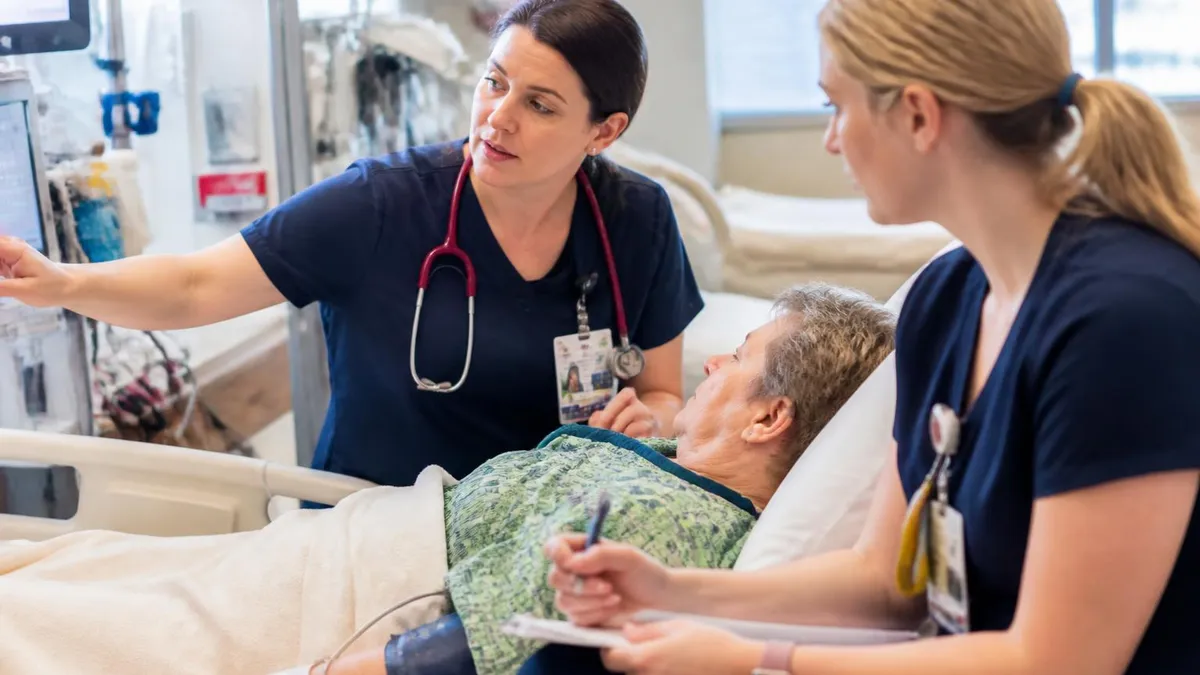
Online BSN Program Formats: Which Track Fits You?
A four-year program for students without a nursing license. Online pre-licensure BSN programs blend asynchronous coursework with mandatory in-person clinical rotations at local healthcare facilities arranged by the university or the student.
Designed for licensed RNs holding an ADN or hospital diploma. Programs grant transfer credit for prior nursing education, typically requiring only 30 to 60 new credits. Most completers finish in one to two years while working full-time.
For career changers who hold a non-nursing bachelor's degree. Intensive programs compress nursing core content into 12 to 18 months. Many require in-person lab and clinical days even when the didactic content is delivered online.
Bridges licensed practical nurses directly to a BSN, granting credit for LPN education and work experience. These tracks are offered by a smaller subset of institutions but represent a cost-effective pathway for experienced LPNs ready to advance.
Admission requirements for online BSN programs vary by track, but certain standards are nearly universal across accredited institutions. For traditional pre-licensure tracks, universities typically require a high school diploma or GED, a minimum GPA of 2.5 to 3.0, completion of prerequisite science courses such as anatomy, physiology, microbiology, and chemistry with laboratory components, and satisfactory scores on a standardized nursing entrance exam like the TEAS or HESI A2. Strong applicants usually exceed the minimum GPA threshold and complete prerequisites at accredited colleges rather than through unofficial channels.
RN-to-BSN programs have a different set of entry benchmarks because applicants already hold a professional credential. Most programs require an active, unencumbered RN license in the applicant's state, an associate degree or nursing diploma from an accredited institution, a minimum cumulative GPA of 2.0 to 2.5, and current or recent clinical employment.
Some programs go further, requesting letters of recommendation, a personal statement outlining career goals, and an employment verification letter confirming active practice. Applicants who meet the minimum GPA cutoff but have strong recommendation letters and relevant clinical experience often gain admission over technically eligible competitors who submit minimal documentation.
Prerequisite coursework represents one of the most common bottlenecks for online BSN applicants. Schools have different transfer credit policies, so a physiology course completed at a community college five years ago may or may not satisfy a university's requirement, depending on the grade earned and the recency standards the nursing department enforces. Applicants should request a detailed prerequisite equivalency review early in the application process — ideally six to twelve months before the intended start date — to avoid last-minute enrollment in courses that delay admission by a full semester.
Background checks and drug screenings are required by virtually all accredited programs because students will have direct patient contact during clinical rotations. Felony convictions, particularly those involving fraud, abuse, or controlled substances, can complicate or prevent licensure even after graduation. Most nursing schools are transparent about this during the application process and may ask applicants to complete a preliminary background disclosure. Addressing any legal history proactively with the program's admissions office is far better than discovering the issue after paying tuition and completing coursework.
Technology requirements are a practical but sometimes overlooked admission consideration for online students. Programs typically specify a minimum computer processor speed, operating system version, webcam and microphone capability for proctored exams, and reliable high-speed internet. Some clinical simulation tools require specific browser configurations or proprietary software that only runs on certain operating systems. Verifying technology compatibility before the first day of class prevents the frustration of being locked out of coursework during critical early weeks of a semester.
English language proficiency requirements apply to international students and non-native speakers. Most programs accept TOEFL scores of 80 or higher on the internet-based test or IELTS Academic scores of 6.5 or above. Some institutions have their own language proficiency assessments. International applicants must also verify that their foreign nursing credentials are evaluated by an approved credential evaluation service before those credits can be applied toward the online BSN program's transfer credit policy.
Once admitted, students benefit from understanding how their program handles orientation, advising, and clinical placement coordination. Programs that assign a dedicated academic advisor and provide a clear clinical affiliation process tend to have stronger completion rates and better NCLEX-RN pass rates. Asking specific questions during the pre-enrollment advising session — such as average time to completion, clinical site flexibility, and support resources for working adults — reveals far more about program quality than any marketing brochure.
BSN Curriculum: Core Subjects, Clinical Hours, and Specializations
Every accredited online BSN program covers a common set of foundational subjects regardless of track. These include pathophysiology, pharmacology, health assessment, nursing research and evidence-based practice, community and public health nursing, leadership and management in nursing, nursing informatics, and healthcare policy. Students completing an RN-to-BSN program typically focus more heavily on the upper-division courses since foundational clinical skills are already validated by licensure, while pre-licensure students build from the ground up across all four years.
Nursing research is one of the most transformative courses for online BSN students. It teaches nurses to critically evaluate published studies, apply research findings to bedside decisions, and participate in quality improvement initiatives at their employing institutions. Many programs culminate in a capstone project that requires students to identify a clinical problem, conduct a literature review using databases like CINAHL and PubMed, propose an evidence-based intervention, and present findings to faculty. This project alone distinguishes BSN-prepared nurses in the job market by demonstrating applied critical thinking at a graduate-adjacent level.

Online BSN Programs: Advantages and Disadvantages
- +Flexibility to complete coursework on your own schedule, ideal for working nurses and parents
- +Ability to remain employed and earning income while advancing your degree
- +Access to accredited programs nationwide regardless of geographic location
- +Lower overall cost compared to traditional on-campus programs when commuting and relocation are factored in
- +Self-paced or asynchronous formats accommodate diverse learning styles and peak productivity hours
- +Many programs accept significant transfer credit, reducing time and tuition dramatically
- −Limited face-to-face interaction with faculty and peers can reduce networking opportunities
- −Requires strong self-discipline and time management skills without the structure of in-person classes
- −Clinical placement coordination can be challenging in areas with limited affiliated sites
- −Technology issues such as internet outages can disrupt proctored exams or synchronous sessions
- −Some employers or graduate programs may perceive online degrees with bias, though this is declining
- −Isolation and reduced peer support can increase attrition rates among students without strong support systems
How to Choose the Right Online BSN Program: 10-Point Checklist
- ✓Verify CCNE or ACEN accreditation status directly on the accrediting body's official website before applying.
- ✓Confirm the program is approved by your state's board of nursing if you plan to sit for NCLEX or maintain licensure there.
- ✓Request a detailed transfer credit evaluation to understand exactly how many new credits you must complete.
- ✓Compare cost per credit hour across at least three programs, factoring in fees, technology charges, and clinical costs.
- ✓Ask specifically how the program coordinates clinical placements and whether you can use your current employer as a site.
- ✓Review the most recent NCLEX first-time pass rates published by the state board or the program's accrediting body.
- ✓Confirm the technology requirements are compatible with your current computer and internet connection before committing.
- ✓Evaluate faculty credentials — look for programs where instructors hold graduate degrees and maintain active clinical practice.
- ✓Investigate student support services including tutoring, writing centers, financial aid counseling, and career placement assistance.
- ✓Read student reviews on platforms like Niche, Reddit nursing forums, and AllNurses to hear candid experiences from alumni.
NCLEX Pass Rate Is the Most Honest Quality Signal
A program's NCLEX-RN first-time pass rate is the single most transparent indicator of educational quality available to prospective students. State boards of nursing publish this data annually. Programs consistently achieving first-time pass rates above 90 percent are demonstrating that their curriculum, faculty, and student support systems are producing practice-ready graduates. Always look up this number before paying an application fee.
The financial investment in an online BSN program is significant, but so is the return. According to the Bureau of Labor Statistics, registered nurses with a BSN earn a median annual salary of approximately $81,000, with experienced nurses in high-cost metropolitan areas and specialized units routinely exceeding $100,000. Nurses who advance to roles such as nurse manager, clinical educator, or informatics specialist — positions that frequently require a BSN as a minimum — earn even more. The financial case for completing an online BSN is compelling when viewed over a 20- to 30-year career horizon.
Tuition for online BSN programs breaks down very differently depending on whether you attend a public or private institution and whether you qualify for in-state tuition rates. Public universities chartered by state governments often extend in-state tuition to all online students regardless of physical location, a policy sometimes called universal in-state tuition for distance learners.
This can translate to savings of $5,000 to $15,000 over the life of the program compared to attending a private institution. Verifying whether a program charges differential online tuition or extends in-state rates uniformly is one of the most impactful financial questions you can ask during the admissions process.
Employer tuition reimbursement is one of the most underutilized financial resources available to working nurses pursuing an online BSN. Many hospital systems, long-term care networks, and health systems offer tuition assistance ranging from $2,500 to $10,000 per year, with some large health system employers providing full tuition coverage for employees who commit to a multi-year service agreement post-graduation. Nurses who strategically align program enrollment with employer benefit cycles can fund the majority of their BSN without taking on student loan debt, dramatically improving the program's net return on investment.
Federal financial aid is available for students enrolled at least half-time in accredited online BSN programs. The Free Application for Federal Student Aid (FAFSA) determines eligibility for Pell Grants, subsidized and unsubsidized federal student loans, and work-study opportunities. Graduate-level nursing programs are often eligible for additional federal loan programs. BSN students who complete the FAFSA early — ideally on or near October 1 when the application opens for the upcoming academic year — maximize their chance of receiving institutional grant aid before limited funds are exhausted.
Scholarships specifically for nursing students are more abundant than many applicants realize. National organizations including the American Association of Colleges of Nursing, the National Student Nurses Association, and the Foundation of the National Student Nurses Association award millions of dollars in scholarships annually. State-level programs, particularly in rural health shortage areas, offer service-incentive scholarships that forgive tuition in exchange for a commitment to practice in an underserved community for two to four years after graduation. Specialty nursing organizations also award discipline-specific scholarships for students concentrating in oncology, pediatrics, public health, and other areas.
The total cost of ownership for an online BSN extends beyond tuition. Students should budget for textbooks (typically $150 to $400 per semester), NCLEX review course fees ($200 to $500), clinical uniform and equipment costs if required, professional liability insurance during clinical rotations (often $35 to $70 per year through student nursing associations), and NCLEX application fees ($200 for most states). These ancillary costs add $500 to $2,000 to the overall investment but are predictable enough to plan for in advance, preventing financial surprises mid-program.
The return on investment calculation for an online BSN becomes even more favorable when considering career mobility beyond staff nursing. BSN completion opens the gateway to master's-level programs including the Master of Science in Nursing (MSN), Master of Public Health (MPH), and eventually doctoral programs such as the Doctor of Nursing Practice (DNP). Each credential tier unlocks significantly higher earning potential, broader scope of practice, and greater autonomy. The online BSN is not merely a degree — it is the critical infrastructure that makes every subsequent nursing career milestone possible.

Some online nursing programs have lost accreditation mid-cycle, leaving enrolled students with credits that other institutions may not accept. Always verify accreditation status directly on the CCNE website (ccneaccreditation.org) or the ACEN website (acenursing.org) — not solely through the school's marketing materials. If a program is listed as "on warning" or "probation," investigate before enrolling to avoid significant financial and academic risk.
Succeeding in an online BSN program requires a fundamentally different approach to learning than showing up to a classroom three times per week and absorbing lectures passively. Online learners must construct their own academic routine, manage competing personal and professional obligations with minimal external accountability, and leverage digital tools that their in-person peers may never need to master. Students who thrive in online BSN programs share several consistent habits that set them apart from those who struggle or withdraw before completion.
Time management is the single most critical skill for online BSN success. Successful students treat their coursework like a scheduled shift — blocking two to three hours of focused study time per course per week on a recurring calendar invitation rather than studying whenever time happens to appear.
Nursing courses require continuous engagement; cramming is particularly dangerous in a discipline where concept application in clinical settings is tested, not just factual recall. Building a semester-long study calendar during the first week of classes prevents the panic that arises when multiple deadlines converge in weeks eight through ten of a sixteen-week semester.
Discussion boards are the primary social learning space in most online nursing programs, and students who engage authentically rather than posting the minimum required response get significantly more out of the experience. Thoughtful replies that connect course content to personal clinical experience not only demonstrate mastery to the grading faculty but also create a genuine peer learning environment where classmates share insights from diverse specialty backgrounds.
A student working in a pediatric ICU and a student employed at a rural community health clinic bring entirely different perspectives to a discussion on population health interventions — both learning from each other in ways a traditional classroom rarely facilitates.
Clinical preparation requires proactive communication with the program's clinical coordinator. Students who wait to be placed often face longer delays than those who reach out early, provide a preferred geographic radius, identify potential clinical sites through their own professional networks, and follow up persistently but professionally. Maintaining a current CPR certification, flu vaccination record, health clearance documentation, and background check during the entire duration of the program — not just at the time of application — prevents last-minute scrambles that delay clinical start dates and push graduation timelines back by an entire semester.
Leveraging university support services is an underutilized advantage for online BSN students. Most accredited programs provide virtual tutoring, writing center consultations, library research assistance, and mental health counseling services that are fully accessible to distance learners. Nursing students who use the writing center before submitting evidence-based practice papers consistently earn higher marks than those who self-edit exclusively. Similarly, students who schedule proactive advising appointments each semester — rather than waiting until a problem surfaces — stay on track academically and avoid the credit miscounts that can add unexpected semesters to program completion.
Study groups among online BSN classmates provide accountability and conceptual reinforcement that self-study alone cannot replicate. Platforms like Zoom, GroupMe, and Discord make it straightforward to organize weekly study sessions with classmates across multiple time zones.
Rotating the responsibility for summarizing a week's lecture content and posting it to the group not only benefits the classmates who receive the summary but also deepens the understanding of the student who created it — a well-documented principle called the protégé effect in educational psychology literature. Students who build these peer networks in the first two weeks of a course typically sustain them through graduation.
Practice exams are an essential study tool at every stage of an online BSN program, not just in the weeks before NCLEX. Topic-specific practice questions in areas like community health nursing, maternal-newborn nursing, pharmacology, and health assessment reinforce course material while simultaneously building the test-taking stamina and question interpretation skills that NCLEX demands.
Students who integrate regular practice question sets into their weekly study routine — rather than treating them as a last-minute review strategy — consistently report higher confidence and lower test anxiety when high-stakes exam days arrive. The habit of practicing under timed, exam-like conditions is one of the most transferable skills an online BSN student can develop.
Practical preparation for online BSN coursework and NCLEX success begins well before the first day of class. Students who use the weeks between acceptance and orientation productively — reviewing pathophysiology fundamentals, brushing up on pharmacology classes, and setting up an organized digital file system for coursework — enter their first semester with momentum rather than playing catch-up from day one. Simple preparation steps compress the learning curve dramatically and allow students to focus mental energy on higher-order content rather than basic logistics and orientation anxiety.
Building a dedicated study space at home makes a measurable difference in focus and productivity. Nursing content is cognitively demanding, and attempting to complete reading assignments or timed quizzes in a noisy, shared household environment undermines both comprehension and performance. A desk in a quiet corner, a reliable pair of noise-canceling headphones, and a browser profile dedicated exclusively to coursework create the environmental cues that help the brain shift into focused work mode consistently. Behavioral research consistently shows that environmental design is one of the most effective and underappreciated tools for sustaining academic performance across a multi-year degree program.
Proctored online exams require specific preparation beyond content mastery. Students must understand the proctoring software used by their program — common platforms include Honorlock, ProctorU, and Respondus — and run compatibility checks at least one week before the first scheduled exam.
Proctored exams typically require a government-issued photo ID, a clean desk visible on webcam, a stable internet connection, and the ability to complete the entire exam in a single uninterrupted sitting. Technical failures on exam day, such as a proctoring software crash or an unstable connection, require immediate contact with the technical support team and the course instructor, so saving those contact numbers in advance prevents delays in getting help when it matters most.
Note-taking strategies for online nursing content differ from traditional lecture note-taking. Because most online BSN courses deliver content through pre-recorded video lectures and assigned readings rather than live instruction, students must actively create structured notes rather than passively transcribing.
The Cornell note-taking method, concept mapping, and the Feynman technique — where you write an explanation of a concept as if teaching it to someone with no background — are all highly effective for nursing content that emphasizes application over memorization. Active encoding during the initial engagement with material reduces total study time later in the semester by improving retention from the first pass.
Staying current with changes in nursing practice and healthcare policy throughout the program enriches both coursework participation and clinical performance. Subscribing to free newsletters from the American Nurses Association, the Centers for Disease Control and Prevention, and the Institute for Healthcare Improvement keeps online BSN students connected to real-world developments that frequently appear in course discussions and case studies. This ambient professional awareness also signals engagement to clinical preceptors and future employers, distinguishing candidates who are genuinely invested in the profession from those who completed the degree strictly as a credential box-checking exercise.
Mental health and stress management cannot be treated as optional considerations for nursing students. Research published in nursing education journals consistently identifies burnout, anxiety, and academic stress as significant predictors of attrition in online nursing programs, particularly among working RNs who are simultaneously managing clinical positions, family obligations, and academic demands. Proactive strategies — including regular physical exercise, adequate sleep, connection with supportive peers, and utilization of counseling services — are not self-indulgent luxuries but evidence-based performance strategies that sustain academic output across the full duration of a degree program.
Graduating from an accredited online BSN program positions nurses for an immediate and sustained career advantage. Beyond the salary premium and expanded job eligibility, BSN graduates report higher professional satisfaction, broader scope of involvement in quality improvement and unit governance, and stronger preparation for the complexity of modern healthcare environments. Whether the next step is a specialized role, a graduate degree, or a leadership position within a current employer, the BSN credential opens doors that remain firmly closed to non-bachelor's-prepared nurses in today's evidence-based, outcomes-focused healthcare landscape.
BSN Questions and Answers
ADN to BSN Online: Bridge Programs and Costs Complete Guide

Accelerated BSN Programs by Location: Complete US Guide With Canada Comparison for 2026

Accredited BSN Programs: Complete Guide to CCNE and ACEN Nursing Degrees in 2026

BSN RN: What It Is, Salary, and Why It Matters in 2026

Accelerated BSN Programs in California: Requirements, Cost, Length, and How to Get In
About the Author

Registered Nurse & Healthcare Educator
Johns Hopkins University School of NursingDr. Sarah Mitchell is a board-certified registered nurse with over 15 years of clinical and academic experience. She completed her PhD in Nursing Science at Johns Hopkins University and has taught NCLEX preparation and clinical skills courses for nursing students across the United States. Her research focuses on evidence-based exam preparation strategies for healthcare certification candidates.