
Ohio University BSN: Complete Program Guide, Requirements, and Career Outcomes
Ohio University BSN program guide: admission requirements, curriculum, costs, and career outcomes. Everything you need to know. 🎓

The ohio university bsn program stands as one of the most respected nursing pathways in the Midwest, drawing students who want a rigorous, clinically grounded education backed by a flagship public university. Ohio University's School of Nursing has built a reputation over decades for producing practice-ready graduates who go on to serve in hospitals, community health centers, and specialty clinics across the country. Whether you are entering nursing for the first time or exploring bridge options, understanding every facet of this program is essential before you commit your time and tuition dollars.
Ohio University's BSN program is offered through the College of Health Sciences and Professions, with the main campus located in Athens, Ohio. The university has invested significantly in simulation labs, clinical partnerships, and faculty recruitment to ensure that students gain hands-on experience that matches what employers expect on day one of practice. Regional campuses in Chillicothe, Eastern, Lancaster, Southern, and Zanesville extend access to rural communities and non-traditional students who cannot relocate to Athens.
Admission to the traditional BSN track is competitive. The nursing school typically reviews applicants on the basis of cumulative GPA, science prerequisite performance, standardized test scores, and relevant healthcare experience. Prospective students are encouraged to shadow registered nurses, volunteer in clinical settings, and build a personal statement that communicates a genuine commitment to patient care. Meeting minimum requirements does not guarantee admission, especially in cohorts where dozens of qualified candidates compete for a limited number of seats.
Beyond traditional pathways, Ohio University also offers an RN-to-BSN completion track designed for licensed nurses who hold an associate degree or diploma and want to advance their credentials. This online-friendly option allows working nurses to complete degree requirements without leaving their current position, making it an attractive choice for Ohio's large workforce of community college graduates. If you are already licensed and weighing your next step, exploring an ohio university bsn bridge pathway could save both time and money compared to a traditional four-year enrollment.
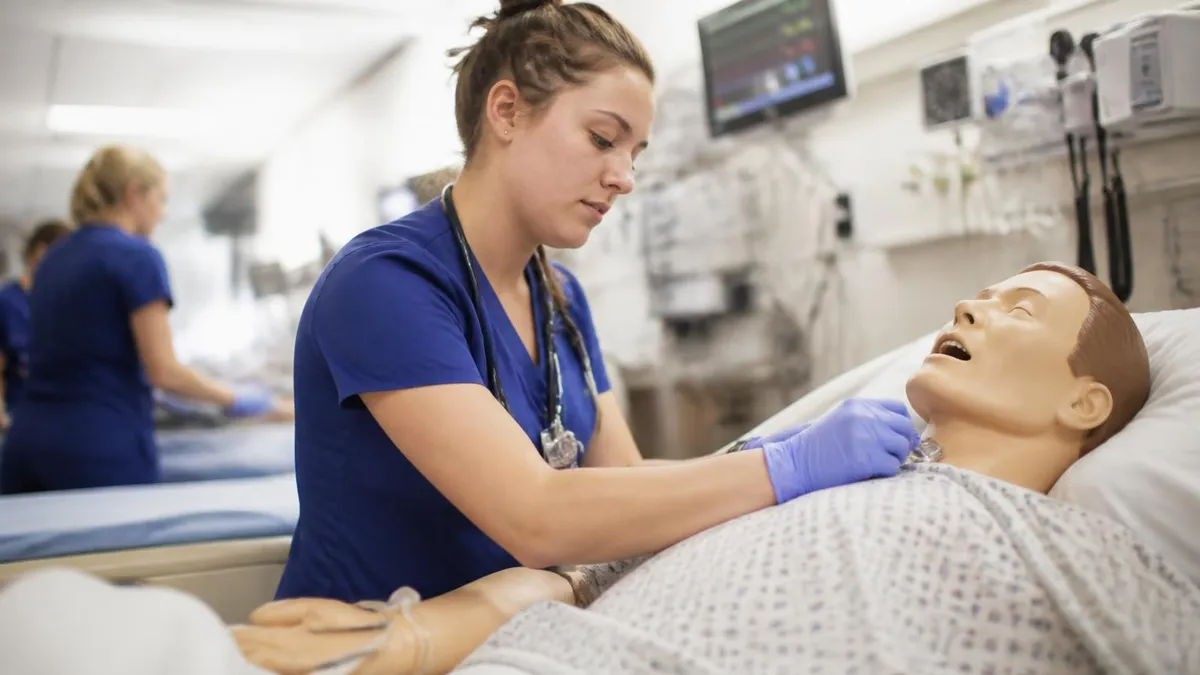
The curriculum integrates coursework in nursing science, pharmacology, health assessment, pathophysiology, community health, maternal-newborn care, and psychiatric-mental health nursing. Students complete clinical rotations in a variety of settings, accumulating hundreds of direct patient care hours before graduation. Simulation technology, including high-fidelity mannequins and standardized patient encounters, supplements hospital and clinic placements so that no student arrives at a clinical site without foundational confidence.
Career outcomes for Ohio University BSN graduates are strong. The NCLEX-RN first-time pass rate for the program has consistently tracked at or above the national average, which signals that the curriculum adequately prepares students for licensure. Graduates work in acute care, pediatrics, oncology, home health, and public health across Ohio and beyond. Entry-level salaries in Ohio for BSN-prepared nurses average around $60,000 to $68,000 annually, with earnings climbing substantially as nurses gain experience or pursue specialty certifications.
This guide covers everything prospective students need to know: admission requirements, curriculum structure, clinical training expectations, costs, financial aid strategies, and the preparation steps that separate accepted applicants from those who are waitlisted. Whether you are a high school senior mapping your college plans or a working adult weighing a career change, the sections below provide the detail you need to make a fully informed decision about the Ohio University BSN program.
Ohio University BSN by the Numbers
Ohio University BSN Program Tracks
Designed for students entering directly from high school or as early college transfers. Covers two years of pre-nursing coursework in Athens followed by formal nursing cohort admission and two years of intensive upper-division nursing study and clinical rotations.
An online-friendly pathway for licensed RNs who hold an ADN or nursing diploma. Allows working nurses to complete degree requirements part-time, often finishing in 12 to 18 months while maintaining full-time employment in their current nursing role.
Ohio University operates nursing programs at regional campuses including Chillicothe, Eastern, Lancaster, Southern, and Zanesville, expanding access to students in rural Ohio who want a flagship-university credential without relocating to Athens.
For students who already hold a non-nursing bachelor's degree, Ohio University offers accelerated tracks that compress the upper-division nursing curriculum into an intensive format, shortening time-to-graduation significantly compared to the traditional four-year plan.
Admission to the Ohio University BSN nursing cohort is a two-stage process. In the first stage, incoming students are admitted to Ohio University as pre-nursing majors and complete foundational coursework in biology, chemistry, anatomy, physiology, microbiology, statistics, and psychology. At the conclusion of this pre-nursing phase, typically after 60 credit hours, students formally apply for admission to the upper-division nursing program. The nursing school evaluates this application separately from general university admission, and a competitive GPA is essential.
The minimum cumulative GPA required to apply to the nursing cohort is generally 2.75 on a 4.0 scale, but admitted students routinely present averages above 3.3, particularly in science prerequisites. Anatomy and physiology, microbiology, and chemistry carry the most weight because they predict performance in advanced nursing coursework. Students who earn a C or below in any science prerequisite are advised to retake the course before applying, as nursing faculty review individual course grades in addition to cumulative averages.
Healthcare experience is not always a hard requirement, but it is an important differentiating factor in competitive admissions cycles. Applicants who have worked or volunteered as certified nursing assistants, patient care technicians, emergency medical technicians, or medical scribes tend to demonstrate stronger application narratives. Ohio University's nursing faculty are looking for evidence that candidates understand the physical and emotional demands of direct patient care, not just an academic interest in the subject.
Letters of recommendation are typically required from academic instructors, preferably in the sciences, and from healthcare supervisors or professional mentors. Generic letters add little value; the most effective recommendations include specific anecdotes about the applicant's problem-solving ability, compassion, reliability under pressure, and communication skills. Applicants should give recommenders at least six weeks of lead time and provide a brief summary of their nursing goals and relevant experiences.
The personal statement is the candidate's opportunity to contextualize their application and explain why Ohio University's specific program aligns with their professional goals. Admissions reviewers are experienced nurses and educators who read dozens of essays per cycle. Authentic, specific writing that references real patient interactions, community service experiences, or personal health journeys tends to resonate more than generic statements about wanting to help people. A well-crafted statement can offset a slightly lower GPA if everything else in the application is strong.
International applicants and students whose primary language is not English must demonstrate English proficiency through TOEFL or IELTS scores meeting Ohio University's minimum thresholds. International students should also factor in the cost of international student health insurance and the time required for visa processing when planning application timelines. Ohio University's international student services office provides dedicated advising for nursing applicants navigating these additional requirements.
Transfer students from other colleges and universities are welcome to apply, provided they meet the same prerequisite GPA standards as students completing the pre-nursing curriculum at Ohio University. Transferred credits are evaluated by the registrar's office against Ohio University's equivalency tables, and not all community college science courses transfer at the same level. Prospective transfers should request an unofficial transcript evaluation early in the process to avoid surprises that delay their application timeline by an entire academic year.
Ohio University BSN Curriculum and Clinical Training
The upper-division nursing curriculum at Ohio University covers fundamentals of nursing practice, health assessment, pharmacology, pathophysiology, adult health nursing, pediatric nursing, psychiatric-mental health nursing, maternal-newborn care, and community health. Each course builds on previous content, creating a spiral curriculum where students revisit core concepts at increasing levels of complexity. Exams in nursing courses frequently mirror the structure of NCLEX-RN questions, familiarizing students with clinical reasoning formats well before they sit for licensure.
Pharmacology is a significant focus area because medication errors represent one of the most common sources of preventable patient harm. Students learn drug classifications, mechanisms of action, therapeutic uses, dosage calculations, and nursing implications across all body systems. Faculty expect students to integrate pharmacology knowledge into every clinical scenario, from reviewing a patient's medication administration record on the floor to counseling patients about medication adherence during discharge education sessions.

Ohio University BSN: Advantages and Considerations
- +CCNE-accredited program ensuring employer recognition and graduate school eligibility nationwide
- +Multiple delivery formats including traditional, RN-to-BSN online, and regional campus options for diverse student needs
- +Strong clinical partnership network across southeastern Ohio hospitals and community health agencies
- +High-fidelity simulation center that builds skills before students encounter real patients in clinical rotations
- +Competitive NCLEX-RN first-time pass rates that exceed the national average in recent reporting cycles
- +Regional campus locations reduce the need to relocate for students in rural Ohio communities
- −Competitive cohort admission means a strong overall GPA is insufficient without strong science prerequisite grades specifically
- −Athens campus location in rural Appalachian Ohio limits access to major metropolitan clinical sites found at urban universities
- −Class sizes in the cohort are limited, creating waitlist risk even for well-qualified applicants in high-demand cycles
- −Out-of-state tuition rates significantly increase total program cost for students from neighboring states like West Virginia or Pennsylvania
- −RN-to-BSN online track requires significant self-discipline and time management for working nurses balancing full-time clinical jobs
- −Limited on-campus housing options for upper-division nursing students who must be available for early morning clinical shifts
Ohio University BSN Application Checklist
- ✓Complete all science prerequisites (anatomy, physiology, microbiology, chemistry) with a B or better in each course
- ✓Achieve a minimum cumulative GPA of 2.75, aiming for 3.3 or above to be competitive in the nursing cohort
- ✓Accumulate at least 100 hours of direct patient care experience through volunteer, CNA, EMT, or PCT work
- ✓Request letters of recommendation from at least one science faculty member and one healthcare professional
- ✓Draft and revise a personal statement that includes specific clinical experiences and articulates clear nursing goals
- ✓Confirm that all prerequisite courses appear on your transcript or have pending transfer evaluations resolved
- ✓Meet with an Ohio University nursing advisor to review your application for completeness before the deadline
- ✓Submit official transcripts from all colleges and universities previously attended, including dual enrollment credits
- ✓Complete the FAFSA by Ohio University's priority deadline to maximize eligibility for need-based financial aid
- ✓Prepare for a possible interview by practicing responses to behavioral nursing admission questions
Science GPA Matters More Than Cumulative GPA
Ohio University nursing faculty review science prerequisite grades individually, not just your overall cumulative average. A 3.5 cumulative GPA with a C in microbiology is a red flag that can disqualify an otherwise strong application. Prioritize retaking any science course where you earned below a B before submitting your cohort application, and consider completing upper-level biology electives to demonstrate science aptitude beyond the minimums.
Understanding the full cost of an Ohio University BSN program is critical for financial planning. In-state undergraduate tuition at Ohio University is approximately $11,000 to $12,500 per academic year as of the most recent published rates, placing it among the more affordable flagship university options in the Midwest. When you add room and board, fees, books, equipment, and clinical transportation costs, total annual expenses for an on-campus student typically reach $22,000 to $28,000, meaning a complete four-year BSN can cost between $88,000 and $112,000 before financial aid.
Out-of-state students face significantly higher tuition, often paying $21,000 to $23,000 per year in tuition alone. For students from nearby states like Kentucky, West Virginia, or Pennsylvania, it is worth exploring whether Ohio University participates in any regional exchange or tuition reciprocity agreements that could reduce this burden. The Midwest Student Exchange Program (MSEP) is one such agreement that Ohio University has historically participated in, offering eligible out-of-state students tuition rates no higher than 150 percent of in-state cost.
Financial aid for Ohio University nursing students comes through multiple channels. The FAFSA determines eligibility for federal Pell Grants, federal subsidized and unsubsidized loans, and federal work-study programs. Ohio University's financial aid office also administers institutional scholarships specifically for nursing students, including awards tied to academic merit, financial need, and career interest in underserved or rural healthcare settings. Students interested in public health or community nursing should specifically ask about scholarships targeting those specializations.
The Ohio Nurse Education Assistance Loan Program (NEALP) provides forgivable loans to Ohio residents pursuing nursing education. Recipients who subsequently practice as registered nurses in Ohio — particularly in high-need areas or shortage designations — may have a portion of the loan forgiven for each year of qualifying service. This program represents a significant financial incentive for students who plan to remain in Ohio after graduation and work in healthcare settings that serve underserved populations.
Federal loan forgiveness programs are relevant for Ohio University BSN graduates who enter public sector employment. The Public Service Loan Forgiveness (PSLF) program cancels remaining federal loan balances after 120 qualifying monthly payments made while working full-time for a government or nonprofit organization. Most Ohio hospital systems and public health departments qualify as eligible employers, making PSLF a realistic option for BSN graduates who carry federal loan debt and plan long-term careers in institutional settings.
Graduate assistantships and tuition waivers are not typically available at the undergraduate level, but students who excel in the BSN program and aspire to advanced practice nursing should begin planning for graduate school costs early. Ohio University offers a Master of Science in Nursing (MSN) and Doctor of Nursing Practice (DNP) programs, and some graduate assistantship opportunities may become available at that stage. Establishing strong faculty relationships during the BSN program is the most effective way to learn about and compete for these graduate funding opportunities.
Work-study and part-time employment during nursing school requires careful management. The clinical schedule in the upper-division nursing years is demanding, with some students completing 12-hour clinical shifts followed by class days and mandatory study commitments. Students who work part-time report that limiting hours to no more than 15 per week during the nursing cohort portion of the program helps them maintain academic performance. Campus jobs, nursing unit technician roles, and tutoring positions are among the most flexible employment options for nursing students who need to earn income while managing an intensive academic schedule.

Ohio University's nursing cohort application deadline typically falls in February or March for fall semester entry. Missing this deadline by even one day means waiting a full year for the next cohort cycle. Check the School of Nursing's official website for the exact deadline each academic year, as dates can shift, and submit all materials at least two weeks early to account for transcript processing delays or recommendation letter submission issues.
Career outcomes for Ohio University BSN graduates reflect the program's emphasis on clinical readiness and NCLEX-RN preparation. Graduates enter the workforce with the educational credential that a growing number of hospitals and health systems require or prefer for registered nurse positions. The American Nurses Association and the Institute of Medicine have both called for the nursing workforce to be at least 80 percent BSN-prepared, a goal that has accelerated hiring preferences nationwide and made the BSN an effective investment in long-term employability and career mobility.
Ohio University BSN graduates find employment across a wide range of clinical settings. Acute care hospitals in Columbus, Cleveland, Cincinnati, and the surrounding regions actively recruit Ohio University graduates for positions in medical-surgical units, step-down care, emergency nursing, operating room nursing, and critical care. Graduates who complete clinical rotations at Nationwide Children's Hospital, OhioHealth facilities, or other regional health systems during their program often receive job offers or invitations to apply from those same organizations upon graduation.
Community and public health nursing is a specialty area where Ohio University graduates are particularly well positioned. The program's location in Appalachian Ohio gives students firsthand exposure to health disparities, limited healthcare access, chronic disease burden, and social determinants of health that affect rural communities at higher rates than urban populations. Graduates who complete rural clinical rotations develop a sensitivity to these issues that is increasingly valued by federally qualified health centers, county health departments, and state and federal public health agencies.
Salary progression for BSN-prepared nurses in Ohio follows a clear trajectory. Entry-level positions typically pay between $58,000 and $70,000 annually depending on the employer, location, and shift differentials. Night shift and weekend differentials can add $3,000 to $8,000 to annual earnings. After three to five years of clinical experience, nurses often move into charge nurse, preceptor, or unit educator roles with commensurate pay increases. Those who pursue specialty certifications — such as the CCRN for critical care or the RNC-OB for obstetric nursing — see additional salary recognition from many employers.
Graduate education is a natural next step for Ohio University BSN graduates who aspire to advanced practice or leadership roles. Nurse practitioners, certified nurse-midwives, certified registered nurse anesthetists, and clinical nurse specialists all require graduate-level education, and Ohio University's MSN and DNP programs provide a familiar academic environment for graduates who want to remain in the Ohio University system. The application process for graduate nursing programs typically requires two to three years of clinical experience, strong professional references, and a clear articulation of the clinical problem or population the applicant intends to focus on in advanced practice.
Nursing informatics, healthcare administration, case management, and nursing education are additional career trajectories available to Ohio University BSN graduates. These roles leverage clinical knowledge in non-bedside environments, offering different working conditions that appeal to nurses who want to reduce physical demands or shift their professional focus later in their career. Many of these positions require additional education or certification but build naturally on the BSN foundation that Ohio University provides.
Networking during the nursing program is a professional investment that pays dividends for years after graduation. Ohio University's alumni network includes thousands of nurses working in every region of Ohio and across the country. Staying connected through the Ohio University Alumni Association, attending Ohio Nurses Association events, and maintaining relationships with clinical supervisors from rotation sites creates a professional web that supports job searches, career transitions, mentorship, and peer collaboration throughout an entire nursing career.
Preparing strategically for the Ohio University BSN program begins long before you submit an application. Students who succeed in the nursing cohort typically start developing strong study habits and science foundations in their first semester of pre-nursing coursework, not after they receive a disappointing exam grade and realize the pace is faster than they expected. Treat every prerequisite science course as if it were nursing school itself, because nursing faculty will hold you to that standard once you are admitted to the cohort.
Active learning techniques outperform passive review for nursing content. Instead of re-reading your anatomy textbook, draw the structures from memory and label them, then check your accuracy against the text. Instead of highlighting pharmacology notes, write drug class summaries in your own words and quiz yourself on mechanisms of action using flashcards. The NCLEX-RN rewards application and clinical reasoning, not rote memorization, so practice applying information to patient scenarios from the earliest weeks of your nursing curriculum.
Practice examinations are one of the most efficient preparation tools available to nursing students. Working through NCLEX-style questions in community health nursing, maternal-newborn nursing, and other specialty areas helps you identify knowledge gaps while simultaneously familiarizing you with the question format, clinical reasoning demands, and priority-setting logic that licensure exams test. Free practice resources like those available through PracticeTestGeeks allow you to assess your readiness in specific content domains without financial investment.
Time management is the skill that most often separates nursing students who thrive from those who struggle. The upper-division nursing cohort at Ohio University includes lectures, labs, clinical preparation, clinical shifts, post-conference requirements, and independent study, all in the same week. Building a weekly schedule at the beginning of each semester and protecting your study blocks from social commitments, part-time work overload, and non-urgent tasks creates the structure that consistent performance requires. Use a paper planner or digital calendar consistently, not sporadically.
Self-care is not a luxury in nursing school — it is a clinical and academic necessity. Sleep deprivation impairs clinical judgment, reduces exam performance, increases medication error risk during simulation, and undermines the interpersonal skills that nursing requires. Ohio University nursing faculty frequently remind students that caring for yourself is the prerequisite for caring for others. Building sleep, exercise, nutrition, and social connection into your weekly schedule as non-negotiable commitments, rather than afterthoughts, supports the sustained performance that four-year nursing programs demand.
Peer study groups are effective when structured intentionally. The best nursing study groups include members who are all committed to preparation, divide topics equitably, teach content to each other rather than just comparing notes, and hold each other accountable for meeting preparation standards before group sessions. Groups that drift into venting, social conversation, or passive review are less helpful than solo study for most students. Evaluate your group's productivity honestly and adjust your participation accordingly without guilt.
Faculty office hours are underutilized by most nursing students. Ohio University nursing faculty are clinical experts who have navigated the same material, taken the same licensure exam, and worked in the same clinical environments where you will eventually practice. Bringing specific questions from your study sessions or clinical experiences to office hours accelerates your understanding in ways that textbooks alone cannot replicate. Faculty also remember students who demonstrate intellectual curiosity and professional initiative, which matters when recommendation letters for graduate programs or competitive positions are written years down the line.
BSN Questions and Answers
ADN to BSN Online: Bridge Programs and Costs Complete Guide

Accelerated BSN Programs by Location: Complete US Guide With Canada Comparison for 2026

Accredited BSN Programs: Complete Guide to CCNE and ACEN Nursing Degrees in 2026

BSN RN: What It Is, Salary, and Why It Matters in 2026

Accelerated BSN Programs in California: Requirements, Cost, Length, and How to Get In
About the Author

Registered Nurse & Healthcare Educator
Johns Hopkins University School of NursingDr. Sarah Mitchell is a board-certified registered nurse with over 15 years of clinical and academic experience. She completed her PhD in Nursing Science at Johns Hopkins University and has taught NCLEX preparation and clinical skills courses for nursing students across the United States. Her research focuses on evidence-based exam preparation strategies for healthcare certification candidates.