
BSN to MSN Programs: Specialties, Cost, Online Options, and How to Choose the Right Path
BSN to MSN programs: ✅ nurse practitioner, CRNA, nurse educator, nurse leader specialties. Cost $25K-$75K, 18-36 months, online and hybrid options compared.

BSN to MSN programs are the most common path for working bachelor's-prepared nurses (BSN holders) advancing to master's-level practice. The Master of Science in Nursing (MSN) opens specialty practice roles — Nurse Practitioner (FNP, AGNP, PMHNP, etc.), Certified Registered Nurse Anesthetist (CRNA), Clinical Nurse Specialist, Nurse Educator, Nurse Leader/Administrator. Each specialty has different curriculum, different clinical hour requirements, different salary outcomes, and different career trajectories.
The typical BSN to MSN program runs 18-36 months depending on specialty, with most nurse practitioner programs at 24-30 months. Cost ranges from $25,000 (state school in-state) to $75,000+ (private universities). Online programs are widely available now and have generally similar tuition to in-person programs at the same institution. Clinical hour requirements (500-1,000+ hours depending on specialty) require in-person practicum sites near where you live, regardless of whether the academic coursework is online.
For nurses considering MSN, the specialty choice drives nearly everything else. Family Nurse Practitioner (FNP) is the most popular specialty and most widely available program. CRNA is the highest-paying specialty ($200K+ typical) but requires the most rigorous admission (1+ year ICU experience, ~12 month all-day curriculum, very selective programs). Psychiatric Mental Health Nurse Practitioner (PMHNP) is the fastest-growing specialty given the U.S. mental healthcare workforce shortage. Nurse Educator and Nurse Leader/Administrator are non-clinical paths with different salary profiles.
The job market for MSN-prepared nurses is strong overall but specialty-dependent. Nurse practitioners earn $115,000-$145,000 typical (with primary care FNP at the lower end and specialty NPs at the higher end). CRNAs earn $200,000-$250,000+ (highest-paid nursing specialty). Nurse Educators earn $80,000-$100,000 (academic salaries lower than clinical). Nurse Leaders and Administrators earn $95,000-$140,000 depending on the size of the organization they manage.
For nurses already working full-time, the practical question is whether to attend in-person classes (often part-time, 3-4 years to complete) or online programs (often 24-30 months full-time-equivalent). Online programs have improved dramatically over the past decade and are now mainstream — many top nursing schools offer fully online MSN programs that achieve identical accreditation and outcomes as in-person programs. The trade-off is mostly about scheduling flexibility and learning style preference.
This guide covers MSN specialty options in detail, program costs and financial aid, online vs. in-person trade-offs, admission requirements, clinical practicum logistics, and how to choose between programs. It's intended for BSN-prepared nurses planning their next career step and high school students or college freshmen who want to understand the nursing career ladder beyond initial RN licensure.
MSN Program Quick Facts
- Duration: 18-36 months depending on specialty. NP programs typically 24-30 months.
- Cost: $25K (state in-state) to $75K+ (private). Tuition similar online vs. in-person.
- Top specialties: FNP, AGNP, PMHNP, CRNA, Nurse Educator, Nurse Leader
- Highest pay specialty: CRNA ($200K-$250K+). Hardest to get into.
- Online programs: Widely available, generally same accreditation/quality as in-person
- Clinical hours: 500-1,000+ depending on specialty. Must be in-person at approved practicum sites.
- Admission: BSN degree, current RN license, ~2.0-3.5 GPA minimum (varies), recommendations, some specialties require 1-2 years RN experience.
- Job outlook: Strong overall. NP, CRNA, PMHNP particularly in demand.
Specialty selection drives nearly everything about an MSN program. Family Nurse Practitioner (FNP) is the most popular specialty — provides primary care to patients across the lifespan. Programs are widely available (every major nursing school offers FNP), curriculum covers family medicine, pediatrics, women's health, and adult care. Cost $30K-$55K typical. Career: primary care clinics, urgent care, occupational health. Salary: $100K-$130K typical, higher in underserved areas.
Adult-Gerontology Nurse Practitioner (AGNP) focuses on adult and geriatric patients. Two variants: Acute Care (AGACNP — hospitalists, ICU NPs) and Primary Care (AGPCNP — clinic-based adult/elder care). AGACNP particularly strong in hospital systems; AGPCNP in primary care offices. Salary $105K-$135K typical, with AGACNP at higher end.
Psychiatric Mental Health Nurse Practitioner (PMHNP) provides mental health diagnosis, medication management, and therapy. One of the fastest-growing specialties due to U.S. mental health workforce shortage. Salary $115K-$145K typical, often higher in private practice. Strong career flexibility — telehealth, private practice, hospital, community mental health all viable.
Pediatric Nurse Practitioner (PNP) specializes in pediatric care. Two variants: Acute Care (PNP-AC) and Primary Care (PNP-PC). Career: pediatric clinics, children's hospitals, school health. Salary $100K-$125K typical. Programs less common than FNP but available at major nursing schools.
Certified Registered Nurse Anesthetist (CRNA) administers anesthesia. The highest-paying nursing specialty. Programs are now uniformly doctoral (DNAP/DNP) since 2022, requiring 3-4 years to complete. Salary $200K-$280K typical. Admission requires 1+ year ICU experience (essential — most programs require minimum 2 years of recent critical care). Most selective and demanding nursing specialty.
Non-NP specialties: Nurse Educator (academic and continuing education roles, $75K-$105K), Nurse Administrator/Leader (management roles, $95K-$135K), Clinical Nurse Specialist (advanced practice in specific clinical areas like wound care, oncology, $90K-$115K), Public Health/Community Health (varies widely). These typically don't require the clinical hours that NP specialties do; some are completed faster.

MSN Specialty Comparison
Primary care, lifespan. Most popular specialty. $100K-$130K. Widely available programs. 24-30 month duration.
Adult/elder care. Acute Care (AGACNP) or Primary Care (AGPCNP). $105K-$135K. Strong hospital and clinic demand.
Mental health. Fastest-growing specialty. $115K-$145K. High demand due to workforce shortage. Good private practice option.
Pediatric specialty. Acute Care or Primary Care variants. $100K-$125K. Niche but consistent demand. Fewer programs than FNP.
Highest pay $200K-$280K. Doctoral degree (DNAP/DNP). 3-4 years. Selective admissions. 1+ year ICU experience required.
Non-clinical advanced practice. Education $75K-$105K. Administration $95K-$135K. Different curriculum from NP specialties.
Online vs. in-person programs: the choice has become less stark in 2026 than it was a decade ago. Online MSN programs from accredited nursing schools (Vanderbilt, Johns Hopkins, Duke, University of Phoenix, Walden, Western Governors, Frontier Nursing, etc.) achieve the same accreditation (CCNE or ACEN), produce graduates with the same credentials, and have similar national certification pass rates as in-person programs.
The trade-off is mostly about format preference and clinical placement logistics. Online programs require you to find clinical practicum sites near where you live; this is typically the student's responsibility (with school support). In-person programs have established clinical affiliation agreements and place students in those sites. For students in urban areas with many healthcare facilities, finding clinical sites is straightforward. For rural students or those in saturated nursing markets (cities with many nursing schools competing for clinical sites), online programs can be harder to complete because clinical placement is bottlenecked.
Cost considerations: online programs are NOT cheaper per credit at most major universities. Tuition is generally similar to in-person rates. Where online saves money: housing (you stay where you are), commuting costs, time away from work (no need to attend daily classes), and (for nurses with families) childcare costs. The total cost-of-attending is often $10K-$25K lower for online programs, even with same tuition.
Pace flexibility: online programs typically offer full-time and part-time tracks. Most working nurses choose part-time (4-5 years) to maintain employment income during the program. Full-time (24-30 months) requires significantly reducing or pausing work. Many programs are designed specifically for working nurses with cohort-based progression and weekly synchronous online class sessions.
For nurses considering programs, the accreditation question is non-negotiable: only attend a CCNE or ACEN accredited program. Non-accredited programs don't lead to recognized credentials and most state nursing boards won't grant advanced practice licenses from non-accredited programs. The accreditation status is published on the school's website and on the CCNE/ACEN websites.
MSN Program Details
- State university (in-state): $25K-$40K total tuition
- State university (out-of-state): $45K-$65K total
- Private university: $50K-$90K total
- For-profit online (Walden, Phoenix, etc.): $35K-$55K total
- Plus clinical fees: Practicum site fees vary $500-$5,000
- Books and equipment: $500-$2,000
- Total cost of attendance: $30K-$95K typical, plus opportunity cost
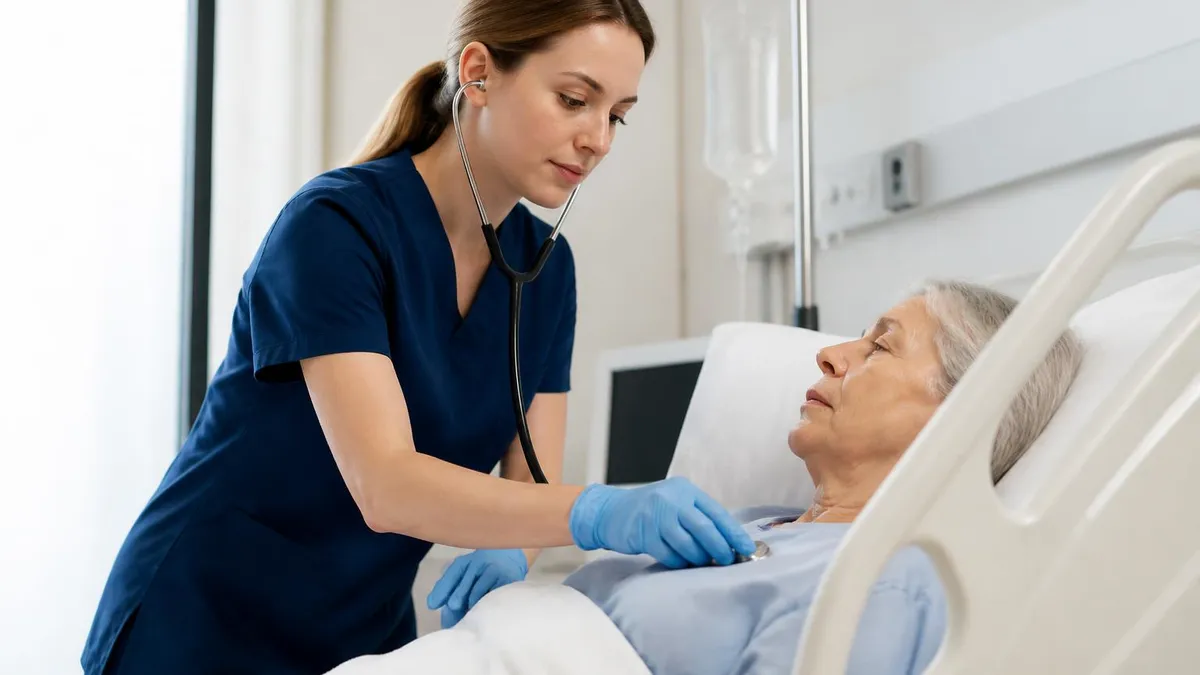
Financial aid options for MSN programs. Federal Direct Unsubsidized Loans (up to $20,500/year for graduate students). Federal Direct PLUS Loans (up to cost of attendance minus other aid; require credit check). State nursing scholarship programs (vary by state — California, Florida, Texas have substantial state-funded nursing scholarships). HRSA Nurse Faculty Loan Program (for Nurse Educator specialty — substantial loan repayment if you teach nursing after graduation).
Employer tuition assistance is significant for working nurses. Most major hospitals and health systems offer $3,000-$10,000 per year in tuition assistance, sometimes more for nurses staying with the organization. Combined with student loans, many nurses cover most of their MSN cost through employer assistance.
Loan forgiveness programs: Public Service Loan Forgiveness (PSLF) for nurses working at non-profit hospitals or government agencies — forgives remaining federal student loans after 10 years of qualifying payments. Nurse Corps Loan Repayment (HRSA) — repays 60-85% of student loans for nurses working in designated underserved areas. State-specific programs in many states offer additional loan repayment.
For nurses pursuing FNP or PMHNP specialties, the National Health Service Corps (NHSC) offers significant loan repayment for nurse practitioners who commit to working in underserved primary care settings (rural areas, urban underserved). Up to $50K loan repayment for 2 years of service, with extensions possible. This can substantially reduce or eliminate MSN debt for nurses willing to work in shortage areas.
The financial calculation for MSN: total cost $40K-$70K typical. After-graduation salary increase $25K-$40K typical (from staff RN to NP). Loan payment $400-$800/month for 10 years. Net positive financial impact within 2-3 years post-graduation for most nurses. The return on investment for MSN is generally strong, particularly with employer tuition assistance and PSLF.
For nurses considering CRNA specifically: cost is higher ($60K-$120K) because of the doctoral requirement and longer program. After-graduation salary $200K+ creates payback typically within 1-2 years even at high debt levels. CRNA financial ROI is the strongest in nursing, but admission selectivity makes the path harder to access.
The American Association of Colleges of Nursing (AACN) has pushed for the Doctor of Nursing Practice (DNP) as the entry-level credential for advanced practice nursing. Currently, both MSN and DNP routes lead to NP licensure in most states. MSN typically takes 2-3 years; DNP takes 3-4 years and costs more. Many schools now offer BSN-to-DNP direct entry that skips the MSN stop. Whether to pursue MSN or DNP depends on career goals — for clinical practice as a NP, both work and salary is similar. For nursing leadership or academic roles, DNP has some advantages. Most working nurses still choose MSN for speed and cost; DNP is becoming more common for new graduates entering directly.
Clinical practicum logistics are one of the more complex parts of MSN programs. The school provides academic instruction but you must find your own preceptors (experienced NPs or physicians who supervise your clinical hours) in some programs, or the school places you in established clinical sites in others. The arrangement varies significantly.
Online program clinical placement: typically the student's responsibility with school support. The school provides resources (list of approved preceptor types, clinical learning objectives, evaluation forms) but the student finds preceptors through their own network, employer connections, or local healthcare provider outreach. This can be challenging in saturated markets — cities with multiple online MSN programs competing for the same preceptors.
In-person program clinical placement: school has established clinical affiliations and places students in designated sites. Less effort required from the student but less flexibility in location and specialty exposure. The student's role is to show up and meet the rotation requirements; the school handles logistics.
Hybrid program clinical placement: some combination. The school may provide initial placements and require students to identify additional sites for advanced rotations. This is increasingly common in modern MSN programs.
Compensation for preceptors: traditionally, clinical preceptors volunteered their time as part of nursing education tradition. Increasingly, preceptors are paid stipends ($25-$100 per student hour) by some programs. This affects costs and clinical placement availability. Programs that pay preceptors typically charge more in tuition.
For nurses planning MSN, talking to current students at the programs you're considering is the best way to understand actual clinical placement experience. Online reviews often miss program-specific clinical placement nuances. The placement experience can make or break a program — choose a program where placement is well-supported, not just one with attractive tuition.
MSN Program Decision Factors
Only attend CCNE or ACEN accredited programs. Non-accredited programs don't lead to recognized credentials. Verify on school's website.
Choose programs offering your target specialty. FNP widely available. CRNA more selective. PMHNP rapidly growing.
Online has more schedule flexibility. In-person has established clinical placement. Match your work situation and learning style.
Talk to current students. Some online programs require students to find their own preceptors — challenging in saturated markets.
Tuition varies widely. Cheaper isn't always lower quality (state schools often excellent value). Expensive isn't always worth it.
Confirm your employer covers the program. Most hospitals offer $3K-$10K/year for nursing graduate education.

BSN to MSN Timeline
Year 1: Decide Specialty
Year 2: Apply to Programs
Year 2-3: Enroll and Start
Year 3-4: Clinical Practicum
Year 4-5: Complete and Certify
Apply for State License
MSN Program Stats
Key Facts at a Glance
| Item | Value | Details |
|---|---|---|
| Typical duration | 18-36 months | |
| Typical cost | $25K-$75K | |
| FNP clinical hours | 500-650 | |
| CRNA clinical hours | 2,000+ |
As of 2022, all new CRNA programs are doctoral level — Doctor of Nurse Anesthesia Practice (DNAP) or Doctor of Nursing Practice (DNP). The older MSN-CRNA option is no longer available for new students. This adds about 12 months and significant cost compared to the old MSN path. However, the salary differential and demand for CRNAs ($200K-$280K typical) generally justifies the investment. CRNA remains the highest-paying nursing specialty and has very strong job market characteristics, just with a longer path now than 10 years ago.
After MSN graduation, the certification process matters. Each specialty has its own national certification exam administered by a specialty board. For Family Nurse Practitioner: AANPCB (American Academy of Nurse Practitioners Certification Board) or ANCC (American Nurses Credentialing Center) — choose one. For Psychiatric Mental Health: ANCC. For Adult-Gerontology: AANPCB or ANCC. For Pediatric: PNCB. For CRNA: NBCRNA. Each board has its own exam, application process, and continuing education requirements.
State licensure follows national certification. After passing your national board exam, you apply to the state nursing board where you want to practice. Each state has different application requirements, fees, and processing times. Most processing takes 4-12 weeks. Some states have reciprocity arrangements; others require complete re-application even for nurses already licensed in another state.
The first NP job after MSN graduation often has lower pay than expected because new graduates have less clinical experience than the salary surveys reflect (which include experienced NPs). New graduate FNPs typically start at $95K-$110K; jumps to $115K-$130K within 2-3 years as experience accumulates. The new-grad period is critical for building skills and earning the practical experience that drives long-term career trajectories.
Continuing education requirements for NPs are substantial. Most state nursing boards require 60-100 contact hours every 2-5 years (varies). National certifications require ongoing CE plus periodic recertification (typically every 5 years). Maintaining all credentials requires consistent effort throughout the career.
For nurses comparing MSN to other healthcare paths (PA school, medical school, specialized nursing): MSN is faster than medical school (4 years grad + residency) and generally cheaper than PA programs ($75K-$110K for PA vs. $25K-$75K for MSN). NPs and PAs do similar work in primary care; NPs are more aligned with nursing model (holistic patient care), PAs with medical model (disease-focused). Both are valuable paths; choice often comes down to which approach to patient care fits your style.
BSN Pros and Cons
- +BSN has a publicly available content blueprint — you know exactly what to prepare for
- +Multiple preparation pathways accommodate different schedules and budgets
- +Clear score reporting shows specific strengths and weaknesses
- +Study communities share current insights from recent test-takers
- +Retake policies allow recovery from a difficult first attempt
- −Tested content scope requires substantial preparation time
- −No single resource covers everything optimally
- −Exam-day performance can differ from practice test performance
- −Registration, prep, and retake costs accumulate significantly
- −Content changes between versions can make older materials less reliable
Sample BSN - Degree Bachelor of Science in Nursing Practice Questions
Try these questions from our free BSN - Degree Bachelor of Science in Nursing practice tests. The correct answer and an explanation follow each question.
Which principle of the Five Rights of Delegation addresses whether the environment is appropriate for the task to be safely performed?
- A. Right task
- B. Right person
- C. Right circumstance
- D. Right supervision
Answer: C. Right circumstance
The Right Circumstance evaluates whether the setting, resources, and patient condition make it safe and appropriate to delegate the task.
Which scenario represents a violation of the delegation principle of 'right task'?
- A. Asking a UAP to transport a stable patient to radiology
- B. Asking a UAP to insert a urinary catheter on a newly admitted patient
- C. Asking a UAP to empty a urinary drainage bag and document the output
- D. Asking a UAP to reposition a bedbound patient every 2 hours
Answer: B. Asking a UAP to insert a urinary catheter on a newly admitted patient
Urinary catheter insertion requires sterile technique and clinical judgment, making it outside the standard scope of UAP practice in most states.
The nursing assistant takes the patient's vital signs after the respiratory therapist suctions an intubated patient. Which vital sign value needs to be reported right away to the licensed nurse by the nursing assistant?
- A. Blood pressure of 168/90 mm Hg
- B. Tympanic temperature of 101.4ºF (38.6ºC)
- C. Heart rate of 98 beats/min
- D. Respiratory rate of 24 breaths/min
Answer: B. Tympanic temperature of 101.4ºF (38.6ºC)
The risk of infection for a patient undergoing mechanical breathing never goes away. Bypassing the body's natural air-filtering systems, the endotracheal tube gives bacteria and viruses a direct path to the lower respiratory system.
A patient with a urinary tract infection is prescribed trimethoprim-sulfamethoxazole (TMP-SMX). Which allergy history is a contraindication to this medication?
- A. Penicillin allergy
- B. Sulfa drug allergy
- C. Aspirin-exacerbated respiratory disease
- D. Contrast dye allergy
Answer: B. Sulfa drug allergy
TMP-SMX contains a sulfonamide component; a documented sulfa allergy is a contraindication due to the risk of severe hypersensitivity reactions.
Take the full BSN - Degree Bachelor of Science in Nursing practice test
BSN Questions and Answers
The BSN to MSN pathway is one of the most accessible ways for working nurses to substantially advance their careers and earning potential. The 24-30 month investment, while demanding, produces returns that typically pay back within 2-3 years post-graduation. The specialty options accommodate diverse interests — clinical practice, administration, education, and research all have specialty tracks. The credentialing infrastructure is mature, the job market is strong, and the work itself offers more autonomy and higher impact than staff RN roles.
For nurses considering MSN, the practical recommendation is: spend significant time on specialty selection before applying. The wrong specialty choice is hard to undo — you can't simply switch from FNP to PMHNP mid-program. Shadow nurse practitioners in your target specialty. Read job descriptions for the roles you'd want post-graduation. Talk to MSN-prepared nurses in your target field about their daily work. The 2-3 years of MSN study and the multi-decade career that follows are worth investing time in choosing the right specialty match.
A practical addendum on full-practice authority laws. The scope of practice for nurse practitioners varies significantly by state. Full Practice Authority (FPA) states — about half the country — allow NPs to evaluate, diagnose, and treat patients independently of physician supervision. Restricted Practice states require some level of physician oversight, sometimes including a collaborative practice agreement.
This affects what jobs are available, what your daily work looks like, and how easily you can establish independent practice. Before committing to an MSN program, check the practice authority laws in the state(s) where you plan to work. The state-by-state map is published by the American Association of Nurse Practitioners (AANP) and updates periodically as laws change.
For nurses planning to work in multiple states or who anticipate relocating after MSN, the eNLC (enhanced Nurse Licensure Compact) facilitates multi-state RN practice but does NOT cover advanced practice licenses. Each state's advanced practice license is separate and must be obtained individually. If you anticipate practicing in several states across your career, plan for the additional licensing time and fees. This is one of the reasons settling in a state with full practice authority and stable advanced practice regulations is appealing for many NP graduates.
About the Author

Registered Nurse & Healthcare Educator
Johns Hopkins University School of NursingDr. Sarah Mitchell is a board-certified registered nurse with over 15 years of clinical and academic experience. She completed her PhD in Nursing Science at Johns Hopkins University and has taught NCLEX preparation and clinical skills courses for nursing students across the United States. Her research focuses on evidence-based exam preparation strategies for healthcare certification candidates.