
BSN to CRNA Programs: Complete Pathway Guide to Becoming a Nurse Anesthetist in 2026
📝 BSN to CRNA programs explained: admission requirements, DNP timelines, ICU experience, costs, and salary. Your complete 2026 roadmap to nurse anesthesia.

BSN to CRNA programs are the most direct doctoral pathway for registered nurses who want to become Certified Registered Nurse Anesthetists, one of the highest-paid and most autonomous advanced practice roles in healthcare. Since January 2025, every accredited nurse anesthesia program must award a doctoral degree, typically a Doctor of Nursing Practice (DNP) or Doctor of Nurse Anesthesia Practice (DNAP). That shift means your Bachelor of Science in Nursing is now the foundational launchpad for a 36 to 42-month doctoral journey into anesthesia care. Practice with the free BSN - Degree Bachelor of Science in Nursing practice test on PracticeTestGeeks (7 questions with answer explanations).
The CRNA pipeline is famously competitive. Top programs receive 200 to 600 applications for cohorts of 20 to 40 students, and successful applicants typically arrive with 3.7+ GPAs, 2 to 3 years of high-acuity ICU experience, CCRN certification, and strong shadowing hours. Unlike other advanced practice routes, you cannot bypass the critical care requirement. Programs want nurses who have managed vasoactive drips, ventilators, swans, and unstable patients independently before they ever touch an anesthesia machine.
This guide walks you through every milestone from BSN graduation through CRNA board certification: the prerequisite coursework you must finish, the ICU experience that actually counts, the GRE and CCRN expectations, the application timeline, program costs ranging from $40,000 to over $200,000, and what your daily life will look like during clinical residency. If you are still earning your bachelor's, our coverage of BSN Online Programs can help you choose a school that positions you for CRNA admission.
By the end of this article, you will understand exactly what admissions committees are looking for, how to build a competitive application from your first BSN clinical rotation, and whether the financial and personal cost of CRNA school aligns with your career goals. We will also cover the realistic salary expectations after graduation, which range from $180,000 to $250,000+ depending on geography, setting, and call burden.
The good news: nurse anesthesia is one of the fastest-growing advanced practice specialties, with the Bureau of Labor Statistics projecting 38% growth for nurse anesthetists, midwives, and nurse practitioners through 2032. CRNAs deliver more than 50 million anesthetics annually in the United States and are the sole anesthesia providers in roughly 80% of rural counties. Demand is durable, geographically widespread, and immune to most automation pressures affecting other healthcare roles.
The harder truth: the path requires sustained academic excellence, deliberate ICU career planning, and a financial commitment that often exceeds $150,000 in tuition plus 36 months of forfeited nursing income. Many applicants need two or three application cycles to gain admission. This guide assumes you are serious about the journey and want a candid, evidence-based roadmap rather than recruitment marketing.
Whether you are a BSN student plotting a five-year plan or a current ICU nurse one year from applying, the playbook is the same: maximize your GPA, accumulate the right ICU hours in the right unit, certify aggressively, shadow CRNAs in real ORs, and craft an application that demonstrates clinical judgment under pressure. Let's break it down step by step.
Free BSN - Degree Bachelor of Science in Nursing Study Tools
Interactive BSN - Degree Bachelor of Science in Nursing resources on PracticeTestGeeks, free to start:
- BSN - Degree Bachelor of Science in Nursing flashcards — review key terms and concepts card by card
- BSN - Degree Bachelor of Science in Nursing study guide — topic-by-topic overview of what the exam covers
- BSN - Degree Bachelor of Science in Nursing cheat sheet — one-page printable summary for last-minute review
BSN to CRNA Programs by the Numbers

Core Admission Requirements for BSN to CRNA Programs
You must hold an unencumbered RN license in your state of practice. Most programs require a BSN from a CCNE or ACEN accredited school, completed before the program's start date with verified transcripts.
Minimum cumulative GPA is typically 3.0, but admitted students average 3.6 to 3.8. Science GPA, especially in chemistry, anatomy, physiology, microbiology, and statistics, is weighted heavily by most admissions committees.
One year minimum, but two to three years of adult critical care in a high-acuity ICU is the realistic competitive standard. Programs explicitly favor MICU, SICU, CVICU, and trauma ICU over step-down or PCU units.
The AACN Critical Care Registered Nurse credential demonstrates mastery of critical care concepts. While only some programs require it, virtually all admitted students hold CCRN, often supplemented by CMC or CSC subspecialty certifications.
Most programs expect 8 to 40 hours of CRNA shadowing across multiple sites. GRE requirements vary, with many programs now waiving or making it optional, though competitive scores still strengthen marginal applications.
Choosing between DNP and DNAP is one of the first decisions you will make when researching BSN to CRNA programs. Both are doctoral degrees recognized by the Council on Accreditation of Nurse Anesthesia Educational Programs (COA) and the National Board of Certification and Recertification for Nurse Anesthetists (NBCRNA). Both qualify graduates to sit for the National Certification Examination. The practical differences are subtle but worth understanding before you commit three years of your life.
The Doctor of Nursing Practice (DNP) is awarded by schools of nursing and emphasizes the AACN Essentials, including evidence-based practice, healthcare systems leadership, population health, and quality improvement. DNP programs frame anesthesia within the broader nursing scholarship tradition. The Doctor of Nurse Anesthesia Practice (DNAP) is typically housed in colleges of health professions or anesthesia-specific departments and tends to weight clinical anesthesia content slightly more heavily, with less emphasis on traditional nursing theory.
For job placement, salary, and licensure, the degrees are functionally equivalent. Hospital credentialing committees, anesthesia groups, and state boards do not distinguish between DNP-CRNAs and DNAP-CRNAs. What matters far more is program reputation, clinical site quality, board pass rates, and the specific case mix you experience during residency. A program with diverse trauma, cardiac, pediatric, regional, and obstetric exposure will outperform a program with narrower clinical scope regardless of which doctoral letters follow your name.
Program structure is remarkably consistent across institutions: roughly 9 to 12 months of front-loaded didactic coursework in advanced physiology, pharmacology, chemistry of anesthesia, and principles of anesthesia practice, followed by 24 to 30 months of clinical residency where you accumulate 2,000+ anesthesia hours and at least 600 anesthetic cases across required categories. A scholarly project, sometimes called a doctoral capstone or DNP project, runs in parallel.
Most programs are full-time, in-person, and explicitly prohibit outside employment during clinical phases due to fatigue and patient safety concerns. A few hybrid programs front-load didactics online for the first year before transitioning to in-person clinicals, but you should not expect to work as an RN once anesthesia clinicals begin. Plan your finances accordingly, because this is a three-year income interruption, not a part-time graduate add-on like some other advanced degrees.
If you are still finishing your bachelor's, picking the right undergraduate program matters. Strong science prerequisites, strong ICU clinical placements, and a 4.0-friendly course load make a measurable difference. Many CRNA applicants started with an ADN and bridged through ADN to BSN Online programs to lift their cumulative GPA and unlock graduate-level chemistry and statistics courses required by anesthesia schools.
One important note on accreditation: only programs accredited by COA produce graduates eligible to take the NCE and become certified CRNAs. Verify accreditation status directly at coacrna.org before applying anywhere. As of 2026, there are roughly 130 COA-accredited nurse anesthesia programs in the United States, and that number continues to grow as demand for CRNAs intensifies in rural and underserved markets.
BSN Practice Test Questions
Prepare for the BSN - Degree Bachelor of Science in Nursing exam with our free practice test modules. Each quiz covers key topics to help you pass on your first try.
BSN Community and Public Health Nursing
BSN Exam Questions covering Community and Public Health Nursing. Master BSN Test concepts for certification prep.
BSN Maternal-Newborn and Women's Health Nu...
Free BSN Practice Test featuring Maternal-Newborn and Women's Health Nursing. Improve your BSN Exam score with mock test prep.
BSN Medical-Surgical Nursing
BSN Mock Exam on Medical-Surgical Nursing. BSN Study Guide questions to pass on your first try.
BSN Mental Health and Psychiatric Nursing
BSN Test Prep for Mental Health and Psychiatric Nursing. Practice BSN Quiz questions and boost your score.
BSN Pharmacology and Medication Administra...
BSN Questions and Answers on Pharmacology and Medication Administration. Free BSN practice for exam readiness.
BSN BS-Nursing General
BSN Mock Test covering BS-Nursing General. Online BSN Test practice with instant feedback.
ICU Experience That Counts for CRNA Programs
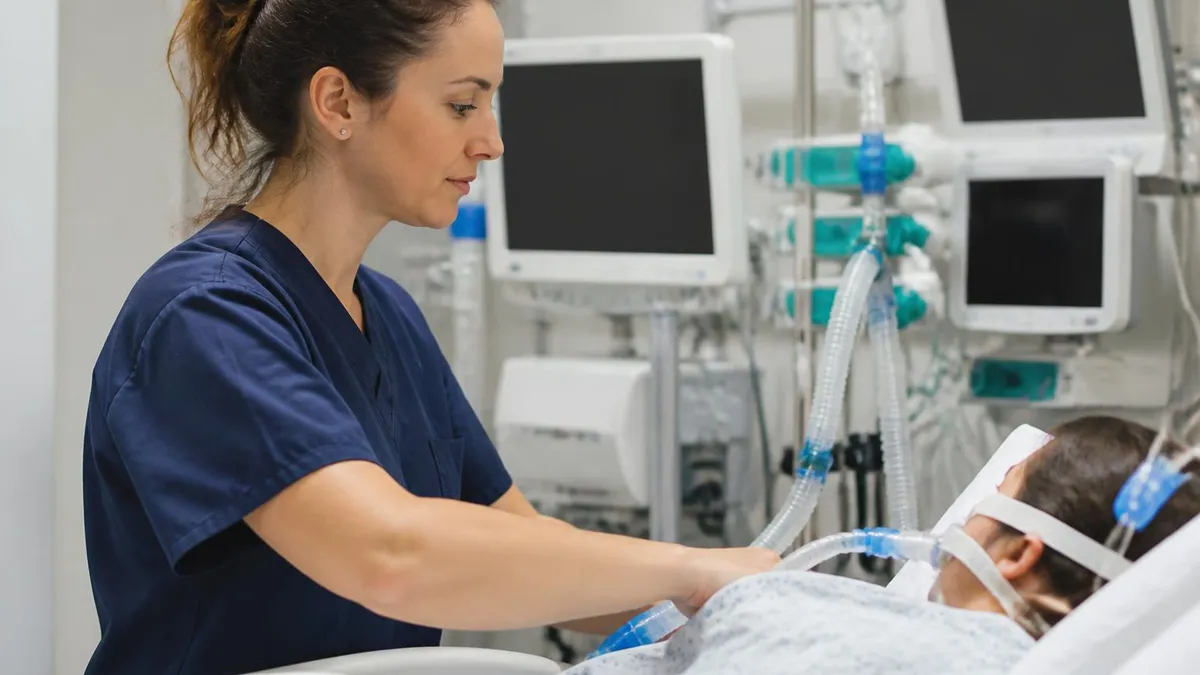
Cardiothoracic ICU (CVICU), Surgical ICU (SICU), and Medical ICU (MICU) at Level I or Level II trauma centers consistently produce the strongest CRNA applicants. These units expose nurses to vasoactive drips, mechanical ventilation, pulmonary artery catheters, CRRT, IABPs, ECMO, and unstable hemodynamic patients who require constant titration and clinical judgment.
Neuro ICU and Burn ICU also count strongly when admissions committees recognize the high-acuity case mix. The key is independent management of critically ill, often intubated patients with multiple drips. A nurse who has run norepinephrine, vasopressin, propofol, and fentanyl on the same patient demonstrates exactly the pharmacologic comfort programs want.
Is the BSN to CRNA Path Right for You?
- +Median salary above $214,000 with top earners exceeding $300,000 annually
- +High clinical autonomy, especially in rural and opt-out states
- +Strong job security with 38% projected growth through 2032
- +Diverse practice settings including hospitals, surgery centers, and pain clinics
- +Direct billing privileges and entrepreneurial practice opportunities
- +Respected role with significant scope and responsibility in anesthesia care
- +Manageable schedule options including no-call positions in many markets
- −36 to 42 months of full-time doctoral education with no outside employment
- −Total cost typically $40,000 to $200,000+ in tuition plus living expenses
- −Extremely competitive admissions with single-digit acceptance rates at top schools
- −High-stakes clinical residency with steep learning curve and physical demands
- −Forfeited RN income of $200,000+ during program duration
- −Significant emotional pressure during cardiac, trauma, and pediatric rotations
- −Lifelong continuing education and recertification every 4 years through CPC program
Pros and Cons at a Glance
| Pros | Cons |
|---|---|
| High clinical autonomy, especially in rural and opt-out states | Extremely competitive admissions with single-digit acceptance rates at top schools |
| Diverse practice settings including hospitals, surgery centers, and pain clinics | High-stakes clinical residency with steep learning curve and physical demands |
| Direct billing privileges and entrepreneurial practice opportunities | Significant emotional pressure during cardiac, trauma, and pediatric rotations |
BSN to CRNA Programs Application Checklist
- ✓Earn your BSN from a CCNE or ACEN accredited program with a 3.5+ cumulative GPA
- ✓Complete graduate-level statistics and organic or biochemistry with B or higher
- ✓Secure an adult ICU position at a Level I or II trauma center within 6 months of NCLEX
- ✓Accumulate at least 24 months of high-acuity ICU experience before applying
- ✓Earn CCRN certification, ideally within your first 18 months in ICU
- ✓Add CMC, CSC, or TCRN subspecialty certifications to strengthen your file
- ✓Complete 20 to 40 hours of CRNA shadowing across at least 2 different facilities
- ✓Request 3 strong letters of recommendation from ICU manager, charge nurse, and physician
- ✓Take the GRE if required by your target programs and aim for 305+ combined
- ✓Draft a personal statement that highlights specific clinical decisions and outcomes
Why two years of ICU is the realistic minimum, not one
While most programs technically require only one year of critical care, the average admitted CRNA student has 2.7 years of ICU experience according to recent COA data. One year shows you survived orientation; two to three years show you can independently manage complex patients, mentor newer nurses, and apply pharmacology under pressure. Apply with less experience and you risk wasting application fees on programs that rarely admit single-year candidates.
The financial picture of BSN to CRNA programs is best understood as a three-part calculation: direct tuition costs, indirect living and opportunity costs, and post-graduation earning potential. Direct tuition varies dramatically by school. Public state programs for in-state residents can cost $40,000 to $80,000 total. Private programs and out-of-state public tuition routinely run $120,000 to $200,000+, with a handful of elite private schools approaching $250,000 in total cost of attendance once fees, books, equipment, and required conference travel are included.
Indirect costs are easy to underestimate. Most programs prohibit outside employment, so you are forfeiting 36 months of RN income at a typical bedside salary of $75,000 to $110,000 per year. That is $225,000 to $330,000 in lost wages, plus continued rent, insurance, food, transportation to clinical sites scattered across a region, scrubs, board exam fees, and licensing costs. Realistic total program cost, including opportunity cost, frequently exceeds $400,000.
Funding options exist but rarely cover the full cost. Federal Direct Unsubsidized loans cap at $20,500 per year for graduate students. Grad PLUS loans cover the remainder but carry higher interest rates and origination fees. Some programs offer graduate assistantships or research stipends, but these are limited. A small number of hospital systems, particularly the VA and certain rural anesthesia groups, offer service-commitment scholarships in exchange for two to four years of post-graduation employment.
The return on investment, however, is among the strongest in healthcare. The median CRNA salary as of 2024 was $214,200 according to the Bureau of Labor Statistics, with the top 10% earning over $300,000. Locum tenens CRNAs and independent practitioners in opt-out states routinely clear $400,000 in high-call positions. Compared to a staff RN earning $90,000, the lifetime earning differential easily exceeds $4 million over a 25-year career.
Public Service Loan Forgiveness (PSLF) is a major lever for CRNAs who plan to work at qualifying nonprofit hospitals, VA facilities, or government-affiliated systems. Ten years of qualifying payments while working full-time for an eligible employer can erase remaining federal loan balances entirely. Many CRNA graduates with $150,000 to $200,000 in federal loans use income-driven repayment plus PSLF to discharge their debt while building careers in hospital-based practice.
If you are weighing the CRNA path against other advanced nursing routes, the financial calculus is generally favorable to nurse anesthesia. Nurse practitioner programs cost less and take less time, but median NP salaries hover around $128,000, roughly $85,000 less than median CRNA pay. Across a career, that gap easily justifies the additional CRNA program cost for nurses who genuinely enjoy anesthesia practice and can tolerate the rigorous training.
One financial planning tip: build a 12-month emergency fund before starting your program. Unexpected medical bills, family emergencies, or program-related travel can create cash flow crises during clinical residency when you cannot pick up extra shifts. Going in with a financial buffer reduces stress and lets you focus on learning, which directly improves your clinical performance and board readiness.
Every COA-accredited program publishes its first-time National Certification Examination pass rate. Strong programs maintain 90% or higher consistently. If a program reports pass rates below 85% for multiple consecutive cohorts, that often signals weak clinical site quality, inadequate didactic preparation, or admissions practices that do not screen for academic readiness. Verify pass rates on the COA public dashboard before committing.
Building a competitive BSN to CRNA application is a multi-year process, not a senior-year sprint. The applicants who get into top programs on their first cycle typically start strategizing during their junior year of nursing school. They take graduate-level chemistry electives if available, build relationships with ICU nurse leaders during clinicals, and target ICU new graduate residencies at academic medical centers rather than community hospitals with lower acuity.
Your personal statement is one of the highest-use components of the application. Generic essays about wanting to help people or fascination with pharmacology do not differentiate you. Strong essays describe specific clinical scenarios where you made independent decisions, recognized subtle deterioration before a physician arrived, or coordinated complex interventions during a code. Programs want to see that you already think like an anesthesia provider, anticipating problems rather than reacting to them.
Letters of recommendation should come from people who can speak in detail about your clinical judgment, not just your reliability or kindness. The ideal trio is your ICU nurse manager, an intensivist or anesthesiologist who has worked with you, and a CRNA you have shadowed extensively. Avoid letters from nursing school faculty unless you have stayed in contact and they can describe your post-graduation clinical growth. Generic letters from former professors weaken otherwise strong applications.
Shadowing is non-negotiable but easy to do poorly. Showing up for one 8-hour shift and leaving is not enough. Aim for at least three full days with different CRNAs at different facilities: a busy academic medical center, a community hospital with mostly CRNA-led care, and ideally a surgery center or pain clinic. Ask thoughtful questions, take brief notes on case types and challenges, and follow up with a handwritten thank-you note that may become a letter-of-recommendation source.
The interview is where competitive applicants get accepted or rejected. Most CRNA programs conduct intensive interviews that combine traditional behavioral questions with clinical scenarios. You may be asked to interpret an ABG, calculate a drug dose, describe management of septic shock, or explain the difference between depolarizing and non-depolarizing neuromuscular blockers. Drill core ICU pharmacology, hemodynamics, and ventilator management for at least three months before interview season.
If you are concurrently weighing other advanced practice paths or want to understand alternatives, our comparison of RN vs BSN credentials clarifies the foundational degree question, while broader bridge programs covered in LVN to BSN Programs may help non-traditional applicants build the academic record CRNA admissions committees require.
Finally, plan for the possibility of reapplication. About 40% of admitted CRNA students apply more than once. A first-cycle rejection is not a verdict on your potential, it is feedback. Request post-interview feedback when programs offer it, identify the weakest component of your application, and address it directly before the next cycle. Applicants who reapply with a stronger CCRN, additional ICU experience, or improved GRE scores often gain admission on their second or third attempt.
Once you are accepted, the practical prep work shifts from admissions to academic readiness. The first semester of any CRNA program is famously brutal. Advanced physiology, pharmacology, and chemistry of anesthesia move at residency pace, and students who have not refreshed their basic science in years often feel overwhelmed. Plan to spend the 6 months before matriculation reviewing acid-base balance, respiratory physiology, cardiac cycle physiology, autonomic pharmacology, and pharmacokinetic principles.
Free and low-cost resources can carry you a long way. Open-source textbooks like Costanzo's Physiology, Katzung's Pharmacology, and Stoelting's Pharmacology and Physiology in Anesthetic Practice are foundational. Several CRNA YouTube channels and podcasts provide excellent free overviews of complex topics. Build a morning study habit now, ideally 30 to 60 minutes daily, so the academic load feels familiar when classes start. Students who treat the prep period seriously consistently report easier transitions.
During the program, your clinical learning will eclipse anything you experienced in BSN school. Expect 50 to 70 hours per week between classroom time, clinical rotations, simulation labs, and independent study. Sleep, nutrition, and physical fitness become performance variables, not lifestyle choices. Many programs lose 5 to 10% of students to academic failure or voluntary withdrawal during the first year, often due to burnout rather than intellectual inability. Protect your health like a professional athlete.
Build a study group within the first month of matriculation. Anesthesia content is too broad to master alone, and explaining concepts to peers cements your own understanding. Most successful CRNA students rotate study group roles: one person leads a topic each week, others ask probing questions, and the group rehearses oral exam scenarios that mimic the type of grilling that happens during clinical rotations and morning report.
Clinical rotations begin around month 9 or 12, depending on the program. Your first cases will likely be ASA 1 and 2 patients, healthy adults for routine procedures like cholecystectomies and orthopedic surgeries. As you progress, you will move into cardiac, neuro, obstetric, pediatric, regional anesthesia, and trauma rotations. Each rotation has skill checklists, case minimums, and oral exam expectations. Document everything in your case log software, because that data feeds your credentialing portfolio after graduation.
Board prep for the National Certification Examination should begin around month 24 of a 36-month program. The NCE is a 3-hour, 100 to 170-question adaptive computer exam covering basic sciences, equipment, instrumentation, technology, basic principles of anesthesia, advanced principles of anesthesia, and professional aspects. Use commercial question banks like Valley Anesthesia and APEX consistently. Plan a focused 12 to 16-week dedicated prep window in the final semester. First-time pass rates nationally hover around 84 to 88%, and you want to be on the strong side of that curve.
After certification, your career options are remarkably broad. Hospital staff positions offer stable schedules and benefits but limited financial upside. Locum tenens work can pay $200 to $300+ per hour with travel flexibility. Independent practice in opt-out states allows you to bill directly and build a partnership. Many CRNAs combine settings across a career, starting in academic hospitals for diverse case exposure and transitioning to surgery centers or independent practice as priorities shift toward lifestyle and earnings.
Sample BSN - Degree Bachelor of Science in Nursing Practice Questions
Try these questions from our free BSN - Degree Bachelor of Science in Nursing practice tests. The correct answer and an explanation follow each question.
The pediatric unit's charge nurse is not present. The nursing supervisor made the decision to transfer the obstetrics unit's nurse to the pediatrics unit. What patients from the list below could the nurse manager trustfully provide the float nurse?
- A. A child diagnosed with Kawasaki disease and with cardiac complications
- B. A child who has had a nephrectomy for Wilm’s tumor
- C. A child receiving an IV chelating therapy for lead poisoning
- D. A child who had multiple injuries from a serious vehicle accident
Answer: B. A child who has had a nephrectomy for Wilm’s tumor
Because this nurse has previous experience caring for patients who have had cesarean births, she should be able to care for a client who needs significant abdominal surgery.
A patient with borderline personality disorder engages in 'splitting' on the inpatient unit, telling one nurse that they are the 'best nurse' while stating another nurse is 'terrible.' The appropriate nursing response is to:
- A. Communicate consistently with the entire nursing team and maintain uniform boundaries
- B. Validate the patient's positive feedback and address the complaint about the other nurse
- C. Reassure the patient and try to improve the therapeutic relationship with the 'terrible' nurse
- D. Document the behavior and avoid further interaction to prevent escalation
Answer: A. Communicate consistently with the entire nursing team and maintain uniform boundaries
Splitting is managed by maintaining consistency across all staff through regular team communication and uniform limit-setting.
A freshly hired nurse with three months of experience on an adult medicine unit was asked to float to pediatrics. The nurse balks at performing pediatric skills and is given an engaging but intimidating assignment. The nurse needs to:
- A. Refuse the assignment and leave the unit requesting a vacation a day
- B. Resign on the spot from the nursing position and apply for a position that does not require floating
- C. Inform the nursing supervisor and the charge nurse on the pediatric floor about the nurse’s lack of skill and feelings of hesitations and request assistance
- D. Ask several other nurses how they feel about pediatrics and find someone else who is willing to accept the assignment
Answer: C. Inform the nursing supervisor and the charge nurse on the pediatric floor about the nurse’s lack of skill and feelings of hesitations and request assistance
The nurse has an ethical duty to disclose her level of expertise to the individual in charge of the assignment and the individual in charge of the unit. As a result, the nurse prevents leaving clients behind and putting them in danger.
A nurse is organizing care for a patient with multiple needs. Which task should the nurse complete using the principle of 'doing the most good for the most patients' (utilitarian triage)?
- A. Spending 45 minutes with one patient who requests extensive conversation for emotional support
- B. Completing all medication administrations on time for all six assigned patients
- C. Performing a detailed non-urgent chart review during peak morning care hours
- D. Helping one patient with discharge planning while others wait for morning medications
Answer: B. Completing all medication administrations on time for all six assigned patients
Timely medication administration for all assigned patients benefits the greatest number of patients and prevents harm from missed or delayed doses.
Take the full BSN - Degree Bachelor of Science in Nursing practice test
BSN Questions and Answers



About the Author

Registered Nurse & Healthcare Educator
Johns Hopkins University School of NursingDr. Sarah Mitchell is a board-certified registered nurse with over 15 years of clinical and academic experience. She completed her PhD in Nursing Science at Johns Hopkins University and has taught NCLEX preparation and clinical skills courses for nursing students across the United States. Her research focuses on evidence-based exam preparation strategies for healthcare certification candidates.