
BSN Programs in Pennsylvania: Complete Guide to Nursing Schools, Requirements, and Career Outcomes
Explore BSN programs in PA — admissions requirements, top schools, costs, and career outcomes. Your complete 2026 September guide. 🎓

If you are exploring BSN programs in PA, you are entering one of the most rewarding and in-demand healthcare fields in the United States. Pennsylvania is home to more than 90 accredited nursing programs, offering traditional four-year degrees, accelerated tracks, and online-hybrid options that serve students across every region of the state. Whether you are a recent high school graduate, a working adult looking to advance, or a licensed practical nurse seeking a bachelor-level credential, Pennsylvania's nursing education landscape offers a clear pathway to professional practice.
The Bachelor of Science in Nursing, commonly known as the BSN, has become the preferred entry-level degree for hospital systems, health networks, and specialty practices throughout Pennsylvania and the nation. Major employers including UPMC, Jefferson Health, Penn Medicine, and Geisinger Health System have all moved toward BSN-preferred hiring policies, with many units requiring a BSN within a defined period of employment. Understanding what the degree involves — and how Pennsylvania's programs structure the curriculum — puts you in the strongest position to choose the right school and succeed from day one.
Pennsylvania's geographic diversity means you can find BSN programs in major metropolitan centers like Philadelphia and Pittsburgh, as well as smaller cities like Harrisburg, Erie, Allentown, and State College. This spread gives students genuine flexibility in choosing between large research universities with expansive clinical networks and smaller liberal arts colleges that offer intimate class sizes and dedicated faculty mentorship. Many programs have developed strong relationships with regional hospitals, ensuring that clinical placement is reliable and professionally meaningful throughout the degree.
Admission requirements for BSN programs in Pennsylvania generally include a competitive high school or transfer GPA, completion of prerequisite science coursework, and documentation of healthcare experience such as volunteering or certified nursing assistant work. Many programs also require standardized test scores, professional references, and a personal statement describing your motivation for entering nursing. Because nursing programs are highly competitive — some accept fewer than 20 percent of applicants — understanding what each school prioritizes gives you a measurable advantage during the application process.
Financially, Pennsylvania offers a range of BSN program costs that span from approximately $12,000 per year at state-funded institutions to over $55,000 annually at private universities. However, scholarship support, federal aid, loan forgiveness programs tied to underserved community service, and employer tuition reimbursement can significantly reduce out-of-pocket costs for qualified students. Many students also benefit from the Pennsylvania Higher Education Assistance Agency grants, which provide need-based funding specifically for in-state residents attending accredited programs.
Once you complete a BSN in Pennsylvania and pass the NCLEX-RN licensure exam, your career options expand dramatically compared to associate-degree-prepared nurses. BSN graduates qualify for specialty certifications, graduate school admission, leadership positions, and public health roles that require a baccalaureate foundation.
The Pennsylvania State Board of Nursing oversees licensure, and staying current with board requirements is essential for every nursing student planning to practice in the commonwealth. Exploring bsn programs in pennsylvania at the bridge level is also a strong option for nurses who already hold an ADN and want a flexible pathway to the BSN without returning to full-time campus study.
This comprehensive guide covers everything you need to know to navigate Pennsylvania's BSN landscape confidently — from school selection and admissions strategy to clinical training expectations, licensure timelines, and the salary outcomes you can realistically expect after graduation. Whether you are just beginning your research or narrowing down your final program choices, the information ahead will help you make a well-informed decision aligned with your career goals and personal circumstances.
BSN Programs in Pennsylvania by the Numbers

Top BSN Programs in Pennsylvania
Consistently ranked among the top nursing schools in the nation, Penn Nursing in Philadelphia offers a rigorous BSN curriculum integrated with world-class clinical placements at Penn Medicine and Children's Hospital of Philadelphia. Competitive admission with exceptional research opportunities.
Located in Pittsburgh, Duquesne's BSN program is CCNE-accredited and known for its values-based nursing education. Students benefit from close ties with UPMC and Allegheny Health Network, offering diverse clinical rotations across specialties and strong post-graduation employment rates.
Jefferson's College of Nursing in Philadelphia offers both traditional and accelerated BSN tracks with deep integration into Jefferson Health's extensive clinical network. The program emphasizes interprofessional education and produces graduates who are competitive in Philadelphia's demanding healthcare market.
Penn State's College of Nursing at University Park offers a four-year BSN and partners with regional health systems statewide. Penn State's reach across its commonwealth campuses makes it especially accessible for students in central and rural Pennsylvania seeking quality baccalaureate nursing education.
Drexel in Philadelphia is known for flexible scheduling options including an accelerated BSN and strong co-op partnerships with major health systems. Its urban location provides exposure to diverse patient populations and specialty areas ranging from trauma care to public health nursing.
Admission requirements for BSN programs in Pennsylvania vary by institution, but most CCNE- or ACEN-accredited programs follow a common framework that prospective students should understand well before applying. A strong academic record is the foundation of any competitive application. Most programs require a minimum cumulative GPA of 3.0, though highly competitive schools like Penn Nursing typically admit students with GPAs averaging 3.7 or higher. In addition to overall GPA, prerequisite course performance is carefully evaluated, particularly in subjects like anatomy, physiology, microbiology, chemistry, and statistics.
Science prerequisites are non-negotiable at virtually every BSN program in the state. Most schools require at least two semesters of anatomy and physiology with laboratory components, a course in microbiology or a related biological science, general chemistry, and college-level statistics or mathematics.
These courses must typically have been completed within the past five to seven years, and most programs require a grade of C or better — though many competitive programs expect a B or higher in all science prerequisites. Students who took prerequisite courses at a community college should verify that the credits will transfer and be accepted by their target nursing program.
Healthcare experience is an increasingly important component of BSN applications in Pennsylvania. Many programs require or strongly recommend documented experience in a healthcare setting, which can include work as a certified nursing assistant, emergency medical technician, patient care technician, medical scribe, or volunteer at a hospital or clinic. Even a modest amount of hands-on healthcare exposure demonstrates to admissions committees that you understand the realities of nursing practice and are committed to the profession. Some programs explicitly require 40 to 100 hours of verified healthcare experience before they will consider an application complete.
Standardized test requirements have shifted in recent years. Many Pennsylvania nursing programs have moved away from requiring the SAT or ACT for traditional BSN applicants, focusing instead on GPA and prerequisite performance. However, some programs still use the HESI A2 or TEAS (Test of Essential Academic Skills) as a nursing-specific entrance exam. These assessments evaluate reading comprehension, science knowledge, mathematics, and English language skills. Scores on these tests can significantly affect your competitiveness, and preparation materials are widely available to help you maximize your results before exam day.
Professional references are required by most BSN programs in Pennsylvania, and the quality of these references matters. Programs typically request two to three letters from individuals who can speak to your academic ability, work ethic, and suitability for the nursing profession. Science or healthcare instructors, supervisors from healthcare jobs, and professional mentors in healthcare settings are ideal recommenders. Personal references from family members are generally not accepted, and references submitted close to or after deadlines may delay or jeopardize your application review.
The personal statement or essay is your opportunity to distinguish yourself beyond grades and test scores. Most Pennsylvania BSN programs ask applicants to describe their motivation for pursuing nursing, relevant experiences that have shaped their goals, and how the specific program aligns with their professional aspirations. Admissions committees read hundreds of essays, so specificity, authenticity, and clarity are essential.
Avoid generic statements about wanting to help people, and instead focus on concrete experiences that demonstrate your understanding of nursing's complexity and your readiness for the rigors of the program. A well-crafted personal statement can compensate for a borderline GPA and move an application from the waitlist to an acceptance.
For students already working in healthcare who want to advance their credentials, exploring bridge options like those covered in our guide to bsn programs in pennsylvania can illuminate accelerated pathways that credit prior learning and shorten the time to degree completion. These options are especially valuable for RNs and LPNs who want to minimize time away from work while still earning a fully accredited baccalaureate credential recognized by Pennsylvania employers.
BSN Program Types Available in Pennsylvania
The traditional four-year BSN is the most common pathway for students entering nursing directly from high school or as college freshmen. Pennsylvania universities structure these programs with two years of general education and prerequisite sciences followed by two years of intensive nursing coursework and clinical rotations. Students gain exposure to medical-surgical nursing, pediatrics, obstetrics, mental health, and community health before graduation, building a broad clinical foundation that prepares them for NCLEX-RN and entry-level practice.
Traditional programs offer the advantage of a structured academic community, extensive extracurricular opportunities, and access to campus resources like tutoring centers, nursing skills labs, and simulation facilities. Pennsylvania programs at Penn State, Villanova, Duquesne, and West Chester University are well-regarded traditional tracks with strong clinical networks. Graduates of traditional BSN programs are eligible to sit for NCLEX-RN immediately after completing their degree, making this the most straightforward path from student to registered nurse in the commonwealth.

Pursuing a BSN in Pennsylvania: Benefits and Challenges
- +Access to 90+ accredited programs across diverse geographic regions statewide
- +Strong employer demand — UPMC, Penn Medicine, and Jefferson Health prefer BSN-prepared nurses
- +Higher earning potential compared to ADN graduates, with an average salary premium of $5,000–$10,000 annually
- +Gateway to graduate education including MSN, DNP, and CRNA programs at Pennsylvania universities
- +Eligibility for specialty certifications, leadership roles, and advanced clinical positions
- +Robust financial aid including PHEAA grants, nursing scholarships, and hospital tuition reimbursement
- −Highly competitive admissions — some programs accept fewer than 20% of applicants
- −Significant upfront cost at private universities, potentially exceeding $200,000 for four years
- −Intensive clinical rotation schedules that can be difficult to balance with employment
- −Prerequisite course requirements may add 1–2 semesters before nursing-specific coursework begins
- −NCLEX-RN pass rates vary widely between programs, affecting new graduate job prospects
- −Urban clinical sites in Philadelphia and Pittsburgh may require significant commuting or relocation
BSN Program Application Checklist for Pennsylvania Students
- ✓Complete all prerequisite sciences (anatomy, physiology, microbiology, chemistry, statistics) with a B or better
- ✓Verify prerequisite courses were taken within the past five to seven years as required by your target program
- ✓Accumulate at least 40–100 hours of documented healthcare experience (CNA, EMT, volunteer, patient care tech)
- ✓Request official transcripts from every college or university you have attended
- ✓Schedule and prepare for the TEAS or HESI A2 exam if required by your target Pennsylvania nursing program
- ✓Secure two to three professional references from science instructors, healthcare supervisors, or clinical mentors
- ✓Draft and revise a specific, authentic personal statement highlighting concrete nursing-related experiences
- ✓Research PHEAA grants, institutional scholarships, and hospital tuition reimbursement programs before applying
- ✓Confirm that your target program holds CCNE or ACEN accreditation to ensure licensure eligibility
- ✓Mark all application deadlines — many Pennsylvania BSN programs have priority deadlines in November or December
BSN-Preferred Hiring Is Now the Standard at Pennsylvania's Largest Health Systems
UPMC, Penn Medicine, and Geisinger Health System — Pennsylvania's three largest health networks — have all adopted BSN-preferred or BSN-required hiring policies for most acute care nursing positions. Nurses hired with an ADN are typically required to complete a BSN within three to five years. Starting your BSN now eliminates that requirement and positions you for immediate consideration for competitive new graduate residency programs.
Understanding the cost of BSN programs in Pennsylvania is essential for making a financially sustainable choice. Tuition rates vary enormously depending on whether you attend a public state university, a private liberal arts college, or a research university.
At the lower end, public universities in the Pennsylvania State System of Higher Education — schools like Bloomsburg, Clarion, Indiana, Lock Haven, and West Chester — charge in-state tuition rates of approximately $9,000 to $14,000 per year for undergraduate nursing students. When you add room, board, fees, books, and clinical supplies, the total annual cost of attendance at these institutions typically ranges from $22,000 to $30,000 per year.
Private universities in Pennsylvania charge considerably more. Institutions like Villanova University, La Salle University, Drexel University, and Misericordia University have tuition rates between $38,000 and $58,000 annually before financial aid. However, private universities frequently offer substantial merit scholarships and institutional grants that can significantly reduce net price.
The key for prospective students is to compare net price — the amount you actually pay after all grants and scholarships — rather than sticker price. Many students find that a private university's net price is comparable to or even lower than a public university's full cost of attendance once financial aid is applied.
Federal financial aid is available to all qualified students regardless of whether they attend a public or private institution. Filing the FAFSA (Free Application for Federal Student Aid) is the essential first step in accessing federal grants, subsidized loans, and work-study programs. The Pell Grant, available to students from lower-income families, can provide up to $7,395 per year toward nursing school costs. Federal subsidized and unsubsidized loans offer predictable repayment terms and access to income-driven repayment plans after graduation, making them a manageable borrowing option for nursing students who need supplemental funding.
Pennsylvania-specific financial aid is available through the Pennsylvania Higher Education Assistance Agency, commonly known as PHEAA. The Pennsylvania State Grant is a need-based award available to Pennsylvania residents attending eligible in-state programs, with maximum awards reaching approximately $5,750 per year for full-time students. PHEAA also administers several loan forgiveness programs tied to nursing practice in underserved communities or shortage areas. Nurses who agree to practice in a Health Professional Shortage Area for two or more years may be eligible for significant loan repayment assistance through federal and state programs.
Nursing-specific scholarships are abundant and widely available to Pennsylvania students. The American Association of Colleges of Nursing, the Pennsylvania State Nurses Association, the National League for Nursing, and many hospital foundations offer scholarship programs specifically for BSN students. Additionally, many Pennsylvania hospitals including UPMC, Jefferson Health, and Tower Health offer tuition reimbursement or tuition assistance programs that provide financial support to employees pursuing nursing degrees. If you are already working in a healthcare setting, asking your employer about education benefits before applying to a BSN program could save you thousands of dollars per year.
The accelerated BSN pathway deserves specific financial consideration. While ABSN programs charge higher per-credit tuition and fees, the condensed timeline — typically 12 to 18 months compared to four years — means significantly reduced total living expenses and a much faster transition to RN-level income.
A registered nurse in Pennsylvania earns an average of $73,000 per year according to Bureau of Labor Statistics data, meaning that every semester shaved off your time to graduation is equivalent to tens of thousands of dollars in additional lifetime earning potential. For career changers with savings, a faster but more expensive program can be the more economically rational choice over the full time horizon.
Loan repayment strategy should be part of your financial planning before you enroll. The federal Public Service Loan Forgiveness program is particularly relevant for nurses who plan to work at nonprofit hospitals, academic medical centers, or government health agencies — all common employers in Pennsylvania.
After making 120 qualifying monthly payments under an income-driven repayment plan while employed full-time at a qualifying organization, the remaining balance of your federal student loans is forgiven tax-free. Given that major Pennsylvania health systems like Penn Medicine, Children's Hospital of Philadelphia, and many county health departments qualify as 501(c)(3) nonprofit organizations, PSLF is a realistic and powerful debt management tool for Pennsylvania nursing graduates.

Before enrolling in any BSN program in Pennsylvania, verify its NCLEX-RN first-time pass rate on the Pennsylvania State Board of Nursing's public reports. Programs with first-time pass rates below 80% may face accreditation consequences and signal weaker clinical preparation. The national average first-time pass rate for BSN graduates is approximately 88–90%, and selecting a program that meets or exceeds this benchmark is one of the most important quality indicators you can review.
After completing a BSN program in Pennsylvania and graduating, your immediate priority is obtaining RN licensure through the Pennsylvania State Board of Nursing. The licensure process begins with applying for authorization to test through the Board and then registering with Pearson VUE to schedule the NCLEX-RN examination.
The NCLEX-RN is a computer-adaptive test that assesses your competence across six core client needs categories: safe and effective care environment, health promotion and maintenance, psychosocial integrity, physiological integrity, and their subcategories. The exam can contain between 70 and 135 questions depending on your performance pattern, and the session lasts a maximum of five hours.
Pennsylvania processes NCLEX-RN results through a combination of the Pearson VUE Quick Results service and official Board notification. Most candidates receive unofficial results within 48 hours through Quick Results, with official Board confirmation typically arriving within two to six weeks. Once licensed, Pennsylvania RNs must renew their license every two years and complete 30 hours of continuing education in the first renewal cycle. Active RN licensure in Pennsylvania is recognized for endorsement by most other states, and Pennsylvania participates in the Nurse Licensure Compact, allowing compact-state privileges for qualifying nurses.
The career outlook for BSN-prepared nurses in Pennsylvania is exceptionally strong and expected to remain so through at least the early 2030s. The Bureau of Labor Statistics projects approximately 18 percent job growth for registered nurses in Pennsylvania through 2032, driven by an aging population, expansion of outpatient and community health services, and retirements among the current nursing workforce. Pennsylvania's hospital systems are simultaneously expanding capacity — UPMC alone has multiple major capital projects underway — and investing heavily in new graduate residency programs that specifically target BSN graduates from accredited Pennsylvania programs.
Salary outcomes for BSN graduates in Pennsylvania vary by region, specialty, and experience level. New BSN graduates in Philadelphia typically start between $62,000 and $72,000 per year in acute care settings, with sign-on bonuses common in high-demand units like intensive care, emergency nursing, and operating room nursing.
Pittsburgh salaries are comparable, with UPMC and Allegheny Health Network offering competitive new graduate packages that include shift differentials, tuition reimbursement, and retirement matching. In rural parts of Pennsylvania, starting salaries may be slightly lower at $55,000 to $65,000, but rural employers frequently offer enhanced loan repayment and housing assistance to attract graduates to underserved areas.
Specialty certifications significantly enhance earning potential and career mobility for BSN-prepared nurses in Pennsylvania. Once you have completed the experience requirements — typically one to two years in a defined specialty — you can pursue certifications from the American Nurses Credentialing Center, the American Association of Critical-Care Nurses, and other specialty bodies. Certified registered nurses in Pennsylvania consistently earn five to fifteen percent more than uncertified colleagues in the same specialty, and certification is increasingly required for advancement into charge nurse, clinical coordinator, and nurse educator roles within major health systems.
Graduate education is the natural next step for Pennsylvania BSN graduates who aspire to advanced practice, leadership, or academic careers. Pennsylvania is home to numerous strong MSN and DNP programs, including those at Penn, Duquesne, Jefferson, Penn State, and Villanova. Programs in nurse practitioner specialties, certified registered nurse anesthesia, clinical nurse leadership, and nursing education all begin with the BSN as a prerequisite.
Many Pennsylvania health systems partner with local universities to provide tuition support for nurses pursuing graduate credentials, making the path from BSN to advanced practice more financially accessible than it may initially appear. Understanding how the BSN credential positions you for these advanced pathways reinforces why choosing an accredited, high-performing program from the start matters so profoundly for your long-term professional trajectory.
For nurses considering career transitions or seeking to understand how their BSN credential compares to other nursing pathways, our detailed resource on bsn programs in pennsylvania outlines the bridge options available for currently licensed nurses who want to formalize and expand their credentials. Pennsylvania's nursing education infrastructure is rich enough to support nurses at every stage of their career, from initial BSN completion through doctoral-level advanced practice preparation.
Succeeding in a BSN program in Pennsylvania requires more than academic talent — it demands strategic preparation, consistent study habits, strong time management, and a proactive approach to clinical learning. Students who thrive in nursing programs are typically those who engage with course material before class, participate actively in simulation labs, and build relationships with faculty and clinical preceptors who can guide their professional development.
The workload in a BSN program is genuinely demanding, particularly during junior and senior year when nursing courses and clinical rotations run simultaneously, often requiring 30 to 40 hours per week of combined coursework, studying, and clinical practice.
Building a strong study system early in your program pays dividends throughout your BSN and into NCLEX-RN preparation. Effective nursing students typically use active recall techniques like practice questions, concept mapping, and spaced repetition rather than passive re-reading of lecture notes.
Given that the NCLEX-RN tests clinical reasoning and priority-setting rather than memorization alone, developing the habit of applying knowledge to patient scenarios — rather than simply recalling facts — should be a core element of your study strategy from your very first nursing course. Practice tests organized by content area, like the ones available on PracticeTestGeeks, give you immediate feedback on your knowledge gaps and help you calibrate your preparation over time.
Clinical rotations are the heart of your BSN education and deserve as much intentional effort as your academic coursework. Show up to every rotation prepared: review the relevant pathophysiology and pharmacology the night before, arrive early, ask thoughtful questions, and reflect on each patient encounter afterward.
Students who treat clinical rotations as opportunities for deep learning — rather than hours to complete — develop clinical judgment far more rapidly than peers who simply go through the motions. Building genuine rapport with your preceptors also increases the likelihood of receiving meaningful feedback, strong evaluations, and professional references that carry weight during your job search.
Time management during your BSN program requires honest self-assessment and disciplined scheduling. Many nursing students underestimate how much time clinical rotations add to their weekly schedule — a single 12-hour hospital rotation plus pre- and post-clinical preparation can consume an entire day and a half of your week.
Building a weekly schedule that accounts for every class, lab, clinical rotation, study session, and personal commitment at the start of each semester helps prevent the accumulation of academic debt that becomes overwhelming mid-semester. Use digital calendar tools, block scheduling, and weekly reviews to stay on top of your commitments and identify problems before they become crises.
Peer study groups are an underutilized resource in many BSN programs and can significantly enhance both your academic performance and your experience of the program. Forming a study group of four to six classmates with complementary strengths creates a mutual teaching environment where explaining concepts to others reinforces your own understanding.
Study groups also provide emotional support during the most demanding periods of the program and can simulate the collaborative teamwork dynamic that is central to professional nursing practice. Many Pennsylvania BSN programs explicitly encourage peer collaboration as part of their educational philosophy, recognizing that nurses who learn to learn together perform better in interprofessional clinical teams.
Self-care during your BSN program is not optional — it is a professional necessity. Nursing school is known for producing high levels of student stress, and burnout before graduation is a real risk for students who do not intentionally protect their physical and mental wellbeing. Regular sleep, consistent physical activity, adequate nutrition, and periodic social connection are not luxuries but prerequisites for sustained cognitive performance and clinical effectiveness. Pennsylvania's nursing programs increasingly offer student wellness resources including counseling services, peer support programs, and mindfulness training — taking advantage of these services is a sign of self-awareness, not weakness.
Your final year of a BSN program is also the time to actively build your professional network and begin your job search strategy. Attending career fairs at your nursing school, joining the Student Nurses Association of Pennsylvania, connecting with nurse recruiters at your clinical sites, and applying for new graduate residency programs well in advance of graduation all position you for a strong start in your nursing career.
New graduate residency programs at Pennsylvania health systems including UPMC, Penn Medicine, Jefferson Health, and Geisinger are highly competitive and typically open applications six to nine months before their cohort start dates. Being prepared, professional, and proactive during this phase of your BSN education sets the foundation for a career that grows steadily in both impact and compensation.
BSN Questions and Answers
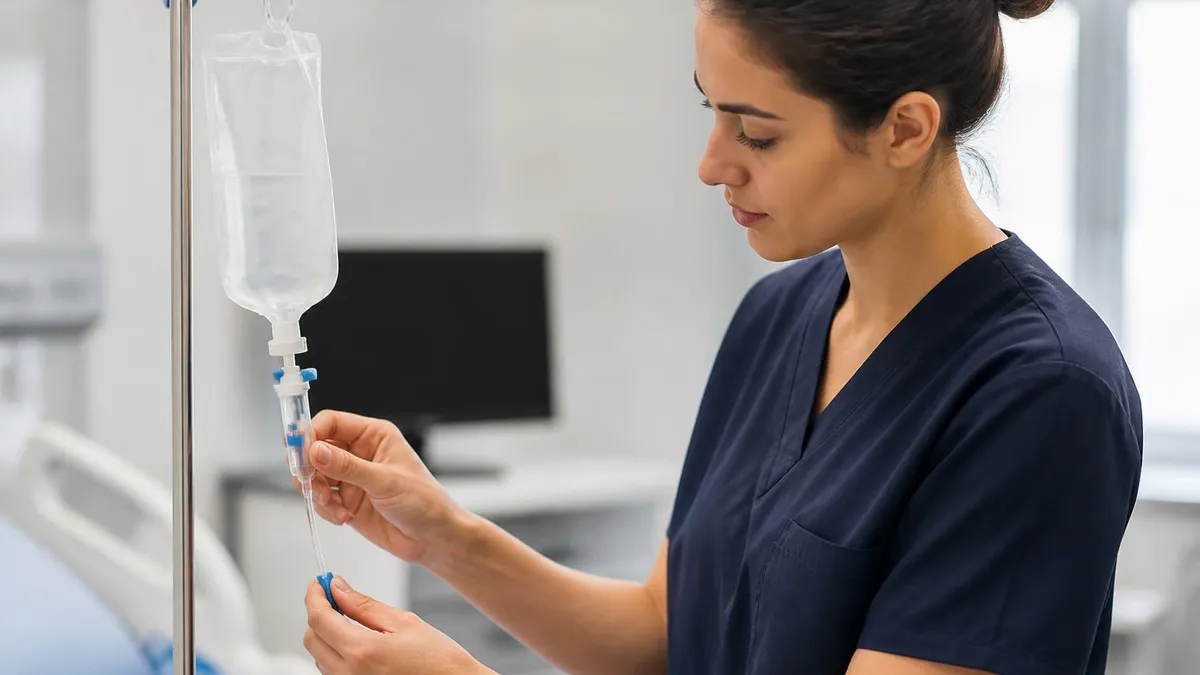
ADN to BSN Online: Bridge Programs and Costs Complete Guide

Accelerated BSN Programs by Location: Complete US Guide With Canada Comparison for 2026

Accredited BSN Programs: Complete Guide to CCNE and ACEN Nursing Degrees in 2026

BSN RN: What It Is, Salary, and Why It Matters in 2026

Inexpensive Online RN to BSN Programs: Affordable Paths to Your Bachelor's Degree in 2026
About the Author

Registered Nurse & Healthcare Educator
Johns Hopkins University School of NursingDr. Sarah Mitchell is a board-certified registered nurse with over 15 years of clinical and academic experience. She completed her PhD in Nursing Science at Johns Hopkins University and has taught NCLEX preparation and clinical skills courses for nursing students across the United States. Her research focuses on evidence-based exam preparation strategies for healthcare certification candidates.