
Online BSN Programs for Non-Nurses Texas: Complete Training Guide & Requirements
Online BSN programs for non-nurses Texas: requirements, top schools, costs & timelines. Your complete guide to entering nursing with a non-nursing degree. 🎓
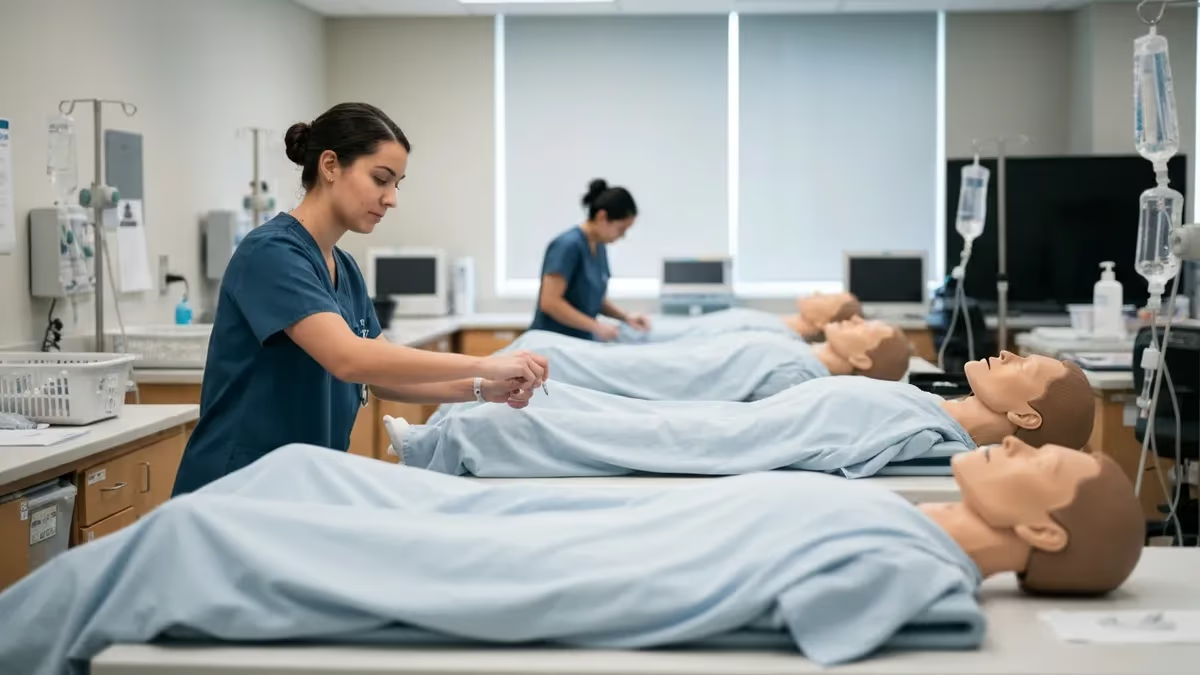
If you are exploring online BSN programs for non-nurses in Texas, you are entering one of the most strategically smart career pivots available in healthcare today. Texas is the second-largest state by population and consistently ranks among the top states for nursing demand, with the Texas Center for Nursing Workforce Studies projecting a shortage of more than 57,000 nurses by 2032.
Online and hybrid programs designed specifically for non-nurses — people who hold a bachelor's or associate degree in a field other than nursing — make it possible to enter the profession efficiently without starting over academically. These accelerated and direct-entry pathways compress the traditional four-year BSN into 12 to 24 months of intensive, focused study.
Non-nurse entry BSN programs, sometimes called second-degree BSN or direct-entry BSN programs, are designed for career changers who already possess the academic maturity and general education requirements that traditional freshmen spend their first two years completing. Because you have already studied college-level biology, chemistry, psychology, statistics, and English composition, schools can fast-track you directly into nursing core coursework and clinical rotations. This structural advantage is enormous: you move from prerequisite completion to NCLEX eligibility in a fraction of the time it would take a first-time college student following a conventional BSN plan.
Texas hosts programs at major research universities, regional state schools, and private nursing colleges, each with slightly different admission criteria, clinical placement structures, and tuition models. Understanding the differences between fully online programs with local precepted clinicals, hybrid programs requiring periodic campus visits, and on-campus accelerated tracks will help you choose the format that fits your geography, schedule, and learning style. Many students in rural or suburban Texas lean toward programs with strong online didactic delivery paired with flexible preceptorship agreements at nearby hospitals and clinics.
Prerequisite science courses are the single biggest barrier most non-nurses face before applying. Programs in Texas typically require anatomy and physiology I and II, microbiology, chemistry, statistics, lifespan developmental psychology, and nutrition — all completed within the past five to ten years with a grade of C or better, though competitive applicants typically earn B or higher.
If your previous degree included these courses, you may be able to apply within months. If not, community colleges across Texas — including Austin Community College, Houston Community College, and Dallas College — offer these prerequisites affordably, often online, allowing you to build your qualifications while continuing to work.
You can find comprehensive comparisons of program formats and bridge options in resources covering bsn programs for non nurses, which detail how different credential pathways stack up for working adults navigating career transitions. Reading these comparisons before applying helps you avoid common pitfalls like choosing a program with clinical placement support that does not extend to your county or selecting a cohort start date that conflicts with prerequisite completion timelines.
Financial investment varies widely across Texas institutions. Public universities such as the University of Texas at Arlington, Texas Woman's University, and Texas Tech University Health Sciences Center offer competitive tuition rates ranging from approximately $400 to $700 per credit hour for in-state students. Private programs tend to cost more but sometimes offer stronger clinical network support or faster cohort start dates. Total program costs for a non-nurse BSN in Texas generally range from $25,000 to $70,000 depending on school type, residency status, and whether you need to complete prerequisites prior to admission.
The return on this investment is compelling. Texas registered nurses with a BSN degree earn a median annual salary of approximately $78,000, with experienced nurses in specialty areas such as critical care, perioperative nursing, and informatics regularly exceeding $95,000. Magnet-designated hospitals in Houston, Dallas, San Antonio, and Austin increasingly require or strongly prefer BSN-prepared nurses for hiring and promotion, making the degree a career-defining credential rather than simply a credential of entry. Understanding the full landscape of requirements, formats, costs, and outcomes is the essential first step before you submit a single application.
BSN for Non-Nurses in Texas by the Numbers

Types of BSN Programs Available for Non-Nurses
Designed for applicants who hold any non-nursing bachelor's degree. Compresses four-year BSN content into 12–18 months through intensive year-round scheduling. Widely available at Texas universities including UT Arlington and Texas Woman's University.
Some programs admit students with associate degrees or significant college credits in other fields. Typically runs 18–24 months and includes a prerequisite bridge semester before nursing core courses begin. Ideal for those re-entering education mid-career.
Didactic coursework delivered entirely online while clinical hours are completed at approved partner sites near the student's home. Texas programs increasingly use preceptorship models, letting students work with local healthcare systems for hands-on training.
Specifically for Licensed Vocational Nurses who want to advance to the BSN level without completing an ADN first. Texas has several LVN-to-BSN bridges at regional universities that award partial credit for prior nursing licensure and work experience.
Choosing the right BSN program as a non-nurse requires evaluating five core factors: accreditation status, clinical placement support, schedule flexibility, total cost, and NCLEX pass rates. Accreditation is non-negotiable.
Your program must be accredited by either the Commission on Collegiate Nursing Education (CCNE) or the Accreditation Commission for Education in Nursing (ACEN), and it must hold approval from the Texas Board of Nursing (TBON). Graduating from an unaccredited program means you cannot sit for the NCLEX-RN licensure exam in Texas, which ends your nursing career before it begins. Always verify accreditation status directly on the CCNE and ACEN websites before applying, since status can change.
Clinical placement is the area where online programs most frequently struggle, and it is the most important operational question you should ask any program. In Texas, nursing students must complete a minimum of 500 clinical hours before graduation, though many BSN programs exceed this by 20 to 40 percent. If a program offers online didactics, ask specifically: does the school coordinate clinical placements for you, or are you responsible for finding your own preceptor and site?
Programs with established hospital partnerships — particularly those with agreements at HCA Healthcare, Baylor Scott and White, Memorial Hermann, or the Texas Medical Center network — provide meaningfully better placement security than programs that leave students to arrange clinicals independently.
Schedule flexibility matters enormously for career changers who may be managing existing employment, family obligations, or financial constraints. Some accelerated programs require full-time enrollment with no outside employment, which is a realistic constraint to plan around financially. Others structure coursework in evening and weekend cohorts designed for working adults. Hybrid models that allow you to front-load online coursework and complete clinical hours on a preceptored schedule are often the most compatible with adult life, though they may extend the overall program timeline by three to six months compared to full-time immersive programs.
NCLEX pass rates are a direct measure of program quality and should be reviewed at the program level, not the school level. A university may have a strong reputation while its nursing school's NCLEX first-attempt pass rate falls below the Texas state average of approximately 87 percent. The Texas Board of Nursing publishes annual NCLEX pass rates by program, and this data is publicly accessible. Seek programs that consistently exceed 88 percent first-attempt pass rates over a three-to-five-year period — that consistency signals a curriculum, faculty, and support structure that genuinely prepares graduates for licensure.
Cost modeling should account for more than tuition per credit hour. Add application fees ($50–$150), background check and drug screening fees ($75–$150), liability insurance ($30–$60 per year), NCLEX registration ($200), clinical supply costs including a stethoscope, blood pressure cuff, and scrubs ($300–$600), ATI or HESI testing fees embedded in the curriculum ($200–$400), and living expenses if you cannot work during the program. The total out-of-pocket figure for a Texas ABSN program at a public university may reach $35,000 to $45,000 once these supplemental costs are factored in, while private programs can push $60,000 to $75,000 all-in.
Geographic considerations shape your options more than many applicants realize. The Houston metropolitan area, the Dallas-Fort Worth Metroplex, and the San Antonio healthcare corridor offer the densest concentration of clinical sites, meaning programs based in or partnered with these regions can more readily guarantee placement. Students in West Texas, the Panhandle, or along the Rio Grande Valley should specifically seek programs with rural health preceptorship networks or those that have established agreements with regional medical centers in Lubbock, Amarillo, El Paso, or the Valley Baptist Health System.
Finally, consider cohort size and student support services. Small cohorts of 20 to 30 students tend to produce stronger peer support networks, better faculty accessibility, and more individualized academic advising. Programs with dedicated success coaches, NCLEX preparation embedded throughout the curriculum rather than only in the final semester, and tutoring services for pharmacology and pathophysiology specifically — two courses where non-nurses most frequently struggle — provide a meaningfully better probability of graduation and licensure success on the first attempt.
BSN Curriculum, Clinical Hours & NCLEX Licensing Requirements
Non-nurse BSN students move through an intensive nursing core that typically covers health assessment, pathophysiology, pharmacology, fundamentals of nursing practice, medical-surgical nursing, pediatrics, obstetrics and women's health, psychiatric and mental health nursing, community and public health nursing, and nursing leadership and management. These courses are sequenced so that foundational knowledge builds toward complex clinical reasoning. Pharmacology and pathophysiology receive particular emphasis because they underpin safe clinical decision-making across every specialty area nurses encounter in practice.
Most programs also embed evidence-based practice, informatics, quality improvement, and interprofessional collaboration throughout the curriculum rather than confining these topics to a single capstone course. This integrated approach mirrors how hospitals expect BSN-prepared nurses to function from day one of employment. Students in Texas-based programs often study healthcare delivery models specific to the state's Medicaid system, rural health disparities, and the unique demographics of Texas patient populations, including a significant Spanish-speaking community that makes bilingual communication skills a professional asset.

Pros and Cons of BSN Programs for Non-Nurses
- +Faster path to RN licensure — 12 to 24 months versus four years for traditional students
- +Prior college coursework satisfies most or all general education requirements
- +Higher starting salaries at Magnet hospitals that prefer or require BSN preparation
- +Strong career change motivation often translates to above-average academic performance
- +BSN opens doors to specialty certifications, graduate school, and nurse practitioner programs faster
- +Online hybrid formats allow geographic flexibility for Texas students in rural or suburban areas
- −Intensive pace leaves little time for outside employment, requiring significant financial planning
- −Prerequisite science courses can add 6 to 18 months before program admission if your degree lacked them
- −Tuition costs at private accelerated programs can exceed $60,000 to $70,000 total
- −Clinical placement competition is fierce, especially in the Dallas-Fort Worth and Houston metro areas
- −High academic rigor and emotional demands of nursing coursework cause attrition in some cohorts
- −Transitioning to 12-hour nursing shifts is a significant lifestyle adjustment for career changers
BSN Application Checklist for Non-Nurse Candidates
- ✓Verify all prerequisite courses are complete with a grade of B or better within the past 7–10 years
- ✓Request official transcripts from every college or university you have attended
- ✓Complete CPR/BLS certification through the American Heart Association (required before clinicals)
- ✓Schedule and complete a criminal background check through an approved Texas vendor
- ✓Write a 500–750 word personal statement explaining your motivation for the career change into nursing
- ✓Secure two to three letters of recommendation from professors, healthcare supervisors, or employers
- ✓Verify your target program holds active CCNE or ACEN accreditation and Texas Board of Nursing approval
- ✓Research financial aid options including THECB nursing scholarships and federal Direct Unsubsidized Loans
- ✓Confirm the program's clinical placement support model and verify placements are available near your home
- ✓Submit FAFSA by the earliest program deadline — typically six to nine months before cohort start
Texas Nursing Shortage = Your Opportunity
Texas is projected to face a shortage of more than 57,000 nurses by 2032, meaning BSN graduates entering the workforce now will encounter robust hiring demand, signing bonuses at many health systems, and strong leverage for negotiating starting salaries. Completing your BSN through an accredited Texas program positions you at the front of this hiring wave, particularly in high-growth markets like Austin, the Texas Medical Center in Houston, and the North Texas hospital corridor.
The financial picture for non-nurse BSN candidates in Texas is complex enough to warrant careful planning before you submit applications. Tuition at public Texas universities for accelerated second-degree BSN programs typically runs between $400 and $700 per credit hour for Texas residents. A 60-credit-hour accelerated program at a public institution therefore costs roughly $24,000 to $42,000 in tuition alone.
Private programs at schools like Baylor University, Texas Christian University, or Houston Baptist University may charge $900 to $1,200 per credit hour, pushing total tuition to $54,000 to $72,000 for the same number of credits. Understanding these numbers early prevents the painful discovery of financial incompatibility mid-application cycle.
Federal financial aid is available to students in accredited BSN programs who meet enrollment status requirements. Filing the FAFSA early — ideally six to nine months before your intended cohort start date — gives you access to Federal Direct Unsubsidized Loans at competitive fixed interest rates. Graduate-level loan limits of $20,500 per year apply to post-baccalaureate certificate and second-degree students at some institutions, though this varies by how the school classifies your program. Some accelerated programs are classified as undergraduate, affecting loan eligibility, so confirm classification with each school's financial aid office before assuming a specific aid amount.
Texas-specific funding sources are particularly valuable. The Texas Higher Education Coordinating Board (THECB) administers several nursing scholarship and loan repayment programs, including the Nursing Shortage Reduction Program and the Professional Nursing Shortage Reduction Scholarship. These programs award up to $3,000 per semester in some cases and are targeted specifically at students enrolled in TBON-approved nursing programs in Texas. Eligibility requirements vary, but career-change applicants who demonstrate financial need and commit to practicing in Texas after graduation are frequently competitive candidates.
Hospital-sponsored tuition assistance is an underutilized funding source for non-nurse candidates willing to make employment commitments. Several major Texas health systems — including HCA Houston Healthcare, Baylor Scott and White Health, and the University Health system in San Antonio — offer tuition reimbursement or forgivable loan programs for students who commit to employment upon graduation.
These agreements typically require one to two years of post-graduation employment at the sponsoring institution in exchange for $5,000 to $20,000 in educational assistance. For career changers who plan to work in a specific region of Texas, approaching local hospital systems before beginning your program can significantly reduce net tuition costs.
Living expense planning deserves equal attention, particularly for candidates in full-time accelerated programs that prohibit or strongly discourage outside employment. A single adult living in Austin, Houston, or Dallas-Fort Worth needs approximately $2,500 to $3,500 per month for rent, food, transportation, and basic expenses.
Over a 15-month program, that represents $37,500 to $52,500 in living costs on top of tuition. Building a six-month emergency reserve before beginning your program, negotiating a leave of absence from your current employer rather than resigning, or choosing a part-time evening-weekend program that allows continued employment are all strategies experienced career changers use to manage this financial gap.
Return on investment calculations generally favor the BSN investment strongly. A Texas RN with a BSN earns a median of approximately $78,000 annually in their first few years of practice. Specialty certifications in critical care (CCRN), emergency nursing (CEN), or perioperative nursing (CNOR) push salaries above $90,000 within three to five years.
The break-even point on a $50,000 total program investment — comparing nursing salary to the salary foregone during the program and the salary trajectory of the prior career — typically occurs within two to three years of licensure for candidates who were earning less than $70,000 in their previous field. For candidates leaving lower-paying industries, the financial case for the BSN is exceptionally clear.
Loan repayment programs extend the financial advantage further. Nurses working in federally designated Health Professional Shortage Areas (HPSAs) in Texas — many rural counties and underserved urban neighborhoods qualify — can access the NHSC Loan Repayment Program, which awards up to $50,000 in loan repayment in exchange for two years of service.
Texas also participates in the federal Public Service Loan Forgiveness program for nurses employed at qualifying nonprofit hospitals or government health agencies, potentially eliminating remaining federal loan balances after ten years of qualifying payments. Combining these programs with hospital tuition assistance can result in a BSN that costs the graduate very little in net out-of-pocket terms over a ten-year career horizon.
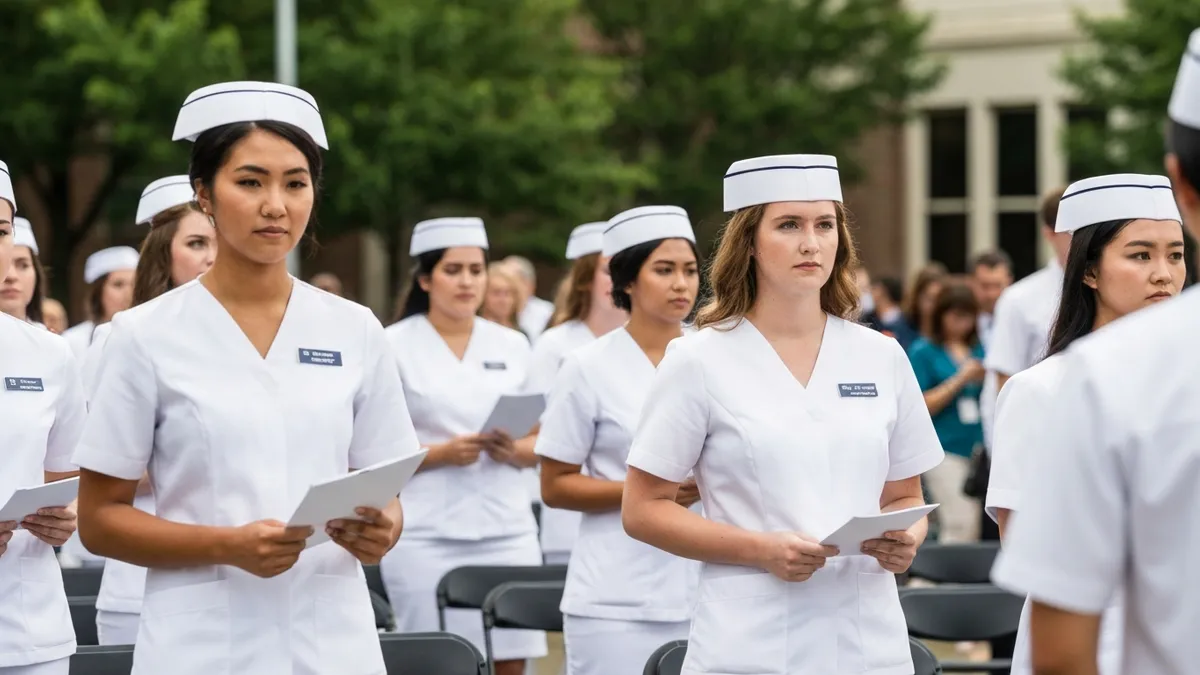
Most Texas BSN programs for non-nurses require that science prerequisites — anatomy and physiology, microbiology, and chemistry — be completed within the past five to ten years. Some programs enforce a strict five-year expiration, meaning courses completed before that window are invalid regardless of your grade. If your prior degree included these sciences more than five years ago, plan to retake them at a Texas community college before applying. Confirm each program's specific expiration policy directly with admissions before investing time in the application.
Career outcomes for non-nurse BSN graduates in Texas are exceptionally strong, particularly for candidates who are strategic about their first employment choice. The first RN position after licensure is widely regarded as the most formative professional decision a new nurse makes, because it shapes clinical skills, specialty exposure, and professional network in ways that affect career trajectory for years.
New BSN graduates who accept positions in medical-surgical units at large acute care hospitals gain exposure to the widest variety of patient populations, diagnoses, and care coordination challenges, building a generalist foundation that makes them competitive for specialty transfer within two to three years. This pathway is consistently recommended by nurse residency directors and experienced nurse educators across Texas.
Nurse residency programs are a critical transition resource that non-nurse BSN graduates should prioritize in their job search. Major Texas health systems including Memorial Hermann, Texas Children's Hospital, Methodist Hospital System, and UT Southwestern Medical Center operate structured residency programs lasting 12 to 18 months that pair new graduates with experienced nurse mentors, provide structured clinical competency development, and include didactic education tailored to specialty practice areas. Residency programs are highly competitive — application cycles open six to nine months before graduation — so career-changers should research and apply to residency programs simultaneously with their final semester of coursework.
Specialty nursing is where BSN-prepared Texas nurses most visibly outperform non-BSN peers in both salary and career advancement. The American Association of Critical-Care Nurses (AACN) requires a minimum of 1,750 hours of critical care experience to sit for the CCRN certification examination, typically attainable within 18 to 24 months of employment in an ICU.
Once certified, critical care nurses in Texas earn median salaries between $90,000 and $105,000 annually, with experienced charge nurses and clinical educators at the upper end of that range. Perioperative nursing, emergency nursing, and labor and delivery are similarly high-demand, well-compensated specialty areas with clearly defined certification pathways accessible to BSN graduates.
Graduate education opportunities open to BSN-prepared nurses in Texas are extensive. The University of Texas system, Texas Tech University Health Sciences Center, and Texas A&M University all offer MSN programs in education, administration, informatics, and nurse practitioner tracks that accept BSN applicants.
Nurse practitioners in Texas with a Family Nurse Practitioner (FNP) or Psychiatric Mental Health Nurse Practitioner (PMHNP) credential earn median salaries ranging from $115,000 to $135,000 annually. Texas granted nurse practitioners full practice authority in 2023, removing the longstanding requirement for a collaborative agreement with a physician and dramatically expanding NP career independence and business opportunities in the state.
Nurse educators and clinical staff development specialists are also in significant demand across Texas hospital systems. BSN-prepared nurses with two to three years of clinical experience who pursue an MSN in Nursing Education can transition into hospital education departments, academic nursing programs, and simulation center faculty roles.
These positions typically offer more predictable schedules than bedside nursing, competitive salaries in the $75,000 to $95,000 range, and the professional satisfaction of training the next generation of nurses. Non-nurses who became nurses through career-change programs often find this pathway particularly compelling, because their experience of being a beginner in nursing gives them authentic empathy for nursing students they later teach.
Healthcare technology and informatics represent an emerging career direction that BSN-prepared nurses with non-nursing prior careers are uniquely positioned to enter. A former accountant, software developer, or data analyst who earns a BSN brings a powerful combination of clinical knowledge and technical or analytical skills that health technology companies, electronic health record vendors, and hospital informatics departments actively recruit.
Nursing informatics specialists in Texas earn between $85,000 and $110,000 annually, and the role is projected to grow significantly as healthcare systems continue implementing and optimizing digital health infrastructure across the state. This is a career direction worth exploring for non-nurses whose prior career was in technology or data-intensive fields.
Ultimately, the non-nurse BSN pathway in Texas is one of the most direct routes to a career that combines financial stability, intellectual challenge, job security, and genuine daily meaning. Nurses consistently report high levels of professional purpose and patient connection despite the demands of the work.
For career changers who feel called to healthcare but want the credential rigor and career ceiling that only a bachelor's degree provides, the BSN is the right foundation. Researching detailed program comparisons for bsn programs for non nurses helps you identify the format and institution most aligned with your specific goals, timeline, and financial situation before you commit to a program.
Succeeding in a non-nurse BSN program requires a different kind of preparation than succeeding in most other graduate or professional programs, because nursing education integrates cognitive knowledge with psychomotor skill and emotional intelligence simultaneously. Unlike law school or an MBA, where classroom performance maps fairly directly to professional performance, nursing school demands that you master content deeply enough to apply it under pressure in real patient care situations where errors have direct human consequences. Understanding this distinction before you begin shapes how you study, practice, and prepare throughout the program.
Building strong study habits before your program starts pays compounding dividends during the intensive months ahead. Non-nurse BSN programs move at a pace that surprises many academically strong career changers — pharmacology alone covers hundreds of drug classes in a matter of weeks, and pathophysiology requires understanding disease processes at a cellular level while simultaneously learning how those processes manifest in real patients. Creating a structured daily study schedule, forming a consistent study group with cohort peers, and using active recall techniques like practice testing rather than passive re-reading are evidence-based strategies that directly predict NCLEX passage rates.
Practice exams are among the most effective tools available to non-nurse BSN students preparing for both coursework assessments and the NCLEX-RN. Nursing school examinations are constructed differently from most other academic tests — they frequently present clinical scenarios where more than one answer appears correct, and success requires selecting the most correct answer based on nursing priorities, safety hierarchies, and the nursing process.
Practicing with NCLEX-style questions from the first week of nursing school — not just in the final month before the exam — trains your clinical reasoning instincts progressively rather than trying to build them in a compressed last-minute review sprint.
Clinical rotation success depends on preparation, professional attitude, and proactive engagement with your preceptor. Arrive to each rotation having reviewed the pathophysiology and standard care protocols for the patient population you expect to encounter. Ask your preceptor specific questions rooted in what you observed rather than generic questions — this signals clinical engagement and accelerates learning. Complete post-clinical reflection exercises that many programs require but students often rush through: the process of articulating what you observed, what you would do differently, and what you need to study further cements clinical reasoning skills that abstract coursework cannot fully build.
Self-care and mental health deserve explicit planning alongside academic preparation. Non-nurse BSN programs have above-average attrition rates compared to traditional BSN programs, and the most common reason students leave is not academic failure — it is psychological and physical burnout. The combination of intensive coursework, clinical hours, simulation labs, and the emotional weight of caring for sick and suffering patients creates a stress load that requires intentional management.
Programs that build in peer support structures, faculty check-ins, and counseling access reduce attrition significantly. Ask prospective programs directly about their student wellness resources and attrition rates, and take both data points seriously in your selection decision.
Time management between semesters matters as much as within them. The break between cohort semesters — often only two to four weeks in an accelerated program — is best used for light review of upcoming topics, rest, and administrative tasks like clinical rotation paperwork rather than complete disconnection from nursing content. Students who spend semester breaks doing timed NCLEX practice questions at a moderate pace of one to two hours daily maintain knowledge retention and arrive at the next semester with momentum rather than needing a significant re-ramp period to regain their cognitive footing in nursing content.
Building your professional network during the program, not after it, positions you advantageously for the competitive nurse residency application process. Introduce yourself to the charge nurses, unit educators, and nurse managers on every clinical rotation floor. Express genuine interest in the specialty and ask about the unit's nurse residency program timeline.
Follow up with a brief thank-you note to your preceptors at the end of each rotation. These interactions, when authentic and professional, frequently result in direct job referrals and residency application advocacy from nurses who observed your clinical performance firsthand — a distinct competitive advantage over applicants who are unknown quantities applying cold from the job board.
BSN Questions and Answers
ADN to BSN Online: Bridge Programs and Costs Complete Guide

Accelerated BSN Programs by Location: Complete US Guide With Canada Comparison for 2026

Accredited BSN Programs: Complete Guide to CCNE and ACEN Nursing Degrees in 2026

BSN RN: What It Is, Salary, and Why It Matters in 2026

Inexpensive Online RN to BSN Programs: Affordable Paths to Your Bachelor's Degree in 2026
About the Author

Registered Nurse & Healthcare Educator
Johns Hopkins University School of NursingDr. Sarah Mitchell is a board-certified registered nurse with over 15 years of clinical and academic experience. She completed her PhD in Nursing Science at Johns Hopkins University and has taught NCLEX preparation and clinical skills courses for nursing students across the United States. Her research focuses on evidence-based exam preparation strategies for healthcare certification candidates.