
BSN Programs Chicago IL: Complete Guide to Schools, Requirements, and Costs
BSN programs Chicago IL: top accredited schools, admission requirements, tuition costs, and career outcomes. 🎓 Your complete 2026 September guide.

If you are researching BSN programs Chicago IL, you have landed in one of the strongest nursing education markets in the United States. Chicago is home to world-class academic medical centers, Level I trauma hospitals, and a dense network of community health clinics that together create an unmatched clinical training environment. Whether you are a high school graduate planning your first degree or a working adult looking to advance your healthcare career, Chicago's universities and colleges offer full-time, part-time, accelerated, and online-hybrid BSN pathways designed to fit nearly every schedule and budget.
The Bachelor of Science in Nursing is now the preferred entry-level degree among Chicago-area hospital systems. Institutions such as Northwestern Memorial, Rush University Medical Center, and the University of Illinois Hospital have all announced strong preferences — and in some cases formal requirements — for BSN-prepared nurses in hiring decisions. This preference aligns with the landmark Institute of Medicine goal calling for 80 percent of the nursing workforce to hold a BSN by 2025, a target that continues to drive enrollment and curriculum investment at Illinois nursing schools.
Tuition for BSN programs in Chicago varies considerably. Public universities such as the University of Illinois at Chicago charge in-state students roughly $12,000 to $16,000 per year in tuition and fees, while private institutions like Loyola University Chicago or DePaul University can run $38,000 to $48,000 annually before scholarships. Despite the higher sticker prices at private schools, many students find that institutional grants, the Illinois Monetary Award Program (MAP), and employer tuition assistance close much of the gap, making a private BSN financially competitive when compared over a full four-year enrollment.
Chicago nursing graduates also benefit from a remarkably strong local job market. The Illinois Department of Employment Security projects that registered nurse employment in the Chicago-Naperville-Elgin metropolitan area will grow faster than the national average through 2032, driven by an aging population, expanded community health infrastructure under the Affordable Care Act, and persistent nurse shortages in specialty areas such as critical care, oncology, and psychiatric nursing. New BSN graduates in the Chicago metro typically receive starting offers between $62,000 and $74,000 per year, with experienced BSN-prepared nurses in high-demand specialties regularly exceeding $90,000.
Accreditation is a critical factor when evaluating any BSN program. In Illinois, reputable programs hold either Commission on Collegiate Nursing Education (CCNE) or Accreditation Commission for Education in Nursing (ACEN) approval, and state approval from the Illinois Department of Financial and Professional Regulation (IDFPR). Without proper accreditation, graduates may face barriers when applying to graduate programs or seeking licensure reciprocity in other states. All programs highlighted throughout this guide carry full accreditation status as of the 2025–2026 academic year.
Clinical placement is where Chicago truly distinguishes itself from smaller nursing education markets. Students enrolled in Chicago-area BSN programs rotate through facilities ranging from large academic medical centers to federally qualified health centers serving underserved communities on the South and West sides.
This breadth of clinical exposure — urban trauma, pediatrics, mental health, community health, obstetrics, and geriatrics all within a single metropolitan region — produces graduates who are clinically versatile and highly competitive in both local and national job searches. You can also explore flexible pathways through bsn programs chicago il designed for RNs who already hold an associate degree.
This guide walks you through every dimension of choosing and succeeding in a Chicago BSN program: school profiles, admission requirements, cost breakdowns, NCLEX preparation strategies, and career outcomes. By the end, you will have a clear picture of which programs best match your background, goals, and budget — and exactly what steps to take to move your application forward.
BSN Programs Chicago IL by the Numbers
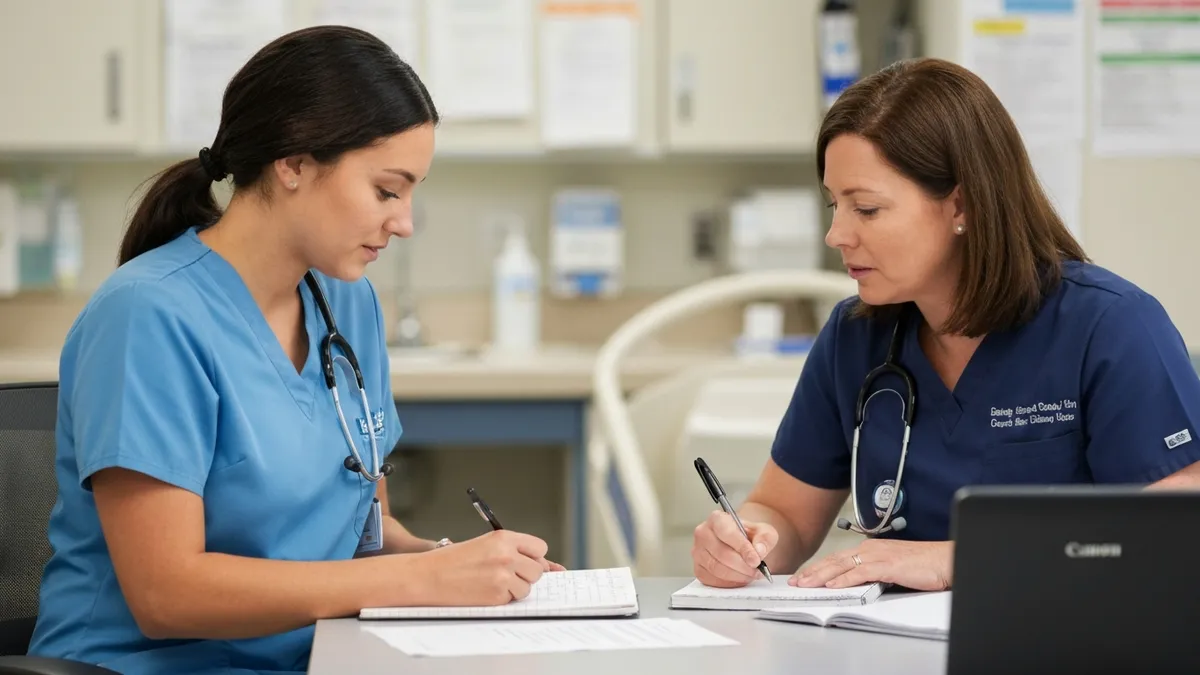
Top BSN Programs in Chicago, Illinois
Illinois's flagship public nursing school, UIC College of Nursing offers a highly regarded BSN with one of the lowest in-state tuition rates in Chicago. Strong research focus, diverse patient population in clinical rotations, and a CCNE-accredited curriculum with specialty tracks in community and global health.
A Jesuit institution with a mission-driven nursing program emphasizing ethics, social justice, and whole-person care. Loyola's BSN pairs rigorous coursework with clinical placements at Loyola University Medical Center and community partners across Cook County. CCNE-accredited with strong NCLEX pass rates.
DePaul's School of Nursing offers both a traditional BSN and an accelerated second-degree BSN for students who already hold a bachelor's in another field. Located in the heart of Chicago, DePaul provides urban clinical experiences across multiple hospital systems and community health settings. CCNE-accredited.
Rush College of Nursing is consistently ranked among the top nursing schools in the Midwest. The BSN curriculum integrates simulation, evidence-based practice, and clinical rotations at Rush University Medical Center. Graduates benefit from strong hiring pipelines directly into Rush's network of specialty units.
With a campus on Chicago's North Michigan Avenue, Chamberlain offers flexible BSN scheduling including part-time and hybrid options ideal for working adults. ACEN-accredited with multiple intake cohorts per year and a dedicated NCLEX prep curriculum integrated throughout the final semester.
Understanding admission requirements for Chicago BSN programs is the essential first step in building a competitive application. While specific prerequisites vary by institution, the majority of CCNE- and ACEN-accredited programs in the Chicago area share a common framework.
Most traditional four-year BSN programs require a high school diploma or GED, a minimum cumulative GPA between 2.75 and 3.2 on a 4.0 scale, and completion of prerequisite science courses including biology, chemistry, and anatomy. Programs with higher NCLEX pass rates and clinical prestige — such as Rush University and UIC — tend to set the bar closer to a 3.4 GPA for competitive applicants.
Science prerequisite courses deserve special attention. Most Chicago BSN programs require applicants to complete courses in biological sciences, chemistry, microbiology, and human anatomy and physiology before matriculating into the nursing major.
Critically, many programs require that these science prerequisites be completed within the last five to ten years, and they must be completed with a grade of C or better — though competitive applicants typically aim for B or higher. If your prerequisite coursework is outdated, Chicago's community college system offers affordable options for refreshing these courses, often at costs of $300 to $800 per course at City Colleges of Chicago.
Standardized testing requirements have shifted significantly since 2020. While the SAT and ACT remain relevant for traditional four-year applicants entering directly from high school, many programs now place greater weight on science GPA, prerequisite course performance, and healthcare work experience. Several accelerated BSN programs in Chicago — targeting career-changers who already hold a bachelor's degree — have eliminated standardized test requirements entirely, instead prioritizing prior degree GPA (typically 3.0 or above) and demonstrated healthcare exposure through volunteer work, patient care technician roles, or emergency medical services.
Healthcare experience is increasingly a differentiating factor in Chicago BSN admissions. Programs at Loyola, Rush, and DePaul note in their admissions materials that candidates with 100 to 300 or more hours of direct patient care experience — whether through volunteering, CNA work, or medical scribe positions — are viewed more favorably than equally qualified applicants without such experience. If you are planning to apply within the next 12 months, securing a part-time CNA or patient care technician role at a local hospital or nursing home will meaningfully strengthen your application.
Letters of recommendation are required by virtually all Chicago BSN programs, with most requesting two to three letters from academic instructors, healthcare professionals, or supervisors who can speak to your academic ability and commitment to nursing. A common mistake applicants make is selecting recommenders solely based on familiarity rather than relevance. A letter from a science professor who can speak to your analytical skills in a laboratory setting, or from a charge nurse who supervised your volunteer shifts, will carry far more weight than a letter from a family friend or employer in an unrelated field.
Personal statements and essays play a substantial role in differentiating applications at selective Chicago programs. Admissions committees at CCNE-accredited schools are specifically looking for evidence of genuine motivation for nursing — not a generic desire to help people, but specific experiences that shaped your understanding of what nursing entails. Strong personal statements reference particular clinical encounters, describe what a candidate learned from exposure to patient care, and articulate a clear vision for how the BSN will enable specific career goals. Aiming for 500 to 650 words with a clear narrative arc is standard practice across Chicago nursing programs.
International applicants and non-native English speakers face additional requirements at most Chicago BSN programs, including TOEFL or IELTS scores meeting minimum thresholds (typically TOEFL iBT 80 or IELTS 6.5), certified transcript translations, and in some cases credential evaluation by services such as WES or ECE. UIC and Loyola both have dedicated international student admission offices that can guide applicants through these additional steps. Students in this situation are encouraged to begin the application process at least 12 to 18 months before their intended enrollment date to allow adequate time for document processing and visa applications.
BSN Program Formats and Tracks in Chicago
The traditional four-year BSN is the most common pathway for students entering nursing directly from high school or early in their college careers. Chicago programs following this format typically devote the first two years to prerequisite sciences, liberal arts core requirements, and foundational nursing theory, with intensive clinical rotations beginning in the third year. Students log 800 to 1,200 clinical hours across medical-surgical, pediatric, obstetric, psychiatric, and community health settings before graduation.
Tuition for traditional BSN tracks in Chicago ranges from approximately $12,000 per year at UIC to $46,000 at private institutions. Full-time enrollment is the standard expectation, though some programs offer a part-time track for students managing employment or family obligations, which extends the completion timeline to five or six years. Traditional BSN graduates sit for the NCLEX-RN immediately after graduation and typically enter the workforce within three to four months of program completion.
Pros and Cons of Pursuing a BSN in Chicago
- +Access to world-class clinical training sites including Northwestern Memorial, Rush, and University of Illinois Hospital
- +Strong and growing job market with RN demand projected to outpace national averages through 2032
- +Wide range of program formats — traditional, accelerated, and RN-to-BSN — for every background
- +Illinois MAP grants and institutional scholarships reduce net cost at both public and private schools
- +High NCLEX first-pass rates at top programs (88–95%) due to rigorous clinical and exam prep integration
- +Diverse clinical rotations across urban trauma, community health, pediatrics, and psychiatric settings
- −Private BSN tuition in Chicago can exceed $45,000 per year before financial aid is applied
- −Competitive admissions at top programs require strong science GPAs and documented healthcare experience
- −Clinical placement competition in the Chicago metro can limit scheduling flexibility during rotations
- −Cost of living in Chicago (housing, transportation) adds significantly to total program expenses
- −Accelerated programs prohibit meaningful outside employment, creating financial pressure for career-changers
- −Traffic and commuting logistics between campuses and clinical sites can be time-consuming and stressful
BSN Application Checklist for Chicago Programs
- ✓Verify the program holds CCNE or ACEN accreditation and current IDFPR state approval before applying.
- ✓Complete all required science prerequisites (biology, chemistry, anatomy, microbiology) with a B or higher.
- ✓Confirm prerequisite courses were completed within the program's recency window (typically five to ten years).
- ✓Accumulate at least 100 hours of direct patient care experience through volunteering, CNA work, or EMT service.
- ✓Request official transcripts from every college or university previously attended, including community colleges.
- ✓Secure two to three letters of recommendation from academic instructors or healthcare professionals.
- ✓Draft and revise your personal statement to include a specific clinical experience and clear career goals.
- ✓Submit the Illinois MAP grant application by the program priority deadline (typically February 1 for fall entry).
- ✓Research institutional scholarships at each target school and note separate scholarship application deadlines.
- ✓Schedule a campus visit or virtual information session to connect with the admissions team and current students.
Apply Early — Rolling Admissions Fill Fast
Most Chicago BSN programs use rolling admissions, which means applications are reviewed as they arrive and seats are filled on a first-qualified, first-offered basis. Applying in October or November for the following fall — rather than waiting until the priority deadline in February — can meaningfully increase your chances of admission to competitive programs like Rush and Loyola, where cohort sizes are limited to 40–80 students per entering class.
Understanding the full cost of a BSN program in Chicago requires looking beyond published tuition figures to account for fees, living expenses, equipment costs, and opportunity costs. At the University of Illinois Chicago, in-state undergraduate tuition and fees for the nursing program run approximately $15,500 per academic year, making it one of the most affordable accredited BSN options in the metro area. However, when room and board, books, uniforms, clinical supplies, and transportation are factored in, the true annual cost at UIC rises to $28,000 to $35,000 for students living off campus in Chicago's competitive rental market.
Private institutions present a different financial picture. Loyola University Chicago published undergraduate tuition of approximately $47,000 for the 2024–2025 academic year, while DePaul hovered around $42,000. Rush University, as a graduate-focused health sciences institution, charges tuition for its BSN completion program at rates closer to $32,000 per year given its smaller program footprint. At Chamberlain, per-credit-hour pricing for the BSN program works out to roughly $665 per credit, meaning a full 120-credit BSN runs approximately $79,800 before fees — though most students do not complete all 120 credits at that rate due to prior college credit transfers.
Financial aid dramatically reduces net costs for most Chicago BSN students. The Illinois Monetary Award Program (MAP) provides need-based grants of up to $6,462 per academic year for eligible Illinois residents attending approved schools, including most private nursing programs in Chicago. Federal Pell Grants can add another $7,395 annually for students with significant financial need.
Combined with institutional merit scholarships — which at Loyola and DePaul range from $5,000 to $20,000 per year for academically strong candidates — many students find their net annual cost reduced to $15,000 to $25,000 at private schools, often below the sticker-price of the full tuition.
Loan options are widely available but should be approached with careful planning. Federal Direct Subsidized Loans offer the most favorable terms for undergraduate nursing students, with interest rates fixed at 6.53 percent for 2024–2025 and no interest accruing during enrollment. Federal Direct Unsubsidized Loans are available to students regardless of financial need. For students considering graduate nursing education after the BSN, minimizing undergraduate loan debt is a strategic priority — graduate nursing programs carry their own tuition obligations, and entering an MSN or DNP program with substantial BSN debt creates long-term financial strain even at Chicago's competitive nursing salaries.
Scholarship opportunities specific to nursing are plentiful but require proactive research. The Illinois Nurses Foundation awards multiple scholarships annually to Illinois nursing students, typically ranging from $1,000 to $5,000. The American Association of Colleges of Nursing (AACN) maintains a scholarship database with opportunities open to BSN students nationally. Chicago-based hospital systems also fund local scholarships — Northwestern Medicine, for example, awards nursing scholarships to students enrolled in partner BSN programs who commit to post-graduation employment in their system. These employer scholarships often come with work commitments of one to two years but pair scholarship funding with a guaranteed job offer.
Living expenses in Chicago deserve careful budgeting. One-bedroom apartment rents in neighborhoods close to major nursing school campuses — Streeterville, Lincoln Park, Wicker Park — average $1,600 to $2,200 per month as of 2025. Students who share housing in Pilsen, Logan Square, or Rogers Park can reduce monthly rent to $900 to $1,200 per person.
Chicago's extensive public transit system (CTA buses and the L train) makes car ownership unnecessary for most nursing students, eliminating vehicle costs but adding $105 per month in transit pass expenses. Building a realistic monthly budget of $2,200 to $3,000 for living expenses on top of tuition gives most Chicago BSN students an accurate picture of total program cost.
Work-study and part-time employment opportunities are available for many BSN students, with the important caveat that nursing programs typically restrict outside employment to no more than 20 hours per week during clinical semesters. Patient care technician (PCT) and nursing assistant roles at area hospitals pay $17 to $22 per hour and provide the dual benefit of income and clinical experience.
Many hospitals actively recruit current nursing students for PCT positions and offer priority consideration for RN positions upon graduation and NCLEX licensure. This makes part-time PCT employment one of the most strategically valuable choices a Chicago BSN student can make during the second and third year of their program.
Illinois NCLEX-RN applicants must submit their nursing license application to the IDFPR and receive Authorization to Test (ATT) from Pearson VUE before scheduling their exam. The ATT expires within 90 days, and missing your testing window forfeits your registration fee ($200) and requires reapplication. Begin the IDFPR application process no later than two months before your program graduation date to ensure your ATT arrives on time and you can schedule your preferred testing date at a Chicago-area Pearson VUE center.
NCLEX-RN preparation is the bridge between completing your BSN program and entering professional nursing practice, and Chicago BSN programs invest heavily in exam readiness. Most accredited programs in the Chicago area integrate NCLEX-style question practice throughout the curriculum using platforms such as ATI, HESI, or UWorld, with formal exit exams and predictive assessments administered in the final semester.
Programs with the strongest first-pass rates — consistently above 90 percent at Rush, UIC, and Loyola — typically mandate structured NCLEX prep beginning in the third year and require students to meet minimum benchmark scores on predictive assessments before program completion is certified.
The NCLEX-RN shifted to the Next Generation NCLEX (NGN) format in April 2023, introducing new item types including case studies, extended multiple response, matrix questions, and drag-and-drop items that demand higher-order clinical reasoning rather than simple factual recall.
Chicago BSN programs updated their curricula and simulation exercises to align with NGN item types within the 2023–2024 academic cycle, but students should confirm with their specific program that NGN preparation is explicitly incorporated into coursework and standardized testing platforms. Reviewing the NCSBN's official NGN website and using updated question banks that include all six NGN item types is essential for every candidate.
Post-graduation career outcomes for Chicago BSN graduates are strong across virtually all specialty areas. The Chicago-Naperville-Elgin metropolitan area employed approximately 73,000 registered nurses as of the most recent Bureau of Labor Statistics data, with mean annual wages of $82,450 — well above the national RN mean of $77,600.
Specialty areas commanding the highest salaries in Chicago include cardiac care ($88,000–$96,000), oncology ($85,000–$93,000), emergency nursing ($83,000–$91,000), and certified registered nurse anesthetist programs (post-BSN, exceeding $180,000). Even at the entry-level, BSN graduates entering Chicago hospital systems with sign-on bonuses — a common practice in 2024–2025 given persistent nursing shortages — may receive $5,000 to $15,000 in addition to base salary.
Magnet hospital designations are particularly relevant for career-focused BSN graduates choosing where to seek employment. Chicago is home to several Magnet-designated hospitals, including Northwestern Memorial Hospital, Ann and Robert H. Lurie Children's Hospital, and Rush University Medical Center. Magnet designation signals a commitment to nursing excellence, evidence-based practice, and professional development, and Magnet hospitals are statistically associated with better nurse-to-patient ratios, lower nurse burnout rates, and stronger opportunities for career advancement. Many BSN graduates specifically target Magnet hospitals for their first RN positions as a strategic career investment.
Graduate school pathways are a natural next step for BSN graduates who aspire to advanced practice nursing roles. Chicago offers exceptional MSN and DNP programs at Rush, Loyola, UIC, and Marquette University (Milwaukee, one hour north) covering specialties including nurse practitioner, clinical nurse specialist, nurse educator, and nurse administrator tracks.
Rush University is particularly renowned for its CRNA (Certified Registered Nurse Anesthetist) program, one of the most competitive and highly compensated advanced nursing specialties. BSN graduates planning to pursue graduate education benefit from targeting Magnet hospital employers early in their career — the clinical diversity and shared governance opportunities at these institutions strengthen graduate school applications.
Community health nursing is a growing specialty in Chicago that BSN programs specifically prepare graduates to enter. The city's robust network of federally qualified health centers (FQHCs), Chicago Department of Public Health clinics, and non-profit community organizations creates strong demand for nurses skilled in population health, care coordination, and social determinants of health. Community health RN salaries in Chicago range from $62,000 to $78,000, with public sector positions offering stable benefits packages and pension eligibility. For BSN graduates motivated by health equity and community service, Chicago's community health sector provides fulfilling, impactful career options with strong long-term stability.
Nursing leadership development begins during the BSN and accelerates in the first years of practice. Chicago hospital systems actively support new graduates through structured nurse residency programs — typically 12 months of mentored clinical practice, leadership development, and evidence-based project completion. Programs at Northwestern, Rush, and Advocate Aurora Health are accredited by the American Nurses Credentialing Center (ANCC) and provide a structured transition from student to professional RN.
Participating in a nurse residency program reduces first-year turnover rates and gives new nurses the supervised experience they need to build clinical confidence in high-acuity environments. Researching which Chicago employers offer ANCC-accredited nurse residency programs should be part of every BSN student's job search strategy during their final semester of study.
Practical preparation strategies make a measurable difference in both academic performance and NCLEX outcomes for Chicago BSN students. One of the highest-yield habits you can build from day one is consistent, spaced repetition of nursing content using question-based learning rather than passive re-reading of textbooks.
Research consistently shows that students who practice 30 to 50 NCLEX-style questions per day throughout their program score significantly higher on predictive assessments and first-attempt NCLEX-RN rates than peers who study primarily through passive review. Platforms like UWorld, ATI, and Board Vitals allow you to filter by specialty area, difficulty level, and NGN item type — use this filtering capability to target your weakest content areas systematically.
Simulation lab time is a critical supplement to clinical rotations that many students underutilize. Chicago BSN programs invest heavily in high-fidelity simulation mannequins and standardized patient scenarios because simulated clinical experiences build procedural confidence and critical thinking in a zero-risk environment. If your program offers open simulation lab hours outside of required sessions, take advantage of them — practicing IV insertion, foley catheter placement, medication administration workflows, and emergency response scenarios in the simulation lab before encountering them in clinical settings reduces anxiety and accelerates competency development.
Time management is arguably the most important non-clinical skill in a BSN program, and Chicago students face unique urban-life distractions that require deliberate structure. Using a weekly planner to block study time, clinical prep, assignment deadlines, and personal commitments — and treating study blocks with the same seriousness as clinical shifts — prevents the last-minute cramming that undermines retention and clinical reasoning. Students who build consistent 90-minute focused study sessions (using techniques like the Pomodoro method) into their daily routine report significantly lower stress levels and better exam performance than peers who study reactively in response to upcoming deadlines.
Peer study groups are a valuable but often poorly structured resource. The most effective study groups in BSN programs are small (three to five students), meet on a consistent schedule, and focus on active learning activities — explaining concepts to each other, working through case studies, and testing each other with practice questions — rather than reading notes aloud or reviewing material passively together.
If you are in a clinical cohort, identifying two or three peers whose academic strengths complement yours (one strong in pharmacology, another in pathophysiology, a third in leadership and management) creates a natural division of teaching responsibility that reinforces everyone's mastery.
Chicago's healthcare community offers networking opportunities that extend well beyond your program's official clinical placements. Organizations such as the Illinois Nurses Association (INA), the Chicago chapter of the American Association of Critical-Care Nurses (AACN), and student nurse organizations at each school host events, conferences, and volunteer opportunities that connect BSN students with practicing nurses, nurse managers, and advanced practice providers. Attending even one or two professional events per semester builds visibility in the local nursing community, familiarizes you with workplace culture at specific facilities, and occasionally leads directly to job offers or mentorship relationships that dramatically accelerate career development.
Mental health and self-care are not optional in a BSN program — they are clinical necessities. Nursing school is academically rigorous and emotionally demanding, and Chicago students navigating urban living costs, competitive cohort dynamics, and the weight of caring for vulnerable patients in clinical rotations must actively protect their psychological wellbeing.
Chicago BSN students have access to campus counseling services, student health centers, and a growing number of peer support programs within nursing schools specifically designed to address nursing student stress. Normalizing conversations about burnout, moral distress, and compassion fatigue — and seeking support before these issues escalate — prepares you to model the same health-promoting behaviors with future patients that you are learning to teach in community health and health promotion coursework.
Finally, understanding Illinois licensure requirements in detail before graduation prevents costly delays in entering the workforce. Illinois requires BSN graduates to apply for RN licensure through the IDFPR, submit official program completion verification, pass a criminal background check, and achieve a passing NCLEX-RN score before practicing as a registered nurse.
Illinois participates in the Enhanced Nurse Licensure Compact (eNLC) as of January 2024, meaning Illinois RN licenses are recognized by over 40 compact member states without requiring a separate license — a significant advantage for Chicago graduates who may seek travel nursing contracts or relocate for career opportunities. Planning your IDFPR application timeline carefully, with a target submission date three to four weeks before your graduation date, ensures the fastest possible path from program completion to your first RN shift.
BSN Questions and Answers
ADN to BSN Online: Bridge Programs and Costs Complete Guide

Accelerated BSN Programs by Location: Complete US Guide With Canada Comparison for 2026

Accredited BSN Programs: Complete Guide to CCNE and ACEN Nursing Degrees in 2026

BSN RN: What It Is, Salary, and Why It Matters in 2026

Accelerated BSN Programs in California: Requirements, Cost, Length, and How to Get In
About the Author

Registered Nurse & Healthcare Educator
Johns Hopkins University School of NursingDr. Sarah Mitchell is a board-certified registered nurse with over 15 years of clinical and academic experience. She completed her PhD in Nursing Science at Johns Hopkins University and has taught NCLEX preparation and clinical skills courses for nursing students across the United States. Her research focuses on evidence-based exam preparation strategies for healthcare certification candidates.