
Mastering the BSCC Certification: Your Guide to Correctional Officer 2026
Prepare for the Mastering the BSCC Certification: Your certification. Practice questions with answer explanations covering all exam domains.

The Board of State and Community Corrections (BSCC) plays a crucial role in maintaining California’s correctional standards and overseeing the recruitment and training of correctional personnel. One of the pivotal steps for individuals aiming to work in California’s correctional facilities is passing the BSCC test. This certification exam is a gateway for becoming a qualified correctional officer in state and community institutions. Practice with the free BSCC - Board of State and Community Corrections practice test on PracticeTestGeeks (11 questions with answer explanations).
Whether you're beginning a career in corrections or transitioning into the field, understanding the structure and requirements of the BSCC test is essential. In this article, we’ll break down what the test entails, how to prepare effectively, and where to find reliable resources practice platform.
Free BSCC - Board of State and Community Corrections Study Tools
Interactive BSCC - Board of State and Community Corrections resources on PracticeTestGeeks, free to start:
- Free BSCC Corrections Officer Selection Questions and Answers — 11 questions with instant scoring and answer explanations
- BSCC - Board of State and Community Corrections flashcards — review key terms and concepts card by card
- BSCC - Board of State and Community Corrections study guide — topic-by-topic overview of what the exam covers
- BSCC - Board of State and Community Corrections cheat sheet — one-page printable summary for last-minute review
- The BSCC Selection Exam has no single statewide passing score. Each hiring agency sets its own pass point for each classification, and candidates pass or fail on their total score. (Board of State and Community Corrections (BSCC), Standards and Training for Corrections (STC) Division; exam administere)
- The hiring agency, not the candidate, pays for the BSCC Selection Exam. CPS-HR charges $190 per paper administration plus $10.50 for each scheduled candidate and $3.30 for each tested candidate. Remote proctored exams cost $215 per testing window plus $48 per candidate. (Board of State and Community Corrections (BSCC), Standards and Training for Corrections (STC) Division; exam administere)
- Hiring agencies can give the BSCC Selection Exam on paper, on a computer in person, or online with a live webcam proctor. Each agency picks the format. (Board of State and Community Corrections (BSCC), Standards and Training for Corrections (STC) Division; exam administere)
- The BSCC Selection Exam is one exam used to screen entry-level Adult Corrections Officer, Juvenile Corrections Officer and Probation Officer candidates at California local corrections agencies that participate in the Standards and Training for Corrections (STC) Program. (Board of State and Community Corrections (BSCC), Standards and Training for Corrections (STC) Division; exam administere)
- For paper BSCC Selection Exams, CPS-HR emails score reports to the hiring agency within three working days of receiving the answer sheets. For remote proctored exams, the agency gets scores within 1–2 days after the testing window closes. (Board of State and Community Corrections (BSCC), Standards and Training for Corrections (STC) Division; exam administere)
Facts verified Oct 20, 2026 against Board of State and Community Corrections (BSCC), Standards and Training for Corrections (STC) Division; exam administere. Dates that have passed are removed automatically.
BSCC Exam at a Glance
Facts verified Oct 20, 2026 against Board of State and Community Corrections (BSCC), Standards and Training for Corrections (STC) Division; exam administere. Dates that have passed are removed automatically.
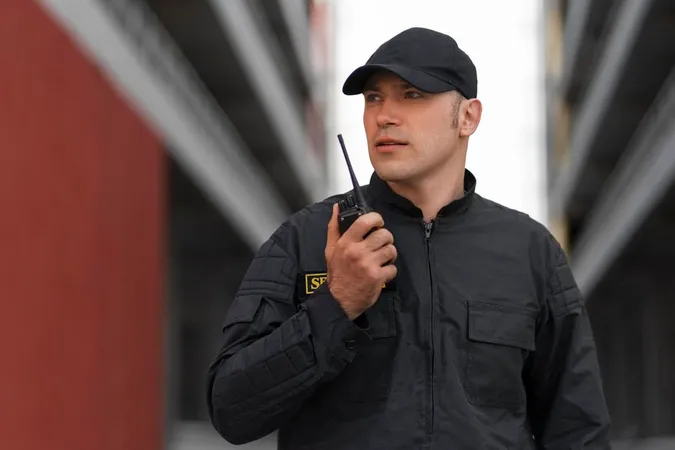
What is the BSCC Certification Test?
The BSCC test is an entry-level written examination administered to individuals seeking employment as correctional officers in California. Developed by the California Board of State and Community Corrections, the exam evaluates candidates on their readiness to serve in environments such as county jails, juvenile detention centers, and adult correctional facilities.
This test is designed to ensure that applicants possess the cognitive skills, decision-making ability, and behavioral competencies required for the job. It is a standardized test used by various correctional agencies across the state to simplify the hiring process and ensure quality candidates enter the field.
BSCC Test Structure
The BSCC certification test includes multiple-choice questions and typically lasts around 2.5 hours. The questions are designed to assess the applicant’s basic competency in areas critical to correctional duties.
Key sections of the BSCC test include:
Reading Comprehension
This section assesses a candidate’s ability to understand written information, rules, and procedures—skills vital for interpreting policies and performing accurate documentation in correctional settings.
Writing Clarity
Correctional officers are often responsible for writing reports, incident summaries, and shift logs. This portion of the test evaluates grammar, sentence structure, spelling, and clarity of expression.
Basic Mathematics
This includes arithmetic operations, percentages, ratios, and data interpretation. These skills are used in tasks such as inventory, scheduling, and monitoring facility resources.
Situational Judgment
Candidates are presented with job-related scenarios and must choose the most appropriate response. This measures decision-making, ethical reasoning, and conflict resolution—core skills for correctional work.
Observational Ability
Questions test a candidate’s attention to detail by asking them to identify changes or inconsistencies in visual materials or written content.
Why is the BSCC Test Important?
Standardized Qualification
The BSCC test offers a standardized benchmark for correctional agencies to evaluate applicants. Passing the test demonstrates your foundational readiness for the challenges of working in corrections.Required for Employment
Most correctional facilities in California require candidates to pass the BSCC certification before proceeding to interviews, physical fitness assessments, or academy training.Reflects Real Job Demands
The test covers real-world tasks that correctional officers encounter daily. From making decisions in high-pressure situations to documenting incidents, it ensures you’re equipped for the role.Career Advancement
Achieving a high score not only increases your chances of getting hired but also establishes a strong foundation for advancement into supervisory or specialized roles within the corrections system.

Eligibility Requirements
To take the BSCC certification test, you must typically meet the following requirements:
Age: Be at least 18 or 21 years old depending on the agency.
Education: Possess a high school diploma or GED.
Legal Status: Be a U.S. citizen or legal resident eligible for employment.
Background: Pass a criminal background check and meet agency-specific standards.
Application: Submit an application with the local agency or correctional institution conducting the test.
Agencies may also require candidates to pass additional assessments such as a physical ability test, oral interview, medical evaluation, or psychological screening before offering a position.
How to Prepare for the BSCC Test
Effective preparation can make a significant difference in your performance. Here are strategies to help you succeed:
Understand the Format
Familiarize yourself with the question types and the time limits for each section. This reduces anxiety and helps you pace yourself during the exam.Take Practice Tests
Use online platforms simulate the actual exam environment. These resources offer a wide range of practice tests tailored to correctional testing.
Focus on Weak Areas
Identify areas where you struggle—whether it’s math, grammar, or decision-making—and dedicate extra study time to those sections.
Use Study Guides
Comprehensive study guides and prep books cover detailed explanations of test sections and often include sample questions, which can reinforce your understanding.
Join a Prep Course
Enroll in a BSCC-specific prep course, often offered by community colleges or training academies. These courses provide in-depth insights and group study benefits.
Stay Informed
Visit the California Board of State and Community Corrections to stay up to date on test schedules, exam content, and law enforcement hiring practices.
Additional Prep Resources
In addition to the BSCC-specific tools, several related exams and study materials can reinforce your skills:
CO Test: This correctional officer test prep can improve your understanding of job-specific tasks and prepare you for similar exam questions.
California Correctional Officer Exam: If you're applying to state-level correctional agencies like CDCR, this practice test provides focused content aligned with their exam.
Common Mistakes to Avoid
Underestimating the Test
Some candidates assume the exam will be easy because it’s entry-level. However, the test is comprehensive and designed to assess critical job skills.Neglecting Time Management
Practicing without a timer can lead to poor pacing on the actual exam. Always time yourself when taking mock exams.Skipping Situational Practice
Situational judgment questions are unique and can’t be memorized. Practice analyzing scenarios critically rather than relying on instinct.Overlooking Administrative Tasks
Many candidates focus on the physical or enforcement side of corrections but forget the importance of administrative and documentation duties. These are heavily tested.
After the Test: What’s Next?
After passing the BSCC test:
You may be placed on an eligibility list used by hiring agencies to fill vacancies.
Interview processes typically follow, including physical fitness tests and background checks.
Upon hiring, you’ll undergo formal academy training and on-the-job probation before becoming a full correctional officer.
Continued professional development through on-site training, promotions, or specialized roles is encouraged. The bscc exam is just the first step toward a rewarding law enforcement career.

Blog: Pros and Cons
- +Blog certification validates expertise recognized by employers nationwide
- +Certified professionals typically earn 15-20% higher salaries
- +Opens doors to advanced positions and leadership roles
- +Demonstrates commitment to professional standards and ethics
- +Builds a strong professional network through certification communities
- −Exam preparation typically requires 2-4 months of dedicated study
- −Certification and exam fees can range from $150-$500+
- −Must complete continuing education to maintain active certification
- −Pass rates vary — thorough preparation is essential for success
- −Some certifications require prerequisite experience or education
Pros and Cons at a Glance
| Pros | Cons |
|---|---|
| Blog certification validates expertise recognized by employers nationwide | Must complete continuing education to maintain active certification |
| Opens doors to advanced positions and leadership roles | Pass rates vary — thorough preparation is essential for success |
| Demonstrates commitment to professional standards and ethics | Some certifications require prerequisite experience or education |
Sample Blog Practice Questions
Try these questions from our free Blog practice tests. The correct answer and an explanation follow each question.
Which element is most effective for hooking readers in a blog post introduction?
- A. Opening with a dictionary definition of the main topic
- B. Listing every subtopic the post will cover in bullet points
- C. Starting with a compelling question, anecdote, or surprising statistic
- D. Beginning with a lengthy description of the author's credentials
Answer: C. Starting with a compelling question, anecdote, or surprising statistic
A strong hook — such as a question, story, or startling fact — captures the reader's attention and motivates them to keep reading.
Which blog post format is most commonly shared on social media platforms?
- A. Long-form, academic-style research reports
- B. Listicles (numbered or bulleted list-based posts)
- C. Technical documentation and how-to reference guides
- D. Commentary pieces responding to recent news events
Answer: B. Listicles (numbered or bulleted list-based posts)
Listicles are highly shareable because their structured, easy-to-scan format lets social media users quickly grasp the value before clicking or sharing.
What is the primary benefit of maintaining an editorial calendar for a blog?
- A. It automatically generates new blog post ideas without any planning
- B. It ensures consistent publishing and organized content planning aligned with goals
- C. It eliminates the need for keyword research before writing
- D. It guarantees higher search engine rankings over competitors
Answer: B. It ensures consistent publishing and organized content planning aligned with goals
An editorial calendar helps bloggers plan topics in advance, maintain a consistent schedule, and align content with seasonal trends and business objectives.
What is a 'call to action' (CTA) in a blog post?
- A. A headline that tells readers what the post is about
- B. A prompt that encourages readers to take a specific next step
- C. The introductory paragraph of a blog post
- D. A technique for writing more engaging subheadings
Answer: B. A prompt that encourages readers to take a specific next step
A CTA guides readers to take a desired action — such as subscribing, leaving a comment, or making a purchase — after consuming the content.
Conclusion
The BSCC test is a crucial stepping stone for anyone looking to work in California’s correctional system. It assesses your readiness for a demanding yet fulfilling career in public safety. With the right preparation—using study guides, mock exams, and reliable tools—you can pass the test and begin your journey toward serving your community.
Start preparing today with trusted resources and build the confidence you need to succeed.
How this page was made: written with AI tools and published by Nathan Beja, founder of Practice Test Geeks, who is responsible for its content. Exam facts are checked against the official sources listed below. Not reviewed by a subject-matter expert. Editorial policy
Sources & references
Exam facts on this page (fees, format, dates, passing scores) are checked against these official sources; the date is our last check. Editorial policy
- bscc.ca.gov — Test delivery, eligibility, fees, registration deadline, score release, passing score · verified Oct 2026