
STD Testing: Where to Get Tested, Costs & What to Expect
Learn about STD testing options including Planned Parenthood, costs, accuracy, and how testing protects sexual health. Comprehensive guide.

STD testing — increasingly called STI (sexually transmitted infection) testing in current medical terminology — is a routine part of sexual health care. Whether you're sexually active and want regular screening, you've had a recent partner change, you have symptoms that might indicate an infection, or your healthcare provider recommended testing as part of routine care, knowing where to get tested, what testing involves, and how to interpret results helps you make informed decisions about your sexual health. This guide walks through STD testing comprehensively, including the various testing options available and what to expect throughout the process.
Common STDs/STIs that testing addresses include chlamydia, gonorrhea, syphilis, HIV, herpes (HSV-1, HSV-2), trichomoniasis, hepatitis B and C, and HPV (human papillomavirus). Different infections require different testing methods — urine tests for chlamydia and gonorrhea, blood tests for HIV and syphilis, swab tests for herpes outbreaks, Pap smears for HPV-related cervical changes. A comprehensive STD panel typically includes the most common infections; specific tests can be added based on individual risk factors and concerns.
Multiple testing locations and providers offer STD testing services. Planned Parenthood is one of the most well-known options, providing testing on a sliding scale based on income at hundreds of locations nationwide. Public health clinics offer free or low-cost testing in many communities. Primary care offices, community health centers, and university student health centers all provide STD testing as part of routine care. Hospitals and urgent care centers test for some STDs especially when symptoms warrant evaluation. Online testing services have grown in availability, providing home collection kits with mail-in laboratory analysis.
This guide covers the major STD testing options, what specific tests detect, how to choose which tests are right for your situation, costs and insurance considerations, what to expect during testing, and how to handle results. Whether you're seeking testing for the first time or considering it for routine screening, you'll find practical information here to navigate the process confidently.
Misconceptions about STD testing remain common despite increased public health education. Some people assume their primary care doctor automatically tests for STDs at every annual physical — they don't unless specifically ordered or screening criteria are met. Some assume condoms eliminate need for testing — while condoms reduce transmission significantly, they don't eliminate it especially for infections transmitted via skin contact (HPV, herpes). Some assume that lack of symptoms means no infection — many STDs are asymptomatic. Addressing these misconceptions through accurate information improves health-seeking behavior and outcomes.
Common testing locations: Planned Parenthood, public health clinics, primary care, urgent care, online services
Common tests: Chlamydia, gonorrhea, syphilis, HIV, herpes, trichomoniasis, hepatitis B/C, HPV
Sample types: Urine, blood, swab — depends on the specific infection
Results time: Same-day to 1-2 weeks depending on test and provider
Cost: Free at public health clinics; sliding scale at Planned Parenthood; varies elsewhere
Planned Parenthood is one of the most accessible STD testing options nationwide. With over 600 health centers across the U.S., Planned Parenthood provides comprehensive STD testing on a sliding scale based on income — making testing affordable for those without insurance or with high-deductible plans. Most centers test for the major STDs including HIV, chlamydia, gonorrhea, syphilis, herpes, and HPV. Insurance is accepted at many centers, and patients without insurance pay based on their financial situation rather than full retail prices. Online appointment booking is available at most centers.
Public health departments operate STI clinics in most U.S. cities and counties, often offering free testing for the most common infections. These clinics historically focused on STI testing and treatment as a public health function and are funded to provide low-cost or free services regardless of insurance status. Hours and services vary by location — check with your local health department for specifics. Many cities also have specific HIV testing programs (sometimes called "AIDS service organizations" though many now use updated terminology) that offer free, confidential or anonymous HIV testing with rapid results.
Primary care providers can perform STD testing as part of routine medical care. For people with insurance, this is often the most convenient option since it integrates with your existing healthcare. Annual physicals or wellness visits can include STD screening based on risk assessment. Specific concerns about exposure or symptoms can be addressed during regular appointments or sick visits. The advantage of primary care testing is integration with your medical record and continuity with the provider who knows your overall health history. The medical testing framework includes STD testing as one component of comprehensive preventive healthcare.
University student health centers serve college students with various health services including STD testing. Most centers offer testing at low cost, sometimes covered by student health fees. Confidentiality protections help students feel comfortable seeking testing without parental notification (where applicable). Many universities also offer specific sexual health programs including testing campaigns, education, and partner notification services. For college students, the campus health center is often the most accessible and affordable testing option during academic terms. Like the blood test framework, STD testing can integrate with broader health screening conducted as part of routine care.
Online STD testing services have grown significantly. Companies like LetsGetChecked, Everlywell, Nurx, and others offer home collection kits with mail-in laboratory analysis. The kits typically test for the most common STDs through urine samples, finger-stick blood samples, or swabs. Costs vary from $50-$300+ depending on the panel size and specific tests included. Results come through secure online portals, typically within 5-10 days. For people uncomfortable visiting clinics in person, or in areas with limited testing options, online services provide convenient alternatives. The drawback: online services don't typically include treatment if positive — that requires separate provider visits.
For pregnant women, comprehensive STD screening is essential because some infections can affect the developing fetus. CDC recommends syphilis testing at the first prenatal visit (essential for preventing congenital syphilis which can be devastating), HIV testing, hepatitis B testing, chlamydia and gonorrhea testing for women under 25 or with risk factors. Some testing is repeated in the third trimester for high-risk pregnancies. Effective treatment of detected infections during pregnancy prevents transmission to the baby in most cases — making prenatal STD screening one of the most important preventive health interventions available during pregnancy.

STD Testing Locations Compared
600+ centers nationwide. Sliding-scale fees based on income. Comprehensive testing including HIV, chlamydia, gonorrhea, syphilis, herpes, HPV. Insurance accepted; uninsured pay based on financial situation. Online appointment booking available.
City/county-operated. Often free for STI testing regardless of insurance. Limited hours at some locations. Focus on common STDs and public health priorities. Includes specialized HIV testing programs in many areas. Excellent option for uninsured or low-income individuals.
Most convenient if you have insurance and an existing PCP relationship. Integrates with your medical record. Annual physicals can include STD screening. Insurance typically covers screening per ACA preventive care guidelines for many STDs. Good for ongoing comprehensive health management.
Home collection kits with mail-in lab analysis. $50-$300+ depending on panel. Results in 5-10 days through secure online portals. Convenient for those uncomfortable with clinic visits or in areas with limited options. Drawback: separate provider needed for treatment if positive.
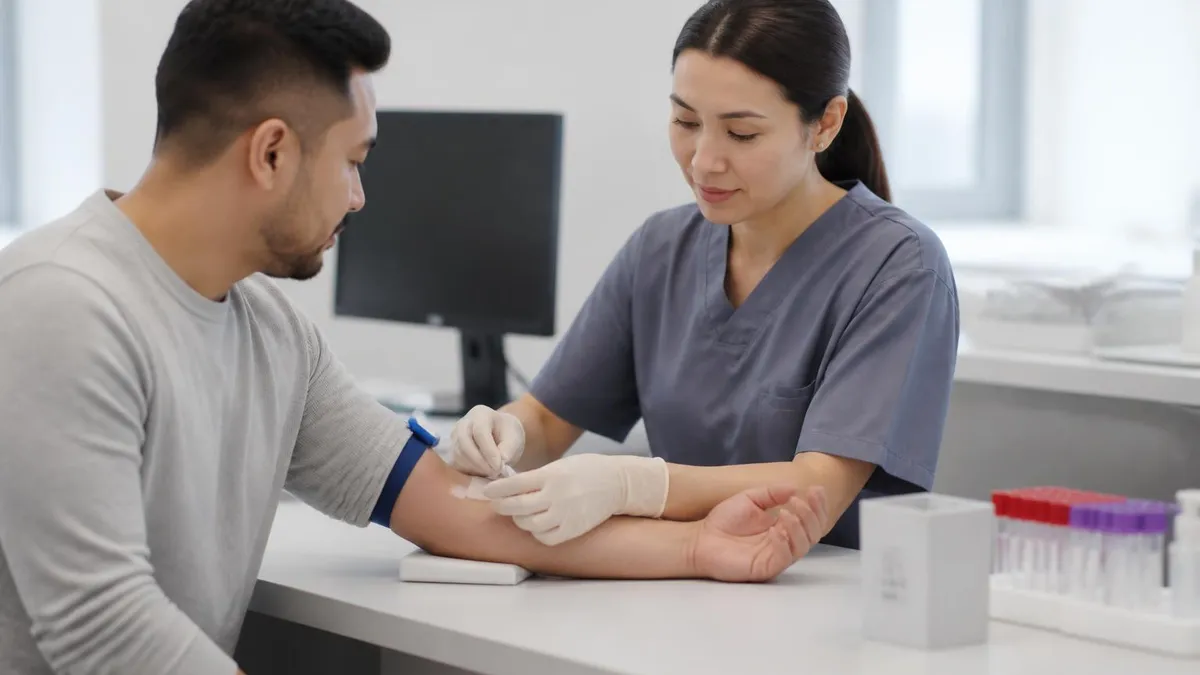
Test types vary based on which infections are being checked. Urine tests detect chlamydia and gonorrhea reliably and are non-invasive, requiring just a urine sample. Blood tests detect HIV (multiple test types available with varying timing of detection after exposure), syphilis, herpes (HSV-1 and HSV-2), hepatitis B, and hepatitis C. Swab tests collect cells from suspected infection sites — vaginal, urethral, oral, or rectal — for testing of various infections including trichomoniasis, chlamydia, gonorrhea, and herpes during active outbreaks. Pap smears check cervical cells for HPV-related changes during routine gynecological care.
Test timing matters because each infection has a "window period" — the time between exposure and when tests can reliably detect it. HIV antibody tests reach reliable accuracy 3-12 weeks after exposure depending on test type (newer 4th-generation tests detect earlier). Chlamydia and gonorrhea tests are reliable 1-2 weeks after exposure. Syphilis blood tests work 3-12 weeks after exposure. Herpes blood tests for HSV antibodies work 3-6 months after exposure. Testing too soon after exposure can produce false negatives — knowing the window periods helps you time testing for accurate results.
Routine STD screening recommendations vary by demographic and risk factors. CDC recommends annual chlamydia and gonorrhea screening for sexually active women under 25 and older women with risk factors (new partner, multiple partners). HIV testing at least once for everyone 13-64 as part of routine care, more frequently for higher-risk populations. Syphilis testing during pregnancy (essential for preventing congenital syphilis) and for higher-risk individuals. Herpes screening generally not recommended for asymptomatic people due to false positive concerns. The pregnancy test framework similarly addresses how routine vs. symptom-driven testing differs in their recommendations.
Symptoms that warrant testing include: unusual discharge from genitals, painful urination, sores or bumps on or near the genitals or mouth, unexplained pain in lower abdomen or testicles, unusual bleeding (women), pain during intercourse, and rash on hands or feet (possible secondary syphilis). However, many STDs cause no symptoms in early stages, which is why routine screening is important even when feeling well. Symptoms when present warrant prompt testing and treatment; absence of symptoms doesn't rule out infection.
Cost considerations vary widely. With insurance covering preventive care under the ACA, many STD screening tests are covered without out-of-pocket cost when ordered as part of routine preventive care. Without insurance, costs at private providers can be substantial — comprehensive panels may cost $200-$500+ at private labs. Public health clinics and Planned Parenthood typically have much lower costs through sliding-scale fees, free programs, or grant-funded testing. Knowing your insurance situation and exploring lower-cost options when needed produces better outcomes than avoiding testing due to cost concerns.
Common STDs and Their Testing
The two most commonly reported STDs in the U.S.
- Test type: Urine sample (sometimes swab depending on suspected infection site)
- Window period: 1-2 weeks after exposure for reliable detection
- Symptoms: Often asymptomatic; when present include discharge, painful urination, pelvic pain
- Treatment: Antibiotics — typically curable with treatment
- Routine screening: Annual for sexually active women under 25; sexually active men with risk factors
Confidentiality is a major concern for many people seeking STD testing. Federal law protects medical information generally, but specific concerns include whether testing appears on insurance records, whether parents see information for minors, and whether employers might learn about testing. Most clinics protect confidentiality strictly. Insurance billing typically goes to the policyholder, which may concern dependents on family insurance plans. For situations requiring maximum privacy, paying out-of-pocket at low-cost clinics or using anonymous HIV testing programs provides additional privacy protection beyond what insurance-billed testing offers.
Anonymous HIV testing is available in many areas through specific public health programs. Anonymous testing means your name isn't recorded with the test result — you receive a number that you use to retrieve results without identifying yourself. This level of privacy protection differs from confidential testing (where your information is recorded but legally protected). Anonymous testing is particularly valuable for people in vulnerable situations where even confidential testing feels too exposed. Search "anonymous HIV testing near me" or contact local AIDS service organizations for available options.
For minors, laws vary by state about whether parents must consent to or be informed about STD testing. Many states allow minors to consent to STD testing without parental involvement, recognizing that requiring parental consent could deter teens from seeking testing they need.
Confidentiality from parents in these states is legally protected for the testing itself, though insurance billing can still reveal that some service was provided. Teens with concerns about confidentiality can use Planned Parenthood, public health clinics, or school health centers that protect minor patient privacy more comprehensively. The blood test protections similar to those covering general medical privacy apply.
Partner notification — informing past sexual partners that they may have been exposed to an STD — is important for stopping transmission chains but emotionally challenging. Many health departments offer partner notification assistance: they'll contact your past partners on your behalf, anonymously if you prefer, to advise them to get tested without revealing your identity. This service helps break transmission cycles while protecting you from awkward direct conversations. Self-notification through honest direct conversation is also common. Either way, partner notification is an important part of comprehensive STD response that benefits public health and protects partners' health.
Treatment availability differs by infection. Bacterial STDs (chlamydia, gonorrhea, syphilis) are typically curable with antibiotics. Viral STDs (HIV, herpes, hepatitis B, HPV) are typically managed long-term but not cured — antiviral medications keep these infections under control while preserving the person's overall health. Trichomoniasis is curable with antibiotics. Pubic lice and scabies are treatable with topical medications. Each infection has specific treatment protocols; following these treatments fully (completing antibiotic courses, taking long-term antivirals consistently) produces the best outcomes.

Many STDs cause no symptoms in early stages, especially in women. Chlamydia and gonorrhea are often asymptomatic. HIV may have only flu-like symptoms briefly during initial infection then no symptoms for years. Untreated infections can cause permanent damage including infertility, organ damage, and increased risk of other infections. Routine screening based on age and risk factors catches infections before they cause harm. Don't wait for obvious symptoms to seek testing — by the time symptoms appear, damage may have already begun in some cases.
For people in serious relationships considering moving away from condom use or other barrier methods, comprehensive STD testing for both partners is the responsible approach. Both partners get tested, share results openly, and make informed decisions about safer sex practices going forward. Some couples make explicit agreements about monogamy alongside testing — testing without commitment to monogamy doesn't provide ongoing protection. Open communication about sexual health alongside testing produces better outcomes than testing in isolation.
For people with diagnosed chronic STDs (HIV, herpes, HPV), ongoing healthcare focuses on managing the condition and preventing transmission to partners. HIV care involves antiretroviral therapy that, when consistent, can reduce viral load to undetectable levels (where transmission risk approaches zero — "U=U" or undetectable equals untransmittable). Herpes management uses suppressive antiviral therapy to reduce outbreak frequency and transmission risk. HPV management includes Pap smear monitoring for cervical changes and HPV vaccination for those eligible. Each condition has specific care protocols managed long-term with appropriate healthcare providers.
For HIV-negative individuals at increased risk of HIV exposure, PrEP (pre-exposure prophylaxis) is a daily oral medication that significantly reduces HIV acquisition risk. PrEP requires medical evaluation, ongoing monitoring (every 3 months typically), and consistent daily use to be effective. The medication is FDA-approved and widely covered by insurance. For people in relationships with HIV-positive partners or with multiple sexual partners, PrEP provides additional protection beyond condoms alone. Discussing PrEP with healthcare providers helps determine whether it's appropriate for your situation.
Looking forward, STD testing technology continues advancing. Multiplex tests detect multiple infections from a single sample, reducing the need for multiple separate tests. Home self-collection options continue expanding. New rapid tests provide same-day results for more infections than ever before. Vaccine development continues — gonorrhea vaccines are in clinical trials, potentially offering prevention rather than just treatment for this increasingly antibiotic-resistant infection. Staying informed about current testing options and best practices through reliable sources (CDC, Planned Parenthood educational materials, your healthcare provider) helps you make informed decisions as the field evolves.
STD Testing Quick Facts
STD Testing Location Comparison
- +Planned Parenthood: comprehensive testing, sliding-scale fees, widely available
- +Public health clinics: often free for common STDs, no insurance needed
- +Primary care: convenient if insured, integrates with medical history
- +Online testing: privacy and convenience, accessible from home
- +University health centers: low cost for students with confidentiality protections
- −Online testing: separate provider needed for treatment of positive results
- −Public health clinics: limited hours, sometimes long waits
- −Primary care: requires insurance for affordability; less specialized than dedicated STD services
- −All testing: requires patience for window periods between exposure and accurate testing
- −Treatment: viral STDs not curable, requiring long-term management
STD Testing Questions and Answers
About the Author
Attorney & Bar Exam Preparation Specialist
Yale Law SchoolJames R. Hargrove is a practicing attorney and legal educator with a Juris Doctor from Yale Law School and an LLM in Constitutional Law. With over a decade of experience coaching bar exam candidates across multiple jurisdictions, he specializes in MBE strategy, state-specific essay preparation, and multistate performance test techniques.