
Ohio BMV Title Office: Complete Guide to the DMV Written Test and Driver Licensing in Ohio
Prepare for the Ohio BMV title office visit and dmv written test. 🟢 Study traffic laws, road signs, and safe driving practices to pass your knowledge exam.
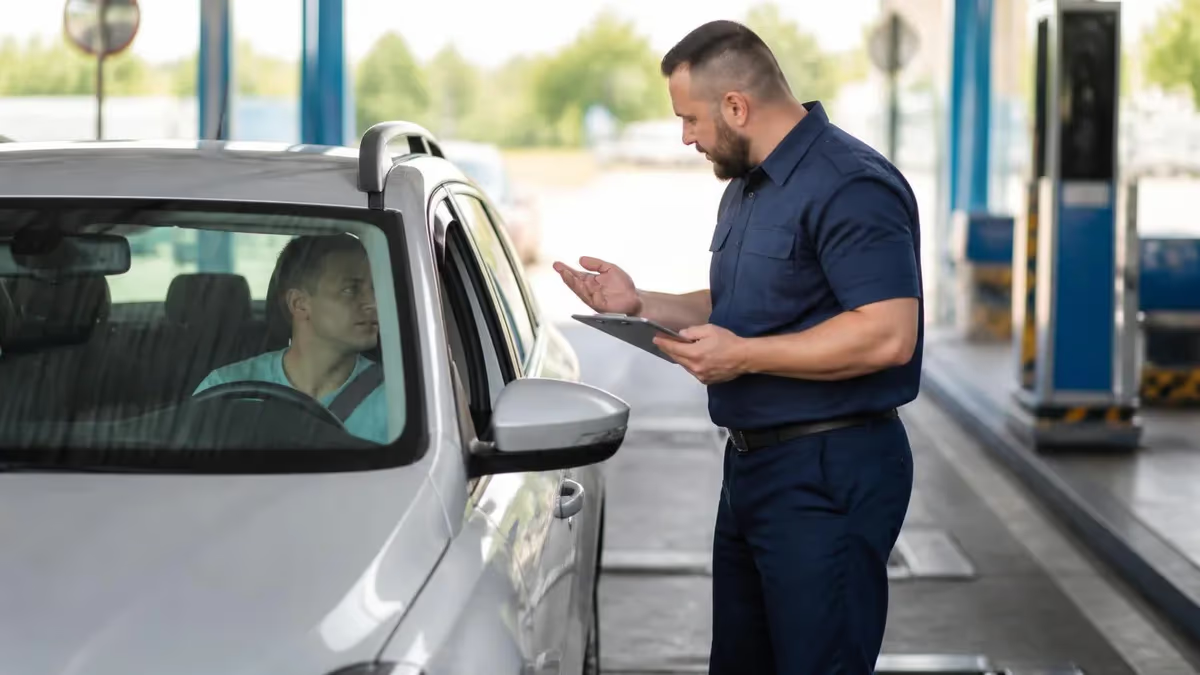
The ohio bmv title office handles everything from vehicle title transfers and registration renewals to issuing driver licenses and overseeing the dmv written test that every new Ohio driver must pass. Whether you are a first-time applicant or a new resident transferring an out-of-state license, understanding how the Ohio Bureau of Motor Vehicles operates is the first step toward getting behind the wheel legally and confidently. Knowing what to bring, what to expect, and how to prepare can save you hours of frustration at the counter.
The dmv written test — officially called the Ohio knowledge test — is a key milestone in the licensing process. It assesses your understanding of Ohio traffic laws, road signs and markings, safe driving practices, and the rules that keep every road user safe. The exam is administered on a computer at any full-service Ohio BMV location, and passing it is required before you can schedule your behind-the-wheel driving skills test. Most applicants who study seriously can pass on the first attempt.
Ohio requires first-time license applicants to pass a 40-question knowledge test with a score of at least 75 percent, meaning you can miss no more than 10 questions. The test draws from the Ohio Driver's Manual, covering topics such as right-of-way rules, speed limits, pavement markings, alcohol and drug impairment laws, and proper responses to emergency vehicles. Preparing with a structured study plan and realistic practice questions dramatically increases your chances of passing without a second trip.
Many drivers underestimate how much is covered on the driving knowledge test. Ohio's manual runs more than 100 pages and includes detailed guidance on everything from merging on expressways to the legal blood-alcohol concentration limits for commercial drivers. The good news is that the test is structured — there are no trick questions, and every item tests a concept clearly explained in the manual. Focused preparation over one to two weeks is usually sufficient for most applicants.
Beyond the written knowledge exam, the Ohio BMV title office also processes critical vehicle ownership documents. If you've recently bought a car, inherited a vehicle, or moved to Ohio with an out-of-state title, you'll need to visit a BMV title office within a specific window of time to avoid late fees. The title process is separate from the licensing process but takes place at the same offices, so many Ohioans handle both tasks in a single visit when timing allows.
Whether your priority is passing the dmv knowledge test or completing a title transfer, this guide walks you through every stage of the Ohio BMV process. We cover what documents to bring, how the written test is structured, what topics appear most frequently, and which study strategies deliver the best results in the shortest time. By the end, you'll have a clear roadmap for your Ohio BMV visit and the confidence to walk in prepared.
Ohio's BMV also offers online services for certain transactions, including license plate renewals and some record requests, reducing the need for in-person visits. However, the driving knowledge test must be taken in person at a physical BMV location, and title transfers generally require a physical visit as well. Knowing which tasks you can handle online and which require a trip to a title office will help you plan your time efficiently and avoid unnecessary wait times at busy locations.
Ohio DMV Written Test by the Numbers
Key Facts at a Glance
| Item | Value | Details |
|---|---|---|
| Test Questions | 40 | Multiple choice format |
| Passing Score | 75% | 30 correct answers required |
| Time Allowed | No Limit | Most finish in 30 minutes |
| License Application Fee | $25.75 | 4-year Ohio license |
| Attempts Before Waiting Period | 3 | Then 7-day wait required |
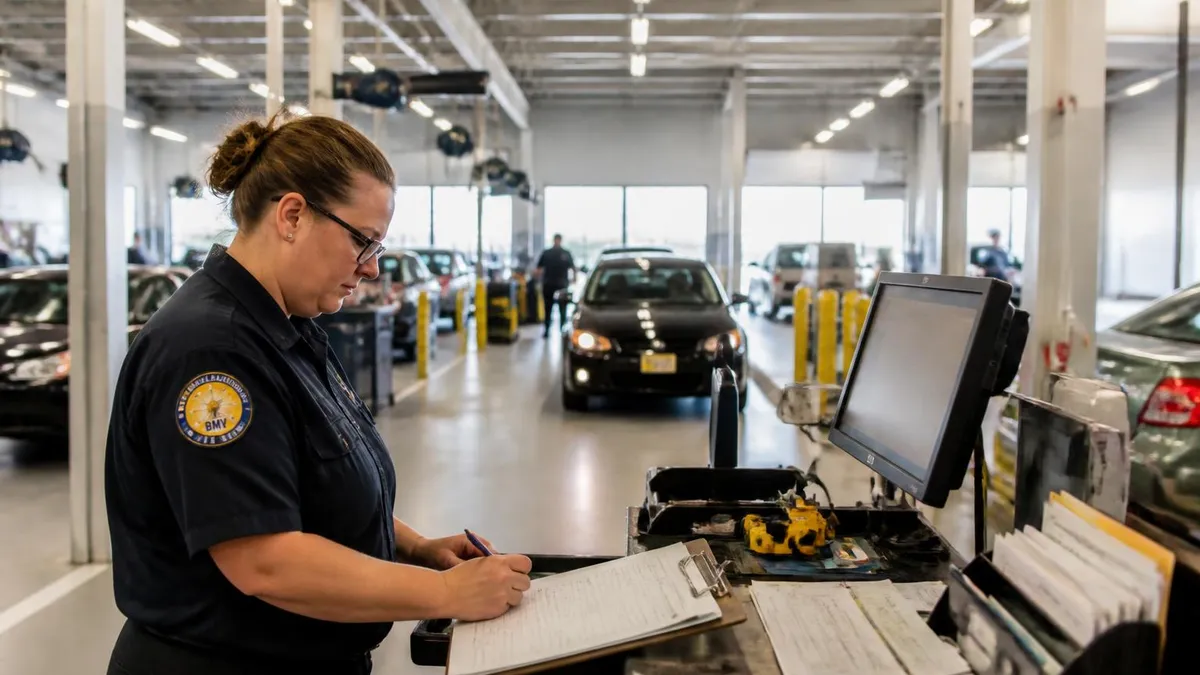
Ohio BMV Knowledge Test: Format and Requirements
The Ohio knowledge test contains 40 questions drawn from the Ohio Driver's Manual. Each question has four answer choices. You must answer at least 30 correctly — a 75 percent score — to pass and advance to the skills test phase of licensing.
Ohio does not impose a strict time limit on the knowledge test. Most applicants finish in 20 to 35 minutes. Taking your time to read each question carefully is always advisable. Rushing through is the most common cause of avoidable errors on straightforward questions.
The test is administered on a computer terminal at any full-service Ohio BMV location. No paper forms are used. Results are immediate — you'll know your score before you leave the counter. Appointments are recommended but walk-ins are accepted at most locations.
You must present valid identity documents to take the test: proof of identity, Social Security number, and two proofs of Ohio residency. REAL ID applicants need additional documentation. Always verify the current document checklist on the official Ohio BMV website before visiting.
Applicants for a temporary instruction permit identification card (TIPIC) must be at least 15 years and 6 months old. Adults 18 and older may apply directly for a driver's license. Age determines which type of license or permit you receive after passing the knowledge exam.
Understanding what the dmv written test actually covers is the most strategic way to prepare. The Ohio knowledge test is drawn exclusively from the Ohio Driver's Manual, so every question has a clear, documented answer. The manual is organized into logical sections covering traffic laws, road signs and markings, vehicle operation, and special driving conditions. Applicants who read each section carefully and take notes on key rules — especially numerical thresholds like speed limits and following distances — consistently outperform those who skip straight to practice tests.
Road signs and markings form one of the largest portions of the exam. Ohio drivers are expected to recognize signs by shape and color as well as by the written message they display. Regulatory signs with red borders — like stop and yield signs — must be obeyed immediately. Warning signs are typically diamond-shaped and yellow, alerting drivers to upcoming hazards. Guide signs in green provide directional information. Knowing these categories cold before test day is essential because several questions will show sign images without text and ask you to identify them.
Traffic laws constitute the other major category. Ohio's rules cover right-of-way at intersections, proper following distances, speed limits in school and construction zones, and the legal obligations when approaching emergency vehicles with activated lights and sirens. The Move Over law, which requires drivers to change lanes or slow significantly when passing stationary emergency vehicles, frequently appears on the test. Similarly, rules about railroad crossings and school bus stop laws are tested regularly because they carry serious safety implications.
Alcohol and drug impairment laws receive significant emphasis on the Ohio knowledge exam. The state's legal blood-alcohol concentration limit for non-commercial drivers is 0.08 percent, while commercial drivers face a stricter 0.04 percent limit. Drivers under 21 are subject to Ohio's zero-tolerance law, with a BAC limit of just 0.02 percent. Understanding the consequences of OVI (operating a vehicle impaired) convictions — including license suspension periods and reinstatement requirements — is important both for the test and for real-world driving responsibility.
Safe driving practices covering everyday situations round out the exam content. Questions address proper lane changing procedures, how to handle a skid on wet or icy roads, correct headlight usage in fog and rain, and the rules for parking on hills. Ohio also tests knowledge of seat belt requirements, which mandate that all front-seat occupants and all passengers under 15 years old wear a properly adjusted safety belt at all times. Child restraint seat laws for younger children are also covered and frequently appear in exam questions.
The driving test online preparation resources available through practice sites mirror the structure of the actual Ohio exam very closely. Using high-quality practice questions — particularly those that explain why each answer is correct or incorrect — accelerates learning far more effectively than passive reading alone. Research on test preparation consistently shows that active recall practice, where you force yourself to retrieve information from memory rather than simply re-reading it, produces stronger retention and better real-exam performance. The goal is not just memorizing answers but understanding the underlying safety principles.
Special driving conditions such as night driving, driving in heavy rain, fog, and winter weather are also tested on the Ohio knowledge exam. The manual provides specific guidance on increasing following distances in poor weather, when to use low-beam versus high-beam headlights, and how to handle hydroplaning. These situational questions require more than memorization — they require you to apply general principles to specific scenarios. Reviewing these sections carefully and linking each rule to a real driving situation you can visualize will help you answer these questions confidently on test day.
Traffic Laws, Road Signs, and Safe Driving Practices by Category
Ohio's traffic laws encompass right-of-way rules, speed limit regulations, and the specific obligations drivers have at intersections, railroad crossings, and school zones. The posted speed limit in a school zone is 20 mph when children are present, and in a construction zone the limit drops to whatever is posted — typically 35 to 55 mph — with fines doubled for violations. Understanding which vehicle has the right of way at an uncontrolled intersection (the vehicle on the right) and at a four-way stop (the vehicle that arrived first) is essential because these scenarios appear on the knowledge test repeatedly.
Ohio's Move Over law requires drivers approaching a stationary emergency, public safety, or road service vehicle with flashing lights to vacate the adjacent lane when safe to do so. If a lane change is not possible, drivers must slow to a speed at least 10 mph below the posted limit. Violating this law carries significant fines and potential license points. The law also extends to tow trucks and highway maintenance vehicles, a detail that many test-takers overlook when reviewing only the basic emergency-vehicle rules.

Online DMV Permit Test Prep vs. Reading the Manual Alone
- +Immediate feedback on each answer helps you correct misconceptions before they become ingrained
- +Practice questions simulate the real exam format, reducing test-day anxiety and surprise
- +Targeted quizzes let you focus on weak areas like road signs or alcohol laws specifically
- +Spaced repetition in online tools reinforces hard-to-remember facts more effectively than one-time reading
- +Unlimited attempts allow you to build confidence by testing until you consistently score above 90 percent
- +Many free practice tests are updated regularly to match the current Ohio Driver's Manual edition
- −Some third-party practice sites contain outdated or inaccurate questions that do not reflect Ohio's current laws
- −Over-relying on practice tests without reading the manual can leave conceptual gaps in your knowledge
- −Screen fatigue from extended online practice can reduce focus and retention toward the end of a session
- −Free sites may not cover all topics equally, leaving construction zone or special vehicle rules understudied
- −Practice test scores can give false confidence if the site's question pool is much smaller than the real exam
- −Passive clicking through answers without genuinely thinking delays true learning compared to active study methods
Pre-Test Checklist: What to Do Before Your Ohio BMV Visit
- ✓Read the complete Ohio Driver's Manual at least once from cover to cover before attempting any practice tests
- ✓Complete at least five full 40-question practice tests and score above 85 percent consistently before scheduling your exam
- ✓Study road signs by shape and color, not just by text, so you can identify them in image-based questions
- ✓Memorize key numerical thresholds: 0.08 BAC limit, 20 mph school zones, 75 percent passing score
- ✓Gather all required identity documents — proof of identity, Social Security card or number, and two Ohio residency proofs
- ✓Verify your specific BMV location's hours and whether appointments are required or recommended for your visit
- ✓Bring the exact application fee in an accepted payment form — check the Ohio BMV website for current accepted methods
- ✓Get a full night of sleep before test day — fatigue significantly impairs reading comprehension and recall accuracy
- ✓Arrive at the BMV at least 15 minutes early to allow time for check-in without rushing into the test anxious
- ✓Review the Move Over law, school bus stop rules, and railroad crossing requirements the morning of your test
75% Is the Magic Number — But Aim for 90%+
Ohio requires a 75 percent score to pass the knowledge test, but test-takers who consistently score 90 percent or higher on practice exams almost never fail the real thing. Aiming for a 10-15 percent buffer above the passing threshold gives you a comfortable margin for the handful of questions that may cover less-familiar topics. Build your practice habit around excellence, not minimum adequacy, and passing becomes nearly inevitable.
The Ohio BMV title office provides a range of vehicle ownership and registration services that are separate from, but often coordinated with, the driver licensing process. When you purchase a vehicle in Ohio — whether from a dealership or a private seller — you have 30 days to title the vehicle in your name. Missing this window results in a $5 late fee for the first 30 days and escalating penalties after that. The title office is where this transaction is completed, and having the right paperwork ready in advance makes the process much faster.
To transfer a vehicle title in Ohio, you will need the signed-over title from the previous owner, a completed Application for Certificate of Title to a Motor Vehicle (Form BMV 3774), proof of your identity, and payment for the title fee and any applicable sales tax. If there is a lien on the vehicle — meaning you financed the purchase — the lienholder's information must also be included on the application. The Ohio BMV processes the title and mails the certificate to either you or your lienholder depending on your financing arrangement.
New Ohio residents who bring a vehicle from another state must also visit the BMV title office. Ohio requires out-of-state vehicles to be retitled within 30 days of establishing Ohio residency. The process requires the out-of-state title, proof of Ohio residency, a completed title application, and payment of Ohio's title fee and any applicable sales tax or use tax. Vehicles with out-of-state liens require coordination with the lienholder, who may need to mail the title directly to the Ohio BMV for processing.
Gifted vehicles and inherited vehicles have their own title transfer procedures. When a vehicle is given as a gift, Ohio waives the sales tax as long as the relationship between donor and recipient qualifies — immediate family members including spouses, parents, siblings, and children are typically covered. An affidavit of gift or proper documentation of the relationship is required. For inherited vehicles, the estate may need to go through a formal probate process before the title can be transferred, though Ohio has simplified procedures for vehicles below a certain value threshold.
The Ohio BMV also handles salvage and rebuilt titles for vehicles that have been declared total losses by insurance companies and subsequently repaired. A salvage title indicates the vehicle has been significantly damaged; a rebuilt title means the vehicle has been repaired and inspected to meet Ohio's roadworthiness standards. If you are purchasing a used vehicle, checking whether it has a clean title versus a salvage or rebuilt history is an important step that the title office can help verify through its records system.
Duplicate titles are available when an original certificate is lost, stolen, or damaged beyond legibility. The process requires a completed duplicate title application and a fee. If a lienholder holds the original title, the lienholder must also consent to the issuance of a duplicate. Processing times vary but typically take two to four weeks for the new certificate to arrive by mail. If speed is critical — for example if you are selling the vehicle — expedited processing options may be available for an additional fee at select locations.
Online title-related services through the Ohio BMV are limited compared to in-person options. License plate renewals, address changes on your driver record, and certain registration updates can be completed through the official Ohio BMV website without a physical visit. However, title transfers, first-time Ohio titles, and most lien-related transactions must be completed at a physical title office. Planning ahead, bringing complete documentation, and arriving early during non-peak hours — typically Tuesday through Thursday mornings — significantly reduces your wait time and ensures your paperwork is processed without unnecessary back-and-forth.
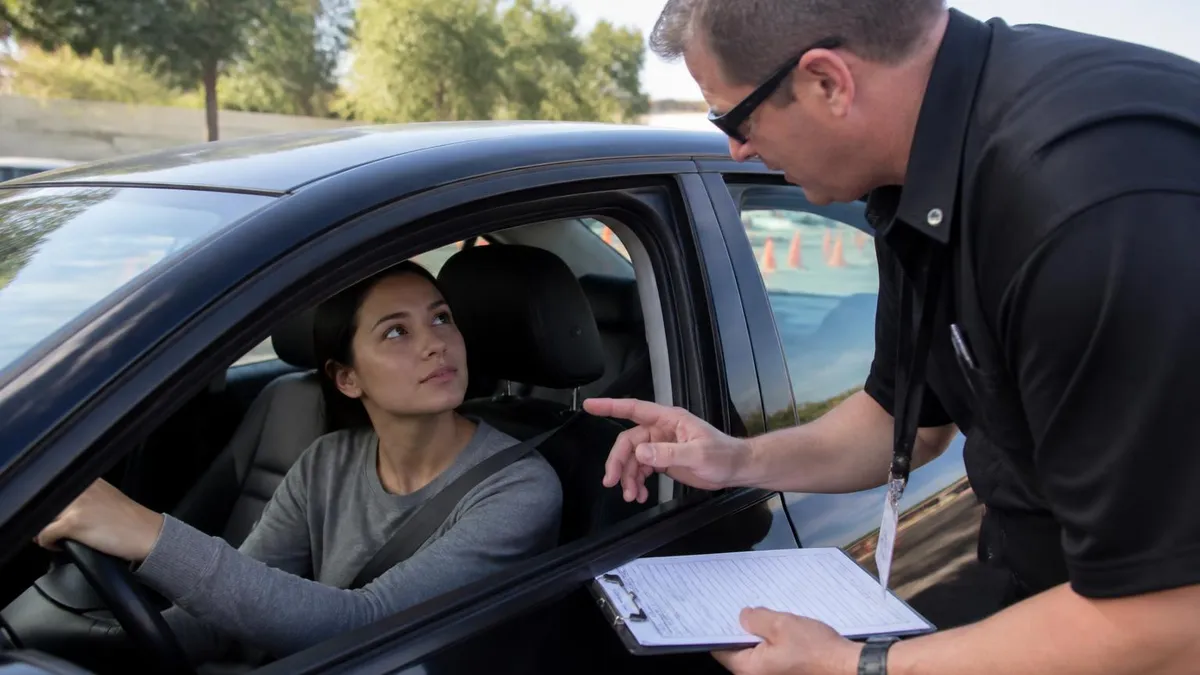
Ohio law requires vehicle titles to be transferred within 30 days of purchase or of establishing Ohio residency for out-of-state vehicles. Missing this deadline triggers late fees starting at $5 and increasing over time. If you are also completing a license transfer, coordinating both transactions in a single BMV visit within the 30-day window saves time and helps you avoid penalties on either transaction.
Passing the driver license test on your first attempt is an achievable goal for the vast majority of Ohio applicants who prepare systematically. The most common reason applicants fail is not the difficulty of the material — it's inadequate preparation. Many people assume that because they already know how to drive, the written test will be easy. In reality, the knowledge test covers dozens of specific rules, numerical thresholds, and sign identifications that experienced drivers have long since stopped consciously thinking about. Reviewing the material as if you've never driven before is the right mindset.
A structured study plan covering two weeks gives most applicants enough time to read the full Ohio Driver's Manual twice, complete multiple rounds of practice tests, and identify and close any knowledge gaps before test day. During the first week, focus on reading the manual in full — don't skim, and take brief notes on rules you find surprising or that involve specific numbers. During the second week, shift to active practice: take one full practice test each day, review every wrong answer with the manual open, and re-test on those topics the following day.
The dmv test online practice tools available at PracticeTestGeeks and similar sites are specifically designed to mirror the format and difficulty of the Ohio knowledge exam. Using randomized question pools rather than fixed sets prevents you from simply memorizing answer patterns. When you encounter an unfamiliar question, treat it as a research task — look up the rule in the manual, understand the principle behind it, and make a note. This investigative approach builds genuine comprehension rather than superficial familiarity with a fixed set of questions.
Common topics that trip up first-time test-takers include the specific rules for yielding to pedestrians at crosswalks, the proper procedure for a three-point turn on a public road, and the requirements for using turn signals before lane changes. Ohio law requires signaling at least 100 feet before a turn or lane change in non-highway conditions. On expressways, the signal should be activated early enough to communicate intent clearly to other drivers — the manual recommends signaling before checking mirrors and blind spots, not after. These procedural details are frequently tested and frequently missed.
Test anxiety is a real obstacle for some applicants, particularly teenagers and adults who haven't been in a formal testing environment for years. The best antidote to anxiety is over-preparation. When you have taken 10 or more practice tests and passed each with a score of 85 percent or higher, you will walk into the BMV with justified confidence rather than hoping for the best. Physical preparation also matters: sleep well the night before, eat a balanced meal, and arrive early enough that you don't feel rushed. Anxiety peaks when people feel unprepared or pressed for time.
If you do not pass the knowledge test on the first attempt, Ohio allows you to retake it. There is no mandatory waiting period for the first three failures, but after three failed attempts within one application, a seven-day waiting period is imposed before you can test again. Each attempt requires paying the application fee if your application has expired. The best response to a failed attempt is to treat it analytically: note which topics generated the most errors, return to those sections of the manual, and increase your practice test frequency before the next attempt.
For younger drivers pursuing an Ohio TIPIC (the learner's permit for those under 18), passing the knowledge test unlocks the supervised driving period required before a license can be issued. Ohio's graduated licensing system requires TIPIC holders to complete at least 50 hours of supervised driving — including 10 hours at night — before applying for a full license.
The knowledge test is the first formal step in this process, and passing it with confidence sets a positive tone for the entire licensing journey ahead. Preparing thoroughly for the written exam reflects the same conscientiousness that makes for a safe, responsible driver on Ohio's roads.
Practical preparation strategies can mean the difference between passing the Ohio knowledge test on the first try and making a second or third trip to the BMV. One of the most effective techniques is to read the Ohio Driver's Manual in print or digital form with a highlighter or note-taking tool in hand. Specifically highlight rules that involve numbers — speed limits, following distances in seconds, BAC percentages, signaling distances — because these quantitative details are exactly what test questions love to isolate. Reviewing your highlights the evening before your test serves as an efficient last-minute refresher.
Another high-value strategy is to study road signs by creating mental associations. The stop sign's eight-sided shape and red color are universally recognizable, but can you instantly identify a pennant-shaped yellow sign as a no-passing zone indicator? Or recognize that a circular sign always indicates a railroad crossing? Shape-to-meaning associations are processed faster than text reading, which is exactly how they work in real driving conditions. Flash card sets — whether physical or using a free digital tool — are particularly effective for sign recognition because they force rapid visual identification under mild time pressure.
Group study or explaining concepts aloud to another person is another underrated technique. When you can explain why a particular traffic law exists — why the Move Over law protects roadside workers, why following distance rules are based on reaction time and braking distance, why BAC limits are set where they are — you have achieved genuine understanding rather than superficial memorization. This level of understanding makes it much easier to answer novel question phrasings that differ from the exact practice questions you studied, which is exactly the kind of variation you may encounter on the actual exam.
On the day of your Ohio BMV knowledge test, several practical steps will help you perform at your best. Read every question completely before selecting an answer — rushing leads to misreading questions and selecting the wrong option even when you know the correct answer. If a question seems ambiguous, consider which answer would represent the safest driving behavior, since Ohio's exam is ultimately testing whether you will be a safe driver. Safety-oriented answers are almost always correct on any question that doesn't have a clear cut factual answer.
After passing the knowledge test, the path to a full Ohio driver's license continues with the vision screening (usually administered the same day at the BMV), the temporary instruction permit issuance, the supervised driving period, and finally the behind-the-wheel skills test. For applicants 18 and older skipping the graduated process, the skills test can be scheduled immediately after passing the knowledge test. The skills test evaluates your ability to execute basic maneuvers — backing, turning, lane changes, and obeying traffic controls — on a predetermined course near the BMV location.
Applicants transferring a license from another state or country may have different requirements depending on their home state's reciprocity agreement with Ohio. Many U.S. state license holders can convert to an Ohio license without retaking the skills test, but the knowledge test is still required for most out-of-state transfers. International license holders typically must complete all testing requirements including both the knowledge and skills tests. Confirming your specific requirements with the Ohio BMV before visiting will prevent surprises and ensure you bring the right documentation for your particular situation.
Ultimately, success at the Ohio BMV title office — whether you're completing a title transfer, renewing your registration, or taking your driving knowledge test for the first time — comes down to preparation and organization. Know what you need to bring, understand what the process involves, and invest the study time to perform well on the knowledge exam. The Ohio BMV system is designed to be navigable for prepared applicants, and the resources available through practice test platforms, the official manual, and guides like this one give every Ohio driver the tools to succeed on their very first visit.
BMV Questions and Answers
DMV Driver's License Written Test Questions: Complete Study Guide and Practice Strategy for 2026

Georgia Permit Test Practice: Complete 2026 Guide to Passing Your DDS Knowledge Exam on the First Try

Ohio BMV License Renewal: Online, In-Person, and Cost Guide

Drivers Ed Practice Test: Prepare for Your Knowledge Exam

Permit Test Questions: What to Expect, Sample Questions, and How to Pass First Try
About the Author

Licensed Driving Instructor & DMV Test Specialist
Penn State UniversityRobert J. Williams graduated from Penn State University with a degree in Transportation Management and has spent 20 years as a certified driving instructor and DMV examiner consultant. He has personally coached thousands of applicants through written knowledge tests, skills assessments, and commercial driver licensing programs across more than 30 states.
Join the Discussion
Connect with other students preparing for this exam. Share tips, ask questions, and get advice from people who have been there.
View discussion (9 replies)