
Warsaw Indiana BMV Hours: What to Know Before Your DMV Written Test
Warsaw Indiana BMV hours, locations & tips. Ace your DMV written test with practice quizzes covering traffic laws & road signs. ✅

If you are preparing to take the DMV written test in Warsaw, Indiana, understanding local BMV hours and how to make the most of every visit can save you significant time and frustration. The Warsaw Indiana BMV hours follow a standard state schedule, but knowing the nuances — peak times, holiday closures, and which services require appointments — puts you a step ahead before you even walk through the door. Thousands of first-time drivers underestimate how much preparation matters not just for logistics but for the knowledge test itself.
The DMV written test, also called the driving knowledge test, evaluates your understanding of Indiana traffic laws, road signs and markings, safe driving practices, and right-of-way rules. Indiana requires all first-time license applicants to pass this exam before scheduling a behind-the-wheel road test. The written portion is not a formality — statewide pass rates hover around 50 percent on the first attempt, meaning roughly half of all test-takers need to return for a second visit. Planning your BMV trip carefully and studying in advance are the two variables entirely within your control.
Warsaw is the county seat of Kosciusko County and serves a large rural and suburban population across northern Indiana. The local BMV branch handles everything from driver's license applications and permit tests to title transfers, vehicle registrations, and ID renewals. Because the branch serves multiple communities, wait times can stretch considerably on Monday mornings and lunch hours. Arriving early on a Tuesday or Wednesday mid-morning typically results in the shortest queues.
This guide walks you through everything you need to know about Indiana BMV operations, the structure of the DMV knowledge test, the topics covered on the exam, and how to build a realistic study plan that gets you to a passing score on the first try. Whether you are a teen applying for a learner's permit, an adult getting your first Indiana license after moving from another state, or someone preparing for the driving test online practice route, this article has you covered with concrete strategies and clear timelines.
Indiana's BMV operates under the Indiana Bureau of Motor Vehicles, a state agency separate from the federal government. Each branch location is independently staffed and may have slightly different operational hours during holidays or local events, so verifying current hours before making the trip is always worthwhile. For residents in the Carmel area or other parts of the state, checking indiana bmv hours for your specific branch ensures you arrive when services are actually available.
One of the most common mistakes new drivers make is showing up to the BMV without the correct documentation, without having studied, or without understanding what the written test actually assesses. The knowledge test is a timed, multiple-choice examination drawn from Indiana's official driver's manual. It covers a broad range of topics, and skipping even one chapter of the manual can mean failing on questions about subjects like school zone rules, blood-alcohol concentration limits, or the precise meaning of less common traffic signs.
The sections below provide a comprehensive breakdown of BMV hours, the written test format, key study topics, a preparation checklist, and frequently asked questions from Indiana drivers. Use the table of contents to jump directly to the section most relevant to your situation, and make sure to try the free practice quizzes embedded throughout this guide — they mirror the actual question style and difficulty level you will encounter on test day.
Indiana BMV Written Test by the Numbers

Warsaw Indiana BMV Hours: What to Expect at Each Step
Check Current BMV Hours Before You Go
Gather Required Documents in Advance
Arrive During Off-Peak Hours
Take the Vision Screening First
Complete the DMV Knowledge Test
Schedule Your Road Test After Passing
The DMV written test in Indiana is designed to verify that every new driver on the road has a baseline understanding of the rules, signs, and behaviors that keep traffic flowing safely. The test is not simply about memorizing facts — it is about demonstrating that you can apply knowledge in real driving situations. Many questions present a scenario and ask what the correct action is, rather than just asking for a definition. This format requires genuine comprehension, not surface-level reading.
Indiana's knowledge test consists of 50 multiple-choice questions drawn from three broad categories: traffic laws and regulations, road signs and pavement markings, and general safe driving practices. To pass, you must answer at least 34 questions correctly, which corresponds to a 70 percent passing threshold. If you fail, you must wait one business day before retesting. After a third failure, you may be required to wait 90 days before attempting again, depending on the examiner's discretion and the circumstances.
The road signs and markings portion is one of the most visually intensive sections of the test. You will need to recognize not just the shape and color of common signs — like the red octagon of a stop sign or the yellow diamond of a warning sign — but also less familiar signs such as no-passing zones, railroad crossing advance warnings, and regulatory signs that specify turn restrictions. Indiana's manual includes a full color reference section dedicated to sign identification, and this section is worth reviewing multiple times before your test date.
Traffic laws questions cover Indiana-specific rules about speed limits in various zones, following distances, use of headlights, seat belt requirements, child restraint rules, and laws governing cell phone use while driving. Indiana prohibits all handheld cell phone use for drivers under 18 at all times, and while adults may use handheld phones while driving, doing so significantly increases crash risk. Test questions sometimes address the legal consequences of violations, such as points added to your driving record or fines associated with specific infractions.
The driving knowledge test also includes a significant number of questions about impaired driving. Indiana has a legal blood-alcohol concentration (BAC) limit of 0.08 percent for adult drivers and 0.02 percent for drivers under 21. Questions may ask about the effects of alcohol on reaction time and judgment, how many drinks it takes to reach the legal limit (which varies by body weight and metabolism), and what happens legally when you refuse a chemical test — a concept known as implied consent. These topics are covered in dedicated chapters of the Indiana driver's manual.
Safe driving practices questions cover defensive driving techniques, what to do in emergency situations such as brake failure or a tire blowout, how to share the road with motorcycles and large trucks, and protocols for driving in adverse weather conditions like snow, ice, fog, and heavy rain. Indiana winters make weather-related driving questions especially relevant, and the manual includes specific guidance on reducing speed, increasing following distance, and avoiding sudden lane changes in low-traction conditions.
Understanding the full scope of what is tested on the driver license test gives you a clear framework for your study plan. Rather than passively reading the manual from cover to cover, experienced test-takers recommend taking a practice test first to identify weak areas, then focusing study time on those specific chapters before doing a final comprehensive review. This targeted approach is more efficient than linear reading alone and leads to higher first-attempt pass rates among drivers who use it consistently.
Road Signs and Markings, Traffic Laws & Safe Driving Practices
Indiana's road signs fall into three primary categories: regulatory, warning, and informational. Regulatory signs like stop, yield, speed limit, and no-turn signs carry the force of law — ignoring them can result in traffic citations or crashes. Warning signs, typically diamond-shaped and yellow, alert drivers to upcoming hazards such as sharp curves, pedestrian crossings, or merging lanes. Pavement markings including solid yellow center lines, white lane lines, and crosswalk striping provide additional guidance that complements overhead signage.
One area that trips up many test-takers is the distinction between signs that look similar but carry very different meanings. For example, a yellow circle sign with an "X" and "RR" signals an at-grade railroad crossing ahead, while a round yellow sign with a black "X" and two Rs indicates a multiple-track crossing. Similarly, a white rectangular sign reading "Do Not Pass" is a regulatory sign, while a pennant-shaped yellow sign marks the beginning of a no-passing zone. Studying these side-by-side in the manual's sign reference section helps solidify the distinctions before test day.
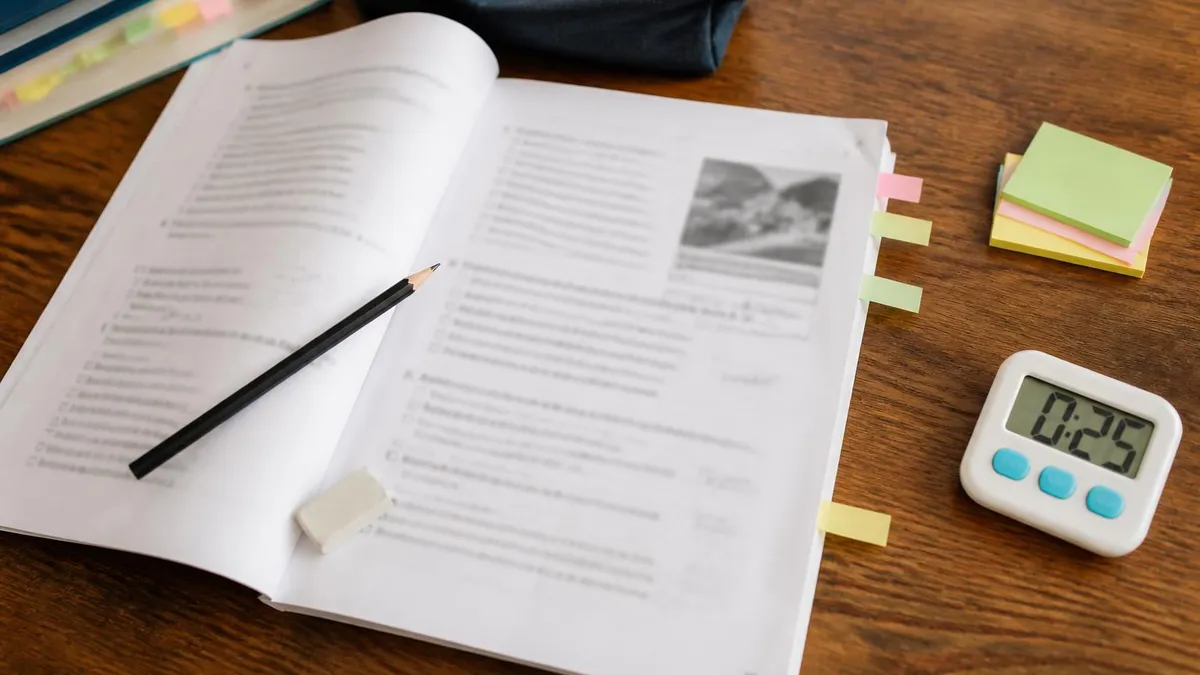
Preparing Online vs. Studying Only the Printed Manual
- +Online DMV permit test practice simulates the real exam interface, reducing test-day anxiety
- +Immediate feedback on wrong answers helps you learn correct rules faster than re-reading
- +Practice tests identify weak topic areas so you can focus study time efficiently
- +Driving test online tools are available 24/7, fitting any schedule including late-night cramming
- +Many free platforms include road sign identification drills with full color visuals
- +Progress tracking across multiple sessions shows measurable improvement over time
- −Some online question banks use outdated or out-of-state rules that do not match Indiana's current manual
- −Relying only on practice tests without reading the manual leaves gaps in conceptual understanding
- −Screen fatigue from extended online sessions can reduce retention and focus
- −Free platforms may include ads or paywalls that interrupt your study flow
- −Not all platforms weight questions proportionally to how often topics appear on the real exam
- −Internet access issues or device limitations can make online study unreliable in rural areas
DMV Knowledge Test Preparation Checklist
- ✓Download or pick up the current Indiana Driver's Manual from the BMV website before studying
- ✓Read all chapters of the manual at least once, paying special attention to signs and traffic laws sections
- ✓Take a full 50-question diagnostic practice test before your focused study begins to identify weak areas
- ✓Study road signs and pavement markings using color visuals, not just text descriptions
- ✓Review Indiana-specific BAC limits, implied consent laws, and zero-tolerance rules for drivers under 21
- ✓Memorize default speed limits for residential streets, rural highways, and multi-lane divided roads
- ✓Practice right-of-way rules at four-way stops, uncontrolled intersections, and roundabouts
- ✓Take at least three full-length timed practice tests to build exam stamina and pacing confidence
- ✓Verify your documentation checklist the day before your BMV appointment — identity, SSN, residency proofs
- ✓Confirm current Warsaw Indiana BMV hours and plan to arrive 20 minutes before the branch opens
You Only Need 34 Correct Out of 50 — But Don't Let That Lower Your Guard
A 70 percent passing threshold sounds forgiving, but it means you can miss only 16 questions. Since road signs alone account for roughly 20 percent of the exam, missing most of the sign questions could put you dangerously close to failing even if you ace everything else. Treat the sign identification section with the same rigor as traffic law chapters — it is worth every minute of extra review time.
Building an effective study plan for the Indiana driver license test does not require weeks of marathon sessions. Most successful first-time passers spend between five and ten hours of focused preparation spread over several days. The key word is focused — passive reading while distracted yields far less retention than active engagement with the material. Active study techniques include writing down unfamiliar rules, verbally explaining a traffic law to yourself or a study partner, and taking short practice quizzes after finishing each chapter of the manual.
Day one of your study plan should begin with a cold practice test. Without reading anything in advance, sit down and answer 50 practice questions under timed conditions. This diagnostic pass feels uncomfortable, but it serves a critical purpose: it maps exactly where your knowledge gaps are before you invest study time. Most people discover they are weakest on pavement markings, railroad crossing protocols, and the specific percentages and numbers associated with BAC thresholds. These pinpointed weaknesses become your priority reading targets for days two and three.
Days two and three should involve deep reading of the manual chapters that correspond to your weakest diagnostic areas. Do not skip to the summary or highlight sections — read the full chapter text, because exam questions are often drawn from details embedded in body paragraphs rather than bolded key terms. After reading each chapter, write a brief summary in your own words. This retrieval practice — recalling what you just read without looking — has been shown in educational research to significantly boost long-term retention compared to rereading the text.
On day four, shift to intensive practice testing. Take two or three full-length, 50-question timed tests and review every wrong answer immediately after finishing. For each question you missed, go back to the relevant manual chapter and re-read the rule in its original context. This creates a feedback loop that connects isolated quiz answers to a broader conceptual framework. By this point in your preparation, most people are hitting 80 to 90 percent on practice tests, which is the confidence range you want before scheduling your real exam appointment.
Day five should be a light review day. Skim your written notes, flip through the sign reference pages one more time, and do a single timed practice test to verify that your accuracy has held. Avoid heavy cramming the evening before your BMV appointment — fatigue on test day is one of the most common and most preventable causes of silly mistakes. A good night's sleep improves recall, processing speed, and the ability to read scenario-based questions carefully without rushing.
If you have access to a driving test online platform that allows you to filter questions by topic, use that feature to do targeted five-to-ten-question mini-quizzes on your weakest subjects the morning of your test. This light activation of recently studied material — sometimes called a warm-up pass — primes your memory without overwhelming you. Keep the session under 15 minutes so you arrive at the Warsaw BMV branch feeling alert and prepared rather than mentally fatigued.
One additional study resource many Indiana drivers overlook is the BMV's official practice test available directly on the Indiana Bureau of Motor Vehicles website. While shorter than the real exam and not exhaustive in its coverage, the official practice test uses questions developed by the same team that writes the actual exam, which means the question phrasing, format, and difficulty level are authentic. Using it as a final confidence check the night before your appointment is a smart addition to any study plan.

Indiana's BMV knowledge test dedicates a significant portion of questions to alcohol, drugs, and impaired driving laws — topics that many test-takers underestimate or skip entirely. These chapters cover implied consent (agreeing to chemical testing by virtue of driving on Indiana roads), the automatic license suspension that follows a refusal, and the specific BAC levels that trigger OWI charges for adults and zero-tolerance violations for drivers under 21. Missing multiple questions from this section alone can push your score below the 70 percent passing threshold.
After passing the written test and receiving your Indiana learner's permit, your driving education moves from the classroom to the road. The learner's permit phase is not optional or symbolic — it is a legally required supervised practice period designed to give new drivers real-world experience before they operate a vehicle independently. Indiana law requires drivers under 18 to complete a minimum of 50 hours of supervised driving, including at least 10 hours at night, before they are eligible to apply for a full driver's license or even a probationary license.
During the supervised driving period, your supervising driver must be a licensed Indiana driver who is at least 25 years old. This applies whether you are practicing with a parent, an older sibling, or a paid driving instructor. The permit must be in your physical possession every time you drive, and you must carry it along with the supervising driver's license. Law enforcement can and does check both documents during traffic stops involving permit holders, and driving without a supervising adult present can result in permit suspension.
Indiana has a graduated driver licensing system (GDL) that adds additional requirements for drivers under 18 even after they move past the permit stage. The first stage is the learner's permit.
The second is a probationary license, also called a Shafer's Law license, which comes with passenger restrictions (no more than one non-family passenger under age 25 for the first 180 days), nighttime driving restrictions (no driving between 10 p.m. and 5 a.m. for drivers under 18), and a zero-tolerance policy for any alcohol in the system. Understanding these restrictions before you pass the written test helps you plan your driving practice appropriately.
Adult applicants — those 18 and older who are getting their first Indiana license — follow a slightly different path. You are not subject to the GDL passenger or nighttime restrictions, and Indiana does not require adult first-timers to hold a permit for a minimum period before taking the road test.
However, you still must pass the written knowledge test, pass a vision screening, and provide all required documentation at the BMV. Many adults who have been driving in another state for years are surprised to discover how much Indiana-specific content appears on the knowledge test, particularly around local speed limits, state-specific signage, and Indiana's implied consent statute.
The road skills test, administered by a BMV examiner or a licensed third-party tester, evaluates your ability to perform basic maneuvers including parallel parking, three-point turns, lane changes, turns at intersections, and smooth braking. You must provide your own vehicle, and it must be in safe operating condition with working brakes, signals, mirrors, and registration.
The examiner will also check that your seat belt functions properly before the test begins. Examiners use a standardized scoring rubric, and certain critical errors — like running a red light or making a lane change without checking mirrors — result in automatic failure regardless of how well you perform on other maneuvers.
Scheduling your road test well in advance is essential in northern Indiana, where BMV appointment availability for road tests is often limited to specific days of the week at the Warsaw branch. Some applicants find it faster to schedule at a nearby branch in Fort Wayne or South Bend if Warsaw's calendar is full. Third-party testing providers, which Indiana authorizes for certain commercial license applicants, are another option worth exploring if the standard BMV scheduling process has long lead times.
For everything from scheduling your initial permit test appointment to checking current wait times and confirming that your documents are in order, the Indiana BMV's online portal offers most of what you need without requiring an in-person visit first. Creating an account at the myBMV portal lets you manage your records, schedule appointments, and even renew certain credentials without stepping inside a branch — a significant convenience for rural Indiana residents who may live 30 or more minutes from the nearest full-service BMV location.
Practical preparation for the DMV knowledge test goes beyond reading the manual and taking a few practice quizzes. The most successful first-time passers build habits and strategies that make test day feel routine rather than stressful. One of the highest-leverage habits is reading every practice question completely before looking at the answer choices. Many questions are designed with plausible-sounding wrong answers, and rushing to read only the first two options often leads to selecting a near-correct answer instead of the best one. Slowing down for ten extra seconds per question is frequently the difference between a passing and failing score.
Another high-value strategy is to pay close attention to qualifier words in both questions and answer choices: always, never, only, except, and must carry significant legal weight in traffic law contexts. For example, a question might ask when you are required to use your headlights, and the correct answer often hinges on whether the law uses the word "must" versus "should." Indiana law specifies that headlights must be used from 30 minutes after sunset to 30 minutes before sunrise and whenever windshield wipers are in use — the wiper rule surprises many test-takers who focus only on the sunset/sunrise portion.
Understanding the structure of wrong answer choices also helps. BMV test writers typically construct three types of incorrect options: answers that are partially correct but miss one key detail, answers that describe a rule from a different jurisdiction or a common misconception, and answers that reverse the correct rule (e.g., saying you must yield when you actually have the right-of-way). Recognizing these patterns makes it easier to eliminate options systematically when you are not immediately certain of the right answer.
Physical preparation matters more than most test-takers expect. On the day of your BMV visit, eat a balanced meal, drink water, and avoid excessive caffeine, which can increase anxiety and reduce the precision of your reading. If you wear glasses or contact lenses for the vision screening, remember to bring them — many people forget their corrective lenses at home and are turned away before they ever reach the knowledge test terminal. Keep a copy of your documentation checklist in your phone or on paper so you can verify everything is in your bag the morning of your appointment.
If you fail the knowledge test on your first attempt, do not be discouraged — as noted earlier, approximately half of all applicants do not pass on the first try. Indiana requires a one-business-day waiting period before retesting, which gives you 24 hours to identify exactly where your knowledge gaps are and address them. Ask the BMV examiner if they can tell you which topic categories you missed questions in — they may be able to share broad category information that helps you direct your re-study. Then return with targeted preparation on those specific topics.
Parents and guardians supporting a teen through this process play an important role beyond just supervising driving hours. Helping your teen create and stick to a realistic study schedule, sitting with them during practice tests to discuss correct answers, and modeling good driving behavior during supervised sessions all contribute to better outcomes on both the written test and the eventual road test. Research on teen driver safety consistently shows that parental involvement in the learning-to-drive process correlates with safer driving behaviors years into adulthood.
The most important thing to remember as you approach your BMV appointment is that the knowledge test exists not as a bureaucratic hurdle but as a genuine safety gate. Every question on the exam reflects a scenario that real Indiana drivers encounter on real roads.
The rules about school zone speeds, railroad crossings, and impaired driving are not arbitrary — they are derived from decades of crash data identifying the specific knowledge deficits that lead to fatal collisions. Approaching the test with that framing — as preparation for the actual responsibility of driving — produces better studying, better test scores, and ultimately safer drivers on Indiana's roads.
BMV Questions and Answers
BMV Carmel Indiana: Complete Guide to Passing Your DMV Written Test in 2026
Indianapolis BMV: Locations, Services, and What to Expect
BMV Driver's Test Schedule: How to Book Yours (2026)
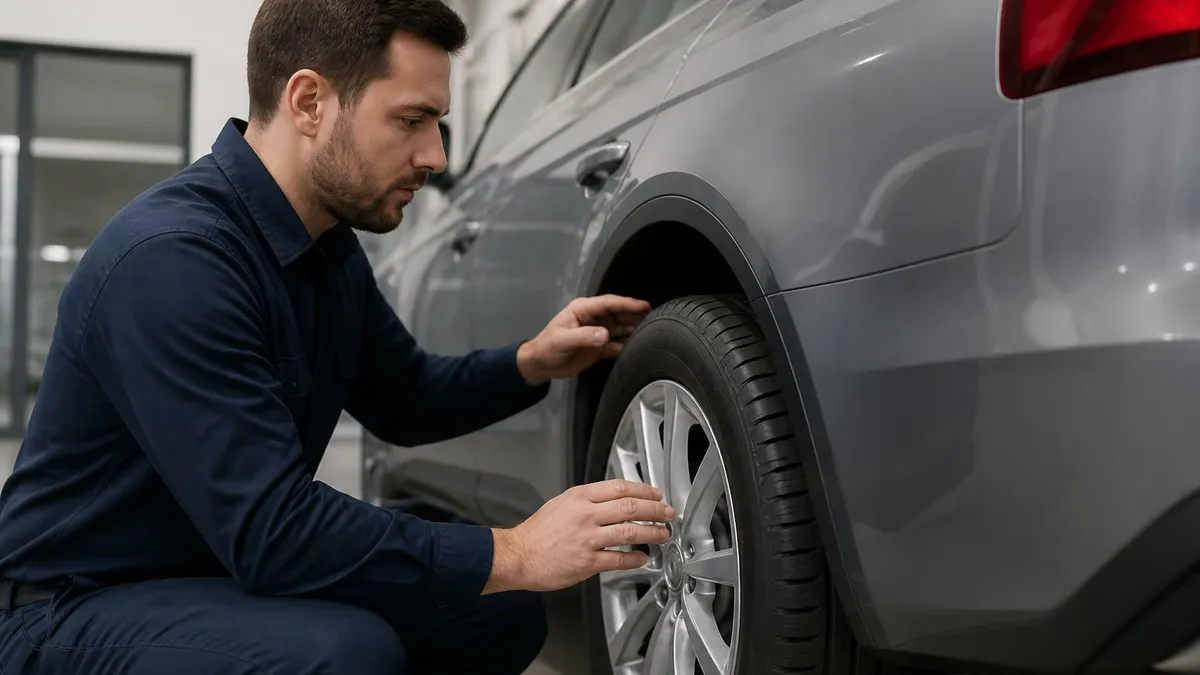
DMV Driver's License Written Test Questions: Complete Study Guide and Practice Strategy for 2026

BMV Hours of Operation: Everything You Need to Know Before Your DMV Written Test
About the Author
Licensed Driving Instructor & DMV Test Specialist
Penn State UniversityRobert J. Williams graduated from Penn State University with a degree in Transportation Management and has spent 20 years as a certified driving instructor and DMV examiner consultant. He has personally coached thousands of applicants through written knowledge tests, skills assessments, and commercial driver licensing programs across more than 30 states.
Join the Discussion
Connect with other students preparing for this exam. Share tips, ask questions, and get advice from people who have been there.
View discussion (9 replies)