
How Many Mistakes Are Allowed on the Driving Test in California and Beyond: Complete DMV Written Test Guide
How many mistakes are allowed on driving test California? Learn DMV written 🎓 test passing scores, error limits, and prep tips for all 50 states.

If you are preparing for the dmv written test, one of the first questions on your mind is almost certainly: how many mistakes are allowed on driving test California — and does that number differ from state to state?
The short answer is that California allows you to miss no more than 8 questions on the standard 46-question knowledge exam for a passenger vehicle license, meaning you need to answer at least 38 correctly to earn a passing score of 83 percent. Understanding exactly where that threshold sits can take a huge amount of anxiety out of test day and help you study smarter rather than harder.
The California DMV knowledge exam is not designed to trick you; it is designed to confirm that you understand the traffic laws, road signs and markings, and safe driving practices that protect everyone on public roads. When you know precisely how many errors are permitted, you can calibrate your practice sessions around realistic targets. Aiming for a perfect score during preparation is smart strategy, but knowing you have a small buffer of allowable errors makes the actual test feel far less intimidating than many first-time applicants expect.
Across the United States, every state sets its own passing threshold for the driver license test, and those thresholds vary more than most people realize. Some states require 80 percent correct, others demand 85 or even 90 percent. The number of total questions on the exam also fluctuates — from as few as 20 questions in some states to 50 or more in others. That combination of varying question counts and varying pass rates means the raw number of allowable mistakes differs significantly depending on where you are applying for your license.
Beyond the raw numbers, understanding why error limits exist helps you become a better test-taker. Each question on the dmv knowledge test corresponds to a real-world driving scenario. A question about following distances, for example, is not abstract trivia — it reflects the stopping distances at highway speeds that determine whether a rear-end collision occurs. When the DMV sets an 83 percent pass rate for California, it is essentially saying: we need you to get at least 38 out of 46 fundamental safety concepts right before you are allowed on public roads unsupervised.
Many applicants underestimate how achievable the passing threshold actually is. With consistent preparation using a quality driving knowledge test resource, the vast majority of students who study seriously pass on their first attempt. The California DMV reports that first-time pass rates hover around 50 percent statewide, which sounds discouraging until you realize the majority of those failures come from applicants who walked in with minimal preparation rather than from students who studied diligently. Dedicated practice can and does close that gap dramatically.
This guide breaks down the exact passing scores and allowed-mistake counts for every major state, explains what categories of questions appear most frequently on the knowledge exam, and gives you a concrete study plan to maximize your score. Whether you are a teenager taking the test for the first time, an adult who let a license lapse, or a new resident transferring a license from another state, the information here applies directly to your situation. You can also explore our driving knowledge test resources for additional state-specific study materials and full-length practice exams.
One important distinction to keep in mind: the rules discussed in most sections of this article apply specifically to the written knowledge portion of the licensing process, not the behind-the-wheel road test. The road test has its own scoring system involving critical errors and point deductions that operates very differently from the multiple-choice knowledge exam. Both tests matter, but understanding each one's scoring mechanics separately will help you prepare for them individually rather than conflating the two and confusing yourself in the process.
DMV Written Test by the Numbers

State Passing Score Breakdown: How Many Mistakes Are Allowed?
California's standard knowledge test has 46 questions. You must answer 38 correctly, allowing up to 8 errors. Teen applicants under 18 take a 46-question test but need only 38 correct — the same threshold applies statewide regardless of age.
Texas gives only 20 questions but requires just 70 percent correct, meaning you can miss up to 6. The lower bar reflects a shorter test; the questions still cover all standard categories including road signs, traffic laws, and safe driving practices.
Florida's knowledge test is 20 questions with an 80 percent pass threshold, so you can miss only 4. Florida additionally requires a separate road signs test of 20 questions — you must score 100 percent on that portion before moving to the main exam.
New York's test length varies by county and appointment type — either 20 or 40 questions — with a 70 percent pass threshold. That means you may miss up to 7 on the short version or 14 on the long version, giving New York one of the more forgiving error limits nationally.
The Ohio BMV knowledge exam contains 24 questions drawn from road signs and traffic regulations. You need 18 correct answers, allowing up to 6 mistakes. Ohio also requires applicants under 16 to pass a separate 4-question vision screening before the knowledge portion.
The dmv written test is structured around a predictable set of topic categories that rarely change from year to year, even when individual questions are refreshed. Understanding which categories carry the most weight in your state's exam is one of the single most effective preparation strategies available. In California, for example, roughly one-third of all questions relate to traffic laws and right-of-way rules, another third cover road signs and markings, and the remaining questions address safe vehicle operation, alcohol and drug impairment, and special driving conditions such as bad weather or school zones.
Road signs and markings deserve special attention because they are the category where unprepared applicants lose the most points. Many test-takers assume that sign recognition is intuitive — that they already know what a red octagon or a yellow diamond means from years of riding in vehicles. In practice, the nuanced distinctions between warning signs, regulatory signs, and guide signs trip up a surprisingly large number of applicants. The shape, color, and symbol combinations on standard US signs each carry specific legal meanings, and the DMV tests for the details, not just general impressions.
Traffic laws form the second major pillar of the dmv knowledge test. This category includes speed limits in school zones and work zones, following distance rules, right-of-way at uncontrolled intersections, merging procedures on highways, and the legal requirements for turns and lane changes.
Many applicants are surprised to discover that they have been driving with incorrect assumptions about some of these rules for years. For instance, a large percentage of experienced drivers do not know the precise legal following distance at 55 mph versus 65 mph, or the exact right-of-way rule when two vehicles arrive at a four-way stop simultaneously from perpendicular directions.
Safe driving practices make up a third important topic cluster, encompassing defensive driving concepts, space management, scanning techniques, and hazard recognition. Questions in this category often describe a scenario — a child playing near a parked car, a motorcyclist in your blind spot, a truck slowing on a curve ahead — and ask what action you should take.
These scenario-based questions are harder to memorize through rote study; they require genuine understanding of the underlying principles. The good news is that the principles are consistent: maintain space, scan ahead, reduce speed when visibility is limited, and always assume other drivers may make errors.
Alcohol and impaired driving questions appear on every state's knowledge exam because impairment is one of the leading contributors to fatal crashes nationwide. The California DMV tests blood alcohol concentration (BAC) limits, the legal definition of DUI, the consequences of refusing a chemical test under implied consent laws, and the effects of specific drugs including prescription medications on driving ability.
These questions are generally straightforward to learn because the answers are black-and-white legal thresholds rather than judgment calls. Scoring well on this section is often a matter of simple memorization reinforced by a targeted practice quiz. You can review all the specifics on driving test mistakes allowed patterns across states with our dedicated state comparison resources.
Vehicle equipment and registration laws represent a smaller but consistent portion of the written exam. Questions here cover required safety equipment such as seatbelts and child restraint systems, headlight use requirements at dusk and in rain, and the legal requirements for windshield visibility.
These questions are easy to answer correctly once you have read the relevant section of your state driver handbook, but they are easy to skip in preparation because they feel less dramatic than rules about speeding or DUI. Skipping them is a mistake — each question is worth exactly as much as any other question on the test.
Special driving situations round out the typical knowledge exam. This category includes railroad crossings, emergency vehicle right-of-way, school bus stop laws, and driving in fog or on ice. State handbooks dedicate significant sections to these topics precisely because they involve scenarios where drivers routinely make dangerous errors. If you only have limited study time, prioritizing road signs, traffic laws, and special situations will give you the highest return on investment since these three categories collectively account for the majority of questions on most state exams.
DMV Test Online vs. In-Person vs. Permit Test: Key Differences
Several states now allow eligible applicants to take the dmv test online from home, including California's remote knowledge test pilot for applicants who meet certain criteria. Online versions of the exam use the same question bank and passing thresholds as in-person tests — if California requires 83 percent in person, it requires 83 percent online too. The primary advantage of the online format is reduced wait time and the comfort of a familiar environment, which can lower test anxiety for some applicants significantly.
Online driving test sessions are typically proctored remotely through webcam monitoring software that flags suspicious behavior such as looking away from the screen too frequently or having another person visible in the room. Applicants must have a functioning webcam, a stable internet connection, and a government-issued ID ready for verification before the session begins. Technical failures during the test are handled differently by each state — some allow a same-day restart, while others require rescheduling. Always verify your state's specific online test policies before booking an appointment.

Studying with Practice Tests vs. Reading the Handbook Alone
- +Exposes you to exact question formats used on the real exam
- +Immediate feedback reveals knowledge gaps faster than passive reading
- +Timed simulations build comfort with test-day pacing and pressure
- +Spaced repetition in good platforms speeds long-term retention
- +Tracking scores over multiple sessions shows measurable improvement
- +Covers road signs visually, which the handbook describes only in text
- −Practice questions may not match your state's current handbook edition
- −Over-reliance on question patterns can leave conceptual gaps if explanations are skipped
- −Low-quality free sites occasionally contain incorrect or outdated answers
- −Cannot replace reading the handbook for newly added state-specific laws
- −Screen fatigue from extended online sessions can reduce study effectiveness
- −Some applicants memorize answers without understanding the underlying rules
Pros and Cons at a Glance
| Pros | Cons |
|---|---|
| Exposes you to exact question formats used on the real exam | Practice questions may not match your state's current handbook edition |
| Immediate feedback reveals knowledge gaps faster than passive reading | Over-reliance on question patterns can leave conceptual gaps if explanations are skipped |
| Timed simulations build comfort with test-day pacing and pressure | Low-quality free sites occasionally contain incorrect or outdated answers |
| Spaced repetition in good platforms speeds long-term retention | Cannot replace reading the handbook for newly added state-specific laws |
| Tracking scores over multiple sessions shows measurable improvement | Screen fatigue from extended online sessions can reduce study effectiveness |
| Covers road signs visually, which the handbook describes only in text | Some applicants memorize answers without understanding the underlying rules |
Test Day Preparation Checklist for the DMV Written Exam
- ✓Complete at least five full-length timed practice tests scoring 90 percent or higher before your appointment.
- ✓Download and read the most current version of your state's official driver handbook cover to cover at least once.
- ✓Review all road sign shapes, colors, and symbols from the handbook's visual sign chart.
- ✓Confirm your appointment date, time, and testing location at least 48 hours in advance.
- ✓Gather required documents: proof of identity, Social Security Number, proof of residency, and payment for testing fees.
- ✓Get seven to eight hours of sleep the night before — fatigue measurably reduces recall and processing speed.
- ✓Eat a balanced meal before the test to maintain focus; avoid heavy meals that cause drowsiness.
- ✓Arrive at the DMV office or testing center at least 15 minutes early to allow time for check-in procedures.
- ✓Read every question and all answer choices completely before selecting — do not rush through familiar-sounding questions.
- ✓Flag uncertain questions and return to them if the testing platform allows review before final submission.
Aim for 95%+ in Practice to Guarantee Passing the Real Exam
Because test anxiety and unfamiliar question phrasing can cost you 5 to 10 percentage points on the actual exam compared to practice sessions, always set your practice target significantly above the official passing threshold. If California requires 83 percent, train until you consistently hit 93 to 95 percent on full-length simulations — that buffer absorbs the performance dip that almost every test-taker experiences under real exam conditions.
Retaking the dmv written test after a failure is a structured process, not an open-ended retry system. In California, you are allowed up to three attempts within a 12-month period before your application expires and you must start the entire process over, including paying the application fee again. Most states have a mandatory waiting period between attempts — California requires one day between retakes, while other states may require three to seven days. Knowing these rules in advance prevents you from being caught off guard by administrative barriers after a first failure.
The mandatory waiting period between attempts actually serves a useful purpose: it forces you to study rather than retry impulsively. A test-taker who fails with a score of 75 percent in California (needing 83 percent) has missed roughly four more questions than allowed. Sitting down immediately for a retake without additional preparation is almost certain to produce the same result. The one-day minimum gives you time to identify exactly which categories tripped you up, target those areas with focused practice, and return with a meaningfully better command of the material.
Score reports from failed tests are invaluable study tools. California and most other states provide you with a breakdown of which topic categories you answered incorrectly, even if they do not show you the exact questions. If your report shows that you missed three road sign questions and two right-of-way questions, you know precisely where to focus your next study session. Applicants who analyze their failure reports and study the specific weak areas systematically pass on the second attempt at a very high rate — far higher than those who simply re-read the entire handbook without a targeted plan.
Some states impose a longer mandatory waiting period after a second failure. In New York, for example, applicants must wait a full week between the second and third attempt. California allows the same one-day minimum throughout all three attempts but strongly advises applicants to treat each retake as a fresh exam requiring dedicated preparation rather than a casual retry. DMV counselors in California have noted that the most common second-failure scenario involves applicants who waited the minimum one day, did minimal additional study, and came in hoping their score would improve by chance — it rarely does without deliberate effort.
If you exhaust all permitted attempts and your application expires, the reapplication process varies by state but generally involves paying the full application fee again, submitting all required documents again, and starting the wait period from scratch. In California, an expired application means you lose the driving record credit for any road tests you may have passed during the original application window as well. This makes it critically important to take every attempt seriously — the administrative and financial cost of an expired application adds up quickly and delays your ability to drive legally.
Special accommodations are available for applicants with documented disabilities. California allows extended time, oral exams administered by a DMV employee, translated exams in multiple languages, and reader assistance for applicants who qualify. These accommodations must be requested in advance — they are not available on a walk-in basis. If you or someone you are helping believes they qualify for testing accommodations, contact the DMV's Disability Services unit well before the scheduled appointment date to allow time for verification and arrangement of the appropriate support.
Understanding what triggers a fresh application requirement is also important for applicants who are transferring a license from another state. Some states have reciprocal agreements that waive the written knowledge test for licensed drivers from certain states; others require the full knowledge test regardless of prior licensing history. Always verify your specific situation with the DMV before assuming any exemption applies to you — the rules change periodically and vary not just by state but sometimes by the class of license you currently hold and the license class you are applying for in the new state.

If you fail the California DMV written test three times within a 12-month period, your entire application expires. You must reapply, pay the application fee again, and restart the process from scratch — including any road tests you previously passed. Always treat each attempt as your final chance and prepare thoroughly before each retake rather than testing impulsively.
The road test scoring system is fundamentally different from the written knowledge exam, and understanding that difference is essential for applicants preparing for both halves of the licensing process. While the written test uses a simple question-count threshold (you need 38 of 46 correct in California), the behind-the-wheel road test uses a point deduction system with two distinct categories of error: critical errors that result in immediate failure and minor errors that accumulate over the drive. Confusing the two systems leads applicants to badly misjudge how strict the road test actually is.
Critical errors on the California road test include actions that require the examiner to physically intervene to prevent a collision, running a red light or stop sign, striking another vehicle or object, and failing to yield when legally required to do so. Any single critical error ends the test immediately with a failure grade regardless of how well you performed in every other area of the drive. There is no partial credit for completing 90 percent of the route flawlessly if you blow through a stop sign on the final block — that single error generates an automatic fail.
Minor errors — called observation errors, lane control errors, steering errors, and similar categories in the California examiner's rubric — accumulate as point deductions. You are allowed to receive a certain number of these minor deductions and still pass the road test, provided you do not commit any critical errors along the way.
The specific threshold for minor errors varies by state and test route length. In California, the exact threshold is not publicly disclosed in the same way the written test threshold is, but examiners generally allow up to 15 minor point deductions across the standard drive before it affects your pass/fail outcome.
The most common minor errors on the California road test are failure to check mirrors at prescribed intervals, improper lane positioning during turns, hesitation at legal merge points, and incomplete stops at stop signs (colloquially called rolling stops). These errors are easily corrected through deliberate practice with a licensed driver who watches for them specifically. Many applicants who fail the road test on their first attempt are surprised to learn that they failed not for dangerous driving but for accumulating too many small technical errors that they had simply never been trained to eliminate.
Behind-the-wheel practice requirements differ by age in California. Applicants under 18 are required by the provisional licensing program to complete a minimum of 50 hours of supervised driving practice — including 10 hours at night — before they can take the road test.
This requirement is enforced through a parent or guardian certification form, not through monitoring, but the intent is sound: 50 hours of varied practice genuinely builds the perceptual and vehicle-handling skills that the road test evaluates. Adult applicants face no minimum hour requirement, though any licensed driver should practice the specific maneuvers tested (three-point turns, parallel parking, lane changes, and freeway merges) before scheduling the exam.
Scheduling the road test is a separate step from the written test in virtually every state. After passing the written exam, you receive a learner's permit that authorizes supervised driving practice for a defined period — typically 6 months in California. During that window, you can schedule the road test at any DMV office that offers behind-the-wheel testing, though wait times vary considerably by location and season.
Urban DMV offices in the San Francisco Bay Area and Los Angeles metro typically have longer wait times than rural offices, and scheduling months in advance is often necessary during the summer months when teen applicants are most active.
If you want a side-by-side look at how the written and road tests compare across multiple states including a breakdown of common failure reasons, visit our full guide on the driving knowledge test comparison page where we have compiled examiner feedback data and official state statistics into one resource. Understanding both tests holistically — their format, their scoring, and their most common failure patterns — is the foundation of a preparation strategy that gets you licensed efficiently and safely on the first attempt wherever you live.
Building a structured study schedule in the weeks before your DMV written test appointment dramatically increases your chances of passing on the first attempt. Rather than cramming the entire driver handbook in one long session the night before, spread your preparation across at least two to three weeks. Divide the handbook into topical sections — road signs, traffic laws, right-of-way rules, special situations, and vehicle operation — and dedicate one to two days to each section before moving on. This distributed practice approach aligns with how memory consolidation actually works and produces far more durable recall than marathon single-session study.
Start each study session by reviewing the material you covered in the previous session before moving on to new content. This brief review — even just five minutes of re-reading key points — triggers the spacing effect that dramatically improves long-term retention. After reviewing old material, read the new handbook section carefully with a notepad nearby to write down rules or numbers you find confusing or surprising. The act of writing reinforces memory encoding more strongly than passive reading, and your personal notes become a quick-reference document for the final days before your test.
Supplement handbook reading with targeted practice quiz sessions after each topic. If you just studied road signs, immediately do a 20-question practice quiz focused exclusively on road signs before moving on. This immediate application of what you just read forces your brain to retrieve the information rather than simply recognizing it on the page — and retrieval practice is the single most effective method for building test-ready memory. Most drivers who fail the written test have recognized information while reading but never practiced retrieving it under simulated test conditions.
In the final week before your appointment, shift from topic-by-topic study to full-length timed simulations. Take a complete 46-question (or your state's equivalent) practice test from start to finish without pausing, using the same time limit as the real exam. After each simulation, review every incorrect answer in detail — not just glance at the correct answer, but read the full explanation and trace back to the relevant section of the handbook if available. Repeat this process daily during the final week, and you will enter your appointment with a well-mapped mental model of the entire exam content.
Stress management on test day is often undervalued but genuinely matters. Many applicants who have adequately prepared still underperform because they rush through questions, misread answer choices due to anxiety, or second-guess correct first instincts. Training yourself to work steadily rather than quickly during practice sessions prepares you to maintain that pace under real conditions.
If you finish the test early — which most prepared applicants do — use the remaining time to review flagged questions rather than submitting immediately. Changing an answer should only happen when you have a specific, concrete reason backed by a rule you recall clearly, not simply because you feel uncertain.
Parents and guardians helping teenagers prepare for the permit test can maximize their impact by focusing on active co-study rather than simply handing the teenager a handbook. Read sections aloud together, quiz each other on road sign meanings during car trips, and discuss real traffic scenarios you encounter while driving — explaining why you checked mirrors before changing lanes or why you slowed before a yellow signal light turns this everyday driving behavior into explicit instruction.
Research consistently shows that verbal explanation of driving decisions by an experienced driver accelerates a new driver's conceptual understanding far more effectively than independent study alone.
Finally, make sure you are studying from the most current edition of your state's driver handbook. California updates its handbook periodically to reflect new laws, changed speed limits in specific zones, or revised rules about emerging vehicle types like electric scooters and autonomous vehicles.
Using an outdated handbook — even one from the previous year — risks preparing for rules that have since been amended. The official DMV website always hosts the most current PDF version of the handbook as a free download, and many state DMVs also have free official practice tests on their websites that draw from the same current question bank used for real appointments.
BMV Questions and Answers
DMV Driver's License Written Test Questions: Complete Study Guide and Practice Strategy for 2026
Georgia Permit Test Practice: Complete 2026 Guide to Passing Your DDS Knowledge Exam on the First Try

Ohio BMV License Renewal: Online, In-Person, and Cost Guide
BMV Hours Near Me: Find Local Branch Times, Wait Estimates & Same-Day Service
DMV Test California: Complete 2026 Guide to Passing Your Permit and Driving Exam
About the Author
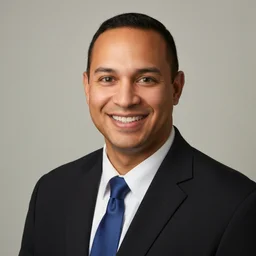
Licensed Driving Instructor & DMV Test Specialist
Penn State UniversityRobert J. Williams graduated from Penn State University with a degree in Transportation Management and has spent 20 years as a certified driving instructor and DMV examiner consultant. He has personally coached thousands of applicants through written knowledge tests, skills assessments, and commercial driver licensing programs across more than 30 states.
Join the Discussion
Connect with other students preparing for this exam. Share tips, ask questions, and get advice from people who have been there.
View discussion (9 replies)