
BLS Skills Checklist: Complete Study Guide & Certification Prep for Healthcare Providers
What is a BLS certification? Master every skill on the checklist with our complete AHA BLS study guide for healthcare providers. ✅

The BLS skills checklist is the backbone of every Basic Life Support certification course, and understanding exactly what it tests is the first step toward passing your exam with confidence.
If you have ever asked what is a BLS certification, the short answer is that it is a credential issued by organizations such as the American Heart Association or the American Red Cross that proves you can perform high-quality cardiopulmonary resuscitation, operate an AED, and provide rescue breathing for adults, children, and infants. Every skill on the checklist maps directly to a testable station during the hands-on portion of your course.
Healthcare providers — nurses, paramedics, respiratory therapists, medical students, and many allied health professionals — are required to hold a current BLS card as a condition of employment or clinical placement. The certification is typically valid for two years, after which a basic life support renewal class is needed to stay compliant. Knowing which skills the evaluator will assess, and in what order, allows you to practice deliberately rather than randomly, dramatically improving your performance on test day.
Many students confuse BLS with a basic CPR class offered at a community center, but the two are not identical. When people ask is BLS the same as CPR, the honest answer is that BLS includes CPR but goes further: it adds team dynamics, bag-mask ventilation, two-rescuer coordination, and AED integration. The bls skills checklist captures all of these elements in a single structured evaluation tool that instructors use to verify competency before signing off on your card.
The American Heart Association BLS course is the gold standard for hospital-based providers, while the American Red Cross basic life support course is widely accepted in outpatient and community settings. Both programs cover the same core science derived from the latest resuscitation guidelines, but they differ slightly in their skill station formats and written exam structures. Understanding these differences matters when you choose where to take your initial course or your renewal class.
Preparation is everything. Students who walk into a BLS skills station having only read a manual often freeze when the mannequin is placed in front of them. Muscle memory, built through repeated deliberate practice, is what separates providers who perform fluidly under pressure from those who hesitate at critical moments. This guide breaks down every section of the BLS skills evaluation, explains the rationale behind each requirement, and gives you a concrete study plan to build that muscle memory before your next class.
Throughout this article you will find practice quizzes, study schedules, checklists, and expert tips drawn from the current AHA BLS guidelines. Whether you are preparing for your first basic life support for healthcare providers course or refreshing skills ahead of a renewal, this resource is designed to give you a complete picture of what to expect and how to excel. By the time you finish, you will know exactly which steps earn points, which common errors cost them, and how to demonstrate professional-level competency on every skill station.
BLS Certification by the Numbers

BLS Certification Study Schedule
- ▸Read the current AHA BLS Provider Handbook chapters 1–3
- ▸Watch official AHA or Red Cross video demonstrations of adult CPR
- ▸Memorize the Chain of Survival steps in order
- ▸Take a baseline practice quiz to identify knowledge gaps
- ▸Practice compression rate (100–120/min) using a metronome app
- ▸Drill correct hand placement and compression depth (2–2.4 inches)
- ▸Practice AED operation sequence on a training device
- ▸Review common errors: incomplete recoil, excessive ventilation rate
- ▸Practice infant two-finger and two-thumb encircling chest compressions
- ▸Drill child CPR with correct depth (2 inches) and rate adjustments
- ▸Practice two-rescuer adult CPR with a partner if possible
- ▸Review bag-mask ventilation technique and seal formation
- ▸Complete at least three timed full-scenario run-throughs
- ▸Take three full-length BLS practice quizzes targeting weak areas
- ▸Review choking relief (FBAO) for adults, children, and infants
- ▸Rest well the night before; arrive early with required ID
High-quality CPR is the centerpiece of every BLS skills evaluation, and the checklist breaks it down into measurable components that an instructor can observe and score in real time.
The AHA defines high-quality CPR by five key metrics: compression rate of 100 to 120 per minute, compression depth of at least 2 inches for adults (about 2 inches for children and 1.5 inches for infants), full chest recoil between every compression, minimal interruptions of no more than 10 seconds, and avoidance of excessive ventilation. Each of these metrics appears explicitly on the BLS skills checklist, meaning a failure on any one of them can result in a remediation requirement.
Compression rate is one of the most commonly missed elements during skills testing. Students who practice without a timing aid often default to either too slow (around 80 per minute) or too fast (above 130 per minute). The optimal zone of 100 to 120 compressions per minute delivers the best balance of cardiac output and coronary artery perfusion pressure. A simple trick is to compress to the beat of the song "Stayin' Alive" by the Bee Gees, which sits at almost exactly 103 beats per minute — well within the target range and genuinely useful in a clinical emergency.
Compression depth requires consistent downward force, which surprises many students who underestimate how much effort is needed on a real person versus a soft foam mannequin. On a firm evaluation mannequin, you should feel the chest compress measurably and fully release back to its resting position before the next compression. Incomplete recoil — where you lean on the chest between compressions — prevents the heart from refilling with blood and significantly reduces CPR effectiveness. Instructors watch for this error specifically, because it is both common and consequential.
Ventilation during BLS is deliberate and controlled. Each rescue breath should be delivered over one second, produce visible chest rise, and be followed by a full passive exhalation before the next breath. The compression-to-ventilation ratio is 30:2 for single-rescuer adult CPR and 15:2 for two-rescuer pediatric CPR. Bag-mask ventilation — used when a barrier device is available — requires one hand to maintain a proper mask seal (E-C clamp technique) while the other hand squeezes the bag. Many students find bag-mask technique the most challenging skill to master because it requires fine motor coordination that only develops through hands-on repetition.
AED operation is tested as a distinct skill station or integrated into the CPR scenario. The universal sequence is: power on the AED, attach the pads to bare skin in the correct positions (right subclavicular and left lateral for adults), allow the device to analyze rhythm, clear all rescuers before delivering a shock if advised, and immediately resume CPR for two minutes before re-analysis. Students must verbalize "I'm clear, you're clear, everyone's clear" or an equivalent statement before pressing the shock button, because this step directly maps to patient and rescuer safety in real resuscitations.
Two-rescuer CPR introduces team roles and communication expectations that the checklist evaluates alongside technique. The compressor focuses on rate, depth, and recoil while the ventilator manages the airway and bag-mask. Roles should switch every two minutes or at every AED analysis pause to prevent compressor fatigue, which degrades compression quality rapidly. The checklist specifically looks for clear role announcements, smooth handoffs with minimal pause in compressions, and professional communication between rescuers — skills that translate directly to effective code team performance in a hospital setting.
Relief of foreign body airway obstruction (FBAO) rounds out the core skills section. For a conscious adult or child, the BLS provider delivers up to five back blows followed by up to five abdominal thrusts, cycling until the object is expelled or the patient becomes unresponsive. For a responsive infant, the technique changes to five back blows alternating with five chest thrusts — never abdominal thrusts — because the infant's abdominal organs are too vulnerable. When a victim becomes unresponsive, the provider transitions immediately to CPR and inspects the mouth before each ventilation attempt to remove any visible obstruction.
AHA vs. Red Cross Basic Life Support: What You Need to Know
The American Heart Association BLS for Healthcare Providers course is the most widely required credential in US hospitals and health systems. It covers adult, child, and infant CPR, AED use, bag-mask ventilation, and two-rescuer team dynamics. The course runs approximately four to five hours and includes both a hands-on skills test and a written or computer-based exam of 25 questions. Providers must pass both components to earn the two-year card, and most hospital credentialing offices specifically require the AHA version.
The AHA also offers a HeartCode BLS option, which delivers the cognitive content online through video-based learning before the student completes an in-person skills session with a certified instructor. This blended format appeals to busy healthcare providers because it reduces classroom time to roughly 60 to 90 minutes. However, the skills evaluation is identical to the traditional course — there are no shortcuts on what the checklist requires you to demonstrate in person.

BLS Certification: Benefits and Challenges to Consider
- +Demonstrates verified, hands-on lifesaving competency to employers
- +Required for most healthcare provider roles across all clinical settings
- +Builds genuine confidence to act in real cardiac emergency situations
- +Recognized nationally by hospitals, clinics, and licensing boards
- +Renewal courses are short and can often be completed in under three hours
- +AHA and Red Cross guidelines are updated to reflect the latest resuscitation science
- −Skills testing can be stressful, especially for first-time test-takers
- −Hands-on practice requires access to a mannequin and training AED device
- −Course fees ($50–$80) and renewal costs recur every two years throughout a career
- −Card expires quickly — a lapsed card can result in immediate removal from clinical duty
- −Online-only courses do not satisfy the skills station requirement for most employers
- −Technique degradation between renewals is common without regular deliberate practice
BLS Skills Checklist: 10 Must-Know Actions Before Your Exam
- ✓Verify scene safety before approaching any unresponsive victim.
- ✓Check for responsiveness by tapping shoulders and shouting loudly.
- ✓Call for help and activate the emergency response system (or direct a bystander to call 911).
- ✓Check for a pulse and breathing simultaneously for no more than 10 seconds.
- ✓Begin chest compressions at a rate of 100–120 per minute and a depth of at least 2 inches for adults.
- ✓Allow complete chest recoil between every compression without leaning on the chest.
- ✓Deliver rescue breaths over 1 second each, watching for visible chest rise.
- ✓Attach and operate an AED as soon as one is available, minimizing CPR interruptions.
- ✓Clear all rescuers before delivering an AED shock and resume CPR immediately afterward.
- ✓Switch compressor roles every 2 minutes to maintain compression quality throughout the resuscitation.
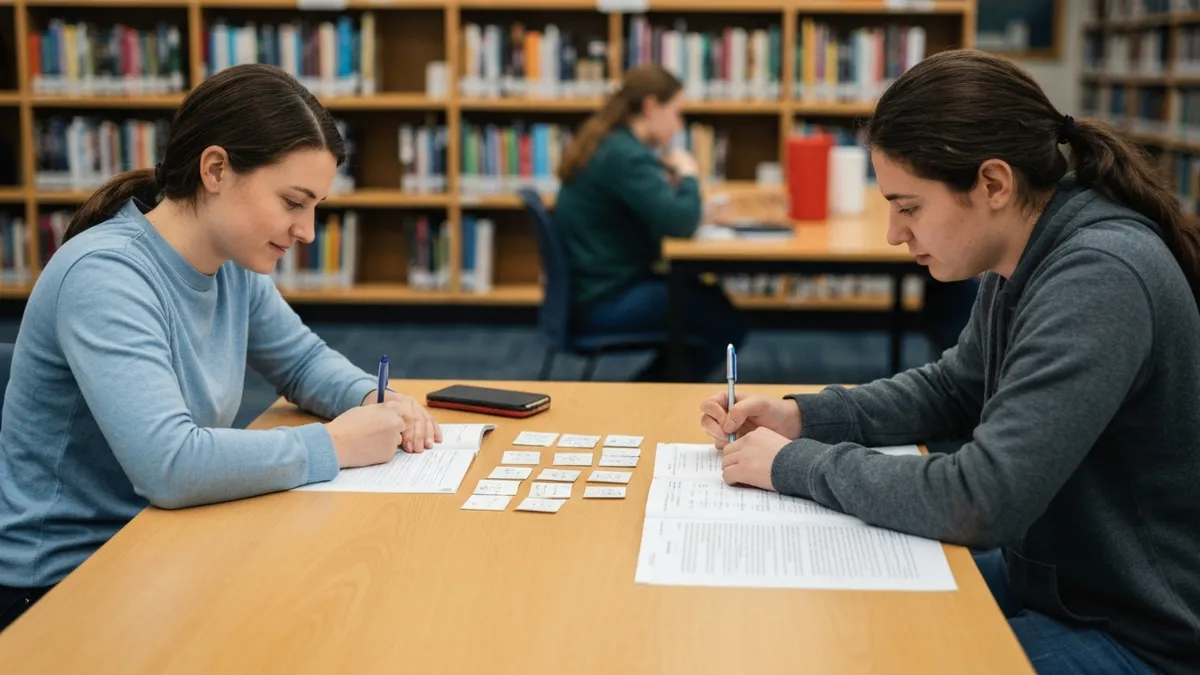
The 10-Second Rule Saves Points — and Lives
The single most penalized error on the BLS skills checklist is excessive interruption of chest compressions. The AHA mandates that all pauses in compressions — for pulse checks, AED analysis, ventilations, or role switches — must not exceed 10 seconds. Practicing with a timer during your preparation sessions is the most effective way to ingrain this habit before you face an evaluator.
Understanding the difference between BLS and standard CPR clears up one of the most frequent questions prospective students ask. When people search is BLS and CPR the same, what they usually mean is whether the community Heartsaver CPR course they took years ago qualifies them for a healthcare provider position. The short answer is no.
Healthcare provider BLS courses include additional skills — two-rescuer coordination, bag-mask ventilation, and pediatric-specific techniques — that are not covered in lay rescuer CPR classes. Most clinical employers require the healthcare provider version specifically, so it is worth confirming which course level you need before registering.
The written component of the BLS exam is separate from the skills evaluation but equally important. The basic life support exam American Heart Association format typically consists of 25 multiple-choice questions administered on paper or via a digital platform.
Questions draw from the cognitive portions of the BLS Provider Handbook and cover topics including the Chain of Survival, compression parameters, AED indications, pharmacology basics (epinephrine during CPR is a common topic), recognition of shockable versus non-shockable rhythms, and special resuscitation situations such as opioid-associated emergencies and drowning. A score of 84% or higher (21 out of 25 correct) is required to pass the AHA written exam.
The aha basic life support exam is not designed to trick you, but it does test conceptual understanding rather than simple memorization. Questions are written to assess whether you understand the rationale behind each skill step, not just the steps themselves.
For example, a question might describe a scenario where compressions are paused for 15 seconds during an AED analysis and ask what the provider should do — the correct answer involves resuming compressions immediately after the analysis rather than waiting for the AED to complete an extended cycle. Understanding the reasoning behind the 10-second pause limit helps you answer scenario-based questions that surface the concept in unfamiliar ways.
Special situations are a growing portion of both the skills and written assessments. The AHA 2020 and 2025 guideline updates placed increased emphasis on opioid-associated cardiac arrest management, drowning resuscitation, and the recognition that some patients in cardiac arrest may have reversible causes (the H's and T's) that require specific interventions beyond standard CPR. Providers working in emergency departments, ICUs, or addiction treatment settings should pay particular attention to these sections because they are likely to encounter these scenarios in clinical practice and may face scenario-based exam questions drawn from them.
Team dynamics is a soft skill component that many candidates underestimate on the BLS skills checklist. During a two-rescuer scenario, the evaluator is watching for closed-loop communication — where one team member gives a directive, another team member confirms they heard and acted on it, and the first member acknowledges the confirmation.
For example: "Start compressions" → "Starting compressions" → "Good, compressions are in progress." This communication pattern is drawn directly from high-performance team science and reflects how actual resuscitation teams in hospitals operate. Practicing verbalization out loud during your preparation sessions — even if you feel awkward doing it — pays dividends during the evaluation.
Pediatric resuscitation is often the most anxiety-producing section of the BLS skills evaluation for providers who primarily work with adults. The key differences to internalize are: infant compression depth is 1.5 inches using two fingers or the two-thumb encircling technique; child compression depth is approximately 2 inches; the pediatric compression-to-ventilation ratio shifts to 15:2 for two-rescuer scenarios; and abdominal thrusts are never used for infants during choking relief. Mentally rehearsing the transition from adult to pediatric technique — including physically repositioning your hands before the scenario begins — helps prevent confusion under the pressure of evaluation.
Post-resuscitation care, while not always a scored skill station, is increasingly addressed in written exam questions. After return of spontaneous circulation (ROSC), priorities include optimizing oxygenation (target SpO2 94–99%), avoiding hyperventilation, obtaining a 12-lead ECG, identifying and treating reversible causes, and initiating targeted temperature management if appropriate. Understanding that BLS is the first link in a chain that ultimately leads to long-term neurologically intact survival — not just the restoration of a heartbeat — gives the entire checklist a clinical context that deepens both your knowledge retention and your motivation to master every skill.
Most hospitals and clinical sites will suspend scheduling privileges the moment your BLS card lapses — even by one day. An expired card typically means you must complete a full initial certification course rather than the shorter renewal class, costing you significantly more time and money. Set a calendar reminder 60 days before your expiration date so you have ample time to find a class and reschedule if needed.
Choosing the right BLS course format is a practical decision that affects how well you can prepare. Traditional instructor-led courses offer immediate feedback during skills practice, which is invaluable for first-time certifications. Blended learning formats — where you complete online modules before an abbreviated in-person skills session — suit experienced providers who already have strong technique and mainly need to stay current with guideline updates. What blended formats cannot replace is the hands-on repetition needed to build initial muscle memory, which is why first-time candidates are almost universally better served by the full in-person course.
Cost considerations are real for students paying out of pocket. The basic life support for healthcare providers course typically costs between $50 and $80 at a community training center, though hospital employee health departments and nursing or medical schools sometimes offer subsidized or free courses to their students and staff.
If you are enrolled in a clinical program, check with your school first — many programs include BLS certification in your program fees and schedule group classes at the start of each academic year. Paying full price at a retail training center when a free institutional option is available is one of the most common unnecessary expenses for students entering the healthcare field.
Practice resources matter enormously in the weeks before your certification. Simply re-reading the handbook is the least effective study strategy; active recall through practice questions, timed CPR simulations, and scenario walkthroughs produces far better retention. The practice quizzes available throughout this article map directly to the cognitive content tested on the AHA and Red Cross written exams, and they are organized by topic area so you can focus your time on the sections where you are weakest rather than reviewing material you already know well.
Partner practice is the single most effective preparation strategy for the skills station. If you can practice with a classmate, colleague, or family member using a mannequin — even an inexpensive practice mannequin — you will enter the evaluation with a level of comfort and automaticity that solo study cannot replicate. Take turns playing the role of the evaluator and the candidate, using the actual BLS skills checklist as your scoring guide. Verbalizing the checklist steps while performing them builds the habit of narrating your actions, which many instructors appreciate as evidence of deliberate, trained performance rather than guesswork.
Mental preparation deserves as much attention as physical preparation. Test anxiety is common even among experienced clinicians, and the pressure of being evaluated can cause skills that feel automatic during solo practice to suddenly feel uncertain. One effective technique is to begin each practice session by imagining the evaluation environment — the room, the evaluator, the mannequin — and then proceeding through the scenario exactly as you would in the real test. This mental rehearsal reduces the novelty of the evaluation setting and helps your nervous system treat it as a familiar situation rather than a threatening one.
On the day of your BLS course, arrive early enough to ask the instructor any clarifying questions before the session begins. Confirm which specific skills stations will be evaluated and in what order, since different training centers sometimes sequence stations slightly differently. Make sure you understand whether you will be evaluated individually or as part of a team scenario, because this affects how you should position yourself relative to the mannequin and how you should communicate with the evaluator. Small logistical clarifications made before the session starts can prevent costly confusion during the evaluation itself.
After you pass and receive your BLS card, scan or photograph it immediately and store the digital copy in a secure, accessible location such as a cloud drive or a password manager. Many providers discover their physical card is lost or damaged right when they need to present it for a credentialing check.
Your training center may be able to issue a replacement, but the process takes time, and having a digital backup ensures you can provide proof of certification instantly. Keep track of your expiration date from day one, and add the renewal deadline to your long-term professional calendar so it never sneaks up on you.
The final weeks before your BLS certification are best spent consolidating skills rather than cramming new information. At this stage, your goal is automaticity — the ability to move through each checklist step smoothly, without hesitation, even if someone is watching and evaluating you. The most productive approach is to run through complete timed scenarios rather than isolating individual skills. Full scenarios force you to manage transitions (from scene assessment to pulse check to compressions to AED) in real time, which is exactly what the evaluation will demand from you.
Targeted written exam review in the final week should focus on the question types you missed most often in your practice quizzes. Common weak spots for first-time BLS candidates include: the exact compression-to-ventilation ratios for each patient age group and rescuer count combination, the correct AED pad placement for pediatric patients (anterior-posterior positioning when the child is small), the depth and rate adjustments for infants versus children versus adults, and the specific actions required when an AED advises no shock.
Knowing the guidelines cold on these topics is the difference between a 100% pass and an awkward remediation conversation with your instructor.
Hydration, sleep, and nutrition on the day of your course sound like generic advice, but they have a real effect on fine motor performance and recall under stress. Skipping breakfast before a physically demanding CPR skills session leads to fatigue that degrades compression quality well before the evaluation concludes. Most BLS courses are physically taxing — sustained chest compressions at 100 to 120 per minute for two-minute cycles require meaningful cardiovascular effort, especially for providers who are not accustomed to physical exertion. Arriving rested and fueled gives you a straightforward performance advantage that costs nothing beyond planning.
If you need a remediation on any skills station, treat it as a learning opportunity rather than a failure. Instructors are required to remediate — not fail — students who demonstrate a specific deficiency, and the remediation process is designed to be educational.
You will typically be shown exactly which checklist item you missed, allowed to practice the corrected technique, and then re-evaluated on that specific station. The vast majority of students who reach remediation pass on their second attempt within the same course session. What matters is that you leave with accurate technique, not that you passed without needing correction.
Community engagement with BLS skills extends well beyond the certification course. Many hospitals encourage certified providers to participate in community CPR outreach events, where they teach basic compression-only CPR to members of the public. Teaching is one of the most powerful ways to deepen your own mastery of a skill — explaining the rationale for compression depth or the reason for the 30:2 ratio to a layperson forces you to articulate concepts that you may have only held at an intuitive level, reinforcing your understanding and filling conceptual gaps you did not know you had.
The broader public health context of BLS certification is worth holding in mind as you study. Cardiac arrest survival rates in the United States remain low — fewer than 12% of out-of-hospital cardiac arrest victims survive to hospital discharge — primarily because bystander CPR is not initiated quickly enough or with sufficient quality.
Every healthcare provider who holds a current BLS card and has internalized the skills checklist to the point of automatic recall represents a meaningful increase in the likelihood that a witnessed arrest in their environment will receive effective intervention in the critical first minutes before emergency services arrive.
As you complete this guide and move toward your certification or renewal, remember that the BLS skills checklist is not a bureaucratic hurdle — it is a distillation of decades of resuscitation science into a practical, teachable set of actions that save lives when performed correctly. Every item on that checklist exists because research demonstrated that providers who perform it consistently produce better patient outcomes than those who do not. Master the checklist, practice until the skills feel natural, and approach your evaluation with the confidence that comes from thorough, deliberate preparation.
BLS Questions and Answers

BLS Certificate Lookup: What Is a BLS Certification and How to Get Yours
Free Basic Life Support MCQ Questions and Answers Guide
AHA BLS Certification: Course, Renewal, and Exam Guide
BLS Training: Course Content, Format & How to Get Certified

Online BLS: Complete Guide to Getting Your Basic Life Support Certification
About the Author

Registered Nurse & Healthcare Educator
Johns Hopkins University School of NursingDr. Sarah Mitchell is a board-certified registered nurse with over 15 years of clinical and academic experience. She completed her PhD in Nursing Science at Johns Hopkins University and has taught NCLEX preparation and clinical skills courses for nursing students across the United States. Her research focuses on evidence-based exam preparation strategies for healthcare certification candidates.
Join the Discussion
Connect with other students preparing for this exam. Share tips, ask questions, and get advice from people who have been there.
View discussion (8 replies)