
American Red Cross BLS: Certification, Courses, and How to Enroll 2026 October
The American Red Cross BLS course certifies healthcare providers in CPR, AED, and emergency response. 🗨️ Learn about the course, exam, cost, and how to
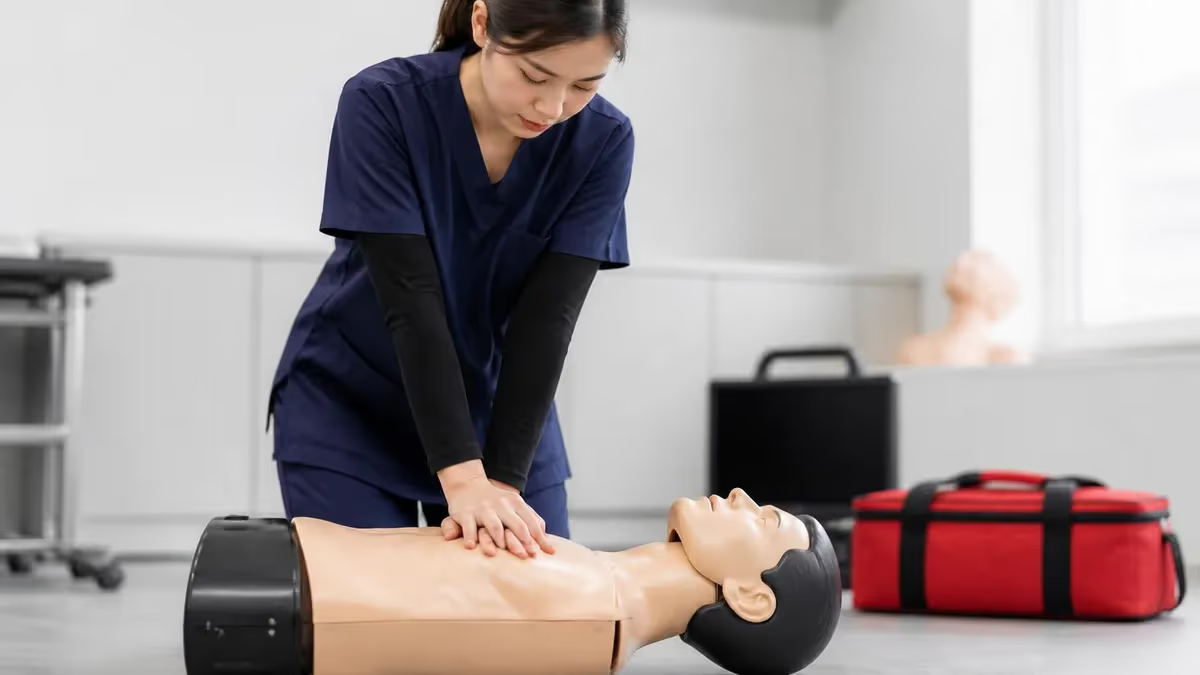
American Red Cross BLS Certification
When your employer says 'you need BLS certification,' the next question is usually 'Red Cross or AHA?' It's a legitimate question — both organisations offer BLS courses that teach the same life-saving skills, but they aren't interchangeable in every workplace. The American Red Cross BLS certification is widely accepted, well-structured, and available in flexible formats that accommodate busy healthcare professionals. Understanding what it includes, how it compares to the AHA alternative, and whether your specific employer accepts it saves you from the frustrating experience of getting certified with the wrong provider.
The American Red Cross offers one of the two most widely recognised Basic Life Support (BLS) certifications in the United States — the other being the American Heart Association's BLS Provider course. Red Cross BLS training prepares healthcare professionals and other high-responsibility workers to respond to cardiac emergencies with high-quality CPR, AED use, and team-based resuscitation skills. If your employer or school accepts Red Cross BLS (and most do), the Red Cross course provides the same core competencies as the AHA version at a comparable price point.
Choosing between Red Cross BLS and AHA BLS is one of the first decisions healthcare workers face when getting certified. The content is substantially similar — both courses teach adult, child, and infant CPR, two-rescuer techniques, bag-mask ventilation, AED operation, and choking relief. The differences are primarily in the course format, the specific terminology used, and employer acceptance policies. Most employers accept both interchangeably, but some — particularly hospitals and nursing programmes — specifically require AHA BLS. Always verify which provider your employer or school requires before enrolling.
Red Cross BLS is available in three formats: fully in-person classroom instruction, blended learning (online coursework plus an in-person skills session), and instructor-led online with in-person skills validation. The blended option is the most popular because it lets you complete the knowledge portion at your own pace before attending a shorter hands-on session. This flexibility is particularly valuable for working healthcare professionals who can't easily block out a full day for classroom training.
This guide covers the American Red Cross BLS course in detail — what it includes, how it compares to AHA BLS, what the certification exam involves, how much it costs, and how to find and register for a course near you. Whether you're getting BLS certified for the first time or deciding between Red Cross and AHA for your renewal, the information here helps you make an informed choice.
- Course name: BLS for Healthcare Providers (Red Cross) / Basic Life Support
- Who it's for: Healthcare professionals — nurses, doctors, EMTs, dental staff, medical students, and other clinical workers
- Course duration: 4–5 hours in-person; or 2–3 hours online + 1–2 hours in-person (blended)
- Cost: $80–$110 depending on location and format (instructor-led vs blended)
- Certification valid for: 2 years from date of completion
- What it covers: Adult, child, and infant CPR; 2-rescuer CPR; bag-mask ventilation; AED use; choking relief; team dynamics
- Exam: Written knowledge test + hands-on skills assessment on manikins
- Acceptance: Widely accepted — most employers recognise Red Cross BLS, though some specifically require AHA. Always verify
What the Red Cross BLS Course Covers
High-Quality Chest Compressions
Airway Management and Ventilation
Two-Rescuer CPR and Team Communication
AED Operation and Integration
Choking Relief for All Ages

Red Cross BLS vs AHA BLS: How They Compare
The American Red Cross and the American Heart Association both offer BLS certifications that teach the same core competencies — but they're not identical courses, and the differences matter for some employers. Understanding the comparison helps you choose the right one (or confirm that the one you've chosen meets your requirements).
Content overlap is roughly 90–95%. Both courses teach CPR for adults, children, and infants, two-rescuer techniques, bag-mask ventilation, AED use, and choking relief. Both follow the same evidence-based CPR guidelines (derived from the International Liaison Committee on Resuscitation's consensus science). Both require a hands-on skills assessment on manikins and a written knowledge test. Both certifications are valid for 2 years.
The differences are in the details. AHA uses specific algorithms (the 'AHA BLS Algorithm' flowcharts) that many hospital code teams reference during resuscitations. Red Cross uses its own instructional framework that covers the same clinical content but with different visual aids and terminology. Some healthcare professionals who've trained with AHA find the algorithm-based approach more intuitive for real clinical use; others prefer the Red Cross instructional style.
Neither approach is objectively better — they teach the same skills through slightly different lenses. What matters clinically is that you can perform high-quality CPR, operate an AED, manage an airway, and coordinate with a resuscitation team — regardless of which organisation's certificate hangs on your wall. Both Red Cross and AHA graduates can save lives equally effectively if they've engaged with the training and maintained their skills.
Employer acceptance is the practical differentiator. The majority of U.S. hospitals specifically require AHA BLS — the AHA BLS Provider card is what hospital credentialing departments are set up to verify and accept. Red Cross BLS is accepted by many employers (particularly in non-hospital settings like dental offices, outpatient clinics, EMS agencies, and schools), but it's not universally interchangeable with AHA in hospital environments. If you work in a hospital or plan to, verify with HR or the credentialing department whether Red Cross BLS is accepted before enrolling.
For nursing and medical students, programme requirements almost always specify AHA BLS. If you're entering a healthcare degree programme, check the programme's clinical requirements — the vast majority list 'AHA BLS Provider' specifically. Taking Red Cross BLS when your programme requires AHA means paying for a second certification, which is a frustrating and avoidable expense.
Red Cross BLS Course Formats
The traditional format: 4–5 hours of instructor-led training in a classroom with manikins, AED trainers, and hands-on practice throughout. The instructor guides you through video-based content, demonstrates techniques, supervises your practice, and conducts the skills assessment and written test at the end. Best for people who learn best with live instruction and immediate feedback. Available at Red Cross training centres, hospitals, community centres, and employer locations.
The most popular format: complete the knowledge portion online at your own pace (2–3 hours of video instruction, interactive content, and quizzes), then attend a shorter in-person session (1–2 hours) for hands-on skills practice and assessment. The in-person component is mandatory — you can't get BLS certified with online learning alone. Blended learning reduces the in-person time commitment while ensuring you can demonstrate physical CPR competence. Schedule the in-person session after completing the online portion.
Red Cross offers a Simulation Learning format that uses advanced online simulation technology to practise decision-making in realistic scenarios before the in-person skills session. This format provides more interactive online content than the standard blended option — including scenario-based exercises where you make clinical decisions in simulated cardiac arrest situations. The in-person component remains required for hands-on skills verification. This is the most technologically advanced Red Cross BLS format.
Red Cross offers on-site BLS training where a certified instructor comes to your workplace. This is ideal for healthcare facilities that need to certify multiple staff members — the instructor brings manikins and equipment, and the entire team trains together without leaving the workplace. On-site training is typically arranged by contacting a local Red Cross training provider and scheduling a group session. Group pricing often makes on-site training the most cost-effective option for organisations certifying 10 or more people.
Red Cross BLS Exam and Skills Assessment
The Red Cross BLS written exam tests your knowledge of the concepts covered in the course:
- Format: Multiple-choice questions covering CPR algorithms, compression rates and depths, ventilation ratios, AED operation, choking procedures, and team dynamics
- Passing score: Typically 80% or higher — the exact passing threshold may vary slightly between Red Cross versions
- Open or closed book: Varies by instructor and format. Some in-person courses allow reference to the student manual during the exam; blended courses may administer the exam differently
- If you fail: Most instructors allow one immediate retake. If you fail the retake, you may need to repeat the course
- Preparation: Review the student manual and pay attention during course instruction. The questions test practical knowledge, not obscure details

Red Cross BLS Cost and Registration
Red Cross BLS certification costs $80–$110 depending on your location, the course format (in-person vs blended), and the specific training provider. Blended learning courses tend to be slightly less expensive than fully in-person courses because of the reduced instructor time. Prices include the course instruction, skills assessment, written exam, and digital certification card — there are no hidden fees for the certificate itself.
To register, visit the Red Cross website (redcross.org) and search for BLS courses by ZIP code. The site shows available dates, locations, formats, and prices. You can also find Red Cross-authorized training providers through Google search ('Red Cross BLS near me' plus your city). Many hospitals, community colleges, and independent training centres offer Red Cross BLS courses under authorisation from the local Red Cross chapter.
Renewal courses are available for currently certified providers — these are shorter (typically 2–3 hours) and cost less ($50–$80) than the initial certification course. Renewal courses refresh your skills and update you on any guideline changes since your last certification. Schedule renewal 1–2 months before your certification expires to avoid a lapse that could affect your employment status.
Group training for employers can be arranged by contacting a local Red Cross training provider. Group rates typically offer 10–20% savings per person compared to individual registration, and on-site delivery eliminates travel time for staff. Many healthcare facilities schedule annual BLS renewal days where a Red Cross instructor certifies the entire clinical team in one session — the most efficient approach for organisations with many BLS-certified employees.
Financial assistance for BLS certification is limited compared to academic programmes, but some options exist. A few employers cover BLS costs as a professional development expense — ask HR before paying out of pocket. Some community organisations and workforce development programmes include BLS certification as part of healthcare career pathway training. Red Cross chapters occasionally offer scholarships or reduced-rate community training events.
Military veterans and active-duty service members may also find discounted or free BLS training through VA healthcare facilities, military installation wellness programmes, or veteran-specific workforce development initiatives. The Red Cross has a long-standing relationship with the U.S. military and often provides training services on or near military installations. If you're a veteran transitioning to civilian healthcare work, ask your local Red Cross chapter about military-connected training opportunities before paying full price.
Before Enrolling in Red Cross BLS
- ✓Verify that your employer or school accepts Red Cross BLS — some specifically require AHA BLS, and taking the wrong one means paying twice
- ✓Choose the right format: in-person (4–5 hours, best for hands-on learners), blended (online + in-person, most flexible), or simulation learning (most interactive online component)
- ✓If selecting blended learning, complete the entire online portion BEFORE your scheduled in-person session — you can't participate in the skills session without finishing online
- ✓Wear comfortable clothing for the skills session — you'll be kneeling on the floor practising CPR on manikins for 1–2 hours
- ✓Bring a valid photo ID to the in-person session — Red Cross verifies identity before issuing certification
- ✓If you have physical limitations, inform the instructor before the session starts — accommodations are available for knee, back, or mobility issues
- ✓After certification, save your digital card and set a calendar reminder for renewal 2 months before the expiration date
Red Cross BLS: Advantages and Limitations
- +Widely available — Red Cross training centres and authorized providers are located in virtually every U.S. city, with frequent course offerings and multiple format options
- +Blended learning is well-designed — the online component uses high-quality video instruction and interactive scenarios, and the in-person session is focused and efficient
- +Recognised by most employers — Red Cross BLS is accepted for employment by the majority of healthcare facilities, dental offices, EMS agencies, and schools
- +Digital certification — your certification card is available digitally immediately after completing the course, verifiable online by employers without needing to see a physical card
- −Not universally accepted in hospitals — some hospitals and nursing programmes specifically require AHA BLS and won't accept Red Cross as equivalent. Always verify before enrolling
- −Slightly different terminology than AHA — if your workplace uses AHA algorithms and terminology during codes, training in the Red Cross framework may create minor confusion initially
- −No standardised algorithm flowcharts — AHA's BLS Algorithm is widely posted in hospital code carts and resuscitation areas. Red Cross doesn't provide equivalent standardised reference cards in the same format
- −Fewer renewal options in some areas — AHA renewal courses may be more widely available than Red Cross renewals in hospital-dense markets where AHA is the dominant provider

Who Should Get Red Cross BLS?
Red Cross BLS is appropriate for healthcare providers whose employers accept Red Cross certification — and for anyone in a high-responsibility role who needs professional-level CPR training. The course content prepares you for the same cardiac emergencies as AHA BLS, and the skills you learn are clinically identical.
Healthcare professionals in non-hospital settings often find Red Cross BLS the most practical option. Dental offices, outpatient clinics, physician practices, rehabilitation facilities, long-term care facilities, and home health agencies commonly accept Red Cross BLS. If you work in one of these settings, Red Cross is a fully appropriate and recognised credential. The certification carries the same weight as AHA BLS for employment, licensing, and regulatory compliance in settings that accept it.
EMS professionals, firefighters, and law enforcement officers often train through Red Cross because many local departments and agencies have established Red Cross training partnerships. The Red Cross's community presence and training infrastructure make it a natural partner for public safety organisations that need to certify large numbers of personnel on a regular schedule.
Fitness professionals (personal trainers, group fitness instructors, lifeguards) who need BLS-level training for their fitness certification requirements often use Red Cross because of its wide availability and flexible scheduling. Most fitness certifying bodies (ACE, NASM, ACSM) accept Red Cross BLS alongside AHA BLS.
Community organisations, religious institutions, and youth programmes (Boy Scouts, Girl Scouts, YMCA) often train their volunteer leaders and staff through Red Cross BLS because of the Red Cross's community-oriented mission and local presence. These organisations typically prefer the Red Cross brand for its community association and its network of local chapters that can provide ongoing support and training resources beyond the initial certification course.
Students entering healthcare programmes should verify their programme's specific requirement before choosing Red Cross. If the programme lists 'AHA BLS Provider' specifically, take the AHA course. If it lists 'BLS certification from a nationally recognised provider' or 'Red Cross or AHA BLS,' Red Cross is acceptable. The few minutes spent verifying this requirement before registering saves the cost and time of potentially needing a second certification.
One additional group to consider: international healthcare workers practising in the United States. Red Cross is a globally recognised brand — more so than AHA in many countries — which means international workers may be more familiar with Red Cross training frameworks. However, for U.S. employment purposes, the credential's acceptance depends entirely on the U.S. employer's policy, not on international recognition. International workers should verify U.S. employer requirements just as domestic workers should.
Red Cross BLS: Key Numbers
Key Facts at a Glance
| Item | Value | Details |
|---|---|---|
| Red Cross BLS certification cost — includes course instruction, skills assessment, written exam, and digital certification card. Renewal courses cost $50–$80 | $80–$110 | |
| Red Cross BLS certification validity — renewal is required before expiration. Healthcare employers enforce this strictly; an expired card can mean removal from clinical duties | 2 years | |
| Duration of the in-person Red Cross BLS course — blended learning reduces the in-person component to 1–2 hours after completing 2–3 hours of online coursework | 4–5 hours | |
| Typical passing score for the Red Cross BLS written exam — questions test practical CPR knowledge covered during the course rather than obscure medical details | 80%+ |
Red Cross BLS Renewal Process
Red Cross BLS certifications expire after 2 years and require renewal to maintain. The renewal process is simpler and shorter than initial certification because it assumes you already have the foundational knowledge and are refreshing your skills and learning any updated guidelines.
Red Cross BLS renewal courses are typically 2–3 hours and cost $50–$80 — shorter and less expensive than the initial course. Renewal includes a condensed review of BLS concepts, updated guideline information, skills reassessment on manikins, and a written knowledge check. Blended renewal options are available: complete the knowledge review online, then attend a shorter in-person skills session for reassessment.
Don't wait until your certification expires to renew. Schedule renewal 1–2 months before expiration to ensure course availability and avoid any lapse. Some healthcare employers pull staff from clinical duties immediately when BLS certification expires — even a single day of lapse can create employment complications. Setting a calendar reminder when you first receive your certification is the most reliable way to ensure timely renewal.
If your Red Cross BLS certification has already expired, you may need to take the full initial course rather than the shorter renewal — policies vary by training provider and how long the certification has been expired. Red Cross generally allows renewal within a grace period after expiration, but the specific window varies. Contact your local training provider to confirm whether you're eligible for the renewal course or need to retake the full course.
When renewing, take the opportunity to update any outdated skills or knowledge. CPR guidelines are revised periodically by the International Liaison Committee on Resuscitation, and these revisions are incorporated into renewal courses. Compression depth recommendations, ventilation approaches, and medication protocols have all been updated in recent guideline cycles. Even if the changes seem minor, staying current ensures your practice aligns with the latest evidence — which is the entire purpose of a periodic renewal requirement rather than a one-time lifetime certification.
Before paying for Red Cross BLS, confirm that your employer or programme accepts it. Most healthcare employers accept Red Cross BLS, but many hospitals and nursing/medical programmes specifically require AHA BLS. Taking the wrong one means paying for two certifications instead of one. Check your employer's credentialing requirements, your school's clinical prerequisite list, or your licensing board's accepted providers BEFORE registering. A quick email to HR, your programme director, or the credentialing office takes 5 minutes and can save you $80–$110 and several hours of unnecessary training.
Finding Red Cross BLS Courses Near You
Red Cross BLS courses are available in virtually every U.S. city through a network of Red Cross chapters, authorized training providers, and independent instructors. Finding a convenient course involves checking a few sources to compare dates, locations, and formats.
The Red Cross website (redcross.org/take-a-class) is the primary search tool. Enter your ZIP code and filter for BLS courses. Results show available dates, locations (training centres, community facilities, or workplace addresses for on-site courses), the format (classroom vs blended), the price, and available seats. You can register and pay directly through the website. Popular dates and locations fill up — register 2–3 weeks in advance for the best selection.
Google search for 'Red Cross BLS near me' or 'Red Cross BLS [your city]' often surfaces authorized training providers that may not appear in the Red Cross website search. Independent training centres, hospitals with education departments, and community colleges frequently offer Red Cross BLS under authorisation from the local chapter. These providers set their own schedules and prices (within Red Cross guidelines), so comparing multiple providers can reveal more convenient options.
For healthcare facilities needing to certify multiple staff, contacting the local Red Cross chapter directly to arrange group on-site training is the most efficient approach. The chapter connects you with an authorized instructor who brings all equipment (manikins, AED trainers, supplies) to your facility and conducts the course on your schedule. Group training minimises the operational disruption of sending individual staff members to external classes at different times.
Sample BLS - Basic Life Support Practice Questions
Try these questions from our free BLS - Basic Life Support practice tests. The correct answer and an explanation follow each question.
After successfully resuscitating a drowning victim, which complication requires close hospital monitoring?
- A. Hyperglycemia from the stress response
- B. Delayed pulmonary edema (secondary drowning) causing respiratory failure hours later
- C. Hyperthermia from the resuscitation effort
- D. Deep vein thrombosis from immobilization
Answer: B. Delayed pulmonary edema (secondary drowning) causing respiratory failure hours later
Fluid aspiration during drowning can cause pulmonary edema and respiratory failure hours after successful resuscitation, making hospital observation mandatory.
During high-quality CPR on an adult, what is the recommended rate of chest compressions?
- A. 60–80 compressions per minute
- B. 80–100 compressions per minute
- C. 100–120 compressions per minute
- D. 120–140 compressions per minute
Answer: C. 100–120 compressions per minute
AHA BLS guidelines specify a compression rate of 100–120 compressions per minute for adults, children, and infants.
A pregnant woman is choking and conscious. Where should you deliver thrusts?
- A. Abdomen, below the navel
- B. Abdomen, above the navel
- C. Chest, at the center of the breastbone
- D. Upper back only
Answer: C. Chest, at the center of the breastbone
For pregnant patients, chest thrusts are delivered at the center of the breastbone instead of abdominal thrusts to avoid harming the fetus.
What is the compression-to-ventilation ratio for two-rescuer child CPR?
- A. 30:2
- B. 20:2
- C. 15:2
- D. 10:1
Answer: C. 15:2
For two-rescuer child CPR, the compression-to-ventilation ratio is 15 compressions followed by 2 breaths. This ratio provides a higher proportion of breaths compared to single-rescuer CPR (30:2), acknowledging that children often experience cardiac arrest due to respiratory issues. More frequent ventilation helps address their primary need for oxygen.
American Red Cross BLS Questions and Answers
About the Author

Registered Nurse & Healthcare Educator
Johns Hopkins University School of NursingDr. Sarah Mitchell is a board-certified registered nurse with over 15 years of clinical and academic experience. She completed her PhD in Nursing Science at Johns Hopkins University and has taught NCLEX preparation and clinical skills courses for nursing students across the United States. Her research focuses on evidence-based exam preparation strategies for healthcare certification candidates.
Join the Discussion
Connect with other students preparing for this exam. Share tips, ask questions, and get advice from people who have been there.
View discussion (8 replies)