
Is the Bar Exam Hard? A Realistic Look at Difficulty, Pass Rates & What It Takes
🧠 Is the bar exam hard? Honest analysis of pass rates, study hours, question types, and what makes the bar exam tough — plus tips to pass.

Is the bar exam hard? The short, honest answer is yes — the bar exam is one of the most difficult professional licensing tests in the United States, and almost every lawyer you meet will tell you it was the hardest academic experience of their life. It tests three years of law school knowledge in two days, demands stamina, precision, and emotional control, and rewards students who can apply doctrine under intense time pressure. But hard does not mean impossible, and understanding the difficulty is the first step to beating it.
What makes the bar exam hard is not any single question. The Multistate Bar Examination (MBE) asks 200 multiple-choice questions across seven subjects, the essays demand IRAC writing on unpredictable issues, and the performance test forces you to draft a memo from a closed universe of facts in 90 minutes. Each individual task is manageable. The challenge is doing all of them, back to back, while exhausted, on a strict clock, with your career and your future income hanging in the balance.
The numbers tell the story. National first-time pass rates hover around 75 percent, but repeat-taker rates collapse below 40 percent. The California bar exam, historically the toughest in the country, has dipped under 50 percent in some recent administrations. New York runs near 65 percent. Even high-performing law school graduates fail when they underestimate the test. Difficulty is real, measurable, and worth respecting from the moment you graduate.
There is also a psychological layer that statistics miss. Bar prep is a ten-to-twelve-week marathon of 50-to-60-hour study weeks, often immediately after graduation, while peers are vacationing or starting clerkships. Isolation, financial stress, and imposter syndrome compound the academic load. The exam itself spans two long days in a convention hall with hundreds of equally anxious test-takers. Many candidates report that the emotional grind is harder than the legal material.
Then there is the format shift. The traditional Uniform Bar Exam is being replaced by the NextGen bar exam, which restructures subjects and emphasizes lawyering skills over rote memorization. Some students worry this makes it harder; others welcome the practical focus. Whether you sit for the UBE, NextGen, or a state-specific exam like California's, the core difficulty is similar — you must master enormous volumes of law and deploy it accurately under fire. To understand the shift, review our deep dive on the barred from exam changes coming in 2026 and 2027.
This article walks through exactly why the bar exam is hard, how hard it really is by the numbers, who passes and who fails, and what proven strategies separate successful candidates from those who repeat. We pull from data, from law student forums, and from supreme court reports across multiple jurisdictions. By the end you will have a clear-eyed view of what you are up against — and a roadmap to crush it on your first attempt.
If you are reading this before law school, in the middle of 1L, or weeks away from sitting, the same truth applies: difficulty is not destiny. People with average law school grades pass the bar all the time. People with stellar grades sometimes fail. What predicts success is preparation, mindset, and respect for the exam's scope. Let's unpack what that actually looks like.
The Bar Exam by the Numbers

Bar Exam Format & Structure
| Section | Questions | Time | Weight | Notes |
|---|---|---|---|---|
| MBE (Multistate Bar Exam) | 200 | 6 hours | 50% | Multiple choice, 7 subjects |
| MEE (Multistate Essay Exam) | 6 | 3 hours | 30% | Six 30-minute essays |
| MPT (Multistate Performance Test) | 2 | 3 hours | 20% | Closed-universe lawyering tasks |
| Total UBE Score Required | 0 | — | 266-280 | Varies by jurisdiction |
| Total | 206 | 12 hours over 2 days | 100% |
Pass rates are the most concrete measure of how hard the bar exam is, and they vary dramatically by state, by school, and by attempt number. Looking at what is the bar exam in raw statistics, the national first-time pass rate sits around 75 percent across all American Bar Association-accredited graduates. That seems high until you realize it includes only people who finished an ABA law school — the population most likely to succeed. Repeat takers and non-ABA graduates drag overall pass rates well below 60 percent in most states.
California has long held the reputation as the hardest jurisdiction. Recent California bar exam administrations have produced first-time pass rates between 52 and 62 percent, with overall rates dipping under 40 percent. The California Supreme Court even lowered the passing score from 1440 to 1390 in 2020 because pass rates had become troublingly low. Even with that adjustment, California remains the gold standard for difficulty, partly because of its mix of UBE subjects with state-specific topics like community property.
New York, by contrast, posts first-time pass rates around 78 to 83 percent for ABA graduates. Texas hovers near 75 percent. Florida runs closer to 70 percent. Smaller states with smaller candidate pools — Iowa, Missouri, Wisconsin — sometimes show higher numbers, but those reflect graduate quality more than test ease. The truth is that the UBE is identical across jurisdictions; what differs is the cut score each state sets and the local subjects layered on top.
Repeat-taker statistics are the most sobering. Once you fail the bar, your odds of passing on the second attempt drop to roughly 40 percent. By the third attempt, the rate falls below 30 percent. This is partly self-selection — strong candidates pass first — but it also reflects the difficulty of regaining momentum and avoiding the demoralization spiral. If you read any bar exam reddit thread, you'll see story after story of repeat takers grinding through cycles of hope and disappointment.
School rank correlates with pass rate but does not determine it. Top-14 law schools regularly post first-time pass rates above 90 percent. Schools ranked 100 and below sometimes post rates near or below 50 percent. But every cycle produces Harvard graduates who fail and Cooley graduates who pass with room to spare. Study habits, financial pressure during prep, mental health, and prior test-taking skill explain more of the variance than alma mater ever could.
The Multistate Professional Responsibility Examination (MPRE) is a separate hurdle most states require before or after the main bar exam. Pass rates on the MPRE run around 75 to 80 percent. It is shorter, lower-stakes, and not where most candidates struggle — but failing it can delay your sworn admission even if you ace the UBE itself. Plan for both timelines from the start of your bar prep journey.
The takeaway from the numbers is simple. The bar exam is hard, but it is also passable by ordinary people who prepare seriously. The pass rate of 75 percent first-time means three out of four motivated, law-school-trained adults clear the bar on their first try. That is not a coin flip. That is a difficult but achievable challenge, especially if you study smart, sleep enough, and treat the exam with the respect it demands.
BAR Practice Test Questions
Prepare for the Bar Exam exam with our free practice test modules. Each quiz covers key topics to help you pass on your first try.
BAR Exam Bar Exam Remedies
BAR Exam Questions covering Exam Bar Exam Remedies. Master BAR Test concepts for certification prep.
BAR Exam Bar Exam Wills, Trusts & Estates
Free BAR Practice Test featuring Exam Bar Exam Wills, Trusts & Estates. Improve your BAR Exam score with mock test prep.
BAR Exam Business Associations
BAR Mock Exam on Exam Business Associations. BAR Study Guide questions to pass on your first try.
BAR Exam Civil Procedure
BAR Test Prep for Exam Civil Procedure. Practice BAR Quiz questions and boost your score.
BAR Exam Contracts & Sales
BAR Questions and Answers on Exam Contracts & Sales. Free BAR practice for exam readiness.
BAR Exam Criminal Law & Procedure
BAR Mock Test covering Exam Criminal Law & Procedure. Online BAR Test practice with instant feedback.
BAR Exam Evidence
Free BAR Quiz on Exam Evidence. BAR Exam prep questions with detailed explanations.
BAR Exam Family Law
BAR Practice Questions for Exam Family Law. Build confidence for your BAR certification exam.
BAR Exam Professional Responsibility & Ethics
BAR Test Online for Exam Professional Responsibility & Ethics. Free practice with instant results and feedback.
BAR Exam Real Property
BAR Study Material on Exam Real Property. Prepare effectively with real exam-style questions.
BAR Exam MBE (Business Associations)
BAR Exam Questions covering Exam MBE (Business Associations). Master BAR Test concepts for certification prep.
BAR Exam MBE (Constitutional Law III)
Free BAR Practice Test featuring Exam MBE (Constitutional Law III). Improve your BAR Exam score with mock test prep.
BAR Exam MBE (Constitutional Law II)
BAR Mock Exam on Exam MBE (Constitutional Law II). BAR Study Guide questions to pass on your first try.
BAR Exam MBE (Constitutional Law I)
BAR Test Prep for Exam MBE (Constitutional Law I). Practice BAR Quiz questions and boost your score.
What Makes Bar Exam Questions So Tough
The first source of difficulty is sheer volume. The MBE covers seven subjects — Constitutional Law, Contracts, Criminal Law and Procedure, Civil Procedure, Evidence, Real Property, and Torts — each with hundreds of testable rules. The MEE adds Business Associations, Conflicts of Laws, Family Law, Secured Transactions, Trusts, and Wills. That is thirteen full domains of law, every rule fair game, with no choice about which to skip.
Most candidates report that the breadth, not depth, is what overwhelms them. You don't need PhD-level expertise in any one subject — you need solid working knowledge of every subject simultaneously. Forgetting the Statute of Frauds carve-outs while perfectly memorizing future interests will still cost you points. This is why bar prep courses front-load lectures and rely on relentless cumulative review to keep older material from fading before exam day.

Bar Exam Difficulty: What's Working in Your Favor vs. Against You
- +You only need to score around 266-280 on the UBE — not perfect
- +Three years of law school have already trained your legal reasoning
- +Bar prep courses provide structured, proven curricula
- +Thousands of past questions are publicly available for practice
- +Pass rates show three of four first-timers succeed
- +Score portability under UBE lets you practice in many states
- +Failing once does not bar you from retaking and passing
- −13+ subjects must be mastered simultaneously
- −10-12 weeks of intensive study disrupts income and life
- −Repeat-taker pass rates collapse below 40 percent
- −California and similar tough states have lower cut scores
- −Mental and physical stamina demands rival the academic load
- −Cost of bar prep, fees, and lost wages exceeds $10,000 for many
- −Failure delays job start, salary, and bar admission paperwork
Pros and Cons at a Glance
| Pros | Cons |
|---|---|
| Three years of law school have already trained your legal reasoning | California and similar tough states have lower cut scores |
| Bar prep courses provide structured, proven curricula | Mental and physical stamina demands rival the academic load |
| Thousands of past questions are publicly available for practice | Failure delays job start, salary, and bar admission paperwork |
Pre-Bar Exam Practice Test Readiness Checklist
- ✓Complete a full-length timed MBE simulation at least twice before exam week
- ✓Memorize the elements of every major Torts and Contracts rule cold
- ✓Outline at least 30 MEE essays under timed conditions
- ✓Draft two full MPTs from scratch in 90 minutes each
- ✓Review the released bar examiner answers and rubrics line by line
- ✓Build a one-page rule cheat sheet per subject for final-week review
- ✓Schedule three full mental health rest days during prep
- ✓Test-drive your route, parking, and ID requirements before exam day
- ✓Stock high-protein snacks and water bottles for both exam days
- ✓Confirm laptop software, charger, and backup pen-and-paper plan
Total Practice Question Volume, Not Hours Studied
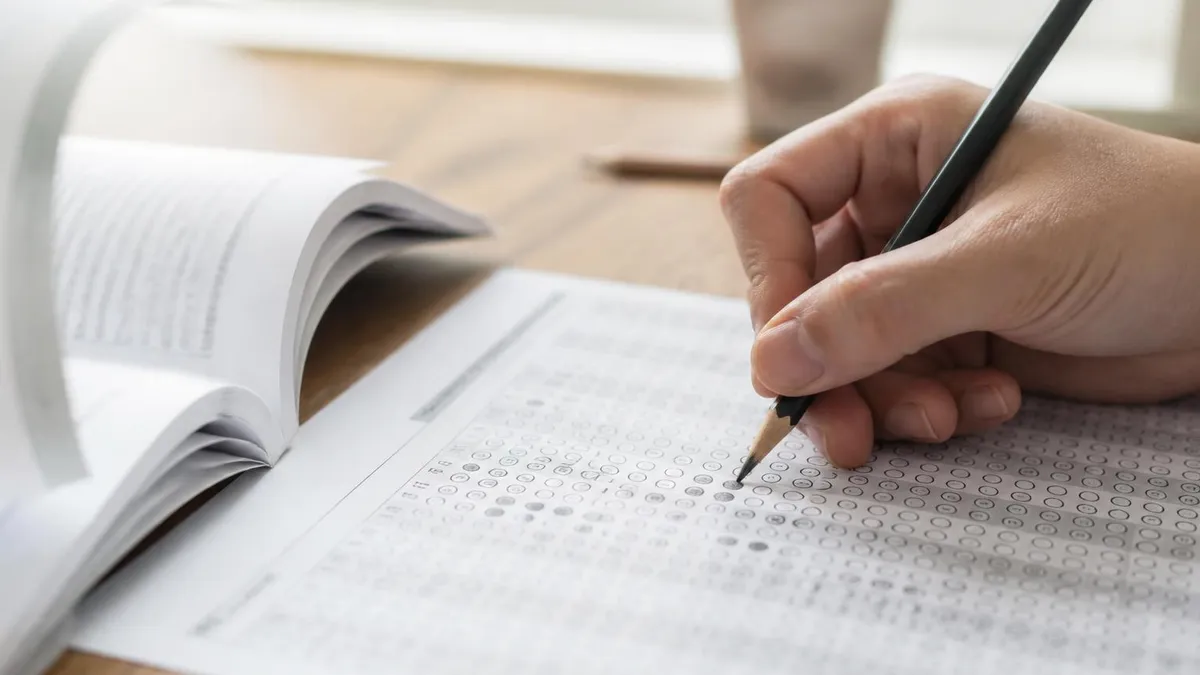
Bar prep data consistently shows that candidates who complete 2,000+ practice MBE questions pass at significantly higher rates than those who only watch lectures. Active retrieval — not passive review — is what cements the law in long-term memory. Track your practice question count weekly and treat it as your true progress metric.
The good news about the bar exam being hard is that the path to passing is well-documented. Every successful bar passer follows roughly the same playbook, with personal variations. Understanding that playbook — and committing to it — is the difference between a confident first-time pass and a heartbreaking near-miss. The supreme court bar exam results in every state confirm a consistent pattern: candidates who do the work pass at high rates, and candidates who cut corners do not.
Start with a commercial bar prep course. Barbri, Themis, Kaplan, AdaptiBar, and Quimbee all produce high-quality programs. The specific brand matters less than your commitment to following the schedule. Most courses give you a daily task list calibrated to finish all coverage and review with two weeks left for full-length simulations. Trust the schedule. Bar courses have iterated for decades; their pacing reflects what actually works.
Allocate roughly 400 hours of focused study across 10 to 12 weeks. That works out to 40 to 50 hours per week, treating bar prep as a full-time job. Mornings are usually best for lectures and new material when your brain is fresh; afternoons for practice questions; evenings for review of what you got wrong. Sundays should be light or off. Burnout is the number one reason candidates implode in the final two weeks of prep.
Practice questions are the heart of the work. Aim for at least 2,000 MBE questions completed under timed conditions, with thorough review of every wrong answer. Many top scorers complete 3,000 to 4,000. Do not skip the explanations — that is where the actual learning happens. The same applies to essays: write at least 30 full MEEs and grade yourself against released answers, looking for missed issues and weak rule statements rather than perfect prose.
Final two weeks should be simulation-heavy. Two full MBE days, three or four full MEE sessions, two full MPTs, all timed and graded. Resist the urge to keep watching lectures. By this point you either know the law or you don't, and additional input fatigues you without consolidating retention. Replace input with output. Force your brain to retrieve under pressure exactly the way it will on exam day.
Mindset matters enormously. The candidates who pass do not necessarily feel confident in week eight — many feel terrified. But they keep showing up, completing the daily tasks, and trusting the process. The candidates who fail often spiral into avoidance, skipping question sets because the scores feel bad, or compulsively re-watching old lectures to feel busy without making progress. Notice which pattern you slip into and intervene early.
Finally, take care of your body. Sleep seven to eight hours nightly. Exercise at least three days a week. Eat real food and limit alcohol to weekends, if at all. Physical health drives cognitive performance more than any study technique. Bar passage is fundamentally an endurance event, and athletes do not crush the night before competition. Treat your final week like race week — taper effort, sleep heavily, and arrive on day one rested, fed, and calm.
Practice MBE scores during the first month of prep are almost always brutal — 45 to 55 percent is normal and not a sign you will fail. Scores climb sharply in the final four weeks as material consolidates. Many people who fail did not score low early; they panicked early, abandoned their schedule, and never caught up.
Knowing what works is only half the battle. Knowing what tanks bar candidates is equally important. Every cycle, predictable mistakes sink otherwise capable graduates. Avoiding these pitfalls is often easier than mastering any single subject, because they are about behavior rather than intelligence. Some of these mistakes are made famous by celebrity attempts — the kim kardashian bar exam journey is a great public example of how persistence beats raw talent when the test gets brutal.
The first major mistake is treating bar prep like law school. Law school rewards deep, theoretical understanding of a few topics per semester. The bar rewards broad, applied recall of hundreds of rules. Candidates who keep reading hornbooks and outlining like 1Ls often fall behind because they never shift to active retrieval. Bar prep should feel less like reading and more like flashcards, drills, and timed practice from week two onward.
The second mistake is over-relying on lectures. Watching a lecture feels productive — you understand everything in real time — but it produces shockingly little long-term retention. Lectures are necessary inputs, but they must be paired with immediate practice questions on the same topic, plus spaced repetition review. If you find yourself at 90 percent lectures and 10 percent questions in week four, you are dangerously behind regardless of how it feels.
The third mistake is ignoring weak subjects. Almost every candidate has a subject they hate — Secured Transactions, Future Interests, Federal Income Tax in some states. The temptation is to write it off and hope the test does not feature it heavily. Examiners absolutely will test it, sometimes heavily. Two or three extra hours per week on your weakest subject is the highest-use time you can spend in the final month.
The fourth mistake is skipping essay practice because writing feels harder than multiple choice. Essays are where many candidates close the gap or sink. Writing forces you to convert recognition into production, which is much closer to what examiners reward. If you find yourself doing 200 MBE questions a day but only one essay a week, recalibrate. Aim for at least three to five timed essays per week throughout prep.
The fifth mistake is exam day mismanagement. Showing up dehydrated, undercaffeinated, or anxious about parking ruins the first hour. Many candidates report that the morning MBE session went poorly because of nerves, then they spent the afternoon trying to make up imagined ground. Build a calm, repeatable exam-day routine during practice simulations: same breakfast, same arrival time, same warm-up. Predictability lowers cortisol and lets your trained brain do its job.
The sixth mistake is comparison to others. Bar forums and study groups can be helpful, but constant comparison to other candidates' practice scores, hours studied, or apparent confidence is corrosive. Some classmates lie, some are genuinely ahead, and some are bluffing through pure terror. Run your own race. The exam grades you against a fixed cut score, not against the kid posting on Reddit at 2 a.m. about how many subjects he finished.
If you are reading this article in the final weeks before exam day, here is the practical playbook to maximize your odds. Week minus-four is when most successful candidates shift fully into output mode. Cut lecture intake to less than 20 percent of your time. Spend the rest doing timed MBE sets of 33 questions, full essays, and at least one MPT per week. Review every wrong answer in writing. The act of writing why you missed it cements the correction far better than re-reading the explanation.
Week minus-three should include your first full-length MBE day — 100 questions in the morning, 100 in the afternoon. It will be exhausting. That is the point. You need to discover where your stamina breaks, what your bathroom timing looks like, and how your accuracy holds up after question 75. Many candidates discover hidden weaknesses only in simulation, when there is still time to fix them.
Week minus-two introduces a second full simulation plus a full MEE day. Compare your scores to MBE percentiles published by NCBE — roughly 130 scaled means you are tracking pass, 135+ is comfortable, 125 is danger zone but recoverable. Adjust your last-week focus to whichever subjects produced the most misses. Do not try to learn anything brand new at this stage. Sharpen what you already partly know.
Week minus-one is taper week. Cut total study hours by 30 to 40 percent. Sleep nine hours nightly if you can. Light review of your one-page subject cheat sheets, gentle exercise, and a calm Friday and Saturday before the exam. Do not do a full simulation in the final three days. Your brain needs to consolidate, not exhaust itself. Pack your bag, confirm your route, and lay out exam day clothing the night before to remove decision fatigue.
On exam morning, eat a moderate breakfast with protein, arrive at least 45 minutes early, and avoid talking to other candidates about substantive law. Other candidates' last-minute panic is contagious and useless. Wear earplugs during the wait. Use the restroom before each session. Pace yourself ruthlessly during the MBE — if you don't know a question in 90 seconds, mark it, pick your best guess, and move on. Returning is fine if time allows.
Between sessions and between exam days, decompress aggressively. Do not review your morning answers. Do not Google rules at lunch. Eat something light, drink water, walk if possible, and reset for the next session. Many candidates damage day two by stewing about day one. The exam is graded as a whole. A rough essay can be balanced by a strong MBE and vice versa. Stay in motion, not in rumination.
Finally, after the exam, give yourself genuine rest before you start second-guessing. Results in most jurisdictions arrive in 8 to 16 weeks. Nothing you remember now will change your score. Use the wait to begin job onboarding, take a real vacation, and reset relationships you neglected during prep. Whatever the result, you have completed one of the hardest credentialing gauntlets in any profession — that itself is a real achievement worth honoring.
Bar Questions and Answers


About the Author
Attorney & Bar Exam Preparation Specialist
Yale Law SchoolJames R. Hargrove is a practicing attorney and legal educator with a Juris Doctor from Yale Law School and an LLM in Constitutional Law. With over a decade of experience coaching bar exam candidates across multiple jurisdictions, he specializes in MBE strategy, state-specific essay preparation, and multistate performance test techniques.