
Science Camps Arizona: Arizona Science Center, Stargazing, and AZSCI Test Prep
Explore science camp arizona options, stargazing sites & dark sky parks. 🎓 Boost your AZSCI score with practice tests and study tips.

The Arizona Science Center stands at the heart of Phoenix's scientific community, drawing more than 300,000 visitors each year and anchoring a state-wide ecosystem of science camp arizona programs that stretches from the Sonoran Desert floor to the high-altitude observatories of Flagstaff. Whether your student is a budding astronomer, a budding biologist, or simply a curious middle-schooler who wants hands-on laboratory experience, Arizona offers an extraordinary range of camp options — many of them directly tied to university research programs and real working scientists.
Arizona's unique geography makes it one of the best states in the nation for outdoor science education. The Sonoran Desert provides living laboratories for ecology and climate studies, while the Colorado Plateau hosts ancient geology that scientists still actively study today. At night, the state's commitment to dark-sky preservation means that stargazing near me searches consistently point to Arizona as a top destination, with some of the clearest skies in the entire Western Hemisphere available within a two-hour drive of any major city.
Science camps in Arizona vary widely in format, cost, and academic intensity. Day camps at science museums run Monday through Friday and are ideal for younger children who want structured activities without overnight separation from family. Residential camps hosted by universities can last two to four weeks and often include university housing, meals, college-level instruction, and genuine research project experience. The distinction matters enormously when families are comparing programs and budgets, so understanding the full landscape is essential before you register.
For students preparing for the Arizona Science Test — known as the AZSCI — these camp experiences are not just enriching extras. They can directly accelerate test readiness by immersing students in scientific practices like data collection, controlled experimentation, and evidence-based argumentation, which are exactly the competencies measured on the AZSCI. Teachers and counselors frequently recommend pairing a summer science camp experience with a structured AZSCI review plan for maximum academic benefit.
Famous scientists throughout history have credited early hands-on exposure to science as the decisive factor in their career paths. Carl Sagan described childhood telescope sessions as formative. Mae Jemison pointed to science fairs and camps. Arizona's network of programs is designed with that same philosophy in mind: give young people real tools, real questions, and real scientific community, and many of them will never look back. The state invests heavily in these programs precisely because workforce projections show enormous demand for STEM professionals in the coming decade.
This guide covers the major science camp options across Arizona, explains how they connect to AZSCI content standards, and gives you a clear framework for choosing the right program for your student's age, interests, and academic goals. We also point you toward the best science camps arizona resources tied to university atmospheric and planetary research, which offer experiences unavailable anywhere else in the country. Whether you are a parent, a teacher, or a student planning your own summer, you will find actionable information here.
Arizona ranks among the top five states nationally for the concentration of research universities, federal science facilities, and private-sector tech and aerospace companies per capita. That density creates an unusually rich pipeline of scientists willing to mentor young students, donate equipment, and open their laboratories to summer camp programs. Understanding this ecosystem — and how to access it — is the first step toward giving any Arizona student the science foundation they need to succeed on the AZSCI and beyond.
Arizona Science Camps by the Numbers
Top Arizona Science Camp Programs
Based in Phoenix, the Arizona Science Center runs week-long day camps for grades K–8 covering robotics, chemistry, physics, and engineering. Programs align directly with Arizona state science standards and often feature guest scientists from ASU and local industry partners.
The UA in Tucson hosts residential and day programs in astronomy, ecology, and atmospheric science. Students work alongside graduate researchers, use professional equipment, and present findings at end-of-camp symposia — a genuine pre-college research experience.
ASU Tempe and Polytechnic campuses offer summer intensives in biomedical science, engineering, sustainability, and data analytics. Many programs provide college credit for high-school students and include campus housing for full immersion in university life.
NAU in Flagstaff uses its proximity to Lowell Observatory and the U.S. Naval Observatory to offer astronomy-focused overnight camps. Dark skies, high elevation, and professional telescope access make this one of the most distinctive programs in the Southwest.
The Arizona Game & Fish Department integrates wildlife science and conservation biology into hunter safety course and hunters education programs, teaching participants ecology, habitat management, and data collection skills directly relevant to AZSCI life science standards.
Arizona's reputation for having some of the best places to stargaze in North America is not just a tourism slogan — it is backed by decades of scientific investment and rigorous light-pollution legislation. The state passed some of the nation's first outdoor lighting ordinances, specifically to protect observatory operations, and that legacy now gives campers and students access to genuinely dark skies within comfortable driving distance of Phoenix, Tucson, and Flagstaff. For science camp programs, this means nighttime astronomy sessions are not supplemental activities but core curriculum.
The concept of a darker sky is central to Arizona's identity as a science destination. The International Dark-Sky Association, which certifies dark sky parks and communities worldwide, has recognized more Arizona sites than those of any other state. Designated areas include Oracle State Park, the Cosmic Campground region near the New Mexico border, and multiple zones within the Coconino National Forest. Science camps that operate in or near these zones provide experiences that urban students simply cannot replicate anywhere closer to home.
For families typing stargazing near me into a search engine from anywhere in Arizona, the options are genuinely excellent. Kitt Peak National Observatory south of Tucson offers public night programs year-round, and several summer science camps formally partner with Kitt Peak to give students access to research-grade telescopes. The McDonald Observatory in West Texas is often cited as a comparison point, but Arizona's density of accessible observing sites within a single state is unmatched in the continental United States.
A dark sky park designation carries specific requirements: the surrounding area must demonstrate measured darkness below a certain threshold on the Bortle scale, and local governments must commit to ongoing lighting ordinance enforcement. Camping overnight inside a certified dark sky park — as several Arizona science camps arrange — gives students the experience of seeing the Milky Way with the same clarity that professional astronomers prize. Many students describe this as the single most memorable moment of their entire summer camp experience.
The universities in arizona that host astronomy-focused camps understand that this experiential layer is what converts a curious student into a committed scientist. Observation logs kept during camp nights frequently become the foundation for science fair projects, and a handful of Arizona camp alumni have had minor planet discoveries credited to their names through university collaboration programs — a level of authentic scientific contribution that is extraordinary for pre-college students.
Beyond astronomy, Arizona's dark-sky culture connects to broader environmental science themes covered on the AZSCI. Light pollution is a measurable ecological stressor: it disrupts nocturnal animal behavior, affects pollinator navigation, and even influences plant flowering cycles in well-documented ways. Science camps that weave these threads together — connecting the experience of a dark, star-filled sky to data about ecosystem health — give students the kind of integrated scientific understanding that AZSCI data analysis questions are specifically designed to assess.
Parents and students should be aware that the best dark-sky camp sites book quickly, particularly for the June-to-August window when school is out and Arizona's monsoon season has not yet reduced atmospheric clarity. Applications for the most competitive university-affiliated programs often open in January or February, and some programs fill within days of announcement. Checking program websites early in the calendar year and setting reminders is the single most effective logistical tip any experienced Arizona science camp family can share.
University of Metaphysical Sciences Sedona Arizona and Specialized Science Programs
Sedona, Arizona is best known for its red rock formations and arts community, but it also hosts a range of science-adjacent educational programs. The university of metaphysical sciences sedona arizona draws students interested in holistic and integrative studies, while nearby Slide Rock State Park and Red Rock State Park offer ecology and geology field study opportunities used by multiple university extension programs and summer science camps across the region.
For AZSCI-focused students, Sedona's geological formations are exceptional outdoor classrooms. The layered sandstone, limestone, and basalt visible in canyon walls record hundreds of millions of years of Earth history. Science camps that schedule field days in the Sedona area routinely use these exposures to teach stratigraphic principles, relative dating, and the interpretation of sedimentary environments — concepts that appear directly in the AZSCI earth science content domain and are notoriously abstract when taught only through textbook diagrams.

Science Camps in Arizona: Benefits and Drawbacks to Consider
- +Access to world-class dark sky parks and observatories unavailable in most other states
- +University-affiliated camps offer genuine research project experience with professional mentors
- +Arizona's diverse biomes — desert, forest, canyon, and plateau — create unmatched field science settings
- +Many programs align directly with AZSCI content standards, reinforcing classroom learning over summer
- +Hunters education and Game & Fish programs provide accredited outdoor science credentials
- +Strong pipeline from camp participation to university STEM program enrollment in Arizona institutions
- −Summer heat in Phoenix and lower elevations can limit outdoor activity windows to early morning
- −Top university-affiliated programs are highly competitive with limited enrollment and early deadlines
- −Residential camps at universities can be expensive, often ranging from $800 to $2,500 per session
- −Transportation to remote dark-sky sites or Sedona-area field locations requires significant planning
- −Program quality varies considerably — some private camp operators lack certified science instructors
- −Hunters education course schedules may conflict with peak summer availability for school-age students
Pros and Cons at a Glance
| Pros | Cons |
|---|---|
| Access to world-class dark sky parks and observatories unavailable in most other states | Summer heat in Phoenix and lower elevations can limit outdoor activity windows to early morning |
| University-affiliated camps offer genuine research project experience with professional mentors | Top university-affiliated programs are highly competitive with limited enrollment and early deadlines |
| Arizona's diverse biomes — desert, forest, canyon, and plateau — create unmatched field science settings | Transportation to remote dark-sky sites or Sedona-area field locations requires significant planning |
| Many programs align directly with AZSCI content standards, reinforcing classroom learning over summer | Program quality varies considerably — some private camp operators lack certified science instructors |
| Hunters education and Game & Fish programs provide accredited outdoor science credentials | Hunters education course schedules may conflict with peak summer availability for school-age students |
Science Camp Arizona Preparation Checklist
- ✓Research application deadlines for university-affiliated programs by January each year.
- ✓Confirm that the camp's curriculum aligns with Arizona state science standards and AZSCI content domains.
- ✓Review the instructor credentials — look for certified teachers or degreed scientists on staff.
- ✓Pack UV-protective clothing, sunscreen SPF 50+, and insulated water bottles for desert field days.
- ✓Complete the online portion of hunters education or wildlife programs before any required in-person field days.
- ✓Check whether the camp site holds a certified dark sky park designation for nighttime astronomy sessions.
- ✓Request a program schedule in advance to identify which nights are scheduled for telescope or observatory sessions.
- ✓Register for at least one AZSCI practice test before camp begins so you can identify specific content gaps.
- ✓Bring a field notebook dedicated to recording observations, data tables, and scientific sketches during camp.
- ✓Confirm housing and transportation logistics for residential programs at least 30 days before the start date.
Science Camp Participation Can Raise AZSCI Scores by an Average of 8–12 Points
Arizona Department of Education data consistently shows that students who participate in structured, standards-aligned science enrichment programs during summer — including formal science camps at the Arizona Science Center or university-affiliated programs — score measurably higher on the AZSCI in the following school year. The effect is strongest in the data analysis and scientific argumentation domains, which are also the highest-weighted AZSCI categories. Pairing camp experience with targeted practice tests produces the largest cumulative gains.
Understanding how science camp arizona experiences connect to specific AZSCI content standards helps both students and parents make smarter choices about which programs to prioritize. The AZSCI is organized around three main practice domains: Analyzing and Interpreting Data, Constructing Explanations and Designing Solutions, and Engaging in Argument from Evidence. Each of these practices is best learned through doing — through actually collecting data, forming hypotheses, running controlled tests, and defending conclusions. Science camps that design their curricula around these practices are not just fun; they are strategically aligned with what the test actually measures.
The Analyzing and Interpreting Data domain, which carries significant weight on the AZSCI, requires students to read graphs, compare data sets, identify trends, distinguish signal from noise, and draw valid inferences. In a typical classroom, students encounter these skills in textbook exercises and lab worksheets. At a well-designed science camp, they encounter them in real field data they collected themselves — water temperature readings from a riparian ecosystem, photon counts from a telescope's CCD camera, or population density estimates from a wildlife transect survey. The difference in cognitive engagement and retention is substantial.
Constructing Explanations is another AZSCI practice domain where camp experience provides an edge. When students spend a week investigating a single question — why do certain cactus species dominate some hillside aspects but not others, or how does light pollution affect insect diversity near camp — they develop the habit of building explanatory models grounded in evidence. This is precisely what AZSCI constructed-response questions ask for, and students who have actually done science, rather than only read about it, write more coherent and evidence-rich explanations on test day.
The Argument from Evidence domain is perhaps where the gap between camp-experienced and camp-inexperienced students is most visible. Arguing from evidence requires confidence in scientific reasoning — the ability to say not just what you found but why your interpretation is better supported than alternatives. Science camps, particularly residential programs with nightly discussions and formal presentations, build this confidence through repeated practice in front of peers and instructors. The social dimension of scientific argumentation, which is often absent from solo test-prep studying, turns out to be a crucial developmental ingredient.
Earth and space science content on the AZSCI maps especially well onto Arizona camp experiences. Students who have stood in the bottom of a canyon reading rock layers, or who have tracked a star's path across a dark Arizona sky over several hours, carry concrete spatial and temporal mental models that abstract classroom instruction rarely achieves. Famous scientists like geologist John Wesley Powell, who mapped the Grand Canyon's stratigraphy, understood that direct observation creates a quality of knowledge that descriptions alone cannot replicate. Arizona's landscape makes these observations available to any student willing to show up.
Life science content on the AZSCI — covering ecosystems, evolution, genetics, and cellular processes — is served by Arizona's extraordinary biological diversity. The Sonoran Desert is one of the most species-rich desert ecosystems on Earth, hosting more than 2,000 plant species, 500 bird species, and 130 mammal species. Ecology-focused science camps operating in desert, riparian, or mountain environments give students direct exposure to species interactions, adaptation evidence, and ecosystem dynamics that are otherwise purely textbook abstractions. This experiential richness is directly convertible into AZSCI test performance when students learn to articulate what they observed in scientific terms.
Physical science content — forces, energy, waves, electricity, and chemical reactions — is addressed by the hands-on laboratory programs at institutions like the Arizona Science Center, which maintains a full engineering and physics lab space for camp use. Students who spend a week building circuits, testing materials under different stress conditions, or modeling wave interference patterns develop procedural fluency that translates directly into higher scores on AZSCI physical science questions, which frequently require interpreting experimental setups and predicting outcomes under changed variables.
The most competitive university-affiliated science camps in Arizona — including programs at the University of Arizona, ASU, and Northern Arizona University — routinely fill their available spots within two to four weeks of applications opening, which typically occurs in January or February. Families who wait until spring break to begin researching summer science camp options frequently find that their preferred programs are already full. Set a calendar reminder for January 15th each year and begin the search process immediately after the winter holidays.
Choosing the right science camp for AZSCI preparation requires balancing several factors: the student's current grade level and science background, the specific AZSCI content domains where they most need strengthening, the family's budget and transportation capacity, and the student's own interests and learning style. A student who loves astronomy will learn more at an observatory camp than at a general science program, even if the observatory camp's formal AZSCI alignment is less explicit. Intrinsic motivation is a powerful force multiplier for science learning at any age.
Budget is a real constraint for many Arizona families, and it is worth knowing that several high-quality programs are low-cost or free. The Arizona Game & Fish hunter safety course and hunters education programs are subsidized by hunting license revenue and cost as little as $15 to $25 for the full certification sequence. The Arizona Science Center offers scholarship assistance and Title I school partnerships that provide free or reduced-cost camp access. Public university extension programs occasionally offer free or low-cost day programs tied to specific research grants. None of these require families to compromise on educational quality.
Transportation logistics deserve serious planning, particularly for programs at high-elevation or remote sites. Flagstaff is approximately 140 miles north of Phoenix — a straightforward two-hour drive, but one that requires vehicle reliability and fuel budgeting. The UA campus in Tucson is about 115 miles southeast of Phoenix. For families without reliable personal transportation, some university programs offer shuttle coordination from Phoenix-area pickup points, and this option is worth explicitly asking about during the application process.
Students with specific learning differences — including ADHD, dyslexia, sensory processing differences, or autism spectrum presentations — should ask programs directly about their accommodation policies. The best Arizona science camps maintain inclusion as an explicit program value and have staff trained to support diverse learners. Hands-on, experiential science learning is in many ways naturally more accessible than lecture-and-worksheet instruction, and several camp directors report that students who struggle academically during the school year flourish in the camp environment precisely because it plays to kinesthetic and visual-spatial strengths.
For students targeting the AZSCI specifically, the ideal summer plan combines a one- or two-week science camp experience with a structured AZSCI practice test routine during the weeks before and after camp. The camp experience builds conceptual depth and scientific confidence; the practice tests build the specific skills of reading test questions carefully, managing time under pressure, and applying knowledge in unfamiliar contexts. Neither component alone is as effective as the combination, and the transition between camp mode and test-prep mode is smoother than most students expect.
Teachers and school counselors play an important role in this ecosystem that often goes unrecognized. Many Arizona schools have formal partnerships with science camps or can help group enrollment at reduced cost. Teachers who complete a professional development residency at a science camp — a program offered by several university-affiliated camps — often bring materials, relationships, and enthusiasm back into their classrooms that benefit all their students throughout the academic year, not just those who attended camp personally.
The science camps arizona community is more interconnected than it appears from the outside. Program directors know each other, share curriculum resources, and sometimes co-organize field trips to sites like Kitt Peak or Meteor Crater that would be cost-prohibitive for individual programs to arrange alone. Joining this community — by attending programs, subscribing to newsletters, and connecting with other science-curious families through museum membership — gives students ongoing access to science learning opportunities throughout the year, not just in summer.
Practical preparation for the AZSCI, anchored by science camp experience, follows a rhythm that experienced students and teachers describe consistently. Begin by taking a diagnostic practice test at least eight weeks before your AZSCI test date. Score it domain by domain — Analyzing Data, Constructing Explanations, Argument from Evidence — and identify the one or two areas where your performance is furthest from your target. That diagnosis becomes the organizing principle for everything that follows, including how you approach reviewing your science camp experience.
Review your field notebooks, lab reports, and camp presentation materials with fresh eyes, specifically asking: which of these experiences generated data that I analyzed and interpreted? Which required me to construct an explanation grounded in evidence? Which involved me defending a conclusion against an alternative interpretation? Most science camp participants find that they have done all three of these things without labeling them as test preparation, and recognizing that connection between authentic science practice and AZSCI skills is itself a significant motivational insight.
Build a weekly practice test schedule that alternates between full-length timed sessions and targeted shorter practice sets focused on specific question types. The full-length sessions train test stamina and time management; the targeted sets build fluency on specific item formats. For the AZSCI, the most commonly tested data formats include line graphs showing experimental results over time, scatter plots comparing two measured variables, bar graphs comparing multiple experimental conditions, and data tables with multiple columns requiring cross-column comparison. Practicing each of these formats explicitly, using the vocabulary of science you developed at camp, accelerates competence faster than unstructured review.
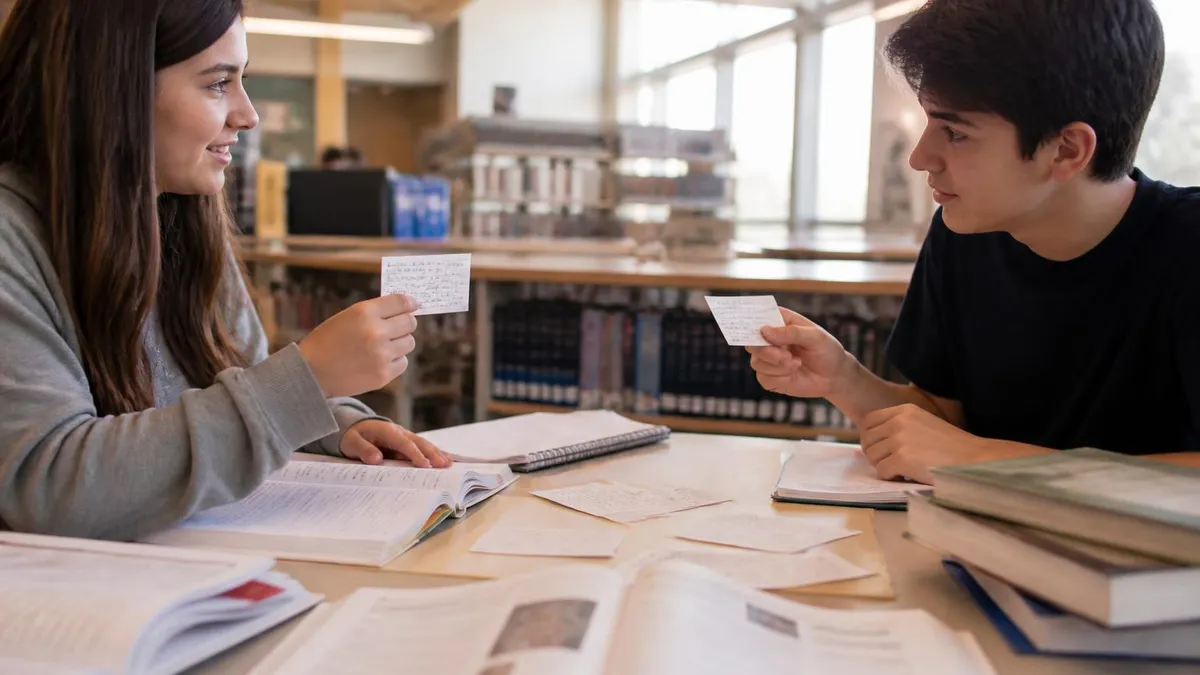
One of the most effective and underused AZSCI preparation strategies is teaching the material to someone else. After camp, sit down with a younger sibling, a parent, or a friend and explain one scientific concept or investigation from your camp experience in detail. Use drawings if helpful. Answer their questions. Try to anticipate misunderstandings and preemptively address them. The cognitive work of explanation — translating your own understanding into words that others can follow — is precisely the work that AZSCI constructed-response items require, and practicing it in low-stakes conversation makes the high-stakes test version significantly easier.
Sleep, nutrition, and physical activity in the days before the AZSCI matter more than most students realize, and science camp veterans often have an advantage here too: camp routines emphasize sleep schedules, outdoor activity, and regular meals, and students who maintain elements of this structure through the school year tend to perform better on high-stakes assessments. The research on sleep and memory consolidation is particularly clear — the brain processes and stores new information during deep sleep, meaning that a well-rested test-taker has better access to recently learned content than an equally knowledgeable but sleep-deprived peer.
Practice the specific vocabulary of AZSCI science writing before test day. Terms like controlled variable, dependent variable, correlation vs. causation, hypothesis, empirical evidence, and scientific consensus appear repeatedly in AZSCI prompts and must be both recognized and correctly applied in written responses. Science camp experiences provide the semantic scaffolding for these terms — students who have actually controlled variables in an experiment know viscerally what the phrase means — but deliberate vocabulary review in the two weeks before the test ensures this knowledge is readily accessible under pressure.
Finally, approach the AZSCI with confidence built on genuine preparation. Students who combine the experiential depth of a quality science camp with systematic practice test review, targeted vocabulary work, and adequate rest enter the testing room with something that no cramming session can manufacture: the felt sense of having actually done science, of having observed, measured, reasoned, and argued the way scientists do.
The Arizona Science Center, the dark sky observatories, the desert ecology field sites, the hunters education programs — all of it points toward the same underlying truth that famous scientists have always understood. Science is a practice, not just a subject. And students who practice it perform better when it counts.
Sample Arizona Science Test Practice Questions
Try these questions from our free Arizona Science Test practice tests. The correct answer and an explanation follow each question.
In a food web diagram, arrows point from the organism being eaten to the organism that eats it. If you observe a pattern of many different arrows all pointing toward a single species, what does this indicate about that species' role?
- A. It is a primary producer with few predators.
- B. It is a decomposer at the bottom of the food web.
- C. It has many different food sources.
- D. It is prey for many different predators.
Answer: D. It is prey for many different predators.
The pattern of arrows indicates the flow of energy. If many arrows point *to* a species, it means many different species are consuming it, making it a common source of food, or prey, for many predators in the ecosystem.
Some cause-and-effect relationships in complex systems, like quantum mechanics or genetics, can only be described using probability. This is known as probabilistic causation. How does this differ from deterministic causation?
- A. Probabilistic causation applies only to designed systems, while deterministic causation applies to natural systems.
- B. In probabilistic causation, a cause is not guaranteed to produce the effect every time, but it increases the likelihood of the effect occurring.
- C. Deterministic causation means the effect happens before the cause, whereas probabilistic causation is the reverse.
- D. Probabilistic causation is a disproven theory, and all true causal relationships are deterministic.
Answer: B. In probabilistic causation, a cause is not guaranteed to produce the effect every time, but it increases the likelihood of the effect occurring.
Probabilistic causation implies that a cause changes the probability of an effect's occurrence, rather than guaranteeing it. For example, exposure to a carcinogen (cause) increases the probability of developing cancer (effect), but doesn't guarantee it for every individual. Deterministic causation, often seen in classical mechanics, implies that if the cause occurs, the effect is inevitable and will follow with 100% certainty.
Over millions of years, the process of natural selection can lead to the evolution of new species. This represents a:
- A. rapid change within a stable system.
- B. short-term cycle of stability.
- C. gradual change in a system over a long timescale.
- D. system that resists all forms of change.
Answer: C. gradual change in a system over a long timescale.
Evolution is a process of gradual change over very long periods. While individual organisms and populations are subject to forces that maintain stability (like stabilizing selection), the overall process of evolution is one of slow, directional change in response to environmental pressures.
After observing that a specific brand of fertilizer appears to increase tomato plant yield, a student concludes, 'Fertilizer X causes an increase in tomato production.' Based on this observational data alone, what is the most significant logical limitation of this conclusion?
- A. The student did not measure the exact weight of the tomatoes produced.
- B. The conclusion confuses correlation with causation, as other variables were not controlled.
- C. The observation was only made on one type of plant (tomatoes).
- D. The student did not use a large enough sample size of tomato plants.
Answer: B. The conclusion confuses correlation with causation, as other variables were not controlled.
This is a classic example of confusing correlation with causation. The student observed two things happening together (use of Fertilizer X and increased yield) and assumed one caused the other. However, without a controlled experiment, other variables (a lurking or confounding variable) could be the true cause. For example, the plants receiving Fertilizer X might also have been in a sunnier location or received more water. A controlled experiment is necessary to establish causation.
AZSCI Questions and Answers
Arizona Science Practice Test

30-Day AZSCI Study Plan — Pass on Your First Try

University of Arizona Atmospheric Science: Dark Skies, Stargazing, and Arizona Science Exploration
How to Pass the AZSCI Exam in 2026 — Complete Study Guide

University of Arizona Planetary Science: Stars, Space, and Arizona Science Exploration
About the Author

Educational Psychologist & Academic Test Preparation Expert
Columbia University Teachers CollegeDr. Lisa Patel holds a Doctorate in Education from Columbia University Teachers College and has spent 17 years researching standardized test design and academic assessment. She has developed preparation programs for SAT, ACT, GRE, LSAT, UCAT, and numerous professional licensing exams, helping students of all backgrounds achieve their target scores.
Join the Discussion
Connect with other students preparing for this exam. Share tips, ask questions, and get advice from people who have been there.
View discussion (8 replies)