
YYZ AVOP: How to Pass the Toronto Pearson Airside Vehicle Operator's Permit Test
✅ YYZ AVOP is Toronto Pearson's airside driving permit: a 30 or 40 question written test, 90% pass mark, valid 3 years. Format, retakes and prep tips.

YYZ AVOP is the Airside Vehicle Operator's Permit for Toronto Pearson. You earn it after 12 to 24 hours of training and a written test with 30 or 40 questions, taken in person in Terminal 1. You need 90 percent to pass, and the card stays valid for three years.
YYZ Avop: Key Facts (Updated October 2026)
| Fact | Details | Source |
|---|---|---|
| Where the test is taken | In person at the AVOP offices on the ground level of Terminal 1 | Toronto Pearson (GTAA) |
| Number of questions | 30 for DA and GA/DA permits (from the Airport Traffic Directives); 40 for the D permit | Toronto Pearson (GTAA) |
| Passing score | 90 percent, plus a correct answer to the mandatory site-identification map question | Toronto Pearson (GTAA) |
| Training required | 12 hours (practical and theoretical) for a DA permit; 24 hours for a D permit | Toronto Pearson AVOP Requirements and Administration |
| Test sessions | Tuesdays, Wednesdays and Thursdays at 08:30, 10:30 and 13:30 | Toronto Pearson (GTAA) |
| Retake rules | One week wait after a first failure, 30 days after a second, and full retraining after a 3-month wait following a third | Toronto Pearson AVOP Requirements and Administration |
| Validity | Three years, with the expiry date shown on the AVOP card | Toronto Pearson (GTAA) |
What Is the YYZ AVOP and Who Needs It?
The airside vehicle operator's permit is the card that lets you drive on the movement and apron areas at Toronto Pearson International Airport, code YYZ. People who search for yyz avop are usually airport employees, contractors, fuel and catering drivers or ground-handling staff whose employer has told them a permit is required. Without it, you cannot take a vehicle onto the airside, however experienced you are on public roads.
Before booking anything, read through a full set of sample questions so the format feels familiar. Our avop practice test pdf hub collects free airside questions on zones, markings, signage and right-of-way, written in the style of the real directives. Realistic wording matters because the Toronto Pearson test draws from the Airport Traffic Directives, and a 90 percent threshold leaves very little room for guesswork on topics that candidates routinely underestimate.
Many people also search for reference codes such as avop-208, avop-069, avop-108, avop-062 or avop-107. Those strings appear in search results and forum threads, but the official sources listed in the table identify the requirements through the Airport Traffic Directives rather than through those codes. We cannot vouch for what each code points to, so always confirm the current wording on the official Toronto Pearson permits page before acting on anything you read elsewhere.
Toronto Pearson distinguishes between permit classes, and the class decides how long your training is and how many questions you face. A DA or GA/DA permit needs 12 hours of practical and theoretical training and a 30-question written test. The D permit needs 24 hours of training and a 40-question test. Your employer or sponsor normally tells you which class applies, because it depends on where and what you will be driving on the airfield.
The pass mark is demanding. You need 90 percent, which means missing no more than three questions on a 30-question paper or four on a 40-question paper, assuming every question carries equal weight. On top of that, you must answer the mandatory site-identification map question correctly. A candidate who scores 95 percent but misidentifies the map location still fails, so treat the map as a separate skill that deserves its own rehearsal time.
The written test is taken in person at the AVOP offices on the ground level of Terminal 1. Sessions run on Tuesdays, Wednesdays and Thursdays at 08:30, 10:30 and 13:30, which gives you nine slots in a normal week. Plan around them, since an employer's start date can hinge on which slot you secure. Confirm availability with the office before travelling to the terminal, and allow extra time to find the AVOP counter.
Failing is not the end, but the waiting periods are strict. After a first failure you wait one week to rewrite. After a second failure the wait is 30 days. A third failure means full retraining after a three-month wait. Each miss costs real calendar time, so arrive prepared. Work through the avop 108 question set and time yourself under test conditions before you book your first attempt.
Once you hold the card, it is valid for three years, with the expiry date printed on it. Put a renewal reminder in your calendar well ahead of that date, because an expired permit cannot be used on the airfield. The sections below walk through the steps to get your permit, what the test covers, how hard it really is, how retakes work and how to prepare, followed by ten short answers to common questions.
You can continue preparing with the yyz avop, which includes answer explanations for every question.
YYZ AVOP by the Numbers
How Do You Get an AVOP at YYZ?
Confirm your permit class
Complete the required training
Study the Airport Traffic Directives
Sit the written test in Terminal 1
Receive your card and note the expiry
What Does the YYZ AVOP Test Cover?
The Toronto Pearson written test draws its questions from the Airport Traffic Directives, the rulebook that governs every vehicle on the airfield. That means the exam is not a general driving quiz. You will be asked about airside areas and zones, markings, lighting, signage, right-of-way and driver conduct. Reading the directives once is not enough, because the questions test whether you can apply a rule to a situation rather than recite a definition.
Airside areas and zones are the first topic to master. Candidates must know where public-road rules end and airfield rules begin, which areas are reserved for aircraft movement, and where vehicles may operate with permission. A typical question describes a vehicle approaching a boundary and asks what the driver must do before entering. The zone quizzes linked below drill exactly this kind of scenario so you can recognise the correct answer quickly under pressure.
Markings, lighting and signage make up the second block. Airfield signs use colour combinations that signal different kinds of instruction, such as mandatory, information and location, and painted lines show where vehicles must stop or hold. You should be able to read a sign at a glance and know what action it demands. Practise by covering the answer options, naming the meaning first, then checking the explanation to catch any gaps.
Right-of-way is the principle that ties everything together. Aircraft have priority over vehicles on the airfield, and the directives set out how vehicles yield to each other. Questions often present a crossing or intersection scenario and ask who must give way. Memorise the order of priority, but also understand why it exists: a vehicle that blocks a taxiway can contribute to a runway incursion, one of the most serious safety events an airport can face.
Once you feel ready, you need a test slot. The avop-208 booking guide explains how applicants reserve a written test at Toronto Pearson and what to expect on the day. Sessions run Tuesdays, Wednesdays and Thursdays at 08:30, 10:30 and 13:30, so book early if your employer has fixed a start date. Arrive well before your slot, because a missed session means rebooking and further delay.
Searchers also type avop 069 when looking for the same booking information, and the answer is identical: the test is taken in person at the AVOP offices on the ground level of Terminal 1. If you want the avop 069 process explained in plain steps, read that article before contacting anyone, so your questions are specific. Employers often handle some paperwork for staff, so ask your supervisor what has already been submitted.
Do not assume the rules from another airport apply at YYZ. Calgary's written assessment also has a 90 percent pass mark, but it allows at most three attempts with at least 16 hours between them. Montréal's theory exam takes about 60 minutes for a type D permit and 45 minutes for a D/A, and a type D there requires a restricted radiotelephony certificate. Always follow the rules of the airport that will issue your card.
How Do the DA, GA/DA and D Permits Differ for the YYZ AVOP (avop 108)?
The DA permit is the shorter route at Toronto Pearson. Applicants need 12 hours of practical and theoretical training, and the written test has 30 questions taken from the Airport Traffic Directives. With a 90 percent pass mark, that leaves room for three wrong answers at most, and the site-identification map question must still be answered correctly.
Because the letters in the permit name relate to the areas where you may drive, confirm the exact scope with your employer and the AVOP office before training. Candidates who study for the wrong class waste hours, and a permit that does not cover your assigned work area will not let you start the job you were hired to do.
Is Studying With an AVOP Practice Test Worth It for YYZ?
- +You learn the question style before the real test
- +Instant feedback shows which topics need more work
- +Repetition builds the speed needed for 30 or 40 questions
- +Weak areas like signs and zones become obvious early
- +You can practise free, anytime, on any device
- +Better preparation avoids waiting periods after a failed attempt
- −Practice questions are not the official Pearson test
- −Memorising answers without understanding the rules can backfire
- −Practice does not replace the required training hours
- −Directives change, so older sources may be out of date
- −It cannot replicate the pressure of the Terminal 1 test room
- −Some candidates over-practise and neglect the site-identification map
What Should You Do Before an AVOP Practice Test for YYZ?
- ✓Confirm your permit class with your employer first.
- ✓Log your 12 or 24 hours of required training.
- ✓Read the current Airport Traffic Directives from the official site.
- ✓Take a topic quiz on airside areas and zones.
- ✓Take a topic quiz on markings, lighting and signage.
- ✓Rehearse the site-identification map until you never miss it.
- ✓Time a full 30 or 40 question practice set.
- ✓Aim for 90 percent or better on three sets in a row.
- ✓Check the next Tuesday to Thursday session slot.
- ✓Arrive early at Terminal 1 with time to spare.
The map question can fail you on its own
At Toronto Pearson you need 90 percent and a correct answer to the mandatory site-identification map question. A high overall score does not save a wrong map answer. Practise reading the airfield layout until locating a site feels automatic.
How Hard Is the AVOP Test at YYZ?
The AVOP test at Toronto Pearson is moderately hard, mainly because of the 90 percent pass mark. We do not have an official pass rate to quote, and any figure you see elsewhere should be treated with caution. What we can say is that the questions are not tricks. They test whether you know the Airport Traffic Directives well enough to apply them accurately, and precision matters more than cleverness.
The arithmetic is unforgiving. On a 30-question paper, 90 percent means 27 correct answers, so three mistakes are the limit. On the 40-question D permit paper you need 36 correct, so four mistakes is the limit. These numbers assume equal weighting, which you should confirm with the AVOP office. Either way, a handful of careless errors is enough to turn a confident candidate into someone waiting a week.
Candidates tend to lose marks in predictable places. Similar-looking signs get confused, zone boundaries are misremembered, and priority rules are applied from road-driving habit instead of airfield rules. Numbers and specific procedures also cause trouble when they are only half learned. The fix is repetition by topic. Take a short quiz, review every explanation, then retake it a day later and confirm that your mistakes have stopped.
The mandatory site-identification map question deserves its own preparation block. It is not a normal question you can afford to miss, because a wrong answer fails the attempt regardless of your score elsewhere. Study the airfield layout in the official materials, practise naming locations from the map, and test yourself by covering the labels. Treat it like a gate you must pass through before your other marks even count.
Visual learners often absorb the directives faster from walkthroughs than from text. A set of avop test questions with video answers lets you see the reasoning behind each correct choice, which helps when a similar scenario appears worded differently on the real paper. Use video as a supplement to the official directives, never as a replacement, since the directives remain the source of the exam questions.
There is no official figure for how many hours of study you will need, so build a plan around your own accuracy. A sensible approach is four or five sessions over one to two weeks, each focused on one topic and ending with a timed quiz. Move on only when you score consistently above 90 percent. If accuracy stalls on one topic, go back to the directives rather than repeating the same quiz.
On test day, the setting is calm but the stakes feel high. Sessions at 08:30, 10:30 and 13:30 give you some choice, so pick the time when you think most clearly. Eat beforehand, bring what the AVOP office asked for, and read each question twice before answering. Rushing is the most common cause of avoidable errors, especially on a paper where every single mark counts.
After a first failure you wait one week, after a second 30 days, and after a third you face full retraining following a three-month wait. Treat your first attempt as the real one and book only when you are consistently scoring above 90 percent.
How Do AVOP Retakes and Renewals Work at YYZ?
The retake rules at Toronto Pearson work as an escalating ladder. After failing the written test once, you wait one week before you can rewrite it. After a second failure, the wait grows to 30 days. A third failure is the most serious: you must wait three months and then complete full retraining before trying again. The rules are designed to make sure that repeat candidates genuinely improve their knowledge.
The practical cost of failing is larger than the waiting time alone. If your employer has scheduled you to start driving airside on a given date, a one-week delay can mean reassigned shifts, lost hours or a postponed start. A 30-day wait is worse. For that reason, the cheapest preparation you can buy is simply more practice before the first attempt, rather than relying on being allowed to try again.
If you reach the third failure, the full retraining requirement means repeating the 12 or 24 training hours, depending on your permit class, in addition to the three-month wait. That is a large investment of time for you and your employer. Candidates in this position should change their approach completely: identify the specific topics causing errors, study the directives directly and practise with explanation-based quizzes rather than repeating tests from memory.
Once issued, a Toronto Pearson AVOP is valid for three years, and the expiry date is shown on your AVOP card. Do not rely on a colleague or supervisor to remind you. Note the date the day you receive the card, and set reminders at several points ahead of it. Renewal requirements can change between cycles, so check the current requirements document before your date arrives rather than assuming last time's process still applies.
Paperwork is the other half of getting a permit, and mistakes there cause delays that have nothing to do with your knowledge. Our avop 062 walkthrough explains the application form section by section, so you can fill it in accurately the first time. Check names, employer details and permit class carefully, since an incorrect entry can send your application back for correction.
Fees are another area where airports differ. We have not verified the current Toronto Pearson fee schedule, so confirm costs with the AVOP office before you book. For comparison, Calgary charges CAD $25 for the written assessment, $125 for the practical assessment, $75 for the competency check or night endorsement and $25 for the card, all billed to the employer. Never assume your airport follows the same structure.
Renewal consequences vary too. At Calgary, renewal assessments must be completed before the permit expires, and a failed renewal attempt revokes the AVOP. Toronto Pearson has its own rules, so read them on the official site and do not borrow another airport's. Keep your card safe, report loss promptly to the AVOP office, and make sure your employer knows your expiry date so work is never scheduled on a lapsed permit.
What Are the Best Tips for AVOP Knowledge Questions and Answers Practice?
Start with a diagnostic. Take one untimed practice set before you study anything, and note which topics cost you marks. Most candidates discover that their weak areas are narrower than they feared, often just signage or zone boundaries. Targeting those areas first is far more efficient than rereading the whole directives from page one, and it gives you a clear measure of progress as your scores climb toward 90 percent.
Study by topic rather than at random. Spend one session on airside areas and zones, another on markings and lighting, and another on signage and right-of-way. Short, focused sessions of 30 to 45 minutes are easier to sustain than marathon evenings. At the end of each session, take a quiz on that topic only, review every explanation, and write down any rule you got wrong in your own words.
Learn to read signs quickly. Cover the answer options and name each sign's meaning from memory, then reveal the options and compare. If you hesitate for more than a few seconds, the sign is not learned yet. Build a small set of flashcards for the signs and markings you keep missing, and review them in spare minutes during breaks, commutes or before shifts until recognition becomes instant.
Rehearse the site-identification map separately. Because a wrong answer fails the attempt, spend a few minutes of every session on it. Look at the airfield layout in the official materials, then test yourself on naming sites and locations without labels. Ask a colleague who already holds an AVOP to quiz you, since they will know the airfield and can point out features you might overlook.
Simulate real conditions at least twice before test day. Sit a full 30 or 40 question set, depending on your class, without notes and with a timer. Aim for 90 percent or better on three consecutive sets. If you cannot do it, delay your booking. A calm one-week postponement of your first attempt costs far less than a failed attempt followed by a mandatory week of waiting.
Look after the basics before the session. Sleep properly the night before, eat something, and arrive at Terminal 1 early so you are not rushing through the building. Read every question twice, watch for words like only, never and must, and do not change an answer unless you can name the rule that proves it wrong. First instincts, grounded in careful study, are usually correct.
Finally, remember that the permit is a safety responsibility, not just a pass mark. The rules you learn exist to prevent collisions, runway incursions and injuries on a busy airfield. Keep studying the directives after you pass, follow them every shift and challenge unsafe practice politely. Your first week airside will go better if you treat the test material as a working manual rather than a one-off exam hurdle.
AVOP Questions and Answers

Mastering the Airside Vehicle Operator's Permit 2026: A Guide to Navigating Airport Grounds Safely

Gtaa Avop Test Booking: How to Book the Toronto Pearson AVOP Written Test

AVOP Practice Test PDF – Free Airside Vehicle Operators Permit Questions
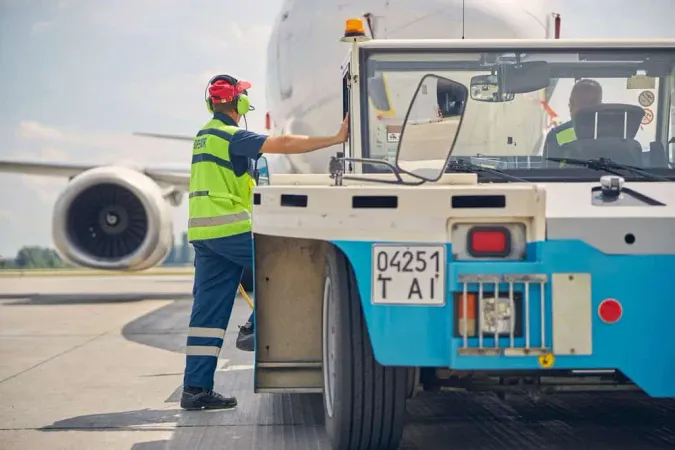
Comprehensive Guide to the AVOP Application Form
AVOP Test
Sources & references
Prepared by the Practice Test Geeks editorial team using AI-assisted drafting; exam facts are checked against the official sources below. Editorial policy
- admtl.com — Test delivery, eligibility, time limit · verified Oct 2026
- torontopearson.com — Test delivery, test dates · verified Oct 2026
- cdn.torontopearson.com — Eligibility, exam format, passing score · verified Oct 2026
- yyc.com — Fees · verified Oct 2026
- yyc.com — Passing score, renewal, retake policy · verified Oct 2026