
Take HESI A2 Exam Online: Options, Rules and Free Practice Test 2026
📝 Take HESI A2 exam online: how remote testing works, what the HESI A2 covers, and a free HESI practice test to help you score higher.

If you want to take the HESI A2 exam online, the first thing to understand is that your nursing program controls the format. The HESI A2 is the Admission Assessment published by Elsevier, and schools decide which sections you sit, where you test, and what score counts. Some programs allow remote proctored testing from home, while others require a campus testing center. Check your school's admissions page before paying for anything, because a wrong assumption can cost you an application cycle. Practice with the free HESI (ATI) practice test on PracticeTestGeeks (30 questions with answer explanations).
Searches for hesi are often mixed up with a Roblox basketball game. Terms like no hesi, no hesi.gg, and no hesi html game refer to a gaming mechanic and have nothing to do with nursing admissions. This guide covers the real HESI exam, the Elsevier assessment that nursing and allied health programs use to measure academic readiness. If you landed here looking for the game, you will want a different site, but if you are applying to nursing school, keep reading.
The HESI A2 exam is made up of separate sections, and your program picks which ones you must complete. The core academic sections are Math, Reading Comprehension, Vocabulary and General Knowledge, and Grammar. Many schools add science sections such as Anatomy and Physiology, Biology, Chemistry, and Physics. There are also two non-scored sections, a Learning Style Inventory and a Personality Profile. Knowing your exact section list lets you build a study plan around real requirements instead of guesses.
Online practice is the part you fully control, even when the real exam has location rules. A good HESI A2 practice test shows you the question styles, the pacing, and the topics you tend to miss. Because each section is timed separately, practicing under the clock matters as much as knowing the content. Students who complete two or three full-length timed sets before test day usually walk in calmer and finish every section without rushing the final questions.
Our hesi a2 test study guide walks through each section in detail, including the math skills, vocabulary strategies, and science topics that appear most often. Use it alongside timed quizzes so that every study session ends with a measurable result. Track your percentage by section, because HESI reports scores per section and your program may set a minimum for each one. That tracking tells you exactly where an extra week of review will pay off the most.
This page is built as a practical roadmap. You will find step-by-step instructions, a comparison of testing options, a checklist for exam day, and study advice you can adapt to your own calendar. Between sections you will also find free practice quizzes in anatomy, physiology, biology, and chemistry, which are science topics many programs require. Work through them in order, and treat every wrong answer as a clue about what to review next.
A final caution before you begin: never rely on third-party sites that promise to take the exam for you or sell leaked questions. Elsevier and nursing programs treat that as academic dishonesty, and it can end your application permanently. Honest preparation works. Most applicants who improve do so by practicing consistently for four to eight weeks, reviewing every missed question, and arriving at test day rested, with their identification and technology fully checked.
HESI: upcoming dates and official changes
- Updated Oct 20, 2026: Delivery (HESI Next Generation) is now Onsite school proctor or remote proctoring (school proctor or 3rd-party vendor) (previously Onsite school proctoring or remote vendor proctoring).
- Updated Oct 20, 2026: Score release (HESI Admission Assessment (A2) — Legacy platform) is now Within 24 hours after completing test sections (previously Within 24 hours after completing test sections).
- Updated Oct 20, 2026: Score release (HESI Specialty and Exit exams — Legacy platform) is now 24–48 hours after exam closure (previously 24–48 hours after exam closure).
Facts verified Nov 9, 2026 against Elsevier. Dates that have passed are removed automatically.
- For the HESI A2 in HESI Next Generation, the estimated exam duration depends on which sections the school selects, and the school can adjust it manually. (Elsevier)
- In HESI Next Generation, schools schedule the HESI A2 as Version 1 for first-time testers or Version 2 for second-time testers, so a retake uses a different exam version. (Elsevier)
- HESI Next Generation exams can be proctored onsite by a school proctor or remotely, either by a school proctor over a group meeting platform or by a third-party proctoring vendor. (Elsevier)
- When a HESI Next Generation exam is set up as student-pay, the student must pay before testing and cannot test until payment is received. (Elsevier)
- On the HESI Legacy platform, HESI Admission Assessment (A2) results show within 24 hours after the student completes the test sections. (Elsevier)
- On the HESI Legacy platform, HESI Specialty and Exit exam results appear 24 to 48 hours after the exam is closed. (Elsevier)
Facts verified Nov 9, 2026 against Elsevier. Dates that have passed are removed automatically.
HESI Exam at a Glance
| Item | Detail | Official source |
|---|---|---|
| Time limit (HESI Admission Assessment (A2) — HESI NG) | Set by the school based on the sections selected | Elsevier |
| Retake policy (HESI Admission Assessment (A2) — HESI NG) | Separate exam version for second-time testers | Elsevier |
| Delivery (HESI Next Generation) | Onsite school proctor or remote proctoring (school proctor or 3rd-party vendor) | Elsevier |
| Eligibility (HESI Next Generation — student-pay exams) | Payment required before testing | Elsevier |
| Score release (HESI Admission Assessment (A2) — Legacy platform) | Within 24 hours after completing test sections | Elsevier |
| Score release (HESI Specialty and Exit exams — Legacy platform) | 24–48 hours after exam closure | Elsevier |
| Registration deadline (HESI Distance Testing — retake registration) | Wait 24 hours before re-registering with the same Department ID | Elsevier |
Facts verified Nov 9, 2026 against Elsevier. Dates that have passed are removed automatically.
Free HESI (ATI) Study Tools
Interactive HESI (ATI) resources on PracticeTestGeeks, free to start:
- HESI Math Practice Exam 2 — 30 questions with instant scoring and answer explanations
- HESI (ATI) flashcards — review key terms and concepts card by card
- HESI (ATI) study guide — topic-by-topic overview of what the exam covers
- HESI (ATI) cheat sheet — one-page printable summary for last-minute review
HESI A2 Exam by the Numbers

How to Take the HESI A2 Exam Online, Step by Step
Confirm Your Program's Rules
Register Through Official Channels
Take a Baseline Practice Test
Run a Full Technology Check
Test, Review, and Plan Next Steps
Remote proctored testing lets you complete an assessment at home while a live or recorded proctor monitors you through your webcam and microphone. Where a school offers this option for the HESI A2, you typically schedule a time slot, install any required software, and verify your identity before the first question appears. Because policies differ widely between programs, your admissions office is the only reliable source. Ask whether remote testing is allowed, which sections are included, and what fees apply.
Expect a strict environment check. Most remote sessions require a private room, a clear desk, a government-issued photo ID, and a slow webcam sweep of your space. Phones, notes, second monitors, and smart watches are normally prohibited. Proctors may stop the session if someone enters the room or if you repeatedly look away from the screen. Treat the exam like a campus session, because the integrity rules and consequences for violations are essentially the same.
Technology failures are the most common reason online sessions go badly. Run any system test your school provides at least two days ahead, not on exam morning. Use a wired internet connection if possible, close every background application, and plug in your laptop. Write down the technical support number before you start, and ask in advance what happens if your connection drops mid-section, since the clock and the policy on restarts can differ.
Timing works section by section. Each HESI A2 section has its own time allotment, and the clock does not pause for interruptions, so plan for quiet. Math, Reading Comprehension, Vocabulary, and Grammar generally run from roughly fifty minutes to an hour each, while science sections are shorter. Your total seat time depends on how many sections your program requires, and a full battery can fill most of a day, usually with breaks scheduled between sections.
Fees and registration vary too. Elsevier and your school set the cost, and prices differ between programs, retake attempts, and whether you test on campus or remotely. Some schools bundle the exam fee into the application, while others ask you to purchase through an official portal. Never pay a third-party site for registration. Confirm the amount, the refund policy, and the deadline in writing, and keep your receipt until your scores post to your program.
If remote testing is not offered, do not panic. Testing centers and campus labs are widely available and often have more flexible scheduling than you expect. Many applicants prefer them because the equipment is managed for you and technical issues are handled on site. Compare your travel time, total cost, and the next available date. Sometimes a week of commuting beats the stress of troubleshooting your own computer on exam day.
Whichever format you pick, the content is identical, so your preparation should not change. Spend your energy on the sections your program requires and on the score it expects. Take a free hesi practice test early to find your baseline, then repeat it every week or two. Rising section percentages are the best evidence that your study method works, and falling ones tell you to adjust before the real attempt.
HESI A2 Exam Options: Online, Testing Center, or Campus
Remote proctored HESI testing, where a school allows it, lets you test from home using your own computer, webcam, and microphone. A proctor verifies your identity, checks your room, and monitors you throughout. The main advantage is convenience, since you save travel time and can pick a familiar environment. The main risk is technology, because a weak connection or incompatible device can interrupt a timed section and create stress you cannot fully control.
To succeed, test your equipment well ahead of time and prepare a private, quiet room with a clear desk. Close all other applications and notify your household. Ask your program exactly which sections are covered remotely and whether breaks are permitted between them. Keep your photo ID ready and read the proctoring rules twice, because accidental violations such as looking away repeatedly or speaking aloud can lead to a flagged or stopped session.

Is Taking the HESI Exam Online Better Than a Testing Center?
- +You skip travel time and transportation costs
- +You test in a familiar, comfortable space
- +Scheduling can be more flexible around work or family
- +No need to find an available seat near your home
- +Setup is quick once your technology check passes
- +You can focus entirely on content after a calm morning at home
- −A poor connection can interrupt a timed section
- −Strict room and ID checks can feel stressful
- −Not every nursing program allows remote HESI testing
- −Household noise can lead to a flagged session
- −You are responsible for your own device and software
- −Support is remote, so fixes may take longer than on site
Pros and Cons at a Glance
| Pros | Cons |
|---|---|
| You skip travel time and transportation costs | A poor connection can interrupt a timed section |
| You test in a familiar, comfortable space | Strict room and ID checks can feel stressful |
| Scheduling can be more flexible around work or family | Not every nursing program allows remote HESI testing |
| No need to find an available seat near your home | Household noise can lead to a flagged session |
| Setup is quick once your technology check passes | You are responsible for your own device and software |
| You can focus entirely on content after a calm morning at home | Support is remote, so fixes may take longer than on site |
HESI A2 Exam Online Day Checklist
- ✓Confirm your appointment time and time zone the day before.
- ✓Complete the required system check at least two days early.
- ✓Keep your government-issued photo ID within reach.
- ✓Clear your desk of notes, books, and extra devices.
- ✓Plug in your laptop and use a wired connection if possible.
- ✓Close every background program and disable notifications.
- ✓Tell your household your exam schedule so no one interrupts.
- ✓Save the technical support phone number before you start.
- ✓Eat a balanced meal and drink water beforehand.
- ✓Review your program's rules on breaks, scratch paper, and calculators.
Your school sets the rules, not a website
Whether you can take the HESI A2 online, which sections you need, and what score you must earn are all decided by your nursing program. Get these answers in writing before you register, then build your study plan around them.
Math is the section that trips up the most applicants, so start there. Expect arithmetic with fractions, decimals, and percentages, ratios and proportions, basic algebra, unit conversions, and word problems that resemble dosage-style thinking. You do not need calculus. You do need speed with fractions and conversions, because the timer rewards fluency. Practice converting between teaspoons, milliliters, pounds, and kilograms until the steps feel automatic, and always write out each step instead of solving everything mentally.
Reading Comprehension passages run a few hundred words, followed by questions about main idea, inference, and the meaning of words in context. The best method is to read the question first, then scan the passage for evidence. Avoid answers that sound reasonable but add information the author never stated. Practice with short health-related articles so the vocabulary and structure feel familiar, and time yourself so that each passage and its questions take under four minutes.
Vocabulary and General Knowledge tests word meanings and everyday facts, often with a healthcare flavor. Build a list of medical roots, prefixes, and suffixes such as hyper-, hypo-, -itis, and -ectomy, because they unlock dozens of unfamiliar words. Flashcards work well here, especially in short sessions of ten minutes. Review any word you miss in a practice set the same day, then again two days later, which strengthens memory far more than rereading a long list once.
Grammar questions check sentence structure, punctuation, verb tense, subject-verb agreement, and word choice. Many students find this section easier than expected, yet careless errors still cost points. Read each sentence in your head and listen for what sounds wrong, then name the rule that explains it. A short review of commas, apostrophes, pronoun agreement, and common confusions like affect versus effect can raise your score faster than almost any other single review session.
Science sections vary by program. Anatomy and Physiology is the most common and covers body systems, terminology, and how organs work together. Biology covers cells, genetics, and basic processes, Chemistry covers atoms, bonds, solutions, and pH, and Physics covers motion, energy, and simple machines. Check your program's required list, then spend study time in proportion to the weight and your weakness. Using the practice quizzes on this page, start with the system or concept you recognize least.
Good practice hesi a2 test questions do more than check answers; they explain why the right option is correct and why the others are wrong. After each set, write one sentence for every miss describing the rule or fact you lacked. Over a few weeks those sentences become a personalized review sheet. This is far more efficient than rereading chapters, because it targets only the knowledge gaps that actually cost you points on the HESI A2 exam.
Finally, mix your practice. Alternate timed sets with untimed review sessions so you build both accuracy and speed. A useful rhythm is three timed sections per week, plus two shorter review sessions focused on errors. Keep a running log of your percentage in each subject. When a section stays above your program's cutoff for three consecutive attempts, shift that time to your weakest area and keep the strong section warm with a brief weekly refresher.
You can continue preparing with the hesi exam near me, which includes answer explanations for every question.
You can continue preparing with the hesi pain case study, which includes answer explanations for every question.
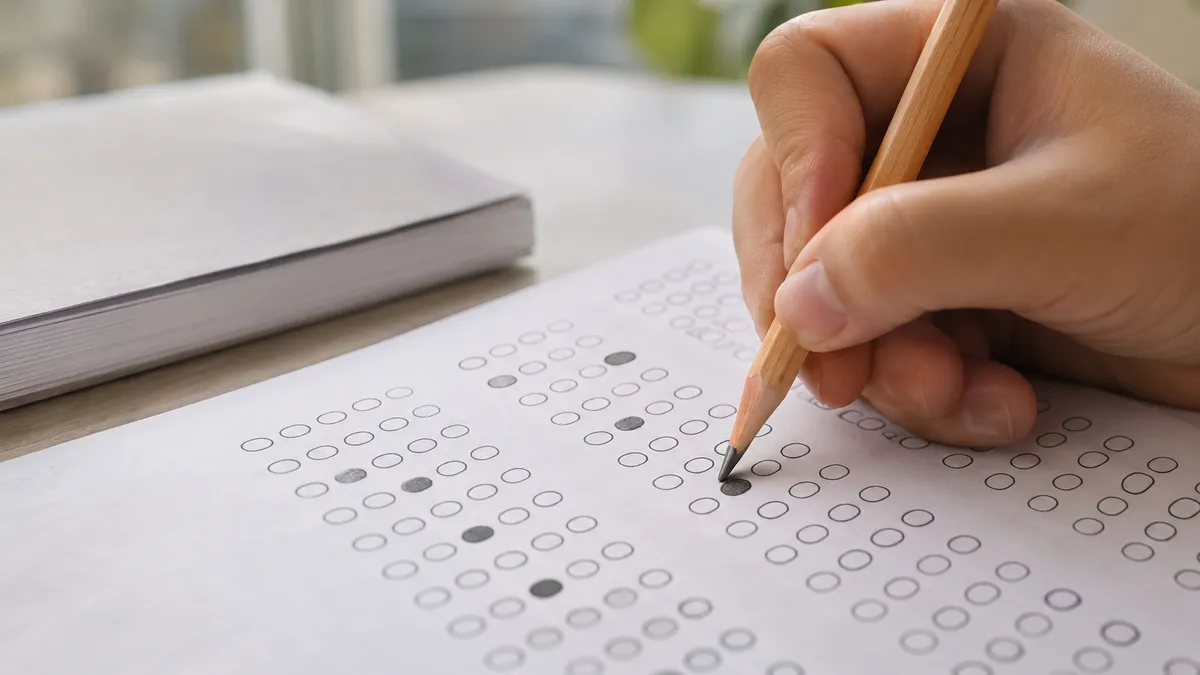
Only register for the HESI A2 through your school or official Elsevier channels. Sites that sell exam answers or offer to test for you violate academic integrity rules and can disqualify your application. Remember too that no hesi game pages are unrelated to this nursing exam.
HESI A2 results come back as scores for each section you took, plus a cumulative score that combines them. Your program decides which numbers matter. Some schools look only at the cumulative score, some require a minimum in every section, and competitive programs often weigh the HESI alongside GPA and prerequisite grades. Learn your program's exact formula early, because it determines whether you should chase a higher math score or protect an already strong reading result.
There is no single national passing score. Programs set their own cutoffs, and many fall between 75 and 80 percent, though competitive nursing programs may expect higher and some allied health programs accept lower. Treat these as typical ranges, not rules. The only number that counts is the one published by the school you are applying to, so find it on the admissions page or ask an advisor and save the response for your records.
Retake policies also belong to your school. Many programs allow a second attempt after a waiting period, often a few weeks, and some limit total attempts per application cycle or per year. Fees usually apply again. Because a retake can delay your application, plan your first attempt as if it is the only one. If you do need another try, use the section report to build a focused plan rather than repeating the same general review.
Timing the exam is a strategic decision. If you plan to take hesi exam online, schedule it far enough before the application deadline to leave room for a retake and for scores to be sent to your program. Delivery rules differ between schools. A good target is to finish your first attempt at least four to six weeks before the deadline, which gives a safety margin for rescheduling, technical problems, or a second attempt.
Score validity matters as well. Some programs only accept results from within a certain window, commonly one or two years, while others accept older scores for specific sections. Ask whether previous attempts at another school transfer, and whether the committee will see every attempt or only the best one. Applicants who skip this question sometimes discover too late that a strong score from last year no longer counts for the current cycle.
Interpreting your report is a skill. Look at the section percentages, then look at the content breakdown if your program shares it. A 72 in math driven by dosage-style word problems calls for different practice than a 72 caused by fraction errors. Compare your practice trends to your real result; if the gap is large, you may be practicing too casually and should add timed sets with strict, realistic conditions before any retake.
Finally, remember that the HESI is one piece of an application. Strong prerequisite grades, healthcare experience, references, and a clear personal statement can offset an average score at many programs. Still, a strong HESI lifts your options and can qualify you for competitive cohorts. Put steady effort into the exam without letting it overshadow the rest of your file, and keep a short list of backup programs with different score expectations.
Build a calendar backward from your exam date. If you have eight weeks, spend the first two on a diagnostic test and your weakest section, weeks three through six rotating through all required sections, and the final two weeks on timed mixed practice. Block study sessions of 45 to 60 minutes with short breaks, since focus drops after an hour. Put each session on your calendar like an appointment so it does not quietly disappear.
Use active recall rather than rereading. Close the book, answer questions from memory, and then check yourself. Flashcards, self-quizzing, and teaching a concept aloud to a friend all force your brain to retrieve information, which is exactly what the exam demands. Spaced repetition adds further strength: review new material after one day, three days, and a week. Even twenty focused minutes a day beats a single six-hour cram session the weekend before.
Practice under realistic conditions at least three times before test day. Sit at a desk, silence your phone, set a timer for the exact section length, and do not pause. This builds the stamina and pacing you will need. Learn to skip a hard question and return to it, because spending three minutes on one math problem can cost you four easier points later in the same section of the HESI exam.
Take care of your body. Sleep matters more than a last-minute review, and research on learning shows that memory consolidates overnight. Aim for seven to eight hours for the week before the exam, eat a balanced breakfast, and drink water. Avoid new caffeine habits on test day; if you normally drink coffee, keep it normal. Light exercise the day before can reduce anxiety and sharpen your focus noticeably.
Prepare logistics the day before. Confirm your appointment time and time zone, locate your photo ID, charge your device, clear your desk, and run any required system check one more time. Arrange a quiet space and tell your household your schedule so no one walks in. Know your school's policy about breaks, scratch paper, and calculators; many exams provide an on-screen calculator for math, so practice with that tool beforehand.
During the exam, read each question fully before answering, especially in math word problems. Underline units, mark what is being asked, and estimate before calculating so you can spot absurd answers. If you are unsure, eliminate clearly wrong options and choose from the rest, since leaving questions blank rarely helps. Keep an eye on the clock, checking your progress at the halfway mark so you can adjust your pace without panic.
After the exam, review your results calmly, whatever they show. Note which sections felt hardest, and write down what worked in your study routine while it is fresh. If you plan to retake, rest for a few days first. If you passed your program's cutoff, move on to the rest of your application. Either way, the habits you built, consistent practice and honest review, will help you in nursing coursework too.
Sample HESI (ATI) Practice Questions
Try these questions from our free HESI (ATI) practice tests. The correct answer and an explanation follow each question.
A recent online survey published that a hospital needs 9 nurses for every 45 patients. How many nurses a hospital would need in order to take care of 255 patients?
- A. 51 nurses
- B. 55 nurses
- C. 255 nurses
- D. 49 nurses
Answer: A. 51 nurses
The hospital needs 9 nurses for every 45 patients, which simplifies to a ratio of 1 nurse for every 5 patients (9/45 = 1/5). To find out how many nurses are needed for 255 patients, set up a proportion: 1 nurse / 5 patients = x nurses / 255 patients. Solve for x by multiplying 255 by (1/5), which gives 51 nurses.
average speed = d/t is the distance an object travels divided by the time it takes to travel in the same direction.
- A. Force
- B. Acceleration
- C. Velocity
- D. Scalar Quantity
Answer: C. Velocity
Velocity is defined as the rate at which an object changes its position, and it includes both magnitude (speed) and direction. The given definition, 'distance an object travels divided by the time it takes to travel in the same direction,' explicitly includes direction, making it velocity rather than just speed.
Ben walks 25 miles from home to work. If he walks the first 5 miles in 1 hour, the second 5 miles in 1.4 hours, the third 5 miles in 1.7 hours and the last 5 miles in 1.8 hours, how long will it take him to complete the 25 mile walking distance? (Enter numeric value only. If rounding is required, round to the nearest tenth).
- A. 5.9 hours
- B. 6 hours
- C. 5 hours
- D. 10 hours
Answer: A. 5.9 hours
To find the total time Ben will take, sum the time spent on each segment of his walk. Add the times for the first, second, third, and last 5-mile segments: 1 hour + 1.4 hours + 1.7 hours + 1.8 hours. The sum is 5.9 hours. Since the problem asks to round to the nearest tenth if required, 5.9 hours is already in the correct format.
The average speed of a high velocity train is 200 kilometers per hour. The distance between Paris and Naples is 7,346 km (1 mile = 1.609 km). How long will the trip take? (Round to the nearest whole number).
- A. 38 hours
- B. 36.73 hours
- C. 37 hours
- D. 3.8 hours
Answer: C. 37 hours
To find the time the trip will take, use the formula Time = Distance / Speed. The distance is 7,346 km and the speed is 200 km/h. Divide 7,346 by 200, which equals 36.73 hours. Rounding 36.73 to the nearest whole number gives 37 hours. The information about miles to kilometers is extraneous for this calculation.
HESI Questions and Answers



How this page was made: written with AI tools and published by Nathan Beja, founder of Practice Test Geeks, who is responsible for its content. Exam facts are checked against the official sources listed below. Not reviewed by a subject-matter expert. Editorial policy
Sources & references
Exam facts on this page (fees, format, dates, passing scores) are checked against these official sources; the date is our last check. Editorial policy
- service.elsevier.com — Test delivery, registration deadline, score release, eligibility · verified Nov 2026
- evolve.elsevier.com — Retake policy, time limit · verified Nov 2026