
Air Traffic Control Center: How They Work, What Happens Inside, and Why They Matter
Discover how an air traffic control center operates, 🏆 what controllers do inside, types of facilities, and what it takes to work there.

An air traffic control center is one of the most technically sophisticated and operationally critical facilities in the entire national airspace system. Every commercial flight you board, every cargo plane crossing the continent overnight, and every general aviation aircraft navigating a busy corridor passes through the invisible web of oversight managed by one or more of these centers. Without them, the modern aviation system would simply cease to function safely at any meaningful scale.
The United States operates 22 Air Route Traffic Control Centers (ARTCCs), commonly called en route centers, managed by the Federal Aviation Administration. These facilities control aircraft flying at higher altitudes — typically above 10,000 feet — once they depart the immediate control of a terminal facility near an airport. Each center covers an enormous geographic sector, sometimes spanning multiple states, and handles thousands of flights every single day without interruption.
Inside an ARTCC, dozens of radar screens glow in the semi-darkness, each monitored by a controller responsible for a defined chunk of airspace called a sector. Controllers issue clearances, assign altitudes, sequence traffic, coordinate handoffs to adjacent sectors, and manage weather deviations — all simultaneously and in real time. The workload is intense, the communication must be precise, and the margin for error is effectively zero on a safety-critical basis.
Beyond the en route centers, the broader category of air traffic control facilities also includes Terminal Radar Approach Control (TRACON) facilities, which manage arrivals and departures within roughly 40 miles of major airports, and Air Traffic Control Towers (ATCTs) that handle aircraft on and immediately around the airport surface. Together, these facilities form an interconnected, layered system that passes aircraft from one jurisdiction to the next with seamless continuity.
The technology inside these centers has evolved dramatically over the past several decades. Modern ARTCCs rely on the FAA's En Route Automation Modernization (ERAM) system, a sophisticated platform that fuses radar data from multiple sources, tracks thousands of aircraft simultaneously, generates conflict alerts, and supports data link communications. Legacy systems that ran for decades have been replaced, and the transition to Performance-Based Navigation (PBN) continues to reshape how controllers manage flow.
Understanding what an air traffic control center actually does — and what it takes to work inside one — is essential context for anyone considering an ATC career, studying for certification exams, or simply trying to understand the invisible infrastructure that makes commercial aviation possible. This article walks through the full picture: how centers are organized, what controllers do moment to moment, the technology that supports them, and the rigorous training pipeline that puts qualified controllers in those seats.
The stakes inside an air traffic control center are as high as they come in any professional field. Controllers routinely manage situations where dozens of aircraft are converging on the same altitude block, where weather systems force simultaneous reroutes affecting hundreds of flights, and where mechanical emergencies require immediate coordination across multiple facilities. The combination of technical knowledge, spatial awareness, communication precision, and composure under pressure makes ATC one of the most demanding cognitive jobs in existence.
Air Traffic Control Centers by the Numbers

Types of Air Traffic Control Facilities
Manages en route aircraft at higher altitudes across vast geographic sectors. The US has 22 ARTCCs. Controllers handle separation, routing, and weather avoidance for flights cruising between departure and destination terminal areas.
Controls arrivals and departures within approximately 40 miles of major airports and up to 10,000–18,000 feet altitude. TRACONs sequence inbound traffic and issue approach clearances before handing aircraft to the tower.
Handles aircraft on the airport surface, during taxi, takeoff, and landing, and in the immediate terminal airspace. Visual contact with aircraft is often possible. Towers coordinate directly with TRACON for departures and arrivals.
The FAA's national traffic management hub in Warrenton, Virginia. It oversees the entire NAS, issues ground delay programs, manages weather-driven reroutes, and coordinates traffic flow across all facilities simultaneously.
Walking into an ARTCC for the first time, most visitors are struck by the quiet intensity of the environment. The lights are kept deliberately low to reduce screen glare, so the radar displays stand out with high contrast. Rows of controller workstations fill the operations floor, each position occupied by a controller wearing a headset and watching a radar scope that shows a portion of the assigned sector. Supervisors move between positions, monitors flash data blocks, and the steady rhythm of radio communication fills the background.
Each sector within an ARTCC is typically staffed by two controllers working as a team: a radar controller, who handles radio communications with pilots and issues instructions, and a radar associate controller, who manages flight progress data, coordinates with adjacent sectors, and handles handoffs. During low-traffic periods, one controller may work both functions alone. During peak operations or complex traffic situations, additional controllers may be added to the position or sectors may be combined and split dynamically.
The geographic sectors themselves are defined both horizontally and vertically. A single ARTCC may contain 30 or more discrete sectors, each covering a specific altitude band and geographic area. High-altitude sectors typically manage jet routes above Flight Level 240 (24,000 feet), while low-altitude sectors cover the transition zone between terminal environments and cruise altitude. Some sectors are classified as ultra-high, dealing with traffic above FL450 including military supersonic operations.
Shift work is a fundamental feature of ARTCC operations. Unlike many government jobs, these facilities operate continuously — 24 hours a day, 365 days a year, with no exceptions. Controllers rotate through shifts including days, evenings, and nights, typically on a compressed schedule that allows for longer off periods. The FAA regulates rest requirements between shifts and limits the number of consecutive hours a controller can work at a radar position without a break, typically no more than two hours of continuous radar time without a mandatory rest period.
The physical design of an ARTCC supports the operational demands of the job. Workstations are ergonomically designed for long-duration use, with adjustable displays and chair heights. Communication equipment is redundant — if primary radio fails, backup systems activate automatically. The facilities themselves are built to survive regional disasters: backup power generators, hardened structures, and geographic separation from primary airports ensure that a facility can continue operating even when surrounding infrastructure is compromised.
Coordination between sectors is one of the most demanding aspects of en route control. When an aircraft approaches the boundary of one sector's airspace, the controller must issue a handoff to the receiving sector, ensuring the pilot is transferred to the correct radio frequency and that the receiving controller is aware of any special conditions — weather deviations, altitude restrictions, speed assignments, or military airspace conflicts. This coordination happens via a combination of automated alerts on the radar display and direct voice communication between controller positions.
The culture inside an ARTCC is shaped by the demands of the job. Experienced controllers develop an almost instinctive sense of traffic flow, able to look at a radar picture and immediately identify potential conflicts or inefficiencies that require action minutes before they become critical. This expertise — built over years of handling real traffic — is what separates a journeyman controller from a fully certified professional, and it cannot be taught in a classroom or replicated by simulation alone.
ATC Radar and Technology Inside the Center
The En Route Automation Modernization (ERAM) system is the backbone of every ARTCC in the United States. Deployed by the FAA to replace the decades-old HOST computer system, ERAM fuses data from primary and secondary radar feeds, weather overlays, and flight plan databases into a single coherent picture for each controller. The system can track more than 1,900 aircraft simultaneously across a facility's entire airspace volume, generating conflict detection alerts when projected flight paths come within defined separation minimums.
ERAM also supports Controller-Pilot Data Link Communications (CPDLC), a digital messaging system that allows controllers to issue routine clearances — altitude changes, route amendments, frequency transfers — via text rather than voice. This reduces frequency congestion on busy sectors and allows pilots to receive complex clearances without the risk of mishearing a critical number. ERAM's integration with Performance-Based Navigation procedures enables more precise routing and altitude assignments that improve fuel efficiency across thousands of daily flights.

Working at an Air Traffic Control Center: Pros and Cons
- +Among the highest-paying federal government positions, with experienced controllers earning $130,000–$180,000+ annually at major ARTCCs
- +Exceptional job security as a federal employee with FAA civil service protections and strong union representation through NATCA
- +Intellectually demanding work that requires constant skill development — no two shifts are identical
- +Compressed work schedules common at many facilities, offering longer stretches of off-time between work weeks
- +Access to excellent federal benefits including FERS pension, FEHB health coverage, TSP retirement matching, and generous leave accrual
- +Genuine sense of mission and purpose — controllers play a direct, measurable role in keeping millions of passengers safe every year
- −Mandatory retirement at age 56, with no exceptions — significantly shorter career span than most federal professions
- −Continuous shift work including nights, weekends, and holidays creates long-term challenges for family schedules and personal health
- −High psychological stress during complex traffic situations, weather events, and emergencies that can cause lasting fatigue
- −Strict medical certification requirements mean a single health event — a heart condition, vision change, or mental health diagnosis — can end a career abruptly
- −Age 31 hiring cutoff for most FAA pathways makes late career changes into ATC essentially impossible through the standard hiring pipeline
- −The training pipeline is long and attrition-heavy — many candidates who reach the FAA Academy still wash out before achieving full certification at a facility
Controller Duties Inside an Air Traffic Control Center
- ✓Monitor assigned radar sector continuously and maintain awareness of all aircraft within the sector's boundaries
- ✓Issue altitude, heading, and speed clearances to maintain required separation between aircraft at all times
- ✓Coordinate with adjacent sectors and facilities before transferring control of an aircraft across a sector boundary
- ✓Update flight plan data and issue route amendments when weather, traffic, or airspace restrictions require rerouting
- ✓Manage frequency congestion by sequencing pilot radio calls and using data link for routine clearances when available
- ✓Declare and coordinate emergency procedures when a pilot declares an emergency or a mechanical issue is reported
- ✓Respond to Traffic Alert and Collision Avoidance System (TCAS) resolution advisories and ensure controller instructions do not conflict with TCAS guidance
- ✓Brief incoming controllers during position relief on all active aircraft, pending coordination, and any unusual conditions in the sector
- ✓Participate in ongoing training exercises, simulator sessions, and proficiency evaluations to maintain certification currency
- ✓Document operational errors, near-midair collisions, or safety deviations accurately and promptly per FAA reporting requirements
Sector Complexity Determines Career Trajectory
Not all ARTCC sectors are created equal. Controllers certified on low-altitude sectors with moderate traffic may earn significantly less and face different career advancement opportunities than those certified on high-complexity oceanic or high-altitude domestic sectors. Requesting assignment to challenging sectors — even when it means more difficulty — is how experienced controllers build the skills and pay grade that define long-term career success in the ARTCC environment.
The training pipeline for ARTCC controllers is one of the longest and most demanding in federal employment. After passing the FAA's initial qualification process — which includes a biographical assessment, medical exam, and the Air Traffic Skills Assessment (ATSA) aptitude test — candidates attend the FAA Academy at the Mike Monroney Aeronautical Center in Oklahoma City. The Academy curriculum covers fundamentals of ATC, radar interpretation, weather, airspace, communications, and the specific equipment used in en route facilities.
Academy training typically runs several months depending on the specialty track, with en route candidates spending significant time on radar simulation exercises that approximate real sector workloads. Graduation from the Academy is not a guarantee of success — candidates who cannot meet performance standards during simulation are washed out before ever reaching a facility. The Academy's attrition rate has historically been meaningful, reflecting the genuine difficulty of the cognitive tasks involved rather than arbitrary gatekeeping.
Upon graduating the Academy, new controllers are assigned to an ARTCC facility where they begin On-the-Job Training (OJT). This phase is where the real learning happens. Trainees work live traffic under the direct supervision of a Certified Professional Controller (CPC), progressively taking on more sectors and more complex traffic situations as their skills develop. Supervisors and facility training staff evaluate each trainee against defined performance standards and documentation requirements that trace back to FAA Order 3120.4.
The OJT phase at an ARTCC is measured not in weeks but in years. Depending on the facility's complexity level — defined by a combination of traffic volume, airspace structure, and operational complexity — it may take two to five years for a trainee to achieve CPC status on all sectors at the facility. During this period, trainees are paid on a developmental pay scale that increases as they certify on additional sectors, ultimately reaching the full CPC pay rate only when certification is complete.
Failure during OJT is possible at any point and does not necessarily end an ATC career outright. Some controllers who struggle at a high-complexity facility are able to transfer to lower-complexity facilities and complete certification successfully. However, facilities have limited flexibility to absorb trainees who are making slow progress, and the FAA's staffing challenges in recent years have created pressure on training programs at understaffed facilities to certify people faster than is sometimes ideal.
Continuing education and recurrent training are permanent features of the job after certification. Controllers must maintain medical certification on an annual basis and complete required training in areas including emergency procedures, new equipment systems, and airspace changes. When major automation upgrades occur — such as the nationwide ERAM deployment — all ARTCC controllers receive facility-level training on the new systems before they go live in their sector. Currency requirements ensure that controllers who return from extended leave re-qualify before working live traffic.
The FAA's staffing situation at ARTCCs has been a persistent operational challenge for over a decade. The agency's own workforce reports have documented shortfalls of hundreds of certified controllers below operational staffing targets at facilities across the country. This creates workload pressure on existing staff and limits facilities' ability to dedicate sufficient OJT time to trainees. Addressing the staffing gap is a long-term structural challenge that intersects with the age-31 hiring cutoff, mandatory retirement at 56, and the multi-year training pipeline required to produce a fully certified en route controller.

The FAA's standard hiring requirement mandates that new controllers must be under age 31 at the time of application for most general public pathways. Veterans may receive limited exceptions. If you are approaching this age threshold and considering an ATC career, act immediately — the Academy application window, security clearance process, and medical certification can take 12–18 months before training even begins, and missing the cutoff disqualifies an otherwise strong candidate permanently.
Coordination between an air traffic control center and the facilities around it is a continuous, high-stakes process that defines how smoothly traffic flows across the national airspace. When an aircraft departs a major airport, it begins under the control of the tower, transitions to the TRACON for the climb phase, and is then handed off to the ARTCC en route sector responsible for its cruise altitude. Each of these transitions requires formal coordination — a handoff — and any breakdown in that coordination has direct safety implications.
The mechanics of a handoff follow a defined protocol. The transferring controller initiates contact with the receiving controller, typically through an automated radar handoff that flashes the aircraft's data tag on the receiving sector's display. The receiving controller accepts the handoff, at which point the aircraft's data block changes color to indicate ownership transfer. The transferring controller then instructs the pilot to contact the new frequency, and the pilot checks in with the receiving controller, who acknowledges with the aircraft's callsign and any relevant instructions.
Military operations add a significant coordination dimension to ARTCC work. The US military operates extensive restricted and warning areas across the country, and ARTCC controllers must coordinate with military radar facilities — including those operated by the Air Force, Navy, and NORAD — whenever civilian traffic needs to transit near or through these areas. Real-time communication between FAA facilities and military Air Defense Identification Zones (ADIZs) is essential during exercises, training operations, and any national security events that activate airspace restrictions.
Oceanic control is a specialized subset of ARTCC operations. The FAA's Oakland and New York ARTCCs manage transoceanic flight over the Pacific and North Atlantic respectively. In oceanic airspace, where radar coverage is absent or limited, controllers rely on procedural separation — defined time and distance standards between aircraft on the same or crossing tracks — rather than radar separation. Position reports via HF radio and satellite communication systems allow controllers to track aircraft progress and maintain separation in environments where conventional radar does not reach.
Weather coordination is a daily operational challenge at every ARTCC. Convective weather — thunderstorms and associated turbulence — forces reroutes that can affect hundreds of flights simultaneously. Controllers work closely with the FAA's Air Traffic Control System Command Center (ATCSCC) in Warrenton, Virginia, which issues Traffic Management Initiatives (TMIs) such as ground delay programs and miles-in-trail restrictions that regulate the flow of traffic into congested sectors or around major weather systems. Execution of these initiatives at the facility level falls to controllers and traffic management specialists working in coordination.
International coordination adds another layer of complexity for border-adjacent ARTCCs. Facilities in New York, Miami, Houston, Seattle, and others maintain real-time coordination arrangements with the air traffic control authorities of neighboring countries — Transport Canada, AEROMEXICO's SENEAM, and Bahamas ATC among them. Aircraft transitioning between domestic and international airspace must be formally transferred between jurisdictions with altitude and route information confirmed on both sides before the handoff is complete.
The future of ARTCC coordination is being shaped by ongoing FAA initiatives including the NextGen modernization program and the emerging Advanced Air Mobility (AAM) integration challenge. As unmanned aircraft systems (UAS) and electric vertical takeoff and landing (eVTOL) aircraft begin operating at scale in lower-altitude airspace, the coordination frameworks that have served traditional aviation will need to evolve significantly. How that evolution intersects with the established ARTCC network — and what it means for the controllers who staff these facilities — is one of the most consequential questions facing the FAA and the aviation industry in the coming decade.
Preparing for a career in an air traffic control center requires a strategic approach that goes well beyond memorizing rules and procedures. The most successful ATC candidates combine strong foundational knowledge with genuine aptitude for spatial reasoning, prioritization under pressure, and clear verbal communication. If you are early in the preparation process, start by understanding the full scope of what the job demands before committing to the pathway — the training is long, the washout risk is real, and the age cutoff is unforgiving.
The ATSA aptitude test is often the first major hurdle candidates encounter. It assesses skills including multi-tasking, spatial visualization, pattern recognition, and working memory — all of which are directly predictive of training success at the Academy and in OJT. Practice materials for the ATSA are available and worth using, but the test is fundamentally measuring cognitive aptitudes that are difficult to dramatically improve through cramming. Focus on understanding the test format and developing test-taking strategies rather than rote memorization.
At the FAA Academy, success comes to candidates who manage mental fatigue effectively. The curriculum is dense, the simulation sessions are demanding, and instructors are watching for the ability to maintain performance under sustained cognitive load — not just the ability to perform well on individual exercises. Candidates who arrive in good physical and mental health, maintain consistent sleep schedules, and actively engage with their instructors during training tend to outperform those who rely on intelligence alone without building sustainable study and recovery habits.
During OJT at a facility, the relationship with your training team is the most important factor in your success. Certified Professional Controllers who serve as on-the-job instructors have significant discretion in how they document trainee progress, and trainees who are proactive, ask good questions, demonstrate intellectual humility, and take feedback well tend to progress faster and with fewer formal performance concerns. Arrogance or defensiveness about errors — which every trainee makes — is one of the fastest ways to develop a difficult training record.
Studying airspace classification, radar concepts, and separation standards before and during training pays dividends. The quiz tiles and practice tests available on this site are designed specifically to build the kind of active recall and pattern recognition that the job requires. Working through ATC radar and technology questions, airspace classification scenarios, and separation standard problems regularly — rather than doing a single marathon study session before an exam — mirrors how expert controllers actually maintain their proficiency over a career.
Physical and mental health management is an underappreciated aspect of long-term success in ATC. The shift work schedule, the cognitive demands of the job, and the mandatory medical certification create a framework where neglecting health has direct career consequences. Controllers who develop chronic conditions that affect medical certification — even conditions unrelated to their job performance — face career interruption or termination. Building health habits early, before the job's demands create compounding stress, is a practical career investment that many experienced controllers wish they had prioritized earlier.
Finally, engage with the ATC community through professional organizations like the National Air Traffic Controllers Association (NATCA) and through informal networks of working controllers. The knowledge that experienced controllers carry about facility culture, training pitfalls, sector complexity, and career development opportunities is not captured in any official FAA document. Mentorship from someone who has navigated the same system you are entering is one of the most valuable resources available to an aspiring or developing controller, and the community is generally generous with that knowledge when candidates approach it with genuine curiosity and respect.
ATC Questions and Answers

How to Become an Air Traffic Controller: Pathways and Real Timeline

Air Traffic Controllers Fired: Reagan 1981, Causes, Effects

Air Traffic Controller Requirements: Age, Education, and Process

Air Traffic Control Pay: Complete Salary Guide for Controllers in 2026

Navy Air Traffic Controller: Complete Career Guide, Duties, and How to Become One
About the Author
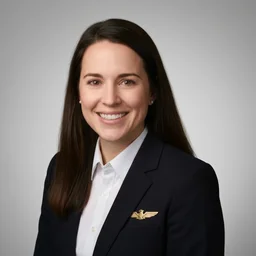
Commercial Pilot & FAA Certification Specialist
Embry-Riddle Aeronautical UniversityCaptain Jennifer Walsh graduated with honors in Aerospace Engineering from Embry-Riddle Aeronautical University and holds FAA Airframe & Powerplant and Airline Transport Pilot certificates. With 11 years of commercial aviation experience and 6 years as a ground school instructor, she guides aviation mechanics and student pilots through FAA written exams and practical tests.
Join the Discussion
Connect with other students preparing for this exam. Share tips, ask questions, and get advice from people who have been there.
View discussion (8 replies)