

aReading Practice Test
Updated for October 2026aReading (FastBridge Reading Assessment) Test Guide
Educators are key in helping students improve their reading skills. The aReading (FastBridge Reading Assessment) Test is a crucial tool for this. This guide will help teachers and school leaders use it well in their classrooms. Try our ACT practice test.
By learning about the aReading Test, educators can boost students’ reading skills. This includes fluency, comprehension, and early literacy. It’s a powerful way to support students’ reading growth.
Military candidates can build their skills and confidence with our ASTB-E naval aviation test 2026, covering all sections tested in the official assessment.
aReading Practice Test Questions
Prepare for the aReading - FastBridge Reading Assessment exam with our free practice test modules. Each quiz covers key topics to help you pass on your first try.
aReading Applied Concepts
aReading Exam Questions covering Applied Concepts. Master aReading Test concepts for certification prep.
aReading Assessment Administration
Free aReading Practice Test featuring aReading Assessment Administration. Improve your aReading Exam score with mock test prep.
aReading Score Interpretation
aReading Mock Exam on aReading Score Interpretation. aReading Study Guide questions to pass on your first try.
aReading Best Practices
aReading Test Prep for Best Practices. Practice aReading Quiz questions and boost your score.
aReading Case Analysis
aReading Questions and Answers on Case Analysis. Free aReading practice for exam readiness.
aReading Comprehension
aReading Mock Test covering Comprehension. Online aReading Test practice with instant feedback.
aReading Core Knowledge
Free aReading Quiz on Core Knowledge. aReading Exam prep questions with detailed explanations.
aReading Fluency
aReading Practice Questions for Fluency. Build confidence for your aReading certification exam.
aReading Foundational Skills
aReading Test Online for Foundational Skills. Free practice with instant results and feedback.
aReading Problem Solving
aReading Study Material on Problem Solving. Prepare effectively with real exam-style questions.
aReading Professional Skills
Free aReading Test covering Professional Skills. Practice and track your aReading exam readiness.
aReading Progress Monitoring
aReading Exam Questions covering Progress Monitoring. Master aReading Test concepts for certification prep.
aReading Standards
Free aReading Practice Test featuring Standards. Improve your aReading Exam score with mock test prep.
Key Takeaways
- The aReading (FastBridge Reading Assessment) Test is a curriculum-based measurement tool that evaluates student reading performance.
- It assesses core reading skills, including fluency and comprehension, to provide a comprehensive understanding of a student’s reading abilities.
- The assessment results help educators identify areas for targeted instruction and intervention, supporting the development of early literacy skills.
- Effective implementation of the aReading Test can lead to improved student reading outcomes and inform data-driven instructional decisions.
- Understanding the administration guidelines and test features is crucial for educators to maximize the benefits of the aReading assessment.
Understanding aReading (FastBridge Reading Assessment) Test
The aReading (FastBridge Reading Assessment) is a detailed reading test. It helps track progress, check reading speed, and screen students universally. This tool is key for making teaching decisions based on data and for finding the best ways to help students.
Core Components of aReading Assessment
The aReading test looks at two main parts of reading skills:
- Reading Fluency: It checks if a student can read at their grade level well and fast. This shows how good they are at reading.
- Reading Comprehension: It also checks if students understand what they read. This makes sure they can read well and understand what they read.
Key Features and Benefits
The aReading test has many good points for teachers:
- It gives reliable data for universal screening and progress monitoring. This helps find students who need extra help.
- It gives data-driven insights to help teachers make better choices and use evidence-based interventions.
- It creates detailed reports that show how students are doing over time.
Test Administration Guidelines
The aReading test is easy and quick to give. It makes sure teachers have enough time to teach:
- The test takes only 20-30 minutes to finish.
- It can be given one-on-one or in groups, depending on what the school needs.
- It’s available in both paper and digital forms. This makes it easy to use in different classrooms.

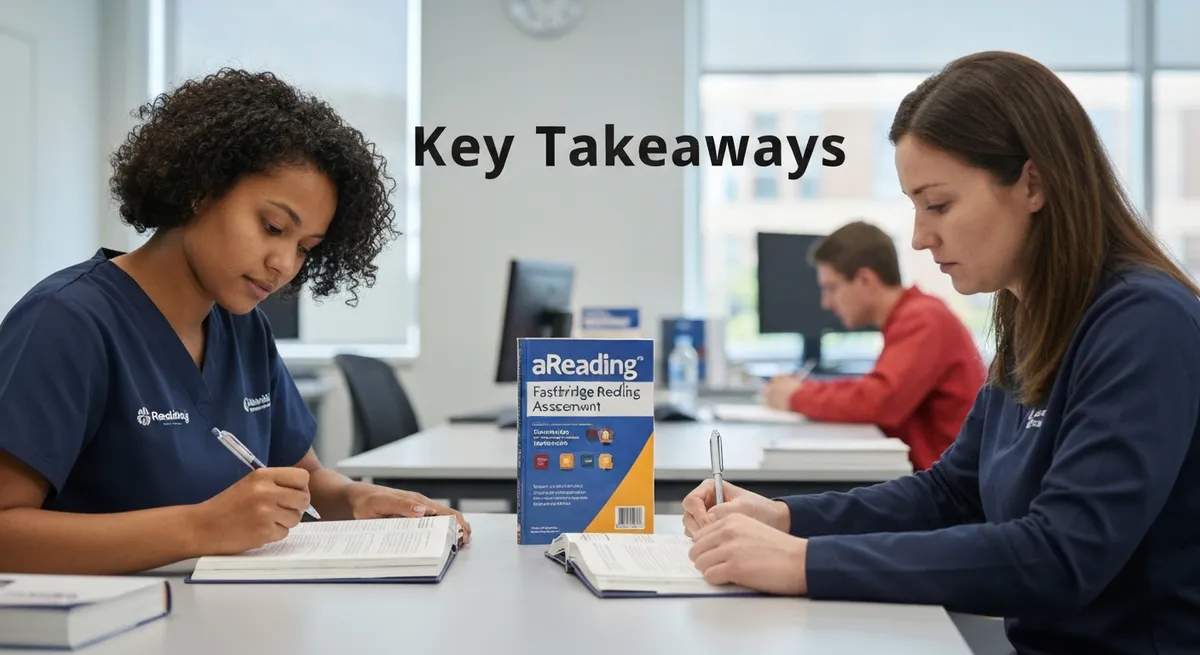
Implementing Effective Reading Assessment Strategies
It’s key to check how well students read to find out what they’re good at and what they need help with. The aReading assessment from FastBridge is a great tool for this. It shows how students are doing with reading and helps spot any problems early.
When using this assessment, it’s important to really look at the results. This way, teachers can see where students might be having trouble, like with phonics or reading smoothly. Then, they can make special plans to help those students.
It’s also vital to find out quickly if a student is having trouble reading. If we catch these issues early, we can help them catch up. The aReading assessment can help find these problems early, so we can act fast.
- Analyze assessment data to identify specific areas of reading difficulty
- Develop targeted instructional plans based on assessment results
- Use the assessment as a screening tool to identify students in need of early intervention
Using the aReading assessment well can really help students get better at reading. Teachers can use the insights from this assessment to make their teaching more effective. This way, every student has a chance to become a good reader.
| Assessment Strategies | Key Benefits |
|---|---|
| Analyze assessment data | Identify specific areas of reading difficulty |
| Develop targeted interventions | Address identified challenges and support student growth |
| Use assessment as a screening tool | Detect reading problems early and provide timely intervention |

Conclusion
The aReading (FastBridge Reading Assessment) Test is a detailed way to check how well students read. It helps grow their vocabulary and improve their reading skills. Teachers get important information to spot and help with reading problems early.
Using the aReading Test helps schools understand how students read, speak, and understand words. This information helps teachers plan better lessons. It makes sure each student gets the right help, leading to better grades and reading skills.
Starting to use the aReading (FastBridge Reading Assessment) Test is key to improving literacy. It’s based on research and helps teachers see how students are doing. This way, teachers can use the best methods to help students read better and learn more.
- +Industry-recognized credential boosts your resume
- +Higher earning potential (10-20% salary increase on average)
- +Demonstrates commitment to professional development
- +Opens doors to advanced career opportunities
- −Exam preparation requires significant time investment (4-8 weeks)
- −Certification fees can be $100-$400+
- −May require continuing education to maintain
- −Some employers may not require certification
aReading Questions and Answers
About the Author

Attorney & Bar Exam Preparation Specialist
Yale Law SchoolJames R. Hargrove is a practicing attorney and legal educator with a Juris Doctor from Yale Law School and an LLM in Constitutional Law. With over a decade of experience coaching bar exam candidates across multiple jurisdictions, he specializes in MBE strategy, state-specific essay preparation, and multistate performance test techniques.
Join the Discussion
Connect with other students preparing for this exam. Share tips, ask questions, and get advice from people who have been there.
View discussion (7 replies)