
Is Anatomy and Physiology Hard? Honest Answer From Students Who Passed
Is anatomy and physiology hard? Honest assessment of difficulty, 📚 common struggles, study strategies, time commitment, and tips for passing the course.
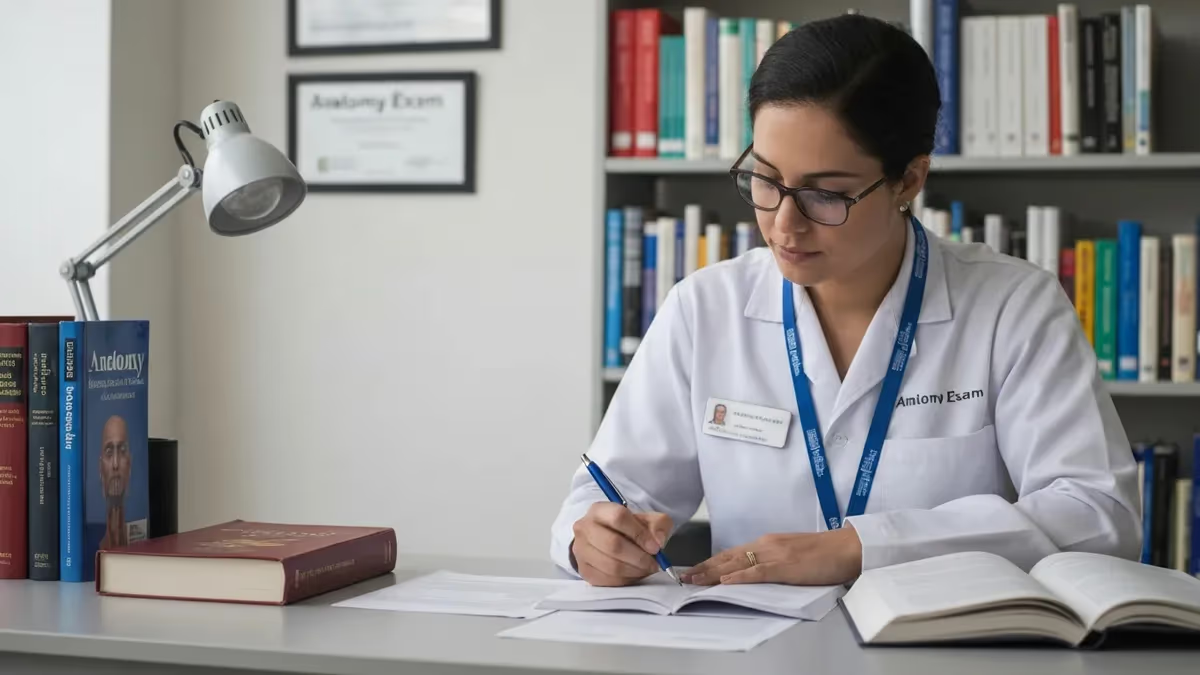
Is anatomy and physiology hard? The honest answer: yes, but not because the concepts are impossibly difficult. A&P is hard because there's an enormous amount to memorize, the terminology is unfamiliar, the systems interconnect in ways that require deep understanding rather than surface recall, and most students underestimate the time commitment until they're already behind. Students who succeed approach the course with realistic expectations and proven study strategies from day one. Students who don't tend to crash by the third week of the semester.
This guide gives you an honest picture of what to expect from A&P, why specific aspects challenge most students, study strategies that actually work, the typical time commitment required for a passing grade versus an A, and practical tips for managing the workload while keeping other commitments in your life. Whether you're considering taking A&P, currently enrolled and struggling, or planning your nursing or pre-health prerequisite sequence, this guide will help you set realistic expectations and develop a workable plan.
Is A&P Hard? Yes, But Manageable
Anatomy and Physiology is consistently rated as one of the most difficult prerequisite courses for nursing and pre-health programs. The difficulty comes from volume of memorization, complexity of interconnected systems, and the time commitment required. Most students who fail do so because of underestimating time requirements, not because they're incapable of the material. With consistent daily study (1.5-2 hours per day) and effective active learning strategies, most students can pass and many can excel.
Why A&P Feels Hard
Hundreds of structures, terms, and processes per chapter. The vocabulary alone is overwhelming — most terms are Greek or Latin derived and unfamiliar.
Systems work together in complex ways. Understanding cardiovascular physiology requires understanding cellular respiration, fluid dynamics, and neural control simultaneously.
Most successful students put in 10-15 hours per week outside of class. That's a major commitment that catches many students off guard.
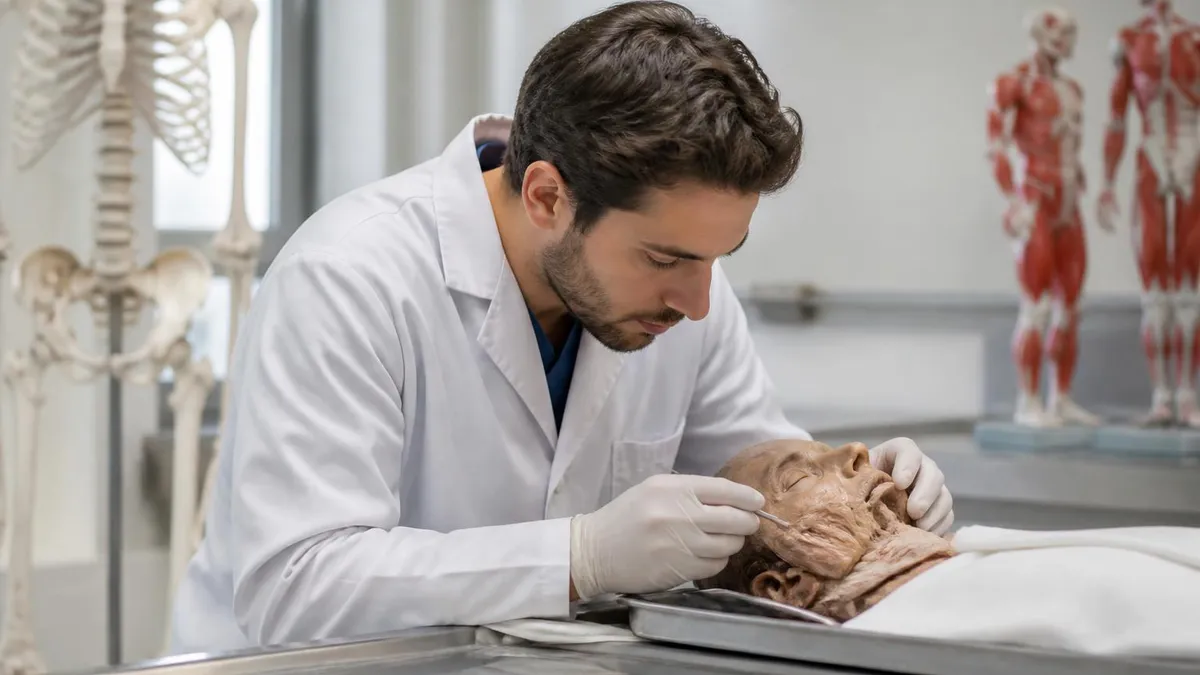
The memorization challenge is real and shouldn't be minimized. A typical A&P I course covers cellular structure, tissue types, the integumentary system, the skeletal system, the muscular system, and basic nervous system anatomy. That's hundreds of named structures, each with specific functions, locations, and relationships to other structures. A&P II adds the cardiovascular, respiratory, digestive, urinary, endocrine, and reproductive systems with similar depth. Combined, you're learning thousands of facts over two semesters.
The terminology compounds the memorization difficulty. Medical terminology uses Greek and Latin roots, prefixes, and suffixes that aren't familiar to most students. Words like 'hyperparathyroidism' break down into components (hyper-para-thyroid-ism) but only if you've learned the medical terminology system. Many programs require or recommend a medical terminology course before A&P specifically because the vocabulary barrier is so significant. Without that foundation, every chapter requires extra time just to decode the language being used.
Beyond memorization, A&P requires conceptual understanding of how systems work together. Why does blood pressure rise when you stand up? The answer involves baroreceptors, sympathetic nervous system activation, vasoconstriction, and increased heart rate — multiple systems coordinating to maintain homeostasis. Learning each system in isolation isn't enough; you need to understand the integration. This is what separates 'memorized A&P' from 'understood A&P', and it's what makes exam questions so challenging when they require applied reasoning rather than pure recall.
A&P Reality Check
What Makes A&P Hard
A typical A&P textbook is 1,000+ pages. Each chapter covers 30-50 pages of dense material. Most chapters take 8-12 hours to study thoroughly. Falling even one chapter behind creates serious problems.
Study strategies that actually work for A&P are different from strategies for other science courses. Passive reading rarely sticks for this material — there's just too much information to absorb through reading alone. Active strategies dramatically outperform passive ones. Flashcards (whether physical or digital like Anki or Quizlet) work well for the vocabulary load. Drawing diagrams of systems from memory helps cement spatial relationships. Teaching concepts to others (or pretending to teach them) forces deeper understanding than passive review.
Spaced repetition is the technique that separates successful A&P students from struggling ones. Reviewing material multiple times over weeks beats cramming everything before exams. Apps like Anki implement spaced repetition algorithms automatically. Manual approaches work too — review old chapters weekly even after moving on to new material. The forgetting curve is steep without spaced review, especially for vocabulary-heavy content like A&P.
Drawing things from memory is one of the most powerful strategies for anatomy specifically. Rather than just looking at diagrams in your textbook, close the book and draw the structures from memory. Compare to the source. Notice what you got wrong. Try again. This active recall builds visual memory dramatically better than passive viewing. The same technique applies to physiology — draw the steps of action potential generation, or the pathway of blood through the heart. The combination of visual and kinesthetic learning sticks.

Many students focus on lecture exams and underweight lab practicals — until they realize labs often count for 30-40% of the grade. Lab practicals require completely different study (visual identification of structures) from lecture exams (concept understanding). Allocate study time for labs proportionally to their grade weight. Practice on actual models in the lab during open lab hours, not just from photos in your textbook.
Common Study Mistakes
A&P has too much material to cram effectively. Students who try this typically fail or barely pass. Daily consistent study works much better than weekend marathons.
Reading the textbook without active engagement produces minimal retention. Annotations, summaries, flashcards, and self-quizzing are essential.
Underweighting lab work because it 'feels less serious' than lectures. Labs typically count 30-40% of your grade and require their own study methods.
Solo study works for some, but most students benefit from study groups for A&P. Teaching others reveals what you don't actually know yet.
Time commitment is the single biggest predictor of success or failure in A&P. The rule of thumb is 2-3 hours of study per hour of lecture. For a 4-credit course (3 hours lecture + 3 hours lab per week), that's 12-18 hours of outside study weekly. Many students don't realize this commitment until they're already behind. Plan your semester schedule with this commitment in mind — A&P doesn't fit easily alongside other heavy courses or full-time work without major sacrifices elsewhere.
Daily study beats weekend marathons. Studying 90-120 minutes per day produces better retention than studying 8 hours on Saturday. Your brain consolidates learning during sleep, so spreading study across multiple days lets that consolidation happen multiple times. Cramming for A&P specifically produces poor results because the volume is too large for short-term memory to handle effectively. Build a daily routine that includes A&P time and protect it.
Office hours and tutoring resources exist for a reason — use them. Professors expect students to come to office hours when struggling with concepts. Many programs offer free tutoring through learning resource centers. Some students hire private tutors. Whatever the source, getting help early when you don't understand something prevents small confusions from becoming major gaps. Asking for help isn't weakness; it's strategy.
Effective A&P Study Techniques
Review material multiple times over expanding intervals — 1 day, 3 days, 1 week, 2 weeks. Apps like Anki automate this. Beats cramming dramatically for long-term retention of vocabulary-heavy content.
The relative difficulty of A&P I versus A&P II varies by student. A&P I covers more straightforward anatomical material — bones, muscles, basic tissues. The challenge is volume but the concepts are tangible. A&P II covers complex physiological systems — cardiovascular, respiratory, endocrine, reproductive — with more abstract concepts and more system-integration questions. Students who struggle with abstract reasoning often find A&P II harder. Students who struggle with rote memorization often find A&P I harder. Most students find both semesters challenging but in different ways.
The textbook matters more than students realize. Marieb's 'Human Anatomy and Physiology' and Tortora's 'Principles of Anatomy and Physiology' are the most widely used texts and are genuinely good. Other texts vary in quality. If your assigned textbook seems unclear or unhelpful, look at one of the standard texts at your library or online. Sometimes a different author's explanation of the same concept clicks where the assigned text doesn't. Don't suffer through a bad textbook explanation when better explanations exist.
Supplementary resources can be lifesavers. Crash Course Anatomy and Physiology on YouTube provides excellent overview videos for each topic. Khan Academy has high-quality A&P content. Apps like Visible Body offer 3D anatomy visualizations. Anatomy.tv (subscription required at many universities) has detailed anatomical resources. Combine multiple resources rather than relying on textbook alone — different explanations help solidify understanding from different angles.
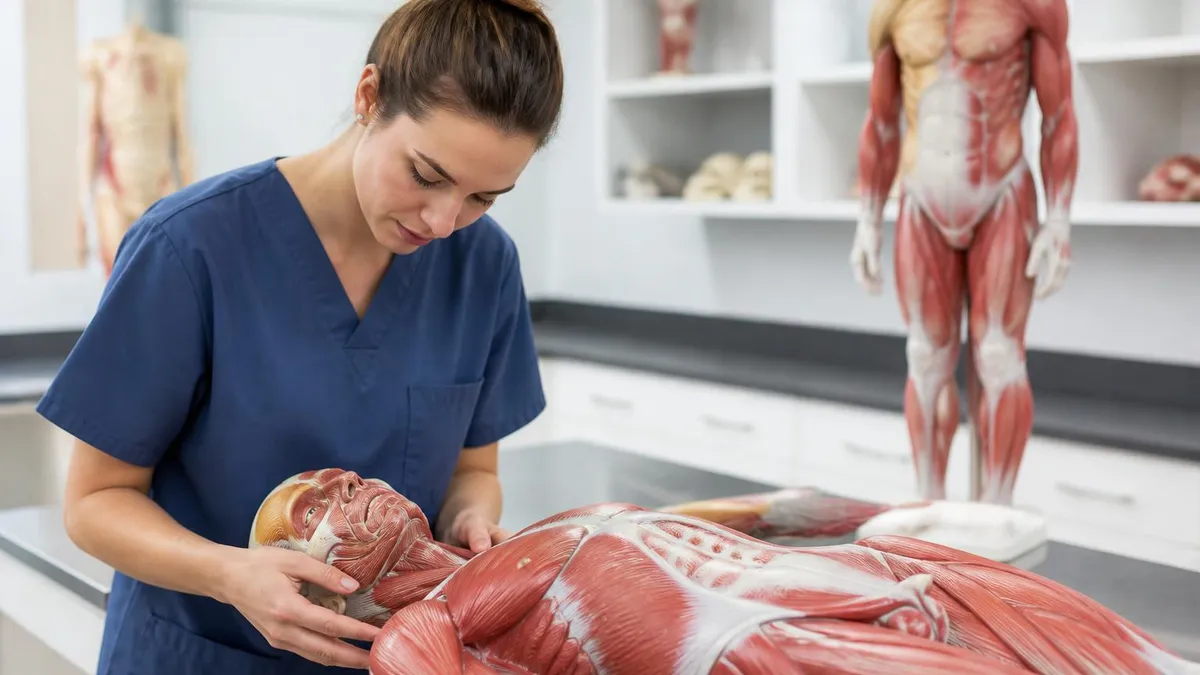
Setting Up for A&P Success
- ✓Block 12-18 hours per week for A&P study in your calendar
- ✓Take medical terminology first if your program offers it
- ✓Buy the textbook before classes start so you can preview chapter 1
- ✓Identify your tutoring and office hours resources
- ✓Set up a digital flashcard app (Anki or Quizlet)
- ✓Find or form a study group of committed classmates
- ✓Don't take A&P alongside other heavy science courses if possible
- ✓Reduce work hours or other commitments if feasible during the semester
- ✓Plan to attend every lecture and every lab without exception
- ✓Buy a coloring book for anatomy (yes, really — Kapit and Elson)
- ✓Set up a consistent daily study schedule from week one
Anatomy coloring books are an underrated study tool. The Anatomy Coloring Book by Kapit and Elson uses color-coding to teach anatomical relationships in a way that pure reading can't match. Many medical and nursing students use it throughout their careers, not just during A&P. The act of carefully coloring forces you to attend to details you would miss while just reading. The combination of visual and tactile engagement produces strong memory traces. It sounds childish but works remarkably well.
For students struggling despite consistent effort, several interventions can help. Talk to your professor about specific topics where you're stuck. Form a study group with classmates doing better than you. Hire a tutor if you can afford it. Use multiple resources — sometimes a different explanation makes a concept click. Take advantage of supplemental instruction if your school offers it. The students who fail A&P typically don't fail because of inability — they fail because of either insufficient time or ineffective strategies. Both are fixable.
Recognize when A&P isn't the right fit at the right time. Some students should postpone A&P until they've taken medical terminology, finished other prerequisite math and biology, reduced their work hours, or addressed other life circumstances that compete for study time. There's no shame in taking A&P later when you can give it the attention it requires. Failing A&P costs time, money, and motivation — sometimes more than waiting a semester would have. Be honest with yourself about whether this is the right semester for this course.
For students aiming for high grades (A or A-) rather than just passing, the time commitment increases substantially. 15-20 hours per week of study is typical for top grades. The strategies are similar but more disciplined. Daily review of new material, weekly review of older material, regular practice with application questions, and proactive office hours visits. The difference between passing and excelling is usually time and consistency, not raw intelligence. Most students who get A's in A&P put in significantly more focused study time than those who get C's.
If by the third or fourth week of the semester you're already lost despite genuine effort, consider withdrawing rather than failing. A W on your transcript is much less damaging than an F. You can retake A&P the next semester with better preparation. Most programs allow this within the first month of class. Talk to your academic advisor about the implications before deciding, but know that withdrawal is sometimes the smartest move.
For pre-nursing and pre-health students specifically, A&P performance often matters more than other prerequisites for program admission. Nursing programs typically require A&P I and A&P II with minimum grades of B or B-. Some highly competitive programs essentially require A's. Knowing the standards at your target programs helps set personal grade goals. If you need a B+ or higher and you're trending toward a C, intervention now is critical.
The applied knowledge from A&P pays off throughout health careers. Nurses use anatomy and physiology knowledge daily. Physical therapists rely on it constantly. Physicians build advanced knowledge on the A&P foundation. The investment isn't just for passing a course — it's building knowledge you'll use for decades. This perspective sometimes helps students push through difficult sections. The struggle now produces capability that benefits patients later.
For students who genuinely love the material despite the difficulty, A&P can be one of the most rewarding courses you'll ever take. Understanding how your own body works at a structural and functional level is genuinely fascinating. The complexity of biological systems is beautiful when you start to see how it all fits together. The 'aha moments' when systems suddenly make sense are memorable. Many students who initially dread A&P come to find it their favorite prerequisite course by the end. Engaging with the material rather than just trying to memorize it makes the difference between drudgery and discovery.
Taking A&P
- +Foundational knowledge for nursing and pre-health careers
- +Fascinating subject matter once you engage with it
- +Clear path to mastery with consistent effort
- +Many study resources available (apps, videos, tutors)
- +Practical knowledge you'll apply throughout your career
- +Sense of accomplishment when you understand complex systems
- −Significant time commitment (10-15+ hours weekly outside class)
- −Heavy memorization load with unfamiliar terminology
- −Lab practicals require completely different study methods
- −High failure/withdrawal rates at many schools
- −Doesn't fit easily alongside other heavy courses or full-time work
Memory consolidation happens during sleep. Pulling all-nighters before A&P exams is counterproductive — sleep-deprived brains don't retain information well, and your test performance suffers from impaired reasoning. Prioritize 7-8 hours of sleep, especially in the days before exams. Consistent sleep beats marathon study sessions for high-volume memorization courses.
Beyond academic strategies, the lifestyle factors that support A&P success matter. Adequate sleep is essential because memory consolidation happens during deep sleep — pulling all-nighters before exams is counterproductive for a course this memorization-heavy. Regular exercise improves cognitive function and reduces stress, which both help long-term learning. Maintaining social connections prevents the isolation that intensive study can create. Trying to study 14 hours a day produces diminishing returns quickly.
Nutrition affects cognitive performance more than most students realize. Skipping meals to study longer reduces effective study time because your brain doesn't function as well. Heavy carbohydrate-only meals produce sleepiness an hour later. Balanced meals with protein, healthy fats, and complex carbohydrates support sustained mental work. Stay hydrated — dehydration impairs cognition before you feel thirsty. These aren't optional luxuries; they're operating requirements for the brain you're asking to learn this much material.
Mental health considerations matter especially during A&P. The course's difficulty combined with high stakes (program admission, GPA requirements) creates significant stress. Watch for signs of burnout: declining motivation, sleep problems, persistent anxiety, isolation. Most universities have counseling services available to students. Using these resources isn't a sign of weakness — it's a sign of taking your wellbeing seriously while pursuing a demanding goal. The students who succeed long-term tend to manage stress proactively rather than just powering through.
Study environment optimization matters more than students realize. A dedicated study space with minimal distractions outperforms studying in noisy or crowded environments. Some students thrive in libraries; others prefer quiet home spaces. Find what works for you and protect it. Keep your phone in a different room while studying — research consistently shows even silenced phones in your peripheral vision reduce cognitive performance. Small environmental changes produce surprisingly large improvements in study effectiveness.
For students who learn better through audio, podcasts and recorded lectures supplement traditional study. Several A&P-focused podcasts exist. Some professors record their lectures for review. Some students record their own summaries and listen during commutes or workouts. The audio reinforcement adds to visual study without requiring additional dedicated time, which is valuable when you're already maxing out study hours during the day.
Connecting A&P content to real life solidifies learning. When studying the digestive system, think about what's happening when you eat lunch. When studying the cardiovascular system, notice your own pulse and how it changes with activity. When studying the nervous system, observe your own reflexes and reactions. This active connection between abstract content and lived experience produces deeper understanding than disembodied study from a textbook.
Building good habits early in the semester pays off enormously. Students who establish daily study routines in week one almost always succeed. Students who tell themselves they'll catch up after a slow start almost always continue to fall behind. The first two weeks set the trajectory for the entire semester. Treat the first chapter with the same seriousness as you would treat exam week material, even though there's no immediate test pressure. The foundation you build determines what you can build on top of it.
Different students respond to different teaching styles. If your professor's approach isn't working for you, supplement aggressively with other resources rather than just complaining about the professor. YouTube videos, alternative textbooks, study group explanations, and tutoring can fill gaps left by classroom instruction. You can't change your professor mid-semester, but you can change what you do outside class to compensate for any teaching style mismatches you encounter throughout the entire academic term.
Anatomy and Physiology Questions and Answers
About the Author

Educational Psychologist & Academic Test Preparation Expert
Columbia University Teachers CollegeDr. Lisa Patel holds a Doctorate in Education from Columbia University Teachers College and has spent 17 years researching standardized test design and academic assessment. She has developed preparation programs for SAT, ACT, GRE, LSAT, UCAT, and numerous professional licensing exams, helping students of all backgrounds achieve their target scores.