
ALCPT Test: 7 Essential Tips to Know for Military English Success 2026 September
🗨️ ALCPT test 7 essential tips to know — American Language Course Placement Test guide, scoring, ECL equivalency, sample tests, and study strategies.
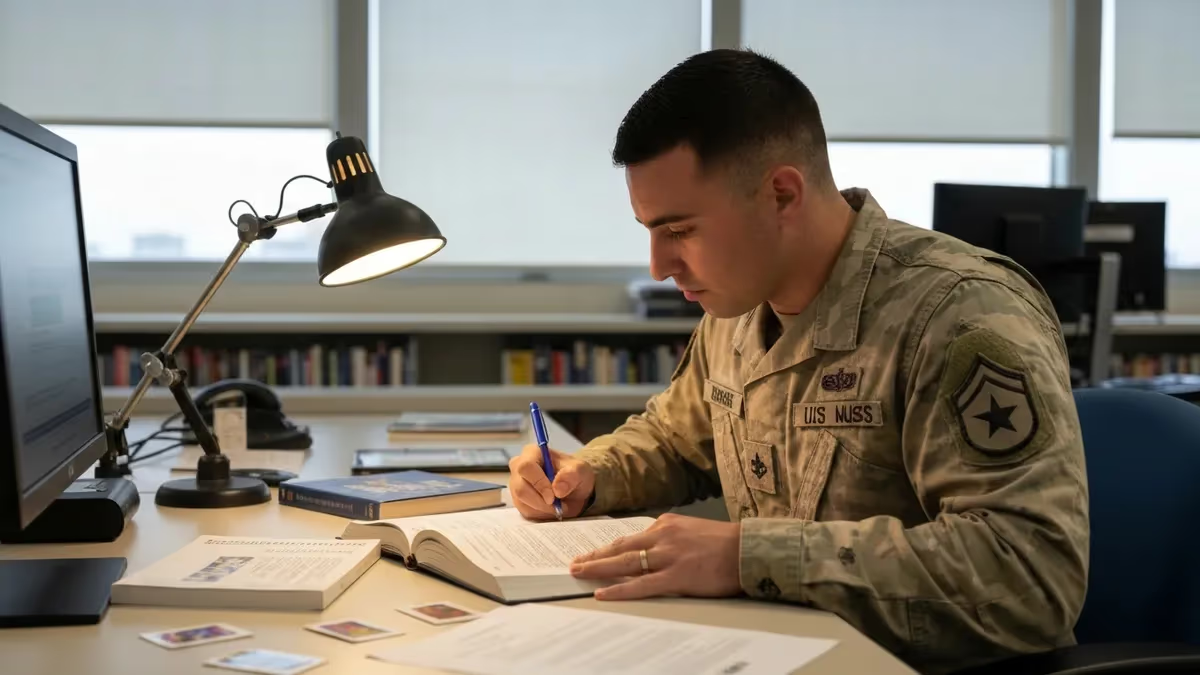
This alcpt test 7 essential tips to know guide covers the American Language Course Placement Test — the standardized English language assessment used by the US Department of Defense and partner military forces worldwide to evaluate English proficiency for foreign military personnel. The alcpt measures listening comprehension and grammatical/vocabulary knowledge through 100 questions delivered via audio and printed booklet format. International military students take ALCPT before attending US Department of Defense English programs at facilities like the Defense Language Institute English Language Center (DLIELC) at Lackland Air Force Base in San Antonio, Texas.
You'll see why ALCPT scores translate roughly to specific English proficiency levels — 70+ usually qualifies for entry-level US military English courses, 80+ for more technical content, 90+ for officer training that requires near-native English. The ALCPT score also correlates with ECL (English Comprehension Level) scores used by the US Navy and DLIELC programs. Most foreign military candidates take both ALCPT and ECL during their initial DLIELC entry process.
If you're testing this week, the test-day checklist near the bottom covers what to expect at your military testing facility. If you have 2-4 weeks to prepare, the structure cards section maps a daily 60-90 minute study schedule. By the end of this guide, you'll know exactly what ALCPT measures and how to prepare strategically for it.
ALCPT by the Numbers
The alcpt tests are administered through Defense Language Institute English Language Center (DLIELC) test administration teams at participating military facilities worldwide. The standard ALCPT format runs 100 multiple-choice questions split between Listening (33 items, audio-delivered) and Reading/Grammar/Vocabulary (67 items, printed booklet). The test runs about 75 minutes total — 25 minutes for listening, 50 minutes for the reading/grammar/vocabulary portion.
Each alcpt form uses a different question pool, with over 100 active test forms in rotation. Common forms include Form 73, Form 90, Form 91, Form 92, and so on. The forms are rotated by DLIELC to prevent memorization-based gaming. Question difficulty is calibrated across forms to produce consistent score outcomes — Form 91 should give roughly the same score difficulty as Form 73 for the same candidate.
Plan to invest 30-60 hours of structured English practice across 4-8 weeks before your scheduled ALCPT. The test is comprehensive — you can't cram audio listening skills or extensive vocabulary in a weekend. Daily English exposure (listening to news, reading articles, drilling vocabulary) builds the underlying language skill that translates to ALCPT score improvement.
One key context: DLIELC tracks individual student progress through the American Language Course (ALC) — a sequenced set of English textbooks numbered 1 through 30. Your ALCPT score determines which book you start at. Stronger ALCPT scores skip earlier books, saving you weeks of training time at Lackland. Aim for the highest ALCPT score you can — every 10-point improvement typically saves 4-8 weeks of DLIELC training time, which translates to faster return to your home country and your specialty training.
The alcpt form you'll be assigned at testing typically reflects DLIELC's current rotation. The form number doesn't affect your prep strategy — focus on building skill across all four ALCPT content areas (listening, vocabulary, grammar, reading comprehension) rather than trying to memorize specific forms. Form-specific memorization is the lowest-return prep strategy.
The alcpt sample test resources circulating online vary significantly in quality. Some are legitimate DLIELC-released sample questions; others are user-generated content that may not reflect current ALCPT difficulty or format. Stick with official DLIELC materials when available, or with reputable third-party prep platforms calibrated to current ALCPT standards.
The alcpt test military context shapes everything about how it's used. Foreign military students seeking US-based training take ALCPT to determine appropriate course placement. Officers training for higher-level positions (typically 80-90+ ALCPT) attend different English courses than enlisted personnel (typically 50-70 ALCPT for entry-level technical training). Your specific score affects which DLIELC course you'll be placed in and how long you'll spend there.
One key context: DLIELC tracks individual student progress through the American Language Course (ALC) — a sequenced set of English textbooks numbered 1 through 30. Your ALCPT score determines which book you start at. Stronger ALCPT scores skip earlier books, saving you weeks of training time at Lackland. Aim for the highest ALCPT score you can — every 10-point improvement typically saves 4-8 weeks of DLIELC training time, which translates to faster return to your home country and your specialty training.
ALCPT Practice Test Questions
Prepare for the ALCPT - American Language Course Placement Test exam with our free practice test modules. Each quiz covers key topics to help you pass on your first try.
ALCPT Adjective and Adverb Forms
ALCPT Exam Questions covering ALCPT Adjective and Adverb Forms. Master ALCPT Test concepts for certification prep.
ALCPT Pronoun and Article Usage
Free ALCPT Practice Test featuring ALCPT Pronoun and Article Usage. Improve your ALCPT Exam score with mock test prep.
ALCPT - American Language Course Placement...
ALCPT Mock Exam on - American Language Course Placement Identifying Grammatical Errors. ALCPT Study Guide questions to pass on your first try.
ALCPT - American Language Course Placement...
ALCPT Test Prep for - American Language Course Placement Idiomatic and Phrasal Expressions. Practice ALCPT Quiz questions and boost your score.
ALCPT - American Language Course Placement...
ALCPT Questions and Answers on - American Language Course Placement Listening for Main Ideas. Free ALCPT practice for exam readiness.
ALCPT - American Language Course Placement...
ALCPT Mock Test covering - American Language Course Placement Listening for Specific Details. Online ALCPT Test practice with instant feedback.
ALCPT - American Language Course Placement...
Free ALCPT Quiz on - American Language Course Placement Prepositions and Conjunctions Usage. ALCPT Exam prep questions with detailed explanations.
ALCPT - American Language Course Placement...
ALCPT Practice Questions for - American Language Course Placement Reading for Direct Information. Build confidence for your ALCPT certification exam.
ALCPT - American Language Course Placement...
ALCPT Test Online for - American Language Course Placement Reading for Implied Meaning. Free practice with instant results and feedback.
ALCPT - American Language Course Placement...
ALCPT Study Material on - American Language Course Placement Sentence and Clause Structure. Prepare effectively with real exam-style questions.
ALCPT - American Language Course Placement...
Free ALCPT Test covering - American Language Course Placement Verb Tense and Agreement. Practice and track your ALCPT exam readiness.
ALCPT - American Language Course Placement...
ALCPT Exam Questions covering - American Language Course Placement Vocabulary: Synonyms in Context. Master ALCPT Test concepts for certification prep.
ALCPT Contextual Word Usage
Free ALCPT Practice Test featuring Contextual Word Usage. Improve your ALCPT Exam score with mock test prep.
ALCPT Grammar and Sentence Correction
ALCPT Mock Exam on Grammar and Sentence Correction. ALCPT Study Guide questions to pass on your first try.
ALCPT Identifying Grammatical Errors
ALCPT Test Prep for Identifying Grammatical Errors. Practice ALCPT Quiz questions and boost your score.
ALCPT Idiomatic and Phrasal Expressions
ALCPT Questions and Answers on Idiomatic and Phrasal Expressions. Free ALCPT practice for exam readiness.
ALCPT Listening Comprehension Dialogues
ALCPT Mock Test covering Listening Comprehension Dialogues. Online ALCPT Test practice with instant feedback.
ALCPT Listening for Main Ideas
Free ALCPT Quiz on Listening for Main Ideas. ALCPT Exam prep questions with detailed explanations.
ALCPT Listening for Specific Details
ALCPT Practice Questions for Listening for Specific Details. Build confidence for your ALCPT certification exam.
ALCPT Prepositions and Conjunctions Usage
ALCPT Test Online for Prepositions and Conjunctions Usage. Free practice with instant results and feedback.
ALCPT Reading for Direct Information
ALCPT Study Material on Reading for Direct Information. Prepare effectively with real exam-style questions.
ALCPT Reading for Implied Meaning
Free ALCPT Test covering Reading for Implied Meaning. Practice and track your ALCPT exam readiness.
ALCPT Reading Passage Analysis
ALCPT Exam Questions covering Reading Passage Analysis. Master ALCPT Test concepts for certification prep.
ALCPT Sentence and Clause Structure
Free ALCPT Practice Test featuring Sentence and Clause Structure. Improve your ALCPT Exam score with mock test prep.
ALCPT Verb Tense and Agreement
ALCPT Mock Exam on Verb Tense and Agreement. ALCPT Study Guide questions to pass on your first try.
ALCPT Vocabulary in Academic Context
ALCPT Test Prep for Vocabulary in Academic Context. Practice ALCPT Quiz questions and boost your score.
ALCPT Test Sections
The first 33 questions test listening comprehension. You'll hear recorded English conversations and statements, then answer multiple-choice questions about what you heard. The audio plays once — there's no replay. Test environments include audio that varies from clear standard American English to faster colloquial speech. Train your listening skill through daily English audio exposure (podcasts, news, English TV) before your test.
Focused alcpt vocabulary study builds the foundation for both the vocabulary section and the reading comprehension passages. Build a daily flashcard habit covering 5,000+ common English words. Apps like Anki, Quizlet, and Memrise have pre-built English vocabulary decks calibrated to specific proficiency levels. Spend 15-30 minutes daily on vocabulary across your prep period.
A focused alcpt quiz session works best when timed and consistent. Take 25-question quizzes daily across different content areas (listening, vocabulary, grammar) to build pacing discipline. The real ALCPT moves quickly — about 45 seconds per question average — so untimed practice doesn't build the speed you'll need on test day.
Don't try to game the test by memorizing specific form answers. DLIELC rotates forms specifically to prevent memorization. Memorize patterns — common grammar errors, vocabulary in context, listening comprehension question types — rather than specific items. Pattern fluency transfers across forms; memorized items don't.
One key context: DLIELC tracks individual student progress through the American Language Course (ALC) — a sequenced set of English textbooks numbered 1 through 30. Your ALCPT score determines which book you start at. Stronger ALCPT scores skip earlier books, saving you weeks of training time at Lackland. Aim for the highest ALCPT score you can — every 10-point improvement typically saves 4-8 weeks of DLIELC training time, which translates to faster return to your home country and your specialty training.
30-Day ALCPT Study Plan
Daily 30 minutes of English audio (podcasts, news, English TV) plus 20 minutes vocabulary drill. Build a personal flashcard deck of 500+ common English words. Take an initial diagnostic ALCPT practice test to set your baseline.
Daily 30-45 minutes of grammar workbook practice — verb tenses, subject-verb agreement, prepositions, articles, pronouns. Use a structured English grammar text (Murphy's English Grammar, Side by Side, etc.). Take a second practice test at week's end.
Daily 25-30 minutes of English reading at appropriate level (graded readers, English news articles, simple novels). Take a mixed-content ALCPT practice test mid-week and a second one at week's end. Track score improvement over weeks 1-3.
Two final full-length practice tests early in the week. Day before exam: 30-minute light review of weakness journal, no new content. Get 8 hours of sleep. On test day, arrive 15-30 minutes early at the testing facility with your military ID.
The alcpt sample test options from DLIELC are limited but high-quality. The Defense Language Institute publishes some sample questions for prospective candidates. Reputable third-party platforms (PracticeTestGeeks and similar) supplement with helpful additional volume. Stick with platforms that match the actual ALCPT format — 100 questions split 33/67 between listening and reading/grammar/vocabulary.
The alcpt practice test ecosystem has grown over the past decade as more foreign military students prepare for DLIELC placement. Online practice platforms, mobile apps, and paid study courses now offer comprehensive prep for ALCPT specifically. The investment of $30-$100 in quality prep typically returns 10-15 ALCPT points compared to free-only preparation.
The alcpt forms rotation by DLIELC means specific form-by-form practice has limited value. Instead, drill content categories: practice 25 listening questions, then 25 vocabulary questions, then 25 grammar questions, then 25 reading questions. Repeating this pattern across 4-6 weeks builds balanced skill across all four ALCPT competencies.
One key context: DLIELC tracks individual student progress through the American Language Course (ALC) — a sequenced set of English textbooks numbered 1 through 30. Your ALCPT score determines which book you start at. Stronger ALCPT scores skip earlier books, saving you weeks of training time at Lackland. Aim for the highest ALCPT score you can — every 10-point improvement typically saves 4-8 weeks of DLIELC training time, which translates to faster return to your home country and your specialty training.
ALCPT Preparation: Pros & Cons
- +DLIELC publishes some free sample materials directly accessible to candidates
- +Test format is consistent across all forms — once you understand structure, prep scales
- +Military-administered, so testing infrastructure is reliable globally
- +Score directly determines DLIELC course placement and training timeline
- +Reputable third-party prep materials exist for $30-$100 investment
- +Strong foundation for further English study — ALCPT skills transfer to ECL and TOEFL
- −Limited free practice volume — most quality prep is behind paywalls
- −Listening section can be challenging without prior exposure to native English audio
- −Test forms rotate, so memorization-based prep produces minimal score lift
- −Mid-career military students often struggle with academic English they haven't used recently
- −Pacing is tight — about 45 seconds per question average
- −Score validity periods vary by military partner program and assignment context
The alcpt test is one of several English assessments military personnel may encounter. The ECL (English Comprehension Level) test is the Navy's preferred assessment. The OPI (Oral Proficiency Interview) tests speaking ability. The DLPT (Defense Language Proficiency Test) tests proficiency in languages other than English. Most foreign military students attending US training take ALCPT as their primary placement test, with ECL and OPI added later depending on the specific training program.
The alcpt exam structure has been remarkably stable since its DLIELC creation in the 1970s. Updates have addressed audio quality, question format modernization, and content currency, but the fundamental 100-question, 75-minute format has remained intact. This stability allows ALCPT prep materials to remain relevant across many years — a 5-year-old prep book still covers the essentials.
For specific score targets: 50-65 ALCPT typically places you in DLIELC's lower-level English courses (Books 1-6 of the American Language Course). 70-80 ALCPT places you in middle-level courses (Books 7-12). 85+ ALCPT places you in upper-level courses (Books 13+) or directly into your specialty training in English. Your score determines weeks of DLIELC training time saved or required.
One key context: DLIELC tracks individual student progress through the American Language Course (ALC) — a sequenced set of English textbooks numbered 1 through 30. Your ALCPT score determines which book you start at. Stronger ALCPT scores skip earlier books, saving you weeks of training time at Lackland. Aim for the highest ALCPT score you can — every 10-point improvement typically saves 4-8 weeks of DLIELC training time, which translates to faster return to your home country and your specialty training.
ALCPT Test-Day Checklist
- ✓Bring valid military ID — required at all DLIELC and partner testing facilities
- ✓Arrive 30 minutes early at the testing room — military test scheduling is precise
- ✓Sit in a comfortable upright position — fatigue affects listening accuracy
- ✓Eat a balanced meal 90 minutes before — protein + complex carbs sustain focus
- ✓Use the bathroom right before the session starts; breaks are limited during the 75-minute test
- ✓Listen carefully to the audio test instructions — they're delivered once with no replay
- ✓Read each question carefully before listening — knowing the question helps focus your listening
- ✓Don't dwell on questions you missed — keep pace and focus on questions ahead
- ✓Pace yourself at ~45 seconds per question to finish all 100 items with review time
- ✓Stay calm during fast audio passages — most ALCPT listening is delivered at moderate pace
Quality alcpt tests with answers resources include explanations for both correct and incorrect answer choices. The rationale review is where most learning happens — knowing why a wrong answer is wrong teaches you the underlying pattern, not just the right answer for one specific question. Avoid practice tests that only provide answer keys without rationales.
The alcpt test online options have grown significantly with mobile and web-based prep platforms. PracticeTestGeeks, Magoosh, and similar prep platforms offer online ALCPT-style question banks. Free Quizlet decks vary in quality — verify uncertain answers against the DLIELC Student Handbook before locking content into memory.
The alcpt test military preparation context differs from civilian academic English. Military students often have rigid daily schedules and limited prep time. The 30-day plan in this guide can compress to 14 days for advanced English speakers (TOEFL 85+ equivalent) or expand to 60 days for less prepared candidates. Adapt to your specific timeline and starting level.
One key context: DLIELC tracks individual student progress through the American Language Course (ALC) — a sequenced set of English textbooks numbered 1 through 30. Your ALCPT score determines which book you start at. Stronger ALCPT scores skip earlier books, saving you weeks of training time at Lackland. Aim for the highest ALCPT score you can — every 10-point improvement typically saves 4-8 weeks of DLIELC training time, which translates to faster return to your home country and your specialty training.
Read Questions Before Listening
Many ALCPT listening questions allow you to read the question stem before the audio plays. Use this window strategically — read the question and answer choices before the audio starts, so you know exactly what to listen for. This pre-reading turns broad listening into focused listening, dramatically improving accuracy on listening comprehension items. The 5-10 seconds you spend pre-reading pays off in 3-5 additional correct answers per test.
The alcpt app options on mobile platforms include both free and paid tools. ALCPT Practice Test apps, English Listening Master apps, and specialized DLIELC prep apps all serve different aspects of preparation. Mix at least 2-3 different apps in your prep — relying on a single source produces narrower exposure than diversified prep.
The Arabic-language search for the ALCPT military test — "اختبار alcpt للعسكريين" — reflects the significant Middle Eastern military student population taking ALCPT through partnerships with the US Department of Defense. Saudi Arabia, UAE, Kuwait, Jordan, Egypt, and several other Arab nations regularly send military students to DLIELC. Arabic-speaking candidates benefit from prep materials that specifically address common transfer errors between Arabic and English (article usage, verb tense systems, word order).
For ESL prep across language backgrounds, the most common transfer challenges include: article usage (a/an/the) for speakers of languages without articles (Russian, Mandarin, Japanese), verb tense systems for speakers of less aspectually-rich languages, preposition usage (universally challenging), and word order in complex sentences. Identify your specific transfer challenges and target them in your prep.
One key context: DLIELC tracks individual student progress through the American Language Course (ALC) — a sequenced set of English textbooks numbered 1 through 30. Your ALCPT score determines which book you start at. Stronger ALCPT scores skip earlier books, saving you weeks of training time at Lackland. Aim for the highest ALCPT score you can — every 10-point improvement typically saves 4-8 weeks of DLIELC training time, which translates to faster return to your home country and your specialty training.
Unlike some English language tests, the ALCPT listening section audio plays once with no replay. You must catch the answer the first time. Stay focused, take notes if your test booklet allows margin notation, and don't dwell on missed questions — move forward to the next item. Untimed practice doesn't prepare you for this single-play challenge. Practice with timed audio drills that mirror the real test's one-shot listening format.
The specific alcpt form 73 is one of DLIELC's older but still active test forms. Form 73 covers the same content distribution as newer forms (Form 90, Form 91, Form 92, etc.) — 33 listening + 67 reading/grammar/vocabulary. Your specific form is assigned by the testing administrator based on rotation schedules. Don't try to find specific form answers; prepare for the underlying content instead.
The alcpt test booklet format is paper-based with multiple-choice bubbles. You'll receive a printed test booklet and an answer sheet. The booklet stays at the testing center after the session — you can't take it home for review. Notes in the booklet's margins are typically allowed but verify with your specific testing administrator. Some military testing environments prohibit any marking outside the answer sheet.
The Arabic-language search for اختبار alcpt (ALCPT test in Arabic) reflects the significant non-English-speaking candidate base. Arabic-speaking candidates often benefit from prep materials in their first language that explain English grammar concepts using familiar reference points. Bilingual study guides and instructor-led courses in Arabic-speaking countries (Egypt, Jordan, Saudi Arabia) provide this bilingual approach.
One key context: DLIELC tracks individual student progress through the American Language Course (ALC) — a sequenced set of English textbooks numbered 1 through 30. Your ALCPT score determines which book you start at. Stronger ALCPT scores skip earlier books, saving you weeks of training time at Lackland. Aim for the highest ALCPT score you can — every 10-point improvement typically saves 4-8 weeks of DLIELC training time, which translates to faster return to your home country and your specialty training.
The Arabic search اختبار alcpt (ALCPT test) brings Arabic-speaking military candidates to English-language prep resources. For optimal prep, supplement English-language ALCPT materials with Arabic-language English grammar references. Cambridge English's bilingual resources, the Defense Language Institute's bilingual handbooks, and YouTube channels teaching English in Arabic (like "Learn English with Adam" or "Speak English With Tiffani" with Arabic subtitles) provide accessible cross-language scaffolding.
The alcpt sample test pdf downloads from various online sources vary in quality. Some are legitimate DLIELC-released materials; others are user-generated content potentially with errors. Cross-reference uncertain answers against the DLIELC Student Handbook (when available) before locking content into memory. For mobile-friendly prep, the ALCPT Practice Test apps offer better quality control than PDF downloads.
Final tip: schedule your ALCPT for a morning slot if your testing facility offers choices. Listening comprehension benefits significantly from peak cognitive function — fresh attention helps you catch nuance in audio passages. A 9 AM ALCPT test gives you clean focus; an afternoon test follows hours of military duties that fatigue your attention. Schedule strategically when possible.
ALCPT Questions and Answers
About the Author

Applied Linguist & Language Proficiency Exam Specialist
Georgetown UniversityDr. Yuki Tanaka holds a PhD in Applied Linguistics and an MA in TESOL from Georgetown University. A former language examiner with the British Council, she has 18 years of experience designing and teaching language proficiency preparation courses for TOEFL, IELTS, CELPIP, Duolingo English Test, JLPT, Cambridge FCE/CAE, and Versant assessments worldwide.
Join the Discussion
Connect with other students preparing for this exam. Share tips, ask questions, and get advice from people who have been there.
View discussion (8 replies)