
Project Management Agile vs Waterfall: The Complete 2026 October Comparison Guide
🎯 Compare agile vs waterfall project management. Learn agility meaning, agile definition, frameworks, costs, and which approach fits your team in 2026 October.

The debate between agile and waterfall has shaped project management agil practices for more than two decades, and understanding the agility meaning behind each approach is the first step toward picking the right one. Waterfall treats a project as a sequential pipeline where each stage finishes before the next begins, while agile treats it as an evolving conversation between the team, the customer, and the work itself. Both methodologies still ship real software, real buildings, and real medical devices every day in 2026, so neither is obsolete.
Agile meaning, at its core, is the ability to respond to change quickly without losing momentum or quality. The Agile Manifesto, signed in 2001 by seventeen software developers in Snowbird, Utah, codified four values and twelve principles that prioritize individuals, working software, customer collaboration, and responsiveness over rigid plans. Agil means iterative delivery, short feedback loops, and self-organizing teams that own outcomes rather than tasks. The meaning for agility extends beyond software into marketing, hardware, and even government policy work.
Waterfall, by contrast, traces its roots to Winston Royce's 1970 paper that ironically warned against the linear approach many later adopted. It works best when requirements are stable, regulatory oversight is heavy, and rework is genuinely expensive. Defense contracts, civil engineering, and pharmaceutical trials still lean waterfall because changing a bridge design halfway through pouring concrete is not a sprint retrospective. The structure provides predictability that stakeholders with fixed budgets and immovable deadlines often demand.
This guide walks through how each methodology actually operates in the field, what kinds of teams thrive in each, and where hybrid models like Water-Scrum-Fall and disciplined agile bridge the gap. We will cover the costs of switching, the hidden tradeoffs that vendor pitch decks gloss over, and the real numbers from State of Agile reports through 2025. By the end, you will have a defensible answer when leadership asks which approach your next initiative should use.
You will also see how an agility ladder of progressive practices lets teams adopt agile incrementally rather than through a risky big-bang transformation. This matters because 67% of agile transformations stall in the first eighteen months, usually because organizations try to copy Spotify or ING wholesale instead of building habits that match their own context. We will look at why incremental adoption beats revolution almost every time.
Beyond methodology mechanics, this article addresses the people side: how project managers become scrum masters, how PMOs evolve into agile centers of excellence, and how procurement and finance teams adapt their gating processes. Most failed transformations fail at the boundary between agile teams and non-agile stakeholders, not inside the team itself. Getting that interface right is the difference between theatre and genuine performance improvement.
Whether you are studying for a PMP, a PMI-ACP, or a SAFe certification, or simply trying to decide how to run your next initiative, the comparison that follows gives you concrete decision criteria, real cost ranges, and the questions to ask before committing either direction. Methodology is a tool, not a religion, and the best project managers carry both wrenches in their belt.
Agile vs Waterfall by the Numbers (2025 Data)

Methodology Frameworks Compared
The most common agile framework, used by 87% of agile teams. Features sprints of 1-4 weeks, three roles (Product Owner, Scrum Master, Developers), and five events including Sprint Planning and Retrospective.
A pull-based system using visual boards and WIP limits to manage flow. No fixed iterations, ideal for support teams and operational work where priorities shift unpredictably from day to day.
Sequential phases: requirements, design, implementation, verification, maintenance. Each phase must complete before the next begins. Heavy documentation, fixed-scope contracts, and stage-gate approvals throughout.
The Scaled Agile Framework coordinates 50-125 person Agile Release Trains. Uses PI Planning every 8-12 weeks and provides governance that enterprise leadership and PMOs typically require to fund agile work.
Water-Scrum-Fall and disciplined agile delivery blend approaches: waterfall for fixed-scope contracts and compliance gates, scrum for the actual build phase. Used heavily in regulated industries and government.
To define agility in a project management context, we have to look past buzzwords and into actual practice. The agility definition that matters is operational: how fast can your team change direction without breaking quality, morale, or the customer relationship? A team that ships every two weeks but cannot change priorities mid-quarter is not agile, it is just on a fast waterfall cadence. Real agility lives in the feedback loops, not the cadence.
The Agile Manifesto opens with four value statements, each framed as preferring one thing over another while acknowledging both have worth. Individuals and interactions over processes and tools means that a team with strong communication beats a team with great Jira hygiene every time. Working software over comprehensive documentation does not mean no documentation, it means documentation should serve delivery rather than substitute for it. Customer collaboration over contract negotiation acknowledges that scope discovered during the work is normal and welcome.
Twelve principles flesh out the values, and several stand out for project managers transitioning from waterfall. Principle one prioritizes early and continuous delivery of valuable software. Principle two welcomes changing requirements even late in development. Principle eight calls for sustainable pace, which is the antidote to the death-march crunch that plagues fixed-deadline waterfall projects. Principle twelve mandates regular retrospection, ensuring the team improves the way it works, not just the work itself.
Roles change dramatically between methodologies. In waterfall, a project manager owns scope, schedule, cost, quality, communications, risk, and stakeholders end-to-end through PMBOK process groups. In scrum, that responsibility distributes across the Product Owner, who owns value and prioritization, the Scrum Master, who owns process health and impediment removal, and the Developers, who own delivery and technical decisions. Many former PMs become Scrum Masters, while others move to RTE or program-level roles in SAFe.
Estimation also shifts. Waterfall teams estimate in hours or days, build Gantt charts, and report percent complete against a baseline plan. Agile teams estimate in story points using planning poker or t-shirt sizing, track velocity over sprints, and report empirically based on what actually shipped. This shift confuses finance teams used to earned value management, which is why SAFe introduces program increments and ART-level forecasts that translate agile delivery into terms a CFO can budget against.
Documentation differences are often misunderstood. Agile teams produce less documentation aimed at handoff between phases, because there are no phases in the waterfall sense. But agile teams still document architecture decisions, API contracts, user stories with acceptance criteria, and runbooks for operations. Lean documentation does not mean no documentation, it means documentation written when needed, by the people who need it, at the right level of detail for the next consumer downstream.
Finally, governance under agile uses outcome-based metrics: deployment frequency, lead time, mean time to recovery, and change failure rate, the four DORA metrics that correlate with elite engineering performance. Waterfall governance uses milestone completion, schedule variance, cost performance index, and stage-gate approvals. Neither is wrong, but mixing the two without translation creates noise that frustrates everyone. A mature transformation translates between governance languages explicitly.

Agile Project Management Practice Test Questions
Prepare for the Agile Project Management exam with our free practice test modules. Each quiz covers key topics to help you pass on your first try.
Agile Project Management Agile Agile Estim...
Agile Project Management Exam Questions covering Agile Agile Estimation Techniques. Master Agile Project Management Test concepts for certification prep.
Agile Project Management Agile Agile Metri...
Free Agile Project Management Practice Test featuring Agile Agile Metrics and Reporting. Improve your Agile Project Management Exam score with mock test prep.
Agile Project Management Agile Agile Princ...
Agile Project Management Mock Exam on Agile Agile Principles and Mindset. Agile Project Management Study Guide questions to pass on your first try.
Agile Project Management Agile Continuous ...
Agile Project Management Test Prep for Agile Continuous Improvement Process. Practice Agile Project Management Quiz questions and boost your score.
Agile Project Management Agile Kanban Meth...
Agile Project Management Questions and Answers on Agile Kanban Method and Practices. Free Agile Project Management practice for exam readiness.
Agile Project Management Agile Kanban Prin...
Agile Project Management Mock Test covering Agile Kanban Principles and Practices. Online Agile Project Management Test practice with instant feedback.
Agile Project Management Agile Manifesto a...
Free Agile Project Management Quiz on Agile Manifesto and Principles. Agile Project Management Exam prep questions with detailed explanations.
Agile Project Management Agile Metrics and...
Agile Project Management Practice Questions for Agile Metrics and Reporting. Build confidence for your Agile Project Management certification exam.
Agile Project Management Agile Release Pla...
Agile Project Management Test Online for Agile Release Planning and Roadmaps. Free practice with instant results and feedback.
Agile Project Management Agile Team Dynami...
Agile Project Management Study Material on Agile Team Dynamics and Collaboration. Prepare effectively with real exam-style questions.
Agile Project Management Agile (Project Ma...
Free Agile Project Management Test covering Agile (Project Management) Practice Test. Practice and track your Agile Project Management exam readiness.
Agile Project Management Agile Scrum Event...
Agile Project Management Exam Questions covering Agile Scrum Events and Artifacts. Master Agile Project Management Test concepts for certification prep.
Waterfall Phases and the Agile Meaning of Iteration
The waterfall requirements phase produces a Business Requirements Document and a Functional Specification, often hundreds of pages, signed off by stakeholders before any design begins. This phase can take three to nine months on large enterprise projects, and changes after sign-off trigger formal change control with cost and schedule impact analysis attached.
In agile, requirements emerge as user stories continuously refined through backlog grooming. The Product Owner maintains a prioritized backlog, and detail is added just-in-time before each sprint. This approach accepts that requirements will change as users see working software, which is the empirical reality of most knowledge work projects.
Agile vs Waterfall: Honest Tradeoffs
- +Agile delivers working software every sprint, generating early ROI
- +Customer feedback shapes the product before money runs out
- +Self-organizing teams report higher engagement and retention
- +Defects caught in sprint cost 10x less than defects caught in UAT
- +Priority changes absorbed without formal change control overhead
- +Empirical forecasting beats Gantt-chart fantasy on uncertain work
- +DORA metrics correlate with business performance, not just delivery
- −Fixed-price contracts are harder to negotiate under agile
- −Regulated industries require traceability agile teams often skip
- −Scaling beyond 100 people requires SAFe, LeSS, or Nexus discipline
- −Distributed teams struggle without strong async communication norms
- −Product Owner role becomes a bottleneck if poorly staffed
- −Estimation in story points confuses finance and procurement teams
- −Cultural change required exceeds what executives typically budget
Pros and Cons at a Glance
| Pros | Cons |
|---|---|
| Agile delivers working software every sprint, generating early ROI | Fixed-price contracts are harder to negotiate under agile |
| Customer feedback shapes the product before money runs out | Regulated industries require traceability agile teams often skip |
| Self-organizing teams report higher engagement and retention | Distributed teams struggle without strong async communication norms |
| Priority changes absorbed without formal change control overhead | Product Owner role becomes a bottleneck if poorly staffed |
| Empirical forecasting beats Gantt-chart fantasy on uncertain work | Estimation in story points confuses finance and procurement teams |
| DORA metrics correlate with business performance, not just delivery | Cultural change required exceeds what executives typically budget |

Choosing Between Agile and Waterfall: Decision Checklist
- ✓Confirm whether requirements are stable or likely to change during execution
- ✓Identify regulatory or compliance constraints requiring documented traceability
- ✓Assess customer availability for sprint reviews and continuous collaboration
- ✓Evaluate team co-location, time zones, and tooling for daily coordination
- ✓Check executive sponsorship for cultural change and impediment removal
- ✓Map dependencies on external teams, vendors, or hardware lead times
- ✓Define how procurement, finance, and HR will adapt their gating processes
- ✓Choose a pilot team and scope that is meaningful but not catastrophic if it fails
- ✓Plan training budget for scrum masters, product owners, and developers alike
- ✓Establish baseline metrics so you can measure whether the change actually worked
There is no universal winner between agile and waterfall
The 2025 PMI Pulse of the Profession found that high-performing organizations use multiple methodologies across their portfolio, not just one. The question is not which is better, but which fits this specific project, team, and stakeholder set. Treat methodology as a design decision per initiative, not a religious commitment for the entire company.
Hybrid models have become the dominant reality in 2026, despite purist objections from both camps. Water-Scrum-Fall describes the pattern where requirements and procurement happen waterfall-style upfront, the actual build runs as scrum sprints, and final UAT plus regulatory submission returns to waterfall stage-gates. This pattern is honest about organizational constraints rather than pretending they do not exist. Roughly 43% of US enterprises run some variant of this hybrid according to the latest State of Agile data.
Disciplined Agile Delivery, originally from IBM and now stewarded by PMI, takes hybrid further by offering a process decision toolkit. Teams choose practices from agile, lean, and traditional approaches based on context factors like team size, regulatory regime, and domain complexity. Rather than mandating scrum or kanban, DAD asks teams to make conscious choices and document them. This appeals to PMO leaders who want governance without smothering team autonomy.
Real-world cases illustrate the spectrum. Boeing's 787 Dreamliner used waterfall for airframe design, with predictable disastrous consequences when supplier coordination broke down. By contrast, Tesla famously runs its software updates on continuous deployment cycles measured in days, while its battery manufacturing follows lean-waterfall hybrid patterns. ING Bank's much-cited agile transformation moved 3,500 employees into squads and tribes, but kept regulatory reporting on traditional cadences because Dutch banking law required it.
The US federal government provides another instructive case. The Department of Veterans Affairs digital service group runs agile sprints for veteran-facing applications, while the underlying procurement contracts remain firm-fixed-price waterfall vehicles. The Defense Innovation Unit pioneered Other Transaction Authority agreements specifically to enable agile contracting, recognizing that traditional FAR-based procurement strangles iterative work. These workarounds show how legal and contractual structures shape what methodologies are actually achievable.
Scaling frameworks deserve scrutiny because they are where most large transformations live or die. SAFe is the market leader by adoption, used at over 70% of Fortune 100 companies, but draws criticism for reintroducing waterfall-style PI Planning and roadmaps. Less Scrum and Nexus stay closer to scrum purity at the cost of less governance scaffolding. Spotify's model, often imitated, was never actually a framework, as the company itself has repeatedly clarified, and it has evolved significantly since the 2014 paper.
Cost matters in the hybrid conversation. A SAFe transformation for a 500-person engineering organization typically costs $1.5 to $3 million in training, coaching, and lost productivity in the first year alone. ROI usually appears in months 18-30 if executive sponsorship holds, measured in faster time-to-market, lower defect rates, and improved employee net promoter score. Many transformations abandon SAFe after year two not because it failed, but because leadership turnover removed the original sponsors.
The lesson across these cases is that methodology must match the contract, the culture, and the constraint set. Trying to run agile on a fixed-price fixed-scope contract creates dishonest reporting where teams pretend to be agile while actually managing to a hidden plan. Trying to run waterfall on a fast-changing consumer product creates expensive failures discovered too late to recover. Honest naming of what you are actually doing beats branded methodology every time.
Many organizations adopt agile rituals like daily standups and retrospectives without changing the underlying decision-making, funding, or accountability structures. This produces methodology theatre: the appearance of agility without the substance. Symptoms include sprints that never change priorities, retrospectives with no follow-through, and product owners who cannot actually prioritize. Diagnose honestly before scaling.
An agile transformation roadmap typically runs three to five years for a large enterprise, and skipping phases reliably produces failure. Phase one is foundation: training a small group of internal champions, piloting two or three teams under experienced coaches, and establishing the baseline metrics you will measure against. Cutting this phase to save money is the most common mistake, because without trained champions you have no one to defend the practices when pressure mounts.
Phase two scales the pilots while leaving the rest of the organization on existing methods. This is where Conway's Law starts biting: agile teams butt up against waterfall procurement, finance, and HR processes, and friction generates either reform or backsliding. Successful transformations use this phase to redesign the gating processes themselves, not just the delivery teams. SAFe agile certifications often enter the picture here as governance and program coordination roles emerge.
Phase three is enterprise scaling, where most of the engineering and product organization operates in agile teams and the supporting functions have adapted. This is where the cultural change becomes visible to customers and to the financial results. Net Promoter Scores climb, time-to-market shortens, and the engineering attrition rate often drops significantly. By contrast, transformations stuck in phase two for more than two years usually unwind back to waterfall under the next leadership change.
Phase four is sustainment and continuous improvement. The novelty fades, the consultants leave, and the question becomes whether the organization has built genuine learning capability or just installed a new bureaucracy. Communities of practice, internal coaching capacity, and regular health checks distinguish sustained transformations from the ones that quietly revert. Many SAFe shops at this stage adopt elements of DevOps and platform engineering to keep momentum.
Cost ranges depend heavily on starting maturity and target end-state. A small startup adopting scrum from scratch can spend under $20,000 on training and coaching for a single team. A regional bank moving 200 engineers to SAFe typically budgets $400K to $800K in year one. A Fortune 500 enterprise running a 5,000-person transformation rarely escapes the $10-30 million range across three years, including external coaching, training, tooling, and the productivity dip during transition.
People decisions matter as much as methodology. Project managers transitioning to scrum master roles need training and active support, because the skill profiles overlap less than recruiters assume. Strong waterfall PMs sometimes become great Release Train Engineers, while others find their value in agile portfolio management or PMO redesign. Forcing every PM through scrum master training without considering individual strengths wastes both money and talent.
Finally, measure transformation success with a balanced scorecard, not just velocity charts. Customer outcomes like NPS and adoption rates anchor the business case. Engineering health metrics like deployment frequency and change failure rate confirm delivery improvement. Employee engagement and retention reveal whether the culture change is genuine. Financial results lag the other indicators by 12-18 months, which is why patient executive sponsorship is the single biggest predictor of transformation success.
Practical advice for project managers deciding which approach to use on their next initiative starts with honest scoping. Ask whether the customer can describe the final outcome in detail today, or whether they will discover requirements as they see working software. If the answer is the latter, agile is your default. If the answer is genuinely the former, with regulatory or contractual reasons backing it up, waterfall remains a reasonable choice. The dishonest scenario is pretending the customer knows what they want when they do not.
For PMP-certified project managers exploring agile, the PMI-ACP certification is the obvious next step, covering scrum, kanban, lean, XP, and TDD. Cost is $435 for members and $495 for non-members in 2026, with 21 hours of training required to sit for the exam. The Scrum Alliance CSM and Scrum.org PSM I are alternatives focused specifically on scrum. SAFe SA, SP, and RTE certifications matter more if you work in enterprises already running SAFe Agile Release Trains.
Tooling decisions follow methodology, not the other way around. Jira dominates agile tooling in 2026, with Azure DevOps strong in Microsoft shops and Linear gaining ground in startups. Waterfall projects typically use Microsoft Project, Smartsheet, or Primavera, which support critical path analysis and resource leveling natively. Trying to run waterfall in Jira or scrum in MS Project creates constant friction that distracts from the actual work. Pick tools that fit the methodology you actually use.
Communication patterns differ significantly. Agile teams typically run a fifteen-minute daily standup, a sprint planning every one to four weeks, a sprint review with stakeholders at sprint end, and a retrospective focused on team process improvement. Waterfall teams run weekly status meetings, monthly steering committees, and milestone reviews at phase boundaries. Mixing patterns without explicit translation creates meetings that satisfy nobody and waste everyone's time.
Documentation strategy needs explicit design too. Agile teams maintain a living architecture decision record, lightweight user stories with acceptance criteria, and just-enough operational documentation to run the system in production. Regulated industries layer on traceability matrices linking requirements to tests to releases. Waterfall teams produce more upfront documentation, which works when the document is consumed by people who were not part of writing it, and fails when the document drifts from reality.
Retrospectives are the single highest-use practice agile contributes regardless of which methodology your overall project uses. Even waterfall projects benefit from regular team retrospectives, which surface impediments before they become catastrophic. The format matters less than the discipline of regular, blameless reflection followed by concrete action items the team actually executes. A retrospective without follow-through is worse than none, because it teaches the team that improvement is theatre.
Closing advice: read the original Agile Manifesto, the Scrum Guide, and Royce's 1970 paper before adopting any framework. Most arguments about agile versus waterfall in 2026 are arguments between caricatures, not between the actual approaches. Reading primary sources takes a weekend and immunizes you against most consulting nonsense for the rest of your career. Your future teams will benefit from leadership grounded in the source material rather than the latest LinkedIn hot take.
Sample Agile Practice Questions
Try these questions from our free Agile practice tests. The correct answer and an explanation follow each question.
An Agile Coach is reviewing a team's Cumulative Flow Diagram (CFD). They notice that over the last several weeks, the band representing the 'Testing' phase is progressively widening, while the 'Done' band's slope is much flatter by comparison. What is the most likely conclusion?
- A. The team's overall velocity is increasing steadily.
- B. Work is entering the testing phase faster than it is being completed, indicating a bottleneck.
- C. The Product Owner is adding new work to the sprint at an unsustainable rate.
- D. The development team is completing their work ahead of schedule.
Answer: B. Work is entering the testing phase faster than it is being completed, indicating a bottleneck.
A widening band on a Cumulative Flow Diagram (CFD) for a specific stage, like 'Testing', signifies that the number of work items in that stage is increasing over time. This happens when the entry rate into the stage exceeds the exit rate. This pattern is a classic indicator of a bottleneck in the workflow. [7, 12, 17]
Which communication approach aligns best with Agile values when sharing project status?
- A. Comprehensive written reports sent at planned intervals
- B. Frequent, lightweight, and transparent communication through conversations and visual tools
- C. Structured executive briefings held at major milestones
- D. Formal change requests submitted for stakeholder review
Answer: B. Frequent, lightweight, and transparent communication through conversations and visual tools
Agile favors frequent, transparent communication that keeps stakeholders informed without heavy documentation overhead.
A team is using a burn-up chart to track progress towards a release. Midway through the project, the product owner adds a significant number of new user stories to the scope. How would this event be reflected on the burn-up chart?
- A. The line representing total scope would show a distinct upward step.
- B. The line representing completed work would drop down to a lower value.
- C. Both the completed work line and the total scope line would flatten.
- D. A new chart must be started as the original scope is now invalid.
Answer: A. The line representing total scope would show a distinct upward step.
A burn-up chart tracks two key lines: the total scope of work and the amount of work completed. When new scope is added, the line representing the total work will jump up, reflecting the new total. The line for completed work continues to climb from its previous point as the team completes tasks.
Which technique helps Agile teams identify all relevant stakeholders at the start of a project?
- A. SWOT analysis
- B. Stakeholder mapping or stakeholder analysis
- C. Risk register review
- D. Sprint retrospective
Answer: B. Stakeholder mapping or stakeholder analysis
Stakeholder mapping helps identify who has interest in or influence over the project, ensuring no key voice is overlooked.
Agile Questions and Answers

Agile Team Structure: How to Build, Organize, and Scale High-Performing Agile Teams

What Is a Spike in Agile? A Complete Guide to Research Spikes, Technical Spikes, and Time-Boxed Investigations

Agile Certification: Best Options, Costs, and How to Choose

Agile Development Life Cycle — Complete Guide (2026)

SAFe Agile Framework: How It Works, Roles & Implementation
About the Author
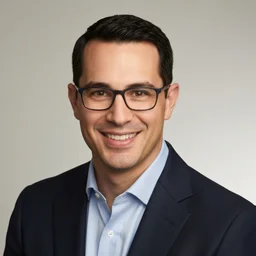
Project Management Professional & Agile Certification Expert
University of Chicago Booth School of BusinessKevin Marshall is a Project Management Professional (PMP), PMI Agile Certified Practitioner (PMI-ACP), PRINCE2 Practitioner, and Certified Scrum Master with an MBA from the University of Chicago Booth School of Business. With 16 years of program management experience across technology, finance, and healthcare sectors, he coaches professionals through PMP, PRINCE2, SAFe, CSPO, and agile certification exams.
Join the Discussion
Connect with other students preparing for this exam. Share tips, ask questions, and get advice from people who have been there.
View discussion (4 replies)