

ACSM Practice Test
Updated for October 2026Certification ACSM
The ACSM offers several different certification options for fitness professionals. Each has its own focus, but all have a similar structure and scope of practice. The ACSM Personal Trainer certification qualifies you to work with apparently healthy clients and those with health challenges that can exercise independently. This program also includes the Exercise is Medicine credential, which focuses on the use of health and fitness programs in a healthcare setting.
The first section of the ACSM CPT textbook provides an excellent launch point for your training career. Its coverage of the science and physiology of human movement is far more extensive than other mainstream certifications. However, it falls short in the area of client assessments. In particular, the ACSM CPT curriculum does not cover corrective exercise assessments in the same depth as ACE.
The main ACSM textbook contains the information you need to pass the exam, but additional study materials can make your experience much more efficient and effective. There are a variety of study materials available, including bundled packages and third-party exam prep guides. The latter offer time-tested study techniques that can reduce your studying time by up to 50%.
ACSM Exercise Guidelines
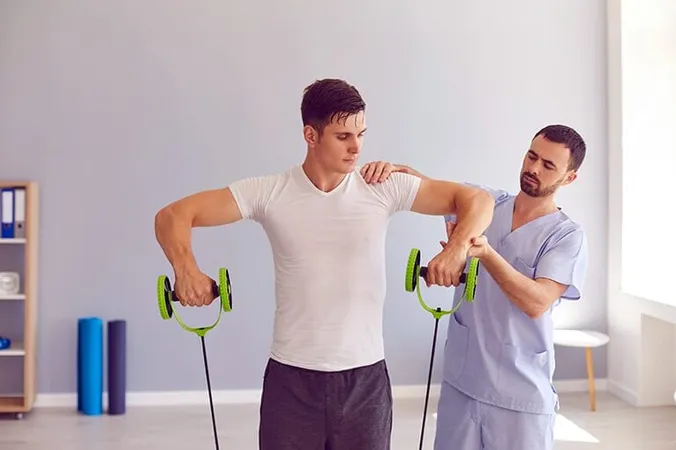
The ACSM’s exercise guidelines are an essential resource for anyone who wants to achieve optimal fitness and health. The ACSM’s guidelines are widely used by healthcare professionals, fitness professionals, and the public to determine the best types of exercises for their specific needs. They are also a crucial tool for identifying and reporting the latest research on exercise guidelines.
The most important aspect of the ACSM’s exercise guidelines is its focus on resistance training. It recommends that most adults do eight to 12 repetitions of each muscle group to a point of fatigue. This will increase their muscular strength and help them maintain fat-free mass. It also recommends that they do two to three days of resistance training per week.
However, the ACSM’s guidelines lack the depth of movement assessments found in other certifications. For example, it devotes upward of four pages to describing the correct technique for Olympic lifts, which is far too detailed to be useful in general fitness settings. The ACSM’s guidelines also rely on a single test for muscular endurance: the push-up test.

ACSM Practice Test Questions
Prepare for the ACSM - American College of Sports Medicine exam with our free practice test modules. Each quiz covers key topics to help you pass on your first try.
ACSM Certified Personal Trainer: Client As...
ACSM Exam Questions covering ACSM Certified Personal Trainer: Client Assessment. Master ACSM Test concepts for certification prep.
ACSM Corrective Exercise Specialist
Free ACSM Practice Test featuring ACSM Corrective Exercise Specialist. Improve your ACSM Exam score with mock test prep.
ACSM Sports Performance Coaching
ACSM Mock Exam on ACSM Sports Performance Coaching. ACSM Study Guide questions to pass on your first try.
ACSM Behavioral Strategies
ACSM Test Prep for Behavioral Strategies. Practice ACSM Quiz questions and boost your score.
ACSM Cardiovascular Fitness
ACSM Questions and Answers on Cardiovascular Fitness. Free ACSM practice for exam readiness.
ACSM Client Assessment
ACSM Mock Test covering Client Assessment. Online ACSM Test practice with instant feedback.
ACSM Corrective Exercise Specialist
Free ACSM Quiz on Corrective Exercise Specialist. ACSM Exam prep questions with detailed explanations.
ACSM Exercise Physiology
ACSM Test Online for Exercise Physiology. Free practice with instant results and feedback.
ACSM Exercise Prescription
ACSM Study Material on Exercise Prescription. Prepare effectively with real exam-style questions.
ACSM Exercise Science
Free ACSM Test covering Exercise Science. Practice and track your ACSM exam readiness.
ACSM Fundamentals & Core Concepts
ACSM Exam Questions covering Fundamentals & Core Concepts. Master ACSM Test concepts for certification prep.
ACSM Health Assessment
ACSM Mock Exam on Health Assessment. ACSM Study Guide questions to pass on your first try.
ACSM Professional Ethics & Conduct
ACSM Questions and Answers on Professional Ethics & Conduct. Free ACSM practice for exam readiness.
ACSM Program Design
ACSM Mock Test covering Program Design. Online ACSM Test practice with instant feedback.
ACSM Resistance Training
Free ACSM Quiz on Resistance Training. ACSM Exam prep questions with detailed explanations.
ACSM Safety and Injury Prevention
ACSM Practice Questions for Safety and Injury Prevention. Build confidence for your ACSM certification exam.
ACSM Safety & Risk Management
ACSM Test Online for Safety & Risk Management. Free practice with instant results and feedback.
ACSM Special Populations
ACSM Study Material on Special Populations. Prepare effectively with real exam-style questions.
ACSM Sports Performance Coaching
Free ACSM Test covering Sports Performance Coaching. Practice and track your ACSM exam readiness.
- ✓Confirm your exam appointment and location
- ✓Bring required identification documents
- ✓Arrive 30 minutes early to check in
- ✓Read each question carefully before answering
- ✓Flag difficult questions and return to them later
- ✓Manage your time — don't spend too long on one question
- ✓Review flagged questions before submitting

ACSM Physical Activity Guidelines
The American College of Sports Medicine is an internationally recognized leader in health-and-fitness education, research and certification. It publishes six leading scholarly journals, several books and various multimedia resources. ACSM’s research and clinical reports help improve the quality of life for people around the world.
ACSM’s fitness training curriculum is geared toward creating safe and effective workout programs for your clients. The first step in this process is a comprehensive initial client consultation that involves subjective and objective reports, as well as medical information when necessary. This allows you to determine your client’s physical fitness level and identify potential health risk factors.
The second step in the ACSM process is to review your clients’ nutrition and dietary habits. This includes evaluating the effectiveness of popular diet trends. For example, a low fat, high carbohydrate diet may help reduce body weight and cardiovascular disease risk but is not suitable for everyone.
The fourth step in the ACSM program is a discussion of corrective exercise assessment and programming for your clients. Unfortunately, this section of the course is less practical than other mainstream certifications. For example, the textbook does not discuss useful functional movement assessments such as static plumb line postural assessments or overhead squat assessments.

ACSM: Pros and Cons
- +ACSM credential is recognized by employers and industry professionals
- +Higher earning potential compared to non-credentialed peers
- +Expanded career opportunities and professional advancement
- +Structured learning path builds comprehensive knowledge
- +Professional development that stays current with industry standards
- −Preparation requires significant time and study commitment
- −Associated costs for exams, materials, and renewal fees
- −Continuing education needed to maintain credentials
- −Competition for advanced positions can be challenging
- −Requirements and standards may vary by state or region
Pros and Cons at a Glance
| Pros | Cons |
|---|---|
| ACSM credential is recognized by employers and industry professionals | Preparation requires significant time and study commitment |
| Higher earning potential compared to non-credentialed peers | Associated costs for exams, materials, and renewal fees |
| Expanded career opportunities and professional advancement | Continuing education needed to maintain credentials |
| Structured learning path builds comprehensive knowledge | Competition for advanced positions can be challenging |
| Professional development that stays current with industry standards | Requirements and standards may vary by state or region |
Sample ACSM Practice Questions
Try these questions from our free ACSM practice tests. The correct answer and an explanation follow each question.
For improving cardiorespiratory fitness, ACSM recommends moderate-intensity exercise for a minimum of how many minutes per week?
- A. 75 minutes
- B. 100 minutes
- C. 150 minutes
- D. 200 minutes
Answer: C. 150 minutes
ACSM recommends at least 150 minutes of moderate-intensity aerobic exercise per week for health and cardiorespiratory fitness improvement.
When measuring waist circumference according to ACSM guidelines, the tape measure should be placed:
- A. At the narrowest point of the torso
- B. Just above the iliac crest at the end of a normal expiration
- C. At the level of the umbilicus
- D. At the widest point of the abdomen
Answer: B. Just above the iliac crest at the end of a normal expiration
ACSM recommends measuring waist circumference just above the iliac crest at the end of a normal expiration.
When performing the ACSM health appraisal, which medical history item would most directly indicate a need for a physician's medical clearance before vigorous exercise?
- A. Prior ankle sprain requiring physical therapy
- B. Recent history of syncope during physical exertion
- C. Mild seasonal allergies controlled with antihistamines
- D. A history of childhood asthma, currently asymptomatic
Answer: B. Recent history of syncope during physical exertion
Exertional syncope is a red-flag symptom suggesting possible cardiac or neurological cause and requires medical evaluation before vigorous exercise is prescribed.
What is the recommended static stretch hold duration according to ACSM guidelines for most adults?
- A. 5-10 seconds
- B. 10-30 seconds
- C. 45-60 seconds
- D. 2-3 minutes
Answer: B. 10-30 seconds
ACSM recommends holding static stretches for 10-30 seconds per repetition for most adults to effectively improve flexibility.
ACSM Questions and Answers
About the Author

Registered Dietitian & Fitness Certification Coach
University of FloridaAmanda Foster holds a Master of Science in Kinesiology from the University of Florida and is a Registered Dietitian and NASM Certified Personal Trainer. She has helped over 1,000 fitness professionals prepare for their ACE, NASM, ACSM, and specialty nutrition certifications, specializing in evidence-based exercise science and macro nutrition coaching methodology.
Join the Discussion
Connect with other students preparing for this exam. Share tips, ask questions, and get advice from people who have been there.
View discussion (8 replies)