ACS 2026: A Complete Guide to the American Chemical Society Organization, Membership, and Mission

ACS 2026 guide to the American Chemical Society organization — membership tiers, governance, divisions, awards, meetings, and how to get involved in chemistry.

ACS 2026: A Complete Guide to the American Chemical Society Organization, Membership, and Mission

The American Chemical Society, widely known simply as ACS, is the largest scientific society in the world devoted to a single discipline, and understanding the organization in acs 2024 means understanding the backbone of modern chemistry in the United States. Chartered by Congress in 1937, the ACS today represents more than 170,000 members spanning students, academic researchers, industrial chemists, and retired professionals. Whether you are a high school student, a doctoral candidate, or a working chemical engineer, the society shapes nearly every corner of the chemical sciences.

At its heart, the ACS exists to advance the broader chemistry enterprise and the people who practice it. That mission expresses itself through peer-reviewed journals, professional development, public outreach, advocacy in Washington, and an enormous calendar of conferences and local events. Few organizations touch so many parts of a scientific field, from the textbooks students read to the standardized exams they take and the careers they eventually build. The scope is genuinely vast and occasionally surprising to newcomers.

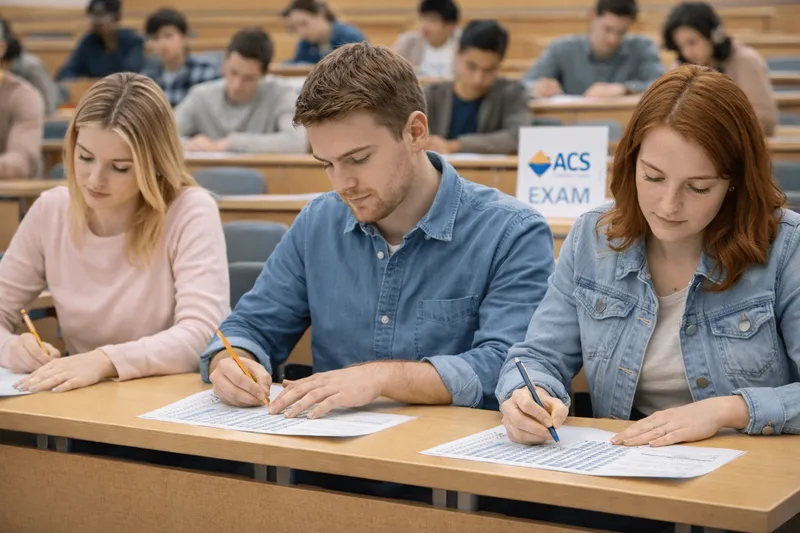
Many people first encounter the society not through its journals but through its standardized examinations. The ACS produces nationally normed chemistry tests used by colleges and universities to measure student mastery in general, organic, physical, and analytical chemistry. These exams carry real weight, often functioning as final assessments or placement gateways. If you have heard classmates anxiously discussing "the ACS," they are usually referring to one of these rigorous, time-pressured standardized tests rather than the organization as a whole.

The society is also a professional home. Members gain access to career services, salary data, networking communities, continuing education, and recognition programs that span the entire arc of a chemistry career. For students especially, joining early can unlock scholarships, travel grants, and mentoring relationships that prove difficult to find elsewhere. The value proposition shifts as you progress, but the organization deliberately builds offerings for every career stage rather than concentrating only on senior academics.

Geography matters too. The ACS is organized into roughly 180 local sections and dozens of technical divisions, which means engagement happens both nationally and in your own city. A member in Houston connects with petrochemical specialists, while a member in Boston might gravitate toward pharmaceutical and biotech circles. This dual structure of local sections and topical divisions is one of the most distinctive features of the society and a major reason members stay engaged for decades.

This guide walks through the organization comprehensively: its history and governance, membership tiers and costs, the famous national meetings, technical divisions, awards and honors, publishing arm, and the practical ways students and professionals plug in. By the end you will understand not just what the ACS is, but how to use it strategically to advance your own goals in chemistry. Think of what follows as a map to one of science's most influential institutions and the opportunities hiding within it.

We will also address the questions newcomers ask most often, from whether membership is worth the dues to how the standardized exams relate to the parent organization. Chemistry is a demanding field, and the ACS can be a powerful ally when you know how to engage with it. Let us begin with the numbers that define the society's remarkable reach across the global chemical sciences community today.

The American Chemical Society by the Numbers

👥170K+Members WorldwideAcross 140+ countries
🏛️1876Year FoundedCongressionally chartered 1937
🌐180+Local SectionsAcross the U.S.
🔬30+Technical DivisionsBy subject specialty
📚75+Peer-Reviewed JournalsPublished by ACS
The American Chemical Society by the Numbers - ACS - American Chemical Society certification study resource

ACS Membership Tiers and Organizational Structure

🎓Student Members

Undergraduate and graduate students join at deeply discounted rates, often free in the first year. They gain access to scholarships, ACS journals, career fairs, and student chapter activities on campus.

🧪Full Members

Practicing chemists and chemical engineers pay standard annual dues and receive full voting rights, division membership, salary surveys, insurance options, and discounted national meeting registration.

🏅Emeritus Members

Long-tenured members aged 65 or older with combined years of membership qualify for reduced or waived dues while retaining nearly all benefits and recognition.

🌐Local Sections

Every member belongs to a geographic local section that hosts seminars, networking nights, science outreach, and the annual National Chemistry Week celebrations in communities nationwide.

🔬Technical Divisions

Members elect to join subject-specific divisions like Organic Chemistry or Analytical Chemistry, which organize symposia, award programs, and specialized newsletters within national meetings.

To understand the American Chemical Society in 2024, it helps to trace its origins. The society was founded in 1876 in New York City by a group of 35 chemists who wanted a national organization to represent their growing profession. At the time, chemistry in America was scattered and informal, lacking the prestige and infrastructure already established in Germany and the United Kingdom. The founders envisioned a unifying body that could elevate standards, share knowledge, and give chemists a collective voice in a rapidly industrializing nation.

The early decades were modest, but momentum built steadily. By the turn of the twentieth century the ACS had launched journals, established local sections, and begun the technical divisions that still define its structure today. A pivotal moment arrived in 1937 when the United States Congress granted the society a national charter. This congressional charter is unusual and prestigious, placing the ACS alongside organizations like the American Red Cross and obligating it to report annually to Congress on its activities and finances.

Governance today reflects that long institutional history. The society is led by a Board of Directors and a large Council composed of elected representatives from local sections and divisions. A President, President-Elect, and Immediate Past President rotate through one-year terms, ensuring continuity while bringing fresh leadership annually. An Executive Director and CEO manages day-to-day operations and the substantial professional staff headquartered in Washington, D.C. This blend of volunteer governance and professional administration keeps the organization both member-driven and operationally stable.

The democratic structure genuinely matters to members. Council meetings, held at national meetings twice a year, debate and vote on policies ranging from professional ethics to public statements on scientific issues. Members can run for office, serve on committees, and shape the society's direction in ways that larger, more top-down institutions rarely permit. This participatory culture is part of why so many chemists describe the ACS as a professional home rather than merely a subscription service or credential.

Financially, the society operates as a nonprofit but runs significant revenue-generating enterprises. The publishing division and the Chemical Abstracts Service, known as CAS, generate the bulk of income, subsidizing member benefits, educational programs, and advocacy work. CAS in particular maintains one of the world's largest databases of chemical information, used by researchers and patent examiners globally. These commercial arms allow the ACS to keep student dues low while funding ambitious outreach initiatives across the country.

The mission has expanded well beyond its 1876 roots. Today the society advocates for science funding, promotes STEM education, supports green chemistry, addresses workforce diversity, and engages the public through programs like Chemists Celebrate Earth Week. It also weighs in on policy issues affecting research and the chemical industry. This breadth means that membership connects you not only to a profession but to a sustained effort to advance chemistry's role in society and improve the world through molecular science.

For anyone considering deeper involvement, knowing this history and governance clarifies how decisions get made and where individual members fit. The ACS is large, but it remains genuinely accessible. A first-year graduate student can present research at a national meeting, win a divisional poster award, and within a few years find themselves on a committee shaping policy. That ladder from newcomer to leader is intentional and remains one of the organization's greatest strengths.

ACS ACS Awards and Recognition

Test your knowledge of ACS honors, prizes, and recognition programs across the chemical sciences.

ACS ACS Awards and Recognition 2

A second set of questions covering notable ACS awards, medals, and the chemists who earned them.

ACS 2024 Divisions and Local Sections Explained

The ACS organizes scientific interests into more than thirty technical divisions, each representing a specialty such as organic chemistry, analytical chemistry, physical chemistry, biological chemistry, or polymer science. Members join the divisions that match their work and receive newsletters, award opportunities, and curated programming at national meetings. Divisions essentially function as professional societies within the larger society, complete with their own elected officers and budgets.

Joining a division is inexpensive and highly worthwhile for serious chemists. Divisions organize the technical symposia where cutting-edge research is first presented, run student travel grant programs, and confer prestigious specialty awards. For a graduate student, a division membership is often the fastest route to visibility, mentorship, and early career recognition within a chosen subfield of the chemical sciences.

Acs 2024 Divisions and Local Sections Explained - ACS - American Chemical Society certification study resource

Is ACS Membership Worth It in 2024?

Pros
  • +Access to 75+ peer-reviewed chemistry journals and the C&EN news magazine
  • +Discounted national and regional meeting registration fees
  • +Detailed salary surveys and career consulting services
  • +Scholarships, travel grants, and awards for students
  • +Networking through local sections and technical divisions
  • +Professional credibility and voting rights in governance
  • +Continuing education courses and certification programs
Cons
  • Annual dues can feel steep for full members on tight budgets
  • Many benefits require active participation to realize value
  • Journal access may overlap with university subscriptions
  • National meetings involve significant travel and lodging costs
  • Divisions charge small additional membership fees
  • Casual members may underuse the available resources

ACS ACS Awards and Recognition 3

Challenge yourself with a third round of questions on ACS awards, fellowships, and recognized achievements.

ACS ACS History and Founding

Review the founding, charter, and early milestones of the American Chemical Society organization.

How to Get Involved with ACS in 2024

  • Create an ACS account and choose the right membership tier for your career stage.
  • Claim any first-year free or discounted student membership offer.
  • Identify and join one or two technical divisions matching your specialty.
  • Find your local section and subscribe to its event calendar.
  • Attend a local seminar or networking event within your first month.
  • Register for a regional or national meeting and submit an abstract.
  • Apply for relevant scholarships, travel grants, or fellowships.
  • Set up access to ACS journals and the C&EN news magazine.
  • Explore career services, salary data, and the ACS job board.
  • Volunteer for a committee or student chapter leadership role.

The first year is often free or nearly free for students

Most undergraduate and graduate students qualify for a complimentary or deeply discounted first year of ACS membership. This low-risk entry unlocks journal access, scholarship eligibility, and meeting discounts. Activate it early — the networking and travel-grant benefits compound over a career, and waiting until graduation means missing the resources designed precisely for students.

Awards and recognition form a central pillar of the American Chemical Society's identity. Each year the society confers dozens of national awards honoring excellence in research, teaching, public service, and industrial innovation. The most prestigious of these is the Priestley Medal, named after Joseph Priestley, the discoverer of oxygen, and considered the highest honor the society bestows. Recipients read like a who's who of chemistry, and several have gone on to win the Nobel Prize, underscoring the medal's standing in the field.

Beyond the Priestley Medal, the awards landscape is rich and varied. The ACS recognizes outstanding graduate research, exceptional undergraduate teaching, contributions to green chemistry, and breakthroughs across every technical division. The ACS Fellows program, launched in 2009, honors members who have made outstanding contributions to both the science and the society itself. For early-career chemists, divisional awards and travel grants provide meaningful recognition and tangible career momentum at a stage when visibility is hard to earn.

National meetings are where much of this recognition plays out in public. The ACS holds two enormous national meetings each year, typically in spring and fall, drawing tens of thousands of attendees to host cities across the country. These gatherings feature thousands of technical presentations, an extensive exposition of instruments and services, career fairs, short courses, and award ceremonies. For many chemists, attending a national meeting is the professional highlight of the year and a chance to absorb the field's latest advances firsthand.

The scale of these meetings can overwhelm first-timers. A single fall meeting might feature more than ten thousand individual presentations spread across dozens of simultaneous sessions. Successful attendees plan strategically, identifying the symposia most relevant to their work and balancing technical sessions with networking and career activities. The exposition hall alone can occupy hours, showcasing everything from mass spectrometers to scientific publishers and graduate program recruiters eager to meet talented students.

National meetings also serve a governance function. The ACS Council convenes during these gatherings to vote on policy, elect leadership, and address issues facing the profession. This dual role — scientific conference and democratic assembly — distinguishes ACS meetings from purely academic conferences. Members can witness and participate in the society's decision-making while simultaneously presenting research and recruiting collaborators, all within the same intense week of activity in a single convention center.

Regional meetings complement the national gatherings on a smaller, more accessible scale. Organized by clusters of local sections, regional meetings such as the Southeastern or Midwest regional meetings offer lower travel costs and a friendlier atmosphere for students presenting their first posters. These events deliver much of the value of national meetings — networking, recognition, and exposure to current research — without the expense and intimidation of a fifteen-thousand-person convention, making them ideal for newcomers.

For students preparing to enter this world, recognition and meeting participation build a professional track record that pays dividends for years. A poster award, a divisional travel grant, or a well-received presentation can open doors to graduate programs, employers, and collaborators. The ACS deliberately structures its awards and meetings to reward emerging talent, ensuring that the next generation of chemists finds both recognition and opportunity within the organization's expansive ecosystem of programs.

How to Get Involved with Acs in 2024 - ACS - American Chemical Society certification study resource

Publishing is arguably the most influential function of the American Chemical Society, and it is what many researchers interact with daily. The ACS Publications division produces more than seventy-five peer-reviewed journals, including flagship titles like the Journal of the American Chemical Society, known universally as JACS, along with Analytical Chemistry, Organic Letters, and the Journal of Physical Chemistry. These journals are among the most cited and respected in the world, and publishing in them is a significant career milestone for any chemist working in research.

The crown jewel of ACS information services is the Chemical Abstracts Service, or CAS, based in Columbus, Ohio. CAS maintains the world's most comprehensive collection of chemical substance information, including the famous CAS Registry Numbers that uniquely identify millions of chemical compounds. Researchers, patent attorneys, and regulators rely on CAS databases like SciFinder to search the chemical literature efficiently. This service generates substantial revenue that helps fund the society's educational and member programs across the country.

Chemical & Engineering News, abbreviated C&EN, is the society's weekly news magazine and a benefit included with membership. C&EN covers research breakthroughs, industry developments, policy debates, employment trends, and the human side of the chemistry profession. For many members it is the single most valued perk, offering a readable, journalistic window into the field that academic journals cannot provide. Its annual salary surveys and employment outlook articles are widely cited references.

The educational arm of the ACS reaches far beyond professional researchers. The society produces the standardized chemistry examinations used by colleges nationwide, develops curriculum materials, and supports chemistry teachers at every level. The ACS Exams Institute, based at the University of Wisconsin–Milwaukee, creates the nationally normed tests that measure student achievement in general, organic, and other chemistry courses. If you are studying for a course final, you may well encounter one of these carefully constructed exams.

Educational outreach extends to the public as well. Programs like National Chemistry Week and Chemists Celebrate Earth Week bring hands-on chemistry demonstrations to schools, museums, and community centers. The society also funds Project SEED, which places economically disadvantaged high school students in summer research positions, and offers extensive scholarship programs aimed at broadening participation in the chemical sciences. These initiatives reflect the ACS commitment to chemistry education and workforce development across society.

For students and early-career chemists, the publishing and educational resources represent enormous practical value. Free or discounted journal access supports coursework and research, while career resources like the ACS job board, salary calculators, and resume reviews aid the transition into the workforce. The society also offers professional certification, continuing education courses, and the ACS Career Navigator suite of tools designed to guide members through every stage of their professional journey in chemistry.

Taken together, the publishing and information enterprises explain how the ACS sustains itself while serving members. Revenue from journals, CAS, and educational products subsidizes low student dues, scholarships, and outreach. This self-funding model has allowed the society to remain financially robust and independent for nearly a century and a half, all while advancing its founding mission of promoting chemistry and supporting the chemists who practice it worldwide every single day.

If you are ready to make the most of the American Chemical Society, a few practical strategies will help you extract maximum value from your membership. Start by being deliberate about which divisions and local section you engage with. Casual members who simply pay dues and never attend an event rarely feel the membership pays off. The chemists who rave about the ACS are almost always the ones who show up, present, volunteer, and treat the organization as an active professional network rather than a passive subscription.

For students specifically, prioritize the financial opportunities. The ACS offers numerous scholarships, the most notable being the ACS Scholars Program for underrepresented students pursuing chemistry degrees, which provides substantial annual funding. Beyond scholarships, divisional travel grants can cover the cost of attending national meetings, and many local sections fund student awards. Applying for these takes time, but the return on a few hours of application writing can be hundreds or even thousands of dollars in support.

When attending your first national or regional meeting, plan ahead rather than wandering. Download the meeting app, build a schedule of must-see symposia, and identify the career fair sessions and networking events relevant to your goals. Set realistic targets such as meeting three new contacts or attending two divisional mixers. First-time attendees who arrive with a plan consistently report far better experiences than those who show up overwhelmed and unsure where to direct their limited time and energy.

Leverage the career resources year-round, not just when job hunting. The ACS Career Navigator includes resume review, interview coaching, salary data, and a chemistry-specific job board that many employers use exclusively. Even if you are happily employed, periodically reviewing salary surveys helps you benchmark your compensation and negotiate effectively. The society's continuing education courses also let you build new technical skills that keep your expertise current in a rapidly evolving field.

Consider pursuing leadership or volunteer roles once you have found your footing. Serving as a local section officer, division committee member, or student chapter leader dramatically expands your network and visibility. These roles signal initiative to employers and graduate programs while connecting you to senior chemists who can become mentors and references. The ACS actively seeks volunteers, so opportunities are plentiful for anyone willing to raise their hand and contribute their time.

If your primary interest in the ACS is the standardized exams rather than membership, focus your preparation on the official ACS study guide and practice materials. The exams are nationally normed and time-pressured, rewarding conceptual mastery and efficient problem-solving over rote memorization. Working through full-length practice tests under realistic conditions is the single most effective preparation strategy, building both the content knowledge and the pacing discipline that these challenging assessments demand from every student.

Finally, stay informed by reading C&EN and following ACS communications. The magazine keeps you current on research, policy, and employment trends, while society emails alert you to deadlines, opportunities, and events. Engagement compounds over time: the member who reads, attends, applies, and volunteers builds a professional foundation that a passive member never will. Treat the ACS as a long-term investment in your chemistry career, and it will reward you accordingly throughout your professional life.

ACS ACS History and Founding 2

Continue testing your understanding of ACS origins, the congressional charter, and key historical milestones.

ACS ACS History and Founding 3

A final set of questions on the founding, leadership, and growth of the American Chemical Society.

ACS Questions and Answers

About the Author

Dr. Lisa PatelEdD, MA Education, Certified Test Prep Specialist

Educational Psychologist & Academic Test Preparation Expert

Columbia University Teachers College

Dr. Lisa Patel holds a Doctorate in Education from Columbia University Teachers College and has spent 17 years researching standardized test design and academic assessment. She has developed preparation programs for SAT, ACT, GRE, LSAT, UCAT, and numerous professional licensing exams, helping students of all backgrounds achieve their target scores.