
ACS Exam 2026 September: American Chemical Society Chemistry Exam Guide
✏️ Pass your ACS exam on the first attempt. Practice questions with detailed answer explanations, hints, and instant scoring.
What Is the American Chemical Society (ACS)?
The American Chemical Society (ACS) is the world's largest scientific organization dedicated to chemistry and the chemical sciences, with over 170,000 members worldwide. Founded in 1876, the ACS serves chemists, chemical engineers, and chemistry educators through scientific publications, professional development programs, career resources, and standardized educational exams widely used in U.S. colleges and universities.
The ACS is most commonly encountered by undergraduate chemistry students through the ACS Examinations Institute, which develops standardized end-of-course chemistry exams used by hundreds of chemistry departments nationwide. These ACS standardized exams allow departments to benchmark student performance against a national standard and are often used as final exams in general chemistry and organic chemistry courses — making ACS exam performance a significant determinant of final course grades for many chemistry students.
ACS Division Structure
The ACS is organized into 32 technical divisions covering specific areas of chemistry: Analytical Chemistry, Biochemistry, Biological Chemistry, Chemical Education, Chemical Information, Computers in Chemistry, Environmental Chemistry, Fuel Chemistry, Geochemistry, Industrial and Engineering Chemistry, Medicinal Chemistry, Organic Chemistry, Physical Chemistry, Polymer Chemistry, and others. Each division sponsors symposia at ACS national meetings, publishes divisional newsletters, and provides resources specific to that field of chemistry. Student affiliate chapters at universities allow students to participate in local ACS programming and network with professional chemists.
ACS Chemistry Exams
The ACS Examinations Institute (ACS EI) develops and distributes standardized chemistry exams for undergraduate chemistry courses. These exams are widely used by U.S. chemistry departments as end-of-course assessments — many chemistry professors use ACS exams as final exams, and some courses weight the ACS exam as a significant portion of the final grade (often 15% to 25%).
General Chemistry ACS Exam
The ACS General Chemistry Exam is used in first-year general chemistry courses (both General Chemistry I and General Chemistry II). The exam tests content covered in a standard two-semester general chemistry sequence: Atomic structure and periodicity — electron configuration, periodic trends, atomic radius, ionization energy, electronegativity; Chemical bonding — ionic and covalent bonding, VSEPR theory, hybridization, molecular geometry, intermolecular forces; Stoichiometry — mole calculations, limiting reagents, percent yield, empirical and molecular formulas; Solutions — molarity, dilution, colligative properties; Thermochemistry — Hess's law, enthalpy, entropy, Gibbs free energy; Chemical kinetics — rate laws, activation energy, Arrhenius equation; Chemical equilibrium — Le Chatelier's principle, equilibrium constants (Ka, Kb, Ksp, Kp, Kc); Acids and bases — pH calculations, buffer systems, acid-base titrations; Electrochemistry — galvanic cells, standard reduction potentials, Faraday's law. The General Chemistry ACS Exam is multiple-choice with 70 questions in 110 minutes.
Organic Chemistry ACS Exam
The ACS Organic Chemistry Exam is used in second-year organic chemistry courses (Organic Chemistry I and II). Content includes: Nomenclature — IUPAC naming of organic compounds; Bonding and structure — hybridization, resonance, aromaticity; Stereochemistry — chirality, enantiomers, diastereomers, R/S configuration, E/Z geometry; Reaction mechanisms — nucleophilic substitution (SN1, SN2), elimination (E1, E2), electrophilic aromatic substitution, addition reactions; Functional group chemistry — alcohols, aldehydes, ketones, carboxylic acids and derivatives, amines; Spectroscopy — IR and NMR interpretation for structure determination; Multi-step synthesis — planning synthesis routes from functional group transformations. The Organic Chemistry ACS Exam is 70 multiple-choice questions in 110 minutes.
Other ACS Exams
The ACS Examinations Institute also offers standardized exams for Physical Chemistry, Analytical Chemistry, Biochemistry, and Inorganic Chemistry. These upper-level course exams follow the same multiple-choice format and are used in advanced undergraduate chemistry courses. ACS also offers the Chemistry Olympiad (USNCO) examination for high school students competing for the U.S. Chemistry Olympiad team.
ACS Exam Preparation
The ACS standardized chemistry exams are nationally normed — your score is compared to the national distribution of students who took the same exam. Understanding how to prepare effectively for ACS exams significantly improves performance relative to course exams, which may focus more on lecture-specific content.
ACS Official Study Materials
The ACS Examinations Institute publishes official study guides for the General Chemistry and Organic Chemistry exams — these are the most reliable preparation materials. The official study guide includes: a complete practice exam with answers and explanations; content outlines for each topic area tested; guidance on what types of problems appear in each content area. Purchase the official ACS study guide for your specific exam (General Chem I, General Chem II, Organic Chem I, Organic Chem II) — the combined study guide includes both semesters. These are available at the ACS Examinations Institute website (exams.acs.org).
Content Mastery vs. Memorization
ACS exams test conceptual understanding and problem-solving application, not rote memorization. Effective preparation: understand the underlying principles (equilibrium, energy, bonding), not just formulas; practice applying concepts to novel problems you haven't seen before; for organic chemistry: practice reaction mechanisms step-by-step — understand why reactions occur, not just what products form; for general chemistry: practice calculation problems (pH, equilibrium, stoichiometry) until they are routine.
Practice Under Exam Conditions
ACS exams are timed — 70 questions in 110 minutes (approximately 95 seconds per question). Practicing under time pressure is essential: complete the official practice exam in one sitting with strict timing; skip any question that takes more than 2 minutes — mark it and return at the end; process of elimination is highly effective on ACS exams — eliminating 2 of 4 options gives a 50% chance on a guess; know which topics appear in which proportion — general chemistry exams weight equilibrium and kinetics heavily; organic chemistry exams weight mechanisms and synthesis.
ACS Membership
ACS membership provides professional resources, networking, and career support for chemists at all career stages — from students to senior researchers.
Student ACS Membership
Student ACS membership is available to undergraduates and graduate students at discounted rates (approximately $25 to $35 per year). Benefits include: access to Chemical & Engineering News (C&EN) — the ACS's weekly news publication covering chemistry research, industry, and policy; job postings through the ACS Careers platform; access to some ACS journal content; discounts on ACS Publications subscriptions; eligibility to participate in ACS student affiliate chapters and national meetings. Student chapters at universities organize chemistry seminars, career panels, research symposia, and outreach events. Joining an ACS student chapter is one of the best ways for undergraduate chemistry students to network with graduate students, faculty, and industry chemists.
Professional ACS Membership
Professional ACS members receive full access to ACS Careers job postings, ACS continuing education programming, discounted ACS national meeting registration, and eligibility to participate in technical division activities. ACS national meetings (held twice annually — spring and fall) are among the largest scientific meetings in the world, drawing 10,000 to 15,000 attendees. Presenting research at an ACS national meeting is a significant professional milestone for graduate students and early-career chemists.

ACS Checklist
- ✓Purchase the official ACS Examinations Institute study guide for your specific exam
- ✓Complete the official practice exam under timed conditions (70 questions, 110 minutes)
- ✓Identify content areas where you scored below 50% and review those topics in your textbook
- ✓For General Chemistry: master equilibrium calculations (Ka, Kb, Ksp), pH, and thermodynamics
- ✓For Organic Chemistry: understand all major reaction mechanisms (SN1, SN2, E1, E2, EAS, additions)
- ✓Practice process of elimination — ACS multiple-choice rewards disciplined guessing on unknowns
- ✓Time yourself during practice — aim for under 90 seconds per question average
- ✓Review spectroscopy (IR and NMR) for organic chemistry — commonly tested for structure ID
- ✓For stereochemistry: practice assigning R/S and E/Z configuration until it is automatic
- ✓Join your university's ACS student affiliate chapter for networking and chemistry community
ACS Practice Test Questions
Prepare for the ACS - American Chemical Society exam with our free practice test modules. Each quiz covers key topics to help you pass on your first try.
ACS Awards and Recognition
ACS Exam Questions covering ACS Awards and Recognition. Master ACS Test concepts for certification prep.
ACS History and Founding
Free ACS Practice Test featuring ACS History and Founding. Improve your ACS Exam score with mock test prep.
ACS Membership and Benefits
ACS Mock Exam on ACS Membership and Benefits. ACS Study Guide questions to pass on your first try.
ACS Policy and Advocacy
ACS Test Prep for ACS Policy and Advocacy. Practice ACS Quiz questions and boost your score.
ACS Publications and Journals
ACS Questions and Answers on ACS Publications and Journals. Free ACS practice for exam readiness.
ACS Conference and Events
ACS Mock Test covering Conference and Events. Online ACS Test practice with instant feedback.
ACS Divisions and Local Sections
Free ACS Quiz on Divisions and Local Sections. ACS Exam prep questions with detailed explanations.
ACS Pros and Cons
- +ACS has a defined, publicly available content blueprint — candidates know exactly what to prepare for
- +Multiple preparation pathways (self-study, courses, coaching) accommodate different learning styles and schedules
- +A growing ecosystem of study resources means candidates at any budget level can access quality preparation materials
- +Clear score reporting allows candidates to identify specific strengths and weaknesses for targeted remediation
- +Professional recognition associated with strong performance provides tangible career and academic benefits
- −The scope of tested content requires substantial preparation time that competes with existing professional or academic commitments
- −No single resource covers the full content scope — candidates typically need multiple study tools for comprehensive preparation
- −Test anxiety and exam-day performance variability mean preparation effort does not always translate linearly to scores
- −Registration, preparation, and potential retake costs accumulate into a significant financial investment
- −Content and format can change between exam versions, making older preparation materials less reliable
Pros and Cons at a Glance
| Pros | Cons |
|---|---|
| ACS has a defined, publicly available content blueprint — candidates know exactly what to prepare for | The scope of tested content requires substantial preparation time that competes with existing professional or academic commitments |
| Multiple preparation pathways (self-study, courses, coaching) accommodate different learning styles and schedules | No single resource covers the full content scope — candidates typically need multiple study tools for comprehensive preparation |
| A growing ecosystem of study resources means candidates at any budget level can access quality preparation materials | Test anxiety and exam-day performance variability mean preparation effort does not always translate linearly to scores |
| Clear score reporting allows candidates to identify specific strengths and weaknesses for targeted remediation | Registration, preparation, and potential retake costs accumulate into a significant financial investment |
| Professional recognition associated with strong performance provides tangible career and academic benefits | Content and format can change between exam versions, making older preparation materials less reliable |
ACS Questions and Answers

Electrocardiogram (EKG) Guide 2026: Interpretation and Certification

NBME Practice Tests: Step 1, Step 2 CK, Step 3, and Shelf Exams Guide
ACS Style Guide: Citations, References and Chemistry Writing
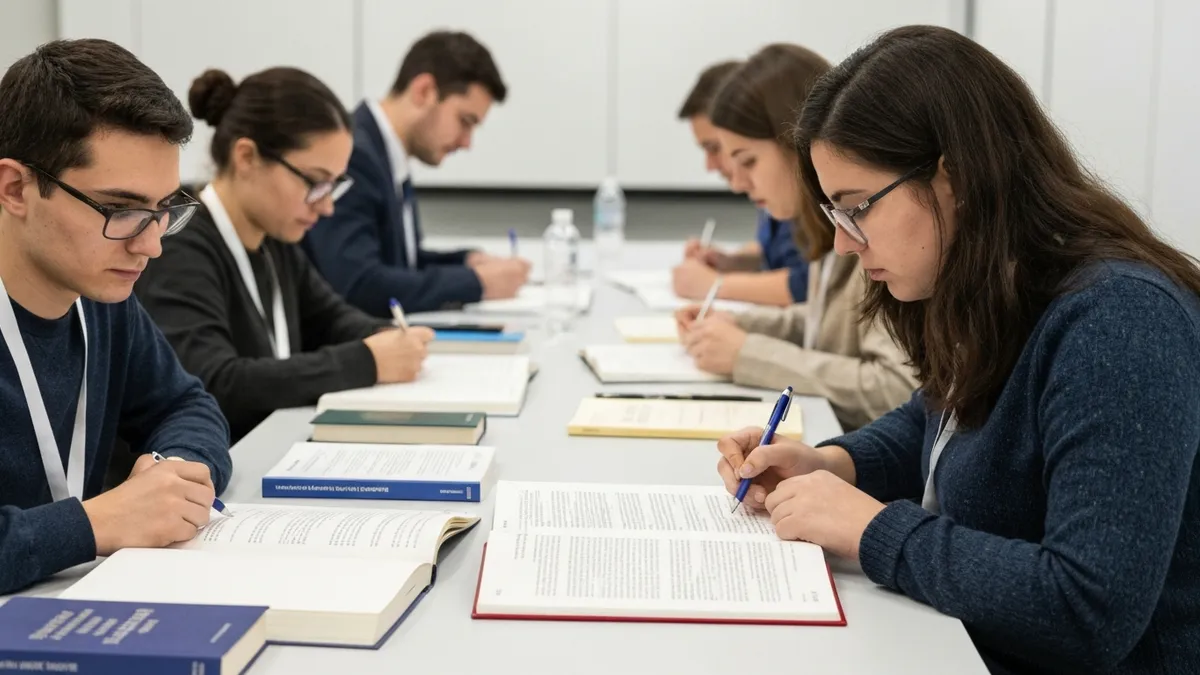
American Chemical Society 2026 — ACS Membership, Exams, and Certifications

American Chemical Society Meeting 2026: Your Complete Guide to ACS National Meetings, Registration, and Conferences
About the Author

Educational Psychologist & Academic Test Preparation Expert
Columbia University Teachers CollegeDr. Lisa Patel holds a Doctorate in Education from Columbia University Teachers College and has spent 17 years researching standardized test design and academic assessment. She has developed preparation programs for SAT, ACT, GRE, LSAT, UCAT, and numerous professional licensing exams, helping students of all backgrounds achieve their target scores.
Join the Discussion
Connect with other students preparing for this exam. Share tips, ask questions, and get advice from people who have been there.
View discussion (8 replies)