
ACLS Overview: What It Is, Who Needs It, and How to Get Certified 2026 September
ACLS overview: what it covers, who needs it, and how to certify. Complete guide with algorithms, drugs, and free practice tests. ✅
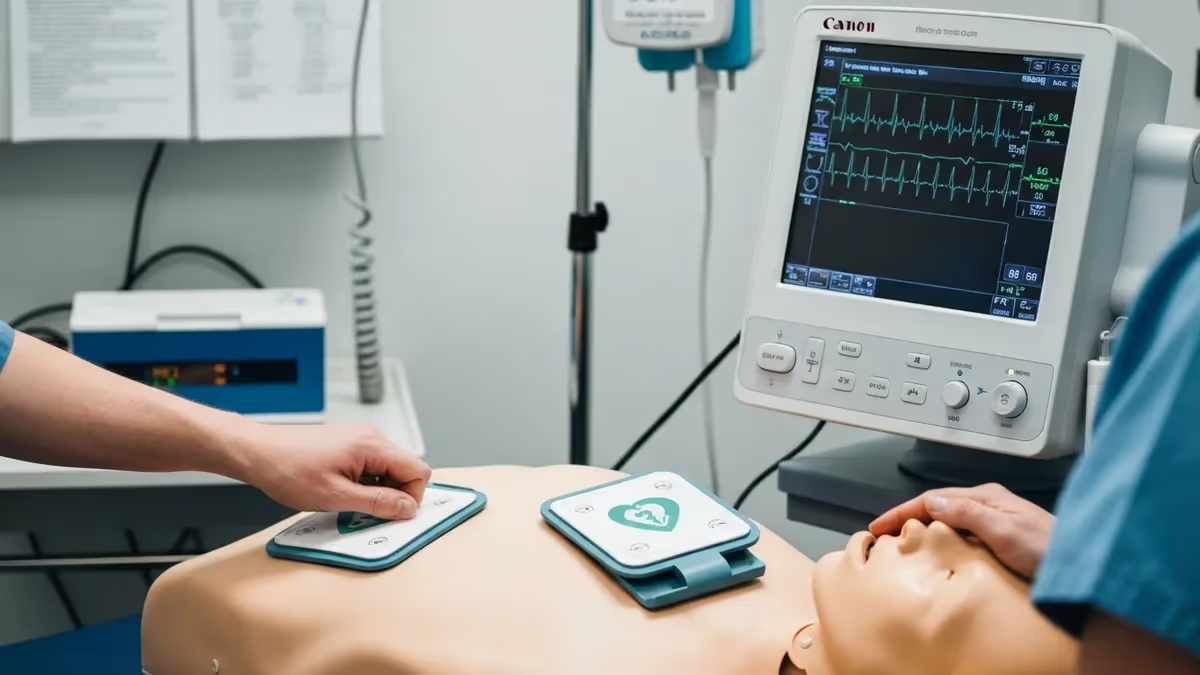
An acls overview is the essential starting point for any healthcare professional who may encounter a cardiac or respiratory emergency. Advanced Cardiovascular Life Support — universally abbreviated as ACLS — is a standardized, evidence-based training program developed by the American Heart Association (AHA) that teaches clinicians how to recognize and manage life-threatening cardiovascular events. It goes well beyond basic CPR, incorporating systematic algorithms, pharmacological interventions, and team communication strategies designed to maximize patient survival rates in the most critical moments of care.
At its core, ACLS training equips providers with a structured decision-making framework for emergencies including cardiac arrest, acute coronary syndromes, stroke, and respiratory failure. Rather than reacting to crises instinctively, trained providers follow validated protocols — the ACLS algorithms — that organize assessment and treatment into logical, repeatable sequences. These algorithms eliminate hesitation, reduce error rates, and ensure that every team member knows their role during a high-stakes resuscitation. The difference between a chaotic emergency response and a coordinated one can literally be measured in lives saved.
ACLS is required or strongly recommended for a wide range of clinical roles across hospital, prehospital, and acute care settings. Emergency physicians, nurses, paramedics, respiratory therapists, anesthesiologists, and critical care specialists are among the most commonly required to hold current ACLS certification. Many hospitals mandate ACLS as a condition of employment for anyone who works in environments where cardiac events are likely, including emergency departments, intensive care units, operating rooms, and cardiac catheterization labs.
The training itself is structured around a combination of cognitive learning and hands-on skills practice. Participants work through case simulations that mimic real emergency scenarios — ventricular fibrillation, pulseless electrical activity, asystole, tachyarrhythmias, and bradyarrhythmias are all covered in detail. These scenarios teach providers not just what medications to administer or when to shock, but also how to communicate effectively within a resuscitation team, delegate tasks under pressure, and close the loop on interventions to ensure nothing is missed.
The AHA updates ACLS guidelines periodically, most recently reflecting findings from the 2020 and 2025 guidelines cycles. These updates incorporate the latest evidence on CPR quality metrics, optimal defibrillation timing, medication selection, post-cardiac arrest care, and opioid emergency response. Staying current with guideline changes is essential for providers whose certification is more than two years old, since some treatment recommendations have shifted meaningfully based on new clinical research.
Certification is awarded after successfully completing both a written knowledge examination and a hands-on skills evaluation. The written exam tests understanding of algorithms, drug indications and dosages, rhythm recognition, and clinical reasoning. The skills evaluation requires demonstrating competency in procedures such as bag-mask ventilation, advanced airway management, and leading or participating in a simulated resuscitation. Most certifications are valid for two years, at which point providers must complete a renewal course to maintain their credential.
Whether you are a nursing student preparing for your first hospital job, a seasoned paramedic refreshing your credential, or a physician expanding your emergency response capabilities, understanding what ACLS covers and what it demands is the critical first step. This guide walks you through everything — from the foundational concepts and algorithms to the specific skills tested, the medications you must know, and the most effective strategies for passing your certification exam on the first attempt.
ACLS Certification by the Numbers

ACLS Certification Requirements at a Glance
Candidates must hold a current BLS (Basic Life Support) certification before enrolling in ACLS. Most courses also recommend a healthcare background, though requirements vary by course provider and institution.
The initial ACLS course typically spans 13–16 hours across one or two days. It includes precourse self-assessment, didactic instruction, skills stations, and a final written exam plus skills evaluation.
A closed-book written exam of approximately 50 multiple-choice questions must be passed with a minimum score of 84%. Questions cover algorithms, rhythm recognition, pharmacology, and clinical decision-making.
Hands-on skills testing includes megacode simulation where candidates must lead or participate in a resuscitation scenario, demonstrating correct sequencing, drug calls, and team communication under evaluation.
Every two years, providers complete a renewal (HeartCode or classroom) course that is shorter than initial certification. Renewal exams still require 84% or higher and include a skills verification component.
The ACLS algorithms are the backbone of the entire certification program. These structured decision trees tell providers exactly what to assess, what to do, and in what order — removing ambiguity from emergency care. The most fundamental algorithm is the Cardiac Arrest Algorithm, which branches into two main pathways based on whether the rhythm is shockable (ventricular fibrillation or pulseless ventricular tachycardia) or non-shockable (pulseless electrical activity or asystole). Understanding both pathways in detail is non-negotiable for passing the exam and providing competent care.
For shockable rhythms, the algorithm prioritizes immediate high-quality CPR followed by defibrillation as quickly as possible. Every two-minute cycle of CPR is followed by a rhythm check; if VF or pVT persists, another shock is delivered. Epinephrine 1 mg IV/IO is administered every three to five minutes throughout the arrest, and amiodarone or lidocaine is added for refractory VF/pVT after the second shock. Understanding the timing and rationale for each intervention — rather than memorizing steps in isolation — is what separates providers who truly understand ACLS from those who have simply memorized a checklist.
Non-shockable rhythms require a fundamentally different approach. Pulseless electrical activity (PEA) and asystole are not treated with defibrillation; instead, the priority is identifying and reversing the underlying cause. This is where the H's and T's framework becomes critical. The five H's — Hypovolemia, Hypoxia, Hydrogen ion (acidosis), Hypo/Hyperkalemia, and Hypothermia — and five T's — Tension pneumothorax, Tamponade (cardiac), Toxins, Thrombosis (pulmonary), and Thrombosis (coronary) — represent the most common and correctable causes of non-shockable cardiac arrest. Systematic evaluation for these reversible causes while maintaining continuous CPR is the core of PEA management.
Beyond cardiac arrest, ACLS also covers the Tachycardia Algorithm and the Bradycardia Algorithm. The tachycardia pathway differentiates stable from unstable presentations and then further divides by whether the QRS is narrow or wide. Unstable tachycardia with a pulse is treated with synchronized cardioversion regardless of the rhythm type. Stable patients undergo more nuanced management based on rhythm classification — adenosine for stable regular narrow-complex tachycardia, rate control agents or antiarrhythmics for atrial fibrillation or flutter, and antiarrhythmic therapy or cardioversion for stable wide-complex tachycardia.
The Bradycardia Algorithm applies when heart rate is below 50 beats per minute and the patient shows signs of hemodynamic instability — hypotension, altered mental status, signs of shock, ischemic chest discomfort, or acute pulmonary edema. Atropine 0.5 mg IV is the first-line pharmacological treatment, with a maximum total dose of 3 mg. If atropine fails or is unlikely to be effective — as in complete heart block or infranodal conduction problems — providers move to transcutaneous pacing, dopamine, or epinephrine infusions while preparing for transvenous pacing if the underlying cause cannot be corrected quickly.
The Acute Stroke Algorithm and the Acute Coronary Syndromes Algorithm round out the major ACLS pathways. Stroke management under ACLS focuses on the eight D's of stroke care — Detection, Dispatch, Delivery, Door, Data, Decision, Drug, Disposition — and the critical time targets: CT imaging within 25 minutes of arrival, fibrinolytic therapy decision within 45 minutes, and drug administration within 60 minutes. Acute coronary syndrome management covers the recognition of STEMI versus NSTEMI presentations, the initiation of antithrombotic therapy, and the decision-making around fibrinolytic therapy versus PCI depending on facility capabilities and symptom onset time.
Mastering these algorithms requires active study — not passive reading. Creating algorithm flowcharts by hand, working through practice cases, and testing yourself on branching decision points are all significantly more effective than reviewing slides. Providers who enter their ACLS exam having worked through dozens of simulated scenarios consistently outperform those who relied only on passive review, because the exam tests applied reasoning under the kind of time pressure that mirrors actual emergencies.
ACLS Medications, Rhythms & Team Dynamics
Epinephrine 1 mg IV/IO every 3–5 minutes is the universal vasopressor used in both shockable and non-shockable cardiac arrest. Amiodarone (300 mg first dose, 150 mg second dose) and lidocaine (1–1.5 mg/kg first dose) are the antiarrhythmics for refractory VF/pVT. Adenosine 6 mg followed by 12 mg treats stable SVT. Atropine 0.5 mg addresses symptomatic bradycardia. Dopamine and epinephrine infusions support hemodynamic stability when atropine fails.
Knowing dosages alone is not enough — ACLS exams and real emergencies demand that providers understand WHY each drug is used, not just the dose. For example, atropine is ineffective in complete heart block because the block is below the AV node where atropine acts. Magnesium sulfate 1–2 g IV is specifically indicated for Torsades de Pointes, a rare but deadly polymorphic VT triggered by prolonged QT. Recognizing these nuances is what distinguishes a prepared ACLS candidate from one who is just pattern-matching on drug names.
ACLS Certification: Benefits and Challenges
- +Standardized algorithms provide clear, evidence-based decision frameworks that reduce error rates in high-pressure emergency situations
- +Certification is recognized nationwide and often required for employment in emergency departments, ICUs, OR suites, and cardiac units
- +Hands-on simulation training builds real procedural confidence that classroom-only learning cannot replicate
- +Regular two-year renewal cycles ensure providers stay current with the latest AHA guideline updates and clinical evidence
- +ACLS training reinforces team communication skills that improve patient outcomes across all clinical encounters, not just cardiac emergencies
- +Completing ACLS demonstrates professional commitment to patient safety and advanced clinical competency to employers and peers
- −Initial certification courses are time-intensive, typically requiring 13–16 hours of classroom and skills training across one or two days
- −The 84% passing threshold on the written exam requires thorough preparation, particularly in pharmacology and rhythm recognition
- −Certification must be renewed every two years, creating an ongoing time and cost commitment for busy healthcare providers
- −Course fees range from $150 to $350 depending on the provider, which can be a barrier when employer reimbursement is not available
- −Some providers find the simulation-based megacode evaluation anxiety-inducing, particularly those with limited emergency medicine exposure
- −Without regular real-world practice between certifications, procedural skills and algorithm recall can degrade, making renewal courses feel like relearning rather than refreshing
ACLS Exam Preparation Checklist
- ✓Complete the AHA precourse self-assessment to identify knowledge gaps before your course date
- ✓Memorize all shockable and non-shockable cardiac arrest pathways and the branching logic for each
- ✓Study every H's and T's reversible cause of PEA/asystole with the corresponding treatment for each
- ✓Practice identifying VF, VT, PEA, asystole, SVT, A-fib, A-flutter, and all heart block degrees from real ECG strips
- ✓Drill ACLS drug names, doses, routes, timing, and clinical indications until recall is automatic under time pressure
- ✓Review the Tachycardia Algorithm and know exactly when to use synchronized cardioversion versus medications
- ✓Study the Bradycardia Algorithm and understand why atropine fails in infranodal blocks
- ✓Practice the Acute Stroke Algorithm including the eight D's of stroke care and time-to-treatment targets
- ✓Rehearse closed-loop communication and team role responsibilities for the megacode skills evaluation
- ✓Complete at least 150–200 ACLS practice questions across all topic areas before your exam date
The 84% Threshold is Non-Negotiable
The AHA requires a minimum score of 84% on the written ACLS exam — meaning you can miss no more than 8 questions on a 50-question test. Candidates who fail most often struggle with pharmacology dosages and rhythm identification under time pressure. Targeting these two areas with dedicated practice quizzes in the week before your exam is the single highest-return study strategy available.
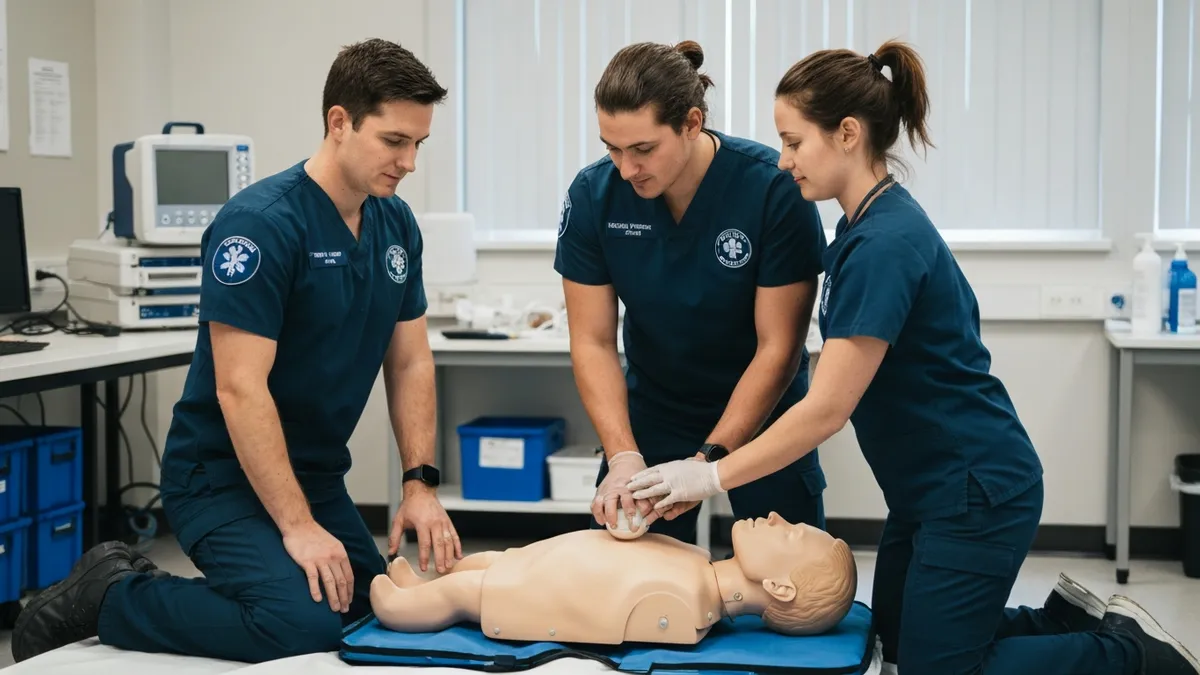
The skills evaluation component of ACLS certification is where many providers feel the most anxiety, yet it is also where preparation pays the highest dividends. The megacode scenario is the culminating assessment — a simulated cardiac arrest or other emergency in which the candidate must either lead the resuscitation team or function as a high-performing team member under direct observation by an AHA-certified instructor. The instructor evaluates whether the candidate correctly identifies the rhythm, calls for appropriate interventions in the right sequence, communicates clearly with the team, and avoids critical errors that would represent patient harm in a real situation.
High-quality CPR is one of the most evaluated components during skills stations. The AHA's 2020 and 2025 guidelines define high-quality CPR with specific, measurable benchmarks: chest compression rate of 100–120 per minute, compression depth of at least 2 inches (5 cm) but not exceeding 2.4 inches (6 cm) in adults, full chest recoil after each compression, minimizing interruptions to less than 10 seconds when possible, and avoiding excessive ventilation rate.
Candidates are often evaluated using CPR feedback devices that provide real-time data on compression rate and depth, making it easy for instructors to identify providers who compress too shallowly, too fast, or who fail to allow full recoil.
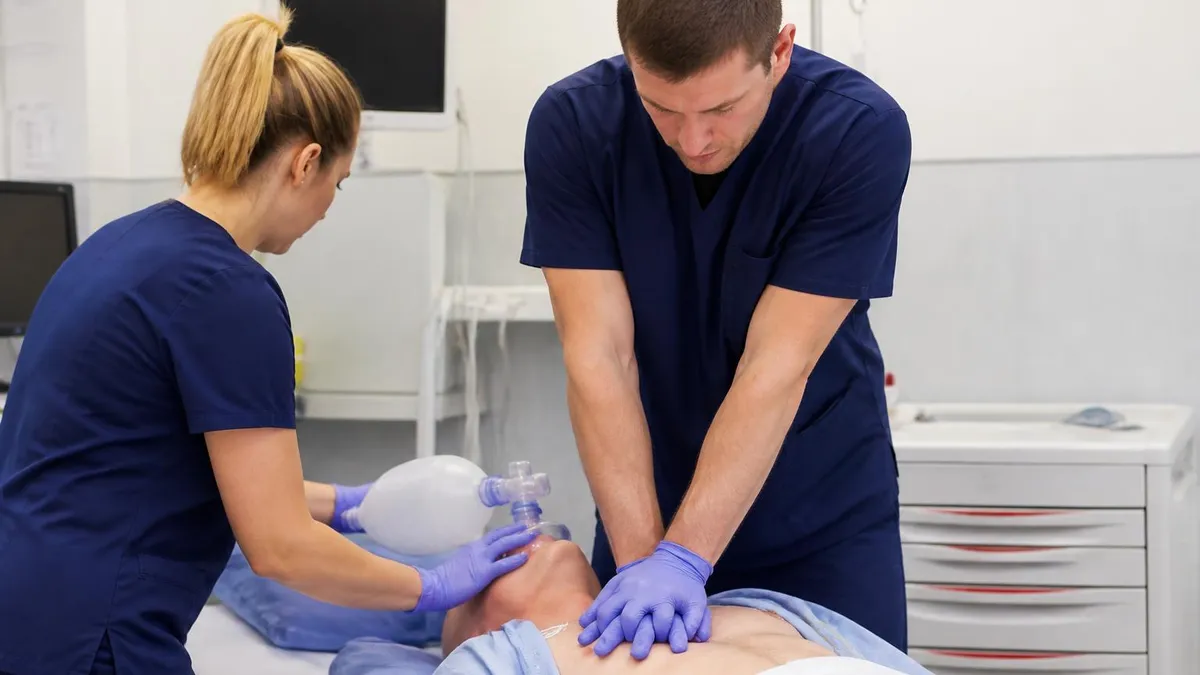
Airway management is the second major skills domain. ACLS assumes that providers can perform bag-mask ventilation effectively — a skill that is frequently underestimated and underpracticed. Proper mask seal, appropriate tidal volumes (visible chest rise without excessive ventilation), and a ventilation rate of 10 breaths per minute during CPR with an advanced airway in place are all evaluated. If an advanced airway (supraglottic or endotracheal tube) is part of the scenario, providers must also demonstrate correct confirmation of tube placement using waveform capnography and clinical assessment, not just visualization alone.
Defibrillation technique is tested during shockable rhythm scenarios. Providers must demonstrate that they can safely charge and deliver a shock while ensuring that all team members are clear of the patient before energy delivery. The sequence — charge during compressions, pause for rhythm confirmation and shock delivery, resume compressions immediately after shock — must be executed with minimal hands-off time. Hands-off fraction (the proportion of time during a resuscitation when no compressions are occurring) is a key quality metric, and experienced instructors will note if the candidate pauses compressions unnecessarily before or after defibrillation.
IV and IO access demonstration may also be part of the skills evaluation depending on the course format. Intraosseous access has become an increasingly important skill as evidence shows IO medications reach central circulation just as rapidly as IV medications during low-flow states like cardiac arrest. Providers should be familiar with IO device operation, correct insertion sites (proximal tibia, distal tibia, proximal humerus), confirmation of placement, and flushing technique before attending their course if skills stations include this component.
One of the most effective preparation strategies for the skills evaluation is to practice verbally narrating your clinical decisions out loud — as if you are speaking to your resuscitation team — while working through algorithm scenarios alone. This technique, sometimes called verbalization training, trains the muscle memory for closed-loop communication and helps providers identify gaps in their own algorithm knowledge when they cannot articulate the next step clearly. Providers who have rehearsed their megacode narration find the actual evaluation far less stressful because the verbal communication pattern is already automatic.
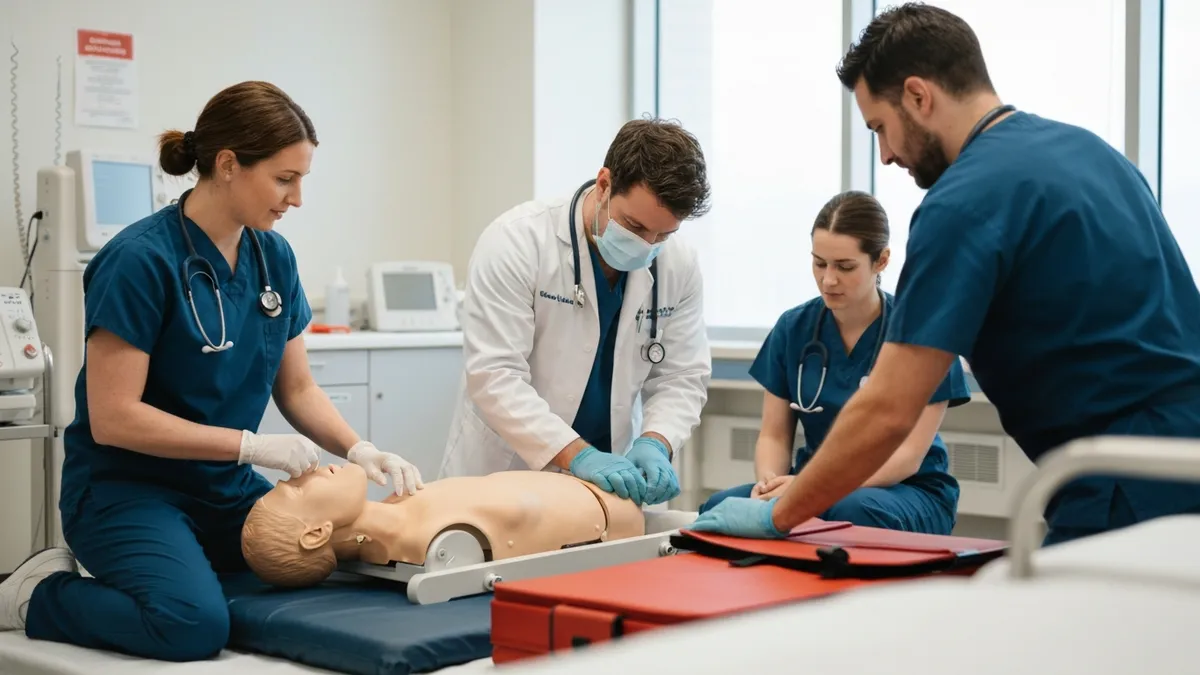
Simulation labs at hospitals and nursing schools increasingly offer ACLS practice scenarios outside of formal certification courses. Taking advantage of these practice opportunities, even informally, accelerates skills development dramatically compared to relying solely on the course day itself. If your institution does not have a simulation program, partnering with a colleague to take turns playing Team Leader and team member during algorithm run-throughs using a mannequin or even role-play is a practical alternative that yields measurable benefits for both participants.
The AHA requires valid BLS (Basic Life Support) certification as a prerequisite for ACLS enrollment. If your BLS card has expired — or will expire before your ACLS renewal date — complete BLS renewal first. Arriving at an ACLS course with an expired BLS credential will prevent participation and result in a lost course fee. Check your BLS expiration date at least 30 days before your scheduled ACLS course.
ACLS renewal and recertification follow a structured two-year cycle, and understanding the options available helps providers maintain their credential without unnecessary disruption to their work schedules. The AHA currently offers two main renewal pathways: the traditional classroom-based renewal course and the HeartCode ACLS blended learning option. Both pathways result in the same AHA certification card, but they differ significantly in format, flexibility, and the way skill verification is handled.
The HeartCode ACLS pathway combines online self-paced eLearning modules with a hands-on skills session that is typically shorter than a full classroom course. Providers complete the cognitive learning — algorithms, pharmacology, rhythm recognition — on their own time through the online modules, then schedule a skills check session with a qualified AHA instructor or training site. This format has become increasingly popular among healthcare professionals with demanding schedules because it eliminates the need to block an entire day for classroom attendance while still ensuring competency verification through the in-person skills component.
Traditional classroom renewal courses typically run four to eight hours and are offered through AHA-authorized training centers at hospitals, community colleges, fire departments, and commercial training companies. The advantage of the classroom format is immediate access to an instructor who can answer questions, clarify algorithm nuances, and provide real-time feedback during skills practice. For providers who feel they need more guided review — particularly those who work in settings where cardiac emergencies are infrequent and their algorithm recall may have drifted — the classroom format provides more structured reinforcement than self-paced eLearning.
Regardless of the renewal pathway chosen, providers should treat recertification as an active learning opportunity rather than a bureaucratic requirement. The AHA has updated ACLS guidelines meaningfully over recent cycles, including refinements to post-cardiac arrest care recommendations, expanded guidance on opioid emergency response, and updated target metrics for CPR quality. Providers who have been certified for several years may find that some of their practiced responses no longer align with current best evidence — and renewal is the mechanism for catching and correcting those gaps before they affect patient care.
Post-cardiac arrest care has become an increasingly emphasized component of ACLS over recent guideline cycles, reflecting growing evidence that what happens after return of spontaneous circulation (ROSC) is just as critical as the resuscitation itself. Targeted temperature management, careful oxygen titration to avoid hyperoxia, blood pressure targets, and early coronary angiography for patients with suspected cardiac etiology are all areas where ACLS-trained providers need current knowledge. The post-arrest period represents a vulnerable window where well-intentioned but outdated practices can harm patients who survived the initial arrest.
Providers who work in facilities where ACLS is required should also familiarize themselves with their institution's specific policies on certification currency. While the AHA defines a two-year certification period, some hospitals require renewal before the two-year mark — particularly if guideline updates occur during the certification period or if a quality review identifies knowledge gaps at the departmental level. Checking your institution's credentialing requirements, not just the AHA standard, ensures that your certification status never creates an unexpected employment compliance issue.
For healthcare providers approaching their first ACLS renewal, the process often feels much less daunting than initial certification. The algorithms and clinical reasoning skills established during initial training create a foundation that makes renewal learning feel like reinforcement and updating rather than starting from scratch. Providers who maintained exposure to emergency scenarios during their two-year certification period — even through simulation, case review, or regular clinical work — typically find renewal courses relatively straightforward and report high confidence in both the written exam and skills evaluation components.
Preparing for ACLS certification effectively requires a deliberate study strategy, not just time spent reviewing materials. The providers who pass on their first attempt consistently share a set of practices that separate active learning from passive review. The most important is starting preparation at least two to three weeks before your course date — not the night before. ACLS content is dense, and the connections between algorithms, rhythm recognition, and pharmacology only become fluent with repeated exposure over time rather than cramming sessions that overload short-term memory without building lasting recall.
Begin your preparation by downloading the current AHA ACLS Provider Manual or accessing the precourse self-assessment provided by your training center. The precourse materials are specifically designed to identify where your existing knowledge is strong and where gaps exist. Many providers discover during the precourse assessment that they are comfortable with cardiac arrest algorithms but weak on pharmacology dosages or tachycardia management — and this discovery, made three weeks before the course rather than the morning of, leaves time to address the gap systematically.
Practice questions are one of the highest-value preparation tools available. Working through ACLS-style multiple-choice questions — covering rhythms, algorithms, pharmacology, and clinical scenarios — both tests your knowledge and builds the exam-taking pattern recognition needed to work efficiently under time pressure. Review every question you miss carefully, tracing back to the underlying concept rather than just memorizing the correct answer. Understanding why the wrong answers were wrong is often more instructive than simply confirming the right answer, because ACLS exam questions are designed to test reasoning, not just recall.
Algorithm memorization is most durable when learned through active retrieval. Instead of re-reading the flowchart, cover it and attempt to draw it from memory — then check your work. This retrieval practice technique has strong support in cognitive science research and produces significantly better long-term retention than re-reading the same material repeatedly. The shockable arrest algorithm, PEA/asystole algorithm, tachycardia algorithm, and bradycardia algorithm are the four highest-priority items for this type of active memorization practice because they are the most heavily weighted on both the written exam and the megacode evaluation.
Many successful ACLS candidates also find significant value in forming a small study group with two or three colleagues preparing for the same course. Study groups allow participants to take turns playing Team Leader in simulated scenarios, which simultaneously builds algorithm recall, team communication skills, and comfort with the verbal performance aspects of the megacode evaluation. Even a single two-hour study session using this format — with one person leading and others playing team roles — provides more preparation value for the skills evaluation than multiple hours of solo reading or video review.
The night before your ACLS course, resist the urge to cram. Your performance on both the written exam and the megacode is better served by adequate sleep than by additional study at this point. Review your most important algorithm summaries briefly if it helps your confidence, but prioritize rest. Arrive at your course with your BLS card, your photo ID, and any precourse materials your training center requested. Bring a notepad for jotting key drug doses or algorithm reminders during the didactic portions of the course, since most instructors welcome active note-taking and it reinforces learning in real time.
After certification, the most effective way to maintain ACLS proficiency is regular exposure to the content — even outside of formal training environments. Many hospital units conduct monthly or quarterly skills stations where providers practice specific components like defibrillation sequencing or megacode participation. Emergency simulation centers increasingly offer open-access practice time.
Reviewing one ACLS algorithm per month as a brief self-directed refresher, particularly in the second year of your certification cycle, dramatically reduces the knowledge decay that can make renewal courses feel overwhelming rather than energizing. Consistent, low-dose exposure is the most sustainable approach to maintaining the level of competency that ACLS certification is designed to represent.
ACLS Questions and Answers

ACLS CPR Certification: Complete Training Guide for Healthcare Professionals
ACLS Study Guide: Complete 2026 Certification Prep with Algorithms, Drugs & Practice Tests

ACLS BLS Course: Complete Training Guide for Healthcare Providers

ACLS Card Lookup: How to Verify, Find & Replace Your ACLS Certification in 2026

ACLS Guidelines 2026: Complete AHA Update on Algorithms, Drugs, CPR Quality & Post-Arrest Care
About the Author

Registered Nurse & Healthcare Educator
Johns Hopkins University School of NursingDr. Sarah Mitchell is a board-certified registered nurse with over 15 years of clinical and academic experience. She completed her PhD in Nursing Science at Johns Hopkins University and has taught NCLEX preparation and clinical skills courses for nursing students across the United States. Her research focuses on evidence-based exam preparation strategies for healthcare certification candidates.