
Dementia Caregiver Certification Training Guide 2026 September
Free Dementia Caregiver Certification practice test with questions and answer explanations. 🧠 Prepare for the 2026 September exam with instant scoring.

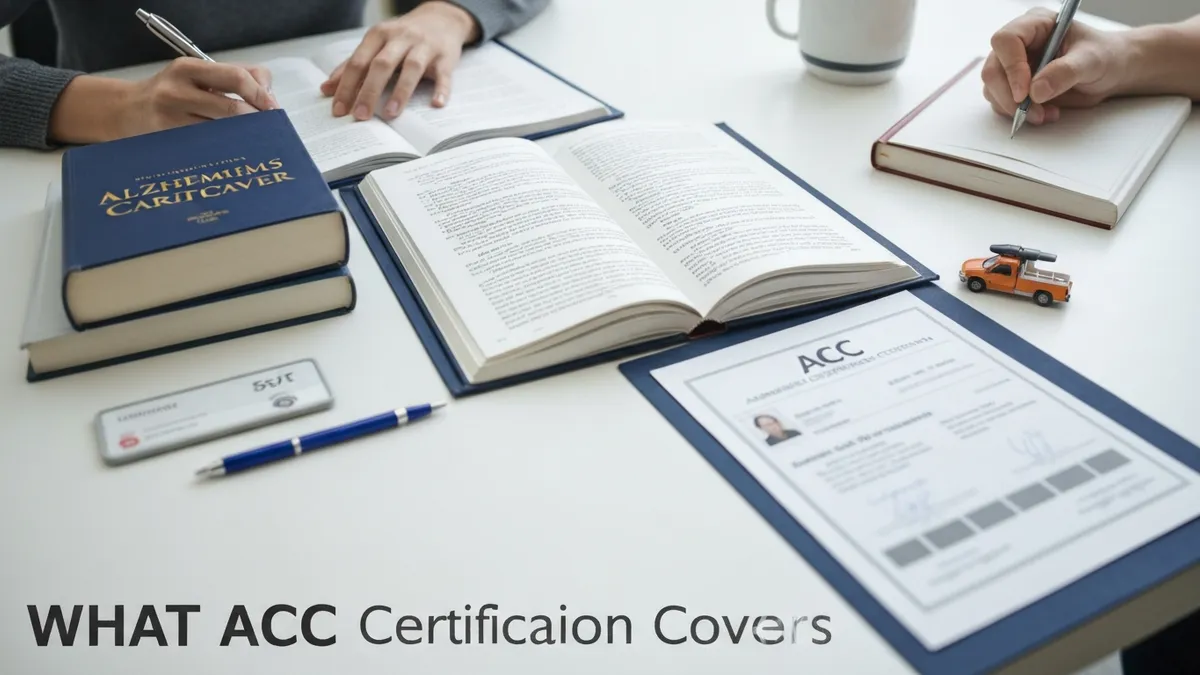
What ACC Certification Covers
Alzheimer's Caregiver Certification programs focus on the full spectrum of dementia care competencies. Core curriculum areas typically include:
- Dementia care principles: Understanding Alzheimer's disease stages, brain changes, and behavioral symptoms so caregivers can anticipate and respond to patient needs effectively.
- Communication strategies: Techniques for verbal and non-verbal communication with individuals who have declining cognitive function, including validation therapy and redirection methods.
- Safety and fall prevention: Environmental modifications, wandering prevention, medication management awareness, and emergency response protocols specific to dementia patients.
- Person-centered care: Preserving dignity and autonomy, engaging meaningful activities, and supporting quality of life throughout disease progression.
- Family caregiver support: Educating and supporting family members, recognizing caregiver burnout, and coordinating with multidisciplinary care teams.
Candidates who complete training are assessed on both knowledge and applied competency, often through written exams and practical demonstrations. If you work in personal care, pairing this credential with knowledge of PCA job duties and salary can help you understand your full career path in direct care roles.
Who Offers ACC Certification
Several nationally recognized organizations grant Alzheimer's caregiver credentials:
- Alzheimer's Association: Offers the essentiALZ and essentiALZ Plus certification programs, widely accepted in memory care facilities across the country. These are competency-based and require passing an online exam.
- National Council of Certified Dementia Practitioners (NCCDP): Awards the Certified Dementia Practitioner (CDP) credential after completing an approved training and passing the CDP exam. The NCCDP also offers the Alzheimer's Disease and Dementia Care (ADDC) seminar as a prerequisite.
- National Healthcareer Association (NHA): Provides allied health certifications with dementia-care pathways suited for CNAs and PCAs seeking specialty credentials. Explore related options like CCMA certification for a broader healthcare career foundation.
- State-approved training programs: Many states require specific dementia training hours for licensed care facilities; coursework from approved providers counts toward both state compliance and national certification.
VA Caregiver Support Program
The VA Caregiver Support Program (CSP) is a federal initiative that assists caregivers of eligible veterans, including those with Alzheimer's disease or other dementias. It operates under two main tracks:
- Program of Comprehensive Assistance for Family Caregivers (PCAFC): For post-9/11 veterans with serious injuries or illnesses. Eligible caregivers receive a monthly stipend, health coverage through CHAMPVA (if not already insured), mental health services, and respite care. Alzheimer's-related conditions are covered if they meet the VA's serious injury standard.
- Program of General Caregiver Support Services (PGCSS): Open to caregivers of veterans from all eras. Provides education, peer support, skills training, and referrals to community resources — at no cost to the caregiver.
To apply for PCAFC, caregivers and veterans must jointly submit VA Form 10-10CG at their nearest VA medical center. Caregivers are assessed on their ability to provide personal care services, including those specific to cognitive impairment. Earning an ACC credential before applying can strengthen your application and demonstrate competency to VA reviewers.
Key support services available through CSP include caregiver coaching hotlines, online training modules on dementia care, and connections to local Caregiver Support Coordinators embedded in VA facilities nationwide.
Caregiver Salary and Career Outlook
Alzheimer's caregiver certification directly impacts earning potential. According to Bureau of Labor Statistics and industry surveys:
- Home health and personal care aides: Median annual wage of approximately $33,530 nationally; certified dementia specialists earn 10–20% above this baseline.
- Certified nursing assistants (CNAs) with dementia specialty: Average $36,000–$42,000/year in memory care units, with premiums in high cost-of-living states like California, New York, and Massachusetts.
- Memory care coordinators and supervisors: With ACC credentials and additional management experience, salaries range from $45,000 to $65,000+.
Job growth for home health and personal care aides is projected at 22% through 2032 — far faster than the average for all occupations — driven primarily by the aging baby boomer population and rising dementia prevalence. Caregivers who invest in ACC certification position themselves for faster advancement into lead caregiver, training coordinator, or care manager roles.

- ✓Complete an NCCDP or Alzheimer's Association approved training program
- ✓Verify your state's specific caregiver certification requirements
- ✓Obtain a background check (required for most caregiver positions)
- ✓Complete CPR/BLS certification (required by most employers)
- ✓Apply for VA Caregiver Support Program if supporting a veteran
- ✓Renew certification per program schedule (typically every 1-2 years)
- ✓Complete required continuing education units for renewal
ACC Study Tips
What's the best study strategy for ACC?
Focus on weak areas first. Use practice tests to identify gaps, then study those topics intensively.
How far in advance should I start studying?
Most successful candidates begin 4-8 weeks before the exam. Create a structured study schedule.
Should I retake practice tests?
Yes! Take each practice test 2-3 times. Focus on understanding why answers are correct, not memorizing.
What should I do on exam day?
Arrive 30 min early, bring required ID, read questions carefully, flag difficult ones, and review before submitting.
- +Growing demand — 6.7M Americans have Alzheimer's disease
- +Certification can increase pay and career advancement
- +Training improves caregiver confidence and patient outcomes
- +VA Caregiver Support provides stipend for eligible family caregivers
- −Emotionally demanding work with high burnout risk
- −Most positions offer entry-level wages without specialization
- −Certification not universally required by all employers
- −Ongoing CE requirements and renewal fees
ACC Caregiver Questions and Answers
More Healthcare & Caregiver Resources
Join the Discussion
Connect with other students preparing for this exam. Share tips, ask questions, and get advice from people who have been there.
View discussion (7 replies)