
911 Operator Qualifications: Requirements to Get Hired 2026 October
Free 911 Operator Qualifications: 🟢 practice test with questions and answer explanations. Prepare for the 2026 October exam with instant scoring.

What Are the Qualifications to Become a 911 Operator?
Becoming a 911 operator — also called an emergency dispatcher or public safety telecommunicator — is more demanding than most people expect. It's not a simple phone answering job. You're coordinating emergency response, gathering critical information under extreme pressure, and making decisions that affect people's safety in real time. The qualifications reflect those demands.
Requirements vary by state, county, and agency, but the core qualifications are consistent across most jurisdictions. Here's what you actually need to become a 911 operator.
Age Requirements to Be a 911 Operator
Most agencies require applicants to be at least 18 years old. Some jurisdictions set the minimum at 21, particularly in areas where operators handle law enforcement dispatch specifically. There's typically no maximum age — what matters is your ability to meet the job's cognitive and stress-tolerance demands.
If you're wondering how old you have to be to work as a 911 operator: 18 is the baseline in most states, but verify with your specific agency. Some smaller agencies may have different local requirements.
Education Requirements
The minimum education requirement for most 911 operator positions is a high school diploma or GED equivalent. A bachelor's degree is not required and isn't standard for this role. Some agencies prefer candidates with coursework in criminal justice, public safety, or communications, but it's rarely a hard requirement.
What's valued more than formal education is specific demonstrated capability: typing speed, multitasking under pressure, clear verbal communication, and the ability to remain calm in high-stress situations. These are measurable skills that matter more than academic credentials for most hiring agencies.
Typing Speed and Keyboard Skills
Most 911 dispatch centers require a minimum typing speed — typically 35 to 45 words per minute with high accuracy. Faster is better. During an active call, you're typing incident information into computer-aided dispatch (CAD) software while simultaneously talking to the caller, monitoring radio traffic, and potentially coordinating with other units. Your hands and brain are doing multiple things at once.
If your typing speed is below the minimum, that's a fixable problem — but fix it before applying. Free typing practice tools can raise most people's speed by 10 to 15 WPM with three to four weeks of consistent daily practice.
911 Operator Job Requirements: The Full List
Beyond age, education, and typing, the standard 911 operator requirements include:
- Clear verbal communication — You need to speak clearly and calmly, be understood easily, and extract information from distressed callers who may be difficult to understand
- Multitasking ability — Simultaneous call handling, data entry, and radio communication is the baseline
- Listening and memory recall — You must retain and accurately record details under pressure
- Background check clearance — Criminal background checks are standard; serious felony convictions typically disqualify applicants
- Drug screening — Pre-employment drug testing is standard; many agencies test randomly after hiring
- Vision and hearing — Corrected vision is typically acceptable; you need to hear clearly under noisy conditions
- Geographic knowledge — Many agencies test your knowledge of local geography, street systems, and landmarks
Did You Know? Passing the 911 Operator Test exam on your first attempt saves both time and money. Start with diagnostic practice tests to identify weak areas.
The Hiring Process for 911 Operators
The hiring process is typically multi-step and more rigorous than candidates expect. Here's what most agencies include:
- Written or computer-based exam — Tests reading comprehension, memory recall, data entry speed and accuracy, and situational judgment
- CritiCall or equivalent skills assessment — A standardized test used by many agencies to measure multitasking, data entry, call summarization, and decision-making under simulated dispatch conditions
- Oral interview — Often includes scenario-based questions about how you'd handle specific emergency situations
- Background investigation — Full background check including criminal history, driving record, and often financial history
- Psychological evaluation — Some agencies include a psychological assessment to evaluate stress tolerance and suitability for the role
- Medical exam — Including hearing and vision testing
The 911 operator career guide covers the full hiring timeline and what each step involves. From application to job offer, the process can take three to six months — start preparing now, not after you've applied.
The CritiCall Test: What You Need to Know
CritiCall is the most widely used pre-employment assessment for 911 operators. It tests the exact skills you'll use on the job: reading and retaining information from a written passage, entering data while listening to audio, summarizing calls accurately, and making time-pressured decisions.
Most people who struggle with CritiCall do so because they've never practiced the specific multitasking format — not because they lack the underlying ability. Practicing with dispatch simulation tools and training your brain to process simultaneous inputs is the most effective preparation.
Radio Communications and Dispatch Protocols
Understanding radio communications — proper terminology, 10-codes, phonetic alphabet, and protocol for different emergency types — is essential knowledge for 911 operators. Some of this you'll learn in academy training after you're hired, but candidates who arrive with baseline familiarity have a meaningful advantage during training.
Common emergency dispatch protocols include:
- Priority of dispatch — life safety first, property second
- Emergency Medical Dispatch (EMD) protocols for medical calls
- Law enforcement incident classification
- Multi-agency coordination on major incidents
Practice tests covering radio communications and dispatch protocols give you exposure to the decision-making frameworks you'll use on the job — which also helps you perform better in oral interviews where scenario questions test this reasoning.
Physical and Psychological Demands of the Role
911 dispatching is not physically demanding in the traditional sense — it's a sedentary, seated job. But it's one of the most psychologically demanding jobs in public safety. You take calls from people experiencing the worst moments of their lives. You make decisions that affect emergency response in real time. You handle back-to-back high-stress calls without recovery time between them.
High burnout rates in 911 centers are well-documented. Agencies know this and the psychological evaluation is partly about identifying whether a candidate has the emotional resilience for sustained performance in that environment. If you're considering this career, reflect honestly on your stress tolerance, your ability to emotionally compartmentalize, and your support systems outside of work. Those factors matter as much as any technical qualification.
The 911 operator jobs available in your area will have specific salary, shift, and requirement information. Most dispatch centers operate 24/7 with rotating shifts — you'll likely work nights, weekends, and holidays, especially as a new hire. Factor that into your planning before you apply.

911 Operator Test: Pros and Cons
- +911 operator — 911 Operator Test credential is recognized by employers and industry professionals
- +Higher earning potential compared to non-credentialed peers
- +Expanded career opportunities and professional advancement
- +Structured learning path builds comprehensive knowledge
- +Professional development that stays current with industry standards
- −Preparation requires significant time and study commitment
- −Associated costs for exams, materials, and renewal fees
- −Continuing education needed to maintain credentials
- −Competition for advanced positions can be challenging
- −Requirements and standards may vary by state or region

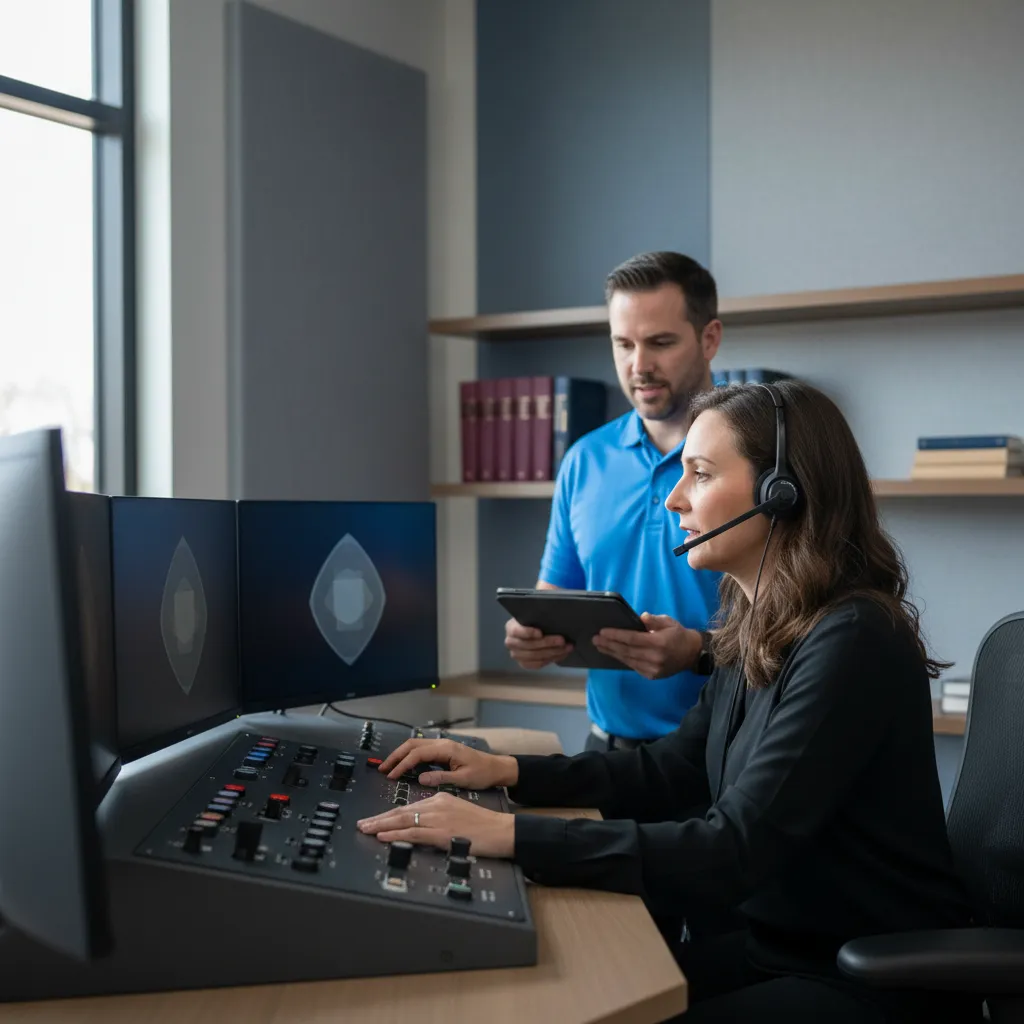

How to Prepare for the 911 Operator Hiring Process
Start early. The 911 hiring process is lengthy — background investigations alone can take weeks. If you're serious about this career, give yourself three to six months of lead time before you expect to start working.
In that time: build your typing speed to at least 45 WPM with high accuracy, practice multitasking exercises (there are free dispatch simulation tools online), review local geography and street systems in your area, and work through practice tests that cover listening recall, data entry, and situational judgment.
The candidates who get hired aren't always the fastest typists or the most experienced. They're the ones who prepared specifically for what the agency tests and who demonstrated in their interviews that they understand the demands of the role. Both of those things are within your control.
Start with practice tests today. Find your gaps. Close them before your application is in front of a hiring panel.
About the Author

Law Enforcement Trainer & Civil Service Exam Specialist
John Jay College of Criminal JusticeMarcus B. Thompson earned his Master of Arts in Criminal Justice from John Jay College of Criminal Justice and served 12 years as a law enforcement officer before transitioning to full-time academy instruction. He is a POST-certified instructor who has prepared candidates for police entrance exams, firefighter assessments, and civil service examinations across dozens of agencies.
Join the Discussion
Connect with other students preparing for this exam. Share tips, ask questions, and get advice from people who have been there.
View discussion (8 replies)