
WHMIS Train the Trainer: Complete Guide to WHMIS 2015 Certification and Workplace Training
Master WHMIS train the trainer requirements, aix safety whmis 2015 answers, symbols, and certification steps. Free practice questions included. 🎯

If you are preparing to deliver WHMIS training in your workplace, understanding the full scope of the WHMIS train the trainer program is essential. WHMIS — the Workplace Hazardous Materials Information System — is Canada's national standard for communicating information about hazardous products used in the workplace. Since the 2015 update aligned WHMIS with the Globally Harmonized System of Classification and Labelling of Chemicals (GHS), employers and designated trainers must stay current on new pictograms, safety data sheet formats, and legal obligations under federal and provincial legislation.
The whmis 2015 aix safety v3 quiz answers have become one of the most searched topics among workers seeking certification proof and trainers verifying their own knowledge. Understanding why those answers matter — and what the underlying concepts really mean — is far more valuable than simply memorizing a list. A qualified train-the-trainer candidate must be able to explain hazard classes, interpret GHS pictograms, read a 16-section Safety Data Sheet, and walk employees through proper label requirements, all while adapting the content to the specific hazardous products present in their facility.
Train-the-trainer programs exist because provincial occupational health and safety regulations place the burden of WHMIS education directly on the employer. Rather than outsourcing every training session to an external provider, companies can designate internal employees as certified WHMIS trainers who then deliver ongoing, workplace-specific instruction to colleagues. This approach saves money, keeps training relevant to actual site conditions, and ensures that new hires receive orientation quickly. Understanding whmis 2015 aix safety practice materials is a critical step in preparing these internal trainers.
The scope of a train-the-trainer course typically covers adult learning principles, how to structure a WHMIS lesson plan, assessment design, record-keeping obligations, and a deep dive into every hazard class under WHMIS 2015. Trainers must be comfortable answering questions about everything from flammable gas storage to reproductive toxicity classifications. They also need practical skills in locating and interpreting supplier labels, creating workplace labels for decanted products, and accessing the correct SDS for any controlled product on site.
One critical distinction that trainers must convey is the difference between WHMIS 1988 and WHMIS 2015. While many workplaces have fully transitioned, some legacy materials and documentation still reference the old Material Safety Data Sheet format and the original eight hazard symbols. A competent WHMIS trainer must bridge both systems during any transition period, helping workers recognize old HHPS supplier labels alongside new GHS-aligned pictograms. Knowing the whmis meaning behind every symbol — old and new — is a baseline expectation for any trainer candidate.
Employers are also required under the Hazardous Products Act and its accompanying Hazardous Products Regulations to ensure that all workers who work with or in proximity to hazardous products receive WHMIS education and training. The law distinguishes between education (the generic knowledge of the system) and training (site-specific instruction about the actual products in a particular workplace). A train-the-trainer program equips designated employees to deliver both components effectively and to document that delivery in a way that satisfies a regulatory inspection or audit.
This article walks through every layer of WHMIS 2015 train-the-trainer requirements, from understanding what does whmis stand for at the legislative level, to mastering AIX Safety module content, to building a training calendar that keeps your workforce compliant year-round. Whether you are a safety coordinator, an HR professional, a supervisor, or a frontline worker being promoted into a training role, the information below will help you succeed.
WHMIS Train the Trainer: Key Numbers

WHMIS Train the Trainer Program Structure
Step 1 — Complete Generic WHMIS 2015 Education
Step 2 — Enroll in a Train-the-Trainer Course
Step 3 — Conduct a Workplace Hazard Inventory
Step 4 — Design and Deliver Site-Specific Training
Step 5 — Assess and Document Worker Competency
Step 6 — Maintain Currency and Renew Trainer Credentials
Understanding WHMIS 2015 at the depth required of a trainer means going well beyond memorizing the ten pictogram symbols. A trainer must understand the classification logic that places a chemical into a particular hazard category, so they can explain to workers why a product carries a specific warning and what that warning demands of them in terms of safe handling, storage, and emergency response. For example, a flammable liquid classified as Category 1 poses a significantly higher ignition risk than a Category 4 product, and a trainer must help workers understand why those distinctions drive different storage and ventilation requirements.
The aix safety whmis 2015 training modules are widely used across Canadian industries precisely because they break complex classification criteria into digestible lessons with embedded knowledge checks. Trainers who have worked through these modules can speak to the rationale behind each section and anticipate the questions workers commonly ask — questions like why two products with similar names have entirely different GHS pictograms, or why a product rated as a skin sensitizer requires different PPE than a simple irritant. This depth of understanding is what separates a qualified trainer from an employee who merely passed a multiple-choice assessment.
Safety Data Sheets are the backbone of both WHMIS worker education and site-specific training. Every SDS under WHMIS 2015 follows a standardized 16-section format established by the Hazardous Products Regulations. Trainers must be fluent in navigating all 16 sections, but experience shows that sections 2 (Hazard Identification), 8 (Exposure Controls and Personal Protective Equipment), and 11 (Toxicological Information) generate the most worker questions. Teaching workers how to quickly locate emergency contact information in Section 1, first aid measures in Section 4, and spill response procedures in Section 6 can make a genuine difference in an emergency situation.
WHMIS symbols — the GHS pictograms — are often the first thing workers notice on a product label, and the whmis symbols a trainer chooses to emphasize should reflect the actual hazard mix in the workplace. A manufacturing facility that handles corrosives and flammable solvents will focus heavily on the flame, exclamation mark, corrosion, and skull-and-crossbones pictograms. A healthcare setting might prioritize the health hazard pictogram (for carcinogens and reproductive toxins) and the biohazard symbol used for certain biological agents. Trainers need to connect each symbol to real consequences in language that resonates with their specific workforce.
Label literacy is another cornerstone of trainer competency. Under WHMIS 2015, supplier labels must include the product identifier, supplier information, hazard pictograms, signal word (Danger or Warning), hazard statements, precautionary statements, and supplemental information. Workplace labels — which employers create for decanted products or containers that have lost their supplier label — require at minimum the product name, safe handling instructions, and a reference to the SDS. Trainers must be able to spot a non-compliant label in the field and know the correct procedure for addressing the gap before the product is used again.
The concept of whmis meaning extends into every corner of a compliant workplace safety program. WHMIS is not simply a training exercise completed once during onboarding — it is an ongoing system requiring regular updates as products change, SDSs are revised, and new workers join the team. Trainers bear responsibility for ensuring that the training program evolves alongside these changes. This means building a process for reviewing SDSs whenever a new product is purchased, flagging outdated workplace labels, and scheduling refresher sessions when significant changes occur in job tasks or work areas.
Provincial enforcement agencies have the authority to inspect workplaces and review WHMIS training records. An inspector may ask to see the training materials used, the assessment results for individual workers, and the SDS library for products on site. A well-prepared trainer maintains organized documentation that can answer all these questions quickly.
Understanding the definition of whmis at the legislative level — including which federal acts and provincial OHS regulations apply in your jurisdiction — is essential context for building a training program that will survive regulatory scrutiny. For those who want to deepen their reference knowledge, exploring the definition of whmis helps ground the system in its statutory roots.
AIX Safety WHMIS 2015 Module Breakdown
The AIX Safety WHMIS 2015 program is structured around the core legislative requirements of the Hazardous Products Act and provincial OHS regulations. Each module addresses a distinct layer of the system: the purpose and history of WHMIS, the classification of hazardous products into physical and health hazard classes, the structure and interpretation of Safety Data Sheets, and the requirements for supplier and workplace labels. Workers who complete all modules and pass the final assessment receive a whmis certificate that employers can record as evidence of generic WHMIS education.
Train-the-trainer candidates benefit from reviewing the AIX Safety aix safety whmis answers not as a shortcut but as a verification tool — confirming that their own understanding is correct before they stand in front of a group of workers and explain the same concepts. The module format includes scenario-based questions that mirror real workplace situations, such as identifying which SDS section to consult when a chemical spills on a worker's skin, or determining whether a mixture qualifies as a controlled product based on its ingredient concentrations. Mastery of these scenarios is what allows a trainer to answer unexpected questions confidently.

In-House WHMIS Trainer vs. External Training Provider: Key Tradeoffs
- +Site-specific content can be tailored to the exact hazardous products present in your facility
- +Internal trainers are available to answer worker questions immediately after training sessions end
- +Long-term cost savings compared to recurring fees for external provider sessions
- +Trainers build institutional knowledge about workplace hazards that improves overall safety culture
- +Training can be scheduled flexibly around shift patterns and operational demands
- +Internal trainers can update content rapidly when new products are introduced or SDSs change
- −Initial investment in train-the-trainer program tuition and trainer time is substantial
- −Trainer must keep their own credentials current, adding an ongoing administrative obligation
- −Smaller organizations may lack the volume of new hires to justify dedicated trainer resources
- −Internal trainers may lack credibility with certain worker groups who prefer external experts
- −Content quality depends heavily on the individual trainer's preparation and communication skills
- −Trainer turnover creates gaps in program continuity that require succession planning
WHMIS Train the Trainer Certification Checklist
- ✓Obtain a current WHMIS 2015 certificate from an accredited provider such as AIX Safety before enrolling in a trainer program
- ✓Complete a recognized train-the-trainer course that covers adult learning theory, lesson planning, and WHMIS content delivery
- ✓Compile a complete inventory of all hazardous products used in your workplace, including products stored in common areas
- ✓Verify that a current SDS (no older than three years from the issue date) is accessible for every product in the inventory
- ✓Inspect all supplier labels to confirm they meet WHMIS 2015 requirements including pictograms, signal words, and hazard statements
- ✓Create or update workplace labels for all decanted products and any containers that have lost their original supplier label
- ✓Develop a site-specific training presentation that references actual SDSs and products from your workplace hazard inventory
- ✓Design a written or practical assessment that verifies workers can locate key information in a real SDS under time pressure
- ✓Establish a training record system capturing worker names, training dates, topics covered, trainer name, and assessment scores
- ✓Schedule annual reviews of all SDSs and training materials to incorporate changes from product revisions or regulatory updates
The Most Common WHMIS Audit Failure Is Missing Documentation — Not Missing Knowledge
Regulatory inspectors across every Canadian province consistently report that the majority of WHMIS compliance orders are issued not because workers lacked knowledge, but because employers could not produce records proving that training occurred. A trainer who delivers excellent sessions but keeps no records is creating the same legal exposure as one who delivers no training at all. Build your documentation system before you deliver your first session, not after.
Delivering effective WHMIS training to adult workers requires more than a thorough knowledge of WHMIS 2015 regulations. Adult learners arrive in the training room with prior experience, established habits, and varying levels of formal education. Some will have worked with chemicals for decades under the old WHMIS 1988 system and may be resistant to the changes introduced in 2015. Others may be new to industrial environments entirely and have no reference point for understanding why a pictogram depicting a flame means something fundamentally different from the one depicting an exploding bomb. Skilled trainers meet all these learners where they are.
The first principle of effective WHMIS delivery is relevance. Workers engage far more deeply with training that connects directly to their daily tasks than with generic presentations full of abstract regulatory language. A trainer working with a paint manufacturing crew should build every example around the solvents, pigments, and catalysts those workers actually handle.
The SDS used in exercises should be the real document from the facility's chemical inventory, not a sanitized sample from a textbook. When workers recognize the product on the screen as the same container sitting on the shelf in their work area, abstract concepts become immediately actionable.
Hands-on activities dramatically improve retention compared to lecture-only formats. Trainers should include at least one exercise in which workers physically locate and read a section of an actual SDS, one activity involving label identification (including spotting a non-compliant or damaged label), and if site conditions permit, a walk-through of a storage area or work zone where learners identify hazard controls in context. Research on adult learning consistently shows that participants retain roughly 75 percent of what they practice doing, compared to approximately 20 percent of what they hear and 30 percent of what they see.
Assessment design is a critical skill for any train-the-trainer graduate. The assessment must be rigorous enough to identify workers who do not genuinely understand the material, but not so difficult that it measures test-taking skill rather than workplace safety knowledge.
Best practice is to include a mix of question types: straightforward recall questions about hazard classes or SDS sections, scenario questions requiring the worker to choose the correct response in a workplace situation, and at least one question requiring the worker to identify the correct information in a real SDS excerpt. Open-ended questions about what a worker would do in a specific emergency add an additional layer of applied verification.
Language and literacy barriers are a significant consideration in many workplaces. WHMIS regulations require that training be provided in language the worker understands, which in practice means some employers must arrange for translated materials or bilingual trainers. Trainers working in diverse environments should identify literacy challenges early — perhaps through a brief pre-assessment — and adapt their delivery accordingly. Visual learning aids, video demonstrations, and peer-assisted learning pairs can all help bridge gaps that written assessments alone cannot address. This is one area where internal trainers who know their workforce have a significant advantage over external providers.
Refresher training obligations are often misunderstood. The common misconception is that WHMIS certification lasts a specific number of years and then expires. In reality, Canadian OHS regulations frame the obligation in terms of triggers: refresher training is required when new hazardous products are introduced to the workplace, when job duties change and expose a worker to different hazards, when the worker's knowledge appears insufficient, or when there is reason to believe that training has not been retained.
Most occupational health professionals recommend annual reviews at minimum, and many organizations choose a three-year recertification cycle to err on the side of compliance.
Building a culture of chemical safety awareness that extends beyond the formal training session is the hallmark of an outstanding WHMIS trainer. This means encouraging workers to ask questions about products they have not seen before, promoting the habit of checking the SDS before starting a new task, and making the SDS library genuinely accessible — not buried in a binder at the back of an office no one visits.
Digital SDS management systems accessible via QR code from storage shelves, or tablet-mounted SDS kiosks in chemical storage areas, bring the information to the point of use, which is ultimately where safe behavior happens. Trainers who champion these practical improvements extend their impact far beyond the classroom.

While the federal Hazardous Products Act and Hazardous Products Regulations establish the minimum national standard for WHMIS 2015, each province and territory administers occupational health and safety through its own legislation, which may impose additional requirements on employers and trainers. Before finalizing your train-the-trainer program, verify the specific obligations that apply in your jurisdiction — particularly regarding training frequency, record retention periods, and the qualifications required of designated WHMIS trainers. Federally regulated workplaces (transportation, banking, telecommunications) follow the Canada Labour Code rather than provincial OHS legislation.
Recertification and ongoing compliance are the dimensions of WHMIS train the trainer that organizations most often underestimate at the outset. When a safety coordinator enrolls in a trainer program, the immediate focus is on passing the course and delivering the first round of training sessions. The harder work — maintaining program quality over months and years, keeping documentation current, and updating training content as products and regulations change — becomes apparent only once the program is running. Building sustainable systems from the start is far more efficient than retrofitting them after a compliance gap is discovered.
Trainer recertification follows the same general principle as worker training: it is triggered by regulatory change, significant product changes, and the passage of time. Most occupational health associations recommend that WHMIS trainers refresh their credentials every three years, even in the absence of major regulatory updates.
This cycle allows trainers to review any clarifications issued by Health Canada, incorporate feedback from worker assessments that revealed common knowledge gaps, and update their delivery methods to reflect current best practices in adult education. Completing the AIX Safety advanced modules or the whmis 2015 aix safety v3 assessment as part of this refresh cycle is a common approach.
Product change management is an ongoing trainer responsibility that many programs overlook. Every time a new hazardous product is introduced to the workplace — a new cleaning solvent, a different adhesive, a substitute lubricant — the trainer must obtain the SDS before the product arrives, review it against existing training materials, determine whether the new product introduces hazard classes not previously covered, and if so, provide updated training before workers handle the product. This process sounds straightforward, but in busy workplaces where purchasing decisions happen quickly, it requires a formal protocol connecting the procurement team to the safety function.
Annual SDS library reviews are a compliance best practice that every WHMIS trainer should schedule as a recurring calendar event. SDS documents have a shelf life in the sense that suppliers periodically revise them as new toxicological data emerges, classification criteria are updated, or regulatory requirements change. An SDS that was current when a product was first purchased may no longer reflect the most recent supplier information several years later.
Trainers should contact suppliers annually to confirm that the SDS on file represents the current version and request updated documents where revisions have been issued. A detailed approach to understanding what does whmis stand for in the legislative context helps trainers frame these obligations correctly for management stakeholders who control procurement budgets.
New worker orientation is one of the most time-sensitive WHMIS training obligations. Workers must receive WHMIS education before they begin working with or in proximity to hazardous products — not within the first week, and certainly not at the next scheduled group session three months away.
Internal trainers are uniquely positioned to deliver rapid orientation because they are present on site, familiar with the specific hazards new workers will encounter, and not constrained by an external provider's scheduling calendar. Developing a streamlined orientation module that covers the essential WHMIS fundamentals in under two hours allows trainers to clear this obligation on a worker's first day.
Program evaluation is the feedback loop that drives continuous improvement in WHMIS training. Beyond tracking pass rates on assessments, effective trainers collect qualitative feedback from workers about which content was clear, which sections caused confusion, and whether the training felt relevant to their actual job.
Near-miss incident reports and first aid records can reveal whether workers are applying WHMIS knowledge correctly in practice — if a particular type of chemical exposure keeps appearing in incident logs, it is a signal that training around that hazard class needs reinforcement. Annual program reviews that incorporate this data produce training programs that genuinely improve safety outcomes rather than merely satisfying a compliance checkbox.
Succession planning for the trainer role is a dimension of WHMIS compliance that many organizations neglect until a key person leaves the company. If the designated WHMIS trainer resigns, retires, or transfers to another role, the organization's entire training program can stall while a replacement is identified and trained.
Best practice is to designate at least two qualified trainers in any facility, with documented backup procedures for each trainer's responsibilities. Some organizations use a mentor model in which an experienced trainer pairs with a new trainer candidate for a full training cycle before the candidate delivers sessions independently, ensuring knowledge transfer is complete before the succession event occurs.
Practical preparation for the WHMIS train the trainer role begins long before the certification course ends. Candidates who arrive at their trainer course having already reviewed their workplace's SDS library, walked their storage areas with fresh eyes, and spoken to workers about their existing WHMIS knowledge will extract significantly more value from the training program than those who approach it as a purely academic exercise. The course content will land differently when it can be immediately connected to real conditions on a real site.
One of the most effective preparation strategies is to work through a broad range of WHMIS practice questions before and during trainer training. Practicing with questions drawn from every module — hazard classification, SDS interpretation, label requirements, worker rights, and employer obligations — surfaces knowledge gaps that study materials alone may not reveal. Trainers who have encountered and correctly answered questions about edge cases, such as mixtures with multiple hazard classifications or products with conflicting signal words, are better prepared to handle the unexpected questions that inevitably arise during worker training sessions.
Understanding the whmis certificate process from both the worker and trainer perspective strengthens overall program design. Workers want to know that their certificate will be recognized by employers across the industry, which means trainers should use provider programs with broad industry acceptance. Trainers themselves benefit from holding credentials from recognized bodies — whether that is AIX Safety, the Canadian Centre for Occupational Health and Safety, or a provincial safety association — because this credential signals to management and to regulatory inspectors that the training program is built on a recognized foundation.
Time management during training delivery is a practical skill that new trainers consistently underestimate. A WHMIS session designed to run 90 minutes will expand to three hours if the trainer allows every tangential question to derail the agenda.
The solution is not to suppress questions — worker questions are evidence of engagement and represent training opportunities — but to develop a parking lot technique for questions that require detailed follow-up, and to practice the session multiple times before delivering it live. Knowing the material deeply enough to recover quickly from any digression and return to the planned flow is a hallmark of an experienced trainer.
Visual aids tailored to the specific hazards in a workplace make abstract GHS classification criteria concrete and memorable. Trainers who print enlarged copies of the pictograms found on products in their facility, display sample supplier labels from their chemical inventory, and project side-by-side comparisons of WHMIS 1988 and WHMIS 2015 symbols give workers a direct visual bridge between the training room and their daily work environment.
Some trainers create laminated quick-reference cards showing the pictograms, hazard classes, and SDS section numbers most relevant to their workplace, which workers can keep at their workstation as an ongoing reference after the formal session ends.
Emergency response integration is a WHMIS training element that distinguishes comprehensive programs from bare-minimum compliance exercises. Workers who know which SDS section to consult in a spill situation, where the emergency contact number is located on the label, and which sections cover first aid and fire-fighting measures are genuinely better prepared to respond safely. Trainers who walk workers through a simulated emergency scenario — using a real SDS and a hypothetical spill of an actual product from the site — build procedural memory that activates under stress far more reliably than information delivered only through lecture.
The ultimate measure of a successful WHMIS train the trainer program is not a high pass rate on assessments or a clean regulatory inspection — it is a workplace where workers automatically consult the SDS before using an unfamiliar product, recognize a missing label as an immediate action item, and feel confident asking questions about chemical hazards without fear of appearing ignorant.
Building that culture requires a trainer who is visible, approachable, and genuinely passionate about chemical safety, not one who delivers the minimum required content and considers the obligation discharged. Trainers who embrace the full scope of their role become the most valuable safety resource their organization has.
WHMIS Questions and Answers

WHMIS Quiz Answers: Complete WHMIS 2015 AIX Safety V3 Practice Guide

WHMIS Label Requirements: Complete Guide to WHMIS 2015 Workplace Labels and Safety Data Sheets
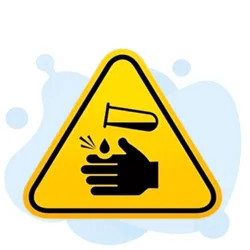
WHMIS Practice Test PDF (Free Printable 2026)

WHMIS Symbols and Meanings: Complete Guide to WHMIS 2015 Pictograms

WHMIS 2015 Symbols Quiz: Complete Study Guide & AIX Safety Certification Prep
About the Author

Educational Psychologist & Academic Test Preparation Expert
Columbia University Teachers CollegeDr. Lisa Patel holds a Doctorate in Education from Columbia University Teachers College and has spent 17 years researching standardized test design and academic assessment. She has developed preparation programs for SAT, ACT, GRE, LSAT, UCAT, and numerous professional licensing exams, helping students of all backgrounds achieve their target scores.