
What's a TEAS Test? Everything You Need to Know About the ATI TEAS Exam
🎯 Curious about what's a TEAS test? Learn what the ATI TEAS exam covers, how it's scored, and how to start preparing today.

If you've been asking yourself "what's a TEAS test" while researching nursing or allied health programs, you're in the right place. The TEAS — which stands for Test of Essential Academic Skills — is a standardized admissions exam developed by ATI (Assessment Technologies Institute) specifically for students applying to nursing schools and other healthcare-related programs across the United States. It measures whether applicants have the foundational academic knowledge needed to succeed in rigorous health science coursework.
The ATI TEAS is not the same as a certification exam or a licensing test. Instead, it acts as a gatekeeper for entry into programs like registered nursing (RN), licensed practical nursing (LPN), respiratory therapy, and radiologic technology. Schools use your TEAS score alongside GPA, recommendation letters, and other application materials to decide who gains admission. In competitive programs, a strong score can make or break your application entirely.
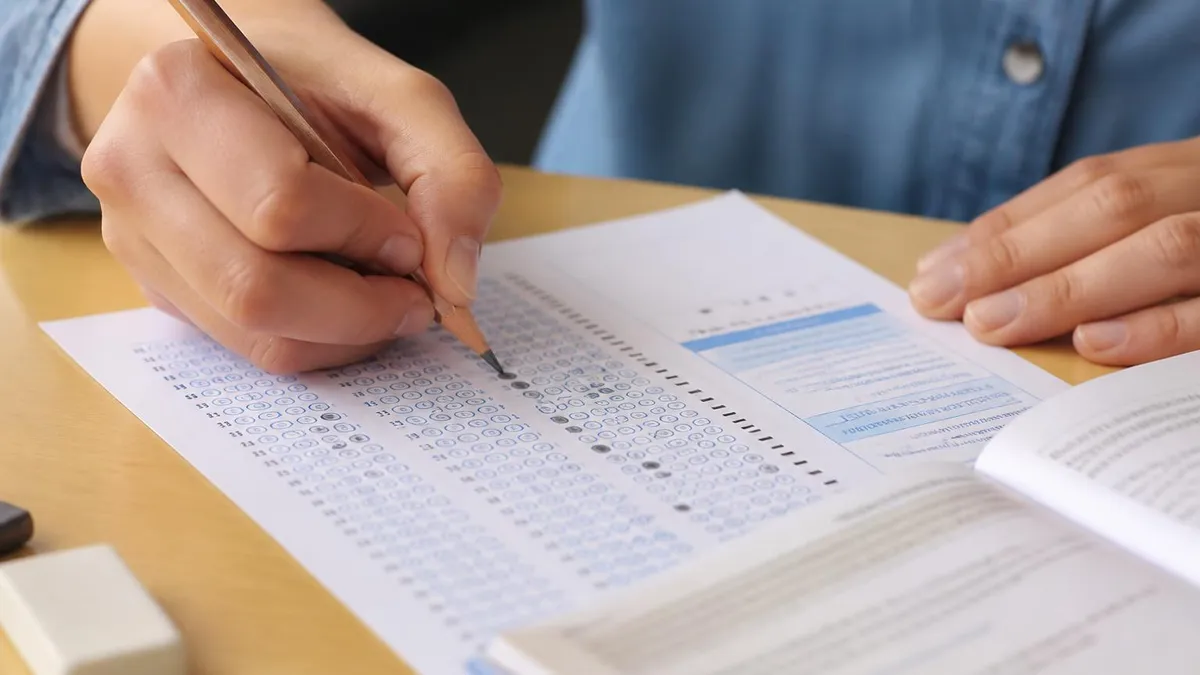
The exam covers four broad subject areas: Reading, Mathematics, Science, and English and Language Usage. Each section is timed independently, and the full test takes roughly three and a half hours from start to finish. Questions are mostly multiple-choice with four answer options, though the current TEAS 7 version includes some technology-enhanced items that ask you to select multiple answers, fill in blanks, or interact with images and graphs.
Many students are surprised to learn just how much the TEAS score matters in competitive nursing markets. Some programs require a minimum composite score of 60 to 65 percent just to be considered, while highly selective schools — such as those attached to university hospital systems — may expect scores above 80 percent. Understanding what the exam tests and how it is weighted is the first step toward building a smart, focused study plan that actually moves the needle.
The Science section tends to be the most challenging for the majority of test-takers because it covers a broad range of topics including human anatomy and physiology, biology, chemistry, and scientific reasoning. Students who graduated several years ago may find they need a significant review of material they haven't touched since high school. That's why most advisors recommend beginning your preparation at least eight to twelve weeks before your scheduled test date to allow time for thorough review without burnout.
It is also worth noting that the TEAS is not a pass-or-fail exam in the traditional sense. There is no universal passing score recognized across all nursing schools. Every institution sets its own benchmark, so a score that qualifies you at one program may fall short at another. This means you need to research the specific score requirements for each school on your list before you can define a realistic target score and measure your readiness.
Understanding what's a TEAS test from a structural and strategic standpoint — not just knowing that it exists — gives you a significant advantage over applicants who walk in underprepared. The sections ahead will break down exactly what each part of the exam covers, how scores are calculated, what to expect on test day, and which study strategies have the highest proven return on investment for busy pre-nursing students.
ATI TEAS Exam by the Numbers
Key Facts at a Glance
| Item | Value | Details |
|---|---|---|
| Total Questions | 170 | Includes 20 unscored pilot items |
| Total Test Time | 3.5 hrs | Across all four sections |
| Typical Score Range Required | 60–80% | Varies widely by program |
| Max Retake Attempts | 3× | Most programs allow up to 3 tries |
TEAS Exam Format and Structure
| Section | Questions | Time | Weight | Notes |
|---|---|---|---|---|
| Reading | 45 | 55 min | ~31% | Key ideas, craft, integration of knowledge |
| Mathematics | 38 | 57 min | ~22% | Numbers, algebra, measurement, data |
| Science | 50 | 60 min | ~31% | Anatomy, biology, chemistry, reasoning |
| English & Language Usage | 37 | 37 min | ~16% | Grammar, vocabulary, sentence structure |
| Total | 170 | 3 hours 29 minutes | 100% |
The Reading section of the TEAS evaluates your ability to extract information from written passages and apply critical thinking skills. You'll encounter texts drawn from academic, scientific, and everyday contexts — everything from informational paragraphs about health procedures to passages that resemble what you'd find in a textbook chapter. Questions focus on identifying main ideas, making inferences, understanding the author's purpose, and interpreting visual information like charts, graphs, and tables embedded within the text.
Reading comprehension is not just about understanding words — it's about processing structure and argument. You'll need to distinguish between facts and opinions, recognize cause-and-effect relationships, and identify the sequence of steps in a procedure or process. Many nursing students underestimate the Reading section because they assume strong English skills will carry them through. In reality, the question formats require deliberate practice, especially for the paired-passage items that ask you to compare two different authors' viewpoints on the same topic.
The Mathematics section covers four primary content areas: numbers and algebra, measurement and data, and mathematical reasoning. Unlike high school math, the TEAS math section is practical and applied. Expect questions about unit conversions — a critical skill in clinical nursing where you'll routinely calculate medication dosages, IV drip rates, and fluid balances. You'll also encounter questions involving fractions, decimals, percentages, ratios, and proportions. A basic on-screen calculator is provided for some questions but not all, so mental math fluency still matters.
Algebraic reasoning on the TEAS typically involves setting up and solving simple equations, interpreting linear relationships, and working with inequalities. The data and measurement subsection asks you to read charts, compute basic statistics like mean and median, and interpret scientific measurements. Students who focus their math prep heavily on algebra but neglect measurement and unit conversions often lose easy points in this section that could have been secured with targeted practice.
The English and Language Usage section may seem shorter at 37 minutes, but don't let that fool you. This section tests grammar rules, sentence structure, vocabulary in context, and the conventions of standard written English. Grammar topics include subject-verb agreement, pronoun-antecedent agreement, correct comma usage, parallel structure, and modifier placement. Vocabulary questions present a word in context and ask you to choose the correct meaning, testing your ability to use context clues rather than just memorized definitions.
One of the most frequently underestimated parts of the English section involves sentence structure — specifically the ability to identify sentence fragments, run-on sentences, and misplaced modifiers. These questions require you to do more than spot errors; you must also select the corrected version from four options, making precise knowledge of grammar rules essential. Many test-prep platforms offer dedicated grammar drills that mirror the TEAS item format, which is the most efficient way to build accuracy in this section quickly.
Across all four sections, the TEAS 7 introduced technology-enhanced items that go beyond traditional multiple-choice. These may include multi-select questions where more than one answer is correct, hot-spot items where you click on part of an image, and fill-in-the-blank questions requiring typed numeric answers. Familiarizing yourself with these item formats through realistic practice tests is essential — encountering them for the first time on test day adds unnecessary cognitive load and can cost you valuable time and points.
TEAS Scoring, Benchmarks, and Milk Tea Moments — Understanding Your Results
Your TEAS score is reported as a percentage called the Adjusted Individual Total Score (AITS). This is calculated by dividing the number of questions you answered correctly by the total number of scored items — the 20 unscored pilot questions do not count against you or for you. Each of the four sections also receives its own subscore, so schools can see your relative strengths and weaknesses across Reading, Math, Science, and English separately.
Score reports are released within 48 hours of completing the exam on ATI's online platform. Your report includes your composite score, section-level scores, and national percentile rankings that show how you performed compared to other test-takers. Some nursing schools require you to send your scores directly through ATI's system, while others ask you to self-report or upload a PDF — always confirm the exact submission process with your target programs well before your application deadline.

Is the TEAS Test Worth Preparing Heavily For?
- +A strong TEAS score significantly improves your competitiveness across multiple nursing programs at once
- +The exam tests foundational academic skills that are directly relevant to nursing school coursework
- +ATI provides detailed score reports that reveal specific content gaps, making targeted prep very efficient
- +Many free and low-cost TEAS study resources are available, including official ATI practice tests
- +Preparing for the TEAS often strengthens your science and math knowledge for actual nursing classes
- +Scoring high on a first attempt avoids the stress and cost of retesting under a 30-day wait period
- −The Science section covers a very broad range of topics that can feel overwhelming without a structured plan
- −Test anxiety can significantly affect performance even when students know the material thoroughly
- −ATI's official practice tests and study manuals cost money, adding financial burden to pre-nursing students
- −A single exam score carries disproportionate weight compared to years of academic achievement
- −The 30-day waiting period between retakes can delay application timelines by a full admissions cycle
- −Score requirements vary so widely that meeting one school's minimum may not qualify you at another
TEAS Preparation Checklist — 10 Steps Before Test Day
- ✓Research the exact TEAS score requirements for every nursing program on your application list
- ✓Register for your TEAS test date at least 6–8 weeks before your program application deadline
- ✓Take a full-length diagnostic practice test under timed conditions to establish your baseline score
- ✓Review your diagnostic score report and rank your four sections from lowest to highest performance
- ✓Build a weekly study schedule that allocates more time to your two weakest content areas
- ✓Work through at least one official ATI TEAS practice test to familiarize yourself with authentic item formats
- ✓Practice technology-enhanced item types (multi-select, hot-spot, fill-in-the-blank) before test day
- ✓Memorize key science facts including major organ systems, cellular functions, and the periodic table basics
- ✓Complete at least 3 full-length timed practice tests in the two weeks before your scheduled exam date
- ✓Prepare your valid photo ID, confirm the testing center location, and plan your arrival at least 20 minutes early

The Science Section Accounts for Nearly a Third of Your Score
With 50 scored questions and the broadest content coverage of any section, Science is where most students either gain or lose significant ground on the TEAS. Prioritizing anatomy, physiology, and biology in your study plan — rather than spreading time evenly across all four sections — is the single most effective strategy for raising your composite score. Even moderate improvement in Science translates directly into a meaningfully higher overall result.
The Science section deserves its own deep examination because it is simultaneously the section most students fear and the one with the greatest potential for score improvement through focused study. The TEAS Science section is divided into three primary content areas: Human Anatomy and Physiology, Life and Physical Sciences, and Scientific Reasoning. Each of these plays a distinct role in the exam, and understanding how they're weighted helps you allocate study time intelligently rather than spreading yourself too thin across all possible topics.
Human Anatomy and Physiology makes up the largest portion of the Science section and is the area most directly relevant to nursing practice. You'll encounter questions about the structure and function of major organ systems including the cardiovascular, respiratory, digestive, nervous, musculoskeletal, endocrine, immune, and reproductive systems. Understanding how these systems interact — for example, how the respiratory and cardiovascular systems work together to deliver oxygenated blood to tissues — is more important than simply memorizing isolated facts. TEAS questions frequently test relationships and processes rather than definitions alone.
Life and Physical Sciences covers topics from general biology and chemistry that form the scientific foundation of healthcare. Biology questions typically address cell structure and function, genetics and heredity, microorganisms, and basic ecology. Chemistry questions on the TEAS focus on atoms and molecules, chemical reactions, properties of acids and bases, and the behavior of solutions — topics that directly connect to pharmacology and biochemistry concepts you'll encounter in nursing school. Many pre-nursing students haven't taken chemistry since high school, making this one of the most important areas to review well in advance of the exam.
Scientific Reasoning questions on the TEAS assess your ability to think like a scientist even without specialized content knowledge. These questions present experimental scenarios, data sets, or research summaries and ask you to interpret results, identify variables, evaluate the validity of conclusions, and recognize flaws in experimental design. Students who have taken even introductory lab-based science courses often find these questions more approachable, since they mirror the process of scientific inquiry rather than testing memorized facts. However, deliberate practice with sample scenarios is still essential to build speed and accuracy under timed conditions.
A highly effective strategy for the Science section is to use active recall rather than passive review. Instead of reading through a textbook chapter and highlighting, close the book after each section and write down everything you can remember without looking. Then check what you missed, review those gaps specifically, and test yourself again the next day. This spaced repetition approach — reviewing information at increasing intervals — has strong scientific support as the most efficient way to move information into long-term memory, which is exactly what you need for a high-stakes timed exam.
Visual learning tools like labeled diagrams of body systems are especially powerful for anatomy and physiology review. Rather than reading descriptions of where the pancreas is located or how the nephron filters blood, drawing and labeling the structures yourself reinforces both the spatial relationships and the associated vocabulary. Flash cards created from your own writing are more effective than pre-made commercial decks because the act of creating them forces you to process and encode the information more deeply than simply reading someone else's summary.
Group study can also be a valuable tool for Science preparation, particularly for anatomy topics. Teaching a concept to a peer is one of the most reliable ways to identify gaps in your own understanding — if you struggle to explain the cardiac cycle clearly, that's a signal you need to revisit that content before test day. Study groups work best when each person prepares independently first and then comes together to quiz each other and discuss difficult concepts, rather than using group time as a substitute for individual preparation and review.
Finally, don't underestimate the value of understanding why rather than just what. Nursing school and clinical practice require you to apply scientific knowledge to patient scenarios, not simply recall facts from memory. The TEAS reflects this expectation by including application-level questions that ask you to use scientific principles to reason through novel situations. Students who understand the underlying mechanisms — why the body responds to infection with fever, how a diuretic affects kidney function — consistently outperform those who only memorize terminology and classification lists.
TEAS testing slots at popular Prometric centers and PSI testing locations fill up weeks — sometimes months — in advance, especially near major nursing school application deadlines. If your program deadline is in February, you may need to register for your TEAS test in October or November of the prior year to secure a convenient date and location. Late registrants are sometimes forced to travel long distances or reschedule entirely, which can push their application into the next admissions cycle.
Test day strategy is as important as content knowledge, and students who walk into the TEAS exam without a clear plan for managing time and anxiety often underperform relative to their actual preparation level. The most important timing rule is to never spend more than 90 seconds on any single question during your first pass through a section. If a question stumps you, mark it and move forward — returning to difficult questions with fresh eyes after completing the rest of the section is almost always more efficient than staring at one problem until time runs out.
The TEAS is administered on a computer, and the testing interface includes a flag feature that lets you mark questions for review. Use this aggressively. During your first pass, answer every question you can confidently handle and flag everything that requires more thought. Once you've answered all the straightforward items, return to the flagged questions with whatever time remains. This two-pass strategy ensures that you capture all the easy points first rather than losing them because you ran out of time while wrestling with harder questions at the beginning of a section.
Managing test anxiety is a skill that requires its own deliberate preparation. Many students find that controlled breathing exercises immediately before the exam and between sections help regulate the physiological stress response that degrades working memory and concentration. Techniques like box breathing — inhaling for four counts, holding for four, exhaling for four, holding for four — are simple enough to use discreetly in a testing center and have measurable effects on cognitive performance under pressure. Practice the technique during your study sessions so it feels familiar and automatic on exam day.
Nutrition and sleep in the 48 hours before the TEAS have a measurable impact on cognitive performance. Avoid making any dramatic changes to your diet or sleep schedule the night before the exam. Eat a balanced meal before the test — something with protein and complex carbohydrates to maintain steady blood sugar — and avoid excessive caffeine, which can intensify anxiety and interfere with sustained attention. If you normally drink coffee, have your usual amount rather than skipping it or doubling it on test day.
Bring everything required to your testing appointment and double-check the list the day before. Most TEAS testing centers require a valid, government-issued photo ID with a matching name to your registration. Some centers also require a secondary form of ID. You generally cannot bring personal items into the testing room, including phones, smartwatches, food, or your own scratch paper — all of these are provided or restricted by the testing center. Arriving 20 to 30 minutes early gives you time to check in, store your belongings, and settle mentally before the exam begins.
After the exam, resist the urge to immediately compare your experience with other test-takers. Every test form contains different questions due to ATI's item rotation system, so discussing specific questions with peers is not only unhelpful but potentially a violation of ATI's testing policies. Instead, make note of the content areas that felt most challenging during the exam while your memory is fresh — this information will be valuable if you need to retake and can supplement the detailed score report ATI provides within 48 hours of completion.
If your score falls short of your target, give yourself a day to recover emotionally before diving into analysis mode. Review your section-level scores and content area breakdowns, identify the specific sub-areas with the greatest room for improvement, and build a retake study plan that is more targeted than your first preparation cycle. Most students who retake the TEAS with a focused, data-driven approach improve their scores meaningfully — the key is using the first attempt's results as a precise diagnostic, not just a discouraging outcome.
Building a sustainable study schedule is one of the most underrated components of successful TEAS preparation. Many aspiring nursing students approach test prep in the same way they approached cramming for college finals — intense sessions of reading and highlighting in the days before the exam.
Research on learning and memory consistently shows this approach produces poor long-term retention, which is exactly what you need for an exam that covers months of academic material across four distinct subject areas. A distributed study schedule spread over eight to twelve weeks almost always produces better results than the same total hours compressed into two or three weeks.
Start by mapping out how many days you have between now and your scheduled TEAS date, then calculate a realistic number of study hours per week based on your other commitments — work, family, current coursework. Most preparation advisors recommend 60 to 100 total hours of focused study for students aiming for a competitive score, with more time allocated to students who feel rusty in science or math.
Divide your total available time across the four sections, weighting toward Science and Math if those were your diagnostic weak spots, while still maintaining weekly review of Reading and English to avoid rust.
Weekly practice tests are non-negotiable for any serious TEAS preparation plan. Taking at least one full-length timed practice test per week — not just section-level quizzes — builds the stamina and pacing instincts you need for the real exam. A full-length practice test simulates the cognitive fatigue that sets in during a three-and-a-half-hour test, which is something that no amount of flashcard drilling can replicate. Students who practice under realistic timed conditions consistently score higher on the actual exam than those who study content without ever simulating the full test experience.
After each practice test, spend as much time reviewing your incorrect answers as you spent taking the test. Look at each wrong answer and ask three questions: Did I not know the content? Did I misread the question? Did I know the answer but second-guess myself into the wrong choice? Each of these error types requires a different remediation approach — content review, reading comprehension practice, and test-taking confidence work, respectively. Categorizing your errors transforms your practice test results from a discouraging score into a precise action plan for your next study week.
Study resources come in many forms, and combining multiple types produces better outcomes than relying on a single source. ATI's official TEAS practice tests are the gold standard for question format accuracy, since they're created by the same organization that writes the actual exam. However, supplementing with third-party TEAS prep books — particularly for Science content review — often provides more thorough explanations than ATI's official materials, which are lean on teaching and heavy on testing. Video-based content from platforms like Khan Academy is especially useful for visual learners tackling anatomy, chemistry, and algebra concepts that benefit from step-by-step demonstrations.
Accountability partners dramatically improve follow-through on study schedules. Whether it's a friend who is also preparing for the TEAS, a study group from a pre-nursing prerequisite class, or an online community of TEAS test-takers, having people who expect you to show up and put in the work dramatically reduces the likelihood of skipping study sessions when motivation dips. Many successful TEAS test-takers report that the social component of their preparation — sharing resources, quizzing each other, celebrating small milestones — was as important as any specific study technique they used.
Finally, remember that the TEAS exam is a step in a much longer journey toward a nursing career. Your score does not define your potential as a nurse or your value as a healthcare professional — it is simply one hurdle in an admissions process designed to identify students who are academically ready for the demands of nursing school.
Approach your preparation with diligence and strategy, but also with perspective. The discipline and problem-solving skills you develop while preparing for the TEAS are exactly the qualities that will serve you well in nursing school and throughout a long, meaningful career in patient care.
Sample TEAS Practice Questions
Try these questions from our free TEAS practice tests. The correct answer and an explanation follow each question.
Amanda wants to paint the walls of a room. She knows that each can of paint contains one gallon. A half gallon will cover a 55 square feet of wall. Each of the four walls is 10 feet high. Two of the walls are 10 feet wide and two of the walls are 15 feet wide. How many 1-gallon buckets of paint does Amanda need to buy in order to fully paint the room?
- A. 4
- B. 5
- C. 9
- D. 10
Answer: B. 5
First, calculate the total wall area: two walls are 10ft x 10ft (200 sq ft) and two walls are 10ft x 15ft (300 sq ft), totaling 500 sq ft. A half-gallon covers 55 sq ft, so one full gallon covers 110 sq ft (55 sq ft * 2). To find the number of gallons needed, divide the total area by the coverage per gallon: 500 sq ft ÷ 110 sq ft/gallon ≈ 4.54 gallons. Since paint is sold in whole gallons, Amanda must buy 5 gallons to fully paint the room.
What is the meaning of the word 'prognosis' based on the following sentence: 'The oncologist delivered a somber prognosis, explaining that without treatment, the patient had approximately six months to live.'?
- A. Medical diagnosis of a current condition
- B. A prediction of the likely course and outcome of a disease
- C. A treatment plan or prescription
- D. A second medical opinion
Answer: B. A prediction of the likely course and outcome of a disease
Context clues (delivering information about how long the patient had to live) reveal that prognosis refers to a prediction about the disease's outcome.
What is the purpose of an "abstract" in a scientific article?
- A. To provide detailed methodology for replicating the study
- B. To list all references cited in the article
- C. To give a brief overview of the study's purpose, methods, and findings
- D. To present the raw data collected during the study
Answer: C. To give a brief overview of the study's purpose, methods, and findings
An abstract is a concise summary (usually 150–300 words) that gives readers a quick overview of the research: what was studied, how, and what was found. It helps readers decide whether to read the full article.
A rectangular hospital room measures 12 feet in length and 7 feet in width. What is the perimeter of the room?
- A. 84 feet
- B. 38 feet
- C. 19 feet
- D. 26 feet
Answer: B. 38 feet
Perimeter of a rectangle = 2 × (length + width) = 2 × (12 + 7) = 2 × 19 = 38 feet. Area would be 12 × 7 = 84 sq ft — a common wrong answer.
TEAS Questions and Answers



About the Author

Registered Nurse & Healthcare Educator
Johns Hopkins University School of NursingDr. Sarah Mitchell is a board-certified registered nurse with over 15 years of clinical and academic experience. She completed her PhD in Nursing Science at Johns Hopkins University and has taught NCLEX preparation and clinical skills courses for nursing students across the United States. Her research focuses on evidence-based exam preparation strategies for healthcare certification candidates.