
Sample TACHS Questions: Free Practice Test for the Catholic High School Admission Exam
Free sample TACHS questions with answers. Practice the tachs exam format, review every section, and boost your Catholic high school admission score. 🎯

If you are preparing for the tachs exam, working through sample tachs questions is the single most effective strategy you can adopt. The Test for Admission into Catholic High Schools — universally known as the TACHS — is the gateway to Catholic secondary education in the Archdiocese of New York and the Diocese of Brooklyn and Queens. Practice with the free TACHS practice test on PracticeTestGeeks (25 questions with answer explanations).
Each year, thousands of eighth-grade students sit for this high-stakes assessment, competing for limited seats at some of the most academically rigorous schools in the region. Starting your preparation with realistic sample questions gives you an honest benchmark of where you stand and what work lies ahead.
The TACHS exam covers four distinct subject areas: Reading, Written Expression, Mathematics, and Abilities. Each section tests a different set of cognitive skills, and the exam is deliberately timed to add a layer of pressure beyond mere content knowledge. Students who walk into the testing center without prior exposure to the question types and pacing demands almost always underperform relative to their true academic ability. Familiarity with the format is not optional — it is the foundation of any successful test-prep strategy for this exam.
Many students and parents ask whether one practice session is enough. The research on standardized test preparation consistently says no. Cognitive scientists refer to a principle called the spacing effect, which shows that skills learned and reviewed across multiple sessions are retained far more reliably than information crammed in a single sitting. For the TACHS, this means spreading your sample question work over several weeks, rotating through subjects, and returning to question types you found difficult the first time you encountered them.
Beyond content review, sample tachs questions serve a vital diagnostic function. When you sit down with a realistic practice set and time yourself carefully, you generate data about your personal strengths and weaknesses. Maybe you breeze through reading comprehension but slow to a crawl on quantitative comparison problems in the Abilities section. Maybe your grammar instincts are strong but your mathematics computation needs work. Without that diagnostic data — data that only comes from actually attempting practice questions — you cannot allocate your limited study hours efficiently.
The TACHS is also a norm-referenced exam, which means your score is reported relative to how other students performed on the same test. You are not simply trying to answer a certain percentage of questions correctly; you are trying to outperform your peers. This competitive dimension makes comprehensive practice even more important: you need to master not only the content but also the timing and strategy that allow you to maximize your correct answers within the allotted time for each section.
For the tachs test, registration typically opens in October, and the exam is administered in November. That compressed timeline means most students have only six to ten weeks between the moment they decide to prepare seriously and the day they sit at a desk with a pencil and a booklet. Every week of focused practice with quality sample questions is therefore extremely valuable, and wasted weeks are genuinely costly in this context.
This article walks you through everything you need to know about using sample TACHS questions effectively: the exam format, subject-by-subject strategies, proven study techniques, and links to the free practice quizzes available right here on PracticeTestGeeks. Whether you are just starting your prep or fine-tuning your approach in the final weeks before test day, you will find actionable guidance in every section below.
Free TACHS Study Tools
Interactive TACHS resources on PracticeTestGeeks, free to start:
- TACHS Mathematics Practice Test 1 — 25 questions with instant scoring and answer explanations
- TACHS flashcards — review key terms and concepts card by card
- TACHS study guide — topic-by-topic overview of what the exam covers
- TACHS cheat sheet — one-page printable summary for last-minute review
TACHS Exam by the Numbers
TACHS: upcoming dates and official changes
- Oct 28, 2026: Registration for the November 2026 TACHS closes on October 28, 2026 at 11:00 PM EST. (TACHS Examination Office)
- Updated Oct 19, 2026: Late registration deadline is now No late registration; no exceptions to the deadline (previously No exceptions to the registration deadline).
- Updated Oct 19, 2026: Registration deadline is now October 28, 2026 at 11:00 PM EST (previously October 28, 2026 at 11:00 PM EST).
- Updated Oct 19, 2026: Exam fee is now $78 per student (nonrefundable) (previously $78 per student).
Facts verified Oct 19, 2026 against TACHS Examination Office. Dates that have passed are removed automatically.
- The TACHS has 6 sub-tests measuring reading, written expression, mathematics and general reasoning skills. (TACHS Examination Office)
- The TACHS examination fee is $78.00 per student, which includes the online Student Handbook, online test materials and score reporting to three high schools. (TACHS Examination Office)
- A student may take the TACHS only once, and results are final with no reviewing, rescoring or retesting. (TACHS Examination Office)
- The TACHS exam is taken remotely online from home on a Chrome device with the Proctorio Secure Exam Proctor extension, and on-site testing is not supported. (TACHS Examination Office)
- The TACHS is for current eighth-grade students only, and applicants for any grade other than ninth should apply directly to the high school. (TACHS Examination Office)
- Registration for the November 2026 TACHS closes on October 28, 2026 at 11:00 PM EST. (TACHS Examination Office)
Facts verified Oct 19, 2026 against TACHS Examination Office. Dates that have passed are removed automatically.
TACHS Exam at a Glance
| Item | Detail | Official source |
|---|---|---|
| Number of questions | 6 timed subtests (reading, written expression, mathematics, reasoning) | TACHS Examination Office |
| Exam fee | $78 per student (nonrefundable) | TACHS Examination Office |
| Retake policy | One attempt only; no rescoring or retesting | TACHS Examination Office |
| Delivery | Online at home, remote proctored (Proctorio) | TACHS Examination Office |
| Eligibility | Current eighth-grade students only | TACHS Examination Office |
| Late registration deadline | No late registration; no exceptions to the deadline | TACHS Examination Office |
| Registration deadline | October 28, 2026 at 11:00 PM EST | TACHS Examination Office |
Facts verified Oct 19, 2026 against TACHS Examination Office. Dates that have passed are removed automatically.

TACHS Exam Format: Complete Section Breakdown
| Section | Questions | Time | Weight | Notes |
|---|---|---|---|---|
| Reading | 50 | ~40 min | ~29% | Vocabulary and reading comprehension passages |
| Written Expression | 40 | ~25 min | ~24% | Grammar, spelling, capitalization, punctuation |
| Mathematics | 50 | ~45 min | ~29% | Concepts, estimation, problem solving |
| Abilities | 30 | ~30 min | ~18% | Analogies, abstract reasoning, quantitative comparisons |
| Total | 170 | Approx. 3 hours | 100% |
Understanding how to study each TACHS section individually is the difference between scattered preparation and targeted score improvement. The Reading section, which accounts for roughly 29 percent of the exam, tests two distinct skills: vocabulary in context and reading comprehension. Vocabulary questions ask students to identify synonyms, antonyms, or the meaning of a word as it is used in a sentence. The best preparation strategy is to read widely — novels, newspapers, science articles, history texts — and to keep a vocabulary journal where you record unfamiliar words along with their definitions and an example sentence of your own creation.
Reading comprehension passages on the TACHS are typically 200 to 400 words long and drawn from a variety of genres: informational texts, literary excerpts, and persuasive pieces. After reading each passage, students answer five to eight questions that probe literal recall, inference, vocabulary in context, and author's purpose. A key strategy is to read the questions before the passage so you know what to look for.
This active reading technique consistently improves accuracy because it transforms a passive reading exercise into a targeted information hunt. Underline or circle key phrases as you read — even if you only annotate mentally because the booklet must be returned unmarked, you can still practice this discipline on all your tachs exam practice questions at home.
The Written Expression section covers the mechanics of standard written English. Expect questions on subject-verb agreement, pronoun-antecedent agreement, verb tense consistency, sentence fragments and run-ons, comma usage, capitalization of proper nouns, and correct spelling of commonly confused words (their/there/they're, affect/effect, principal/principle). The most efficient way to prepare is to review a concise grammar guide and then immediately apply each rule through practice questions. Do not simply read grammar rules and expect them to stick — you need to exercise the rules in context for them to become automatic.
Mathematics on the TACHS is divided into two broad categories: concepts and problem solving, and estimation. The concepts questions cover topics from the typical seventh- and eighth-grade curriculum: fractions, decimals, percentages, ratios, basic algebra, geometry (area, perimeter, volume), data interpretation, and basic probability. Problem-solving questions embed these concepts in word problems that require students to translate a real-world scenario into a mathematical operation. Estimation questions — a distinctive feature of the TACHS — ask students to select the best approximate answer without performing an exact calculation, which rewards number sense over computation speed.
The Abilities section is where many students feel least prepared because it tests reasoning skills that are not explicitly taught in most middle school classrooms. Analogies ask you to identify the relationship between a pair of words or concepts and then apply that same relationship to a new pair. Abstract reasoning presents sequences of shapes, symbols, or figures and asks you to identify the next item in the pattern or the item that does not belong.
Quantitative comparison questions show two mathematical quantities and ask which is greater, whether they are equal, or whether the relationship cannot be determined from the information given. Regular practice with sample analogies and pattern-recognition exercises is the most reliable way to build these skills.
One important truth about the TACHS is that speed matters just as much as accuracy. The exam is deliberately designed so that most students cannot comfortably answer every question with unlimited time — the pressure of the clock is built into the scoring model. This means that alongside content knowledge, you need to develop a pacing strategy.
Work through each section in your tachs exam practice test sessions with a timer running, and if you are spending more than 60 to 90 seconds on any single question, mark it and move on. Returning to skipped questions at the end of a section is far more efficient than losing two or three minutes on a single difficult item early in the section.
Finally, consider the role of sleep and nutrition in your overall preparation. Cognitive research consistently shows that sleep is when the brain consolidates newly learned information into long-term memory. Students who sacrifice sleep to squeeze in extra study hours are often undermining the very learning they worked so hard to accomplish. In the final week before the TACHS, prioritize a consistent sleep schedule, eat well-balanced meals, and engage in light physical activity to manage stress. Your brain performs best when the rest of your body is also well cared for.
TACHS Exam Practice Questions: Strategies by Section
For the Reading section of the TACHS exam, the most powerful sample question strategy is to practice active annotation. Before you read a passage, scan the questions so you know what details matter. As you read, mentally tag the main idea, any contrasting viewpoints, and specific facts that answer the questions you previewed. Students who practice this two-pass technique on realistic sample passages consistently finish the section with more time to check their answers and fewer careless errors from misreading questions under pressure.
Vocabulary questions in the Reading section often test words that appear in an academic context rather than everyday conversation. When reviewing sample TACHS vocabulary questions, look for context clues in the surrounding sentence — the correct answer almost always fits the tone, register, and subject matter of the passage. A word that sounds right in isolation may be wrong in context. Practice eliminating answers that create a logical or tonal mismatch, which is a reliable technique even when you do not know the precise definition of the word being tested.

TACHS Prep: Benefits and Challenges of Practice-Question-Based Study
- +Builds genuine familiarity with question formats before the real exam day
- +Provides accurate diagnostic data to target your weakest subject areas
- +Develops time-management instincts through timed practice sessions
- +Reduces test anxiety by making the TACHS experience feel familiar and routine
- +Reinforces content knowledge through active recall rather than passive review
- +Allows you to track progress over weeks and see measurable score improvement
- −Low-quality practice questions can teach wrong strategies or incorrect content
- −Over-relying on memorized question patterns without understanding the underlying concept
- −Skipping timed practice eliminates the pacing pressure that defines real test conditions
- −Doing only one subject area can create a false sense of overall readiness
- −Reviewing answers passively without analyzing why wrong answers were wrong
- −Starting practice too late in the fall leaves insufficient time to address weak areas
TACHS Test Prep Checklist: 8-Week Study Plan
- ✓Take a full-length timed diagnostic practice test in week one to establish your baseline scores.
- ✓Identify your two weakest TACHS sections and dedicate extra weekly study sessions to them.
- ✓Complete at least 30 sample vocabulary questions per week to build word knowledge steadily.
- ✓Review every wrong answer after each practice session and write down why the correct answer is right.
- ✓Practice the TACHS Abilities analogies for 15 minutes every other day to build pattern recognition speed.
- ✓Time each practice section with a real clock or phone timer — never study a section without the time pressure.
- ✓Complete a full mock exam under realistic conditions (quiet room, no phone) at least twice before test day.
- ✓Review your grammar and punctuation rules with a concise guide, then immediately apply each rule in practice questions.
- ✓Focus estimation practice sessions on mental rounding and approximate calculation without a calculator.
- ✓Schedule a rest day the day before the TACHS exam — no new content, only light review of your notes.
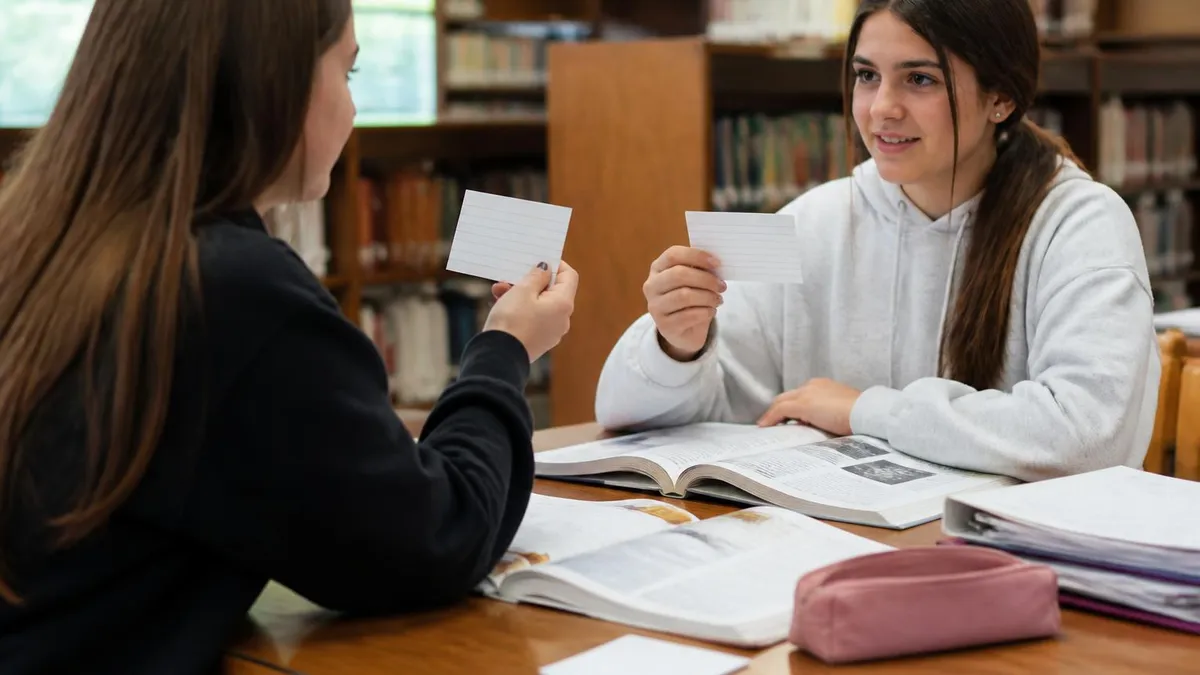
The Abilities Section Counts More Than Students Expect
Many students focus almost exclusively on Reading and Math when preparing for the TACHS, but the Abilities section — which tests analogical reasoning and abstract pattern recognition — can be the deciding factor between admission and rejection at competitive schools. Because Abilities skills respond quickly to targeted practice, just three to four weeks of daily sample question work in this section can produce dramatic score improvements. Do not neglect it.
Understanding how your TACHS score is calculated is essential context for interpreting your practice test results and setting realistic improvement goals. The TACHS does not report a simple percentage of correct answers. Instead, raw scores — the number of questions answered correctly in each section — are converted to scaled scores using a statistical process that accounts for the relative difficulty of each test form. This means that two students who answer 38 out of 50 Reading questions correctly may receive slightly different scaled scores if they took different versions of the exam.
Scaled scores from each section are then combined into a composite score, which is the primary number that Catholic high schools use to evaluate applicants. However, the composite score is never the only factor. Schools also consider your eighth-grade academic record, teacher recommendations, any personal essays required by the school, and in some cases an in-person interview. The TACHS score is therefore best understood as a threshold: a high score opens doors that a low score closes, but once you are above a school's competitive range, the rest of your application determines admission.
For the most selective Catholic high schools in the New York area — schools like Regis, Xavier, Fordham Prep, and Archbishop Stepinac — competitive TACHS scores typically place students in the top 10 to 20 percent of all test-takers. For less selective schools, the competitive range is broader, and a student in the 50th to 70th percentile may be well-positioned for admission. Knowing which schools you are targeting allows you to calibrate your preparation intensity appropriately. If your goal is a highly selective school, you need intensive, consistent preparation over multiple months.
Score reports are typically mailed to families in December, a few weeks after the November exam date. The report includes scaled scores for each section as well as a national percentile rank, which tells you what percentage of students scored lower than you did. Schools receive the same data electronically, so they can begin reviewing applicants shortly after the exam date.
This tight timeline — exam in November, results in December, school decisions typically by March — means that students who are not happy with their results have very limited options for a second attempt. The TACHS is offered only once per year, making thorough preparation beforehand the only reliable path to a strong score.
Some families ask whether TACHS prep courses or tutors are worth the investment. The honest answer depends on the student's self-discipline and the family's budget. A motivated student with access to quality free resources — including the sample tachs questions and practice quizzes available on PracticeTestGeeks — can achieve excellent results through self-study.
A student who struggles to stay on schedule without external accountability may benefit significantly from a structured prep course or one-on-one tutoring. The key variable is not whether the prep is paid or free, but whether the student consistently engages with realistic practice material and reviews their errors carefully.
It is also worth understanding the difference between the TACHS and other Catholic high school admissions tests used in other regions of the country, such as the HSPT (High School Placement Test) and the COOP (Cooperative Admissions Examination). The HSPT is used by many Catholic dioceses outside of New York and covers similar subject areas but with a different format and scoring scale.
The COOP is used specifically in the Diocese of Metuchen, New Jersey. If you are applying to schools in multiple dioceses, confirm which exam each school accepts before finalizing your preparation plan. For the tachs exam 2025 cycle, the TACHS remains the required exam for schools in the Archdiocese of New York and the Dioceses of Brooklyn and Queens.
Finally, remember that sample questions are only as valuable as the review process that follows them. Answering questions without reviewing your errors is the single most common and costly mistake in standardized test preparation. Every wrong answer is a learning opportunity — it tells you either that you did not know the content, that you misread the question, or that you fell for a common test-design trap.
Categorizing your errors in this way allows you to distinguish between content gaps that require more study and strategic errors that require adjusted test-taking habits. Keep an error log throughout your preparation, and return to your most common error types in the final two weeks before the exam.
TACHS registration typically opens in early October and closes within two to three weeks. Late registrations are not accepted, and there is no second exam date — the TACHS is offered only once annually, in November. If you miss the registration window, you will need to wait an entire year to retake the exam. Check the official TACHS website and your target schools' admissions pages for the exact registration dates each fall.
The final weeks before your TACHS exam should shift from broad content review toward targeted reinforcement and test simulation. By this point in your preparation, you have worked through a significant volume of sample tachs questions across all four sections.
The goal now is not to learn new material but to consolidate what you have already studied, sharpen your pacing, and build the mental confidence that comes from repeated successful performance under realistic conditions. Students who maintain a calm, structured approach in the final ten days before the exam almost always perform closer to their true potential than students who panic and try to cram everything at the last minute.
One of the most effective final-phase strategies is to retake practice questions you previously answered incorrectly. Research on learning shows that successfully answering a question you once got wrong is one of the most powerful consolidation experiences available to a test-taker.
It signals to your brain that the correct answer has been integrated and is now retrievable under pressure. Build a collection of your personal missed questions from across your weeks of practice, and cycle through them repeatedly in the final two weeks of preparation. This targeted review is far more efficient than re-doing questions you already know how to answer.
Simulation is equally important in the final stretch. At least once in the last week before the exam, sit down with a full-length practice set, set a timer for the appropriate amount of time for each section, and complete the entire session without pausing, checking your phone, or standing up between sections.
This full-simulation experience does two things: it gives your body and mind a rehearsal of the physical and cognitive demands of the real exam day, and it reveals any pacing issues that may still need adjustment. If you find yourself running out of time in a particular section, you now have a few days to develop a more aggressive skip-and-return strategy.
Nutrition and sleep deserve explicit attention in the final week. Studies of adolescent cognitive performance consistently show that teenagers who sleep fewer than eight hours the night before a high-stakes test perform significantly worse than those who are well rested — regardless of how much they studied. In the three nights before the TACHS, prioritize getting to bed at your normal time or slightly earlier. Avoid the temptation to stay up late for final review sessions. The marginal benefit of two extra hours of studying is vastly outweighed by the cognitive cost of fatigue on test day itself.
On the morning of the exam, eat a balanced breakfast with protein and complex carbohydrates — eggs, oatmeal, whole-grain toast, or a similar meal that provides sustained energy without a mid-morning crash. Avoid sugary drinks or heavy, greasy foods that can cause energy spikes followed by slumps. Arrive at the testing center early enough to find your seat calmly, take a few slow breaths, and mentally run through your section-by-section pacing plan before the proctor starts the exam. A calm, organized start sets the tone for the entire testing session.
During the exam itself, trust the strategies you have practiced. If you encounter a question that stumps you, do not freeze — mark it, move on, and return to it only after you have answered every question you are confident about. Guessing is not penalized on the TACHS (there is no wrong-answer deduction), so leaving any question blank is never the right move. If you must guess, eliminate one or two obviously wrong choices first to improve your probability of guessing correctly. A strategic guess on a question you have partially processed is better than no answer at all.
After the exam, resist the urge to obsess over questions you think you may have missed. Students who discuss the exam with classmates immediately afterward often discover that their recall of specific questions is inaccurate, and the anxiety generated by these conversations serves no useful purpose. The exam is done, and your score will reflect the weeks of genuine preparation you put in.
Take the rest of the day off, do something you enjoy, and allow your nervous system to recover from the intensity of a high-stakes standardized test. For more guidance on what happens next, explore our resource on tachs exam practice questions and what your eventual score report will mean for your applications.
Practical study habits are what separate students who improve dramatically from those who plateau despite putting in hours of work. The first and most important habit is consistency over intensity: thirty minutes of focused TACHS practice every day for eight weeks produces better results than four-hour cram sessions twice a week. This is because daily practice keeps the material active in your working memory and allows the spacing effect to operate — each day's session reinforces the previous day's learning before it has a chance to fade.
Create a dedicated study environment that is free from distractions. Research on cognitive performance consistently shows that multitasking — studying while watching TV, checking social media, or listening to music with lyrics — reduces comprehension and retention significantly. Your TACHS prep sessions should happen in a quiet space where your only task is engaging with the practice material in front of you. Even 25 minutes of truly focused practice in a distraction-free environment is more valuable than 90 minutes of half-engaged studying with constant interruptions.
Use a study schedule that rotates through all four TACHS sections rather than focusing exclusively on your weakest area. While it is smart to give more time to sections where you need the most improvement, neglecting your stronger sections entirely is a mistake. Skills erode without practice, and a section you felt confident about in September can feel rusty by November if you have not touched it in six weeks. A simple rotation might look like: Monday — Reading, Tuesday — Math, Wednesday — Abilities, Thursday — Written Expression, Friday — mixed review or a full timed section.
The review phase of each study session is just as important as the practice phase. After completing a set of sample questions, spend at least as much time reviewing your answers as you did answering the questions. For every question you got wrong, read the explanation, identify why the correct answer is right, and note the specific skill or rule it tested.
For every question you found difficult even if you got it right, note why it felt uncertain. This active, analytical review process is what transforms practice into genuine learning — without it, you are simply going through the motions.
Group study can be valuable for some students, particularly for the Written Expression section, where reading your own grammar errors aloud to a classmate can help you catch mistakes that your eye skips over when reading silently. However, group study is only productive if the group stays on task. Social study sessions that devolve into off-topic conversation consume preparation time without producing preparation benefits. If you choose to study with classmates, set a specific agenda before you meet and hold each other accountable to it.
For the TACHS Abilities section specifically, there are targeted exercises beyond traditional practice questions that can accelerate your improvement. Logic puzzles, number sequence apps, and visual pattern games all engage the same cognitive faculties tested by the Abilities section. Many students find that ten minutes of this type of brain-training activity before their formal TACHS Abilities practice session helps them enter the questions in a more activated, pattern-seeking cognitive state. Think of it as a warm-up for your reasoning muscles, comparable to stretching before physical exercise.
Finally, maintain a big-picture perspective throughout your preparation. The TACHS is an important exam, but it is one part of a much larger educational journey. Students who approach their preparation with curiosity — genuinely interested in the vocabulary they are learning, the mathematical relationships they are exploring, and the reasoning patterns they are mastering — tend to enjoy the process more and retain the skills longer.
The study habits you build while preparing for the TACHS will serve you throughout Catholic high school and beyond, which makes every session an investment in your long-term academic development, not just a means to a single exam score.
Sample TACHS Practice Questions
Try these questions from our free TACHS practice tests. The correct answer and an explanation follow each question.
325 volumes can be stored in a school library's shelves. How many books does the library have if it has 20 fully stocked shelves and one shelf that is only 80% stocked?
- A. 6760
- B. 6500
- C. 7600
- D. 6900
Answer: A. 6760
First, calculate the total books on the 20 fully stocked shelves: 20 shelves * 325 volumes/shelf = 6500 volumes. Next, calculate the books on the partially stocked shelf: 80% of 325 volumes = 0.80 * 325 = 260 volumes. Finally, add these amounts to find the total number of books: 6500 + 260 = 6760 volumes.
Which revision best improves the vague sentence: 'She did a lot of good things for the school'?
- A. She did many things for the school that were good.
- B. She organized three fundraisers and improved the school library.
- C. She was good and helpful at school.
- D. The school was helped by her a lot.
Answer: B. She organized three fundraisers and improved the school library.
Specific details make writing stronger — naming the exact actions (fundraisers, library) is far more effective than vague phrases.
The TACHS exam is used primarily for:
- A. College admission in New York
- B. Admission to Catholic high schools in the Archdiocese of New York and Diocese of Brooklyn/Queens
- C. State standardized testing in all grades
- D. Earning a high school diploma
Answer: B. Admission to Catholic high schools in the Archdiocese of New York and Diocese of Brooklyn/Queens
The TACHS is specifically designed for students applying to Catholic high schools in New York's Archdiocese and Diocese of Brooklyn/Queens.
Which writing strategy helps a student best prepare for the TACHS written expression section?
- A. Memorizing long lists of vocabulary words only
- B. Practicing organizing ideas into clear paragraphs with evidence
- C. Copying sentences from textbooks
- D. Writing as many words as possible without rereading
Answer: B. Practicing organizing ideas into clear paragraphs with evidence
Practicing paragraph structure with clear main ideas, supporting details, and conclusions develops the writing skills tested on the TACHS.
TACHS Questions and Answers

TACHS Prep: Complete Study Guide for the Catholic High School Admission Test

TACHS Exam Results: What Your Score Means and How to Improve

Ultimate Guide to TACHS Prep Classes

TACHS Test 2026: Complete Study Guide for the Catholic High School Admission Exam

TACHS Practice Test PDF 2026: Free Catholic High School Admission Test Questions
How this page was made: written with AI tools and published by Nathan Beja, founder of Practice Test Geeks, who is responsible for its content. Exam facts are checked against the official sources listed below. Not reviewed by a subject-matter expert. Editorial policy
Sources & references
Exam facts on this page (fees, format, dates, passing scores) are checked against these official sources; the date is our last check. Editorial policy
- tachsinfo.com — Eligibility, fees, retake policy, test delivery, exam format, late registration, registration deadline · verified Oct 2026