
San Diego Police Department (SDPD): Jobs & Career Guide 2026 September
✅ Pass the San Diego Police Department (SDPD): exam with confidence. Practice questions with detailed explanations and instant feedback on every answer.

San Diego Police Department: Complete Overview and Career Guide
The San Diego Police Department is one of the largest law enforcement agencies on the West Coast, serving a city of nearly 1.4 million people across 342 square miles of urban, suburban, and coastal terrain. If you're considering a career in law enforcement in Southern California—or if you're researching the department for any other reason—this guide covers the SDPD's structure, mission, hiring process, and what working there actually looks like.
Founded in 1889, the SDPD has grown from a small municipal force into a department of roughly 2,000 sworn officers and an additional 700+ civilian employees. The department operates nine police divisions, each covering a distinct geographic area of the city, and maintains specialized units ranging from SWAT and bomb disposal to gang investigations, homicide, and harbor patrol. It's a city police department in the technical sense, but its scale and the diversity of environments it covers—from border-adjacent neighborhoods to affluent coastal communities to dense urban corridors—make it operationally comparable to much larger agencies.
Jurisdictionally, SDPD operates within the City of San Diego's incorporated limits. The San Diego County Sheriff's Department handles unincorporated areas of the county and provides contract law enforcement to several smaller municipalities that don't have their own departments. The two agencies coordinate closely, particularly on county-wide task forces, major crimes investigations, and emergency operations. For residents of the city itself, SDPD is the primary law enforcement contact.
The department's official mission emphasizes community-oriented policing—a philosophy that prioritizes building trust between officers and the communities they serve through proactive engagement, problem-solving, and transparent communication. In practice, this means SDPD officers are expected to function as neighborhood resources as much as enforcement agents. Beat officers develop detailed working knowledge of their assigned areas and actively maintain relationships with local business owners, community leaders, and regular contacts in the community. This community-first approach shapes hiring criteria, academy training, and ongoing professional development in ways that clearly distinguish SDPD from agencies with a more enforcement-heavy organizational culture.
The department has faced and responded to significant public scrutiny in recent years, particularly following the broader national conversations about police accountability that began in 2020. SDPD implemented expanded body camera policies, revised use-of-force procedures, and increased transparency around officer discipline. These changes are ongoing and continue to shape internal culture and community relations. Applicants and the public alike benefit from reviewing the department's most recent annual report and community engagement materials to better understand the current direction and priorities of the agency.
SDPD's budget is managed through the City of San Diego's general fund, which has experienced both significant cuts during economic downturns and targeted reinvestment during stronger fiscal periods. The department's budget allocation affects staffing levels, equipment, training programs, and civilian support positions. Understanding the department's fiscal environment is useful context for anyone evaluating SDPD as a career destination—departments that are well-funded tend to offer better equipment, more training opportunities, and more stable scheduling than those operating under chronic resource constraints. San Diego's diversified economy, driven by technology, tourism, biotech, and a substantial military presence, has historically provided a relatively stable and resilient revenue base for city services.
San Diego also maintains a significant military population—the city is home to major Navy, Marine Corps, and Coast Guard installations—which influences the community SDPD serves and the kind of policing challenges the department faces. Veterans make up a meaningful percentage of SDPD applicants and officers. Prior military service isn't a formal hiring preference in most cases, but the discipline, physical fitness standards, and chain-of-command experience that military veterans bring often translate directly to the law enforcement environment and are valued in the oral board process. The department actively recruits at military transition events and has established dedicated support resources for veterans navigating the civilian hiring pipeline for the first time.
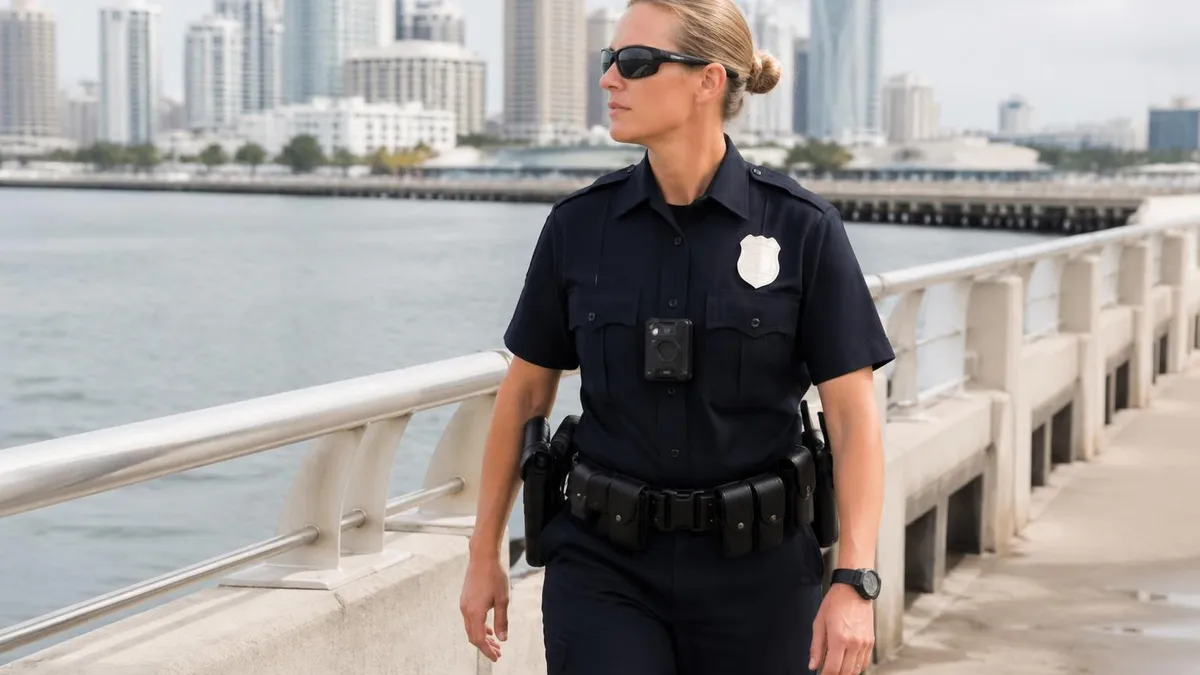
SDPD Hiring: Requirements and Process
The San Diego Police Department conducts regular recruitment cycles throughout the year. The hiring process is competitive and multi-stage, but the department actively recruits qualified candidates and invests significantly in its recruitment outreach. Understanding each stage and what it evaluates helps you prepare effectively rather than guessing what's coming.
Minimum Requirements
To be considered for the SDPD sworn officer position, applicants must: be at least 20.5 years old at time of application (and 21 by date of academy graduation), hold a high school diploma or GED, be a U.S. citizen or permanent resident alien who has applied for citizenship, possess a valid California driver's license, and have no felony convictions. Vision must be correctable to 20/30 in each eye. A current California POST Basic Academy certificate can substitute for the SDPD Academy but is not required for all applicants.
The written examination is an early-stage component of the hiring process. It tests reading comprehension, writing ability, and the kinds of reasoning skills that effective patrol work requires—situational judgment, attention to detail, logical analysis. Candidates should expect questions that assess how they'd interpret written policies, communicate in writing, and make decisions in time-pressured scenarios. The sdpd practice test resources available here are designed to familiarize you with the format and question style before your exam date.
Physical agility testing follows the written exam. The SDPD uses California POST's Work Sample Test Battery (WSTB) for its physical fitness screening, which evaluates aerobic capacity through a 1.5-mile run, upper-body strength via a solid-bar push-up test, and explosive leg power through a standing long jump. These aren't maximum-effort tests on their own—they're minimum standards that candidates must meet. But many applicants underestimate the push-up requirement specifically, and preparing physically well in advance avoids elimination at this stage.
Psychological evaluation, background investigation, polygraph examination, and medical examination all follow the initial screening phases. The background investigation is extensive—covering your full employment history, financial records, criminal history, drug use history, and interviews with references, neighbors, and former employers. The sdpd test preparation you do for the written exam reflects well on your candidacy, but the background investigation is where many otherwise-qualified applicants are eliminated. Honesty throughout the process is essential; discrepancies between your application and background findings are often disqualifying even when the underlying fact wouldn't have been.
The oral board interview is another critical stage that many candidates underestimate. It's typically conducted by a panel of SDPD officers and supervisors who evaluate your communication skills, values, problem-solving approach, and suitability for the role. Questions often involve scenario-based prompts ("What would you do if...") and character-focused inquiries about your background and motivations.
Prepare by researching SDPD's community policing philosophy, reviewing current issues in policing, and practicing structured answers that clearly communicate your reasoning rather than just your conclusion. Candidates who give vague or generic answers to scenario questions consistently score lower than those who provide specific, logical reasoning grounded in values like honesty, de-escalation, and community service. The oral board is where your understanding of what modern policing actually requires gets tested in real time.
SDPD Hiring: Lateral vs. Recruit
Who qualifies: Applicants with no prior sworn officer experience, or those who don't hold a California POST Basic certificate
Process: Full hiring process (written exam, physical agility, background, psych, medical) → 6-month SDPD Police Academy → probationary period
Starting salary: Academy trainees receive full salary during the academy. Base salary escalates through probationary benchmarks.
Note: The SDPD Academy is rigorous and competitive. Physical and academic preparation before the academy start date significantly improves graduation rates.
SDPD Officer Pay and Benefits
Compensation for SDPD officers is competitive by California standards and represents a significant improvement over pay scales from a decade ago. The department increased starting salaries substantially following recruitment challenges in the mid-2010s and continues to make compensation adjustments to remain competitive with other Southern California agencies.
Starting officers (Step 1) earn approximately $84,000–$86,000 annually, with step increases at regular intervals through the probationary period and beyond. Officers who progress through patrol ranks typically reach Step 5 pay (approximately $105,000–$110,000) within five years. Promotion to sergeant, lieutenant, and captain follows a competitive examination and performance review process, with significant salary increases at each rank. The total compensation picture—including pension contributions, health insurance, uniform allowances, and overtime eligibility—adds considerably to the base salary figure.
The SDPD participates in the San Diego City Employees' Retirement System (SDCERS). Officers hired after July 2012 are enrolled in the "Tier 2" pension plan, which provides a defined-benefit pension after meeting service and age requirements. Officers also contribute to their own retirement through payroll deductions. The pension structure is an important element of total compensation that many private-sector comparisons omit when analyzing law enforcement pay.
For the sdpd written exam, candidates who are already planning their career path often ask about specialty pay—the additional compensation available for officers assigned to specialized units or holding specialized certifications. SDPD offers supplemental pay for K-9 handlers, bilingual officers (particularly Spanish), SWAT team members, and officers in certain detective assignments. These add-ons compound over time and can push total compensation meaningfully above base salary for officers who build specialized skills and demonstrate interest in these assignment areas.
Overtime availability is another compensation factor worth understanding before accepting a job offer. SDPD has experienced staffing challenges that result in significant mandatory overtime for many officers—while this increases take-home pay, it also increases fatigue and reduces work-life balance.
Officers considering SDPD should factor realistic overtime expectations into their lifestyle planning, not just the base salary figure. The department's voluntary overtime programs allow officers to supplement their income through grant-funded enforcement programs, event security assignments, and secondary employment with city approval. Officers who manage overtime strategically can build significantly above their base salary, particularly in the early years before step increases reach their maximum.
Leave accrual at SDPD follows the City of San Diego's employee benefit structure, which provides competitive vacation and sick leave accrual rates that increase with seniority. Officers are eligible for holiday pay at premium rates and accrue compensatory time for certain types of mandatory overtime. The comprehensive benefits package—including dental, vision, and health insurance through CalPERS or the city's alternative plans—represents substantial additional compensation beyond the base salary, and comparing total compensation packages (rather than just base salaries) is essential when evaluating SDPD against other departments. Tuition assistance programs are also available for officers pursuing degrees, which matters for those looking to advance into supervisory or management ranks where college education becomes increasingly common among qualified applicants today.

SDPD Officer Requirements Checklist
- ✓Age 20.5+ at application; 21 at academy graduation
- ✓U.S. citizenship or permanent resident with citizenship application pending
- ✓High school diploma or GED (college degree preferred but not required)
- ✓Valid California driver's license with acceptable driving record
- ✓No felony convictions; misdemeanors reviewed case-by-case
- ✓Vision correctable to 20/30 in each eye
- ✓Pass written examination (reading, writing, situational judgment)
- ✓Pass California POST Work Sample Test Battery (physical agility)
- ✓Pass psychological evaluation
- ✓Pass comprehensive background investigation (employment, financial, criminal history)
- ✓Pass polygraph examination
- ✓Pass medical examination
- ✓No disqualifying drug use history (marijuana within past 3 years is typically disqualifying)
- ✓Pass medical examination and drug screening
- ✓Complete structured oral interview with panel of command staff
- ✓Attend and complete 26-week San Diego Police Department training academy
SDPD Divisions and Specialized Units
The San Diego Police Department is organized into nine geographic divisions that collectively cover all areas of the city. Each division operates essentially as a semi-independent policing unit with its own commanders, patrol officers, detectives, and community engagement responsibilities. The divisions are: Central, Eastern, Mid-City, Northeastern, Northern, Northwestern, Pacific, Southeastern, and Western. Officers are typically assigned to a division based on departmental needs and their performance during probation, though preferences can be expressed.
Beyond the patrol divisions, SDPD maintains a range of specialized investigative and tactical units. The Investigations Division handles major crime categories including homicide, sexual assaults, robbery, and financial crimes. SWAT is an elite tactical unit that responds to high-risk operations and hostage situations; selection to SWAT requires several years of patrol experience and passing a rigorous selection process. The Gang Investigations Unit works long-term investigative cases rather than reactive patrol calls, building cases against organized criminal networks over time.
The Harbor Police Division is an unusual feature of SDPD that reflects San Diego's geography—officers in this division patrol San Diego Bay, the harbor facilities, and the coastal waterways that fall within city jurisdiction. Harbor officers are cross-trained in maritime law enforcement, which includes boat operations, dive recovery, and port security coordination with federal agencies.
The sdpd investigations unit and the sdpd use of force policy framework are both areas where the department has made significant public commitments to accountability and professional standards. Candidates who understand these frameworks going into the hiring process—and who can speak to them credibly during the oral board interview—tend to perform better in the hiring process than those who approach the interview without that preparation.
Career advancement within SDPD follows a rank structure common to most large municipal departments. The promotional path from officer to sergeant requires passing a competitive written exam and meeting time-in-grade requirements; lieutenants and captains are promoted through additional examination and executive review processes. Officers who don't pursue promotion can still advance in compensation and assignment quality through specialty units, detective assignments, and seniority-based benefits. Many officers spend entire careers as patrol officers by choice, particularly in assignment-rich environments like SDPD where lateral moves within the department offer significant variety.
Body-worn camera technology has been standard equipment for SDPD patrol officers for several years. All body camera footage is governed by departmental policy and applicable state law (including AB 748, which requires the release of footage within 45 days of serious use-of-force incidents). Officers are trained on proper activation procedures, documentation requirements, and the legal framework governing camera use. Understanding the body camera policy—including when activation is mandatory and what protections officers have around footage—is increasingly part of basic professional competency for SDPD candidates.
SDPD also invests in ongoing training through the San Diego Regional Training Center and in-service training programs delivered at the division level. Officers are required to complete annual in-service training on topics including use of force, implicit bias, crisis intervention, and de-escalation. Specialized training opportunities (such as FBI National Academy attendance or California POST advanced programs) are competitive but available to officers who demonstrate commitment to professional development. The department's training culture reflects the broader shift in modern policing toward treating ongoing education as a professional expectation rather than an occasional requirement, and officers who embrace this approach tend to advance more readily into leadership positions.

SDPD Career: Honest Assessment
- +Competitive starting salary ($84k+) with pension, health benefits, and specialty pay options
- +One of the most diverse and dynamic patrol environments in California
- +Strong promotional opportunities and extensive specialty unit options
- +SDPD's size means a wide variety of assignment choices without leaving the department
- +San Diego's quality of life — climate, geography, recreational amenities — is genuinely exceptional
- −Cost of living in San Diego is high; officer salary goes less far here than in comparable inland cities
- −Department has faced staffing shortages that increase overtime expectations and reduce choice in scheduling
- −Highly competitive hiring process; background investigation eliminates many candidates unexpectedly
- −Ongoing public scrutiny of law enforcement adds complexity to community relations work
- −Housing affordability near most SDPD divisions is challenging on an officer's salary alone
SDPD Questions and Answers



About the Author

Educational Psychologist & Academic Test Preparation Expert
Columbia University Teachers CollegeDr. Lisa Patel holds a Doctorate in Education from Columbia University Teachers College and has spent 17 years researching standardized test design and academic assessment. She has developed preparation programs for SAT, ACT, GRE, LSAT, UCAT, and numerous professional licensing exams, helping students of all backgrounds achieve their target scores.
Join the Discussion
Connect with other students preparing for this exam. Share tips, ask questions, and get advice from people who have been there.
View discussion (9 replies)