
PTS Careers: Your Complete Guide to Personal Track Safety Opportunities
Pass your PTS Careers: Your Complete Guide to exam on the first attempt. Practice questions with detailed answer explanations, hints, and instant scoring. ✏️
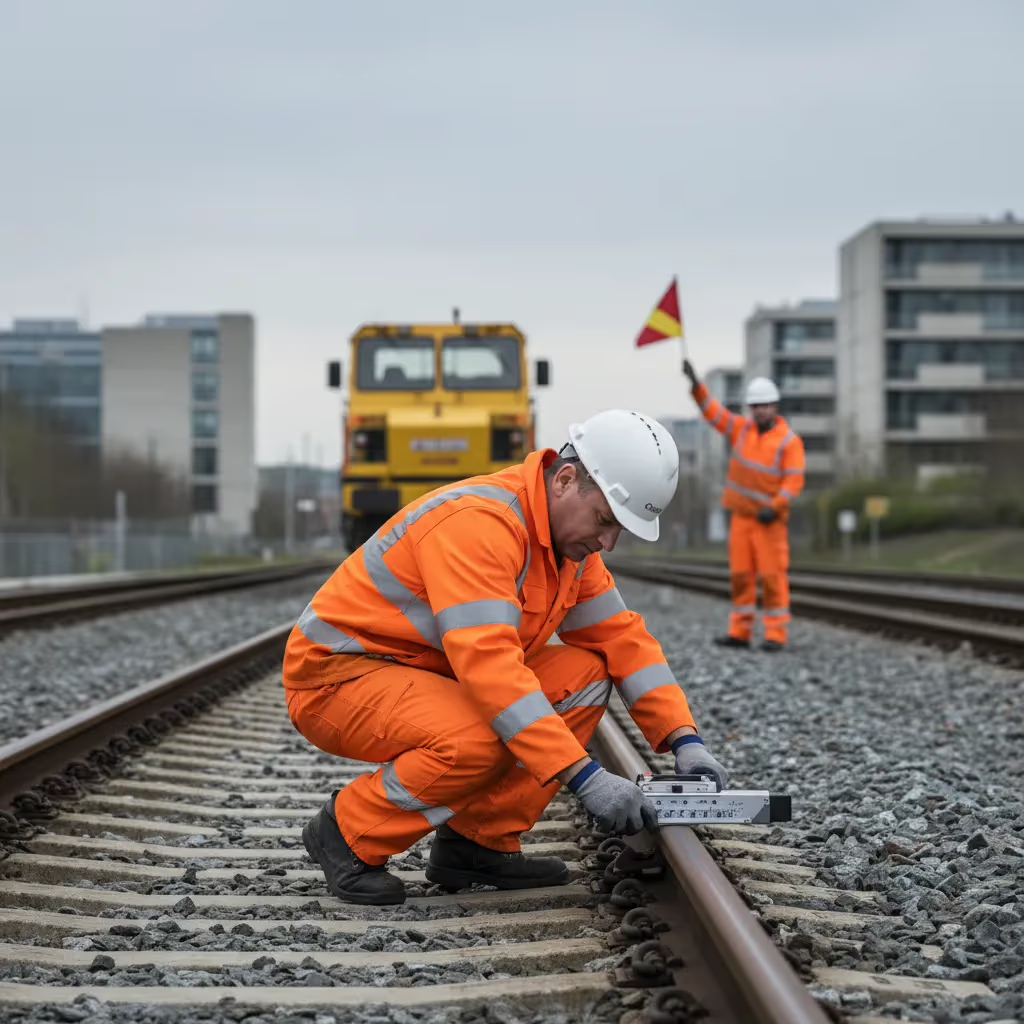
Building a rewarding career in the railway industry starts with understanding Personal Track Safety (PTS) and the exciting opportunities it unlocks. Whether you're exploring railway work for the first time or seeking to advance your career on the tracks, PTS certification opens doors to stable employment, competitive salaries, and meaningful contributions to one of the UK's most critical infrastructure sectors.
The railway industry represents one of the most essential and stable sectors in the United Kingdom, with a vast network spanning thousands of miles across the country. Every day, thousands of dedicated professionals work behind the scenes to maintain, upgrade, and operate this crucial infrastructure that connects communities and supports the economy. If you're considering a career change or looking for your first professional opportunity, the railway industry offers exceptional prospects, particularly for those willing to pursue specialized qualifications like Personal Track Safety.
PTS Practice Test Questions
Prepare for the PTS - Personal Track Safety exam with our free practice test modules. Each quiz covers key topics to help you pass on your first try.
PTS Knowledge
Free PTS Practice Test featuring Knowledge. Improve your PTS Exam score with mock test prep.
PTS - Personal Track Safety COSS Roles and...
PTS Mock Exam on - Personal Track Safety COSS Roles and Responsibilities. PTS Study Guide questions to pass on your first try.
PTS - Personal Track Safety Emergency Proc...
PTS Test Prep for - Personal Track Safety Emergency Procedures. Practice PTS Quiz questions and boost your score.
PTS - Personal Track Safety Personal Prote...
PTS Questions and Answers on - Personal Track Safety Personal Protective Equipment (PPE). Free PTS practice for exam readiness.
PTS - Personal Track Safety Positions of S...
PTS Mock Test covering - Personal Track Safety Positions of Safety. Online PTS Test practice with instant feedback.
PTS - Personal Track Safety Railway Hazard...
Free PTS Quiz on - Personal Track Safety Railway Hazards and Terminology. PTS Exam prep questions with detailed explanations.
PTS - Personal Track Safety Safe Access an...
PTS Practice Questions for - Personal Track Safety Safe Access and Egress. Build confidence for your PTS certification exam.
PTS - Personal Track Safety Safe Systems o...
PTS Test Online for - Personal Track Safety Safe Systems of Work. Free practice with instant results and feedback.
PTS - Personal Track Safety Safety Critica...
PTS Study Material on - Personal Track Safety Safety Critical Communications. Prepare effectively with real exam-style questions.
PTS - Personal Track Safety Sentinel Schem...
Free PTS Test covering - Personal Track Safety Sentinel Scheme and Fitness. Practice and track your PTS exam readiness.
PTS - Personal Track Safety Working Near E...
PTS Exam Questions covering - Personal Track Safety Working Near Electrified Lines. Master PTS Test concepts for certification prep.
PTS - Personal Track Safety COSS Roles and...
Free PTS Practice Test featuring PTS - Personal Track Safety COSS Roles and Responsibilities. Improve your PTS Exam score with mock test prep.
PTS - Personal Track Safety Emergency Proc...
PTS Mock Exam on PTS - Personal Track Safety Emergency Procedures. PTS Study Guide questions to pass on your first try.
PTS - Personal Track Safety Lookout and Wa...
PTS Test Prep for PTS - Personal Track Safety Lookout and Warning Systems. Practice PTS Quiz questions and boost your score.
PTS - Personal Track Safety Personal Prote...
PTS Questions and Answers on PTS - Personal Track Safety Personal Protective Equipment (PPE). Free PTS practice for exam readiness.
PTS - Personal Track Safety Positions of S...
PTS Mock Test covering PTS - Personal Track Safety Positions of Safety. Online PTS Test practice with instant feedback.
PTS - Personal Track Safety Railway Hazard...
Free PTS Quiz on PTS - Personal Track Safety Railway Hazards and Terminology. PTS Exam prep questions with detailed explanations.
PTS - Personal Track Safety Risk Assessmen...
PTS Practice Questions for PTS - Personal Track Safety Risk Assessment and Method Statements. Build confidence for your PTS certification exam.
PTS - Personal Track Safety Safe Access an...
PTS Test Online for PTS - Personal Track Safety Safe Access and Egress. Free practice with instant results and feedback.
PTS - Personal Track Safety Safe Systems o...
PTS Study Material on PTS - Personal Track Safety Safe Systems of Work. Prepare effectively with real exam-style questions.
PTS - Personal Track Safety Safety Critica...
Free PTS Test covering PTS - Personal Track Safety Safety Critical Communications. Practice and track your PTS exam readiness.

- +Industry-recognized credential boosts your resume
- +Higher earning potential (10-20% salary increase on average)
- +Demonstrates commitment to professional development
- +Opens doors to advanced career opportunities
- −Exam preparation requires significant time investment (4-8 weeks)
- −Certification fees can be $100-$400+
- −May require continuing education to maintain
- −Some employers may not require certification
PTS (Personal Track Safety) Questions and Answers
PTS Key Concepts
What is the passing score for the PTS exam?
Most PTS exams require 70-75% to pass. Check the official exam guide for exact requirements.
How long is the PTS exam?
The PTS exam typically allows 2-3 hours. Time management is critical for success.
How should I prepare for the PTS exam?
Start with a diagnostic test, create a 4-8 week study plan, and take at least 3 full practice exams.
What topics does the PTS exam cover?
The PTS exam covers multiple domains. Review the official content outline for the complete list.

Conclusion
Pursuing a career in Personal Track Safety offers an excellent pathway into the thriving UK railway industry. With proper PTS certification, you gain access to stable employment, competitive salaries, clear advancement opportunities, and the satisfaction of contributing to critical national infrastructure. The training process, while thorough, prepares you comprehensively for the responsibilities and challenges of railway work.
The investment in PTS training pays dividends throughout your career. Starting salaries for PTS-certified workers typically range from £20,000 to £35,000, with experienced professionals earning significantly more. The variety of roles available means you can find positions matching your interests and skills, whether in civil engineering, electrical work, signalling, or specialized maintenance.
Job security in the railway sector remains strong, with ongoing infrastructure projects and maintenance requirements ensuring consistent demand for qualified workers. Many employers offer additional benefits including company vehicles, training opportunities, and clear career progression pathways. For those seeking meaningful work with tangible impact, PTS careers provide rewarding opportunities that combine physical activity, technical skill, and critical safety awareness.
The PTS exam uses a multiple-choice format with questions covering all major domains. Most versions allow 2-3 hours for completion.
Questions test both knowledge recall and application skills. A score of 70-75% is typically required to pass.

About the Author

Certified Professional Development Expert & Niche Certification Advisor
University of Pennsylvania Graduate School of EducationDr. Alexandra Kim holds a PhD in Professional Studies from the University of Pennsylvania and is a Certified Professional in Learning and Performance (CPLP) and Certified Professional in Talent Development (CPTD). With 17 years of corporate training and professional certification advisory experience, she helps professionals navigate specialized, emerging, and cross-industry certification programs.
Join the Discussion
Connect with other students preparing for this exam. Share tips, ask questions, and get advice from people who have been there.
View discussion (8 replies)