
PTCB Practice Test 2026 September — Pharmacy Tech Exam Prep
Free PTCB practice test with questions and answer explanations. Prepare for the 2026 September exam with instant scoring. 🟢
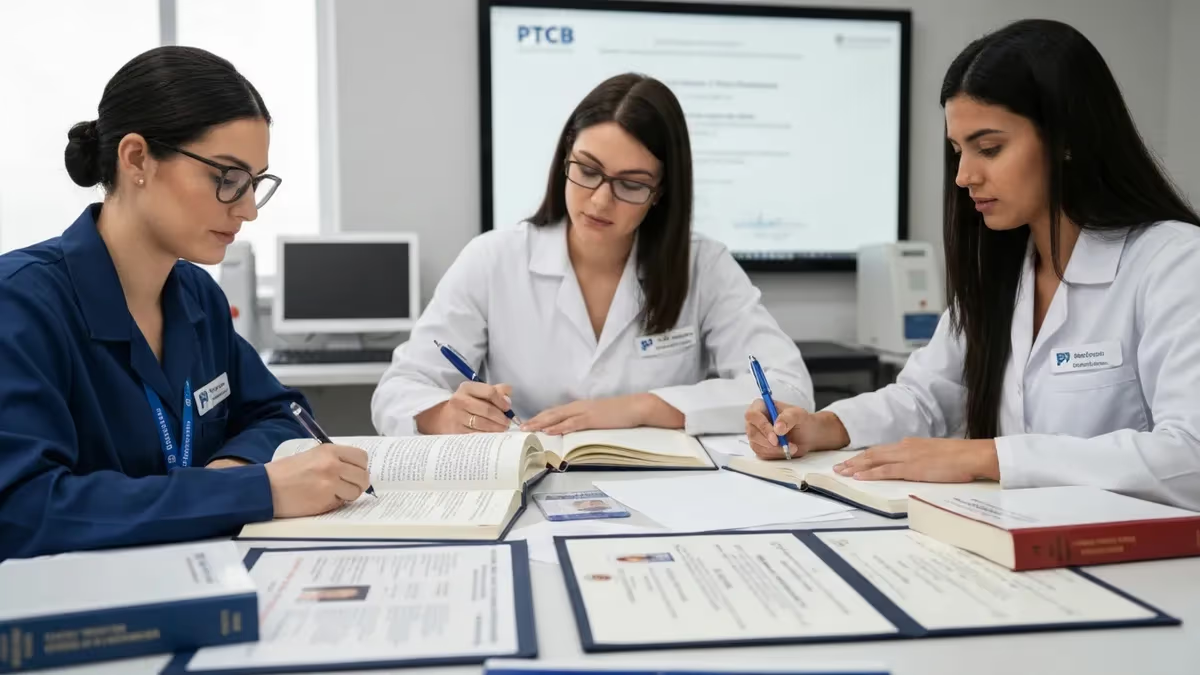
What Is on the PTCB Exam?
The PTCB CPhT exam is a computerized assessment administered at Pearson VUE testing centers nationwide. It consists of 90 scored questions (plus a small number of unscored pilot questions) delivered in a 110-minute testing window. The exam tests the knowledge and skills pharmacy technicians apply every day — from correctly entering a prescription to understanding sterile compounding protocols and recognizing dangerous drug interactions.
PTCB's exam blueprint was updated in 2026 and groups all tested content into four major knowledge domains. Every question maps directly to one of these domains, and your score reflects how well you demonstrate competency across all four. Studying by domain — rather than randomly reviewing drug names — is the most efficient approach to earning a passing score of 1400 out of 1600 on the scaled scoring system.
Candidates who are serious about passing on their first attempt use a combination of textbook review, flashcard drill, and timed PTCB practice exams that replicate the real testing environment. Simply reading is not enough; you must practice under exam conditions to build both accuracy and speed.
PTCB Content Areas Breakdown
Understanding the weight of each content area lets you allocate your study time strategically. Spending 40% of your prep on medications, for instance, directly mirrors the 40% weighting those questions carry on the real exam.
1. Medications (40%) — The largest domain covers brand and generic drug names, drug classes, mechanism of action, common side effects, contraindications, and storage requirements. You will also need to recognize look-alike/sound-alike drugs and high-alert medications such as anticoagulants, insulin, and opioids.
2. Federal Requirements and Patient Safety (26.25%) — This domain covers DEA scheduling, FDA regulations, HIPAA privacy rules, error-prevention strategies, and medication safety standards established by organizations like ISMP. Understanding how laws govern prescription transfers, controlled substance dispensing logs, and patient counseling requirements is essential.
3. Sterile and Non-Sterile Compounding (22.5%) — Covers USP standards (USP 795 for non-sterile, USP 797 for sterile), aseptic technique, beyond-use dating, cleanroom garbing requirements, and calculating compounding formulas. This domain is heavily tested for hospital and specialty pharmacy candidates.
4. Order Entry and Processing (11.25%) — Focuses on prescription and medication order intake, data entry accuracy, insurance billing, prior authorizations, NDC numbers, sig codes, DAW codes, and pharmacy workflow efficiency. Errors in this domain are a leading cause of dispensing mistakes, so precision matters.
Proven Study Tips for the PTCB Exam
A structured six-to-eight-week study plan works well for most candidates. In week one, audit your baseline by taking a full-length PTCB practice test without any preparation to identify your weakest content areas. Then dedicate focused blocks to each domain in proportion to its exam weight — medications first, then federal requirements, then compounding, then order entry.
Use active recall techniques: write drug names on flashcards, recite sig codes aloud, and quiz yourself on DEA schedule definitions until they are automatic. For compounding math, work through at least 30 calculation problems per week covering dilutions, powder volume, days supply, and IV flow rates.
In the final two weeks before exam day, shift to timed full-length practice tests. Analyze every missed question — do not just note the correct answer, but understand why it is correct. This metacognitive step is what separates candidates who pass on the first attempt from those who need a retake. Also review other allied health credentials that share pharmacology content, as cross-domain review reinforces retention.

Understanding the PTCB Scaled Score
The PTCB does not report a simple raw score — it uses a scaled scoring system ranging from 1000 to 1600. The passing threshold is 1400. Scaled scoring is designed to ensure fairness across different exam versions: a slightly harder version of the test translates raw scores upward so that passing on one form is equivalent to passing on another.
After completing the exam at the Pearson VUE center, you will see an unofficial pass or fail result on the screen before you leave. Your official score report from PTCB arrives via email within one to three weeks and includes your scaled score plus a domain-level performance summary. If you do not pass, that domain breakdown is your roadmap for retake preparation — you are allowed to retake the exam up to four times per calendar year.
About 75 to 80 percent of first-time candidates who prepare thoroughly pass the PTCB exam on their initial attempt. Consistent practice testing, particularly under timed conditions, is the single strongest predictor of first-attempt success reported by candidates in surveys.
Pharmacy Technician Salary After PTCB Certification
Earning the CPhT credential has a measurable impact on compensation. According to Bureau of Labor Statistics data, the median annual wage for pharmacy technicians in the United States is approximately $39,000, but certified technicians consistently report higher starting salaries and faster advancement than non-certified peers.
Hospital pharmacy technicians — particularly those working in sterile compounding, oncology, or IV admixture units — frequently earn $45,000 to $55,000 or more annually. Specialty pharmacy and long-term care settings also pay above the retail median. Many employers offer a pay differential specifically tied to PTCB certification, sometimes $1 to $3 per hour above the base rate.
The pharmacy technician field is growing faster than average, with the BLS projecting continued demand driven by an aging population, expanded prescription drug use, and pharmacist delegation of more clinical tasks to certified technicians. Holding an active CPhT credential positions you favorably for those expanding opportunities. See also our guides on related allied health careers including LPN programs and EMT certification.
CPhT Renewal Requirements
PTCB certification is valid for two years. To renew, certified pharmacy technicians must complete 20 hours of continuing education (CE) during the two-year certification period. At least one CE hour must cover pharmacy law, and at least one must address patient safety. CE hours can be earned through ACPE-accredited providers, employer training programs, or PTCB's own CE offerings.
The renewal fee is $40. Technicians who let their certification lapse must retest rather than simply renew, so keeping up with CE and submitting the renewal on time is strongly recommended. PTCB's online portal makes tracking CE completion and submitting renewal straightforward, and many employers will cover CE costs as a benefit for certified staff.
- ✓Confirm your exam appointment and location
- ✓Bring required identification documents
- ✓Arrive 30 minutes early to check in
- ✓Read each question carefully before answering
- ✓Flag difficult questions and return to them later
- ✓Manage your time — don't spend too long on one question
- ✓Review flagged questions before submitting

PTCB Study Tips
What's the best study strategy for PTCB?
Focus on weak areas first. Use practice tests to identify gaps, then study those topics intensively.
How far in advance should I start studying?
Most successful candidates begin 4-8 weeks before the exam. Create a structured study schedule.
Should I retake practice tests?
Yes! Take each practice test 2-3 times. Focus on understanding why answers are correct, not memorizing.
What should I do on exam day?
Arrive 30 min early, bring required ID, read questions carefully, flag difficult ones, and review before submitting.
- +Validates your knowledge and skills objectively
- +Increases job market competitiveness
- +Provides structured learning goals
- +Networking opportunities with other certified professionals
- −Study materials can be expensive
- −Exam anxiety can affect performance
- −Requires dedicated preparation time
- −Retake fees apply if you don't pass