
PSSA Testing Window: Everything Pennsylvania Students Need to Know 2026 October
Learn the PSSA testing window dates, grade schedules, and prep strategies. 📚 Complete guide for Pennsylvania students and parents.

The PSSA testing window is the designated period each spring when Pennsylvania students in grades 3 through 8 sit for the Pennsylvania System of School Assessment. Typically spanning three to four weeks between late March and early May, the window gives schools scheduling flexibility while ensuring statewide uniformity. Understanding when the window opens and closes helps families plan ahead, reduce test-day stress, and maximize preparation time before scores determine academic benchmarks and school accountability ratings.
Pennsylvania's Department of Education sets the PSSA testing window annually, and district administrators choose specific test days within that range. For most students, ELA (English Language Arts) testing comes first, followed by Mathematics, and then Science for eligible grades. Knowing this sequence allows students to focus their review efforts strategically — finishing ELA practice before switching to math drills — rather than cramming all subjects simultaneously in the days immediately before testing begins.
Parents often confuse the statewide window with the exact days their child will be tested. The window is an outer boundary; your child's school selects its own calendar within it. Contact your building principal or check the school's parent portal in February or March to get the specific dates for your school. Arrive early on those mornings, make sure your child has slept well, and confirm that all required materials — typically just a number-two pencil — are ready the night before.
Preparation during the weeks leading up to the pssa testing window makes the single biggest difference in student outcomes. Research consistently shows that distributed practice — short, focused study sessions spread across several weeks — outperforms last-minute cramming. Students who complete at least two or three timed practice sessions before the window report feeling more confident and less anxious on test day, which directly supports better performance on both the selected-response and constructed-response portions of the assessment.
Teachers typically intensify review activities during the four to six weeks immediately before the window opens. Expect an uptick in standards-aligned worksheets, vocabulary practice, and in-class mock assessments during this period. Students should treat these classroom activities seriously because they mirror actual PSSA conditions. Taking them seriously — including writing full constructed responses rather than bullet-point shortcuts — builds the stamina and precision needed for the real testing window.
Accommodations for students with disabilities or English Language Learner status must be arranged well in advance of the window. Individualized Education Programs (IEPs) and 504 plans specify which accommodations apply to state assessments, including extended time, separate testing rooms, read-aloud supports, and translated test directions. Families should confirm with their child's case manager by January that all PSSA-specific accommodations are documented and approved so there are no last-minute complications when the window arrives.
This comprehensive guide covers every dimension of the PSSA testing window: official dates and scheduling rules, subject-by-subject format details, grade-level differences, preparation strategies, what happens after the window closes, and how scores are reported. Whether you are a third-grader taking the PSSA for the first time or an eighth-grader preparing for your final administration, the information here will help you navigate the testing window with confidence and clarity.
PSSA Testing Window by the Numbers

PSSA Testing Window: Annual Calendar Overview
PDE Announces Official Window (November–December)
Districts Set Local Test Days (January–February)
Classroom Review Intensifies (February–March)
ELA Testing Window Opens (Late March)
Mathematics and Science Windows (April)
Scores Released (Summer–Early Fall)
The PSSA testing window is not a single day but rather a multi-week span that encompasses assessments in three distinct subject areas. Understanding the structure of the window — which subjects are tested, how many sessions each subject requires, and which grades are assessed in each area — is essential for effective scheduling and preparation. Pennsylvania assesses English Language Arts and Mathematics for all students in grades 3 through 8, while Science is assessed only at grades 4 and 8, aligning with key transition points in the state's science curriculum standards.
English Language Arts assessments during the window consist of two or three separate testing sessions. Students encounter literary and informational reading passages followed by selected-response questions (multiple choice) and evidence-based selected-response questions that require integrating information across two texts. The ELA window also includes a text-based writing prompt in which students compose an essay supported by evidence drawn directly from the passages provided. This writing task demands careful planning, clear organization, and precise use of textual evidence — skills that can be practiced and improved significantly before the window opens.
Mathematics testing during the PSSA window is divided into a calculator-active section and a calculator-inactive section, depending on grade level. Grades 3 through 4 take all math sessions without a calculator, while grades 5 through 8 have at least one session where an approved four-function or scientific calculator may be used. The math content spans number operations, algebraic thinking, geometry, measurement, and data analysis, with the precise mix of topics shifting grade by grade to reflect Pennsylvania's standards progression. Students should verify which calculator, if any, is permitted at their grade level well before the window opens.
Science PSSA testing, administered only in grades 4 and 8, covers Earth and Space Science, Life Science, Physical Science, and the Nature of Science. Questions assess both content knowledge and science practices such as designing investigations, analyzing data, and constructing explanations. The Science assessment is typically the shortest of the three subjects, but students often underestimate its difficulty because classroom instruction may deprioritize science review in favor of the more heavily emphasized ELA and math standards. Giving science adequate preparation time before the window is a common area where student performance can improve noticeably.
Within the testing window, schools must adhere to strict PDE guidelines about session length, breaks, and materials. Each testing session is time-limited, typically 60 to 90 minutes for younger students and up to 90 minutes per session for older grades, though specific times vary. Students are not permitted to revisit answers from a previous session once it has ended, making it important to budget time carefully within each sitting. Teachers and test administrators are trained to read standardized scripts, maintain a quiet environment, and handle accommodations without disrupting the general testing population.
Make-up testing is built into the PSSA window structure. Students who are absent on a scheduled test day can complete make-up sessions within the window, provided the school can administer them before the window closes. Families dealing with illness, family emergencies, or other absences during the window should notify the school immediately so that make-up logistics can be coordinated. A student who misses testing and cannot be rescheduled within the window receives a non-scored result, which counts against the school's participation rate for accountability purposes.
Because the window spans multiple weeks, students have time to recover and refocus between subjects. After completing ELA, for example, a student has several days to pivot attention to mathematics practice before that portion of the window arrives. This built-in breathing room is one of the underappreciated structural advantages of a multi-week window over a single-day testing format. Smart students and their families take deliberate advantage of this scheduling structure by maintaining a subject-by-subject preparation calendar that mirrors the order in which assessments are administered during the window.
PSSA Testing Window Preparation Strategies by Grade Band
Third and fourth graders entering the PSSA testing window for the first time benefit most from familiarity-building activities. Read aloud together each evening using nonfiction passages similar to those on the ELA assessment, pausing to ask comprehension questions that mirror the text-dependent format of PSSA prompts. Practice writing short explanatory paragraphs with a clear topic sentence and at least two supporting details drawn from the text, since this mirrors the constructed-response format students will encounter during the window.
For mathematics at grades 3 and 4, where no calculator is permitted in any session, fluency with basic facts is non-negotiable. Students who pause to count on their fingers lose valuable time during the testing window that they cannot recover. Use flashcards, apps, or timed drills for five to ten minutes daily in the weeks before the window to lock in multiplication facts through 10×10, as well as addition and subtraction with regrouping. Fourth graders should also review fraction concepts and basic area and perimeter formulas since these appear prominently across multiple PSSA math sessions.

Benefits and Challenges of the Multi-Week PSSA Testing Window
- +Scheduling flexibility allows districts to avoid conflicts with holidays, field trips, and other school events
- +Students can recover mentally between subjects rather than taking all tests in a single exhausting day
- +Make-up testing can be scheduled within the window for students who are absent on primary test days
- +Teachers can continue targeted review for upcoming subjects while earlier assessments are being completed
- +Families have time to confirm accommodations and arrangements after ELA testing before math sessions begin
- +Reduced pressure compared to a single high-stakes test day since time is spread across several weeks
- −Extended window can cause prolonged anxiety for students who are sensitive to testing stress
- −Instruction time is disrupted across multiple weeks rather than a single concentrated period
- −Students may discuss test content with peers between sessions, raising fairness and security concerns
- −Keeping students engaged in regular classroom learning during a multi-week window is challenging for teachers
- −Families must track multiple test dates for multiple children across different grade levels simultaneously
- −Make-up logistics become complex when many students are absent during overlapping parts of the window
Pros and Cons at a Glance
| Pros | Cons |
|---|---|
| Scheduling flexibility allows districts to avoid conflicts with holidays, field trips, and other school events | Extended window can cause prolonged anxiety for students who are sensitive to testing stress |
| Students can recover mentally between subjects rather than taking all tests in a single exhausting day | Instruction time is disrupted across multiple weeks rather than a single concentrated period |
| Make-up testing can be scheduled within the window for students who are absent on primary test days | Students may discuss test content with peers between sessions, raising fairness and security concerns |
| Teachers can continue targeted review for upcoming subjects while earlier assessments are being completed | Keeping students engaged in regular classroom learning during a multi-week window is challenging for teachers |
| Families have time to confirm accommodations and arrangements after ELA testing before math sessions begin | Families must track multiple test dates for multiple children across different grade levels simultaneously |
| Reduced pressure compared to a single high-stakes test day since time is spread across several weeks | Make-up logistics become complex when many students are absent during overlapping parts of the window |
PSSA Testing Window Preparation Checklist
- ✓Confirm your school's exact test dates for ELA, Math, and Science at least three weeks before the window opens.
- ✓Verify that all IEP or 504 accommodations are documented and approved by your child's case manager.
- ✓Complete at least two full-length timed practice tests in each subject before the first test day.
- ✓Review the specific calculator policy for your child's grade level and practice using the approved device.
- ✓Establish a consistent sleep schedule of 8–9 hours per night starting two weeks before the window.
- ✓Prepare a nutritious, familiar breakfast for each test morning to support sustained cognitive focus.
- ✓Pack materials the night before: pencils, approved calculator, and any required accommodation paperwork.
- ✓Practice pacing by timing yourself on sample passages and returning to flag-and-skip when stuck.
- ✓Review grade-appropriate vocabulary for ELA, particularly Tier 2 academic words used across content areas.
- ✓After ELA testing ends, immediately shift practice focus to Mathematics before the math window opens.
Six Weeks of Distributed Practice Outperforms Last-Minute Cramming
Studies on test preparation consistently show that students who begin structured review six weeks before the PSSA testing window score an average of 10–15 percentile points higher than peers who start the week before. Thirty minutes of daily practice — reading one passage, solving ten math problems, reviewing five vocabulary words — is enough to produce meaningful gains without burning students out before the window even opens.
Once the PSSA testing window closes and answer documents are submitted to the Pennsylvania Department of Education, the scoring process begins. Understanding how PSSA scores are calculated and what they mean helps families interpret results accurately when score reports arrive. The PSSA uses a scaled score system with four performance levels: Advanced, Proficient, Basic, and Below Basic. Proficient and Advanced are considered on-grade-level, while Basic and Below Basic indicate that a student has not yet met grade-level expectations in that subject area.
Scaled scores on the PSSA range from approximately 1000 to 1800, depending on grade and subject. The exact range shifts slightly from year to year due to a statistical process called equating, which adjusts for any variation in difficulty between test forms administered in different years. This equating process ensures that a score of 1350 in one year represents roughly the same level of achievement as 1350 in the prior year, making it possible to track student progress meaningfully across multiple testing windows.
The Proficient cut score — the threshold separating Below Basic and Basic from Proficient and Advanced — varies by grade and subject. For example, the math proficiency cut for sixth grade differs from the cut for fourth grade because the underlying content is different. PDE publishes cut score tables annually after equating is complete, and these tables are available on the department's website. Teachers use these benchmarks to identify students approaching proficiency who might move up a level with targeted intervention before the next testing window.
Score reports include not only a total scaled score and performance level but also subscores by reporting category. For ELA, subscores typically cover Literature, Informational Text, and Vocabulary. For Mathematics, subscores address domains such as Numbers and Operations, Algebraic Concepts, Geometry, Measurement, and Data Analysis. These subscores are particularly valuable for targeted remediation: a student who is Proficient overall but Below Basic in Algebraic Concepts can focus next year's preparation on that specific weakness without necessarily needing broad, unfocused review across all content areas.
School and district accountability reports aggregate individual PSSA results to produce building-level and district-level proficiency percentages. These aggregated data points feed into Pennsylvania's state accountability system, influencing school improvement designations, resource allocations, and public perceptions of school quality. For students, the accountability implications are indirect — individual PSSA scores do not determine grade promotion or high school placement in most Pennsylvania districts — but the school-level results have real consequences for programming, staffing, and the resources available to all students in a building.
Families who receive score reports and want to better understand their child's results should begin by comparing this year's performance level to last year's. Consistent improvement — even if still in the Basic range — indicates positive trajectory and should be acknowledged. Regression across testing windows, or a stagnant score in Below Basic, is a signal to request a conference with the teacher to discuss targeted support strategies. Many schools schedule these conferences proactively in the fall, but parents should not wait if they have questions after reviewing the summer score report.
It is also worth noting that PSSA scores are one data point among many. Classroom grades, benchmark assessment results, teacher observations, and portfolio evidence all contribute to a complete picture of a student's academic progress. The PSSA testing window produces a standardized, comparable snapshot at a single point in time, which is valuable precisely because it is not influenced by the specific grading practices of individual classrooms. Used alongside other evidence, PSSA results help educators and families make more informed decisions about instruction, intervention, and enrichment for every student.
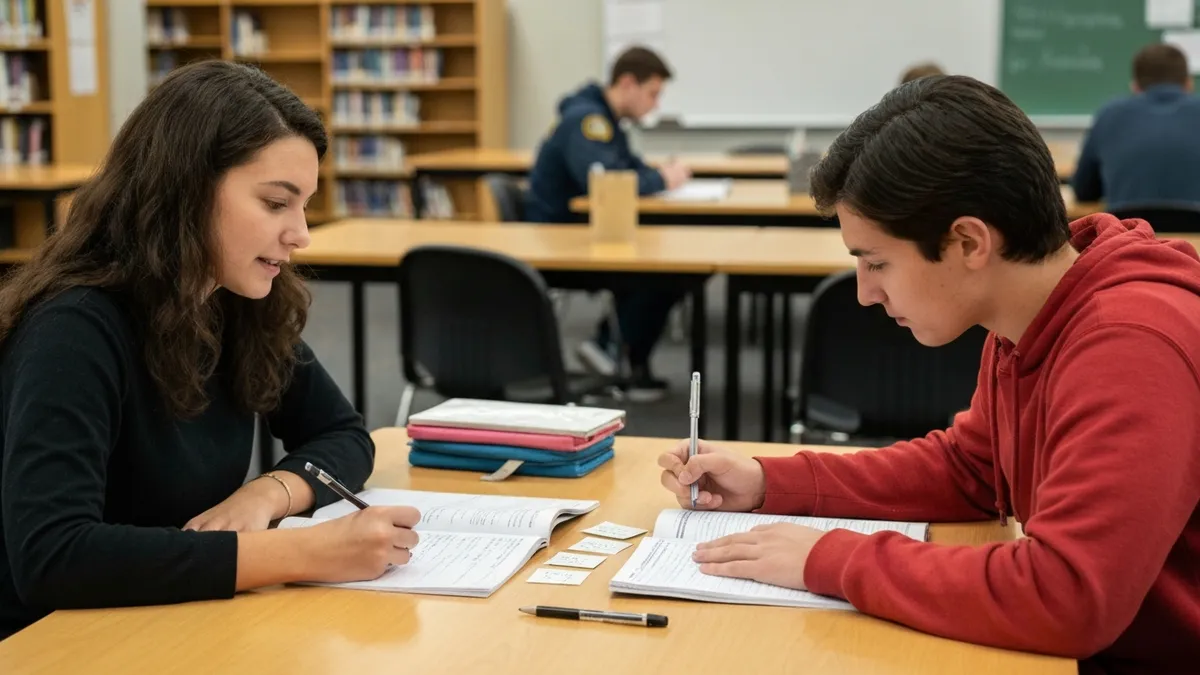
Students who miss PSSA sessions due to illness or absence must complete make-up testing before the statewide window officially closes. Once the window ends, no additional testing is permitted regardless of circumstances. Notify your school immediately if your child is absent during a scheduled PSSA session so administrators can arrange a make-up date within the remaining window. A missed assessment that cannot be rescheduled counts as a non-participation, which affects your school's accountability reporting.
After the PSSA testing window closes and scores are returned, the most productive response for students and families is to use the results as a roadmap for the next academic year rather than as a final verdict on ability. Pennsylvania's assessment system is designed to track longitudinal growth across grades 3 through 8, meaning that every testing window is an opportunity to demonstrate improvement from the previous year. Students who approach the PSSA with this growth mindset — focused on personal progress rather than comparison to peers — typically show more consistent improvement across successive windows.
Teachers and school counselors can help families interpret score reports and translate them into concrete action plans. If a fourth-grader scored Below Basic in Mathematics, for example, the reporting-category subscores might reveal that the weakness is concentrated in fractions and measurement rather than spread evenly across all math domains. This information allows the fifth-grade teacher to prioritize those specific standards in fall instruction, giving the student a focused runway before the next testing window opens the following spring. Targeted support is far more efficient than broad review and produces faster measurable gains.
Families looking for independent resources to supplement classroom instruction between testing windows have numerous options. Online adaptive practice platforms, state-released test items available on PDE's website, and structured workbooks aligned to Pennsylvania's academic standards all provide valuable practice material. The key is consistency: a student who completes three or four focused practice sessions per week across the full school year arrives at the next testing window in a fundamentally stronger position than one who relies solely on the classroom review surge in the final weeks before the window opens.
Community libraries often offer free tutoring programs, homework help centers, and access to online learning platforms that are particularly useful for students in the Basic or Below Basic performance levels. Summer reading and math programs can address the well-documented learning loss that occurs between June and September, preventing students from entering the new school year behind where they finished the previous spring. Sustained over multiple summers, these programs make a compounding difference that shows up clearly in PSSA score trends across the upper elementary and middle school testing windows.
For students with disabilities, the period between testing windows is also a time to review whether current IEP or 504 accommodations adequately supported performance on the most recent PSSA. If a student received extended time but still felt rushed, or if a read-aloud accommodation was not applied correctly, these concerns should be raised at the next IEP meeting so adjustments can be made before the following year's window.
Accommodations are meant to level the playing field, not guarantee a particular score, but ensuring they are implemented correctly is a legitimate and important part of the preparation process for the next window.
Districts use aggregated PSSA data from each testing window to evaluate curriculum alignment and instructional effectiveness. When a significant percentage of students in a grade or subject score Below Basic, district curriculum leaders investigate whether the pacing guides, materials, and instructional approaches adequately cover the standards assessed on the PSSA. This feedback loop between the testing window results and curriculum decisions is one of the most important systemic functions of the annual assessment cycle, ultimately driving improvements that benefit future cohorts of students who will sit for the assessment in subsequent years.
Looking ahead to the next testing window, the most effective thing any student can do is maintain consistent academic engagement throughout the entire school year. The PSSA assesses cumulative standards mastery built over years of instruction, not just what was reviewed in the final weeks before the window. Students who read widely, practice mathematical reasoning regularly, ask questions in science class, and write frequently across content areas develop the deep, transferable skills that standardized assessments like the PSSA are designed to measure — and those skills compound with each passing testing window to produce lasting academic gains.
Practical preparation for the PSSA testing window begins with understanding the specific content standards your child is responsible for at their grade level. Pennsylvania's academic standards, which align closely with the Common Core State Standards for ELA and Mathematics, are publicly available on PDE's website and clearly specify the knowledge and skills assessed at each grade. Printing or bookmarking these standards and comparing them to your child's recent classroom assessments is a fast way to identify which standards have been covered and which might need additional attention before the window opens.
Time management within each PSSA testing session is one of the most commonly overlooked preparation skills. Many students spend too long on difficult questions early in a session, leaving insufficient time for easier questions at the end that they could answer correctly with a few more seconds. Practice the flag-and-move strategy: if a question seems too difficult after 60 seconds of effort, mark it, move on, and return to it after completing the rest of the section. This approach ensures that every answerable question receives attention within the allotted time, maximizing the raw score before the session ends.
Reading comprehension on the ELA PSSA rewards students who annotate actively as they read. Encourage your child to underline key claims, circle unfamiliar vocabulary words, and jot brief margin notes about the main idea of each paragraph. This annotation habit keeps readers engaged with dense informational texts and makes it far easier to locate evidence when answering text-dependent questions. Students who rely on memory alone to answer these questions frequently make errors because they misremember specific details or conflate information from different passages in the paired-text format.
For mathematics, showing all work legibly — even on calculator-active sections — is a strategy that pays dividends. On constructed-response math questions, partial credit is available even when the final answer is incorrect. A student who sets up the correct equation but makes an arithmetic error may earn partial credit if their work is visible and organized. Students who write only a final answer with no supporting work receive zero credit for incorrect responses, leaving significant points on the table that a few additional written steps could have recovered. Emphasize this habit during practice sessions well before the window opens.
The evening before each PSSA session, families should avoid last-minute intensive studying, which increases anxiety without providing meaningful knowledge gains. Instead, spend that evening reviewing a small set of previously mastered concepts to build confidence, eating a balanced dinner, and getting to bed at least 30 minutes earlier than usual. The morning of the test, breakfast should be substantial but familiar — this is not the day to try a new food that might cause stomach discomfort. Arrive at school on time and allow the student a few quiet minutes before testing begins to settle in and focus.
Physical exercise in the days leading up to and during the testing window has a measurable positive impact on cognitive performance. Even a 20-minute walk or bike ride before school can improve working memory, sustained attention, and processing speed — all of which are directly relevant to PSSA performance. If your child's schedule permits, encourage morning physical activity during testing window days. Schools that schedule recess or physical education before testing sessions consistently report better student engagement and fewer behavioral disruptions during assessment periods, suggesting that the physical-cognitive connection is real and meaningful.
Finally, maintain realistic expectations and a supportive emotional environment throughout the testing window. Students perform best when they feel supported rather than pressured. Avoid making PSSA scores the centerpiece of daily conversation during the window.
Instead, acknowledge effort, celebrate completion of each session, and remind your child that the PSSA is one tool teachers use to support their learning — not a measure of their intelligence, potential, or worth. This emotionally grounded approach produces better outcomes than anxiety-driven pressure tactics, and it also models the kind of resilient, growth-oriented mindset that will serve students well across every academic challenge they encounter.
For a fuller set of questions on this topic, see our pssa practice test resource.
Sample PSSA - Pennsylvania System of School Assessment Practice Questions
Try these questions from our free PSSA - Pennsylvania System of School Assessment practice tests. The correct answer and an explanation follow each question.
A student reads a passage where the author uses the phrase 'the city roared with anger.' What literary device is this?
- A. Simile
- B. Personification
- C. Alliteration
- D. Hyperbole
Answer: B. Personification
Personification gives human qualities (anger, roaring) to a non-human thing like a city.
A student wants to write a persuasive essay about school lunch options. Which type of evidence would be MOST effective to include?
- A. A personal story about disliking cafeteria food
- B. A statistic showing the percentage of students who skip lunch
- C. An opinion from one student who agrees
- D. A description of the author's favorite meal
Answer: B. A statistic showing the percentage of students who skip lunch
Statistics provide objective, measurable data that strengthen a persuasive argument more than personal anecdotes alone.
A student writes: 'The firefighters battled the blaze bravely.' This sentence is an example of which sound device?
- A. Onomatopoeia
- B. Rhyme
- C. Alliteration
- D. Assonance
Answer: C. Alliteration
Alliteration is the repetition of the same consonant sound at the beginning of nearby words, as in 'battled the blaze bravely' (b-b-b).
A student reads two articles about climate change, one by a scientist and one by an oil company spokesperson. What should the student consider about the sources?
- A. Both sources are equally reliable because they are both published.
- B. The scientist's article is likely more objective while the company spokesperson may have a bias.
- C. The oil company is more credible because it has more money.
- D. Neither source should be trusted because they disagree.
Answer: B. The scientist's article is likely more objective while the company spokesperson may have a bias.
Evaluating author bias and purpose is essential; a scientist's peer-reviewed work is generally more objective than a company representative who has financial interests.
Take the full PSSA - Pennsylvania System of School Assessment practice test
PSSA Questions and Answers




About the Author

Educational Psychologist & Academic Test Preparation Expert
Columbia University Teachers CollegeDr. Lisa Patel holds a Doctorate in Education from Columbia University Teachers College and has spent 17 years researching standardized test design and academic assessment. She has developed preparation programs for SAT, ACT, GRE, LSAT, UCAT, and numerous professional licensing exams, helping students of all backgrounds achieve their target scores.
Join the Discussion
Connect with other students preparing for this exam. Share tips, ask questions, and get advice from people who have been there.
View discussion (8 replies)