
Can a Private Investigator Get Your Phone Records? What PIs Legally Can and Can't Do in 2026 September
📗 Can a private investigator get your phone records, tap your phone, or read texts? What PIs can legally access, what's illegal, and how to protect your privacy.

It's one of the most common questions people ask about private investigators: can a PI actually get my phone records, listen to my calls, or read my texts? Television has convinced everyone that investigators can pull up anyone's call logs with a few keystrokes. The reality is far more constrained, and understanding the line between what's legal and what's a serious crime matters whether you're considering hiring a PI or worried one is looking into you.
Here's the short answer up front: a legitimate private investigator generally cannot obtain your private phone records, cannot legally wiretap your calls, and cannot read your text messages without authorization. Those records are protected by federal law, and the companies that hold them won't hand them over to a PI. Anyone who promises otherwise is either lying to get your business or proposing to break the law on your behalf—neither of which ends well.
That doesn't mean investigators are powerless. There's a great deal a skilled PI can do legally, from surveillance to mining public records, and the gap between the myth and the reality is exactly what this guide untangles. Understanding what does a private investigator do within the law is the key to knowing what to expect, and it explains why the profession is regulated and licensed in the first place.
The stakes here are real. Investigators who cross these lines face criminal charges, and clients who hire them to do so can be liable too. The famous corporate and media scandals over phone-record "pretexting" led directly to tougher federal laws. So before we get into what a PI can do, it's worth being crystal clear about the hard legal boundaries that govern phones—because those boundaries are stricter than almost anyone expects.
PIs and Phone Records by the Numbers

Where the Legal Line Falls
Your detailed phone records—who you called and when—are protected. A PI can't obtain them from the carrier without your consent, a subpoena, or a court order. Tricking the carrier into releasing them (pretexting) is a federal crime.
Listening to or recording your private calls without consent violates the federal Wiretap Act and state laws. No license lets a PI do this. Anyone offering to 'tap a phone' is proposing a felony.
Accessing your phone, voicemail, or messages without authorization breaks computer-fraud and privacy laws. Spyware installed without consent is illegal, and reputable investigators won't touch it.
PIs can lawfully conduct surveillance in public, search public records and databases, run reverse-lookups on publicly available numbers, and interview sources—building a picture without ever touching protected data.
Let's start with the firmest boundary, because it's the one people most often misunderstand. Your phone records—the itemized log of calls and texts held by your carrier—are legally protected customer information. A private investigator has no special authority to obtain them. They aren't law enforcement, they can't issue subpoenas, and the phone company will not release your records to them. Full stop.
The way PIs historically tried to get around this was "pretexting"—calling the carrier and impersonating the customer or using a false pretense to trick a representative into releasing records. After high-profile scandals exposed this practice, Congress passed legislation specifically criminalizing it. Today, obtaining phone records through pretexting is a federal offense, and both the investigator and anyone who hired them can face prosecution. The loophole is closed and the penalties are severe.
Wiretapping is an even brighter line. The federal Wiretap Act makes it a serious crime to intercept someone's private communications—calls, in this context—without consent. Many states add their own laws, some requiring that all parties to a conversation consent to any recording. A PI who taps a phone isn't bending a rule; they're committing a felony that can land them in prison and cost them their license permanently.
Reading text messages, accessing voicemail, or installing spyware on someone's phone falls under the same umbrella of illegality, often implicating computer-fraud statutes as well. There's no professional exemption. The fact that someone is a licensed investigator gives them exactly zero additional right to access your private digital communications. If anything, their license makes them more accountable, because regulators can revoke it.
So why does the myth persist that PIs can get this stuff? Partly Hollywood, and partly because there genuinely was an era when pretexting was a gray-market practice before the law caught up. There are also shady operators who advertise these services illegally, preying on people in custody disputes or relationship conflicts. Hiring one isn't a clever shortcut—it's exposing yourself to criminal liability and handing your money to someone willing to break the law.
The consent exception is the one important nuance. If you own an account, you can generally access your own records, and parents may have rights over minor children's accounts on a family plan. Employers may have limited rights over company-issued devices with proper policies. But none of this lets a PI access a third party's private records, and the moment authorization is absent, the activity crosses into illegal territory regardless of who's asking.
This legal framework is exactly why private investigation is a licensed, regulated profession in most states. Licensing exists partly to ensure investigators understand and respect these boundaries, and the threat of losing that license is a powerful deterrent. A reputable PI will tell a prospective client plainly that they can't and won't obtain protected phone records—and that honesty is a sign you've found a professional rather than a scammer.
How a PI Legally Builds a Phone-Related Profile
Reverse-lookup public numbers
Search public records
Conduct lawful surveillance
Interview sources
Compile a legal report
Now the constructive side: what a private investigator actually can do legally is substantial, which is why the profession exists at all. The toolkit just doesn't include reaching into your carrier's database. Skilled investigators get results through public records, lawful surveillance, database research, and good old-fashioned legwork—and in many cases that's more than enough to resolve the question a client brought them.
Public-record research is the backbone. Investigators can legally search court records, property records, business filings, marriage and divorce records, liens, and a host of other documents that are open to the public. Tied to a name, these records can reveal an enormous amount about someone's life, finances, and history without ever touching a protected phone log. A practiced PI knows where these records live and how to connect them quickly.
Reverse phone lookups on publicly available numbers are fair game too, with an important distinction. A PI can use legal databases and public directories to identify who a listed number belongs to, or to find numbers a person has publicly associated with their name or business. What they can't do is pull the private call-detail records behind that number. The difference is between public association and protected content—the former is legal research, the latter is off-limits.
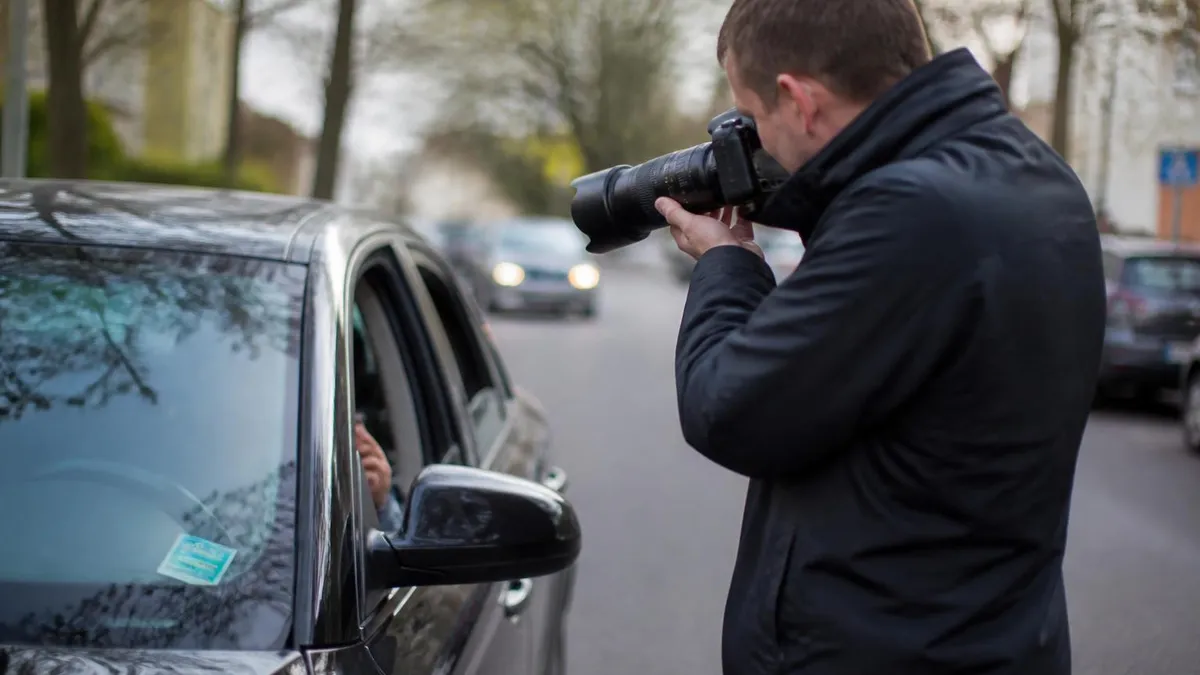
Surveillance is the classic PI tool and is legal within limits. An investigator can observe and document someone in public places, where there's no reasonable expectation of privacy—following a car on public roads, photographing someone entering a building. They cannot trespass, plant tracking devices on a vehicle they don't own in many jurisdictions, or surveil inside private spaces. The expectation-of-privacy concept is the dividing line, and good PIs stay well on the legal side of it.
Investigators also gather information the way any diligent researcher would: interviewing people willing to talk, reviewing social media that's publicly posted, and analyzing data the client lawfully provides. Often the client already has access to relevant phone records—their own, or a shared family account—and can legally hand them to the investigator to analyze. That's a legitimate path that doesn't require the PI to obtain anything improperly.
When private records genuinely are needed for a case, the legal route runs through the courts. In litigation, an attorney can issue a subpoena or obtain a court order compelling the carrier to produce phone records as part of formal discovery. A PI working with a legal team supports this process but doesn't shortcut it. This is the lawful mechanism that exists precisely because the back-channel methods are prohibited—and it comes with judicial oversight.
Understanding this scope also explains why hiring a competent, licensed investigator is worthwhile for legitimate needs. Knowing how to become a private investigator reveals how much training the work involves, and the professionals who complete it deliver real value through legal means. The skill is in extracting the maximum lawful insight from public and observable information—not in illegal shortcuts that would jeopardize both the case and everyone involved.
Phone-Related Questions, Answered Plainly
A PI cannot obtain your private call-detail records from the carrier without your consent, a subpoena, or a court order. Tricking the carrier into releasing them (pretexting) is a federal crime. The legal route to these records runs through a subpoena in litigation.
How to Protect Your Phone Privacy
- ✓Use a strong passcode and biometric lock on your phone.
- ✓Set a separate PIN or passcode on your carrier account to block pretexting.
- ✓Watch for spyware signs: rapid battery drain, overheating, odd data use.
- ✓Keep your phone's software updated to close security holes.
- ✓Be cautious about who has physical access to your unlocked device.
- ✓Review app permissions and remove anything you don't recognize.
- ✓If you suspect illegal surveillance, consult a lawyer and consider law enforcement.

If you're worried someone has hired a PI to look into you, the realistic picture should be reassuring on the phone front. A legitimate investigator isn't pulling your call records or listening to your calls—those avenues are closed to them. What they might lawfully do is observe you in public, research public records tied to your name, and review whatever you've posted publicly online. Knowing that helps you separate genuine concern from television-fueled paranoia.
That said, protecting your privacy is sensible regardless. The single most effective step against the pretexting threat is adding a separate PIN or passcode to your carrier account, which most providers offer. This stops anyone—PI or scammer—from social-engineering a customer-service rep into changing or releasing your account information. It's a two-minute call that closes the exact loophole that fueled the old phone-record scandals.
The bigger modern risk isn't a PI at all—it's illegal spyware installed by someone with physical access to your phone, often in domestic situations. Warning signs include unexplained battery drain, the phone running hot, unusual data usage, or settings that have changed on their own. A strong passcode, current software, and guarding physical access to your unlocked device are your best defenses, and a factory reset can remove most stalkerware if you back up first.
It's also worth knowing the difference between a licensed PI and a shady operator, because the private investigator license is your best signal of legitimacy. Licensed investigators have a regulator to answer to and a livelihood that depends on staying within the law. The people advertising 'get any phone records' services online are typically either scammers who take your money and vanish or criminals proposing illegal acts that implicate you too. Steer clear of both.
If you genuinely believe you're the victim of illegal surveillance—a tapped phone, installed spyware, or stolen records—the right response is legal, not retaliatory. Document what you've noticed, consult an attorney, and consider reporting it to law enforcement. Illegal interception is a crime with real penalties, and you have rights and remedies. Trying to investigate back through illegal means only puts you on the wrong side of the same laws.
For most people, though, the practical takeaway is calm and simple: the dramatic phone-surveillance powers attributed to private investigators are largely fiction. The law builds a strong wall around your private communications, and reputable PIs respect it because their license and freedom depend on it. A basic carrier PIN, a locked phone, and a healthy skepticism toward anyone promising illegal services cover the vast majority of realistic risk.
None of this should make you cynical about the profession itself. Most private investigators do honest, valuable work—locating people, supporting legal cases, conducting background research, and uncovering fraud—entirely through legal channels. The phone-records myth gives the field an unfairly cloak-and-dagger reputation. The truth is more mundane and more reassuring: it's careful, lawful research, not spy-movie wizardry.
If you're weighing whether to hire one, let the phone-records myth be your filter. Ask a prospective investigator directly what they can and can't access, and listen for an honest answer about the legal limits. The professional who explains the boundaries has earned your trust; the one who hints at secret capabilities has just told you to walk away and find someone who works within the law instead, because anything they obtain illegally would be worthless in court anyway.
Put a PIN on your carrier account
If you do one thing after reading this, add a separate security PIN or passcode to your mobile carrier account. Nearly every provider offers it, and it blocks the exact 'pretexting' trick—impersonating you to a customer-service rep—that fueled the old phone-record scandals. It takes minutes and closes the most realistic avenue anyone has for improperly touching your account.
Legitimate Investigation vs Illegal Shortcuts
- +Licensed PIs deliver real results through legal public-record research
- +Lawful surveillance and interviews resolve many cases without protected data
- +Working with attorneys, records can be obtained legally via subpoena
- +A reputable PI protects you by refusing illegal methods
- +Legal findings hold up in court; illegally obtained ones don't
- −Illegal phone access exposes both PI and client to criminal charges
- −Pretexting and wiretapping are federal crimes with serious penalties
- −Shady operators promising 'any records' are scammers or criminals
- −Illegally obtained evidence is typically inadmissible and worthless
- −Hiring someone to break the law can make you legally liable too
If a private investigator or online service offers to obtain someone's call records, tap a phone, or read texts, treat it as a major red flag. These acts are federal crimes, and hiring someone to commit them can make you criminally liable as well. A legitimate, licensed investigator will tell you plainly that they cannot and will not do this—and that honesty is the mark of a real professional.
Let's directly bust the most persistent myths, because clarity here is genuinely useful. Myth one: a PI can pull anyone's phone records with the right connections. Reality: those records are federally protected, carriers won't release them to investigators, and the back-channel method—pretexting—is a crime. The 'right connections' fantasy is exactly the kind of pitch that marks an operator as illegitimate.
Myth two: investigators can legally tap a phone if a client has a good reason, like a cheating spouse or a custody fight. Reality: motive is irrelevant. Wiretapping without consent is a felony regardless of why someone wants it, and emotionally charged situations are precisely where people get talked into illegal services they later regret. No personal grievance creates a legal exception.
Myth three: if a PI installs an app on a phone, it's a legal gray area. Reality: installing spyware on someone's device without authorization is squarely illegal, frequently under computer-fraud and wiretap laws, and it's a common feature of stalking cases that lead to prosecution. There's no gray area—only authorized access or illegal access, with little in between.
Myth four: there's nothing you can do if you're targeted. Reality: you have meaningful protections and remedies. Carrier PINs, device security, and software updates prevent most realistic threats, and if illegal surveillance does occur, the law is on your side—you can pursue legal action and report crimes to authorities. Feeling powerless is itself part of the myth.
The throughline across all of it is that the law draws a hard, deliberate line around private communications, and legitimate investigators stay on the legal side of that line because their license and liberty depend on it. The cloak-and-dagger image of the all-seeing PI is mostly entertainment. The real profession is bound by rules that protect your privacy more thoroughly than most people assume.
So, can a private investigator get your phone records? Not legally, and not from any reputable professional. They can do a great deal through lawful public-record research and surveillance, and through proper legal channels like subpoenas when a court is involved. But your private calls, texts, and carrier records sit behind a wall of federal and state law that no PI license can breach. Knowing exactly where that wall stands is the best protection—and the best filter for spotting anyone who claims they can cross it.
Private Investigator Phone Questions and Answers

What Private Investigators Do: Complete 2026 Guide to Cases, Methods, Tools, and Day-to-Day Work

How to Become a Private Investigator: Requirements & Steps

Private Investigator License: Requirements, Process and States

Private Investigation: Industry Overview, Types of Investigators, Skills, Tools, Income, and Career Paths
About the Author

Educational Psychologist & Academic Test Preparation Expert
Columbia University Teachers CollegeDr. Lisa Patel holds a Doctorate in Education from Columbia University Teachers College and has spent 17 years researching standardized test design and academic assessment. She has developed preparation programs for SAT, ACT, GRE, LSAT, UCAT, and numerous professional licensing exams, helping students of all backgrounds achieve their target scores.