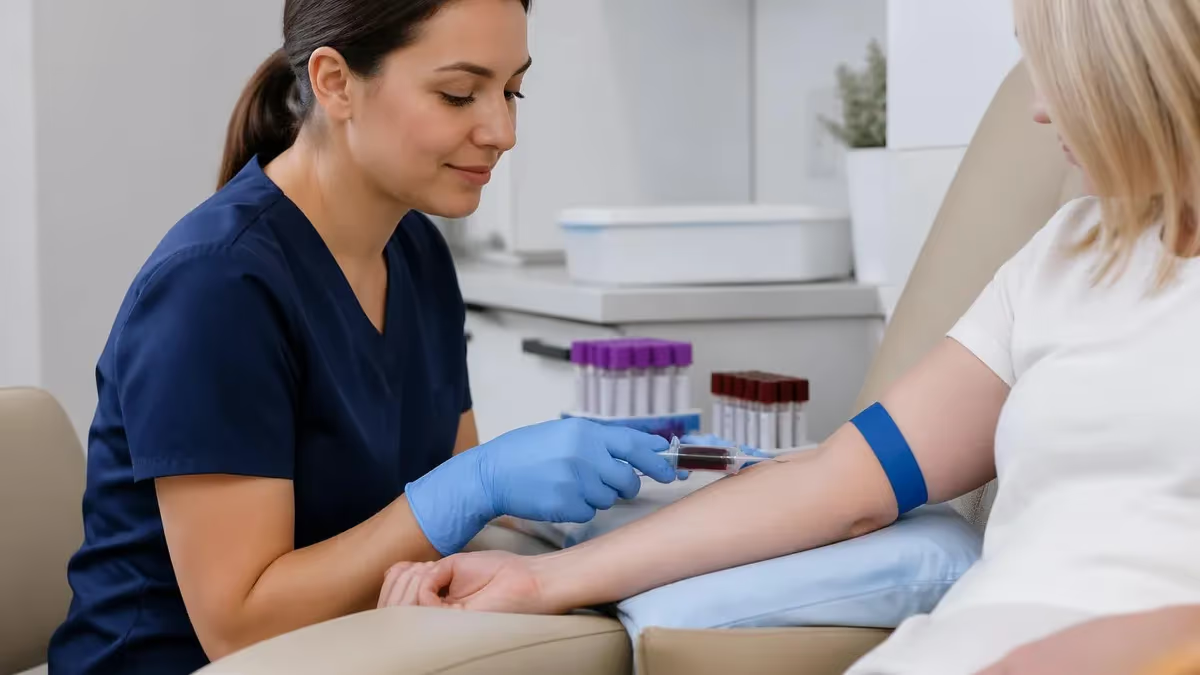
What Is Phlebotomy Certification?
Phlebotomy certification is a professional credential that verifies your ability to safely collect blood specimens from patients. Certified phlebotomists — often called Certified Phlebotomy Technicians (CPT) or Certified Phlebotomist (CPHT) — work in hospitals, clinics, blood banks, and diagnostic laboratories across the United States. Earning your certification proves to employers that you have mastered the technical skills, safety protocols, and patient care standards required in a clinical setting.
Several national organizations offer recognized phlebotomy certifications, including the National Healthcareer Association (NHA), the American Society for Clinical Pathology (ASCP), the National Center for Competency Testing (NCCT), and the American Medical Technologists (AMT). While certification requirements vary slightly by state and employer, holding a nationally recognized credential dramatically improves your job prospects and starting pay.
Phlebotomy Exam Format
Most phlebotomy certification exams follow a standardized multiple-choice format. Understanding the structure before exam day removes one major source of anxiety.
- Number of questions: 100–120 scored items (NHA exam has 100 scored questions plus 20 pretest questions)
- Time allowed: 2 hours (120 minutes)
- Passing score: Approximately 70% correct (scaled scores vary by organization)
- Delivery method: Computer-based testing at approved Pearson VUE or PSI testing centers
- Result timeline: Immediate pass/fail on screen; official certificate mailed within 2–4 weeks
The NHA Certified Phlebotomy Technician (CPT) exam is the most widely taken phlebotomy certification test in the United States. It tests your ability to apply knowledge in realistic clinical scenarios rather than simply recall facts, so scenario-based practice questions are essential preparation.
Exam Topics and Content Areas
The phlebotomy certification exam covers seven major domains. Knowing the weight of each domain helps you prioritize your study time.
1. Anatomy and Physiology (18–22%)
You must identify major veins used in venipuncture (median cubital, cephalic, basilic), distinguish arteries from veins, describe the layers of the skin, and understand the cardiovascular system well enough to explain how blood flows from heart to capillary. Knowledge of the lymphatic system and common hematology values is also tested.
2. Blood Collection Procedures — Venipuncture (30–35%)
This is the largest single content area. Questions cover the correct order of draw (blood culture → light blue → red/gold → green → lavender → grey), tourniquet application time (no more than 60 seconds), needle gauge selection (21–23 gauge for routine draws), angle of insertion (15–30 degrees), and management of difficult or collapsed veins. Evacuated tube system (ETS), syringe, and butterfly (winged infusion set) techniques are all tested.
3. Capillary (Dermal) Puncture (10–12%)
Capillary puncture is performed on infants (heel stick) and adults when veins are inaccessible. Questions cover acceptable puncture sites (lateral heel in neonates, fingertip in adults), lancet depth limits, warming the site to increase blood flow, and the correct order of draw for capillary specimens.
4. Specimen Handling, Processing, and Labeling (15–18%)
Improper handling is a leading cause of specimen rejection. Exam questions address proper labeling at the bedside, centrifugation speeds and times, temperature requirements (room temp vs. refrigerated vs. frozen), chain of custody for forensic specimens, and identification of hemolysis, lipemia, and icterus as preanalytical errors.
5. Safety and Infection Control (12–15%)
Topics include standard precautions, PPE (gloves, gowns, face shields), sharps disposal in puncture-resistant containers, bloodborne pathogen exposure protocols, fire safety (RACE — Rescue, Alarm, Confine, Extinguish), electrical safety, OSHA Bloodborne Pathogens Standard (29 CFR 1910.1030), and proper hand hygiene technique per CDC guidelines.
6. Patient Care and Communication (8–10%)
Questions test your ability to verify patient identity using two identifiers (name + date of birth or medical record number), obtain informed consent, manage patient anxiety, recognize and respond to syncope (fainting), and communicate clearly with patients from diverse backgrounds.
7. Quality, Regulatory, and Legal Issues (5–8%)
This domain covers HIPAA patient privacy requirements, quality control in the laboratory, accreditation standards (CAP, The Joint Commission), chain of custody procedures for legal specimens, and documentation best practices.
Phlebotomy Certification Bodies
Four organizations dominate the U.S. phlebotomy certification landscape. Each has different eligibility requirements and renewal schedules.
| Organization | Credential | Exam Length | Renewal |
|---|---|---|---|
| NHA (National Healthcareer Association) | CPT (Certified Phlebotomy Technician) | 120 questions / 2 hrs | Every 2 years (10 CE credits) |
| ASCP (American Society for Clinical Pathology) | PBT(ASCP) — Phlebotomy Technician | 80 questions / 2 hrs | Every 3 years (36 CE credits) |
| NCCT (National Center for Competency Testing) | NCPT — National Certified Phlebotomy Technician | 150 questions / 3 hrs | Every year (10 CE credits) |
| AMT (American Medical Technologists) | RPT — Registered Phlebotomy Technician | 210 questions / 3 hrs | Every 3 years (30 CE credits) |
The NHA CPT is the most employer-recognized credential for entry-level phlebotomists. ASCP's PBT credential carries the most weight in hospital laboratory settings and is preferred by many large health systems. Check your target employer's job postings to confirm which credential they prefer before you register for an exam.
How to Become a Certified Phlebotomist
The path from no healthcare experience to certified phlebotomist typically takes 4–8 months, depending on your training program and exam schedule.
Step 1: Complete a Phlebotomy Training Program
Most certification bodies require you to complete an accredited phlebotomy training program before you can sit for the exam. Programs are offered at community colleges, vocational schools, hospitals, and online-hybrid formats. A standard program runs 4–8 weeks of classroom instruction plus a clinical externship component.
Look for programs accredited by the National Accrediting Agency for Clinical Laboratory Sciences (NAACLS) or affiliated with CAAHEP-accredited schools. Accreditation ensures the curriculum meets national exam standards.
Step 2: Complete Required Clinical Hours
Hands-on clinical hours are mandatory. Requirements vary by certifying body:
- NHA CPT: 120 hours of clinical experience (or 1 year of work experience)
- ASCP PBT: 1 year of full-time laboratory experience OR completion of an accredited program with 100 hours of clinical practice
- NCCT NCPT: 30 successful venipunctures and 10 capillary punctures
- AMT RPT: 50 venipunctures and 10 capillary punctures (documented)
Step 3: Register and Prepare for the Exam
Exam fees range from $117 (NHA) to $200+ (ASCP). Register through the certifying body's website and select a testing center near you. Most testing centers offer flexible scheduling with appointments available within 1–2 weeks of registration.
Allow 4–6 weeks of dedicated study time. Use a combination of the certifying body's official study guide, flashcards for anatomy and order of draw, and — most importantly — timed practice tests that mirror the real exam format.
Step 4: Pass the Exam
On exam day, bring two forms of ID (one must be government-issued photo ID), arrive 30 minutes early, and avoid cramming the night before — rest and review are more effective than last-minute memorization.
Step 5: Maintain Your Certification
Certifications are not lifetime credentials. You must earn continuing education (CE) credits and pay a renewal fee every 1–3 years (depending on your certifying body) to keep your credential active. CE opportunities include webinars, workshops, professional conferences, and college courses.
Phlebotomist Salary and Job Outlook
Phlebotomy is one of the fastest-growing allied health professions in the United States, making it an excellent career choice for those entering healthcare.
Salary Ranges (2026 Data)
- Entry-level (0–1 year): $17–$19 per hour
- Mid-level (2–5 years certified): $19–$22 per hour
- Senior/hospital phlebotomist: $22–$26 per hour
- Lead phlebotomist / supervisor: $26–$32 per hour
- Annual median salary (BLS): approximately $40,000–$44,000
Salaries are highest in California, Washington, Alaska, and the Northeast. Mobile phlebotomists — who travel to patients' homes or long-term care facilities — often earn a premium above standard lab rates.
Job Growth
The U.S. Bureau of Labor Statistics projects phlebotomist employment to grow 8–10% over the next decade, faster than the average for all occupations. Demand is driven by an aging population requiring more diagnostic testing, the expansion of outpatient laboratory services, and increased health screening programs. Hospitals, reference laboratories (Quest, LabCorp), physician offices, blood banks, and public health clinics all hire certified phlebotomists.
Study Tips and Exam Preparation Strategies
Passing the phlebotomy certification exam on your first attempt requires a structured, consistent study approach. The following strategies are used by successful candidates.
Master the Order of Draw
The order of draw is one of the highest-tested topics on every phlebotomy certification exam. Memorize it cold: Blood cultures → Sodium citrate (light blue) → Serum/SST (red/gold) → Heparin (green) → EDTA (lavender/purple) → Oxalate/fluoride (grey). A common mnemonic is "Boys Should Really Learn Good Study Habits" (Blue, SST, Red, Lavender, Green, Serum, Heparin).
Learn Tube Additives and Inversions
Each tube color corresponds to a specific additive. Know what the additive does, which tests require it, and how many times to invert the tube after collection. EDTA tubes (lavender) require 8–10 gentle inversions; citrate tubes (light blue) require 3–4; SST tubes (gold/red) require 5 inversions.
Study Anatomy Visually
Draw or print a diagram of the antecubital fossa and label the median cubital, cephalic, and basilic veins. Understand why the median cubital is the preferred first-choice vein (larger, more stable, less likely to roll). Know the veins of the hand and forearm as alternatives.
Practice Timed Tests Regularly
Time pressure is a major factor on the actual exam. Practice answering 100 questions in under 90 minutes so that 2 hours feels comfortable. Review every wrong answer — understanding why an answer is incorrect cements the correct concept more effectively than reviewing right answers.
Use Spaced Repetition
Space your study sessions over several weeks rather than cramming everything into a few days. Reviewing material after 1 day, 3 days, 1 week, and 2 weeks dramatically improves long-term retention of anatomy terms, safety protocols, and procedural steps.
Focus on High-Weight Domains
Venipuncture procedures (30–35%) and anatomy/physiology (18–22%) together make up roughly half the exam. If your study time is limited, prioritize these two domains first before moving to specimen handling and safety.
Free CPHT Practice Tests — All 19 Quizzes
The best way to prepare for the phlebotomy certification exam is to practice with realistic multiple-choice questions that mirror the actual test format. Use our free CPHT practice tests below to identify your weak areas and build exam confidence. Each quiz includes instant feedback and detailed answer explanations.
- CPHT Patient Interaction & Specimen Collection — 9 questions covering patient ID verification, informed consent, and specimen collection best practices
- CPHT Venipuncture & Capillary Techniques — 9 questions on ETS, syringe, butterfly technique, and heel stick procedures
- CPHT Specimen Handling, Processing & Labeling — 9 questions on centrifugation, temperature, labeling, and rejection criteria
- CPHT Safety Protocols & Regulatory Compliance — 9 questions on OSHA, PPE, sharps disposal, and bloodborne pathogen standards
- CPHT Patient Care & Safety — 6 questions on syncope management, patient communication, and safety procedures
- CPHT Clinical Procedures & Protocols — 6 questions on clinical workflow, procedural sequencing, and technique
- CPHT Medical Terminology & Documentation — 6 questions on key phlebotomy and laboratory terms
- CPHT Infection Control & Prevention — 6 questions on hand hygiene, PPE, isolation precautions, and contamination prevention
- CPHT Patient Assessment & Evaluation — 6 questions on pre-draw assessment, contraindications, and patient evaluation
- CPHT Pharmacology & Medication Management — 6 questions on drug interactions affecting lab values and anticoagulant therapy
- CPHT Professional Ethics & Legal Standards — 6 questions on HIPAA, scope of practice, and professional conduct
- CPHT Communication & Patient Relations — 6 questions on therapeutic communication and patient-centered care
- CPHT Treatment Protocols & Interventions — 6 questions on clinical intervention protocols and procedural standards
- CPHT Emergency Procedures & Critical Care — 6 questions on emergency response, stat specimens, and critical value reporting
- CPHT Quality Improvement & Evidence-Based Practice — 6 questions on QA/QI, accreditation, and laboratory quality metrics
- CPHT Anatomy & Physiology Fundamentals — 6 questions on veins, arteries, skin layers, and the cardiovascular system
- CPHT Healthcare Technology & Equipment — 6 questions on collection equipment, analyzers, and laboratory instrumentation
- CPHT Disease Pathology & Management — 6 questions on common conditions encountered in phlebotomy practice
- CPHT Health Promotion & Prevention — 6 questions on preventive care, screening programs, and public health principles
Frequently Asked Questions About Phlebotomy Certification
What is the difference between CPT and CPHT in phlebotomy?
CPT stands for Certified Phlebotomy Technician, the credential awarded by the NHA. CPHT is used by some organizations and employers as shorthand for Certified Phlebotomist Technician — the credentials are functionally equivalent. In some contexts CPHT specifically refers to the NHA credential for phlebotomists (distinct from the ExCPT credential for pharmacy technicians). When in doubt, check the exact credential name used in a job posting.
How long does it take to become a certified phlebotomist?
Most students complete a phlebotomy training program in 4–8 weeks of full-time study, or 3–4 months part-time. Add 1–2 weeks to schedule and sit for the exam. From zero experience to certified professional, expect 2–6 months total. Some accelerated hospital-based programs allow students to complete training and certification in as little as 6 weeks.
How hard is the phlebotomy certification exam?
The pass rate for first-time NHA CPT candidates who completed an accredited program is approximately 78–82%. Candidates who study with practice tests, review anatomy thoroughly, and memorize the order of draw pass at higher rates. The exam is challenging but very passable with 4–6 weeks of focused preparation.
Do I need a high school diploma to take the phlebotomy exam?
Yes. All major certifying bodies (NHA, ASCP, NCCT, AMT) require a high school diploma or GED as a minimum educational requirement before you can register for the phlebotomy certification exam. No college degree is required.
How much does the phlebotomy certification exam cost?
Exam fees range from $117 for the NHA CPT to approximately $200 for the ASCP PBT. Some training programs include the exam fee in their tuition cost. Retake fees are typically the same as the original registration fee. Check the certifying body's website for the most current pricing.
Can I take the phlebotomy exam without a training program?
Some certifying bodies allow candidates with documented work experience (typically 1 year full-time in a clinical setting) to sit for the exam without a formal training program. The ASCP PBT and NCCT NCPT both offer experience-based pathways. However, completing an accredited program gives you a structured knowledge base and is strongly recommended for first-time candidates.
How do I renew my phlebotomy certification?
Renewal requirements vary by organization. NHA CPT holders renew every 2 years by earning 10 CE credits and paying a renewal fee. ASCP PBT holders renew every 3 years with 36 CE credits. Most CEs can be earned through online courses, professional seminars, or relevant college credits. Set a calendar reminder well before your expiration date — letting a certification lapse requires retaking the full exam in most cases.
What jobs can I get with a phlebotomy certification?
Certified phlebotomists work in hospitals, outpatient clinics, reference laboratories (Quest Diagnostics, LabCorp), blood donation centers (Red Cross, Vitalant), physician offices, nursing homes, and mobile phlebotomy services. Entry-level positions are widely available, and experienced phlebotomists can advance to lead phlebotomist, laboratory supervisor, or transition into other allied health roles such as medical assistant or clinical laboratory technician.
Is phlebotomy a good career?
Yes. Phlebotomy offers a relatively short training period, strong job stability, and direct patient interaction. It is an excellent entry point into the healthcare field for those who want clinical experience without the years of education required for nursing or medical degrees. Many phlebotomists use the role as a stepping stone to advance into nursing, medical laboratory science, or physician assistant programs.
What is the highest-paying state for phlebotomists?
California consistently ranks as the highest-paying state for phlebotomists, with average hourly wages of $23–$28. Other high-paying states include Washington, Alaska, New York, and Massachusetts. Cost of living varies significantly between these states, so factor that into any relocation decisions.
Conclusion
Phlebotomy certification opens the door to a stable, in-demand healthcare career that you can enter in just a few months. By understanding the exam format, mastering the core content domains — especially venipuncture procedures, anatomy, order of draw, and specimen handling — and using consistent timed practice, you can pass your CPHT or CPT exam with confidence.
Start with our free CPHT practice tests above to benchmark your current knowledge, identify the content areas where you need more review, and build the test-taking stamina you need on exam day. Each practice quiz includes detailed explanations so you learn the reasoning behind every correct answer, not just the answer itself.
Good luck — and welcome to a rewarding career in phlebotomy.