
P&G Products: A Tour of Procter & Gamble's Brand Portfolio 2026 October
🏆 P&G products guide — major brands across Beauty, Grooming, Health Care, Fabric & Home Care, Baby and Feminine Care, plus how Procter & Gamble

P&G products appear in roughly 5 billion households worldwide. Procter & Gamble — founded in Cincinnati in 1837 by candle-maker William Procter and soap-maker James Gamble — is one of the largest consumer-packaged-goods companies in the world, with annual revenue around $84 billion and a portfolio of roughly 65 leading brands organized into 10 product categories. Walk through the personal care, laundry, baby, oral care, and household-cleaning aisles of any major US retailer and you'll see P&G brands holding the leading market positions in nearly every section.
This guide tours the P&G product portfolio category by category. We'll cover the Beauty segment (Pantene, Olay, Head & Shoulders, SK-II, plus several smaller brands), Grooming (Gillette, Venus, Braun), Health Care (Crest, Oral-B, Vicks, Pepto-Bismol, Metamucil), Fabric & Home Care (Tide, Downy, Ariel, Mr. Clean, Febreze, Cascade, Dawn), Baby Care (Pampers, Luvs), Feminine Care (Always, Tampax), Family Care (Bounty, Charmin, Puffs), and the company's organizational approach to managing this huge portfolio. We'll also cover how P&G hires for the brand-management roles that run these businesses internally.
Understanding P&G's brand portfolio matters in several contexts. Consumers benefit from knowing which competing brands are actually owned by the same parent company — choosing between Tide and Gain, for example, is choosing between two P&G brands rather than competitive alternatives. Job seekers applying for marketing and brand management roles at P&G need to understand which brands fit which categories. Investors tracking P&G stock benefit from understanding the diverse revenue streams across consumer staples categories that drive earnings stability through economic cycles.
P&G's organizational model is famously brand-centric. Each major brand is essentially run as its own profit-and-loss business with dedicated marketing, R&D, supply chain, and finance support. The brand-management approach P&G pioneered in the 1930s has been imitated by virtually every consumer-goods company since. P&G alumni regularly become CMOs and CEOs at other major companies, with the company's training programs widely regarded as among the best management development pipelines in the consumer-goods industry.
For job candidates considering P&G specifically, the company's hiring process is rigorous and competitive. Most professional roles require completing P&G's online assessments (PEAK Performance Assessment plus interactive simulations) before progressing to interviews. The assessment combines cognitive ability tests with behavioral measures designed to predict success in P&G's consensus-building, brand-management culture. We focus on the products in this guide; for assessment-specific preparation, separate resources cover the test format and content in detail through guided practice and content review.
Many readers pair this guide with the costco p&g rebate to check their readiness before exam day.
P&G product portfolio at a glance
Major categories: Beauty, Grooming, Health Care, Fabric & Home Care, Baby Care, Feminine Care, Family Care. Top global brands: Tide, Pampers, Gillette, Pantene, Crest, Oral-B, Olay, Always, Bounty, Charmin, Dawn, Tampax, Vicks, Head & Shoulders, and dozens more. Annual revenue: approximately $84 billion. Households served: roughly 5 billion globally. Brand count: approximately 65 leading brands organized into 10 product categories. Headquarters: Cincinnati, Ohio (since 1837).
Beauty — Pantene, Olay, Head & Shoulders, SK-II
The Beauty segment covers hair care, skin care, and personal cleansing products. Major hair-care brands include Pantene (the global leader in shampoo and conditioner), Head & Shoulders (the largest anti-dandruff brand worldwide), and Herbal Essences (a botanical-positioned brand particularly strong in younger demographics). Pantene Pro-V, the brand's flagship line, is sold in roughly 90 countries and represents one of P&G's largest individual brand revenue streams across the entire portfolio.
In skin care, Olay is the dominant brand. Olay's product range covers cleansers, moisturizers, anti-aging treatments, serums, and cosmetics across mass-market and prestige price tiers. The brand has been particularly successful in extending into adjacent categories like body care and men's skincare. SK-II is P&G's prestige Asian-market skincare brand, focused primarily on Japanese, Chinese, and Korean markets where it competes at the high end of department-store skincare with products centered around its signature Pitera ingredient.
Personal-care cleansing brands include Old Spice (men's body wash, deodorant, and antiperspirant), Native (a natural-positioned deodorant brand acquired in 2017), and Secret (women's antiperspirant). Old Spice's extensive marketing campaigns over the past decade — including the famous "The Man Your Man Could Smell Like" advertising — turned the historically older-skewing brand into one of the most-discussed personal-care brands among younger demographics, a transformation case study taught in marketing classes around the world.
The Beauty segment competes intensely with Unilever, L'Oréal, Estée Lauder, Coty, and dozens of smaller players. P&G has historically emphasized scale, R&D investment, and globally consistent brand positioning to maintain leadership across multiple beauty subcategories simultaneously. Recent strategic moves have emphasized digital-first marketing, ingredient transparency demands from younger consumers, and the increasingly important Asia-Pacific market where P&G's beauty growth has been concentrated relative to mature North American and European markets that grow more slowly.

P&G's major product categories
Hair care (Pantene, Head & Shoulders, Herbal Essences), skin care (Olay, SK-II), personal cleansing (Old Spice, Native, Secret). Globally distributed brands competing with Unilever, L'Oréal, Estée Lauder, Coty, and many others. Heavy R&D investment in formulation science. Marketing emphasis varies from mass-market consumer (Pantene) through prestige Asian skincare (SK-II) to specialized natural-positioned brands (Native), reflecting the breadth of beauty consumer preferences.
Gillette razors and shaving products (the global leader by revenue and market share), Venus women's razors, Braun electric shavers and grooming tools, plus several smaller specialty grooming brands. The category has faced disruption from direct-to-consumer competitors (Dollar Shave Club, Harry's) over the past decade, with Gillette responding through pricing changes, distribution expansion, and broader product lines beyond traditional cartridge razors and replacement blade systems.
Oral care (Crest toothpaste, Oral-B brushes), respiratory and over-the-counter (Vicks, NyQuil, DayQuil, Pepto-Bismol, Metamucil), plus several smaller health and personal care brands. Crest and Oral-B are global leaders in their respective oral-care subcategories. Vicks is the dominant cough-and-cold brand in many markets including India, where the brand has unusually deep household penetration relative to other geographies.
Laundry (Tide, Downy, Gain, Ariel — the European market leader, Bounce dryer sheets), dish care (Cascade, Dawn), home cleaning (Mr. Clean, Febreze, Swiffer). Tide is the leading detergent brand globally and one of P&G's largest individual brand revenue streams. The category is highly competitive against Henkel (Persil), Unilever (Surf, Omo), and many private-label store brands across mass-market retail.
Baby diapers (Pampers — the global leader, Luvs as a value-tier alternative), baby wipes, feminine hygiene (Always pads, Tampax tampons), family care (Bounty paper towels, Charmin bath tissue, Puffs facial tissue). Pampers competes with Kimberly-Clark's Huggies in the baby-diaper category. Always and Tampax are global leaders in their feminine-care subcategories with deep brand loyalty across many markets.
Several smaller brands and specialty product lines exist outside the major categories. P&G has divested various non-core brands over the past decade (Iams pet food sold to Mars in 2014; Duracell sold to Berkshire Hathaway in 2016; many smaller divestments). The portfolio simplification reflects strategic focus on the core categories where P&G's scale and brand-management expertise produce competitive advantages over multi-category competitors.
Grooming — Gillette, Venus, Braun
Grooming is one of P&G's largest revenue segments, anchored by Gillette — the global leader in men's shaving products with double-digit-percent worldwide market share for decades. The Gillette product range spans cartridge razors (Mach3, Fusion, ProGlide, ProShield), disposables, replacement blades, shaving foams and gels, post-shave skincare, and adjacent men's grooming products. The Gillette brand also extends into other personal care areas through the Gillette Body and Gillette King C. Gillette ranges that compete in beard care and men's specialty grooming.
Venus is the female-targeted equivalent, sold globally with similar product structure (cartridge razors, replacement blades, shaving creams) tailored for women's body shaving. Venus has been particularly successful at building premium positioning in women's shaving compared to historical price-driven dynamics in the category. Marketing campaigns over the past decade have emphasized authentic representation of body diversity and evolving conversations about grooming choices, reflecting broader cultural shifts in personal-care advertising approaches.
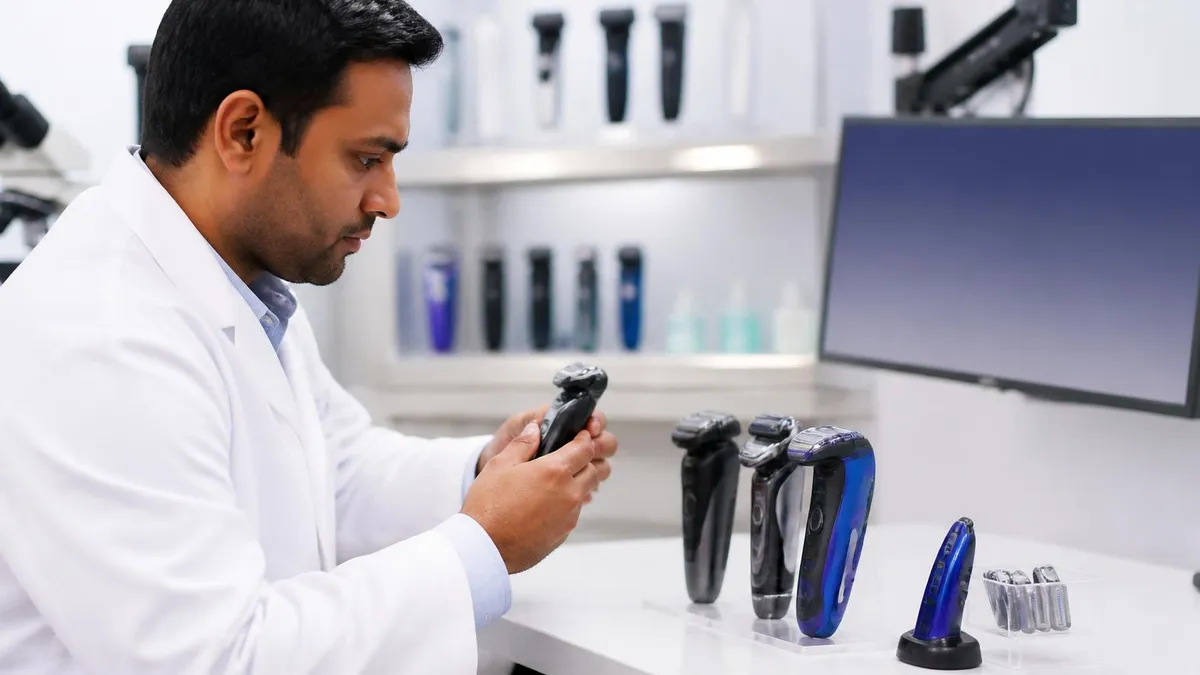
Braun covers electric shavers, hair clippers, and adjacent personal-care electric appliances. Braun is technically owned by P&G as a brand for grooming-adjacent electric products in many markets, while Braun-branded kitchen appliances are licensed to a separate company (De'Longhi). The brand division is unusual but reflects historical acquisitions and licensing arrangements that produced today's market structure where consumers see Braun branding across both grooming and small appliances despite the different ownership of those product lines.
The grooming category has faced significant disruption from direct-to-consumer competitors. Dollar Shave Club (acquired by Unilever in 2016) and Harry's demonstrated that subscription-based razor delivery could compete with traditional retail-distributed Gillette economics. P&G responded with several initiatives including Gillette on Demand subscription service, lower-priced product tiers, and expanded distribution partnerships with retailers like Amazon. The competitive pressure has compressed the historical pricing premium Gillette commanded relative to other razor brands across many markets.
Notable P&G brands by category
Hair: Pantene, Head & Shoulders, Herbal Essences, Aussie. Skin: Olay (mass), SK-II (prestige). Personal cleansing: Old Spice, Native, Secret, Venus deodorant. Pantene is global leader in shampoo by volume; Head & Shoulders leads global anti-dandruff. Olay is the world's largest skincare brand. SK-II competes in prestige Asian skincare with strong positioning in Japan, China, and Korea around its signature Pitera ingredient.
Health Care — Crest, Oral-B, Vicks
P&G's Health Care segment combines two related but distinct subcategories: oral care and over-the-counter health products. Crest and Oral-B together produce one of the strongest oral-care portfolios globally. Crest covers toothpaste, mouthwash, dental floss, whitening strips, and adjacent oral-hygiene products. Oral-B covers manual and electric toothbrushes, including the Genius and iO premium electric models that compete at the high end of the electric toothbrush market against Philips Sonicare and others.
The Crest 3D White line is particularly notable for the at-home whitening category — Crest essentially created the consumer whitening-strip market in the early 2000s and has maintained category leadership since. Oral-B's electric toothbrushes have benefited from clinical research demonstrating better plaque removal than manual brushing, and the brand has invested heavily in app-connected smart brushes that track brushing technique and provide feedback. Both brands hold roughly half the global market share in their respective subcategories alongside Colgate-Palmolive's competing portfolio.
Vicks is the leading OTC respiratory brand, particularly strong in cough drops, vapor rubs, and adjacent products. The brand has remarkably deep penetration in India and other emerging Asian markets, where Vicks VapoRub has near-universal household awareness as a treatment for colds and minor respiratory complaints. NyQuil and DayQuil serve the multi-symptom cold and flu relief market, particularly in North America. Pepto-Bismol is the leading upset-stomach brand in the US, and Metamucil leads the digestive-fiber supplement category.
Beyond these flagship brands, P&G's Health Care segment includes several smaller specialty health products. The segment competes with Johnson & Johnson, Bayer, GlaxoSmithKline (now Haleon for consumer health), Reckitt Benckiser, and many smaller specialty health-product companies. P&G's strategy in OTC health has emphasized maintaining strong category leaders rather than expanding into prescription pharmaceuticals or medical devices, which the company exited through divestitures decades ago to focus on consumer-packaged goods specifically.
Many consumers don't realize that competing brands on the same store shelf are often both owned by P&G. Tide and Gain are both P&G laundry detergents. Pampers and Luvs are both P&G diaper brands. Crest and Oral-B sit in the oral-care section together. The brand-portfolio approach lets P&G compete at multiple price points and target multiple consumer segments without diluting any single brand's positioning. Worth knowing for consumers comparing options or for investors evaluating market-share dynamics across categories where the same parent company holds multiple competing brands.
Fabric & Home Care — Tide, Downy, Cascade, Dawn, Mr. Clean
Fabric & Home Care is one of P&G's largest revenue segments, anchored by the laundry-care business. Tide is the largest individual P&G brand by revenue and the global leader in laundry detergent. The Tide brand spans liquid detergents, powders, pods (Tide Pods, introduced in 2012), specialty stain removers, and the Tide Cleaners franchise locations that serve dry cleaning under the brand. Tide's marketing investment is among the largest of any consumer brand globally, with iconic advertising and product extensions that have kept the brand relevant for decades.
Downy is the corresponding fabric softener brand, and Bounce covers dryer sheets. Gain sits as a slightly more value-positioned laundry brand alongside Tide, with strong fragrance-driven positioning that appeals to consumers who prioritize scent in their laundry products. Ariel is the European market leader in laundry detergent (P&G uses Ariel rather than Tide as its primary brand in many European markets, reflecting regional brand strategy and acquisition history).
In the dish-care subcategory, Cascade dominates dishwasher detergent with the leading market share in the US. Dawn is the leading dish soap, particularly known for the brand's frequent use in cleaning oil-soaked wildlife after environmental disasters — a partnership with the International Bird Rescue and other wildlife organizations that has generated substantial positive brand association alongside the product's mass-market grease-cutting positioning. Both brands compete with Procter rivals' alternatives plus private-label store brands across most retailers.
Home-cleaning brands include Mr. Clean (all-purpose cleaner with the iconic mascot character), Febreze (air freshener and odor-eliminating sprays for fabric and air), and Swiffer (mops, dusters, wet-jet floor cleaning systems). Each brand leads or strongly competes in its specific subcategory. The category competes against Clorox, S.C. Johnson, Reckitt Benckiser, and many private-label brands. Innovation has emphasized convenience formats (Tide Pods, Swiffer disposable cloths, Febreze Plug refills) that simplify consumer routines compared to traditional cleaning products.
P&G product portfolio — quick reference
- ✓Beauty: Pantene, Head & Shoulders, Olay, SK-II, Old Spice, Native, Secret.
- ✓Grooming: Gillette, Venus, Braun electric shavers and trimmers.
- ✓Health Care: Crest, Oral-B, Vicks, NyQuil, DayQuil, Pepto-Bismol, Metamucil.
- ✓Laundry: Tide, Downy, Gain, Ariel (Europe), Bounce dryer sheets.
- ✓Dish care: Cascade dishwasher detergent, Dawn dish soap.
- ✓Home cleaning: Mr. Clean, Febreze, Swiffer mops and dusters.
- ✓Baby: Pampers diapers, Luvs value diapers, baby wipes.
- ✓Feminine care: Always pads, Tampax tampons.
- ✓Family care: Bounty paper towels, Charmin bath tissue, Puffs facial tissue.
- ✓P&G Professional: commercial and institutional versions of consumer brands.
For consumers tracking the brands they buy, P&G's corporate website maintains a complete listing at us.pg.com/brands with product information, sustainability commitments, and category positioning. The corporate site is more comprehensive than third-party brand directories and reflects current brand status (some brands get added, others are divested over time). Bookmarking the corporate brand page is useful for research on the broader portfolio rather than just individual brand websites that focus on specific products without the corporate context.
Baby, Feminine, and Family Care
P&G's Baby Care segment is dominated by Pampers, the global leader in baby diapers by significant margin. Pampers spans premium diapers (Pampers Swaddlers, Pampers Cruisers), training pants (Pampers Easy Ups), specialty products for newborns and overnight wear, and the Pampers Pure line targeting parents who prefer products without certain ingredients. Luvs is the value-tier diaper brand at lower price points than Pampers, competing for budget-conscious parents who don't want to step down to private-label store brands but want better economics than the premium Pampers tier.
The baby-diaper category is essentially a duopoly between Pampers and Kimberly-Clark's Huggies, with private-label brands and smaller specialty diapers (Honest Company, The Honest Diaper Company, etc.) splitting the remaining market share. Innovation in the category has focused on absorbency improvements, fit refinements for active babies, eco-friendly variants, and digital integration through smart diapers that can detect wetness or other conditions. The category remains highly competitive globally with regional variations in brand preferences.
In Feminine Care, Always dominates the global sanitary pads market, and Tampax dominates the tampons market. Both brands hold leading positions across most major markets globally. Always's marketing has been notable for the long-running #LikeAGirl campaign that addressed gender bias in language about athletic performance, which won numerous advertising industry awards and significantly affected the brand's positioning among younger consumers. Tampax similarly has invested in destigmatizing menstruation through educational and marketing programs across many global markets.
Family Care covers Bounty paper towels, Charmin bath tissue, and Puffs facial tissue. Bounty competes with Brawny (Georgia-Pacific) and store brands. Charmin competes with Cottonelle (Kimberly-Clark) and Quilted Northern (Georgia-Pacific) along with private-label brands. Puffs competes with Kleenex (Kimberly-Clark) and store brands. The Family Care category is mature and price-sensitive, with innovation focused on incremental absorbency, softness, and packaging improvements rather than dramatic product reinvention.

P&G — quick numbers
P&G's organizational approach
P&G pioneered the modern brand-management organizational structure in the 1930s. Each major brand is run as its own profit-and-loss business with dedicated marketing, R&D, supply chain, and finance support. The model has been imitated by virtually every consumer-goods company since. P&G alumni regularly become CMOs and CEOs at other major companies, with the company's training programs widely regarded as among the best in consumer-goods management development.
P&G organizes globally around 10 product categories rather than geographic regions. Category leaders own global P&L for their category across all markets. Geographic operating units handle local execution. The structure produces global consistency in brand positioning while allowing regional adaptation in execution. Major P&G categories include Beauty, Grooming, Oral Care, Personal Health Care, Fabric Care, Home Care, Baby Care, Feminine Care, Family Care, and Professional.
P&G invests heavily in R&D — roughly $2 billion annually across the portfolio. Research happens at multiple global innovation centers including the Mason, Ohio campus and various international labs. The R&D function partners with universities, suppliers, and external research organizations through P&G Connect+Develop, the company's open-innovation program that sources external ideas alongside internal research initiatives.
P&G has committed to net-zero greenhouse gas emissions across operations and supply chain by 2040, plus packaging reduction targets, water-use reduction, and supplier sustainability requirements. Specific goals include 100% recyclable or reusable packaging by 2030 and 50% of plastic packaging containing recycled material by 2030. The commitments are tracked publicly in annual sustainability reports posted on the corporate website each year.
Working at P&G — the assessment test
For job seekers interested in P&G specifically, the company's hiring process is rigorous and competitive. Most professional roles begin with online assessments that candidates complete after submitting an application. The PEAK Performance Assessment is P&G's primary cognitive and behavioral test, combining general cognitive ability measures with personality questionnaires designed to predict success in P&G's consensus-building, brand-management culture. The assessment typically takes 35-50 minutes total and covers numerical reasoning, verbal reasoning, and behavioral preferences.
Following the cognitive assessment, P&G uses interactive simulations that present candidates with realistic workplace scenarios — handling a brand crisis, prioritizing competing demands, working with cross-functional partners — and ask them to choose responses or complete tasks. The simulations are scored algorithmically based on patterns that predict success in P&G's actual roles. The format is more sophisticated than traditional situational judgment tests and has been a distinguishing feature of P&G hiring for several years.
For brand management positions specifically, P&G also uses structured behavioral interviews focused on the company's competency framework: leadership, problem-solving, capacity for results, and cultural fit. The interviews are highly structured, with questions tied to specific competencies and answers evaluated against published criteria. Candidates who advance to interview rounds typically have multiple interview sessions with different P&G managers across two or more interview days, depending on the level of the role being filled.
P&G's compensation and career development are widely regarded as among the strongest in consumer goods. Brand management trainee programs (particularly the Brand Manager and Assistant Brand Manager rotations) provide structured exposure to multiple categories and functions over the first few years of the career. Compensation includes competitive base salary, performance bonus, and the company's strong stock-purchase program. Most P&G brand managers stay 5-15 years before moving to other companies (often as VPs of Marketing or CMOs at other consumer-goods firms or marketing-driven companies in adjacent categories).
P&G: Pros and Cons
- +P&G credential is recognized by employers and industry professionals
- +Higher earning potential compared to non-credentialed peers
- +Expanded career opportunities and professional advancement
- +Structured learning path builds comprehensive knowledge
- +Professional development that stays current with industry standards
- −Preparation requires significant time and study commitment
- −Associated costs for exams, materials, and renewal fees
- −Continuing education needed to maintain credentials
- −Competition for advanced positions can be challenging
- −Requirements and standards may vary by state or region
P&G Questions and Answers
About the Author

Educational Psychologist & Academic Test Preparation Expert
Columbia University Teachers CollegeDr. Lisa Patel holds a Doctorate in Education from Columbia University Teachers College and has spent 17 years researching standardized test design and academic assessment. She has developed preparation programs for SAT, ACT, GRE, LSAT, UCAT, and numerous professional licensing exams, helping students of all backgrounds achieve their target scores.
Join the Discussion
Connect with other students preparing for this exam. Share tips, ask questions, and get advice from people who have been there.
View discussion (8 replies)