
PCAT Study Guide: Best Prep Materials & Strategy 2026 September
💡 Pass your PCAT Study Guide: Best Prep Materials & exam on the first attempt. Practice questions with detailed answer explanations, hints, and instant
What the PCAT Tests and Why Preparation Matters
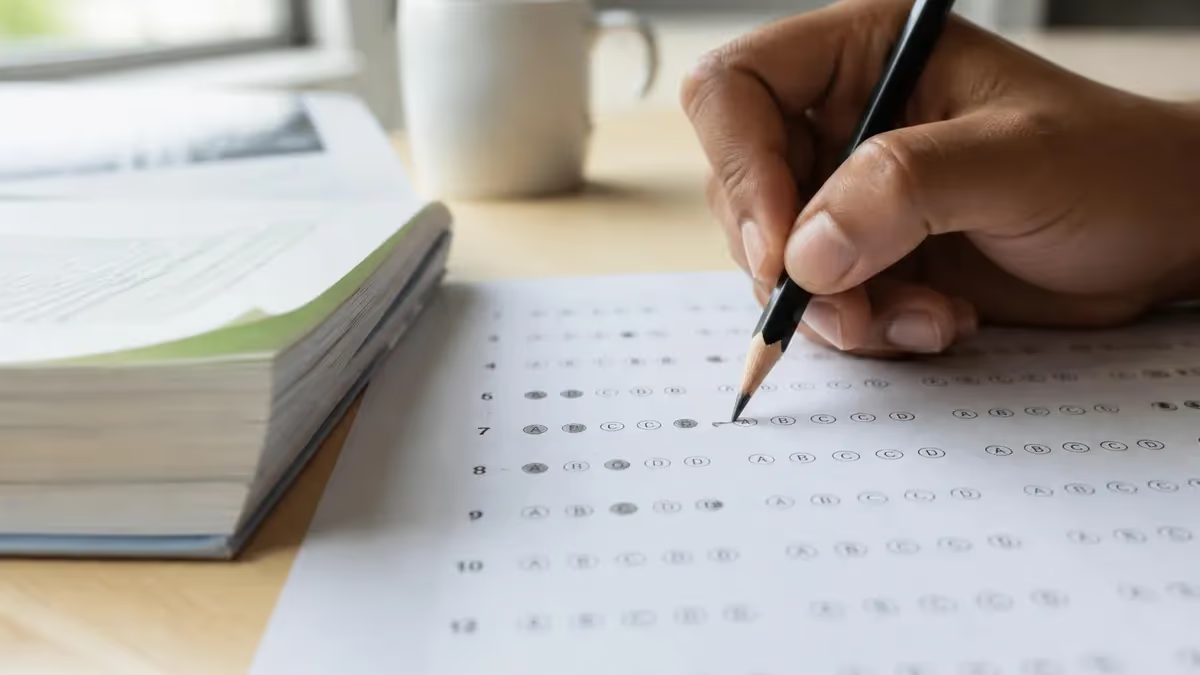
The Pharmacy College Admissions Test (PCAT) is a standardized exam used by pharmacy schools to evaluate applicants' academic readiness. It covers writing, biological processes, chemical processes, and critical reading — a blend of sciences and verbal reasoning that reflects the demands of pharmacy education.
PCAT scores are one of several factors in pharmacy school admissions, but they carry real weight — particularly the scaled composite score and the writing component. Schools use these scores to differentiate between applicants with similar GPAs and to confirm that you have the foundation to succeed in a rigorous professional curriculum.
The good news: the PCAT is a highly learnable test. With the right study materials and a disciplined approach, most students can meaningfully improve their scores. The key is knowing where to invest your preparation time and what resources actually match the exam's content and format.
PCAT Format: A Quick Overview
Understanding the test structure shapes how you study. The PCAT consists of four sections:
- Writing: One essay prompt (30 minutes). You'll be asked to write a problem-solving essay on a social, cultural, or political issue related to health or science.
- Biological Processes: 48 questions in 45 minutes. General biology, microbiology, anatomy, and physiology.
- Chemical Processes: 48 questions in 45 minutes. General chemistry, organic chemistry, and basic biochemistry.
- Critical Reading: 48 questions in 50 minutes. Passage-based reading comprehension on scientific topics.
The Quantitative Reasoning section was removed from the PCAT in recent updates — check the current Pearson VUE PCAT guidelines before building your study plan to confirm current format requirements.
Best PCAT Study Materials
The resources you use shape your preparation. Here's what actually works:
Kaplan PCAT Prep
Kaplan's PCAT prep materials are among the most established and comprehensive options. The Kaplan PCAT textbook covers all tested content areas with clear explanations and practice questions, and Kaplan's online platform adds full-length practice tests and video instruction. Kaplan's science content is solid — particularly for biology and general chemistry — and the practice tests are calibrated to a difficulty level that prepares you for the real exam without being artificially inflated or deflated.
One genuine strength: Kaplan's strategy guides teach you how to approach PCAT question types systematically, which matters as much as content knowledge when you're working through 48 questions under time pressure.
Princeton Review PCAT Prep
Princeton Review offers another well-regarded prep option, with content review, practice questions, and full-length tests. Princeton Review's materials tend to be somewhat more accessible in tone — easier to work through if you find dense textbook content difficult to absorb. The science coverage is slightly lighter than Kaplan's in some areas, but it's well-suited to students who need to rebuild foundational knowledge before drilling harder problems.
Official PCAT Practice Tests (Pearson)
Pearson — the test maker — provides official practice content through the PCAT website. These are your most valuable materials for format accuracy. Question wording, answer choice construction, and difficulty level are all calibrated to the real exam. Use official materials throughout your prep, and especially in the final two weeks before your test date when you want to simulate realistic conditions.
Examkrackers PCAT
Examkrackers materials are known for their high-yield approach — they focus on the concepts most likely to appear on the exam rather than trying to cover everything. If you're studying under time constraints, Examkrackers helps you prioritize efficiently. The biology and chemistry content is strong; some students use it alongside Kaplan for a more comprehensive coverage combination.
Supplementary Science Textbooks
For students with gaps in specific subject areas, standard textbooks (Campbell Biology, Chang's General Chemistry, Clayden's Organic Chemistry) can fill in content that prep books summarize. Don't use these as your primary study materials — they're too comprehensive for the PCAT's scope — but targeted chapter reviews can shore up significant knowledge gaps.
PCAT Biology: What to Focus On
The Biological Processes section covers more ground than most students expect. High-yield areas:
- Cell biology: Cell cycle, DNA replication and transcription, protein synthesis, organelle functions
- Genetics: Mendelian inheritance, gene expression regulation, mutations, biotechnology basics
- Microbiology: Bacterial cell structure, viral replication, immune response
- Anatomy and physiology: Major organ systems — nervous, endocrine, cardiovascular, respiratory, digestive, renal
The anatomy and physiology content is particularly relevant to pharmacy practice, so schools often test it more deeply than other biology topics. Spend extra time on how drugs interact with organ system physiology — it's a bridge between the test and the profession you're entering.
PCAT Chemistry: Strategies for Both Sections
The Chemical Processes section covers general chemistry and organic chemistry. Here's how to approach each:
General Chemistry
Equilibrium (acid-base, solubility product, Le Chatelier's principle), electrochemistry, thermodynamics, and stoichiometry are consistently high-yield. The PCAT tests conceptual understanding — you won't be doing complex multi-step calculations, but you need to understand why reactions proceed in particular directions and what happens when conditions change.
Practice interpreting graphs and data tables, since the PCAT often presents chemistry information visually. Being able to read a titration curve or an energy diagram quickly is a practical skill tested here.
Organic Chemistry
The PCAT tests functional group identification, reaction types, and spectroscopy basics. You don't need the depth of a full organic chemistry course — know the major reaction mechanisms (SN1/SN2, elimination, addition, aromatic substitution), functional group properties and reactivity, and how to interpret NMR and IR data at a basic level. Stereochemistry (R/S configuration, chirality) also appears.
Many PCAT preppers neglect organic chemistry in favor of general chemistry, then get caught off guard by OC questions on the real test. Budget meaningful time here even if it's not your strongest subject.
PCAT Critical Reading: Getting Efficient
The Critical Reading section intimidates some students, but it rewards systematic strategy more than raw reading speed.
Read the passage strategically — don't read every sentence at full attention. Skim to understand structure (what's the main point? what does each paragraph do?), then read carefully only the sections relevant to the questions. Many PCAT reading questions are directly reference-able to specific passage lines — if you can locate the relevant section efficiently, you can answer the question without relying on imperfect memory.
Question types include: main idea/purpose, inference, strengthen/weaken arguments, vocabulary in context, and detail retrieval. Practice each type separately until you recognize them instantly — different question types call for different approaches.
PCAT Writing: What Schools Actually Look For
The writing section produces a score from 1.0 to 6.0 (in 0.5 increments). Most competitive applicants aim for 4.0 or above. Schools want to see:
- A clear thesis responding to the prompt
- Organized paragraphs with specific supporting evidence
- Logical argumentation — not just listing points, but connecting them
- Correct grammar, sentence variety, and vocabulary
Practice writing full essays in 30 minutes before your test date. Time pressure matters — the essay response quality drops considerably if you're not practiced at working within the constraint. Know your essay structure before you sit down: brief intro with clear thesis, 2–3 body paragraphs, brief conclusion. Don't deviate from this under exam pressure.
Building Your PCAT Study Timeline
A 10–14 week timeline works well for most students:
Weeks 1–5: Content review. Biology and chemistry foundations first, then organic chemistry and physiology. Identify your weakest areas in week 1 with a diagnostic test.
Weeks 4–8: Practice questions by section. Aim for 50–100 practice questions per study session, reviewing every incorrect answer in detail.
Weeks 7–12: Full-length practice tests, one per week. Track your scores over time and diagnose persistent problem areas.
Final 2 weeks: Focus review on remaining weak spots. Take 2 additional full-length tests under real conditions. Light review only in the final 2–3 days — your brain needs rest, not new information, right before the exam.
Most students who use this framework and study 2–3 hours daily improve their composite scores meaningfully. If you're starting from a strong foundation, the timeline can compress; if you have significant content gaps, it may need to extend.
Putting It Together
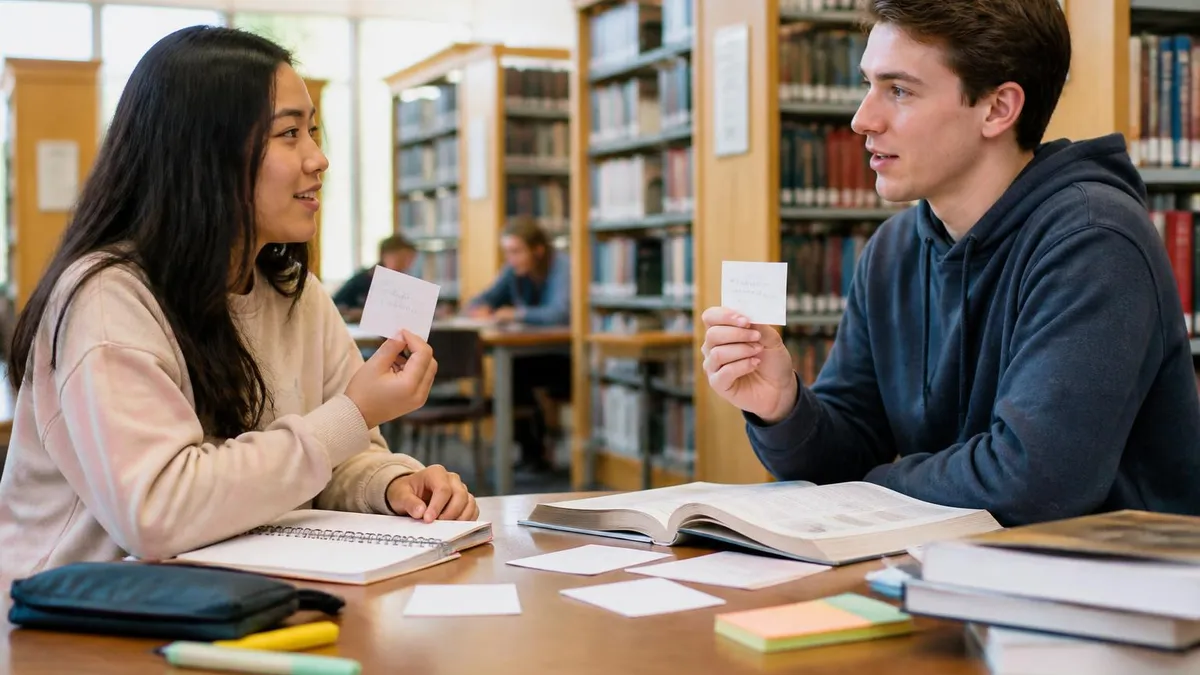
A PCAT study guide works only if your actual study habits support it. The single biggest predictor of PCAT improvement isn't which book you buy — it's whether you do active practice (solving questions, reviewing errors) versus passive review (re-reading notes and content). Active practice is substantially more effective, especially in the weeks leading up to your test date.
Start with a diagnostic to find your baseline, build a content foundation in your weakest areas, then shift to heavy practice-test mode. Stay consistent, review every error seriously, and come to test day having simulated the real exam at least five times. That's how you walk in with confidence rather than anxiety.
About the Author

Registered Nurse & Healthcare Educator
Johns Hopkins University School of NursingDr. Sarah Mitchell is a board-certified registered nurse with over 15 years of clinical and academic experience. She completed her PhD in Nursing Science at Johns Hopkins University and has taught NCLEX preparation and clinical skills courses for nursing students across the United States. Her research focuses on evidence-based exam preparation strategies for healthcare certification candidates.
Join the Discussion
Connect with other students preparing for this exam. Share tips, ask questions, and get advice from people who have been there.
View discussion (9 replies)