
Renewing Your PALS Card: Online and AHA Recertification Guide 2026 October
PALS recertification in 2026 October: 🟢 AHA HeartCode, classroom renewal, online provider costs, 2-year cycle, Spanish options and what counts for hospital
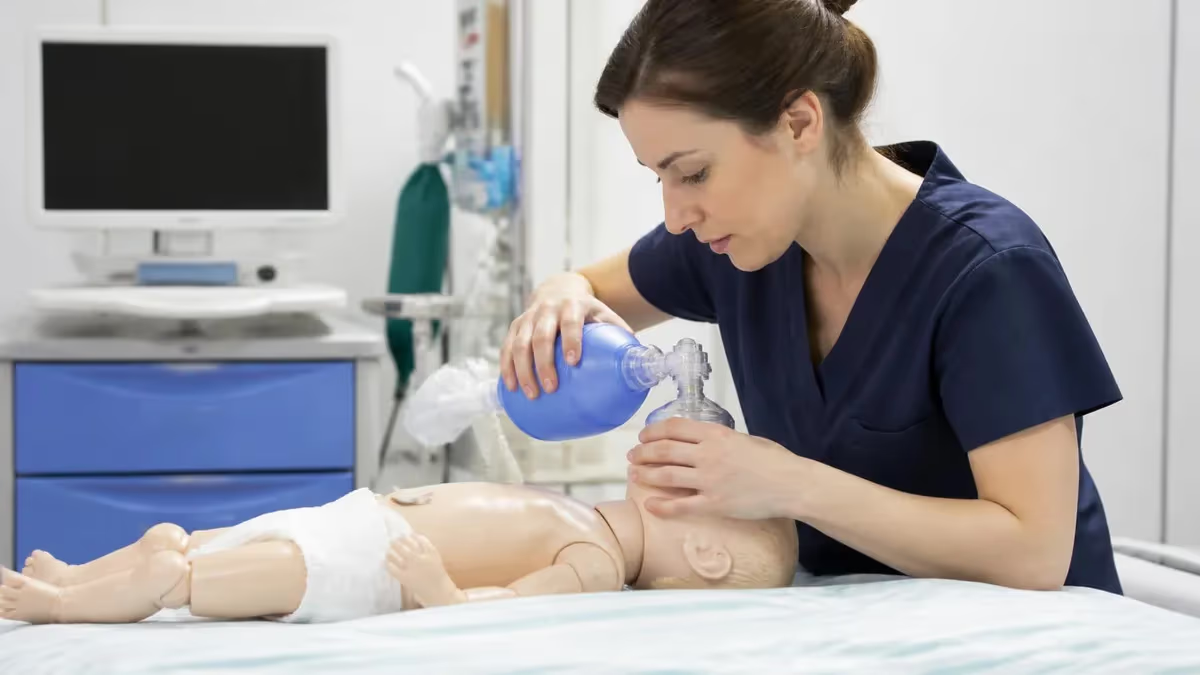
Renewing Your PALS Card: What "Recertification" Actually Means in 2026
Your PALS card has an expiration date stamped on it. Two years from the day you finished the original course. That date is not a polite suggestion. Hospitals, ambulance services, urgent-care clinics, and credentialing boards run automated reports against expired cards every month, and the moment yours rolls over, you can be pulled from the schedule until you walk back in with a fresh one. So PALS recertification is less a continuing-education exercise and more an employment formality you cannot skip.
The American Heart Association sets the rules. PALS cards (and BLS, ACLS, every AHA discipline) are valid for exactly two years from the issue date. The renewal pathway has three flavours: the traditional classroom Renewal Course (shorter than the initial course, roughly four to six hours in person), HeartCode PALS (the online didactic portion plus an in-person skills check with an instructor), and a small set of independent providers who issue non-AHA cards your employer may or may not accept.
Each route lands you with a new card and a new two-year clock. Each route also has a different price, different time commitment, and different acceptance footprint.
This guide walks through all three, the costs people actually pay in 2026, the Spanish and bilingual options that exist, what hospital credentialing offices will and will not accept, and the practical question almost every renewing provider asks: can I do the whole thing online, or do I have to show up somewhere with a manikin? Short answer: you can do the cognitive part online, but you cannot bypass a hands-on skills check if you want an AHA card. Long answer fills the rest of this article.
PALS Recertification by the Numbers
Key Facts at a Glance
| Item | Value | Details |
|---|---|---|
| AHA PALS card validity from the issue date | 2 years | |
| In-person Renewal Course total class time | 4 to 6 hrs | |
| 2026 price range across all PALS recert pathways | $130 to $265 |
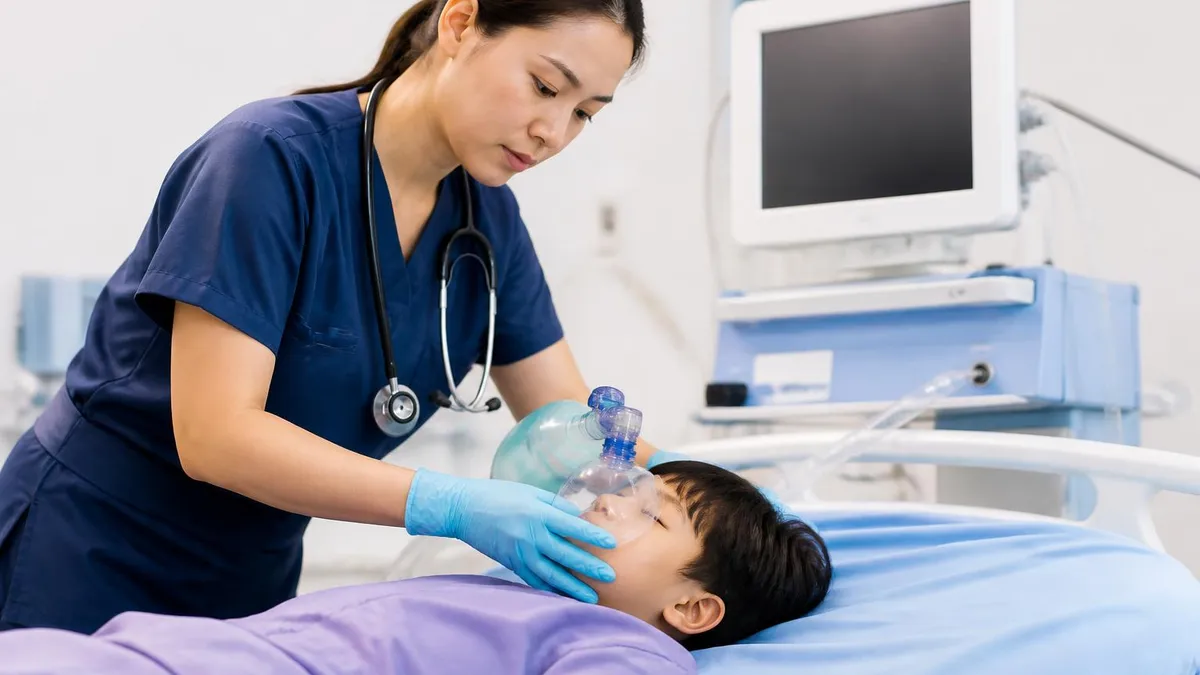
Why PALS Cards Expire Every Two Years (And Why That Is Not Going to Change)
The two-year cycle is not arbitrary. It traces back to studies the AHA commissioned in the mid-1990s that found resuscitation skills, particularly chest compression quality, airway management, and rhythm interpretation, decay measurably within six to twelve months of the original course. By twenty-four months, performance on standardised manikin scenarios drops to baseline (the level of someone who never took the course) for a significant fraction of providers.
That decay curve is steeper for skills you do not use daily. A paediatric ICU nurse who runs codes every week keeps her PALS muscle memory fresh. A school nurse who has never run one is, on average, about as competent twenty-four months later as someone who walked in cold.
So the AHA picked two years as a compromise: long enough that providers do not resent constant retraining, short enough that the worst skill decay has not happened yet. The same two-year cycle applies to BLS, ACLS, NRP, and PEARS. There is also gentle pressure inside the AHA committees to move toward shorter intervals with shorter top-up sessions ("microlearning"), but the formal rule in 2026 remains two years.
What does the expiration look like on the card? Bottom of the eCard, in the issue-date field. Add exactly two years to that date and you have your renewal deadline. Some employers grant a grace period of thirty days. Others, particularly large hospital systems running automated credentialing software, do not. If your card expires Tuesday, expect to be pulled from clinical assignment Wednesday.
One subtle thing: if you take the full Initial PALS course again instead of the Renewal Course, that also works and resets the clock for two years. It is just slower (twelve to fourteen hours instead of four to six) and more expensive. Most providers go the renewal route unless their card lapsed by more than thirty days, after which many training centres require the full initial course as a matter of policy.
Quick Answer: PALS Recertification in One Paragraph
The AHA PALS card is valid for two years from the issue date. To renew, you have three pathways: the classroom Renewal Course (four to six hours in person, $200 to $260), HeartCode PALS (six to eight hours online cognitive plus a ninety-minute in-person skills check, $225 to $265), or a fully online non-AHA provider such as ACLS Medical Training or Pacific Medical Training ($130 to $180, acceptance varies by employer).
Fully online cards are not AHA cards. Confirm with your employer's credentialing office before paying. Spanish-language renewal (recertificación PALS) is available through AHA Training Centres and several independent providers. Use cpr.heart.org to find AHA classes near you.
The Classroom Renewal Course: AHA's Traditional Path
The shortest path to a new PALS card is the in-person PALS Renewal Course. It runs four to six hours total, depending on instructor pace and class size. The format compresses the initial course's twelve-to-fourteen-hour content into a refresher built around scenario stations: respiratory emergencies, shock, cardiac arrest, post-arrest care.
You rotate through stations in small groups, run scenarios on a manikin with an instructor watching, and take a written test at the end. Pass the megacode (the comprehensive scenario at the end) and the written exam (usually 33 questions, 84 percent pass mark) and you walk out with a renewal card the same day or by email within seventy-two hours.
What you bring: the current PALS Provider Manual (you usually need a copy with an unexpired publication date, currently the 2020 Guidelines edition through most of 2026), a photo ID, and your existing PALS card showing you are renewing rather than taking the initial course. What you do not need to do at home: the precourse self-assessment is encouraged but not strictly required for renewal candidates in most training centres.
The classroom renewal is generally considered the most defensible option for hospital credentialing. There is zero ambiguity about whether the provider physically performed CPR and managed the airway. An instructor signed off in real time. Hospitals that have had problems with online certification fraud (and there have been a handful of well-publicised cases) tend to prefer this route for new hires.
The downside is logistics. Classes run at specific times, often on weekends. You drive there. You commit half a day to it. For most working clinicians the time cost matters more than the price tag, which sits between $200 and $260 at a typical AHA Training Centre in 2026, before any institutional discount.
Four PALS Recertification Pathways Compared
Four to six hours in person at an AHA Training Centre. Megacode plus written exam. Most defensible for hospital credentialing. Cost typically $200 to $260 in 2026.
Hybrid: six to eight hours online cognitive at your own pace, then a ninety-minute in-person skills check on a feedback manikin. Full AHA acceptance. About $225 to $265 total.
Independent providers (ACLS Medical Training, Pacific Medical Training, ProMed). $130 to $180 with same-day digital cards. Acceptance varies by employer, confirm first.
Twelve to fourteen hours. Required if your card has lapsed beyond the renewal window (usually more than thirty to ninety days past expiration). Same two-year cycle on renewal.
HeartCode PALS: The Hybrid Online-Plus-Skills Pathway
HeartCode PALS is the AHA's official blended-learning option and it is the format most providers reach for in 2026. The cognitive portion runs entirely online: roughly six to eight hours of interactive modules and adaptive scenarios you can do in pyjamas at your kitchen table, spread across as many sittings as you like. You complete the online portion (saving the certificate of completion as a PDF) and then book a short in-person skills session with an authorised instructor or with the AHA's RQI-style simulation cart at a hospital.
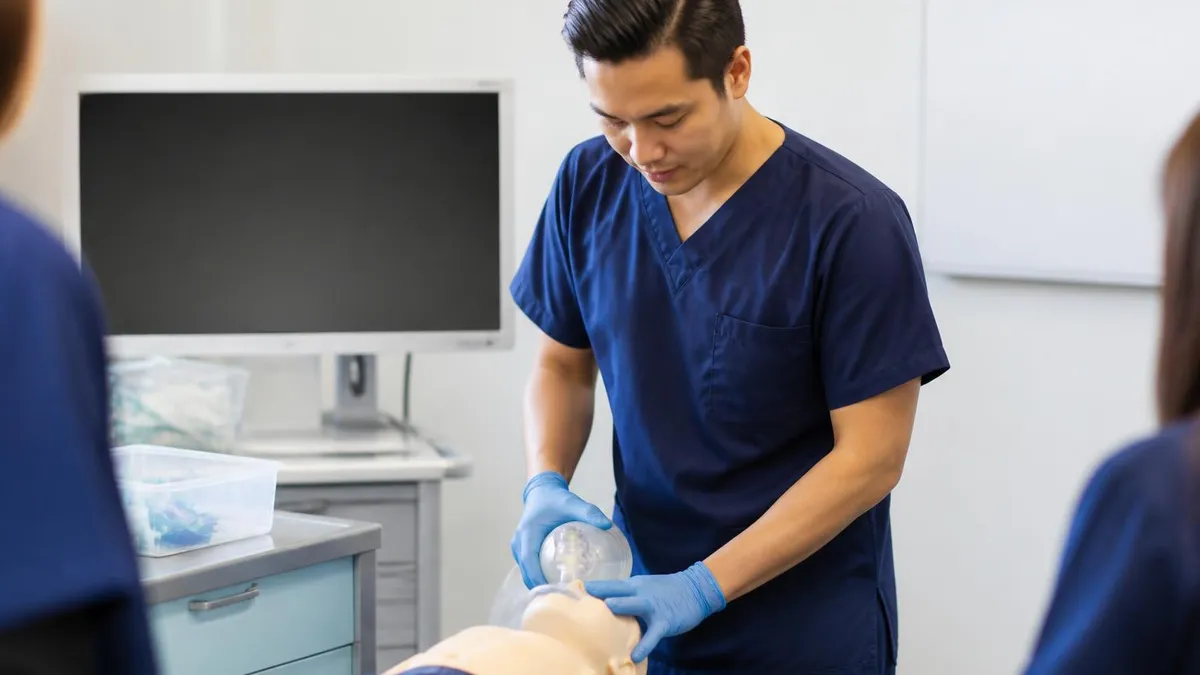
The skills session is the part people sometimes forget exists. You cannot earn the card from the online portion alone. The instructor watches you perform high-quality CPR on a feedback manikin, demonstrate airway management with a bag-valve-mask, defibrillate a manikin in arrest, and run through one or two megacode-style scenarios. It usually takes ninety minutes to two hours. Once the instructor signs the skills check, the AHA issues the eCard.
Cost in 2026: about $145 for the online portion through the AHA's eLearning store, plus $80 to $120 for the in-person skills check at most training centres. Total typically $225 to $265. That is roughly the same as the classroom renewal, but the time-flexibility of doing the cognitive portion at home (and being able to pause and resume) is what sells most working clinicians on this path.
One important point: the skills check expires sixty days after the online cognitive portion. If you finish the online modules and let the deadline slip without scheduling the skills check, you have to redo the online portion. Set a calendar reminder the day you start.
PALS Recertification Pathways: When to Pick Each One
Most acute-care hospital systems require AHA certification specifically. HeartCode PALS or the classroom Renewal Course are the two safe choices. Many large hospitals run internal AHA Training Centres for staff at reduced or zero cost, so check with your unit educator before paying out of pocket. Schedule the skills check within sixty days of finishing the online portion.
Fully Online PALS Recertification: Does It Exist, and Will Your Employer Accept It?
Search "online PALS recert" and you will find a dozen providers offering fully online recertification with no in-person component at all. ACLS Medical Training, Pacific Medical Training, ProMed Certifications, and others issue digital cards immediately after you pass an online multiple-choice exam, typically priced between $130 and $180. The interface is fast, the testing is straightforward, and the card arrives in your inbox the same day.
The catch is acceptance. These providers issue their own cards. They are not AHA. They are not American Red Cross. They are independent certification bodies, and whether your employer accepts them depends entirely on your employer's credentialing policy. Some smaller urgent-care clinics, school districts, dental offices, and outpatient practices accept any reputable provider. Most hospitals, large EMS agencies, and federally credentialed facilities require AHA or American Red Cross specifically. A few states (notably California, New York, and Texas hospital systems) bake the requirement into their bylaws.
Before you pay for a fully online course, call your employer's credentialing or HR office and ask directly: "Do you accept PALS cards from non-AHA providers, or do I need to go through an AHA Training Centre?" Get the answer in writing if you can. Saving fifty dollars on the course is no help if it means redoing the whole thing through an AHA centre two weeks later. This is the single most common rookie mistake in recertification.
That said, for clinicians whose employers do accept independent providers, fully online courses can be done in two to three hours of focused study and one short timed exam. They are the cheapest and fastest option by a wide margin. If your credentialing office signs off, take the win.
Independent online PALS providers issue their own cards. They are not AHA. They are not American Red Cross. Most large hospitals, federal facilities, and state EMS agencies require AHA or American Red Cross specifically and will reject independent cards at credentialing.
Before paying for a fully online course, call your employer's credentialing or HR office and confirm acceptance in writing. Saving fifty dollars on the course is no help if it means redoing the certification through an AHA centre two weeks later. This is the single most common rookie mistake in online PALS recert.
What HeartCode PALS Actually Covers (And What You Need to Demonstrate)
HeartCode's cognitive portion mirrors the initial PALS course. You will work through scenarios on respiratory failure, hypovolemic shock, distributive shock, cardiogenic shock, bradycardia with a pulse, tachycardia with a pulse, pulseless arrest, and post-resuscitation care. Each scenario plays out as an interactive simulation: you make decisions about oxygen, fluids, drugs, defibrillation, and the system grades you on whether the patient survives.
The drugs you need cold: epinephrine 0.01 mg/kg IV/IO for cardiac arrest (1:10,000 dilution), amiodarone 5 mg/kg for shock-refractory VF/pulseless VT, atropine 0.02 mg/kg for symptomatic bradycardia (minimum 0.1 mg, maximum 0.5 mg per dose), adenosine 0.1 mg/kg first dose then 0.2 mg/kg for supraventricular tachycardia, and crystalloid bolus 20 mL/kg for shock. These are the numbers HeartCode tests and the numbers the skills station instructor will quietly check that you remember.
The skills demonstration at the in-person session covers high-quality paediatric BLS (compressions at 100 to 120 per minute, depth one-third of chest AP diameter, full recoil, minimal interruptions), bag-mask ventilation with proper seal, defibrillation with energy at 2 J/kg first shock then 4 J/kg subsequent, and integration of all of it under a megacode scenario. The instructor uses a feedback manikin to verify compression depth and rate, so technique gets graded objectively rather than by eyeball.
The pass mark on the online cognitive portion is roughly 84 percent across the scenarios. If you fail a scenario, the system lets you remediate and retry. There is no fixed maximum number of retries, but providers who fail repeatedly are usually directed to the full initial course rather than the renewal. Most candidates pass on first attempt if they have used PALS algorithms in the previous twelve to eighteen months.
PALS Recertification Checklist
- ✓Check the expiration date on your current PALS card. AHA cards are valid for exactly two years from the issue date stamped on the bottom of the eCard.
- ✓Confirm in writing with your employer's credentialing office whether they accept non-AHA cards. Hospitals almost always require AHA or American Red Cross specifically.
- ✓Pick the pathway: classroom Renewal (in person, four to six hours), HeartCode PALS hybrid (online plus skills check), or fully online from an independent provider if accepted.
- ✓Refresh the core drug doses the week before the class: epinephrine 0.01 mg/kg, amiodarone 5 mg/kg, atropine 0.02 mg/kg (min 0.1, max 0.5), adenosine 0.1 then 0.2 mg/kg, fluids 20 mL/kg.
- ✓For HeartCode, schedule the in-person skills check within sixty days of completing the online cognitive portion or the cognitive portion expires and must be repeated.
- ✓Bring the current Provider Manual, a photo ID, and the existing PALS card to the in-person session. Some training centres require the manual; others issue digital access.
- ✓Pass the megacode and written exam (typically 33 questions, 84 percent pass mark). A failed first attempt usually triggers remediation rather than course failure.
- ✓Save the new eCard PDF immediately. Upload it to your hospital credentialing portal and your personal credentialing folder. Set a calendar reminder for twenty months from the new issue date.
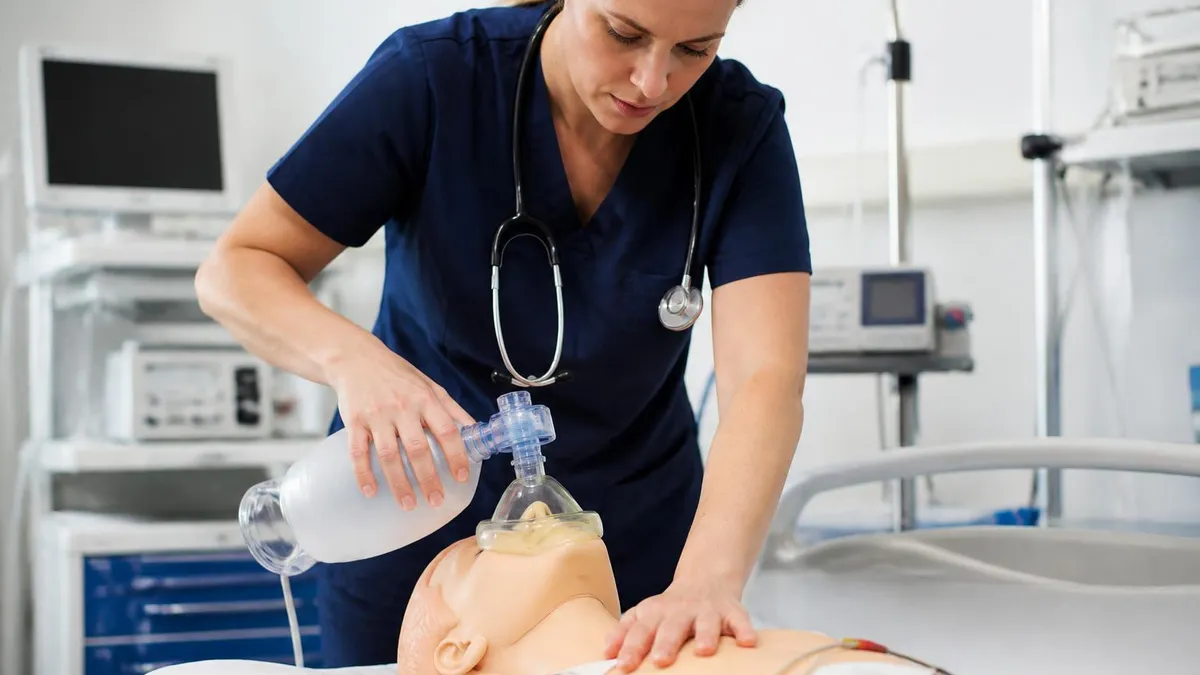
Spanish and Bilingual PALS Recertification Options
Demand for recertificación PALS in Spanish is significant in the US Southwest, Florida, and Puerto Rico, and the AHA has responded with formal Spanish-language materials and instruction. The PALS Provider Manual is available in Spanish through the AHA shop (look for the title Soporte Vital Avanzado Pediátrico). Many AHA Training Centres in California, Texas, Florida, and New York offer the full recertificación de PALS in Spanish, taught by bilingual instructors, with Spanish-language scenario stations and a Spanish-language written exam.
HeartCode PALS itself has a Spanish-language version of the online portion, available from the same eLearning store at the same price. The in-person skills check can be done with any AHA-certified instructor, bilingual or not, though instructors are encouraged to support testing in the candidate's preferred language. The eCard issued is valid identically to the English version. Hospitals accept it without distinction.
Outside the AHA universe, several independent providers also offer fully online PALS recertification in Spanish, with the same employer-acceptance caveat that applies to any non-AHA card. Pacific Medical Training and ProMed Certifications both have Spanish interfaces. Call your credentialing office first to confirm acceptance.
The biggest practical advantage of Spanish-language training is not just comprehension but cultural fluency in the scenarios. The drug doses are identical, but the framing of family interactions in scenarios, the role of language during emergent communication with parents, and the cadence of team-leader callouts all shift in ways that feel more natural to native Spanish speakers. Providers consistently report higher confidence after Spanish-language renewal compared to working in their second language under simulated stress.
Best Online PALS Recertification Options Compared
If you have permission from your employer to go the non-AHA route, or you are renewing for a setting that accepts independent providers, the field has consolidated around a handful of names. ACLS Medical Training has been around since 2010 and is widely accepted by smaller clinics and outpatient practices. Their PALS recert runs about $130 to $150 and includes a downloadable card immediately on passing.
Pacific Medical Training, slightly newer, offers similar pricing and a money-back acceptance guarantee (they refund if your employer rejects the card). ProMed Certifications and the National Health Care Provider Solutions group occupy a similar niche, with prices in the $150 to $180 range and 24-hour customer service for renewal questions.
What to look for when evaluating any online provider: an accredited continuing education partner (look for ACCME or ANCC accreditation), a clear refund policy if your employer rejects the card, a current edition aligned to the 2020 AHA Guidelines (which run through 2025-2026 before the next quinquennial update), and a real customer service phone number rather than just an email contact form.
What to avoid: providers that claim to issue "AHA-equivalent" cards (they are not AHA), providers with no physical address, providers that promise certification in under one hour (the cognitive material genuinely takes longer than that), and providers selling at extreme discount (significantly under $100) which usually indicates either fraudulent operation or skipped continuing-education hours.
The best practical workflow: confirm employer acceptance, pick a reputable provider, complete the cognitive material across a weekend, take the timed exam, and store both the digital card and your provider's accreditation documentation in your professional credentialing folder. If a credentialing officer ever questions the card, you have the paper trail.
Classroom Renewal vs HeartCode PALS
- +All instruction and skills practice happen in a single sitting
- +Highest acceptance by hospital credentialing offices anywhere
- +Instructor sees full picture of your skills in real time
- +No risk of the cognitive portion expiring before skills check
- +Easier for those who learn best in a hands-on group setting
- −Cognitive material at your own pace from home, in pyjamas if you like
- −Pause and resume the online portion across multiple sittings
- −Skills check only ninety minutes instead of full four to six hours in class
- −Same AHA card and same two-year validity as the classroom route
- −Online portion uses adaptive scenarios that target your weak areas
Course Finder: How to Locate a Local PALS Renewal Class
The AHA's official course finder lives at cpr.heart.org (formerly ECC.heart.org, which still redirects). Plug in your ZIP code and a search radius, filter for PALS Renewal or HeartCode PALS, and the system shows you nearby Training Centres with upcoming class dates and direct booking links. Most large hospitals run internal AHA Training Centres for their own staff at little or no out-of-pocket cost. Free-standing Training Centres serve everyone else.
Some practical tips when picking a class. Look at the instructor-to-student ratio: classes capped at six to eight students get genuinely hands-on skills practice, classes of fifteen or twenty become more lecture-heavy with brief station rotations. Read the class description for the location of the skills check (some courses do the cognitive portion at one venue and the skills check at another). Confirm the price includes the eCard issuance fee, not just the instruction time. Ask about the parking situation if you are driving across a major metropolitan area on a Saturday morning.
If your local options are limited, regional weekend "PALS recert marathons" exist in most major metros. These run all-day Saturday or Sunday sessions handling fifty to one hundred providers in batches. They are useful when you need a card fast and your home town has no upcoming classes. Quality varies. Read reviews on the training centre's Google page before booking.
Finally, plan ahead. The two weeks before a card expiration date are always the most booked at every training centre in the country. If you wait, you may not find a slot. Book the moment you cross the twenty-month mark from your previous certification and you will have your pick of dates.
What Happens If Your PALS Card Has Already Expired
Cards that have lapsed by less than thirty days are generally accepted for the Renewal Course at most training centres, though some accept up to ninety days. Past ninety days, you will be directed to the full Initial PALS course (twelve to fourteen hours instead of four to six). The same rule applies for HeartCode PALS: the renewal version expects a current or recently expired card. Past the grace window, the system pushes you to the longer initial pathway.
If you let the card lapse for more than six months or a year, you have several options. The full Initial PALS course is the fastest path back to AHA certification, though it requires the precourse self-assessment, the full Provider Manual reading, and the longer hands-on session. Some hospitals and employers will accept a prolonged-lapse renewal at the discretion of the credentialing committee. Others will treat you as an entirely new candidate and run you through the standard onboarding refresher.
One quiet truth: most clinicians whose cards have lapsed for a year or more have also been away from active paediatric resuscitation practice for that period, and the Initial course is genuinely the right level of refresher rather than a punishment. Working through the precourse self-assessment usually reveals which algorithms have decayed most. Treat it as the diagnostic it is meant to be.
If you are returning from extended leave (parental, military, sabbatical, recovery), discuss your situation with the training centre director before booking. Some training centres have shorter "re-entry" classes tailored to clinicians returning to practice after a long absence. These are not standard, but they exist regionally and can save you significant time compared to the full Initial course.
Bottom Line on PALS Recertification in 2026
Your AHA PALS card is good for exactly two years. The renewal options sit on a spectrum: full classroom (four to six hours, $200 to $260, highest credentialing acceptance), HeartCode PALS hybrid (six to eight hours online plus a ninety-minute skills check, $225 to $265, full AHA acceptance), and fully online from independent providers (two to three hours total, $130 to $180, acceptance varies by employer). Pick based on what your credentialing office allows and what fits your schedule.
Practical advice for 2026: confirm employer acceptance in writing before paying for a non-AHA course, book the renewal class six to eight weeks before your expiration date, refresh the core drug doses (epinephrine, amiodarone, atropine, adenosine) the week before the class regardless of which path you choose, and use the AHA course finder at cpr.heart.org for AHA-aligned options.
Spanish-language renewal is fully supported by the AHA and by several independent providers. The two-year cycle is here to stay because the underlying skill-decay research has not changed. Build it into your career calendar like a recurring birthday and you will never be pulled from the schedule for an expired card.
PALS Questions and Answers
About the Author

Registered Nurse & Healthcare Educator
Johns Hopkins University School of NursingDr. Sarah Mitchell is a board-certified registered nurse with over 15 years of clinical and academic experience. She completed her PhD in Nursing Science at Johns Hopkins University and has taught NCLEX preparation and clinical skills courses for nursing students across the United States. Her research focuses on evidence-based exam preparation strategies for healthcare certification candidates.
Join the Discussion
Connect with other students preparing for this exam. Share tips, ask questions, and get advice from people who have been there.
View discussion (8 replies)