
OSSLT Prep: Complete Guide to the Ontario Secondary School Literacy Test
Master the OSSLT literacy test with practice tests, study strategies, and expert tips. 🎯 Boost your score and pass the Ontario Secondary School Literacy Test.

If you are looking to ace your osslt on the first attempt, you have landed in the right place. OSSLT prep is not something you should leave to the last minute — this test is a graduation requirement for Ontario high school students, and understanding how it works gives you a significant edge. Whether you are preparing for a scheduled sitting or retaking after a previous attempt, a structured approach to practice will make all the difference in your final result.
The Ontario Secondary School Literacy Test is typically administered to Grade 10 students across Ontario. It assesses reading and writing skills that you are expected to have developed by the end of Grade 9. The test covers two broad areas: reading, where you interpret and analyze a range of texts, and writing, where you produce two written pieces — a news report and a series paragraph. Understanding the structure from the beginning of your prep journey means you can allocate your study time efficiently rather than guessing what to focus on.
Many students who struggle with the OSSLT do so not because they lack literacy skills, but because they are unfamiliar with the test's specific format and expectations. The questions are written in particular ways, the graphic texts have their own conventions, and the writing tasks have scoring criteria that reward clarity, organization, and supporting detail. Learning these expectations in advance — rather than discovering them during the real test — is the single biggest advantage you can give yourself.
A strong OSSLT prep plan includes timed practice tests, targeted review of weak areas, and close study of what the markers are looking for. The good news is that the material on this test is not beyond what most Grade 10 students already know. The challenge is applying that knowledge under timed conditions using the specific formats the test demands. That is exactly why practice tests are so valuable: they train your brain to retrieve and apply skills under realistic conditions.
Students who regularly practice with authentic OSSLT-style questions report feeling significantly more confident on test day. Confidence itself matters — anxiety and unfamiliarity are two of the most common reasons students underperform on standardized tests. When you have already seen dozens of graphic texts and written multiple news reports under timed conditions, the real test feels like a familiar exercise rather than an unknown ordeal.
Throughout this guide, you will find everything you need for effective OSSLT prep: an overview of the test format, practice quiz tiles, reading and writing strategies, a checklist to track your readiness, and answers to the most frequently asked questions. Whether you are just starting your preparation or polishing your skills in the final weeks before test day, this guide will help you walk in ready to succeed on the Ontario Secondary School Literacy Test.
OSSLT Ontario by the Numbers

OSSLT Exam Format Overview
| Section | Questions | Time | Weight | Notes |
|---|---|---|---|---|
| Booklet 1 — Reading | 20 | 75 min | 50% | Multiple-choice and short-answer reading questions on varied texts |
| Booklet 2 — Reading & Writing | 16 | 75 min | 50% | Includes graphic text questions plus two written tasks |
| Writing Task 1 | 1 | Included above | Scored on 4-point rubric | Series of paragraphs on a topic |
| Writing Task 2 | 1 | Included above | Scored on 4-point rubric | News report from provided information |
| Total | 36 | Approximately 3 hours | 100% |
Effective OSSLT prep begins with understanding what the test actually measures. The Ontario Secondary School Literacy Test does not test subject-specific knowledge like history facts or math formulas. Instead, it measures your ability to read and understand a variety of texts — including informational articles, narratives, dialogues, and graphic texts like charts, posters, and infographics — and to communicate ideas clearly in writing. This means your study time should be focused on literacy skills, not content memorization.
The first step in any solid study plan is to take a full-length practice test under realistic conditions. Sit at a desk, set a timer, and work through the entire test without stopping. This baseline attempt tells you exactly where you stand. Are you finishing the reading sections with time to spare, or are you rushing through the last few questions? Are your written responses well-organized, or do they tend to ramble? Your performance on that first practice test is your personal roadmap for the weeks ahead.
Once you know your weak areas, you can target them with focused practice. If graphic texts are challenging for you, spend extra time studying how to read visual information — look for titles, legends, data points, and the relationship between image and caption. If the writing tasks feel unclear, study the scoring rubric carefully and practice writing short responses that hit each criterion deliberately. The EQAO (Education Quality and Accountability Office) publishes sample tests and rubrics online that are invaluable for this purpose.
Time management during your prep period is just as important as time management during the test itself. Many students make the mistake of passive studying — rereading notes or looking over old tests without actively engaging with the material. Active practice means writing out full answers, comparing your responses to the scoring rubric, and identifying specifically what you did or did not do. This kind of deliberate practice accelerates improvement far faster than passive review.
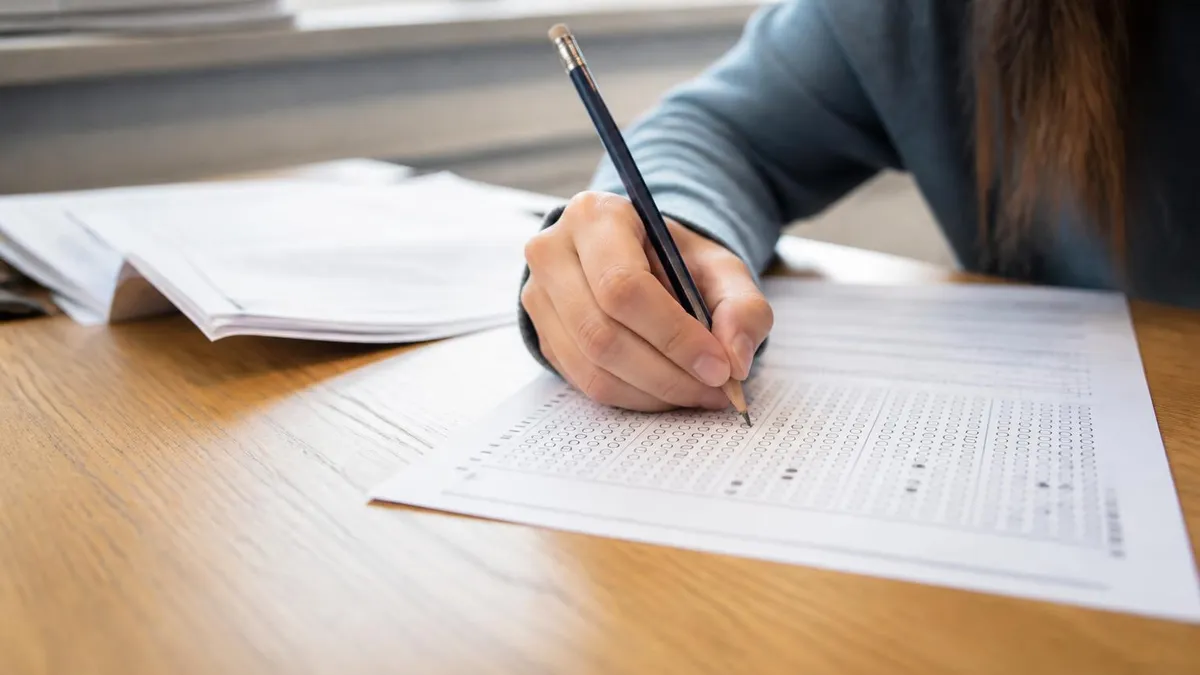
For students using osslt ontario printable materials, working on paper is a great way to simulate the actual test experience. The real OSSLT is administered in paper booklet format, so practicing on a screen is not as representative of real conditions. If you have access to printed practice materials, use them regularly. Train yourself to annotate texts as you read, underline key details, and jot brief notes in the margins before answering questions.
Building a consistent study schedule in the weeks before the test is one of the most effective strategies for OSSLT success. Rather than cramming the night before, aim for shorter, regular sessions — 30 to 45 minutes of focused OSSLT practice, four to five times per week. This spacing effect, well-documented in cognitive science research, helps your brain consolidate and retain skills more effectively than marathon study sessions. Your preparation should feel like training, not cramming, because that is how lasting skill improvement works.
Do not neglect the writing component during your prep. Many students focus heavily on the reading questions because those feel more familiar, but the writing tasks are worth significant marks and require specific skills. Practice writing news reports that have a clear headline, a strong lead sentence that answers who, what, when, where, and why, and two or three supporting paragraphs drawn from provided information. Similarly, practice writing a series of paragraphs on a single topic, making sure each paragraph has a clear main idea and at least two supporting details.
OSSLT Practice Test Strategies: Reading, Writing, and Graphic Texts
When tackling reading passages on the OSSLT practice test, always preview the questions before you read the full text. This priming technique helps your brain flag relevant information as you encounter it, rather than re-reading the entire passage to locate specific details. Pay close attention to the first and last sentences of each paragraph — these almost always contain the main idea and the concluding point, which are favorite targets for test questions. Underline or circle key names, dates, and transitional phrases as you read.
Multiple-choice questions on the OSSLT are designed to have one clearly correct answer and three plausible-but-wrong distractors. A common trap is choosing an answer that feels true in general but is not actually supported by the specific passage. Always return to the text to verify your answer before moving on. For open-response reading questions worth two marks, make sure your answer includes a specific reference to the text — either a direct quote or a clear paraphrase — along with your own explanation or interpretation of what that evidence means.
OSSLT Prep: Structured Practice vs. Unstructured Review
- +Timed practice tests build real test-day stamina and pacing skills
- +Rubric-based self-scoring shows exactly what markers are looking for
- +Repeated exposure to graphic texts reduces anxiety about unfamiliar formats
- +Structured schedules prevent last-minute cramming and knowledge gaps
- +Practicing news reports and paragraphs builds transferable writing skills
- +Identifying weak areas early allows targeted improvement before test day
- −Structured prep requires consistent daily commitment over several weeks
- −Self-scoring written responses is difficult without teacher or tutor feedback
- −Over-reliance on one practice source may not expose you to full format variety
- −Test anxiety can persist even with thorough preparation for some students
- −Unbalanced prep — focusing only on reading or only on writing — leaves gaps
- −Practicing without reviewing answers misses the most important learning step
Pros and Cons at a Glance
| Pros | Cons |
|---|---|
| Timed practice tests build real test-day stamina and pacing skills | Structured prep requires consistent daily commitment over several weeks |
| Rubric-based self-scoring shows exactly what markers are looking for | Self-scoring written responses is difficult without teacher or tutor feedback |
| Repeated exposure to graphic texts reduces anxiety about unfamiliar formats | Over-reliance on one practice source may not expose you to full format variety |
| Structured schedules prevent last-minute cramming and knowledge gaps | Test anxiety can persist even with thorough preparation for some students |
| Practicing news reports and paragraphs builds transferable writing skills | Unbalanced prep — focusing only on reading or only on writing — leaves gaps |
| Identifying weak areas early allows targeted improvement before test day | Practicing without reviewing answers misses the most important learning step |
OSSLT Prep Checklist: Are You Ready for the Ontario Literacy Test?
- ✓Complete at least two full-length timed OSSLT practice tests before test day
- ✓Review the official EQAO scoring rubrics for both writing tasks
- ✓Practice writing at least five news reports using test-style prompts
- ✓Write at least five series paragraph responses and score them against the rubric
- ✓Complete at least ten graphic text practice sets covering charts, posters, and schedules
- ✓Review all multiple-choice reading practice answers and understand why wrong answers are wrong
- ✓Identify your two weakest question types and spend extra sessions on those
- ✓Practice under timed conditions — 75 minutes per booklet, no extensions
- ✓Read the instructions for each test section carefully at least once before the real test
- ✓Get a full night of sleep the two nights before the test and eat a proper breakfast

The Writing Tasks Are Worth More Than Most Students Realize
Many students spend 80% of their prep time on reading questions and almost no time practicing the written tasks. In reality, the two writing components — the news report and the series paragraph — are scored on a four-point rubric and can significantly raise or lower your overall result. Dedicating at least one-third of your total study time to writing practice is one of the highest-return investments you can make before the OSSLT.
Understanding how the OSSLT is scored helps you prepare more strategically. The test is scored on a pass/fail basis — you either meet the provincial literacy standard or you do not — but the way scores are calculated is nuanced. Reading questions include multiple-choice items worth one mark each and open-response questions that can be worth one or two marks. Your overall reading performance contributes to your final determination alongside your writing scores.
The writing tasks are each scored using a four-point rubric with four categories: content and organization, use of conventions, the appropriateness of the form, and communication of ideas. A score of 1 indicates the response does not meet the standard, while a score of 3 or 4 indicates the standard has been met. Your two written responses are each scored independently, and your scores across both the reading and writing sections are combined to determine whether you have demonstrated the provincial literacy standard.
Students sometimes wonder how many questions they need to get right to pass. The EQAO does not publish a specific passing score in terms of raw question counts, because the standard is holistic — it looks at your overall literacy performance across both booklets. However, students who answer the majority of reading questions correctly and produce organized, on-topic written responses consistently achieve a passing determination. The key is not perfection; it is demonstrating functional literacy at a Grade 9-equivalent level.
For students who do not achieve the standard on their first attempt, the OSSLT is available to retake in subsequent years. Ontario school boards offer the test annually, and students can continue retaking it until they meet the graduation requirement. If you are preparing for a rewrite, it is worth reviewing your previous attempt carefully — your board may provide feedback on areas of weakness, and your teacher or guidance counselor can help you identify targeted strategies for improvement before your next sitting.
One important thing to understand about the OSSLT literacy test scoring is that markers are not looking for perfect grammar or advanced vocabulary. They are looking for clear communication, logical organization, and appropriate use of the writing form. A response written in straightforward, correctly punctuated sentences that stays on topic and uses the required format will score well. Complexity for its own sake — using long sentences or obscure words when simple ones would do — can actually hurt your score if it creates confusion.
Students with identified learning disabilities or other special needs may be eligible for accommodations during the OSSLT. These accommodations are arranged through your school and must be in place before test day — you cannot request them the day of the test. Common accommodations include extended time, a separate testing room, the use of a scribe or read-aloud assistant, or access to a word processor. If you believe you qualify for accommodations, speak with your guidance counselor at least several weeks before your scheduled test date.
Looking at data from osslt 2020 and subsequent administrations reveals some consistent trends: students who practice with authentic test materials score meaningfully higher than those who rely on general English study. The format-specific skills — reading graphic texts, writing news reports, managing time across two booklets — are what the test actually measures, and those skills only develop through deliberate, targeted practice with materials that mirror the real test as closely as possible.
The OSSLT is a mandatory graduation requirement in Ontario. Students who do not achieve the provincial literacy standard cannot receive their Ontario Secondary School Diploma (OSSD), regardless of their grades in other courses. If you miss a scheduled test date without an approved exemption, contact your school immediately to arrange an alternative sitting — do not assume it will be rescheduled automatically.
The final weeks of OSSLT prep are the most important — and the most commonly mismanaged. Students often make one of two mistakes at this stage: they either ramp up to unsustainable study marathons that leave them exhausted and anxious on test day, or they coast on the false confidence of a few decent practice scores and do almost nothing in the final week. Neither approach serves you well. A steady, moderate pace of practice right up to the day before the test is the strategy that produces the most reliable results.
In the final two weeks before the test, shift your focus from learning new skills to consolidating existing ones. Rather than trying new question types or exploring unfamiliar material, return to your areas of strength and practice them until they feel automatic. Review the rubric one more time for the writing tasks and do one or two timed writing drills. Read a graphic text each day and practice explaining what it shows in one or two sentences. These small, daily touches keep your skills sharp without burning you out.
The day before the test is not the time for intense studying. Instead, do a brief, low-stakes review — re-read the rubric, flip through a few familiar practice questions, and remind yourself of your key strategies. Pack what you need for the next day: your student ID, pencils and an eraser, and anything else your school has told you to bring. A light, confident review the evening before is far better than a last-minute cram that leaves you tired and anxious.
On the morning of the test, give yourself plenty of time to get ready without rushing. Eat a breakfast that includes protein and complex carbohydrates — both support sustained concentration during a long test. Arrive at your test location with time to spare so you can settle in, organize your materials, and take a few slow, calm breaths before the booklets are distributed. Physical calm translates directly into cognitive performance — students who arrive rushed and stressed consistently perform below their actual ability level.
During the test itself, use the time allocation wisely. Each booklet is designed to be completed in approximately 75 minutes, so if you find yourself spending more than two minutes on a single reading question, move on and return to it later if time allows. For the writing tasks, spend two to three minutes planning your response before you start writing — a quick outline or list of key points prevents you from going off-topic and helps you organize your ideas in a way that markers can clearly follow.
If you reach the end of a section early, do not simply wait for time to be called. Use every remaining minute to review your work. Check that all open-response questions have been answered, review your written responses for obvious errors, and make sure you have filled in every multiple-choice bubble. Small review habits in those final minutes have recovered marks for countless students who would otherwise have submitted careless errors. The osslt literacy test rewards preparation at every stage, including in those final review minutes.
After the test is over, resist the temptation to rehash every question with friends. Post-test analysis is not productive — you cannot change your answers, and comparing responses often creates unnecessary anxiety about questions that may have had multiple defensible answers. Instead, take a break, celebrate completing the test, and wait for your official results. If you have genuinely prepared thoroughly using the strategies in this guide, you have every reason to feel confident about your result.
Practical tips for the OSSLT reading section begin with understanding what makes the texts on this test distinctive. The OSSLT uses a deliberately wide variety of text types — short stories, magazine-style articles, workplace documents, schedules, advertisements, and graphic texts. Each text type has its own conventions, and recognizing those conventions quickly helps you read more efficiently. An advertisement, for example, is designed to persuade, so you should be alert to loaded language and implied claims. A schedule is designed to convey logistical information, so focus on structure, headings, and specific data points.
One of the most effective strategies for the multiple-choice reading questions is process of elimination. Even when you are not sure of the correct answer, you can often identify one or two obviously wrong options and eliminate them immediately. This narrows your odds and increases the chance that your best-guess answer is correct. On the OSSLT, there is no penalty for wrong answers, so you should always fill in an answer for every multiple-choice question — never leave one blank.
For the written tasks, one of the most common errors students make is not following the required format. The news report must look and read like a news report — it should have a headline, a byline (optional), and paragraphs written in third-person, factual style. If you write a news report that reads like a personal narrative or an opinion essay, you will lose marks in the form category even if your ideas are well-expressed. Similarly, the series paragraph task requires multiple distinct paragraphs, each with a clear main idea — not one long paragraph or a bulleted list.
Vocabulary is another area worth some attention during your prep. While the OSSLT does not test definitions directly, encountering an unfamiliar word in a reading passage can slow you down significantly. If you hit an unfamiliar word during the real test, use context clues — the words and sentences around the unfamiliar term usually give enough information to infer its general meaning. Practice this skill during your reading prep by occasionally choosing articles slightly above your comfort level and working through unfamiliar terms using context alone.
Pacing is a skill that many students underestimate until they are sitting in the real test environment. If you have not practiced under timed conditions, the clock becomes a source of anxiety rather than a tool. During your practice sessions, use a timer consistently and track how long you spend on each section. Over time, you develop an intuitive sense of whether you are on pace. Students who practice timed tests regularly arrive at test day with a genuine feel for how fast to move, which is one of the most valuable skills you can bring into the testing room.
Writing conventions — spelling, punctuation, sentence structure, and grammar — are scored on the OSSLT, but they do not need to be perfect. The test is looking for writing that communicates clearly, not writing that is free of every error. However, consistent errors that make your meaning hard to understand will cost you marks. Before submitting your written responses, re-read each one with fresh eyes and look specifically for sentence fragments, run-on sentences, and obvious spelling errors in high-frequency words. These are the most common issues that markers flag in lower-scoring responses.
Finally, remember that the OSSLT is assessing your literacy skills, not your knowledge of English literature or your ability to write in a sophisticated academic style. Think of it as a practical communication test — can you read a variety of text types and understand them accurately, and can you write clearly in two specific formats? If the answer to both those questions is yes, you are going to do well. Trust the preparation you have done, apply the strategies you have practiced, and approach the test with the confidence that comes from genuine readiness.
Sample OSSLT - Ontario Secondary School Literacy Test Practice Questions
Try these questions from our free OSSLT - Ontario Secondary School Literacy Test practice tests. The correct answer and an explanation follow each question.
Which word should be followed by a comma in this sentence: 'Yes I think that is a great idea'?
- A. think
- B. great
- C. Yes
- D. idea
Answer: C. Yes
Introductory words like 'Yes,' 'No,' and 'Well' are followed by a comma.
A student reads a dialogue and is asked to explain why a character pauses before responding. What is the most useful approach?
- A. Assume the author made a formatting mistake.
- B. Consider the context of what was just said and what the pause might reveal about the character's internal state.
- C. Count the number of words in the pause.
- D. Skip the pause since it is not actual dialogue.
Answer: B. Consider the context of what was just said and what the pause might reveal about the character's internal state.
Pauses in dialogue are deliberate choices that signal a character is processing difficult information, hesitating, or experiencing an emotional reaction.
Which of the following sentences requires a question mark at the end?
- A. She asked what time the bus was scheduled to arrive
- B. I wonder if the package has been delivered yet
- C. Could you please tell me how to get to the main office
- D. He wanted to know if the assignment was due today
Answer: C. Could you please tell me how to get to the main office
A direct question, which asks something of the reader, must end with a question mark. The other sentences are indirect questions; they are statements that report a question and should end with a period.
A passage's first paragraph introduces a problem, the middle paragraphs explain causes, and the final paragraph proposes solutions. What is most likely the main idea?
- A. The solutions proposed at the end of the passage
- B. The causes of the problem described in the middle
- C. The problem itself and the need to address it
- D. The background history of how the problem developed
Answer: C. The problem itself and the need to address it
When a passage moves from problem to causes to solutions, the central idea is typically the problem and the overall argument for addressing it.
Take the full OSSLT - Ontario Secondary School Literacy Test practice test
OSSLT Questions and Answers





About the Author

Educational Psychologist & Academic Test Preparation Expert
Columbia University Teachers CollegeDr. Lisa Patel holds a Doctorate in Education from Columbia University Teachers College and has spent 17 years researching standardized test design and academic assessment. She has developed preparation programs for SAT, ACT, GRE, LSAT, UCAT, and numerous professional licensing exams, helping students of all backgrounds achieve their target scores.
Join the Discussion
Connect with other students preparing for this exam. Share tips, ask questions, and get advice from people who have been there.
View discussion (9 replies)