
OSCE Jobs: 7 Essential Tips to Know 2026
Free OSCE Jobs: 7 Essential Tips to Know practice test with questions and answer explanations. Prepare for the 2026 exam with instant scoring. 🧠
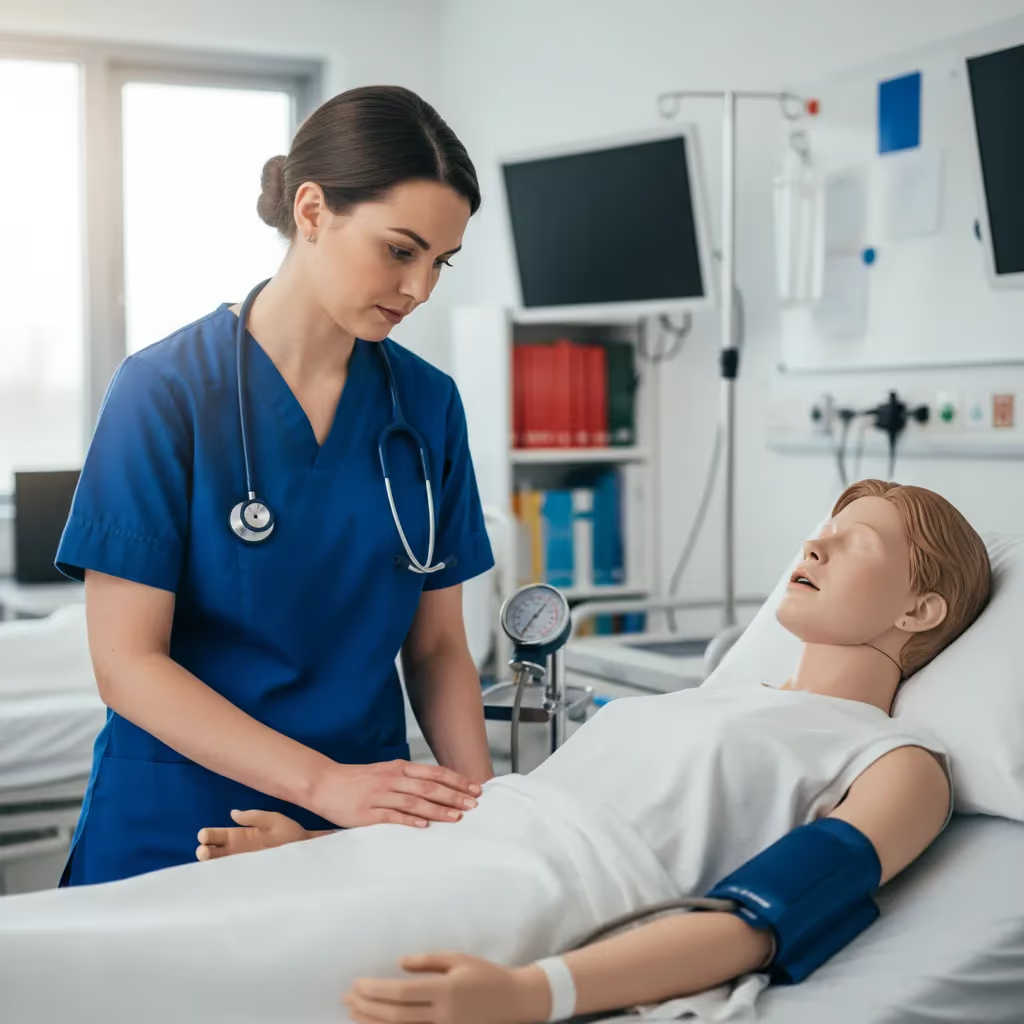
The Objective Structured Clinical Examination (OSCE) has become increasingly important in healthcare education and professional development. Whether you are a medical student, nursing professional, or healthcare practitioner, understanding OSCE jobs and career opportunities is essential for advancing your professional journey. This comprehensive guide explores seven critical tips that can help you navigate the world of OSCE certification and secure meaningful employment opportunities. From understanding the fundamentals of OSCE exams to exploring lucrative career paths, this article provides valuable insights into how OSCE qualifications can enhance your professional prospects. As healthcare organizations worldwide increasingly recognize the importance of structured clinical competency assessment, OSCE-certified professionals find themselves in high demand across various healthcare settings and specialties. Practice with the free OSCE Objective Structured Clinical Examination Practice practice test on PracticeTestGeeks (7 questions with answer explanations).
Free OSCE Objective Structured Clinical Examination Practice Study Tools
Interactive OSCE Objective Structured Clinical Examination Practice resources on PracticeTestGeeks, free to start:
- OSCE Neurological Assessment — 34 questions with answer explanations
- OSCE Objective Structured Clinical Examination Practice flashcards — review key terms and concepts card by card
- OSCE Objective Structured Clinical Examination Practice study guide — topic-by-topic overview of what the exam covers
- OSCE Objective Structured Clinical Examination Practice cheat sheet — one-page printable summary for last-minute review
OSCE Practice Test Questions
Prepare for the OSCE Objective Structured Clinical Examination Practice exam with our free practice test modules. Each quiz covers key topics to help you pass on your first try.
OSCE Clinical Procedures and Protocols
OSCE Exam Questions covering Clinical Procedures and Protocols. Master OSCE Test concepts for certification prep.
OSCE Documentation and Record Keeping
Free OSCE Practice Test featuring Documentation and Record Keeping. Improve your OSCE Exam score with mock test prep.
OSCE Emergency Response Procedures
OSCE Mock Exam on Emergency Response Procedures. OSCE Study Guide questions to pass on your first try.
OSCE Evaluation and Feedback
OSCE Test Prep for Evaluation and Feedback. Practice OSCE Quiz questions and boost your score.
OSCE Clinical Reasoning and Diagnosis
OSCE Questions and Answers on OSCE Clinical Reasoning and Diagnosis. Free OSCE practice for exam readiness.
OSCE Physical Examination Techniques
OSCE Mock Test covering OSCE Physical Examination Techniques. Online OSCE Test practice with instant feedback.
OSCE Patient Assessment and Evaluation
Free OSCE Quiz on Patient Assessment and Evaluation. OSCE Exam prep questions with detailed explanations.
OSCE Patient Communication Skills
OSCE Practice Questions for Patient Communication Skills. Build confidence for your OSCE certification exam.
OSCE Pharmacology Fundamentals
OSCE Test Online for Pharmacology Fundamentals. Free practice with instant results and feedback.
OSCE Preparation and Practice
OSCE Study Material on Preparation and Practice. Prepare effectively with real exam-style questions.
OSCE Professional Ethics and Standards
Free OSCE Test covering Professional Ethics and Standards. Practice and track your OSCE exam readiness.
OSCE Purpose and Scope
OSCE Exam Questions covering Purpose and Scope. Master OSCE Test concepts for certification prep.

- +Validates your knowledge and skills objectively
- +Increases job market competitiveness
- +Provides structured learning goals
- +Networking opportunities with other certified professionals
- −Study materials can be expensive
- −Exam anxiety can affect performance
- −Requires dedicated preparation time
- −Retake fees apply if you don't pass
Pros and Cons at a Glance
| Pros | Cons |
|---|---|
| Validates your knowledge and skills objectively | Study materials can be expensive |
| Increases job market competitiveness | Exam anxiety can affect performance |
| Provides structured learning goals | Requires dedicated preparation time |
| Networking opportunities with other certified professionals | Retake fees apply if you don't pass |
Sample OSCE Objective Structured Clinical Examination Practice Practice Questions
Try these questions from our free OSCE Objective Structured Clinical Examination Practice practice tests. The correct answer and an explanation follow each question.
Which action is essential during any procedure involving sharps?
- A. Using designated sharps containers and following universal precautions
- B. Recapping needles by hand
- C. Disposing of sharps in regular waste
- D. Leaving sharps on the procedure tray for later
Answer: A. Using designated sharps containers and following universal precautions
Proper sharps disposal in designated containers and following universal precautions prevent needlestick injuries and disease transmission.
Which of the following steps is ESSENTIAL immediately before performing a joint aspiration (arthrocentesis)?
- A. Administer prophylactic antibiotics
- B. Apply a tourniquet proximal to the joint
- C. Use strict aseptic technique and skin antisepsis
- D. Order pre-procedure coagulation studies for all patients
Answer: C. Use strict aseptic technique and skin antisepsis
Strict aseptic technique is mandatory to prevent introducing infection into the joint space during arthrocentesis.
Which of the following is essential for all documentation entries?
- A. Date, time, signature, and credentials of the person documenting
- B. Only the practitioners first name
- C. Just the date without a signature
- D. A stamp with the facility name only
Answer: A. Date, time, signature, and credentials of the person documenting
Complete entries require date, time, and authenticated signature with credentials for accountability and legal validity.
An unconscious trauma patient arrives by EMS. Cervical spine injury is suspected. Which airway technique is preferred?
- A. Jaw thrust maneuver without head tilt
- B. Head-tilt chin-lift maneuver
- C. Jaw thrust with aggressive neck extension
- D. Blind nasotracheal intubation without cervical stabilization
Answer: A. Jaw thrust maneuver without head tilt
The jaw thrust without head extension opens the airway while maintaining cervical spine alignment in a patient with suspected c-spine injury.
Take the full OSCE Objective Structured Clinical Examination Practice practice test
(OSCE) Objective Structured Clinical Examination Questions and Answers

Conclusion
Understanding OSCE jobs and the opportunities they provide is essential for healthcare professionals seeking career advancement and professional growth. The seven tips outlined in this article—from understanding exam fundamentals to achieving certification for professional growth—provide a comprehensive roadmap for navigating the OSCE landscape. OSCE certification has become increasingly valuable in today's healthcare environment, where employers demand evidence of clinical competency and ability to perform in real-world scenarios. Whether you are just beginning your healthcare career or seeking to advance an existing one, investing time in OSCE preparation and certification is a decision that will pay dividends throughout your professional journey. The examination demonstrates your commitment to excellence and positions you competitively in job markets worldwide. As healthcare continues to evolve and emphasize quality, patient safety, and professional accountability, OSCE-certified professionals will remain in high demand. Take action today to begin your OSCE journey, and position yourself for the career opportunities and professional growth that await you in the dynamic field of healthcare.

How this page was made: written with AI tools and published by Nathan Beja, founder of Practice Test Geeks, who is responsible for its content. We have not yet matched this exam's facts to an official source, so confirm fees, dates and rules with the exam body. Not reviewed by a subject-matter expert. Editorial policy