
Notary Public Seals: The Complete 2026 October Guide to Stamps, Embossers, and Official Notary Impressions
Notary public seals explained: rubber stamps, embossers, ink colors, state rules, costs, and how to order yours. Complete 2026 October guide for new and 📗

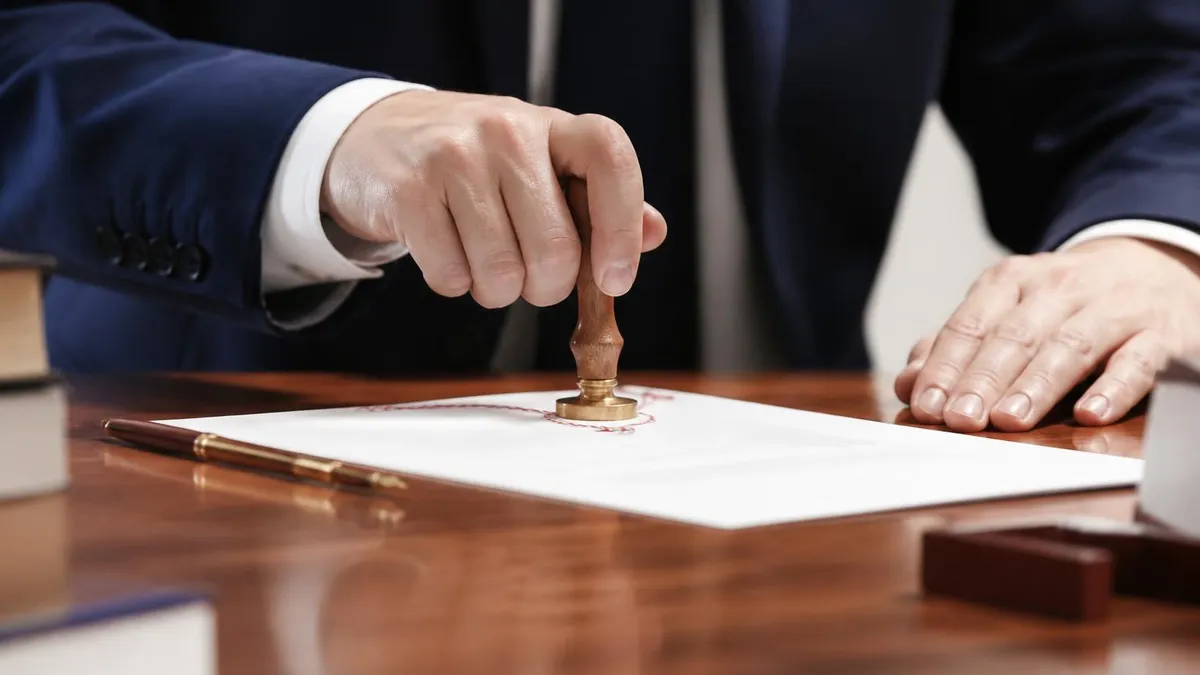
Notary public seals are the official tools every commissioned notary uses to authenticate signatures, certify copies, and complete jurats or acknowledgments. If you have ever asked what is a notary public and what makes their work legally binding, the answer almost always points back to two physical objects: the inked rubber stamp and, in some states, the raised embosser. Together these create the unique impression that turns an ordinary document into a notarized one recognized by courts, banks, and government agencies across the United States.
The seal is not a decoration. It is a regulated instrument tied directly to a specific commissioned officer, a specific commission number, and a specific expiration date. When you press a notary public stamp onto a deed, affidavit, or power of attorney, you are essentially attaching the full legal weight of your state's commission to that page. That is why states impose strict rules on what must appear inside the seal, what shape it can take, what color of ink is acceptable, and how it must be stored.
For new notaries preparing for their commission, understanding seal requirements is just as important as understanding the law itself. A perfectly executed acknowledgment with the wrong seal placement, an illegible impression, or a missing commission number can still be rejected by the recording office. That single rejection can delay a real estate closing, void a loan package, or expose the notary to liability claims. The seal is, in many ways, the visible signature of your authority.
This guide walks you through everything you need to know about notary public seals in 2026: the difference between stamps and embossers, state-by-state rules, where to legally purchase one, how to maintain it, what to do if it is lost or stolen, and how to handle the transition to electronic notarization seals. We will also cover how Spanish-speaking notarios publico in the United States must comply with the same English-language seal rules as any other commissioned notary.
Whether you are preparing for your notary public in bank of america appointment, ordering your first supply kit, or troubleshooting a rejected document, the information below applies to the vast majority of US jurisdictions. We will flag the exceptions as we go, since states like California, Florida, Texas, and New York each handle seal requirements in their own particular way.
By the end of this article you will know exactly what your seal should look like, where to put it on a document, how long it should last, and how to avoid the most common mistakes that get notarizations rejected. You will also learn how seal rules tie into ethics, fraud prevention, and the day-to-day practice of being a trusted public officer.
Let us start with the basics: what a notary public seal actually is, why states require them, and what role they play in the broader chain of trust that supports nearly every important document signed in America.
Notary Public Seals by the Numbers
Key Facts at a Glance
| Item | Value | Details |
|---|---|---|
| Typical Commission Length | 4 yrs | Varies by state (4-10 years) |
| Required on Notarial Acts | 100% | In nearly all US states |
| Required Seal Elements | 5-7 | Name, commission #, state, expiration, etc. |

What Every Notary Public Seal Must Include
Your full legal name exactly as it appears on your commission certificate. Nicknames, initials only, or married names without official updates are not acceptable in most states.
The unique identifier assigned by your state's commissioning authority. This number links every notarization back to your specific appointment record on file with the Secretary of State.
The words 'State of [your state]' or 'Notary Public, State of [your state]' must appear so any party can verify jurisdiction and look up your commission online instantly.
The exact date your commission ends. After this date the seal becomes invalid and using it is generally considered an unauthorized practice carrying civil and sometimes criminal penalties.
The title 'Notary Public' must appear inside the seal so the document clearly identifies the official capacity in which you are signing, not as a private individual.
The two most common types of notary public seals are the inked rubber stamp and the raised embosser. The notary public stamp, usually a self-inking rectangular or circular device, is by far the most widely used because it produces a flat, photocopiable impression. Most modern recording offices and digital document systems require photocopiable seals, which is why nearly every state that once mandated embossers has since moved to ink stamps as the primary requirement. The embosser still has a role, but its purpose has shifted dramatically over the past two decades.
A rubber stamp impression contains all the elements your state requires: your name, commission number, state, expiration date, and the words Notary Public. Black ink is the most common requirement because it photocopies and scans cleanly. A few states, like California, specifically require certain ink colors or prohibit others. The stamp itself is usually self-inking, meaning it contains an internal ink pad that re-inks the rubber die after each press. A quality self-inking stamp will produce ten to fifteen thousand crisp impressions before the pad needs replacement.
The embosser, on the other hand, creates a raised three-dimensional impression by pressing the paper between two metal dies. It produces no ink and therefore does not photocopy well, which is why most states no longer accept it as the sole official seal. However, embossers remain useful as a supplemental security device. Many experienced notaries apply both the inked stamp and a raised embosser to important documents like deeds or wills, because the embossed impression is extremely difficult to forge or alter without leaving visible damage to the paper.
Choosing between formats depends entirely on your state's statute. Some states specify a circular seal, others a rectangular one. Some require a specific minimum and maximum size, often around one inch by two and a half inches for rectangular stamps. Others mandate a serrated or milled border around the impression. Reading your state's notary handbook before ordering is essential, because vendors will happily sell you whatever you ask for, even if it does not comply with your jurisdiction's law.
If you are searching for a free public notary near me, you will notice that the seal on their documents looks remarkably consistent across providers. That is because most legitimate notaries order from a small group of approved vendors who already know each state's exact specifications. Buying from a random online seller without verifying state compliance is one of the most common rookie mistakes new notaries make.
It is also worth understanding what your seal is not. It is not a substitute for your signature, which must always appear separately on the notarial certificate. It is not a personal logo or branding tool. And it is absolutely not transferable to anyone else, including an assistant, family member, or business partner. Every impression must be made personally by the commissioned notary, in their official capacity, after they have performed the required notarial act.
Finally, the seal is tied to the commission, not to the person in perpetuity. When your commission expires, is revoked, or you resign, the seal must be destroyed or surrendered according to your state's rules. Continuing to use an expired seal, even by accident, can result in fines, loss of future commissioning eligibility, and in some cases criminal charges for the unauthorized practice of notarial acts.

Notary Public Practice Test Questions
Prepare for the Notary Public Exam exam with our free practice test modules. Each quiz covers key topics to help you pass on your first try.
Notary Public Basic Notary Public
Notary Public Exam Questions covering Basic Notary Public. Master Notary Public Test concepts for certification prep.
Notary Public Duties & Responsibilities of...
Free Notary Public Practice Test featuring Duties & Responsibilities of a Notary. Improve your Notary Public Exam score with mock test prep.
Notary Public Ethics & Professional Conduct
Notary Public Mock Exam on Ethics & Professional Conduct. Notary Public Study Guide questions to pass on your first try.
Notary Public Fraud Prevention & Security
Notary Public Test Prep for Fraud Prevention & Security. Practice Notary Public Quiz questions and boost your score.
Notary Public Identification & Credential ...
Notary Public Questions and Answers on Identification & Credential Verification. Free Notary Public practice for exam readiness.
Notary Public Jurats & Acknowledgments
Notary Public Mock Test covering Jurats & Acknowledgments. Online Notary Public Test practice with instant feedback.
Notary Public Notarial Acts & Procedures
Free Notary Public Quiz on Notarial Acts & Procedures. Notary Public Exam prep questions with detailed explanations.
Notary Public Notary Laws & Regulations
Notary Public Practice Questions for Notary Laws & Regulations. Build confidence for your Notary Public certification exam.
Notary Public MCQ
Notary Public Test Online for MCQ. Free practice with instant results and feedback.
Notary Public
Notary Public Study Material on Notary Public. Prepare effectively with real exam-style questions.
Notary Public Oaths & Affirmations
Free Notary Public Test covering Oaths & Affirmations. Practice and track your Notary Public exam readiness.
Notary Public Recordkeeping & Journal Entries
Notary Public Exam Questions covering Recordkeeping & Journal Entries. Master Notary Public Test concepts for certification prep.
Notary Public Exam Basic Notary Public
Free Notary Public Practice Test featuring Exam Basic Notary Public. Improve your Notary Public Exam score with mock test prep.
Notary Public Exam Duties & Responsibiliti...
Notary Public Mock Exam on Exam Duties & Responsibilities of a Notary. Notary Public Study Guide questions to pass on your first try.
Notary Public Exam Ethics & Professional C...
Notary Public Test Prep for Exam Ethics & Professional Conduct. Practice Notary Public Quiz questions and boost your score.
Notary Public Exam Fraud Prevention & Secu...
Notary Public Questions and Answers on Exam Fraud Prevention & Security. Free Notary Public practice for exam readiness.
Notary Public Exam Identification & Creden...
Notary Public Mock Test covering Exam Identification & Credential Verification. Online Notary Public Test practice with instant feedback.
Notary Public Exam Jurats & Acknowledgments
Free Notary Public Quiz on Exam Jurats & Acknowledgments. Notary Public Exam prep questions with detailed explanations.
Notary Public Exam Notarial Acts & Procedures
Notary Public Practice Questions for Exam Notarial Acts & Procedures. Build confidence for your Notary Public certification exam.
Notary Public Exam Notary Certificates & W...
Notary Public Test Online for Exam Notary Certificates & Wording. Free practice with instant results and feedback.
Notary Public Exam Notary Laws & Regulations
Notary Public Study Material on Exam Notary Laws & Regulations. Prepare effectively with real exam-style questions.
Notary Public Exam Notary Public
Free Notary Public Test covering Exam Notary Public. Practice and track your Notary Public exam readiness.
Notary Public Exam Notary Public MCQ
Notary Public Exam Questions covering Exam Notary Public MCQ. Master Notary Public Test concepts for certification prep.
Notary Public Exam Notary Seal & Stamp Req...
Free Notary Public Practice Test featuring Exam Notary Seal & Stamp Requirements. Improve your Notary Public Exam score with mock test prep.
Notary Public Seal Rules by State
California requires a rectangular or circular photographically reproducible seal containing the state seal, the words Notary Public, the notary's name, the county where the oath and bond are on file, the commission expiration date, the commission number, and the manufacturer or vendor identification number. The seal must be inked in black or purple, and stamped using a device that produces a clear, legible image suitable for photocopying and electronic transmission to county recorders.
California also prohibits embossers as a sole seal. The rubber stamp is mandatory, and the embosser may only be used in addition to, never in place of, the inked impression. California notaries who lose their seal must notify the Secretary of State in writing within a specific timeframe, and using a seal after the commission expires is a misdemeanor that carries both fines and disqualification from future commissioning.
Rubber Stamp vs. Embosser: Which Should You Use?
- +Self-inking rubber stamps produce crisp, photocopiable impressions accepted by all recording offices
- +Stamps are inexpensive, typically $15 to $40 for a quality self-inking model
- +Modern stamps last 10,000 to 15,000 impressions before needing re-inking
- +Black ink stamps scan cleanly for electronic document transmission
- +Stamps are required by statute in most US states as the primary seal
- +Replacement ink pads are widely available and easy to install
- +Stamps work seamlessly with both paper and digitized workflows
- −Embossers do not produce ink, so they fail photocopy and scan requirements
- −Raised impressions can be flattened or altered by determined forgers using moisture
- −Embossers are heavier, bulkier, and less convenient for mobile notary work
- −Many states no longer accept embossers as the sole official seal
- −Quality embossers cost significantly more than basic rubber stamps
- −Embossed impressions can tear thin paper or carbon-copy forms

Ordering Your Notary Public Seal Checklist
- ✓Confirm your commission has been officially issued by your state's commissioning authority
- ✓Download your state's notary handbook and locate the exact seal specifications section
- ✓Verify your commission number, expiration date, and county of qualification before ordering
- ✓Choose a vendor that specifically certifies compliance with your state's statute
- ✓Select the correct shape: rectangular or circular based on state requirement
- ✓Confirm ink color: black is universal, but check for state-specific exceptions
- ✓Order both a primary self-inking stamp and a backup stamp if budget allows
- ✓Inspect the test impression upon delivery for legibility, alignment, and complete information
- ✓Store the seal in a locked drawer or safe when not in personal possession
- ✓Record the date of receipt in your notary journal as a permanent supply record
One Stamp Is Never Enough
Experienced notaries always keep a second sealed stamp in a safe location. If your primary stamp is lost, stolen, or damaged mid-day, a backup means you do not have to cancel appointments or refund clients while waiting two weeks for a replacement. The cost of a second stamp is trivial compared to lost income or a damaged reputation.
Security and storage of your notary public seal is not optional, and it is not just common sense. Most states impose specific legal duties on notaries to safeguard their seals from theft, loss, and unauthorized use. The reasoning is straightforward: a stolen notary stamp in the hands of a fraudster can be used to forge powers of attorney, fake deeds, falsify affidavits, and authorize fraudulent loan documents. The downstream damage from a single misused seal can run into hundreds of thousands of dollars and irreparably harm innocent victims.
At a minimum, your seal should be stored in a locked container when not in use. Many notaries keep a small fire-resistant lockbox specifically for their stamp, journal, and commission certificate. When traveling for mobile signings, the seal should never be left visible in a vehicle, hotel room, or unattended bag. Treat it with the same care you would treat a stack of blank checks or a corporate credit card, because in terms of legal authority it carries similar weight.
If your seal is lost or stolen, most states require you to notify the commissioning authority in writing within a defined window, often ten to thirty days. You will typically need to include the date and circumstances of the loss, a request to invalidate the missing seal, and in some cases a copy of a police report. Failing to report a loss promptly can expose you to personal liability if the seal is later used in a fraudulent transaction, because the state can argue you breached your statutory duty of care.
Damage to a seal that renders impressions illegible also requires action. A worn-out stamp that produces faint or smudged impressions can cause documents to be rejected by recording offices. In that case, you need to order a replacement and destroy the damaged stamp by cutting through the rubber die. Some states require you to certify in writing that the damaged seal was destroyed, and a few require you to surrender it physically to the state office.
When your commission expires and you do not renew, or if you resign or are removed, the seal must be permanently destroyed. The accepted method is cutting through the rubber die with scissors or a knife so that no further impressions can be made. Simply throwing the stamp in the trash intact is risky, because the rubber die can be retrieved and used by a third party. Document the destruction with a photograph and a dated note in your journal as proof.
Similar rules apply if you move to a different state. Your existing commission is jurisdiction-specific, so the seal from State A is invalid the moment you become a resident of State B. You cannot bring your old stamp with you and continue notarizing, even if you obtain a new commission in your new state. A fresh seal must be ordered reflecting the new state, new commission number, and new expiration date.
Finally, remember that your seal is a personal instrument and cannot be lent to anyone under any circumstances. Not to a coworker who is also a notary, not to a spouse who needs to notarize a document quickly, not to a manager during an emergency. Loaning the seal is a serious offense in every US jurisdiction and can result in immediate commission revocation, civil penalties, and in egregious cases criminal prosecution.
Pre-stamping blank or partially completed forms is one of the most dangerous and most commonly prosecuted notary violations. Your seal must only touch a document after you have personally witnessed the signature and confirmed identity. Pre-stamping creates the perfect tool for fraud and can result in commission revocation, civil liability, and criminal charges in every US state.
Electronic notarization and remote online notarization have introduced an entirely new category of seal: the digital seal. As of 2026, the majority of US states authorize some form of electronic or remote notarization, and each requires the notary to use an electronic seal that meets specific technical standards. The electronic seal is not just a scanned image of your rubber stamp. It is a tamper-evident digital element bound to a specific document through cryptographic technology, usually a public key infrastructure certificate issued by an approved provider.
An electronic seal typically appears as a visual representation of your traditional stamp, but its true legal force comes from the underlying digital certificate that locks the seal to the document. Any subsequent alteration of the document, even something as minor as changing a single character, breaks the cryptographic binding and visibly invalidates the seal. This makes electronic notarization significantly more tamper-resistant than paper-based notarization, despite initial skepticism from some legal traditionalists.
To use an electronic seal, you must first obtain authorization from your commissioning state. Most states require notaries to register separately as electronic or remote notaries, complete additional training, pay an additional fee, and contract with an approved technology vendor. Vendors like industry-leading remote notarization platforms provide the secure platform, the digital certificate, identity verification tools, and the audit trail required by state law for every remote notarization performed.
The remote online notarization process typically uses two-way audio-video conferencing, knowledge-based authentication, and credential analysis to verify signer identity from a distance. After identity is confirmed and the notarial act is completed, the electronic seal is applied to the digital document along with the notary's electronic signature, creating a permanent, tamper-evident record. Many real estate transactions, estate planning documents, and business contracts are now closed entirely through this remote process.
If you work for a major financial institution, you may already be familiar with electronic notarization workflows. The ups notary public services available in some retail locations are now beginning to incorporate hybrid electronic capabilities, where the signer appears in person but the document is signed and sealed digitally for faster transmission to lenders and title companies. This blending of traditional and digital workflows is the direction the entire industry is moving.
For traditional paper notaries who have not yet adopted electronic seals, the transition is not difficult but it does require planning. Budget for the additional registration fees, allow time for training and vendor onboarding, and remember that your electronic seal is subject to the same security rules as your paper stamp. The private key associated with your digital certificate must be protected with strong passwords and, ideally, two-factor authentication. Loss of the private key is treated similarly to loss of a physical seal.
Spanish-speaking notarios publico working in the United States should be especially cautious about electronic notarization marketing. In several Latin American countries, the term notario publico refers to a highly trained attorney with broad legal authority. In the US, the role is far more limited. Electronic notarization does not expand the scope of authority of a US notary, regardless of how digital tools are marketed, and all the same ethical and procedural rules apply to remote sessions as to in-person ones.
Putting all of this into daily practice comes down to building consistent habits. The most successful notaries treat their seal not as a piece of office equipment but as the physical embodiment of their commission. Every time you reach for the stamp, pause and ask yourself the same three questions: Is the signer in front of me? Have I verified their identity? Is the document complete and ready to be notarized? If any answer is no, the seal stays in its container until those issues are resolved.
Placement of the seal on the document matters more than most new notaries realize. The impression should appear near your signature, on the same page as the notarial certificate, and never overlap any text, signature lines, or other essential information. A seal stamped across someone's signature can render the document unreadable to a recording office and cause it to be rejected. A clear margin around the seal, usually at least a quarter inch, gives the impression room to breathe and remain legible after photocopying or scanning.
If you make a poor impression, do not try to re-stamp directly on top of it. Instead, draw a single line through the smudged seal, write the word void next to it, initial and date the correction, and then apply a fresh impression in a clean area of the page. Recording offices are familiar with this convention and will accept a properly corrected page far more readily than a page covered in overlapping stamps that look suspicious or fraudulent on first review.
Renewal of your commission is the moment to re-evaluate your entire seal setup. When your new commission certificate arrives, you must order a brand new stamp reflecting the new commission number and expiration date. You cannot simply continue using your old stamp, even if your name and state have not changed. The expiration date on the seal must match your current active commission exactly, and using an outdated stamp invalidates every notarization made with it after the prior commission expired.
Preparing for the notary public exam itself often includes seal-related questions, especially around required elements, ink color, placement rules, and destruction procedures upon commission expiration. Candidates who skim these topics tend to lose easy points on multiple choice questions that test seal specifics. Spending an hour reviewing your state's seal statute before exam day is one of the highest-return study activities you can do, because the rules are concrete and rarely change from year to year.
Once commissioned, building a seal-related routine into every signing protects you from costly mistakes. Verify the impression is crisp before handing the document back. Confirm all required elements appear in the impression. Make a notation in your journal that the seal was used, on what document, and on what date. Keep an inventory of your seal supplies, including ink pad replacements, backup stamps, and any electronic credentials. This level of discipline separates professional notaries from casual ones.
Finally, never stop learning. Notary law evolves, especially as remote notarization expands and digital identity standards mature. Subscribe to your state notary association newsletter, attend continuing education when offered, and review your state handbook annually even after years on the job. The seal in your hand carries the trust of every signer, every lender, and every court that will ever see your work, and protecting that trust is the most important responsibility you accept the day you take the oath of office.
Sample Notary Public Exam Practice Questions
Try these questions from our free Notary Public Exam practice tests. The correct answer and an explanation follow each question.
What security measure should a notary take with their official stamp or seal when not in use?
- A. Store it visibly on their desk for convenience
- B. Keep it in a secure location accessible only to the notary
- C. Share it with trusted colleagues for convenience
- D. Leave it with their employer for safekeeping
Answer: B. Keep it in a secure location accessible only to the notary
A notary's seal is an official tool that could be used to commit fraud if misused. It must be kept secure and accessible only to the notary themselves.
What is the primary legal purpose of a notary's official seal or stamp?
- A. To authenticate the notarial act and confirm the notary's identity and authority
- B. To decorate official documents with a government symbol
- C. To replace the notary's handwritten signature
- D. To certify the accuracy of the document's content
Answer: A. To authenticate the notarial act and confirm the notary's identity and authority
The notary seal authenticates the notarial act and confirms that the person who performed it holds a valid notarial commission in a specific jurisdiction.
What information is typically required to appear on a notary public's official seal or stamp?
- A. The notary's home address and phone number
- B. The notary's name, state, commission number, and commission expiration date
- C. The notary's bar association membership number
- D. The names of the documents the notary is authorized to notarize
Answer: B. The notary's name, state, commission number, and commission expiration date
A notary's official seal must include identifying information — the notary's name, the state of commission, commission number, and expiration date — so that the seal can be verified and traced.
Which type of information is typically required to appear on a notary's official seal?
- A. Notary's name, state of commission, and commission expiration date (requirements vary by state)
- B. Notary's home address and phone number
- C. The document title and page count
- D. The signer's name and date of birth
Answer: A. Notary's name, state of commission, and commission expiration date (requirements vary by state)
Most states require the notary's name, the state, and commission expiration date on the seal, though exact requirements vary by jurisdiction.
Notary Public Questions and Answers
State Notary Public Search: How to Verify Any Commissioned Notary in 2026

Notary Public Directory: How to Find, Verify, and Use a Trusted Notary in 2026
NPT

Notary Public Classes: Complete 2026 Guide to Training, Certification, and Exam Prep

Notary Public Meaning: What Is a Notary Public and What Do They Actually Do in 2026?
About the Author

Notary Public Law Expert & State Notary Exam Specialist
Georgetown University Law CenterAttorney Sarah Williams is a licensed attorney and National Notary Association (NNA) certified notary with a Juris Doctor from Georgetown University Law Center. She has 13 years of experience in notarial law, document authentication, and real estate closings. Sarah coaches candidates through state notary public examinations, notary signing agent certification, and loan signing agent training programs.