
Notary Public California: Complete 2026 September Guide to Becoming Commissioned
Notary public California guide: ✏️ what a notary public is, how to become one, exam and stamp rules, costs, fees, plus free practice questions to pass.

Understanding what is a notary public starts with one simple idea: a notary is a state-appointed official who serves as an impartial witness to the signing of important documents. If you are pursuing a notary public California commission, you are stepping into one of the most regulated and respected roles in the state. California treats the position seriously because notaries help deter fraud, verify identities, and confirm that signers act willingly and knowingly. The Secretary of State oversees every commission, and the rules here are stricter than in most other states.
A notary public in California does far more than stamp paper. They administer oaths, take acknowledgments, certify copies of certain documents, and complete jurats for sworn statements. Each act requires careful attention to identification, recordkeeping, and the precise wording of certificates. Because a single mistake can invalidate a real estate closing or a power of attorney, California demands that applicants pass a written exam, clear a background check, and post a surety bond before they ever touch a single document.
Many people first encounter notarization at a bank, a shipping store, or a law office. You may have searched for a notary public in Bank of America branch or wondered whether you could find a free notary public near me when you needed a form signed. Those everyday experiences hide a complex licensing system behind them. In California, that system funnels every aspiring notary through specific training, testing, and bonding steps that this guide will walk through in plain language.
The demand for notaries in California is substantial. With a population of nearly 40 million people and one of the largest real estate markets in the country, the state relies on tens of thousands of active notaries to keep transactions moving. Loan signing agents, in particular, find steady work because mortgage refinances, purchases, and reverse mortgages all require notarized signatures. A notary commission can become a flexible side income or the foundation of a full-time mobile signing business.
This guide covers everything you need to launch your career: eligibility requirements, the mandatory education course, the state exam, the background check, the surety bond, and the official notary public stamp you must order. We will also explain the legal duties you take on, the fees you may charge, and the ethical boundaries California enforces. By the end, you will understand not only how the process works but how to prepare for the test that stands between you and your commission.
Whether you are exploring notarization for the first time or you already know the basics and want a clear roadmap, this article gives you the practical detail California applicants actually need. We will reference real fees, real deadlines, and real exam topics so you can plan your timeline confidently. Free practice questions are linked throughout so you can test your knowledge as you read and walk into your exam appointment prepared rather than guessing.
Notary Public California by the Numbers

California Notary Public Requirements and Steps
You must be 18 or older, a legal California resident, and able to read, write, and understand English. No prior felony convictions or disqualifying offenses are permitted under state law.
Finish a six-hour state-approved education course (or three hours for qualified renewals). The course covers California notary law, procedures, and prohibited acts before you can sit the exam.
Take the proctored written exam administered by Cooperative Personnel Services. You must answer enough multiple-choice questions correctly to reach the 70 percent passing threshold.
Submit fingerprints through Live Scan so the Department of Justice and FBI can run a criminal background check. Results must come back clear before the Secretary of State issues your commission.
Purchase a $15,000 surety bond, file your oath of office and bond with the county clerk within 30 days, and order your official seal to begin notarizing legally.
Learning how to become a notary public in California follows a clear sequence, but each step has its own pitfalls. The journey begins with eligibility. You must be at least 18 years old and a legal resident of California. Unlike a few states that allow non-residents to commission, California requires genuine residency. You also cannot have certain criminal convictions, and you must be able to complete every notarial act in English. These baseline rules exist to protect the public from unqualified or untrustworthy officials.
The second step is mandatory education. First-time applicants must complete a six-hour course approved by the Secretary of State, while renewing notaries who apply on time can take a shorter three-hour refresher. These courses are offered online, in person, and in hybrid formats by approved vendors. The curriculum walks through California notary law, the proper completion of acknowledgments and jurats, identification standards, and the long list of prohibited acts that can cost a notary their commission or trigger civil liability.
After education comes the written exam, which is administered statewide by an independent vendor on behalf of the Secretary of State. The test is closed-book, proctored, and timed. You bring a valid photo ID, your proof of course completion, the exam fee, and a passport-style photo. Many first-time test-takers underestimate the difficulty because the questions probe specific statutory details, not general knowledge. Using a structured study program and quizzes dramatically improves first-attempt pass rates compared to skimming the handbook alone.
Once you pass, your fingerprints go through Live Scan so the California Department of Justice and the FBI can run a background check. This is non-negotiable and applies to every applicant, including renewals. Processing can take several weeks, so applicants should schedule Live Scan promptly after the exam rather than waiting. Any disqualifying record discovered during this stage can delay or deny your commission, which is why honesty on the application matters enormously.
When your background clears, the Secretary of State mails your commission certificate. But you are not yet legally allowed to notarize. Within 30 calendar days of the commission start date, you must file your oath of office and your $15,000 surety bond with the county clerk in the county where your principal place of business is located. Missing this 30-day window voids the commission entirely, forcing you to start the whole process over, so calendar the deadline immediately.
The final practical step is acquiring your tools. You need to order your official seal from an authorized vendor, obtain a sequential journal to record every notarial act, and ideally purchase errors-and-omissions insurance to protect yourself financially. If you ever need to confirm whether someone is a legitimate active notary, you can use a notary public florida style lookup tool, since most states including California publish searchable commission databases for public verification.
Notary Public Stamp and Notary Public Seal Rules
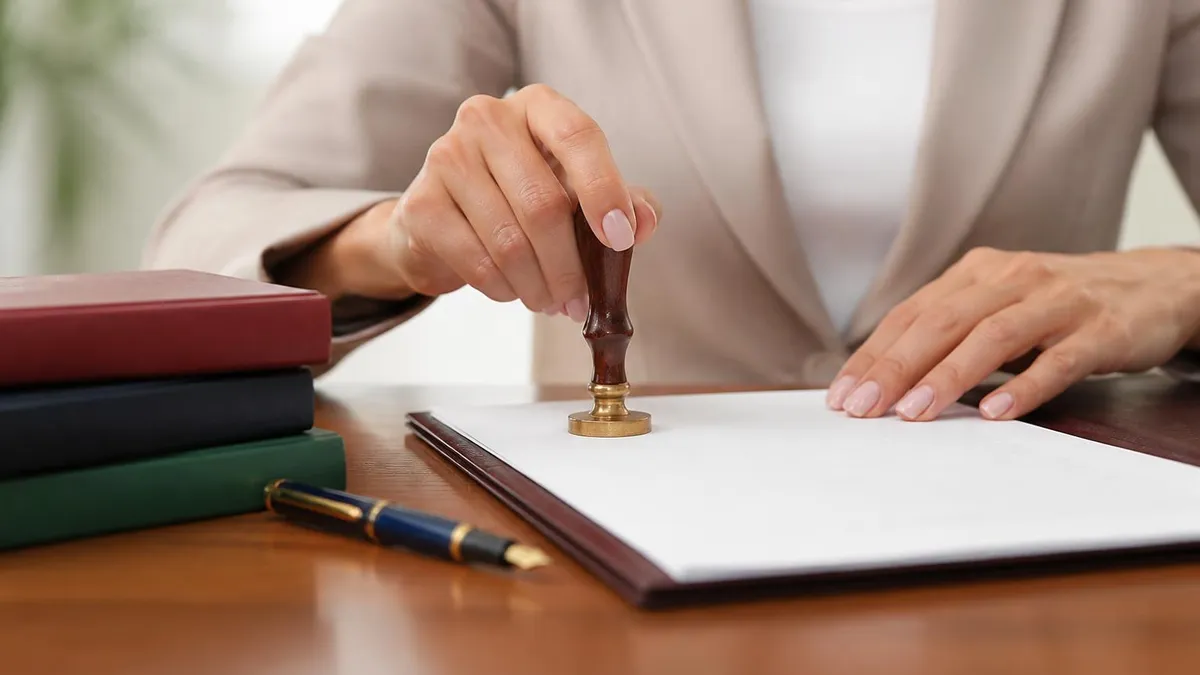
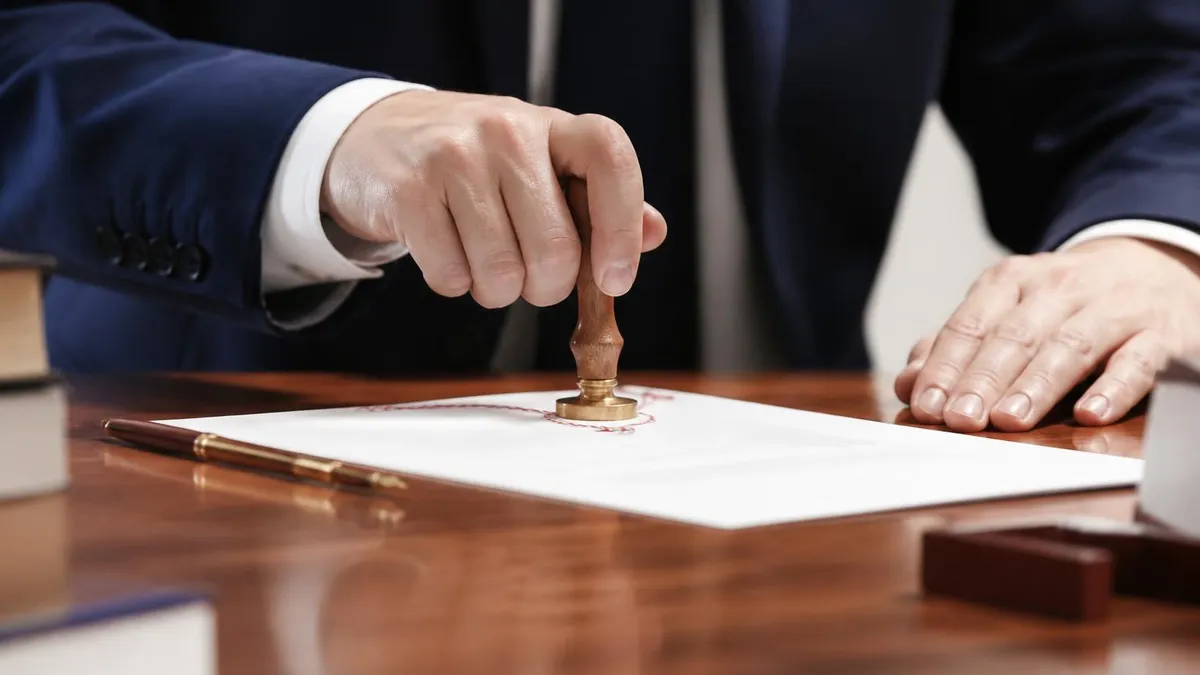
California law requires every notary public seal to contain specific elements arranged in a photographically reproducible format. Your notary public stamp must show the words 'Notary Public,' your name exactly as commissioned, the State Seal of California, the county where you filed your bond, your commission number, and your commission expiration date. The seal can be rectangular or circular, and the design must reproduce clearly when photocopied.
You may only order your seal from a vendor authorized by the Secretary of State, and you must present your commission certificate to do so. This safeguard prevents fraudulent stamps from circulating. The seal is your personal responsibility; never lend it to anyone, and store it in a locked, secure location separate from your journal whenever it is not in active use during notarizations.

Is Becoming a California Notary Public Worth It?
- +Flexible schedule that works around a full-time job or family
- +Steady demand from real estate, lending, and legal industries
- +Low startup cost compared to most professional licenses
- +Mobile and loan signing agents can earn solid per-appointment fees
- +Commission lasts four years before renewal is required
- +Skill is portable and respected across many business settings
- −Strict liability for errors can lead to lawsuits or bond claims
- −California requires a written exam that many other states do not
- −Background check and Live Scan add time and cost
- −State caps the fees you can charge per notarial act
- −Detailed journal recordkeeping is mandatory and audited
- −Mistakes on identification can invalidate documents and harm clients
California Notary Public Pre-Exam Readiness Checklist
- ✓Confirm you are 18 or older and a California resident.
- ✓Verify you have no disqualifying criminal convictions.
- ✓Enroll in a state-approved six-hour notary education course.
- ✓Finish the course and save your proof of completion.
- ✓Register for the proctored written exam with the state vendor.
- ✓Study the official California Notary Public Handbook thoroughly.
- ✓Complete multiple timed practice quizzes to gauge readiness.
- ✓Bring valid photo ID, exam fee, and a passport photo.
- ✓Schedule Live Scan fingerprinting right after passing.
- ✓Plan to file your bond and oath within 30 days of commissioning.
The 30-Day Filing Rule Is Absolute
Even after you pass the exam and clear your background check, you cannot notarize until you file your oath of office and $15,000 surety bond with the county clerk. You have exactly 30 calendar days from your commission start date. Miss it and the commission is void, forcing you to restart the entire process from scratch.
The legal duties of a California notary public center on a single mission: preventing fraud while serving the public impartially. The most common act is the acknowledgment, where a signer personally appears and confirms they signed a document willingly. The notary verifies identity, confirms the signer's understanding that they are acknowledging the document, and completes a certificate. Acknowledgments appear on deeds, powers of attorney, and many recordable instruments, making them the bread and butter of everyday notary work across the state.
The second core act is the jurat, used when a signer must swear or affirm under penalty of perjury that a statement is true. Here the signer must sign in the notary's presence and take a verbal oath, and the notary records the act with specific certificate wording. Confusing a jurat with an acknowledgment is one of the most frequent and consequential mistakes new notaries make, because the legal effect and required procedure differ significantly. Practice quizzes on these two acts pay real dividends on exam day.
Identification is the heart of every notarization. California accepts specific forms of satisfactory evidence, primarily current government-issued photo identification such as a driver's license, state ID, passport, or military ID. In limited cases, credible witnesses who personally know the signer can establish identity. A notary must never rely on personal acquaintance alone for an acknowledgment or jurat. Verifying the document, the photo, the physical description, and the signature protects everyone and keeps the notary out of legal jeopardy.
California strictly regulates the fees a notary may charge. The state sets a maximum per-signature fee for acknowledgments and jurats, and notaries cannot exceed it. Mobile notaries may charge separate, reasonable travel fees, but those must be disclosed and agreed upon before the appointment. Charging more than the statutory cap, or failing to disclose travel charges, can result in disciplinary action. Keeping a clear, itemized record of every fee collected protects the notary during any audit or complaint.
Recordkeeping is mandatory and rigorous. Every California notary must maintain a sequential journal recording each notarial act, including the date, type of act, document description, signer's name, type of identification presented, the fee charged, and the signer's signature and thumbprint for certain real estate documents. This journal is the official record and can be subpoenaed in court. A well-kept journal is often a notary's best defense against accusations of misconduct, so thoroughness here is not optional but essential.
Ethics tie all these duties together. A California notary must remain impartial, refuse to notarize for relatives in ways that create conflicts, decline when a signer appears coerced or confused, and never notarize a document with blank spaces. The notary cannot give legal advice unless separately licensed as an attorney, and the Spanish-speaking public should understand that a notario publico in Latin America is a high-level legal professional, whereas a California notary is not. Misrepresenting that role is illegal and harms vulnerable immigrant communities.

In many Latin American countries a notario publico is a licensed attorney with broad legal authority. A California notary public is NOT a lawyer and may not give legal advice. State law specifically prohibits using the term 'notario' or 'notario publico' in advertising to avoid misleading Spanish-speaking clients.
A California notary commission can power several income paths, and the most lucrative is the loan signing agent role. These specialized notaries walk borrowers through mortgage closing packages, ensuring every signature, initial, and notarization is completed correctly. Because lenders and title companies pay per completed signing, experienced loan signing agents in California's busy housing market can earn meaningful fees per appointment. The key is accuracy and reliability, since a single missed signature can delay funding and damage your reputation with signing services.
Many people first interact with notaries at financial institutions. If you have ever searched for a notary public in Bank of America branch, you discovered that many banks offer notary services free to account holders as a customer perk. The same is true at other major banks, and you may find a chase bank notary public available during business hours. These in-branch notaries handle routine acknowledgments, but they often cannot leave the branch or handle complex loan signings, leaving a gap mobile notaries happily fill.
That gap explains why so many consumers search for a free public notary near me or a free notary public near me. Banks, credit unions, public libraries, and some shipping stores provide low-cost or complimentary basic notarizations. However, availability is inconsistent, and complex documents or after-hours needs frequently require a paid mobile notary. Smart California notaries position themselves to serve exactly those underserved moments, charging fair travel fees while staying within the state's strict per-act fee limits.
Beyond real estate, California notaries serve hospitals, law offices, escrow companies, immigration consultants, and businesses that handle contracts and affidavits daily. Healthcare facilities need notaries for advance directives and powers of attorney, often on short notice. Estate planning attorneys rely on notaries for wills and trusts. Building relationships with these recurring clients creates a steady referral pipeline that is far more valuable than chasing one-off appointments found through generic online searches.
Marketing yourself effectively matters. List your services on notary directories, signing service rosters, and local business platforms. Maintain professional credentials, carry errors-and-omissions insurance, and respond quickly to requests. Many successful California notaries treat reliability and communication as their competitive edge, because clients facing a real estate closing or an urgent medical document remember the notary who showed up on time, prepared, and unflappable far more than the cheapest option available.
Renewal keeps your career alive. California commissions last four years, and you must reapply, retake an approved course, and pass the exam again before your current commission expires. Plan ahead, because letting a commission lapse means starting over as a brand-new applicant, including the longer six-hour course. Track your expiration date carefully, set reminders months in advance, and treat renewal as a routine professional obligation rather than an emergency you scramble to handle at the last minute.
Passing the California notary exam comes down to disciplined preparation, and the single best investment is repeated practice with realistic questions. The official California Notary Public Handbook is your primary source of truth, and you should read it cover to cover at least twice. The exam draws directly from its contents, including precise statutory details about fees, identification, journal entries, and prohibited acts. Skimming is the most common reason capable applicants fail, so commit to genuine, focused study sessions instead.
Build a study schedule that spreads preparation across several weeks rather than cramming. Devote early sessions to understanding the difference between acknowledgments and jurats, since these concepts anchor a large share of exam questions. Mid-stage study should drill identification rules and the maximum allowable fees. Final sessions should focus on edge cases: what to do when a signer cannot sign, when documents have blank spaces, or when a credible witness is required. Each topic rewards repetition and active recall.
Take timed practice exams under conditions that mirror the real test. Sit in a quiet room, close your handbook, set a timer, and answer questions without interruption. Review every wrong answer and trace it back to the relevant law so the correction sticks. This deliberate process turns weak spots into strengths. Many successful test-takers report that completing several full practice exams was the difference between barely passing and walking out confident on their first attempt.
Memorize the numbers. California's exam loves specific figures: the $15,000 bond, the 30-day filing window, the four-year commission term, the six-hour and three-hour course lengths, and the maximum statutory fees. Create flashcards for each figure and quiz yourself until recall is instant. When you can rattle off these numbers without hesitation, you eliminate an entire category of questions that trip up underprepared applicants who relied on vague familiarity rather than precise memorization.
On exam day, arrive early with every required item: your photo identification, proof of course completion, the exam fee in the accepted form, and a passport-style photograph. Read each question carefully, because the exam often includes answer choices that are nearly correct but contain a subtle error. Eliminate obviously wrong options first, then choose the response that matches California law precisely. Manage your time so you can review flagged questions before submitting your completed exam.
If you want to deepen your understanding with explained answers, video walkthroughs help concepts stick. Reviewing a public notary what is explainer alongside written quizzes reinforces the material through multiple channels. Combine reading, practice questions, and visual review for the strongest results. With consistent effort over a few weeks, the California notary exam becomes very passable, and you will step into your new commission ready to serve the public competently and confidently.
Notary Public Questions and Answers
NPT
Notary Public Training: Complete 2026 Guide to Requirements, Certification & Exam Prep
State Notary Public Search: How to Verify Any Commissioned Notary in 2026

Notary Public Signature: Examples, Email Format, and How to Sign

Notary Public Classes: Complete 2026 Guide to Training, Certification, and Exam Prep
About the Author

Notary Public Law Expert & State Notary Exam Specialist
Georgetown University Law CenterAttorney Sarah Williams is a licensed attorney and National Notary Association (NNA) certified notary with a Juris Doctor from Georgetown University Law Center. She has 13 years of experience in notarial law, document authentication, and real estate closings. Sarah coaches candidates through state notary public examinations, notary signing agent certification, and loan signing agent training programs.