
Your Guide to NCCER Electrical Certification Excellence
nccer certification prep with 1,234+ electrical practice questions covering conduit bending, wiring, motors, and code requirements with detailed answers. Start

The demand for skilled electricians continues to rise as industries expand and energy systems become more complex. To meet this demand, standardized and recognized training programs are critical. The NCCER Electrical Certification, offered by the National Center for Construction Education and Research (NCCER), is a trusted credential that validates both classroom learning and hands-on field experience in electrical work. NCCER’s structured training framework prepares aspiring electricians with the technical skills and safety knowledge needed to work in residential, commercial, and industrial settings. Whether you're an apprentice just starting out or a seasoned professional looking to enhance your credentials, NCCER Electrical Certification ensures you're prepared to meet national standards and industry expectations.
If you're pursuing multiple electrical certifications, you may also want to review the 310t practice test to sharpen your knowledge of wiring codes, circuit analysis, and installation standards shared across trades.
Candidates preparing for industrial electrical work often benefit from cross-training, so consider working through the 313D practice test to reinforce your understanding of control systems, motor circuits, and troubleshooting techniques.
NCCER Electrical Practice Test Questions
Prepare for the NCCER Electrical - National Center for Construction Education and Research Electrical Certification exam with our free practice test modules. Each quiz covers key topics to help you pass on your first try.
NCCER Electrical Codes, Standards & Bluepr...
NCCER Electrical Exam Questions covering Codes, Standards & Blueprint Reading. Master NCCER Electrical Test concepts for certification prep.
NCCER Electrical Conduit Bending & Wiring ...
Free NCCER Electrical Practice Test featuring Conduit Bending & Wiring Installation. Improve your NCCER Electrical Exam score with mock test prep.
NCCER Electrical Equipment & Systems
NCCER Electrical Mock Exam on Equipment & Systems. NCCER Electrical Study Guide questions to pass on your first try.
NCCER Electrical Theory & Safety Practices
NCCER Electrical Test Prep for Theory & Safety Practices. Practice NCCER Electrical Quiz questions and boost your score.
NCCER Electrical Assessment & Data-Driven ...
NCCER Electrical Questions and Answers on Assessment & Data-Driven Instruction. Free NCCER Electrical practice for exam readiness.
NCCER Electrical Child Development & Learn...
NCCER Electrical Mock Test covering Child Development & Learning Theories. Online NCCER Electrical Test practice with instant feedback.
NCCER Electrical Classroom Management & St...
Free NCCER Electrical Quiz on Classroom Management & Student Behavior. NCCER Electrical Exam prep questions with detailed explanations.
NCCER Electrical English Language Learners...
NCCER Electrical Practice Questions for English Language Learners & ESL. Build confidence for your NCCER Electrical certification exam.
NCCER Electrical Instructional Planning & ...
NCCER Electrical Test Online for Instructional Planning & Delivery. Free practice with instant results and feedback.
NCCER Electrical Mathematics Instruction &...
NCCER Electrical Study Material on Mathematics Instruction & Numeracy. Prepare effectively with real exam-style questions.
Key Takeaways
Free NCCER Electrical Practice Test Online
NCCER Electrical Certification is a nationally recognized program for training and certifying electricians and electrical trainees.
The certification follows a modular curriculum combining hands-on performance tasks and written assessments.
It is widely accepted by contractors, unions, and employers across the United States.
Certification provides a competitive edge in hiring, promotes safety, and can fulfill state or local licensing prerequisites.
Career paths include positions in residential wiring, industrial electrical systems, solar energy, and maintenance operations.
What Is NCCER Electrical Certification?
The National Center for Construction Education and Research (NCCER) offers an Electrical Certification Program that provides a standardized training framework for aspiring electricians. The program is competency-based and modular, aligning with industry-approved curricula. It is part of NCCER’s broader mission to build a safe, productive, and sustainable workforce in construction and skilled trades.
The NCCER Electrical Certification is structured into four levels:
Level 1: Introduction to the Electrical Trade, basic safety, tools, and electrical theory
Level 2: Alternating current, motors, grounding, conduit bending, and circuit breakers
Level 3: Electrical services, load calculations, transformers, and lighting
Level 4: Advanced controls, HVAC controls, industrial electrical systems, and troubleshooting
Each level includes:
Classroom instruction and textbook learning
Hands-on performance verification tasks
Module tests and written assessments
NCCER certification is portable, meaning it is recognized nationally and recorded in the NCCER Registry, allowing employers to verify your credentials easily.
NCCER Certification for Electrical Trades Explained
NCCER certification is a portable, industry-recognized credential issued by the National Center for Construction Education and Research and tracked in the National Registry, allowing employers to verify your training across all 50 states. For electrical workers, certification is earned by passing the NCCER Electrical Level 1-4 module exams, which cover topics from basic electrical theory and the NEC to load calculations, motor controls, and medium-voltage terminations.
How NCCER Electrical Credentials Are Recorded
Each passing score is logged under your unique NCCER card number in the Registry System, and many states (including Alabama, Florida, and Georgia) accept completed Electrical Level 4 toward journeyman licensing hours. Keep your card number handy when registering for a proctored test, since scores cannot be transferred retroactively without it.
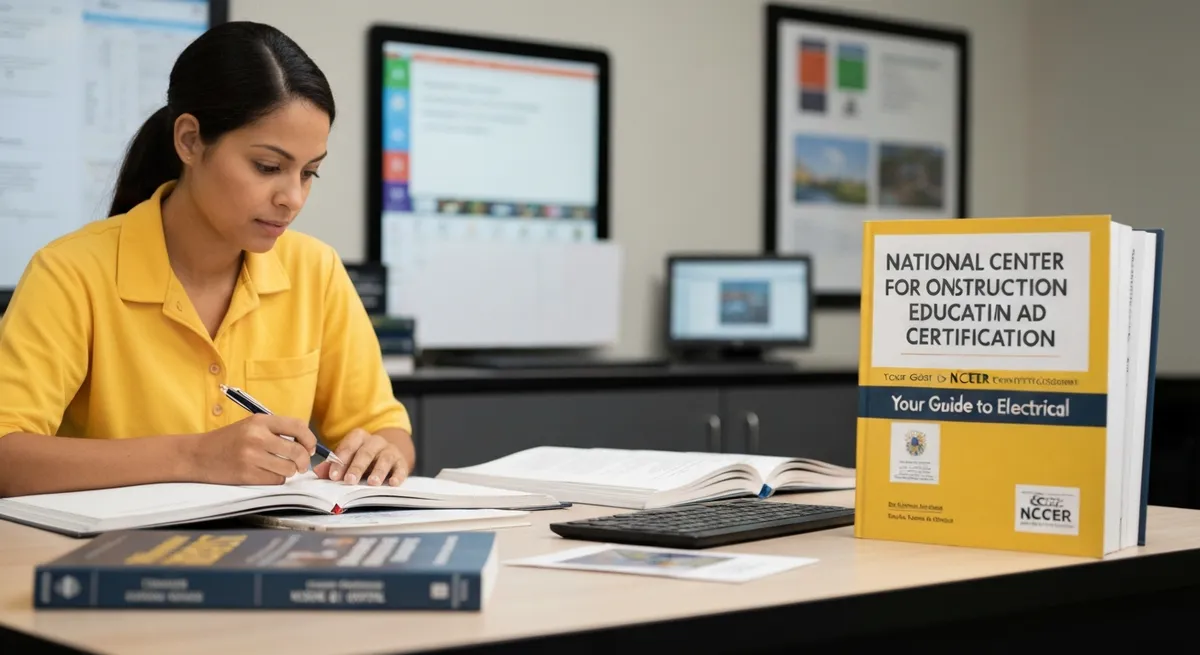
How to Become a Certified NCCER Electrician
Becoming certified through NCCER involves a combination of formal education, training through an accredited provider, and successful completion of performance and written assessments.
Steps to Certification:
Step 1: Enroll with an Accredited NCCER Training Provider
NCCER-certified training is available through community colleges, trade schools, union programs, and contractor associations.Step 2: Complete the Curriculum by Level
Students must progress through four levels, each building upon the previous one. Each level includes both theoretical knowledge and hands-on components.
Step 3: Pass Written and Performance Assessments
You must complete module exams and hands-on tasks. These assessments are conducted by certified NCCER instructors or evaluators.
Step 4: Register Your Credentials in the NCCER Registry
Upon successful completion, your records are stored in the NCCER Registry System, providing verifiable proof of training to future employers.
Step 5: Maintain and Advance Your Skills
While the certification does not expire, continuing education and additional certifications in specialties such as instrumentation, solar power, or HVAC electrical systems are encouraged.
How NCCER Certification Works for Electrical Apprentices
NCCER certification is issued through the National Center for Construction Education and Research and recognized across all 50 states by contractors and licensing boards. Candidates earn credentials by passing written module exams tied to the Contren Learning Series and completing documented performance evaluations administered by a certified Craft Instructor.
NCCER Certification Levels for Electrical Craft Professionals
The NCCER Electrical program spans four levels, with each level requiring passage of roughly 8 to 12 module tests covering topics like conductors, grounding, load calculations, and motor controls. Completing all four levels qualifies a trainee for journeyman-level NCCER certification and entry into the National Registry database employers use to verify credentials.
Exam Format for NCCER Certification Testing
Each NCCER certification module exam contains multiple-choice questions drawn directly from the corresponding trainee guide, with a passing score of 70 percent required. Tests are closed-book unless the module specifically permits use of the NEC codebook, such as Level 2 Module 26205 on Conductor Selection and Calculations.
Job Description for NCCER-Certified Electricians
Professionals holding the NCCER Electrical Certification are qualified to work across multiple sectors, including construction, manufacturing, renewable energy, and facility maintenance.
Key Responsibilities Include:
Installing, maintaining, and repairing electrical wiring and equipment
Interpreting blueprints, diagrams, and electrical codes
Testing electrical systems for continuity, voltage, and safety
Configuring control systems for HVAC, security, or lighting
Ensuring compliance with national and local electrical codes
Collaborating with engineers, contractors, and clients to plan electrical installations
Common Job Titles:
Apprentice Electrician
Journeyman Electrician
Industrial Electrician
Maintenance Electrician
Control Systems Technician
Electrical Foreman or Supervisor (with experience)
NCCER certification is often required or preferred for roles on federally funded construction projects, union jobs, or large-scale industrial installations.
Salary Expectations
NCCER-certified electricians typically earn competitive wages, and certification can serve as a stepping stone to higher-paying supervisory or specialized roles.
Estimated Salary Ranges:
Entry-Level (Apprentice): $35,000 – $45,000 annually
Mid-Level (Journeyman or Technician): $50,000 – $70,000 annually
Senior-Level (Foreman, Supervisor): $75,000 – $95,000+ annually
Electricians working in unionized environments, on government contracts, or in industrial sectors often earn higher wages. Certified professionals may also be eligible for hazard pay, project bonuses, and overtime compensation.
According to the U.S. Bureau of Labor Statistics, the median wage for electricians is approximately $60,000/year, with top earners making over $90,000/year depending on region and experience.
Exam Cost
The total cost to obtain NCCER Electrical Certification can vary based on location, training provider, and whether the student is part of a sponsored program (such as a union or employer-led apprenticeship).
Typical Cost Breakdown:
Tuition for Training Program (Per Level): $500 – $2,000 per level
(Often includes books, lab access, and instructor time)Exam/Assessment Fees: $50 – $150 per module or level
NCCER Registry Processing Fee: May be included or billed separately by the training provider
Study Materials (Optional): $100 – $300
Many vocational programs offer scholarships, grants, or employer reimbursement to cover certification costs. Veterans may also qualify for training under the GI Bill®.

Conclusion
The NCCER Electrical Certification is a respected, nationally portable credential that opens doors in the electrical and construction trades. With a structured curriculum, hands-on training, and clear performance standards, it provides an ideal pathway for individuals seeking a reliable and rewarding career in the electrical field.
Whether you are launching your career, transitioning from another trade, or seeking formal recognition of your skills, the NCCER Electrical Certification equips you with the tools to succeed in a wide variety of work environments. Backed by a network of accredited training centers and an industry-wide registry system, the certification ensures that you meet the expectations of modern employers and construction professionals.
NCCER Electrical Questions and Answers
About the Author
ASE Master Technician & Automotive Certification Trainer
Universal Technical InstituteTony Garza is an ASE Master Technician certified across all eight automotive service areas, with a Bachelor of Science in Automotive Technology from Universal Technical Institute. He has 22 years of shop experience and 9 years teaching ASE certification prep courses. Tony specializes in engine performance, electrical systems, and transmission diagnostics for certification candidates.