
Work for MTA: Complete Guide to MTA Police Careers, Requirements, and Hiring Process
Want to work for MTA? 🎯 Learn about MTA Police careers, hiring requirements, exam steps, and salary. Full guide for US applicants.

Choosing to work for MTA as a police officer is one of the most rewarding career decisions you can make in law enforcement. The Metropolitan Transportation Authority operates one of the largest and most complex transit networks in the United States, and its police department is responsible for keeping millions of daily commuters safe across subways, buses, bridges, and tunnels. Joining the MTA Police means becoming part of a specialized force that blends traditional law enforcement with the unique demands of transit security.
The MTA Police Department (MTAPD) employs several thousand sworn officers and operates across New York, serving the entire MTA service area including New York City Transit, Long Island Rail Road, Metro-North Railroad, and various bridges and tunnels. Officers work in a dynamic environment that requires quick thinking, strong communication skills, and the ability to handle everything from minor fare evasion to serious felonies. The scope of work is broader than many candidates initially realize, making preparation essential from day one of your application.
Before diving into the hiring process, it helps to understand what distinguishes MTA Police from municipal or state agencies. Unlike the NYPD, which covers all five boroughs, MTAPD officers have jurisdiction specifically tied to MTA properties and facilities. This means your daily work might shift from patrolling a subway platform in Manhattan one week to monitoring a commuter rail station in Westchester County the next. The variety keeps the job engaging, but it also demands officers who are adaptable and thorough in their training.
Thousands of candidates apply for MTA Police positions each year, and competition is fierce. The department typically receives applications from veterans, current law enforcement officers looking for a career change, and first-time recruits with no prior police experience. Each group faces different hurdles in the process, but all must pass the same rigorous sequence of testing, background investigation, medical evaluation, and psychological screening before being appointed to the force.
Many applicants underestimate how long the entire process takes. From the moment you submit your application to your first day at the MTA Police Academy, the timeline can stretch anywhere from twelve to twenty-four months depending on the size of the applicant pool, available class slots, and how quickly you move through each phase of evaluation. Planning ahead and staying organized is critical to avoiding unnecessary delays that could push you back to the next hiring cycle.
This guide covers everything you need to know about pursuing an MTA Police career, including minimum eligibility requirements, what the written exam tests, how the physical fitness evaluation works, salary expectations at different stages of your career, and practical strategies for preparing yourself to outperform other candidates in every phase of the process. Whether you are just starting to explore the idea or have already submitted your application, the information here will help you move forward with confidence.
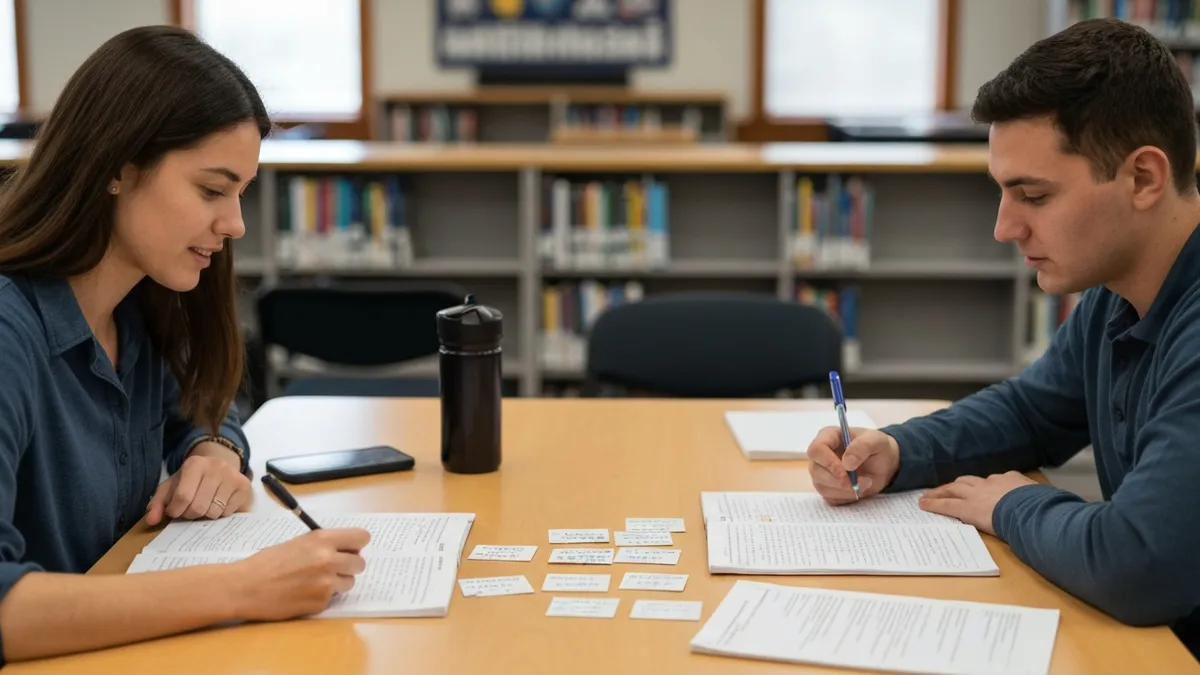
One of the most important things you can do right now is begin studying for the written examination. The MTA Police exam is not impossible, but candidates who walk in without focused preparation consistently underperform compared to those who spend several weeks reviewing the core subject areas. The sections on reading comprehension, written expression, and legal reasoning require both knowledge and timed practice, and the study habits you build early will carry you through every subsequent phase of the hiring process.
MTA Police Career by the Numbers

MTA Police Career Paths and Roles
The foundational rank after graduating the MTA Police Academy. Officers patrol transit facilities, respond to calls for service, enforce laws, and write reports. This role is the starting point for all sworn personnel and typically lasts two to four years before promotion eligibility.
Detectives investigate crimes that occur on MTA property, including theft, assault, fraud, and terrorism-related incidents. Promotion to detective typically requires several years of patrol experience, strong performance evaluations, and passing competitive examinations.
Supervisory roles involve overseeing patrol officers, managing shift operations, and coordinating responses to major incidents. Promotion to sergeant requires passing a promotional exam and demonstrating leadership ability over a period of years.
The MTAPD operates specialized units including Canine, Counter-Terrorism, Harbor, and Community Affairs. Officers with relevant experience and aptitude can apply for transfer to these units after completing their probationary period and demonstrating excellence in patrol.
Meeting the minimum eligibility requirements is the first gate every applicant must clear before the MTA Police hiring process can move forward. The department has established baseline standards that reflect the physical, educational, and legal demands of the job. Unlike some agencies that have relaxed requirements in recent years, the MTAPD maintains strict standards because transit policing presents unique risks that demand officers who are fully capable across multiple dimensions.
Age requirements stipulate that candidates must be at least 21 years old at the time of appointment, though they can apply at age 20 to get into the hiring queue early. There is also a maximum age consideration: candidates must be appointed before their 35th birthday under normal circumstances, though military veterans may receive additional time depending on the length of their service. Checking the most recent exam announcement for updated age parameters is essential since these details can change between hiring cycles.
Educational requirements are a significant factor. The MTAPD generally requires at least 60 college credits from an accredited institution, which is the equivalent of a two-year associate degree. Alternatively, candidates with two years of active U.S. military service may substitute that experience for the college credit requirement. Some applicants try to complete their credits while the hiring process is underway, which is possible since you typically have until the time of appointment to satisfy this requirement rather than the application date.
Citizenship and legal residency requirements mean that all candidates must be U.S. citizens or lawful permanent residents at the time of application. Candidates with permanent resident status may be required to achieve citizenship before appointment. A valid driver's license is also mandatory, and any history of license suspension or revocation will be scrutinized during the background investigation. Applicants should be prepared to document their entire driving history going back at least seven years.
Criminal background standards are thorough and strict. A felony conviction at any point in your history will automatically disqualify you from MTA Police appointment. Misdemeanor convictions are evaluated case by case, but recent offenses, patterns of behavior, or crimes involving dishonesty or violence are viewed very unfavorably. Even arrests without conviction can raise questions during the background investigation, and candidates are expected to disclose all prior contact with law enforcement honestly and completely.
Drug use history is also carefully evaluated. While standards have shifted somewhat for marijuana, a history of recent or heavy drug use — particularly harder substances — will likely result in disqualification. The background investigation will ask about drug use during a formal interview and may corroborate your answers through reference checks, social media review, and financial records. Candidates who have used marijuana should be honest about the frequency and recency of use and understand that each case is evaluated individually based on the totality of circumstances.
Physical fitness standards require candidates to pass a Job Standards Test (JST) that simulates the physical demands of police work. This typically includes tasks like running, climbing stairs, pushing and pulling, and other functional movements. Candidates who fail the physical test may be given limited opportunities to retest, but failing this portion is a common reason for early elimination from the hiring process. Beginning a structured fitness program months before your scheduled physical test is not optional — it is essential for anyone who wants to move forward in the process.
MTA Police Exam Topics and What to Expect
The MTA Police written examination tests candidates across several cognitive and knowledge-based domains. Reading comprehension is typically the largest section, requiring you to read passages about police procedures, legal definitions, or scenario descriptions and answer questions about the content. Written expression tests your ability to identify grammatically correct sentences, choose appropriate vocabulary, and organize information clearly — skills directly tied to report writing in the field.
Additional sections often include mathematical reasoning, problem-solving, spatial orientation, and memory and observation. The memory section may present a scene or list of information at the start of the exam that you must recall accurately later in the test without being able to go back. Many candidates find this section the most challenging because it cannot be entirely studied for — it relies heavily on practiced attention techniques developed through repeated timed exercises.

Pros and Cons of Working for MTA Police
- +Competitive starting salary with regular step increases built into union contract
- +Comprehensive health insurance covering medical, dental, and vision for officers and dependents
- +Defined benefit pension plan providing retirement income after 20 years of service
- +Variety in daily work across subway, rail, bridge, and tunnel environments
- +Strong job security with civil service protections and union representation
- +Opportunities to advance into specialized units including Counter-Terrorism and Canine
- −Lengthy hiring process that can take one to two years from application to appointment
- −Shift work including nights, weekends, and holidays is mandatory for most officers
- −Exposure to high-stress and emotionally difficult situations in a crowded transit environment
- −Probationary period of 18 months during which officers have limited job protection
- −Physical demands increase with age, requiring continuous fitness maintenance throughout career
- −Strict conduct standards apply both on and off duty, limiting personal freedoms in some areas
Pros and Cons at a Glance
| Pros | Cons |
|---|---|
| Competitive starting salary with regular step increases built into union contract | Lengthy hiring process that can take one to two years from application to appointment |
| Comprehensive health insurance covering medical, dental, and vision for officers and dependents | Shift work including nights, weekends, and holidays is mandatory for most officers |
| Variety in daily work across subway, rail, bridge, and tunnel environments | Exposure to high-stress and emotionally difficult situations in a crowded transit environment |
| Strong job security with civil service protections and union representation | Physical demands increase with age, requiring continuous fitness maintenance throughout career |
| Opportunities to advance into specialized units including Counter-Terrorism and Canine | Strict conduct standards apply both on and off duty, limiting personal freedoms in some areas |
MTA Police Application Checklist
- ✓Verify you meet the minimum age requirement of 21 years at time of appointment
- ✓Confirm you have at least 60 college credits or two years of active military service
- ✓Obtain a certified copy of your birth certificate to prove U.S. citizenship or residency
- ✓Gather your complete employment history for the past ten years with accurate dates and supervisors
- ✓Request official transcripts from every college or university you have attended
- ✓Pull your full driving record and address any outstanding violations or suspensions
- ✓Begin a structured physical fitness program targeting the specific Job Standards Test events
- ✓Start daily reading comprehension practice using timed passages and questions
- ✓Review the MTA Police exam announcement for the current testing date and registration deadline
- ✓Prepare a list of character references who can speak to your honesty, reliability, and work ethic
Early Preparation Doubles Your Chances
Candidates who begin studying for the MTA Police written exam at least eight weeks before their test date consistently score higher than those who cram in the final two weeks. Dedicating 30 to 45 minutes daily to reading comprehension and memory exercises produces measurable improvement, and the discipline you develop during exam prep directly translates to the habits that make strong police officers on the job.
Understanding the salary structure and benefits package is essential for evaluating whether an MTA Police career aligns with your financial goals. The compensation offered by the MTAPD is among the most competitive in the transit law enforcement sector, and when you factor in the full value of benefits including pension, health insurance, and paid time off, the total compensation package significantly exceeds the base salary figures alone.
Entry-level MTA Police officers typically start at a base salary in the range of $60,000 to $66,000 annually, depending on the current contract and any longevity adjustments negotiated by the union. This starting figure increases steadily over the first five years of service through a series of contractual step increases. By the time an officer reaches five years on the job, their base salary commonly reaches the $80,000 to $90,000 range, not including overtime, night differential, or specialty pay for assignments in certain units.
Overtime opportunities are substantial at the MTAPD and can add meaningfully to an officer's annual income. Because the transit network operates 24 hours a day, seven days a week, there is consistent demand for officers to cover shifts, special events, and emergency situations. Officers who are willing to work extra shifts can routinely earn $20,000 to $40,000 or more above their base salary in a given year, though this varies by seniority and unit assignment. Union rules govern overtime distribution to ensure fairness.
The pension system is one of the most valuable components of MTA Police compensation. Officers are enrolled in the New York State and Local Police and Fire Retirement System (PFRS), which provides a defined benefit pension upon retirement. After 20 years of service, officers can retire with a pension equal to a significant percentage of their final average salary, providing lifetime income security that private sector workers typically cannot access. The specific tier you enter depends on your start date, as New York State has modified pension tiers over the years.
Health insurance through the MTA covers medical, dental, and vision for the officer and their eligible dependents. The coverage is comprehensive by market standards, with the MTA covering a substantial portion of the premium cost. Officers also have access to a deferred compensation plan (457(b)) allowing pre-tax contributions for additional retirement savings beyond the pension. Life insurance, disability coverage, and an employee assistance program are also included in the standard benefits package.
Paid time off accrues from the start of your career and grows with seniority. New officers typically receive 15 to 20 vacation days annually, increasing to 25 or more days after several years of service. Sick leave, personal days, and holiday pay are also part of the package, giving MTA officers a meaningful work-life balance compared to many other law enforcement agencies. Shift differentials add additional pay for officers working evening or overnight shifts, which partially compensates for the lifestyle impact of non-standard hours.
Tuition assistance is another often-overlooked benefit available to MTA employees. Officers who wish to pursue additional college credits, a bachelor's degree, or graduate education while working can access financial support through the department's educational benefit programs. This incentivizes career growth and helps officers move toward promotional opportunities that require advanced education. Taking advantage of tuition assistance early in your career can position you for sergeant, lieutenant, or specialized assignment roles that come with additional compensation.
MTA Police exam registration windows typically remain open for only four to six weeks and are not extended. Missing the registration deadline means waiting for the next exam cycle, which may not occur for another two to three years. Monitor the MTA Police Department's official announcements closely, sign up for notification emails if available, and set calendar reminders well before the deadline to ensure you do not miss your opportunity to apply.
The MTA Police Academy experience is significant for recruits who arrive prepared and committed to the process. The academy runs approximately six months and is a full-time residential or daily commitment depending on the facility configuration. Recruits are trained in New York State law, MTA-specific policies and procedures, defensive tactics, firearms qualification, emergency vehicle operation, and first aid. The curriculum is demanding, and recruits who fall below performance standards may be separated from the academy class before graduation.
Physical training during the academy continues at an improved intensity beyond what you experienced during the pre-hire physical test. Running distances increase, defensive tactics sessions require strength and endurance, and the combined stress of academic and physical demands can feel overwhelming during the first several weeks. Recruits who arrive in excellent physical condition have a meaningful advantage not just in performance but in mental resilience — knowing your body can handle the physical demands frees up cognitive resources for the academic components of training.
Legal training at the academy covers New York State Penal Law, Criminal Procedure Law, Vehicle and Traffic Law, and MTA-specific regulations that govern conduct on transit property. Officers must understand the legal basis for every action they take, from stopping and questioning a person to making an arrest, executing a search, or using force. The legal curriculum is taught through a combination of classroom instruction, scenario-based exercises, and written examinations that recruits must pass to advance.
Firearms training and qualification is a major component of the academy experience. Recruits must demonstrate proficiency with the department's issued sidearm and meet qualification standards before being authorized to carry on duty. Those with no prior firearms experience should consider taking a basic handgun safety course before the academy begins, as arriving with zero familiarity can put recruits at a disadvantage during the initial training sessions. Range time is supervised and safety standards are rigidly enforced.
After graduating from the academy, new officers enter a probationary period that typically lasts 18 months. During this time, they work under the supervision of a field training officer who evaluates their performance in real operational situations. Probationary officers are held to the same standards as experienced officers while simultaneously being expected to continue learning. This period is critical — performance evaluations during probation directly influence future assignments, advancement opportunities, and the officer's professional reputation within the department.
Career advancement beyond the patrol officer rank requires a combination of time in grade, competitive examination performance, and demonstrated leadership. Promotional exams for sergeant are administered periodically by the department, and officers are ranked based on their exam scores and years of service. The process is competitive, and officers who want to advance need to maintain their studying habits well beyond the initial hiring exam. Seeking out mentors within the department, volunteering for special assignments, and building a record of professional conduct all contribute to promotional success over time.
Many officers find that the most fulfilling aspect of working for the MTAPD is the direct impact they have on public safety in one of the most densely used transit systems in the world. Every day on the job involves interactions with hundreds or thousands of commuters whose safety and security depend on the vigilance of MTA Police.
Officers who approach this responsibility seriously and develop genuine connections with the communities they serve build rewarding careers that extend far beyond the paycheck. If you are ready to begin that journey, exploring your options to work for MTA starts with understanding the full scope of what the department offers and demands.
Preparing strategically for the MTA Police exam requires more than general studying — it means understanding exactly what each section tests and allocating your preparation time accordingly. Reading comprehension is the section most candidates can improve the most with structured practice. The key is not just to read more, but to read the way the exam demands: actively, with attention to main ideas, supporting details, logical inferences, and author intent. Practice with timed passages and force yourself to answer questions without rereading the text unnecessarily.
Memory and observation sections require a different preparation approach. The exam may present a detailed scene, a list of names and descriptions, or a floor plan that you must memorize in a limited amount of time before answering questions about it later. Building this skill requires daily exercises using memory techniques such as visualization, association, and chunking. Apps designed for memory training can supplement traditional practice, but nothing beats working through actual sample scenarios under realistic time pressure to build confidence before test day.
Written expression sections test grammar, sentence structure, word choice, and the logical organization of written information. Officers write reports constantly, and the exam reflects that reality. Review the basic rules of subject-verb agreement, pronoun reference, comma usage, and sentence completeness. Practice identifying the clearest and most precise way to express a given idea, since exam questions in this section often present four versions of the same sentence and ask you to select the most correct or effective one.
Mathematical reasoning is typically a smaller component of the MTA Police exam but should not be neglected. Questions may involve calculating percentages, interpreting data from tables or graphs, working with ratios, or applying basic arithmetic to real-world scenarios. Candidates who have been out of school for several years should spend extra time reviewing these fundamentals, since the questions are not conceptually difficult but can trip up anyone who is not warmed up on basic math operations.
Spatial reasoning and orientation questions may ask you to read a map, follow directions through a transit system layout, or determine the correct direction of travel based on a diagram. These questions are highly learnable with practice. Working through map reading exercises, practicing following written directions with a physical map, and completing spatial puzzles online will all sharpen this skill. Officers use spatial reasoning every time they respond to an incident, so demonstrating competence on the exam matters both for your score and your actual job performance.
The night before your exam, prioritize sleep over last-minute cramming. Research on cognitive performance consistently shows that well-rested candidates outperform fatigued ones on timed tests, even when the fatigued candidate has studied more in the final hours. Lay out all required identification and materials the evening before, eat a nutritious meal the morning of the exam, and arrive at the testing site at least 30 minutes early. Managing exam-day logistics eliminates unnecessary stress and lets you focus your mental energy entirely on performing your best during the test itself.
After the written exam, successful candidates should immediately pivot their energy toward the physical test. Do not assume the weeks between testing phases are downtime — they are an opportunity to continue building fitness, completing background paperwork, and preparing for the psychological evaluation. Candidates who stay proactive between phases consistently move through the process faster and avoid the administrative delays that can stall or derail an otherwise strong application. Treat every phase as equally important and approach the full process with the same discipline you would apply to training for the job itself.
Sample MTA - Police Exam Practice Questions
Try these questions from our free MTA - Police Exam practice tests. The correct answer and an explanation follow each question.
During the MTA Police physical fitness test, which component is assessed by having candidates complete a timed 1.5-mile run?
- A. Muscular strength
- B. Cardiovascular endurance
- C. Flexibility
- D. Anaerobic power
Answer: B. Cardiovascular endurance
The 1.5-mile run is a standard measure of cardiovascular (aerobic) endurance, reflecting the heart and lungs' ability to sustain prolonged physical effort.
An MTA Police Officer must complete a use-of-force report after which of the following incidents?
- A. Verbally telling a passenger to move along
- B. Applying handcuffs to an arrested suspect
- C. Both verbal commands and physical contact of any kind
- D. Only incidents resulting in visible injury to the suspect
Answer: B. Applying handcuffs to an arrested suspect
Use-of-force reports are required whenever an officer uses physical force, including applying handcuffs, regardless of whether injury occurs.
How many people work at the police department if 27,000 people make up 30% of the workforce?
- A. 27,000
- B. 90,000
- C. 81,000
- D. 142,000
Answer: B. 90,000
To find the total workforce, you can set up a proportion: if 30% of the workforce (W) is 27,000 people, then 0.30 * W = 27,000. Dividing 27,000 by 0.30 gives W = 90,000. Therefore, 90,000 people work at the police department.
The Fourteenth Amendment's Due Process Clause extended most Bill of Rights protections to the states through a process called:
- A. Selective incorporation
- B. Total incorporation
- C. Federalism
- D. Substantive due process
Answer: A. Selective incorporation
Selective incorporation applies specific Bill of Rights provisions to the states on a case-by-case basis through the Fourteenth Amendment.
MTA Questions and Answers

State Police Exam for MTA: Career Overview, Duties, Requirements, and How to Prepare

MTA Train Operator: Role, Requirements, Salary, and How to Start Your Career

Florida State Police Exam: Career Overview, Duties, Requirements, and How to Prepare

White Plains Police Exam: Career Overview, Duties, Requirements, and How to Prepare

MTA Police Exam
About the Author

Educational Psychologist & Academic Test Preparation Expert
Columbia University Teachers CollegeDr. Lisa Patel holds a Doctorate in Education from Columbia University Teachers College and has spent 17 years researching standardized test design and academic assessment. She has developed preparation programs for SAT, ACT, GRE, LSAT, UCAT, and numerous professional licensing exams, helping students of all backgrounds achieve their target scores.