
D.O. Doctor of Osteopathic Medicine: What You Need to Know 2026 September
Understand the D.O. degree, how osteopathic medicine differs from allopathic, DO vs MD training, and licensing. Prep for medical exams with free 🧠
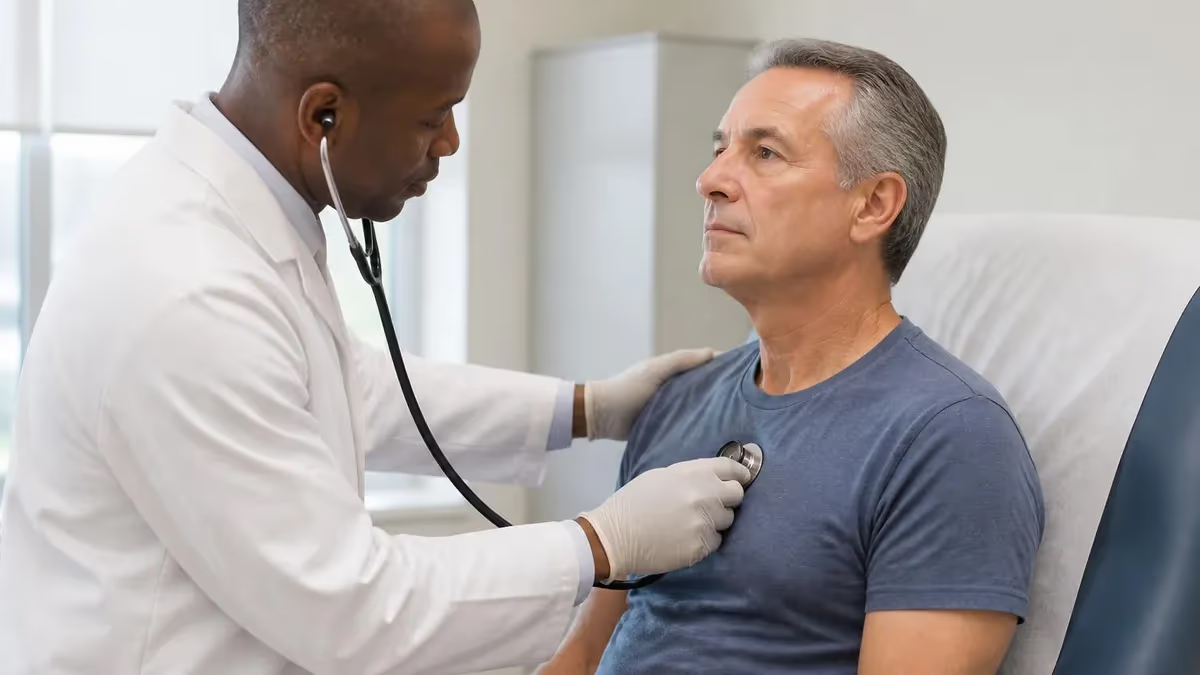
When people encounter the letters "D.O." after a physician's name, the questions come fast: Is that a real doctor? What's the difference from an MD? Are they less qualified? The answers might surprise you — and if you're studying for any medical licensing exam, understanding the distinction between osteopathic and allopathic medicine is worth your time.
A Doctor of Osteopathic Medicine (D.O.) is a fully licensed physician in the United States. D.O.s can prescribe medications, perform surgery, specialize in any field of medicine, and practice in every state. They complete four years of medical school, followed by residency training, and must pass national licensing exams — just like MDs. What makes them distinct isn't their credentials or scope of practice; it's the philosophical and clinical framework their training includes.
This guide covers what osteopathic medicine actually is, how D.O. and MD training compare, and what the licensing pathway looks like for osteopathic physicians in the United States.
What Is Osteopathic Medicine?
Osteopathic medicine is a branch of American medicine founded in the late 19th century by Andrew Taylor Still. Still believed that the body has an inherent capacity to heal itself, that structure and function are interrelated, and that the musculoskeletal system plays a central role in overall health. These principles became the philosophical foundation of osteopathic medicine.
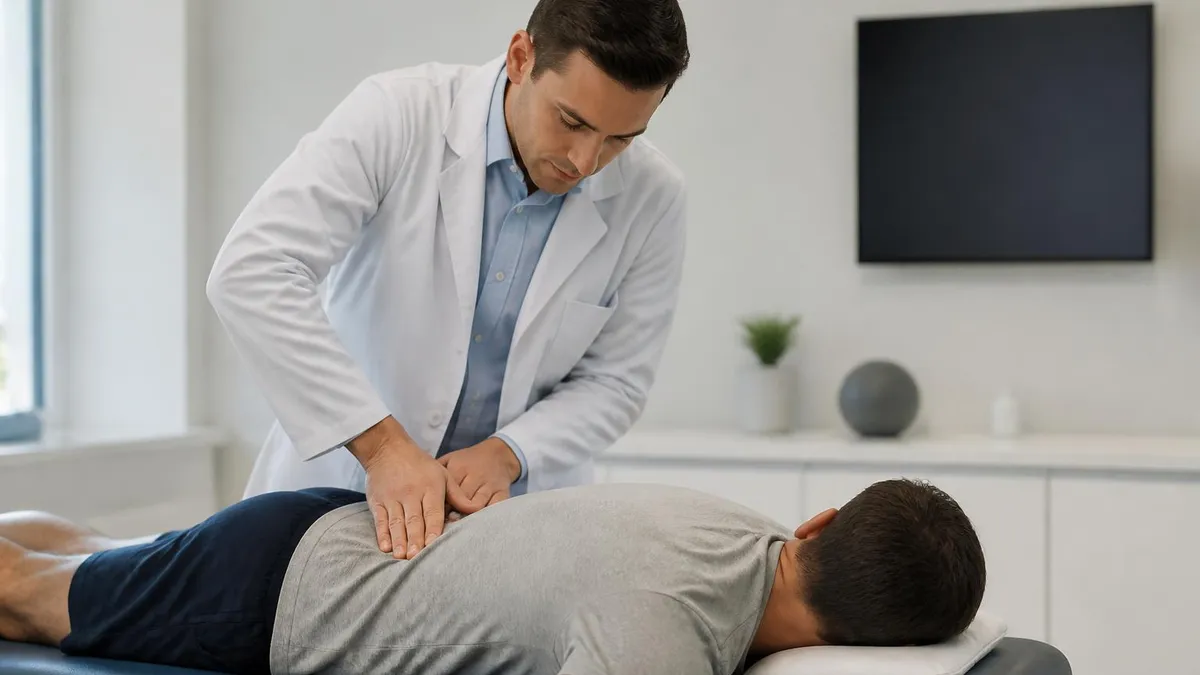
In practice, this translates into a whole-person approach that treats patients rather than just diseases or symptoms. D.O.s are trained to consider the physical, mental, and social dimensions of a patient's health — not just the presenting complaint. They also receive training in Osteopathic Manipulative Medicine (OMM), a set of hands-on diagnostic and treatment techniques involving the muscles, joints, and connective tissue.
OMM is one of the most visible differences between osteopathic and allopathic training. It's not the same as chiropractic manipulation — D.O.s are full physicians who use OMM as one clinical tool among many, not as a primary or exclusive treatment method. Many D.O.s, especially those in surgical or hospital-based specialties, use OMM infrequently. Others, particularly in primary care, integrative medicine, and sports medicine, incorporate it regularly.
D.O. vs. MD: Training Comparison
The paths to a D.O. and an MD overlap significantly. Both require:
- A bachelor's degree with pre-medical prerequisites (biology, chemistry, physics, math)
- Strong MCAT scores for admission
- Four years of medical school (two preclinical, two clinical rotations)
- Residency training in a specialty (typically 3–7 years depending on the field)
- Board licensing exams
- Continuing medical education to maintain licensure
D.O. students additionally complete approximately 200 hours of OMM training integrated throughout their medical school curriculum. This is the most concrete curricular difference between osteopathic and allopathic medical schools.
Historically, D.O.s and MDs trained in separate residency systems. D.O.s applied to AOA-accredited programs and MDs applied to ACGME-accredited programs. That distinction ended in 2020 when the two systems fully merged under ACGME accreditation. Today, D.O. graduates compete for the same residency positions as MD graduates through the same National Residency Matching Program (NRMP) — the Match.
In competitive specialties like orthopedic surgery, dermatology, and radiology, residency slots are highly sought by both D.O. and MD applicants. D.O. students who want to enter these fields face the same competitive landscape as their MD counterparts, including the same emphasis on USMLE/COMLEX scores, research experience, and clinical evaluations.
Licensing Exams: COMLEX vs. USMLE
This is where D.O. and MD paths formally diverge in testing requirements. MD students take the USMLE (United States Medical Licensing Examination), a three-step series. D.O. students take the COMLEX-USA (Comprehensive Osteopathic Medical Licensing Examination), a three-level series with an additional OMM component at each level.
D.O. students can also take the USMLE — and many do, especially if they're aiming for highly competitive specialties where USMLE scores are well recognized. Taking both exam series is optional but requires additional preparation time and cost.
Here's how the exams align:
- COMLEX Level 1 / USMLE Step 1 — Basic sciences, taken after the preclinical years
- COMLEX Level 2-CE / USMLE Step 2 CK — Clinical knowledge, taken during or after clinical rotations
- COMLEX Level 3 / USMLE Step 3 — Patient management, taken during or after residency
D.O. graduates who pass COMLEX and complete an ACGME-accredited residency are fully eligible for state medical licensure in all 50 states. No state requires an MD degree for licensure; a D.O. with equivalent board scores and training meets the same standards.
Specialization and Practice Patterns
D.O.s practice across every medical specialty. You'll find D.O.s in emergency medicine, surgery, cardiology, psychiatry, obstetrics, neurology, and every other field. The notion that D.O.s are limited to primary care or musculoskeletal medicine is outdated — it traces back to the era of separate residency tracks, which no longer exists.
That said, D.O. graduates do skew toward primary care specialties at higher rates than MD graduates. Family medicine, internal medicine, and pediatrics see significant numbers of D.O. graduates. This partly reflects the osteopathic philosophy of whole-person care, and partly reflects the historical pipeline of osteopathic training programs, which emphasized primary care.
As of recent data, there are approximately 145,000 D.O.s practicing in the United States, representing about 11% of the total physician workforce. Osteopathic medical school enrollment has grown significantly over the past two decades, with over 30 accredited COM (College of Osteopathic Medicine) programs currently operating in the US.
The Osteopathic Philosophy in Modern Practice
The founding principles of osteopathic medicine — the body's self-healing capacity, the interrelationship of structure and function, and the importance of treating the whole patient — sound abstract until you see them in clinical context.
Take a patient presenting with chronic lower back pain. An allopathic approach might focus on imaging, pharmacological pain management, and referral to physical therapy. An osteopathic approach would do those things too — but might also assess the patient's gait, occupational posture, stress levels, sleep quality, and apply OMM to address somatic dysfunction contributing to the pain. It's not that one approach is right and the other is wrong; it's that the osteopathic framework explicitly trains physicians to think beyond the complaint.
This whole-person philosophy has gained traction in mainstream medicine over the past few decades, as patient-centered care, integrative medicine, and biopsychosocial models have moved from the fringes to the mainstream of medical education. In some ways, osteopathic medicine was ahead of the curve on these ideas — though that's a point of pride for D.O. advocates, not a criticism of allopathic medicine.
Should You Care Whether Your Doctor Is a D.O. or MD?
For most patients, the answer is: not especially. The credential matters far less than the physician's training, experience, clinical skills, and the quality of the patient-physician relationship. A D.O. in primary care who listens carefully, takes a thorough history, and follows evidence-based guidelines is delivering excellent care. So is an MD who does the same.
Where the distinction might matter is in specific clinical scenarios — chronic pain, sports injuries, postural issues, headache management — where OMM is a potential treatment option. If you're looking for a physician who can incorporate hands-on manipulative techniques alongside conventional medicine, a D.O. has that training. Whether they use it is another matter; many D.O.s don't use OMM regularly outside of specific practice contexts.
Medical Exam Preparation for DO and MD Students
If you're studying for COMLEX or USMLE, strong foundational knowledge in basic and clinical sciences is non-negotiable. Both exams test the same core medical knowledge — anatomy, physiology, pathology, pharmacology, clinical diagnosis, and patient management. COMLEX adds osteopathic principles and OMM, but the underlying medical knowledge base overlaps almost entirely.
The medical knowledge practice tests here cover clinical scenarios, pathophysiology, and diagnostic reasoning across all major systems. They're built to reinforce the kind of integrative clinical thinking that both COMLEX and USMLE demand — which is also, not coincidentally, exactly what osteopathic medical education is designed to build.
Whether you're an MD or D.O. student, consistent practice with high-yield clinical questions is the most effective way to prepare. Vary your question sources, review every explanation thoroughly, and focus extra attention on the areas where your practice scores are weakest. That's the path through either exam.
- ✓Confirm your exam appointment and location
- ✓Bring required identification documents
- ✓Arrive 30 minutes early to check in
- ✓Read each question carefully before answering
- ✓Flag difficult questions and return to them later
- ✓Manage your time — don't spend too long on one question
- ✓Review flagged questions before submitting
About the Author

Educational Psychologist & Academic Test Preparation Expert
Columbia University Teachers CollegeDr. Lisa Patel holds a Doctorate in Education from Columbia University Teachers College and has spent 17 years researching standardized test design and academic assessment. She has developed preparation programs for SAT, ACT, GRE, LSAT, UCAT, and numerous professional licensing exams, helping students of all backgrounds achieve their target scores.