
LSAT Tutor 2026 September: Cost, Best Tutoring Services, and How to Choose
🔎 LSAT tutor cost runs $100-$500/hr. Compare 7Sage, Blueprint, Velocity, Khan Academy. Online vs in-person, how to vet a tutor, free options.

LSAT Tutoring by the Numbers
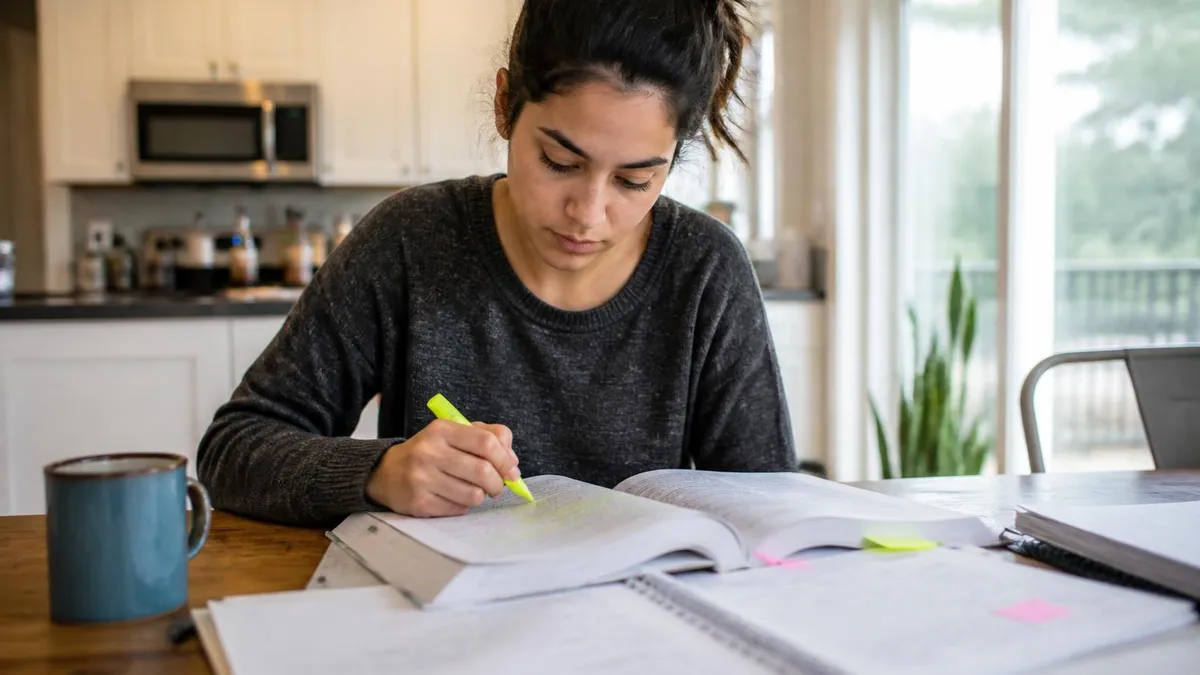
LSAT Tutor 2026: Cost, Best Tutoring Services, and How to Choose
You hit a wall. Your LSAT score range stalled at 154. The drills aren't working anymore. The cold prep books on your desk start to feel like furniture. That's the moment most people Google "LSAT tutor."
Fair warning: tutoring won't fix bad study habits. It won't replace the 200+ hours of practice the test demands. What it can do — and what makes it worth the money for the right person — is shorten the gap between knowing the rules and applying them under timing pressure. It's an accelerator, not a substitute. Treat it that way.
The market is bigger than you'd think. A solid LSAT tutor runs anywhere from $100 to $500 per hour. Top tutors — the ex-170s-scoring instructors who built reputations at Blueprint, 7Sage, and Velocity — clear $500 to $1,000 hourly. On the other end, LSAT classes at Khan Academy cost zero dollars. Before you swipe a card, you need to know what you're actually buying.
Here's the thing nobody at the prep companies tells you. The single biggest predictor of score gain isn't tutor pedigree. It's not the package price. It's how many official PrepTests you've finished, how detailed your wrong-answer log is, and whether you've identified your three most-missed question types by name.
Tutors accelerate that work. They don't replace it. Walk in with the basics done and a great tutor doubles your gains. Walk in cold and you're paying $250 per hour to be taught what the LSAT actually is. That's wasted money.
When You Actually Need an LSAT Tutor
Not every test-taker needs one. Lots of high scorers — including people who hit 170+ — never paid a cent for instruction. They used free LSAT practice test material, official PrepTests, and obsessive self-analysis. So when does a tutor actually move the needle?
Five clear signals. First: you're stuck below 155 after two months of solo prep. That's the classic plateau. You know the question types. You've done the drills. Scores aren't moving. A tutor can usually spot the broken pattern in one session — you're misreading conditional language, you're rushing logic games setups, or your reading comprehension is fine but your timing is shot.
Second: you're weak in one specific section. Logic Games crushes you but Logical Reasoning is fine. A specialist tutor for that one section is targeted spending — and section-specific tutors charge the same hourly rate as generalists.
Khan Academy Is Free and It Works
The Law School Admission Council (LSAC) partnered with Khan Academy to build a free, official LSAT prep program. It includes adaptive practice, full PrepTests, video explanations, and analytics. Studies show Khan-only students raise scores by 11+ points on average. Before you spend $3,000 on a tutor, try Khan for 30 days. If you plateau, then bring in paid help — and you'll have a clear baseline.
Third: you're less than 90 days out from test day. Time pressure changes the math. A tutor accelerates pattern recognition faster than reading another prep book. Fourth: your learning style doesn't match self-study. Some brains need a real human asking "why did you pick C?" Books can't do that.
Fifth: you're aiming for a top-14 law school. The difference between 165 and 172 is huge for admissions, and tutoring routinely closes that gap. T-14 schools median around 170-173, and every point matters for scholarship money. A 173 instead of a 168 can mean a full-ride offer instead of $200K in loans. The ROI on tutoring at that level is enormous.
None of those describe you? Save the money. Use Khan Academy. Drill official PrepTests. Track your wrong answers. That's the cheapest path to a competitive score, and it works for most people. The data backs it up: Khan-only studiers raise scores 11+ points on average. That's a real number from real test-takers, not a marketing claim. Try the free path first. The paid path is always there if you plateau.
How Much an LSAT Tutor Actually Costs
Pricing isn't standardized — which means new test-takers get fleeced regularly. Here's the real spread, broken down by tier so you can match your budget to what you're actually paying for.
Entry-tier tutors on platforms like Wyzant, TutorMe, and Varsity Tutors run $60 to $250 per hour. These are mixed-quality. Some are law students who scored 165 and tutor part-time. Others are career tutors with track records. Vet hard before booking. Ask for the verified score. Ask for references. Don't assume the platform vetted them — most don't.
Mid-tier independent tutors charge $150 to $300 hourly. Most are former 170+ scorers running solo practices — LSATHacks (Adam Pascarella), Manhattan Prep alumni, and independent operators built on social media reputations. This tier is the sweet spot for most students.
Top-tier tutors run $300 to $500 per hour, sometimes more. Think Blueprint senior instructors, 7Sage founders, Velocity LSAT principals. These tutors typically have 175+ official scores and decades of teaching. Worth it for students chasing T-14 admissions.
Elite private tutors hit $500 to $1,000 per hour. Rare, often booked months out, and usually associated with single-name reputations on Reddit and law-school forums. Group tutoring drops the price dramatically: $30 to $50 per hour per person in a 3-4 student group. The tradeoff is obvious — less personal attention. For weak-specific-area students, 1-on-1 is mandatory.
Top LSAT Tutoring Services in 2026
Subscription at $297/mo includes self-paced course + group classes. Add-on private tutoring with 175+ instructors runs $200-$300/hr. Strong logic games curriculum.
Full courses $1,499-$2,799. Add-on tutoring with 99th-percentile instructors at $200/hr. Strong analytics dashboard and video curriculum.
Boutique tutoring service, $230-$330/hr depending on tutor seniority. All instructors verified 170+. No bloated course — pure 1-on-1 model.
Free, official LSAC partner. Adaptive practice, full PrepTests, video explanations. No tutoring component — pure self-paced. Perfect first 30 days of prep.
Packages $1,500-$3,500. Includes group instruction, prep books, practice tests, and tutoring options. Higher cost reflects branded curriculum and live class hours.
$1,100-$3,000 packages. Self-paced, live online, and in-person formats. Strong score guarantee — re-take or refund if score doesn't improve.
The Honest Reality of Hiring a Tutor
Three things nobody at the prep companies will tell you straight. One: tutoring doesn't add points the way ads suggest. Score gains of 5 to 15 points are realistic with consistent weekly tutoring across 8 to 12 weeks. Bigger gains — 20+ points — happen, but they require six months of disciplined work plus tutoring, not tutoring alone.
Two: the tutor's own LSAT score matters more than their teaching credentials. A tutor who scored 168 trying to teach you how to reach 172 is a problem — they've never been at the level you're chasing. Aim for tutors with verified 170+ official scores, ideally 175+. Ask for a screenshot of the score report.
Reputable tutors send it without flinching. Three: most reputable tutors offer a free 30-60 minute trial. If they don't, that's a flag. You're hiring someone for $250 per hour. You should hear them teach before you pay. The trial tells you everything — communication style, teaching method, whether the chemistry works.
Online vs In-Person LSAT Tutoring
In-person tutoring is mostly dead. After 2020, the entire industry shifted to Zoom — and it stuck. Today, 90%+ of LSAT tutoring happens online, and there's no measurable quality difference. The screen-share tools are actually better than a shared notebook. Tutors can annotate question stems in real time, save the session recording, and pull up your error log without rifling through paper.
The catch is your environment. If you're tutoring from a coffee shop or a chaotic apartment, the medium starts to matter. Set up a quiet desk, decent webcam, headphones with a microphone. Treat the session like a real class. Camera on. Phone off. The tutor charges $200 per hour either way. Pay attention.
In-person tutoring still exists in big legal markets — NYC, LA, DC, Chicago. Expect to pay a premium of 30-50% over the online rate for the same tutor, because they're traveling or renting space. The only legitimate reason to choose in-person is if you genuinely focus better with another human in the room and you've tried online tutoring and bounced off it.
Otherwise, online is the right call. Cheaper, more flexible, wider tutor pool, and the recordings let you re-watch tough explanations as many times as you need. There's a reason 90%+ of the industry moved online and stayed there. The economics make sense for both sides.

Tutoring Formats Compared
$100–$500/hr. Best for students with specific weak areas, plateaued scores, or T-14 ambitions. The tutor builds a custom plan around your wrong-answer patterns. Sessions usually 60-90 minutes. Most reputable tutors require homework between sessions — drills, full sections, error logs. Expect to commit 8-12 weeks at 1-2 sessions per week, plus 10-15 hours of independent work weekly. This format produces the largest score gains when done right.
LSAT Tutor Cost Tiers
What a Good LSAT Tutor Should Provide
The hourly rate is the easy part to compare. The harder part — and where most students get short-changed — is the deliverables. A real LSAT tutor isn't a paid explainer. They're building a system around your specific weaknesses. Here's what should show up in your first two weeks of working together.
A written study plan. By the end of session one, you should have a calendar through test day. Which sections you drill on which days, when you take full PrepTests, when you simulate test conditions. Not a generic template — a plan built around your diagnostic score and your weak areas.
A practice test analysis system. After every full PrepTest, your tutor walks you through every wrong answer and every "right for the wrong reason" answer. Not just "here's why the answer is C." The deeper analysis: what cognitive shortcut led you to the wrong pick, and how do you stop it next time.
Weak-area drills come next. Targeted question sets that hit your specific weakness — flaw questions, weaken/strengthen, conditional logic. Pulled from official LSAC PrepTests, not generic prep-book filler. The drills should escalate in difficulty across the engagement.
Accountability and homework. You should leave every session with 5-10 hours of work to do before next session. If your tutor doesn't assign homework, they're not coaching — they're chatting. Exam-day strategy comes last. As test day approaches, the tutor should drill timing, pacing, section-skipping rules, anxiety management, and the actual logistics of test day.
Arrival time, ID, allowed items, scratch paper rules — all of it. If your tutor isn't producing these deliverables by week two, fire them. There are dozens of qualified tutors. Pay for results, not for chat. Most contracts are session-by-session anyway, so cutting ties usually costs you nothing more than an awkward email.
Red Flags to Walk Away From
Some patterns tell you everything you need to know. No LSAT score on their profile is the biggest one. Reputable tutors lead with their score — it's the credential. If you have to ask three times to see proof, something's off. Specific score promises are the next red flag. "I'll get you to 170 in 8 weeks." Nobody can guarantee that. Score gains depend on your starting point, your discipline, and a hundred other variables. Promise language is sales language.
Money up front for a long package is another warning. Pay session-by-session or in small blocks — never $5,000 upfront. If the relationship sours by week three, you want to walk away, not fight for a refund. Unwillingness to share teaching philosophy is suspicious. If you ask "how do you teach Logical Reasoning?" and you get a vague non-answer, that's not customization. That's no method.
How to Vet an LSAT Tutor Before Hiring
- ✓Confirm verified LSAT score — at least 170, ideally 175+. Ask for a screenshot of the score report.
- ✓Request a free 30-60 minute trial session. Any reputable tutor offers this. Refusal is a red flag.
- ✓Ask about teaching method — do they lecture or coach? You want active coaching, not passive lecturing.
- ✓Check their specialty. Logic Games tutor? Reading Comp specialist? Full-prep generalist? Match to your weak area.
- ✓Ask for 2-3 client references — students who recently took the LSAT. Call them.
- ✓Read reviews on multiple platforms. Reddit r/LSAT, Trustpilot, Google reviews. Cross-reference.
- ✓Confirm they assign homework and practice tests between sessions. No homework = no progress.
- ✓Get pricing in writing. Hourly rate, package discounts, refund policy, cancellation terms.
- ✓Discuss realistic score gain. If they promise specific point increases, walk away — nobody can guarantee that.
- ✓Trust your gut after the trial. If communication felt off, find another tutor. You're paying for chemistry too.

No specialty focus matters too. A tutor who claims expertise in LSAT, MCAT, GRE, GMAT, and SAT is not a specialist. Find someone who lives and breathes the LSAT. One last flag: tutors who push you to skip free LSAT practice test drilling and only work "their material" are protecting their package, not your prep. Official LSAC PrepTests should anchor every minute of your prep, with or without a tutor.
Realistic Score Gains From Tutoring
The honest math. Consistent weekly tutoring across 8-12 weeks, plus 10-15 hours of solo work weekly, typically adds 5-15 points to a baseline score. That's the average. Students who go in disciplined — taking practice tests, logging wrong answers, doing the homework — land at the high end of that range or beyond. Students who treat tutoring like a magic pill and skip the solo work stay flat.
Bigger gains — 20+ points — are possible. They happen with six-month engagements, intensive study schedules of 25+ hours weekly, and complete restructuring of the student's approach to the test. They're not common. They're not the default outcome of paying for tutoring. They're the result of a student fundamentally changing how they study, with a tutor accelerating that change. Tutoring is the lever. You're still the engine.
If you want to see the raw-to-scaled math behind those gains, the LSAT score conversion page breaks down exactly how many additional correct answers each scaled point requires. Knowing your conversion math sharpens your study focus — sometimes one cleaner section is worth more than even effort across the test.
What's Worth More Than a Tutor
Counterintuitive but true: a tutor is not the most important investment in your LSAT prep. Five things matter more, and the order matters too. One: quality practice tests. The official LSAC PrepTests — not generic prep-book questions. They're $30-$50 each on LSAC's site, and you need 20-30 of them across your prep cycle.
Two: a disciplined study plan you actually follow. Doesn't matter if it's tutor-built or self-built — execution beats planning. Three: self-analysis after every wrong answer. Why did you pick that? What pattern would have caught it? This is the single most underrated practice in LSAT prep, and no tutor can do it for you. Four: sleep, hydration, and stress management in the final month. Burnout tanks scores faster than weak content.
Five: a tutor — but only after the first four are locked in. Tutoring on top of bad habits wastes money. Tutoring on top of disciplined practice multiplies gains. The order matters. Start with Khan Academy, drill LSAT practice test PDF sections, build the habit, then bring in paid help if you need it.
Most students don't. The ones who do — and who arrive with the basics already locked in — see the biggest returns on every dollar they spend. That's the entire game. Tutoring is a multiplier on existing effort. Multiply zero by anything and you still get zero. Build the base first, then bring in the lever.
One last thing. Pick your test date before you pick your tutor. Knowing exactly when you sit for the LSAT shapes everything else — how many sessions you can fit, when to start a tutor block, when to taper. Check the official LSAT test dates for 2026 and 2027 and work backward. A tutor hired three months out can do real work. A tutor hired three weeks out is just a comfort blanket.
LSAT Tutor vs Self-Study
The honest tradeoff.
- +You've plateaued below 155 after 60+ days of solo prep
- +You're weak in one specific section (Logic Games, RC, LR)
- +Test day is less than 90 days away and you're behind pace
- +You're aiming for a T-14 law school and need 170+
- +You learn better with active coaching than reading books
- +You can commit to 1-2 sessions weekly plus 10-15 hrs solo work
- +Your budget can absorb $1,500-$5,000 over 8-12 weeks
- −You haven't tried Khan Academy yet — it's free and proven
- −You're scoring in the 160s already and just need more PrepTests
- −Your discipline is solid and your error log is detailed
- −You're 6+ months from test day with time to self-correct
- −Your budget can't absorb $1,500+ without financial stress
- −You learn better from books and silent practice than verbal coaching
- −You haven't logged 100 hours of solo prep yet — too early for tutoring
When to Bring in a Tutor — A Realistic Timeline
Diagnostic + Free Prep
Identify the Plateau
Tutor Search + Free Trials
Active Tutoring Block
Timing + Test Day Strategy
Taper and Rest
LSAT Questions and Answers
Related LSAT Articles

LSAT Test Dates 2026 and 2027: Full Schedule, Deadlines, and Score Release

LSAT Score Conversion 2026: Raw Score to Scaled Score & Percentiles

LSAT Accommodations and Registration 2026: Complete Guide

How to Pass the LSAT Exam in 2026 — Complete Study Guide

LSAT Score Range: Percentiles, Scales, and Law School Benchmarks

Free LSAT Practice Test: 2026 Study Guide
About the Author

Attorney & Bar Exam Preparation Specialist
Yale Law SchoolJames R. Hargrove is a practicing attorney and legal educator with a Juris Doctor from Yale Law School and an LLM in Constitutional Law. With over a decade of experience coaching bar exam candidates across multiple jurisdictions, he specializes in MBE strategy, state-specific essay preparation, and multistate performance test techniques.