
LAPD Wilshire Division: Complete Guide to LA's Central District Policing, Salary, SWAT, and Ranks
LAPD Wilshire Division explained — salary, SWAT, ranks, gear & how to file an online report. Full 2026 September guide. ✅

The LAPD Wilshire Division sits at the heart of one of Los Angeles's most diverse and densely populated corridors, covering neighborhoods from Koreatown and Mid-City to the edges of Hancock Park and the Miracle Mile. Established as one of the department's original geographic divisions, Wilshire has long served as a proving ground for patrol officers, detectives, and specialized units alike. Understanding how this division operates — from LAPD salary structures and LAPD ranks to daily patrol responsibilities — is essential for anyone studying for the department's written exam or considering a career with the LAPD.
The division's area of responsibility spans roughly 10 square miles and includes some of the city's highest-traffic commercial corridors along Wilshire Boulevard. Officers here handle an extraordinary range of calls, from property crimes and traffic enforcement to complex gang investigations and domestic violence response. The density of the population means that patrol officers routinely interact with residents speaking dozens of languages, requiring both cultural sensitivity and practical communication skills that go well beyond what most municipal departments demand.
When people search for LAPD news related to this part of the city, Wilshire Division frequently appears in coverage of community policing initiatives, use-of-force reforms, and collaborative programs with neighborhood councils. The division has piloted several consent-decree-era transparency measures that later became department-wide policy, making it an important laboratory for modern urban policing. Those measures have shaped how officers document stops, write reports, and engage with oversight bodies — all topics covered in the department's written exam.
LAPD gear issued to Wilshire Division patrol officers follows department-wide standards, but the urban environment shapes how that equipment is used day to day. Officers carry the department-issued Glock 17 sidearm, wear soft body armor under or over their uniform shirts, and are equipped with BWCs — body-worn cameras — that must be activated at the start of every enforcement contact. Specialized units assigned to or frequently operating in Wilshire also carry less-lethal devices including bean-bag shotguns and conducted energy weapons, all governed by the department's use-of-force policy.
The division's geographic position also places it adjacent to several LAPD specialized units, including detectives assigned to Robbery-Homicide Division and analysts from the Real-Time Analysis and Critical Response (RACR) center at LAPD headquarters downtown. This proximity means that patrol officers in Wilshire regularly hand off cases to specialized investigators, a workflow that demands solid report-writing habits and clear chain-of-custody documentation from day one. If you want to learn how to submit a lapd online report for incidents in the Wilshire area, the department's online portal accepts non-emergency reports 24 hours a day.
Patrol officers in Wilshire Division work a 10-hour, four-day schedule under the department's modified deployment plan, a schedule that directly affects how LAPD salary is calculated on an annualized basis when overtime and special assignment pay are factored in. Base pay for a Police Officer I starts around $64,000 annually, but mid-career officers in Wilshire who pick up overtime — common during high-crime periods or large community events — regularly clear $90,000 or more. Understanding this pay structure is one of the most searched topics among candidates preparing for the department's hiring process.
Whether you are a community member wanting to understand how your neighborhood is policed, a journalist tracking LAPD news, or a candidate preparing for the LAPD written exam, this guide covers everything you need to know about Wilshire Division — its history, command structure, SWAT connections, gear, ranks, and the phonetic alphabet officers use every day on the radio.
LAPD Wilshire Division by the Numbers

LAPD Wilshire Division Command Structure
The Division CO holds overall accountability for patrol operations, community relations, and departmental compliance within Wilshire's geographic boundaries. This officer reports directly to the Area Commanding Officer at Bureau level and serves as the public face of the division during major incidents.
The OC manages day-to-day scheduling, deployment of patrol units, and interdivisional coordination. During major events such as protests or large community gatherings along Wilshire Boulevard, the OC functions as the incident commander for field operations.
Wilshire's detective bureau handles follow-up investigations for crimes including robbery, burglary, assault, and homicide. Detectives are supervised by a Detective III and coordinate with Robbery-Homicide Division at Parker Center when cases rise to the level of major crimes.
SLOs are the department's community policing specialists assigned to specific neighborhoods within Wilshire's boundaries. Each SLO maintains relationships with neighborhood councils, schools, businesses, and faith communities to address quality-of-life issues before they escalate into serious crime.
The SPU targets chronic crime locations and repeat offenders within Wilshire's boundaries using data-driven deployment strategies. Officers in this unit work plain-clothes or undercover assignments and coordinate closely with the division's detective bureau and citywide gang enforcement units.
LAPD salary is one of the most frequently researched topics among candidates exploring a law enforcement career in Los Angeles, and Wilshire Division offers a useful case study in how compensation plays out across different roles and experience levels. A Police Officer I — the entry-level rank — starts at approximately $64,116 per year under the current MOU (Memorandum of Understanding) between the city and the Los Angeles Police Protective League. After 12 months of satisfactory service, officers advance to Police Officer II at roughly $75,000 to $79,000 depending on the step within that pay grade.
By the time an officer reaches Police Officer III — a field training officer or senior patrol officer with at least three years of experience — base pay climbs to between $86,000 and $92,000 annually. Detectives at the Detective II level assigned to Wilshire's detective bureau earn comparable base pay, though their total compensation often exceeds patrol officers because detective assignments frequently generate court overtime, which is compensated at time-and-a-half under department policy. Senior Detectives (D-III) can earn base salaries approaching $110,000 before any overtime is counted.
Supervisors in Wilshire Division earn significantly more. A Police Sergeant I — the first supervisory rank — earns a base salary between $101,000 and $115,000, while a Lieutenant I earns between $120,000 and $135,000. Captains at the division commander level earn above $145,000 base. These figures exclude the city's generous benefits package, which includes health insurance, a defined-benefit pension through the Los Angeles Fire and Police Pensions system, dental, vision, and an annual uniform allowance — elements that add substantial value to total compensation.
Special pay enhancements meaningfully increase take-home earnings for Wilshire officers in qualifying assignments. Officers fluent in a language other than English — particularly Spanish, Korean, Armenian, or Tagalog, all widely spoken in Wilshire's service area — receive a bilingual pay supplement. Officers with college degrees at the AA, BA, or advanced level receive education incentive pay ranging from two to four percent of base salary. Officers who pass the physical fitness assessment voluntarily receive an additional one percent. These supplements compound quickly and can add several thousand dollars annually to an officer's gross income.
Overtime is a significant income driver in Wilshire Division given the density of the population and the frequency of special events along Wilshire Boulevard and in adjacent neighborhoods. Court overtime — mandatory appearance in criminal proceedings — is particularly common for Wilshire officers, who generate a high volume of arrests annually across property crime, violent crime, and narcotics categories. Officers assigned to task forces or secondary deployments such as major crimes investigations earn task-force overtime pay coded differently from standard patrol overtime, and tracking these codes correctly is a skill new officers learn during their first year in the division.
Pension contributions under the current tier structure require officers to contribute a percentage of their base salary to the retirement fund, with the city contributing a matching or larger share depending on actuarial calculations each year. Under Tier 5 — the tier applicable to most officers hired since 2013 — officers contribute approximately 11 percent of their salary and become eligible for a defined benefit at age 55 with 27 years of service, or at age 60 with 20 years.
For officers working in a physically demanding environment like Wilshire, understanding the pension structure is critical long-term financial planning. For additional context on how rank affects compensation, see our lapd badge and insignia guide.
Candidates preparing for the LAPD written exam should familiarize themselves with salary concepts not because the exam directly tests pay rates, but because questions about department structure, supervision, and chain of command — all intertwined with rank and pay grade — appear regularly in the logical reasoning and deductive reasoning sections. Understanding that a Sergeant I supervises patrol officers while a Lieutenant II typically commands a watch gives context to organizational structure questions that otherwise feel abstract on paper.
LAPD SWAT, Gear & Specialized Operations in Wilshire
LAPD SWAT — formally known as Special Weapons and Tactics — is one of the oldest and most respected tactical units in American law enforcement, established in 1967 following the Watts riots. The unit is not permanently assigned to any geographic division, including Wilshire, but it deploys to high-risk incidents throughout the city when patrol resources are insufficient. SWAT handles barricaded suspects, hostage situations, high-risk warrant service, and VIP protection assignments. Officers from Wilshire Division who qualify and apply to SWAT undergo a rigorous selection process that includes physical testing, firearms qualification, and psychological screening.
Assignment to LAPD SWAT is considered one of the most competitive specialty assignments in the department. Candidates must typically have a minimum of three years of patrol experience, demonstrated marksmanship scores above the department standard, and superior physical fitness test results. Once selected, SWAT officers complete an intensive training pipeline covering breaching techniques, less-lethal deployment, sniper principles, and tactical medicine. Wilshire Division's urban density makes it one of the more frequent deployment locations for SWAT callouts in the West Bureau, and patrol officers stationed there gain valuable experience supporting SWAT perimeters and coordinating with tactical teams during extended incidents.

Pros and Cons of Working in LAPD Wilshire Division
- +High call volume builds patrol experience faster than quieter divisions
- +Exposure to diverse community requires strong communication skills valued in promotions
- +Proximity to LAPD headquarters facilitates access to specialized training programs
- +Urban density creates frequent opportunities to work alongside SWAT and detective units
- +Bilingual pay supplements available for Korean, Spanish, Armenian, and Tagalog speakers
- +Strong neighborhood council engagement provides community policing experience for SLO candidates
- −High call volume increases stress levels and physical demands on patrol officers
- −Dense traffic and parking enforcement create logistical challenges during responses
- −Greater frequency of use-of-force reviews given higher incident rates in the area
- −Limited downtime during shifts can make report-writing completion more difficult
- −Cultural complexity requires ongoing training investment not required in homogeneous areas
- −Overtime is common but can lead to fatigue if not managed within department wellness guidelines
LAPD Online Report & Community Tools Checklist for Wilshire Residents
- ✓Identify whether your incident qualifies for online reporting (non-emergency crimes only)
- ✓Gather all relevant information: date, time, location, description of property or persons involved
- ✓Visit the LAPD online reporting portal at lapdonline.org and select your incident type
- ✓Record your online report confirmation number for insurance and follow-up purposes
- ✓Contact Wilshire Division directly at (213) 473-0476 for non-emergency follow-up questions
- ✓Call 911 only for crimes in progress, medical emergencies, or situations posing immediate danger
- ✓Submit tips to the LAPD tip line or via the iWATCH LA app for suspicious activity reports
- ✓Attend Wilshire Area neighborhood council meetings to raise recurring public safety concerns
- ✓Sign up for the LAPD's Notify LA alert system to receive division-level public safety notifications
- ✓Request a copy of your filed police report through the LAPD Records and Identification Division within 30 days
Wilshire Division Experience Accelerates Promotion Timelines
Officers who complete their probationary period in a high-volume division like Wilshire consistently report faster skill development in report writing, use-of-force documentation, and community engagement — all competencies evaluated during promotional assessments to Sergeant I. Candidates who can demonstrate this depth of patrol experience during the oral evaluation process gain a measurable advantage over those from lower-activity assignments.
LAPD ranks form a structured hierarchy that governs every aspect of how Wilshire Division operates, from who authorizes use of force to who signs off on vacation requests. At the base of the sworn officer pyramid sit Police Officer I, II, and III — each representing a distinct experience tier with different pay grades and authority levels.
A Police Officer I is on probation for the first 18 months of employment and operates under close supervision. A Police Officer III has at least three years of experience, may serve as a field training officer, and can assume temporary supervisory responsibility in the absence of a sergeant.
The first formal supervisory rank is Police Sergeant I, distinguished by a chevron insignia worn on the uniform sleeve. Sergeants in Wilshire Division supervise individual patrol units, conduct field inspections, review arrest reports, and serve as the department's first-line quality-control mechanism for all field documentation. A Sergeant II, identified by two chevrons, has additional supervisory responsibilities and may serve as a watch commander's representative during busy watches. The distinction between Sergeant I and II is based on a competitive examination and performance evaluation process that requires active preparation — typically six months to a year of focused study.
Lieutenant ranks (I and II) are the next tier in LAPD ranks, identified by a single gold bar (Lieutenant I) or two gold bars (Lieutenant II) on the uniform collar. In Wilshire Division, Lieutenants serve as watch commanders for individual patrol watches, oversee the detective bureau, or manage specialized units within the division. A Lieutenant II may also serve as the division's operations coordinator, functioning as the CO's primary deputy for day-to-day management. The jump from Sergeant II to Lieutenant I is one of the most competitive promotions in the department, with fewer available positions and a rigorous examination process.
Captain ranks (I, II, and III) represent the upper tier of the divisional command structure. The Wilshire Division CO typically holds a Captain III designation, the highest captain rank, reflecting the size and complexity of the command.
Below the Captain III in department-wide hierarchy are the four Bureau Commanding Officers at the rank of Deputy Chief, followed by the Assistant Chief, and ultimately the LAPD Chief of Police — the department's top executive, appointed by the Police Commission and confirmed by the City Council. The current LAPD chief oversees all 21 geographic divisions, specialized bureaus, and support functions from Parker Center downtown.
Detective ranks in the LAPD operate on a parallel but related track to patrol ranks. Detectives are classified as Detective I, II, or III, with Detective I being the entry point for officers who successfully apply for investigative assignments. Wilshire's detective bureau handles a full range of criminal investigations including grand theft, robbery, assault with a deadly weapon, homicide follow-up, and gang crime analysis. Detectives work primarily in plainclothes and are not typically assigned to patrol duties, though they may respond to active crime scenes to begin preliminary investigations before the patrol unit clears.
Above the sworn ranks, the LAPD also employs civilian professionals in specialized roles that are visible inside Wilshire Division's daily operations. Crime analysts, report-writing room clerks, community relations officers, and IT support personnel all work within the division's building. These civilian roles offer career pathways into the department without going through the sworn officer hiring process, and they frequently interact with patrol officers and detectives on matters ranging from data analysis to crime mapping.
For candidates who want to explore the full LAPD rank structure — including insignia, promotion timelines, and examination formats — detailed information is available through the department's official career resources and through practice exam platforms that simulate the real promotional assessment process. Understanding lapd police report procedures is a core competency tested at the Sergeant and Lieutenant promotional levels.
Special assignment pay differentials also attach to certain rank-equivalent positions within the division. A senior lead officer, for example, holds the rank of Police Officer III or higher but receives an SLO pay differential for assuming expanded community-facing responsibilities. Similarly, training coordinators and range masters hold their base rank but receive additional pay for the specialized duties they perform. These nuances of the LAPD compensation and rank system appear in exam questions designed to test candidates' understanding of departmental organization — and knowing them cold is a competitive advantage in both the written test and the oral evaluation.

LAPD Police Officer applications open on a rolling basis, but eligible list positions fill quickly — candidates who delay submitting after testing can lose their placement. Background investigations for Wilshire Division and all other geographic commands typically take six to twelve months to complete, meaning early application significantly improves your start date. Check the official LAPD Recruitment Section website for current testing dates and do not rely on third-party sites for deadline information, as these frequently publish outdated schedules.
Preparing for the LAPD written exam requires understanding not just facts about the department but the logical reasoning and deductive inference skills the test is specifically designed to measure. The LAPD written examination — formally called the Police Officer Selection Test (POST) — includes sections on written comprehension, written expression, memorization, problem sensitivity, deductive reasoning, inductive reasoning, and information ordering. These sections are not simple trivia; they assess how candidates process information under timed conditions, a cognitive skill that directly predicts performance in the patrol environment where officers must evaluate ambiguous situations rapidly and document their actions precisely.
Candidates who study for the LAPD exam by focusing exclusively on department knowledge — memorizing radio codes, rank structures, or the phonetic alphabet — often underperform on the reasoning sections because they haven't built the mental flexibility the test demands. The highest-scoring candidates treat the exam preparation as two parallel tracks: factual knowledge and reasoning skills. For the factual track, resources like LAPD training bulletins, the department manual, and category-specific practice quizzes cover the content domains. For the reasoning track, timed practice under realistic testing conditions is the most effective preparation strategy available.
The LAPD background investigation is a separate and equally rigorous phase of the hiring process that follows the written exam and oral interview. Wilshire Division — like all LAPD commands — accepts officers who have cleared all hiring phases, and the background investigation is where many promising candidates are eliminated.
Investigators examine employment history, financial records, prior law enforcement contacts, drug use history, and character references. Candidates with minor infractions on their record are not automatically disqualified, but omissions or misrepresentations during the background process are treated as disqualifying in their own right. Honesty and thoroughness in the background questionnaire are non-negotiable.
The oral interview — sometimes called the oral appraisal board — evaluates candidates on a set of competencies including interpersonal skills, judgment, public safety orientation, and stress tolerance. Panels typically consist of three evaluators: an LAPD officer or supervisor, a community member, and a human resources professional. Candidates who perform well in the oral interview are those who give concrete, specific answers drawn from real experience rather than abstract statements of values. Practicing structured answers using the STAR format (Situation, Task, Action, Result) is widely recommended by hiring coaches and former LAPD oral board members.
Physical fitness preparation for the LAPD Physical Ability Test (PAT) should begin well before the written exam date for candidates who are not already in excellent cardiovascular condition. The PAT includes a 99-yard obstacle course, a 165-pound body drag, a 6-foot chain-link fence climb, a 6-foot solid wall climb, and a 500-yard run — all completed within a specified time limit that varies by gender. Officers assigned to Wilshire Division, which regularly involves foot pursuits through dense residential and commercial neighborhoods, consistently report that cardiovascular fitness is the most practically important physical attribute on the job.
The psychological evaluation is the final major pre-hire hurdle, consisting of a written assessment and a clinical interview with a licensed psychologist contracted by the department. The written component includes personality inventories and symptom checklists used to identify patterns associated with poor impulse control, excessive stress reactivity, or dishonesty. The clinical interview allows the psychologist to probe any concerns raised by the written results or by the background investigation.
Candidates who disclose mental health history proactively and demonstrate insight and coping skills typically fare better than those who attempt to conceal or minimize relevant history. If you are concerned about the swatting phenomenon that has targeted LAPD officers and their families in recent years, information about protective measures can be found in our coverage of lapd swatting and police scanner activity.
Medical and polygraph examinations round out the pre-employment process. The medical exam assesses vision (correctable to 20/20 required), hearing, cardiovascular health, and musculoskeletal fitness. The polygraph, while not always legally binding, is used by the department as an investigative tool to verify statements made throughout the hiring process.
Candidates who are truthful throughout every phase — from the initial application to the polygraph — have the lowest attrition rate during the final stages of the hiring process. The department invests significant resources in each candidate who reaches the medical and polygraph phase, which is itself a sign of how seriously the pre-employment process is designed to filter for integrity.
Community engagement is central to how Wilshire Division operates and it is a theme that surfaces repeatedly in LAPD exam preparation materials. The department's philosophy of community policing — formalized through the Community-Based Policing (CBP) framework — requires officers to see themselves as partners with the neighborhoods they serve rather than as external enforcement agents. In Wilshire Division, this philosophy is enacted through weekly Senior Lead Officer community meetings, monthly neighborhood council public safety committee sessions, and joint programs with the Los Angeles City Attorney's office targeting chronic nuisance properties.
The division's Koreatown and Mid-City neighborhoods have historically complex relationships with law enforcement, shaped by events including the 1992 Los Angeles riots and more recent tensions around police accountability reform. Officers who work in Wilshire learn quickly that effective policing in these communities depends on sustained relationship-building over months and years, not on isolated tactical successes. Senior Lead Officers who have worked the same beats for five or more years consistently report better community cooperation on tips, witness statements, and quality-of-life complaints than officers rotating through without community investment.
Crime patterns in Wilshire Division tend to follow the commercial rhythms of Wilshire Boulevard, with property crimes peaking during holiday shopping seasons and violent crimes clustering in the evening hours around entertainment venues and transit corridors. The division's crime analysts produce weekly and monthly statistical summaries that patrol supervisors use to direct deployment.
These summaries are also shared with the community through the LAPD's CompStat briefings, which are open to the public and held regularly at LAPD headquarters. Candidates studying for the LAPD exam should understand CompStat as both an accountability tool and a crime analysis methodology — both of which appear in exam questions about organizational management.
Transit-oriented crime is a particular concern in Wilshire Division given the density of Metro bus lines and the Purple Line subway extension, which has brought new ridership and new crime challenges to stations along the Wilshire corridor. The LAPD's Transit Services Bureau coordinates with Wilshire Division patrol officers on enforcement along these corridors, creating joint operations that expose divisional officers to multi-agency coordination — a skill increasingly valued in the department's promotional assessments. Officers who can document experience with interagency operations have a distinct advantage in promotional boards that test leadership under complex conditions.
The division also maintains active coordination with federal law enforcement agencies including the FBI, DEA, and ATF, particularly on cases involving gang networks that extend beyond the city's boundaries. Task force assignments in which Wilshire Division detectives work alongside federal agents expose officers to different investigative methodologies, evidentiary standards, and charging practices. These assignments are highly sought after because they broaden an officer's professional network and typically lead to involvement in larger, more complex cases than divisional investigations alone would generate.
School resource officer assignments — where available within Wilshire's boundaries — represent another specialized role that candidates interested in juvenile justice and prevention work should consider. SROs work directly inside schools to address discipline-to-crime pipeline issues, provide safety planning, and serve as visible positive models for young people who might otherwise have adversarial first contacts with law enforcement. The LAPD has faced periodic scrutiny over its SRO program in the context of school discipline reform debates, making awareness of these policy discussions valuable for candidates preparing for oral board questions about contemporary policing challenges.
For anyone who wants to stay current on LAPD news specifically related to Wilshire Division, the department publishes a daily online blotter, issues press releases through its Public Information Office, and maintains active social media accounts with division-level information.
The LAPD PIO coordinates all media relations and is the authoritative source for information during active incidents — a function worth understanding for candidates who anticipate interactions with media as patrol officers. Keeping up with department news not only prepares candidates for current-events questions in oral boards but also signals to evaluators that the candidate is genuinely engaged with the profession they are seeking to enter.
LAPD Questions and Answers
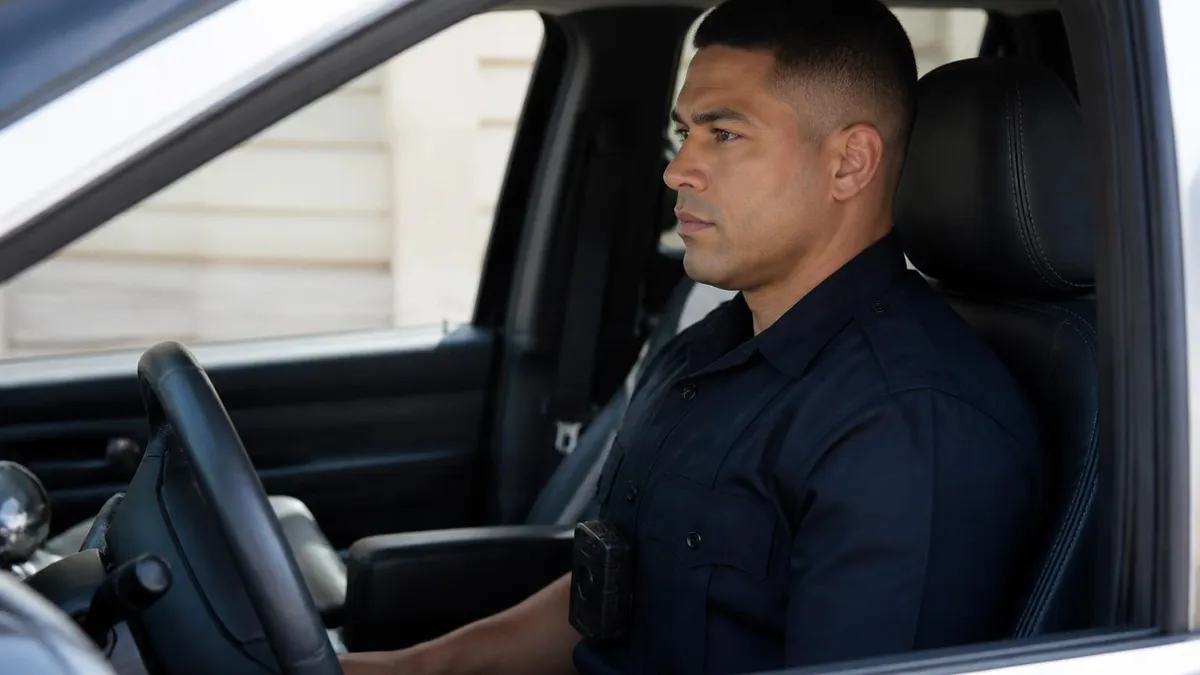
Los Angeles Police Department Rank Structure: Insignia & Promotion Path

LAPD Scanner: How to Listen to Los Angeles Police Radio in 2026
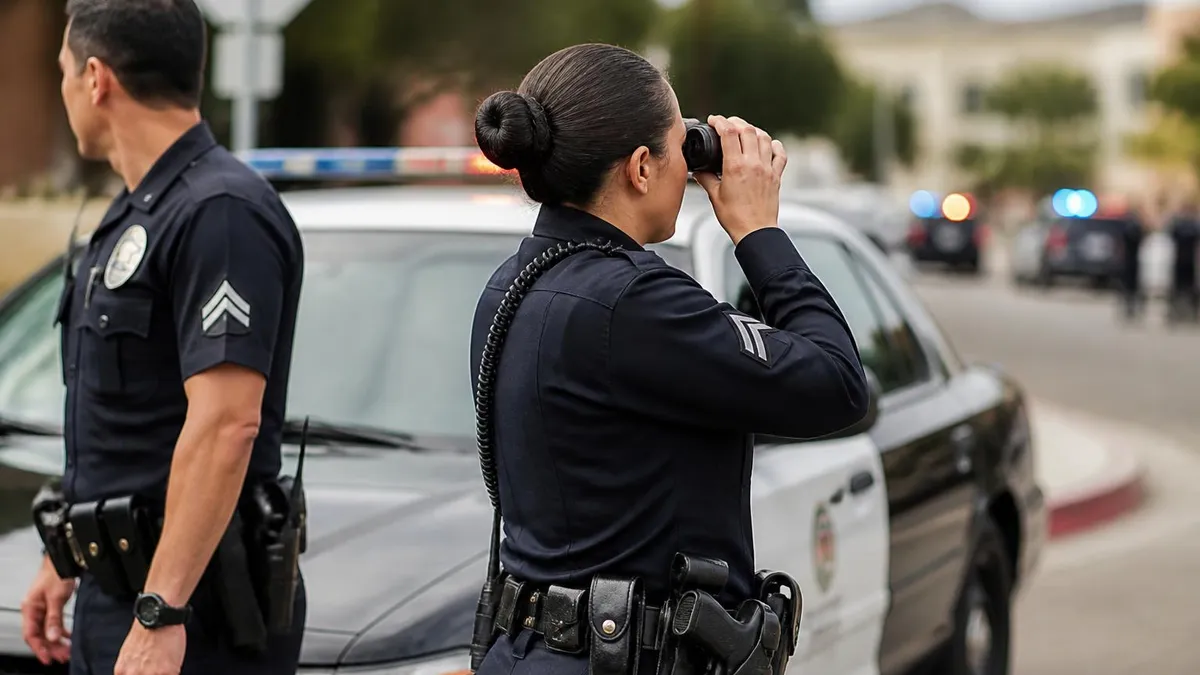
LAPD Metro Division: Inside LA's Elite Tactical Unit — SWAT, Gear, Ranks, and What You Need to Know

LAPD PIO: Complete Guide to the Los Angeles Police Department Public Information Office, Media Relations, and Press Briefings

LAPD Salary 2026 — Pay Scale by Rank, Benefits & Total Compensation
About the Author
Law Enforcement Trainer & Civil Service Exam Specialist
John Jay College of Criminal JusticeMarcus B. Thompson earned his Master of Arts in Criminal Justice from John Jay College of Criminal Justice and served 12 years as a law enforcement officer before transitioning to full-time academy instruction. He is a POST-certified instructor who has prepared candidates for police entrance exams, firefighter assessments, and civil service examinations across dozens of agencies.
Join the Discussion
Connect with other students preparing for this exam. Share tips, ask questions, and get advice from people who have been there.
View discussion (9 replies)